

It was nearly midnight when officers broke down the hotel room door at the Route 66 Casino and Hotel. Inside, they found 3-year-old Ismyella Rodriguez, her alleged abductor, and four other adults. Ismyella was safe, and no one was injured during the dramatic rescue that ended 10 hours after a violent abduction, an AMBER Alert, and the mobilization of federal, local, city, and Tribal law enforcement officers.
On April 6, 2011, 24-year-old Mario Rodriguez allegedly kicked in the door of an apartment in Albuquerque, New Mexico, and snatched Ismyella after pushing her babysitter off a second story balcony.
The Albuquerque Police Department set up a command post with phone banks and issued an AMBER Alert. Sgt. Louis Heckroth and other members of the Repeat Offender Project were called in to track the suspect.
"When they did the AMBER Alert activation, all the phones were set up and ready to go," said Heckroth.
FBI Special Agents Marcus McCaskill and Ben Bourgeois heard about the abduction on police scanners and quickly headed to the command post to offer assistance and access to their databases for all the tips coming in.
"Once we got everyone in the same room, our efficiency went through the roof," said Bourgeouis.
"We were also getting a lot of calls on the tip line because of the AMBER Alert," added McCaskill.
An out-of-state family member heard about the AMBER Alert and provided enough information to support a police search for the suspect at the Pueblo of Laguna reservation. Albuquerque police officers and FBI agents knew the Pueblo of Laguna Police Department would be critical to saving the child.
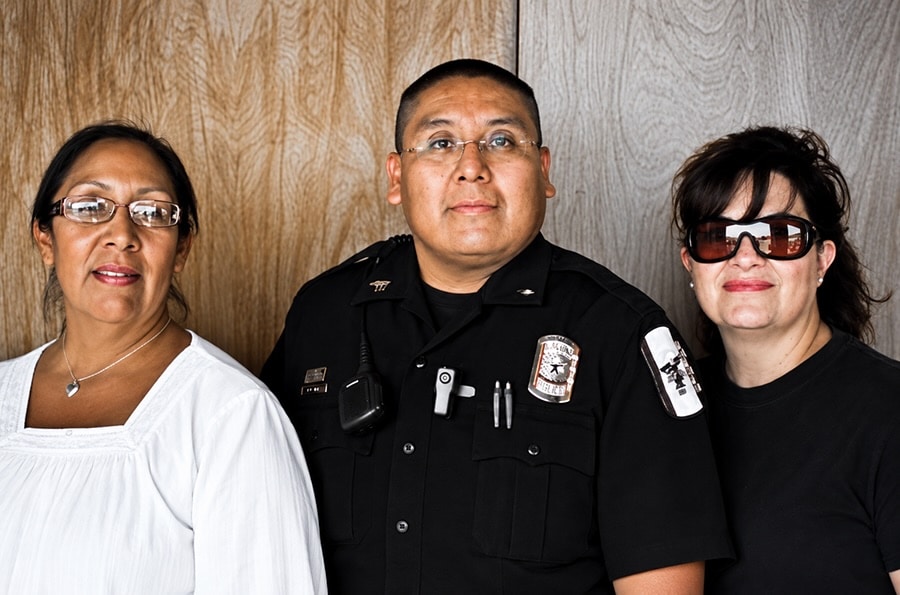
“You hear all the horror stories between tribal police and law enforcement agencies, and it has not happened here," said Pueblo of Laguna Police Chief Michelle Ray. “We all work really well together. We have a common goal, and everything seems to fall in place."
City and federal law enforcement officers traveled in the same vehicles and met with the tribal police at the Route 66 Casino and Hotel. Tribal investigators had worked with casino employees previously, and those relationships helped eliminate the red tape so police could quickly pinpoint where the suspect might be hiding with the victim.
"I had the tribal police and FBI with us, so once the investigation led to a specific hotel room, I could authorize a hostage rescue," said Heckroth.
The rescue went off without a hitch, and the victim's family was overjoyed the girl was safe. "It was like the Super Bowl! Woo-hoo! Just jumping, like oh-my-gosh!" family friend Loretta Ortega told reporters.
Investigators said it would have been very hard to catch up with the suspects if they kept on driving. They believe the AMBER Alert scared the suspects into hunkering down in a hotel room so they would not risk being caught on the road.
Everyone involved in the child abduction investigation said some valuable lessons were learned from this AMBER Alert:
- "Our AMBER Alert training helped," said Ray. "It was great to hear how all the agencies worked together to get the child home safely."
- "Everyone knew what their role was, which is important in this type of investigation," said Heckroth. "You need to know what to do in advance. If you wait until the day it happens, you can put lives in danger."
- "The AMBER Alert worked exactly the way it was supposed to work," said Bourgeouis. "You get everyone up and running quicker with an AMBER Alert than any other way," added McCaskill.
Mario Rodriguez faces kidnapping charges, and three other adults have been charged in connection with the abduction. Ismyella Rodriguez is now living with relatives.