"Even if I knew that tomorrow the world would go to pieces, I would still plant my apple tree," says Mary Jo Margeson, program manager for the Washington State Patrol's Missing and Unidentified Persons Unit (MUPU). As the AMBER Alert coordinator and clearinghouse manager for Washington's Region 5, Margeson navigates the relentless and emotionally taxing daily influx of missing persons cases — a list that never seems to get shorter, made up of repeat runaways, presumed-deceased cases, and the unidentified. It's a job that can feel impossible. It's also one she wouldn't trade.
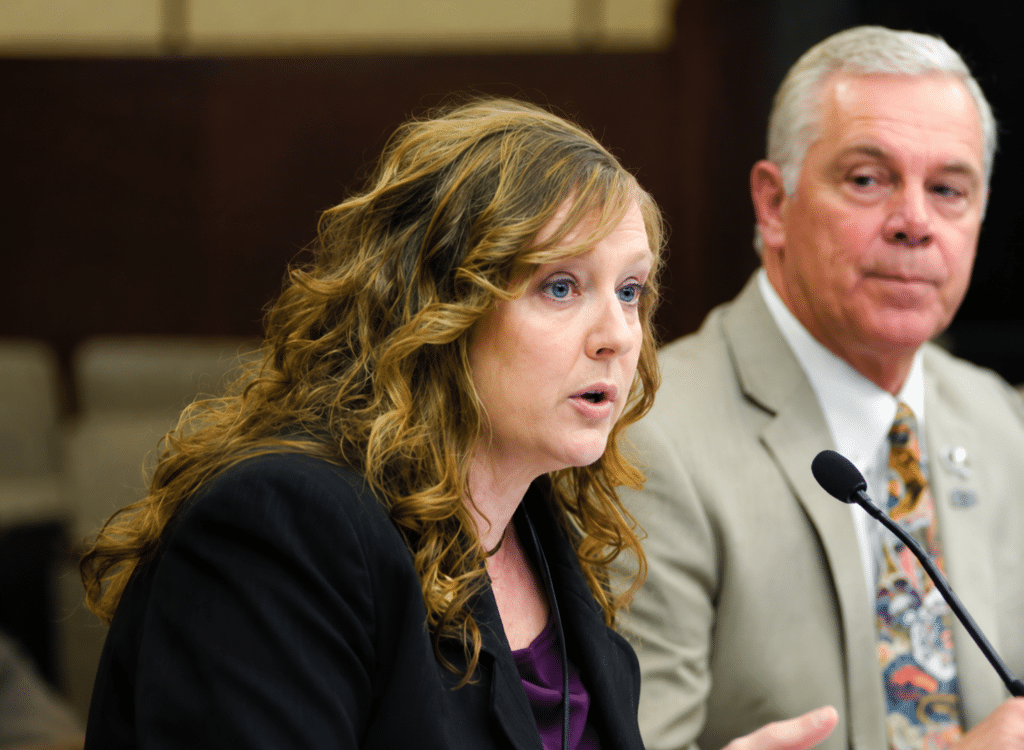
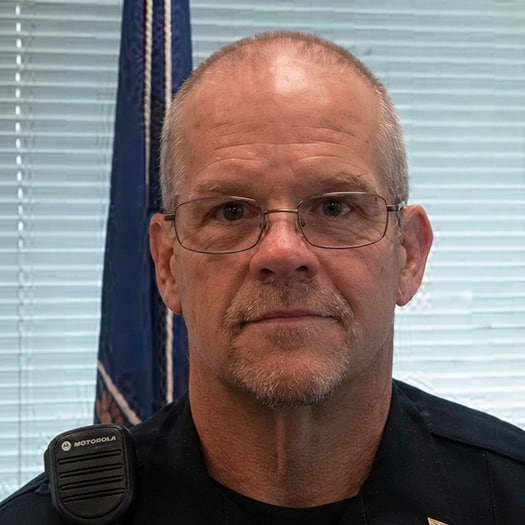
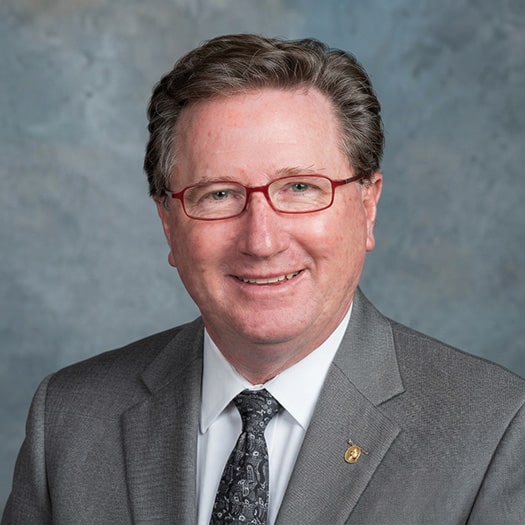
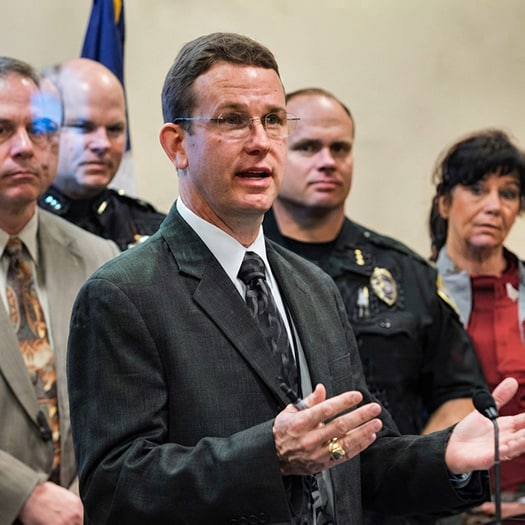
Mary Jo Margeson is the AMBER Alert Coordinator and Missing Persons Clearinghouse Manager for Washington state, Region 5, and program manager for the Washington State Patrol's Missing and Unidentified Persons Unit.
From Dispatch to the Clearinghouse
Margeson grew up in Oregon and moved to Washington at 20. Her path into missing persons work started in 2018, when she joined the Washington State Patrol as a 911 call taker and dispatcher. After about three years, she moved into the Criminal Records Division, then into the Investigative Assistance Division as an intelligence analyst — home to MUPU. About a year later, she stepped into her current role as MUPU program manager.
"I had very limited knowledge about MUPU at the time," she says. "I don't think anyone can fully understand what my unit does until you're in it. We are so much more than a group of people activating alerts."
Law enforcement offered Margeson career stability. What she didn't expect was to find her calling within it — including the chance to work alongside her agency's Missing and Exploited Children's Task Force, which targets the state's worst offenders.
A Special Kind of Person
Ask Margeson what it takes to do this work, and she doesn't sugarcoat it. "It takes a special kind of crazy person to tolerate this work," she says, only half-joking. "All day, every day, my team and I are seeing names of missing people. The list never seems to get smaller." Repeat runaways. People presumed deceased. Cases in between. And a separate list of the unidentified. It can be exhausting, she says, knowing that no matter how much the team pours into the work, the number of missing keeps climbing and people remain unidentified.
Correcting the Record on AMBER Alerts
Ask Margeson about the biggest misconception in her field, and she doesn't hesitate: that every missing child case should trigger an AMBER Alert.
"We're fortunate in Washington because we have a secondary alert that nearly every child could qualify for — the Endangered Missing Person Advisory," she says. The public, she adds, often doesn't realize alerts can't be issued the moment a child is reported missing. Her team acts at the discretion of the investigating agency, which has its own required steps to work through first. "People are questioning why my team didn't activate an alert sooner, but the truth is there are steps that must be taken prior to our involvement — for good reason."
That gap between public expectation and process is also her hardest daily challenge. MUPU doesn't drive the investigations themselves, which means families searching for answers are often referred back to the investigating agency. "I can't save or find everyone, and that's a reality I have to accept because I can't change it."
A Case That Reshaped Her Approach
When asked about a case that stands out, Margeson points to the Decker case — a set of circumstances no alert could have changed, she says, but one that changed how her team communicates. In the aftermath, she faced intense public scrutiny over how the alert process was handled.
"It was so hard to read the horrible things people were saying, but those weeks reshaped how I deal with the public and the media during subsequent events," she says. The team spent weeks re-examining and redesigning how alerts are written, aiming for the clearest, most concise message possible. "You can't ask for the public's help if you aren't painting a clear picture of what you're looking for — without needing the full case details, and while respecting the privacy of the missing person and their loved ones."
Staying in the Work
For coordinators wondering how to keep going when the list keeps growing, Margeson comes back to the same mantra that opens this piece: it's not about solving everything in a day, she says, it's about making a difference where you can. "Any little thing has the potential to help at least one family."
Off the clock, she's intentional about staying present with her kids, whether that's baseball practice or whatever's next on their schedule. She also leans on physical activity — heavy lifting and long walks, usually early in the morning before the world wakes up. "It's the best way I've found to remove distractions and give myself that much-needed 'me time.'"
Inside Missouri State Highway Patrol Troop F's AMBER Alert Leadership Team
Lt. Chris Daniels, Lt. Jim Lowary, Lt. Morgan Patterson, Capt. Jason Crites, Lt. Joe Davidson, Lt. Casey Utterback
Eleven minutes. That's how long it took a Troop F trooper to spot a stolen vehicle at a convenience store, arrest the driver, and pull a child out of the back seat safe. Minutes earlier, an AMBER Alert had gone out: a non-custodial father, wanted for killing the child's mother, was on the run with his son. By the time backup arrived, it was already over.
Ask three different members of Troop F’s leadership team about that case, and three different vantage points come back—the operations director who watched the request move through channels, the lieutenant weighing whether the facts met the legal threshold, the coordinator trusting that the alert reached exactly the people who needed to see it. It’s the case each of them reaches for first when asked what this work looks like when it succeeds.
That overlap says something about how this team operates. Missouri State Highway Patrol's Troop F covers the state's central region—Jefferson City, Columbia, the Lake of the Ozarks—through a command structure built on military service, small-town policing, and decades inside the Patrol. Captain Jason Crites and five lieutenants each run a different piece of Troop F's operations while sharing one high-stakes responsibility: deciding, often within minutes, whether a missing child meets the statutory threshold for a statewide AMBER Alert.
Ask any of them what the public gets wrong, and the answer comes back almost word for word: people assume an alert should go out for every missing child. It doesn’t. The criteria are deliberately narrow—evidence of abduction, evidence of imminent danger—and cases that fall short are routed instead to Missouri’s Endangered Person Advisory system. It’s a distinction the team spends real energy explaining, and worth stating plainly before their individual stories begin.
Lt. Jim Lowary, Lt. Chris Daniels, Lt. Morgan Patterson, Capt. Jason Crites, Lt. Joe Davidson, Lt. Casey Utterback
Capt. Jason N. Crites, Badge #32
Missouri Statewide AMBER Alert Coordinator & Troop F Commander
Crites grew up in Portageville, in Missouri’s southeast bootheel, and served four years in the U.S. Marine Corps before joining the Highway Patrol in 1998. He's held nearly every rank between Troops F and E—corporal, sergeant, lieutenant —and ran the Patrol’s Research and Development Division before returning to Troop F as commander and statewide AMBER Alert Coordinator, a dual role that puts him in charge of both central-region operations and every alert-activation decision in the state.
The pull toward the job started next door. “An MSHP trooper moved in next door and let me ride along during his shifts,” he says. “Seeing him take decisive action during criminal encounters and help stranded motorists inspired me. I looked up to him as a mentor.” After the Marine Corps, becoming a trooper felt like the natural next step.
As coordinator, Crites is the one drawing the line the public most often misunderstands. “We maintain very strict criteria for these activations,” he says, but a missing child who doesn’t meet AMBER Alert parameters isn’t simply left uncovered. Missouri's Endangered Person Advisory exists precisely for those cases.
The case Crites points to as a defining success is a different one: a child abducted in central Missouri, where the reporting agency moved fast with a vehicle description, plate number, and direction of travel. Troop F targeted the alert to that corridor; a motorist spotted the car on the interstate; and because a saturation detail happened to be working nearby, a trooper made the stop and recovered the child within minutes.
“Knowing that a child has been successfully recovered makes the entire grind of maintaining and improving the system completely worth the effort. As a parent, I cannot imagine the fear of having a child abducted.” — Capt. Jason N. Crites
The job's weight doesn't disappear at the end of a shift. Crites manages it with a small ritual: “A personal coping mechanism I developed when I was younger is watching a movie after a critical incident or stressful day. It allows me to temporarily disconnect so I can return to duty with a clear mind.” His advice to newer Coordinators is practical rather than sentimental—master the criteria, tighten your transmission process, and never work without backup. “Having six qualified staff members allows us to consult one another on complicated requests to ensure we make the right call.”
Lt. Joseph D. Davidson, Badge #66
District 4 Operations Director
Davidson grew up in Kahoka, in Missouri’s far northeast corner, and spent seven years in local law enforcement—three as a detention officer, four as a Clark County deputy—before joining the Highway Patrol in 2004. He spent his first two decades in Troop B, rising to corporal and sergeant, before a promotion to lieutenant in August 2024 moved his family to Jefferson City. He now runs District 4 operations, supervising three zones along Interstate 70 and commercial vehicle enforcement, while also serving as motor equipment manager, Honor Guard coordinator, awards coordinator, and property control administrator.
His grandfather was a law enforcement officer, and watching that career shaped his own. “By the time I was in high school, I knew I wanted to follow in his footsteps,” he says.
Davidson's read on the public’s biggest misunderstanding goes a step further than most: it’s not just that people expect an alert for every missing child—many also assume an alert failed simply because they didn’t personally receive it. In most cases, that's a matter of geography, not system failure; alerts are targeted to the area where the child is believed to be.
His own defining case unfolded on Interstate 70, not at a convenience store. FLOCK license-plate cameras flagged the suspect vehicle, and rapid coordination between radio operators and road troopers turned that lead into a safe recovery within minutes—a case that shows how much depends on technology and dispatch working in sync, not just a trooper’s instincts in the moment.
Davidson’s role is largely support—keeping troopers and clerical staff equipped and functioning—and that’s where his motivation comes from: “Knowing that they depend on me every day to get them what they need keeps me highly motivated.” Outside of work, it’s family: 18 years married to his wife, Haley, three kids, weekends at the Lake of the Ozarks, golf, pickleball, and lawn care.
“Seek help when you need it; it is a sign of strength, not weakness … do your best not to let your career become your entire identity.” — Lt. Joseph D. Davidson
Lt. Chris S. Daniels, Badge #55
District Lieutenant & Public Order Unit Assistant Platoon Leader
Daniels grew up in Richmond, Missouri, and graduated from Missouri Western State University before joining the Missouri State Water Patrol in 2000, working the Lake of the Ozarks as a patrol officer. When the Water Patrol merged into the Highway Patrol in 2011, he became a trooper without leaving the Lake, working up to corporal and sergeant before a 2022 promotion to lieutenant. He now manages four road zones within Troop F, supervises radio and maintenance staff, coordinates the University of Missouri football detail, serves as an assistant platoon leader for the Public Order Unit, and acts as the Exposure Control Plan coordinator.
His path into the field was simple and direct: “Upon completing college, I had a simple, direct desire to work in a public service field where I could actively help people and improve the community I live in.” He names integrity, clear communication, critical thinking, and decisiveness as the traits the job demands—and describes the daily balancing act at the center of alert decisions as “a high-stakes balancing act of gathering and verifying facts against established criteria while managing the extreme urgency required to issue a timely alert.” He’s one of several on the team who point to the Interstate 70 recovery described above as the case that stays with him.
What keeps him going is uncomplicated: “Having the distinct knowledge that the work I perform actually matters to people and makes a tangible difference in our communities.” Off duty, he protects time with his family deliberately, calling it essential to not “take the burdens of the job home with you.”
Lt. James E. Lowary, Badge #91
District Lieutenant & Public Order Unit Coordinator
Lowary grew up in Quincy, Illinois, and attended Missouri Southern College in Joplin before the Missouri State Water Patrol hired him in 2000 at the Lake of the Ozarks. He moved into the Highway Patrol in 2004, first assigned to Audrain County, then serving across Camden, Miller, and Cole counties as a corporal and sergeant before making lieutenant in 2023. He now oversees Troop F’s marine zones and the Lake of the Ozarks road zones, coordinates the Public Order Unit, and serves as the troop’s drug test officer.
Lowary’s draw to the work is rooted in protecting people who can’t protect themselves: “I have always felt drawn to protecting vulnerable individuals who cannot advocate for themselves … law enforcement offers a powerful platform to hold offenders accountable while helping impacted families rebuild their lives.” He describes integrity and “a rock-solid moral compass” as non-negotiable, since “children depend entirely on law enforcement to advocate for them.” Like several of his colleagues, the case he returns to is the interstate recovery of the boy abducted by his non-custodial father—a reminder, he says, that “every second is critical, yet all actions must remain tethered to verified facts.”
Outside the uniform, Lowary's life runs on a different clock entirely: a farm with horses and cattle, a wife and daughter who compete in barrel racing, and time spent deer hunting.
“It is essential to focus on interests outside the patrol, so work does not interfere with family life.” — Lt. James E. Lowary
Lt. Casey Utterback, Badge #103
District I Commander & Assistant Patrol ALERT Coordinator
Utterback grew up in a small central Missouri town and joined the Missouri Army National Guard in 1997 before earning an Associate of Arts degree and completing a 470-hour police academy. After three years in municipal policing, he joined the Highway Patrol in 2002, working up through corporal and master sergeant in Troop A out of Kansas City before a promotion to lieutenant brought him to Troop F in 2021. He now commands District I, overseeing Motor Vehicle Inspection, Driver Examination, the Chaplain program, and the SWAT team, in addition to his role as assistant Patrol ALERT Coordinator.
“I knew by high school that I wanted to pursue both the military and law enforcement,” he says, describing an empathetic nature and a drive to serve that predates his career. He points to communication and emotional intelligence—paired with “a solid moral compass and core integrity”—as the foundation of effective leadership in the role.
The hardest part of his job isn’t any single case; it’s the whiplash between them. “The toughest challenge is rapidly shifting gears between radically different tasks within a span of minutes—such as transitioning from tedious administrative paperwork directly to supervising a high-speed vehicle pursuit or managing an officer-involved shooting scene.”
His defining case happened in the Kansas City area: a vehicle stolen with a child inside while the mother ran into a store. The AMBER Alert triggered a multi-jurisdictional pursuit—local, county, and state agencies working together—that ended with a tire-spike, a short foot chase, an arrest, and the child safely back with her mother.
Utterback manages the job’s weight by accepting its limits: “certain outcomes are completely beyond your control, regardless of how much effort you expend.” He protects time for physical fitness and family—sporting events, holidays, family dinners.
“Life is short, so make a conscious effort to make it enjoyable for yourself and those around you.” — Lt. Casey Utterback
Lt. Morgan B. Patterson, Badge #88
Administrative Services Director & Assistant Troop F SWAT Director
Patterson is a Jefferson City native who attended the State Technical College of Missouri and joined the Highway Patrol in 2010 as part of the 92nd Recruit Class. He worked the road in Osage and Gasconade counties before being promoted to corporal, then sergeant in Cole County, then spent a tour instructing at the Patrol’s Academy before making lieutenant in 2023. He now serves as Troop F’s administrative services director and assistant director of Troop F SWAT.
“I witnessed firsthand how dedicated law enforcement officers could change lives,” he says of his path into the field, describing a lasting sense of responsibility “to stand up for those who cannot protect themselves.” He names integrity and communication as the two pillars of emergency response—the first ensuring decisions are based on accurate data, the second keeping field officers, agencies, and the public aligned during a crisis.
The case Patterson points to isn’t a clean rescue—it’s one that almost didn’t happen. A request initially fell short of AMBER Alert criteria, and the team made the harder call: deny it and tell the detective exactly what evidence was missing. Once the agency came back with what was needed, the alert went out immediately. A trooper spotted the vehicle, made a brief pursuit, and recovered the children unharmed. It’s a story less about speed than restraint—proof that getting the criteria right, even when it means saying no first, is what makes the system work.
Patterson’s motivation is close to home: a husband and father of three young boys, he says they’re “a daily reminder of exactly why this work is so important.” He recharges by coaching their sports teams, calling it “a healthy, positive outlet outside of the uniform.”
“Never attempt to make critical, life-altering decisions in isolation … build a cohesive team that communicates openly and trusts one another.” — Lt. Morgan B. Patterson
Six Paths, One Clock
Six different paths into the job, six different corners of Troop F's territory—but the same math shows up in every conversation: children can’t wait, the criteria can’t bend, and no single person carries that weight alone. That's the case this team keeps making, one alert at a time.
Connect with the Missouri State Highway Patrol Troop F's AMBER Alert Leadership Team through the Portal.
Lieutenant Jenna Clawson Huibregtse speaking at a podium with a North Dakota State Patrol SUV in the background.
Lieutenant Jenna Clawson Huibregtse coaching two teams of five young boy basketball teams.
“Progress moves at the speed of trust.”
For Lieutenant Jenna Clawson Huibregtse, this principle is the foundation of effective emergency response. Serving with the North Dakota Highway Patrol (NDHP) and operating as the state's AMBER Alert Coordinator/Clearinghouse Manager, she navigates the intense intersection of urgent missing persons cases and strict policy enforcement. From pioneering cultural liaison programs to implementing North Dakota's newly established Feather and Missing Endangered Persons Alerts, Clawson Huibregtse shares her expert perspective on managing high-stakes alerts, overcoming interjurisdictional complexities, and maintaining resilience in a demanding field.
Lieutenant Jenna Clawson Huibregtse, North Dakota's AMBER Alert Coordinator
Could you share a bit about your current role, the region you serve, and your background?
As a NDHP lieutenant, my responsibilities span public information, social media, dignitary protection, Capitol security, recruitment, and the crash/victims assistance program. I am also North Dakota’s Missing Persons Clearinghouse Manager/AMBER Alert Coordinator, overseeing statewide activations including Blue, Silver, Feather, and Missing Endangered Persons Alerts.
I grew up in Plentywood, Montana, and began my career with the agency in 2015 after earning a master’s degree from North Dakota State University. Proudly, I am a first-generation college graduate and a first-generation law enforcement officer.
What led you to your position as an AMBER Alert Coordinator and Missing Persons Clearinghouse Manager?
I always desired a dynamic career, and my path was heavily influenced by personal and community experiences. After joining the NDHP in 2015, I helped create our Cultural Liaison Officer Program following the 2016 Dakota Access Pipeline protests. The program's goal was to build relationships, increase trust, and reduce jurisdictional complexities with Tribal nations. Since then, I have worked closely with local, county, Tribal, state, and federal partners.
Throughout my tenure, I have served as a patrol trooper, cultural liaison officer, planning officer, safety and education officer, and dignitary protection officer. Managing the Clearinghouse has been exceptionally rewarding, allowing me to strengthen statewide communication while helping locate missing and endangered individuals.
How has the Clearinghouse approached training and communication since the introduction of new adult alerts?
The Feather Alert and Missing Endangered Persons Alert were established during the 2025 legislative session to address a critical gap for endangered adults 18 and older at risk of serious bodily injury or death. While we have utilized these alerts a few times over the last year, we maintain strict activation criteria, particularly concerning Wireless Emergency Alerts.
Expanding a clearinghouse mandate naturally impacts day-to-day operations, but our successful implementation stems from pre-existing relationships with law enforcement agencies and Tribal nations. One of my personal rules is that relationships must be built before an emergency occurs; trying to forge them in the middle of a crisis rarely works well.
Following the legislation, our team took proactive steps:
We conducted more than 15 training sessions directly in communities across North Dakota.
The training was provided to licensed law enforcement officers, emergency managers, and telecommunicators.
We delivered training to four of the five Tribal nations that share geography with North Dakota, with the fifth pending scheduling.
We emphasized front-end education to clarify alert criteria, reducing unqualified requests and helping agencies navigate cases that fall into a gray area.
We actively guided local agencies to maximize existing resources like reverse 911 systems, social media, and media releases.
With every alert request, we continue learning and refining the process. This success is a shared team effort among the NDHP, the Bureau of Criminal Investigation, the State Emergency Communications Center, and the North Dakota Department of Emergency Services.
What essential skills make someone effective in this demanding role?
Coordinators require strong relationship-building abilities, excellent communication skills, and the capacity to lead with empathy while making firm, decisive choices. These rapid-moving cases involve numerous partners and require balancing extreme urgency with strict policy compliance. Success demands building trust beforehand and sustaining it under pressure. The role also brings heavy public scrutiny, especially when cases do not meet alert criteria, making a strong support system essential for staying grounded and effective.
What is the biggest public misconception about issuing alerts?
The public often believes law enforcement can activate an AMBER Alert or Missing Child Advisory anytime a child goes missing. In reality, these tools are reserved for the highest-risk scenarios where immediate public awareness can save a life, and they are only utilized when public assistance is actively needed.
Another misconception is that an unissued alert means law enforcement is ignoring the case. Extensive behind-the-scenes investigative work, agency coordination, and local outreach happen continuously without a statewide broadcast being activated. Overusing alerts outside established guidelines causes "alert fatigue," leading the public to ignore true emergencies. Our goal is always to use the right tool at the right time.
Can you share a specific success story?
One profound success involved an AMBER Alert issued from the Fort Berthold Reservation for a 2-year-old child trapped in the backseat of a stolen vehicle. The rapid alert activation generated multiple public sightings and made the suspect aware of the massive law enforcement response, resulting in the child's safe return. That outcome hinged on several factors: quick reporting, swift law enforcement action, and seamless interagency partnerships. Cases like that reinforce why these alert systems exist and how important timing can be.
We also handle a high volume of Silver Alert requests. By working these cases aggressively from the beginning with local technology and resources, we often resolve them safely before a public broadcast even becomes necessary. Ultimately, our extremely high success rate comes directly from collaboration between law enforcement, emergency communications, media, Tribal nations, and an attentive public.
How do you manage the stress of the job and recharge?
This heavy work stays with you, especially cases involving vulnerable children. No one does it alone. I rely on trusted colleagues and focus on the core mission: protecting vulnerable people and supporting families on some of the worst days of their lives. I stay motivated by watching local, Tribal, state, and federal partners unite to bring loved ones home.
To recharge, I coach youth sports, stay active, and prioritize intentional time with my family. Law enforcement can easily consume your entire identity; maintaining balance allows me to keep perspective and continue showing up for the communities we serve.
What advice do you have for fellow coordinators and new professionals?
Build relationships before you need them, because progress moves at the speed of trust.
Invest time in getting to know your partners before a crisis hits, as these collaborative partnerships cannot be created in the middle of an emergency.
Remember that policies, criteria, and technology matter, but communication and empathy matter just as much when guiding families and agencies through difficult, fast-paced decisions.
Stay collaborative by finding mentors, asking questions, and being willing to learn from every single case.
Stay humble and never lose sight of why the work matters in the first place.
Connect with Lt. Jenna Clawson Huibregtse through the Portal.
"In that moment, I knew I wanted to dedicate my life to helping protect children like him, and I decided I wanted to become a police officer." For Assistant Special Agent in Charge Lisa Vorrasi, Georgia's AMBER Alert Coordinator, a childhood memory of a missing child flyer forged a 20-year career in law enforcement. Juggling intelligence operations at the Georgia Bureau of Investigation with the urgency of missing child investigations, Vorrasi knows that success requires preparation, resilience, and strong alliances. In this Q&A, she shares her strategies for managing high-stakes crises, the vital importance of building partnerships before disaster strikes, and how she finds joy off the clock.
Assistant Special Agent in Charge Lisa Vorrasi, Georgia's AMBER Alert Coordinator
What inspired you to dedicate your career to law enforcement and protecting vulnerable children?
Growing up in Wisconsin, a seemingly small event profoundly impacted the direction of my life. One day after school, I found a flyer in the mail with an image of a young boy about my age. My parents explained he had been kidnapped, and the flyers were distributed to help find him. I remember crying in my room for hours, thinking of that happy boy in the picture who was now scared and separated from his family. Even though I had never met him, the pain was very real. In that moment, I knew I wanted to dedicate my life to protecting children like him, and I decided to become a police officer.
What is the most significant challenge you encounter in your daily work, and how do you navigate it?
Serving as the Georgia AMBER Alert Coordinator represents only a portion of my responsibilities. I am also a supervisor at the GBI’s Georgia Information Sharing and Analysis Center, one of 80 intelligence fusion centers across the United States. I also supervise the Georgia Bureau of Investigation's Information Sharing and Analysis Center, one of about 80 intelligence fusion centers in the U.S. I help oversee a nearly 65-person unit providing criminal and counterterrorism intelligence to our partners. Working in metro Atlanta brings unique challenges, including a massive, diverse population and a sheer volume of complex investigations.
However, my most significant daily challenge is prioritizing tasks. Because of the nature of our work, emerging issues of varying urgency constantly arise. Navigating this requires continuous reprioritization, focusing on "what is important now"—even as that changes by the minute. It requires flexibility, organization, and learning to give myself and others grace.
The nature of this work can be heavy. What keeps you motivated and focused on the mission?
Law enforcement officers are often present on the worst day of someone’s life. For a long career, you must stay grounded in the positive impact you're making rather than dwelling on the sadness. One of the most rewarding aspects is the sense of righteous conviction when victims of horrific crimes receive justice. Holding predators accountable is a powerful motivator, but recognizing small wins—like helping a victim access service, getting a confession, or just listening to someone—is equally vital.
Some days are harder than others, but we are making a difference, one child at a time. If we improve even one life, it is worth the setbacks. Sometimes, getting through tough days comes down to a decent cup of coffee, a good night’s sleep, and a lot of laughter.
How do you manage stress and find joy outside of work?
A great blessing has been my involvement with Special Olympics Georgia's Law Enforcement Torch Run. For 16 years, it has provided a deep source of joy and purpose. The athletes bring incredible positivity, and being part of that community has been life-changing. I also organize Hockey Fun Day, a fundraiser combining my love of ice hockey with my passion for the Special Olympics.
Additionally, my 10-year-old son, Nolan, and I are unified partners on a soccer team, North Fulton United. Stepping onto the field on Sunday afternoons makes the stress of the week fade away.
Recently, I was honored to participate in the 2025 Special Olympics World Winter Games in Turin, Italy. I joined 80 law enforcement officers worldwide to run the Flame of Hope across northern Italy before the opening ceremony. It was a powerful reminder of this movement's global impact. I also recharge by traveling, playing hockey, coaching two Atlanta Ice Lynx girls' youth hockey teams, and spending time with my family and animals.
What advice would you offer to your counterparts across the country or someone brand new to this field?
I have been with the GBI for 20 years, but I have only served as the AMBER Alert Coordinator for the past three years. My biggest lesson is the importance of building relationships with law enforcement partners before a critical incident occurs. The side of the road, in the pouring rain, in the middle of the night, is not the time to establish those connections.
Child abduction investigations evolve rapidly, and every second matters. Knowing you can call a trusted partner directly in the middle of the night makes a tremendous difference. I am especially grateful for the partnerships among AMBER Alert Coordinators and Missing Children Clearinghouse Managers across the country, particularly in Region 2. They are an invaluable resource. Stay engaged, communicate regularly, attend training, and exchange ideas.
Biography
Assistant Special Agent in Charge Lisa Vorrasi of the GBI is assigned to the state’s Fusion Center, the Georgia Information Sharing and Analysis Center. A 20-year veteran of the GBI, she serves as Georgia's AMBER Alert Coordinator and Child Abduction Response Team Commander. She previously served as an ASAC at the Atlanta Regional Office and as an agent for the Atlanta-Carolinas High Intensity Drug Trafficking Area and the Atlanta Regional Office.
Vorrasi holds a bachelor’s degree from the University of Dayton and a master’s degree from Georgia State University. She initiated the GBI’s involvement in the Special Olympics Georgia Law Enforcement Torch Run in 2010 and continues to serve as the agency coordinator and is the Co-Assistant Director for the Special Olympics Georgia Law Enforcement Torch Run Executive Council. Additionally, Vorrasi serves as the long-standing secretary on the executive board of the DeKalb County Chiefs' Association.
"Everything starts with compassion." For Corporal Todd McCurdy, Pennsylvania’s AMBER Alert Coordinator and supervisor of the State Police's Criminal Investigation Assessment and Missing Person units, this is more than a motto—it’s the foundation of his work. Meeting victims on their worst days, McCurdy understands the heavy toll of abduction cases. In this Q&A, he discusses his path to this demanding role, clarifies common misconceptions about the alerting process, and offers no-nonsense advice for his fellow coordinators.
Corporal Todd McCurdy
Could you share a bit about your current role, the region you serve, and where you grew up?
I supervise the Pennsylvania State Police Criminal Investigation Assessment (CIA) Unit and the Missing Person Unit, which includes serving as the state's AMBER Alert Coordinator. My statewide unit provides criminal investigative analysis support for violent crimes. CIA Unit members serve on all Major Case Activations throughout Pennsylvania, assisting with homicides, kidnappings, sexual assaults, and any other complex crimes that benefit from our analysis. We also administer the Missing Endangered Person Advisory System, Pennsylvania’s alerting system for missing persons who do not meet AMBER Alert criteria.
I grew up in Lancaster, Pennsylvania, and began my career with the State Police in 2005. Before this assignment, I primarily worked as a criminal investigator in Lancaster and Chester counties in south-central and southeastern Pennsylvania.
What career path led you to your current position as an AMBER Alert Coordinator and Missing Persons Clearinghouse Manager?
I became a criminal investigator in 2009, and my training and experience have always focused on resolving violent crimes, particularly child abuse and homicide investigations. In 2016, I transitioned to a unit supervisor and Major Case Team supervisor. During that time, I was exposed to several long-term missing person investigations involving suspicious circumstances. These cases tax both investigators and agencies because they are incredibly difficult to resolve.
The challenging nature of these cases pushed me to become more proficient. Then, in 2020, I was directly involved in investigating the abduction of a female in Lancaster County. My role in that case solidified the dedication I have to this work today.
In your experience, what essential skills and personal characteristics make someone effective in this demanding role?
Everything starts with compassion. In police work, we handle numerous calls for service daily. But the average citizen will only be a victim of a violent crime once. We encounter these people on their absolute worst day, and we owe them everything we have to offer.
Varying skills are essential to this role, but they all branch from that foundation of compassion. Pennsylvania has a team of eight AMBER Alert designees. Each brings a unique skillset to the table, which makes us stronger together, but our shared compassion for victims is what drives us to be our best.
What do you believe is the biggest public misconception about the process of issuing AMBER Alerts or missing child advisories?
The biggest misconception is the belief in a mandatory waiting period before an alert can be issued. When we teach AMBER Alert procedures and missing person investigations in Pennsylvania, we are very clear: Just call us. Don’t wait, don’t hesitate, and don’t guess. Call us right away, and we will work through the incident together.
My team encourages all law enforcement and civilians to engage immediately when a child goes missing. These cases often begin under unknown circumstances, which is to be expected. Let us assist from the outset to reach a successful conclusion as efficiently as possible. Even if an alert isn't ultimately issued, my team is trained and ready to help move the investigation forward.
The nature of this work can be heavy. What keeps you motivated and focused on the mission day in and day out?
My unit is tasked with the cases that victims and their families never truly recover from. Each time the phone rings, it’s a new opportunity to attempt to bring resolution to those victims. We owe them everything we have. That mindset drives me and my team to show up every day, prepared for whatever case presents itself.
What advice would you offer to your counterparts across the country, or to someone brand new to this field?
Become proficient. Strive to fully understand the alerting process and the research surrounding child abductions. You can’t do the job of an AMBER Alert Coordinator in half measures. You have to be all in, and you have to want it. This work is not for everyone, and that’s okay.
Finally, lean on your resources, your peers, and your supporting agencies. This work cannot be done on an island. There are people all around you ready and willing to help. Take advantage of that, and your AMBER Alert program will be more successful for it.
Alaska is a land of staggering scale and beauty, but its rugged terrain is as dangerous as it is scenic. For Lieutenant Benjamin Endres of the Alaska State Troopers (AST), the “Last Frontier” isn’t just a backdrop—it’s a massive, 665,000-square-mile jurisdiction where the environment itself is often the greatest threat to life.
Based in Anchorage as the Statewide Search and Rescue Coordinator for the AST, Endres oversees a complex web of logistics in a state that lacks traditional counties or sheriff’s offices. From coordinating canine teams for missing persons in remote Yup’ik villages to managing the state’s AMBER Alert system, his work is a race against both time and the rapidly shifting Alaskan weather.
Originally a law enforcement veteran from Northern Indiana, Endres moved to Alaska in 2008, seeking the ultimate professional challenge. Today, he sits at the center of a vital support network, balancing the roles of emergency management liaison and communications coordinator to keep Alaskans safe in one of the world’s most unforgiving climates. (“The environment in Alaska kills a lot of people,” he says.)
You spent 20 years in law enforcement in Indiana. What drew you to the Alaska State Troopers? I was born and raised in northern Indiana and did about 20 years in law enforcement there before coming up to Alaska at the end of 2008. My uncle was a Michigan State Trooper and my childhood hero; he gave me my initial interest in rural law enforcement. When I was reaching the end of my time in Indiana, I started thinking about where the biggest, most challenging, most rural place would be to finish my career. Alaska was the answer.
Alaska State Troopers in Fairbanks worked with the volunteer search team PAWS to conduct helicopter operation training and familiarization flights with the handlers and dogs.
How does the structure of law enforcement in Alaska differ from the “Lower 48”? It is very different because Alaska does not have counties, sheriff’s offices, or deputies. We have boroughs, but many areas are “unorganized,” meaning there is no local borough government at all. Troopers provide complete law enforcement services for everything outside of traditional city limits. In remote posts like Glennallen, you’re the only game in town for an area as big as some states. You have to be a mix of everything—think Andy Griffith-style sheriff to forensic investigator to prisoner transport officer.
What are the primary logistical hurdles when a search and rescue call comes in from a remote village? Geography and weather are our biggest masters. Many communities are completely off-road and rely on air, riverboat, or snow machine (or “snowmobile” as they’re called in the Lower 48). If a child goes missing in a village that doesn’t have a trooper post, we have to fly someone in. However, our pilots need Visual Flight Rules (VFR) visibility; if there is blowing snow or freezing rain, they simply cannot fly. This can cause delays of several days before we can even get boots on the ground.
You also manage the state’s AMBER Alert system. Why is the criteria for these alerts so strict? In my three years in this position, we’ve only had two AMBER Alerts, and thankfully both kids were recovered successfully. We keep the criteria strict—requiring a confirmed abduction and imminent danger—specifically to avoid “alert fatigue.” We want people to take it seriously when their phone goes off at 2 a.m. Alaska is also limited in how it can broadcast these; for example, we only have two highway signs in the entire state capable of displaying emergency messages, and both are in the Anchorage area.
Can you explain the role of the Village Public Safety Officer (VPSO) and how they bridge the law enforcement gap in rural areas? The VPSO program was started to provide a physical safety presence in small villages that are hard for Troopers to staff. The state funds it, but the officers—I think we have about 80 of them now—work for Native corporations or boroughs. They’re trained in law enforcement, first aid, and firefighting. It’s a very tough job; it takes a unique individual to be the law enforcement representative in a village of only 300 or 400 people where everyone knows you. And often there’s just one VPSO—if even that—available to serve a vast area.
Communication seems like a massive hurdle. How do you stay in touch with officers in the field? And how do you try to locate cell phones? Communication with my colleagues is one of my biggest responsibilities, and it’s a constant struggle. In the “Rail Belt” near populated areas, we have good radio coverage. But in Western Alaska, a trooper on a snow machine often has zero radio communication between villages. Even cell service is problematic; most villages use a provider called GCI, which isn’t always compatible with AT&T or Verizon. When someone goes missing, we can’t “triangulate” a phone to within a few feet like you can in Los Angeles; we’re lucky if we can get it within a mile of a single cell tower.
What are some of the other challenges you face? Communication delays can pose a problem when people think, as some still do, that you have to wait 24 hours before reporting someone missing. We do our best to try to educate people about that. We also face perpetual staffing shortages despite our best efforts to recruit people into taking good-paying positions up here. The number of new recruits can’t keep up with the number of retirements.
What’s a typical day like for you? Anything but typical. They’re very different and challenging in their own way. When I’m not coordinating logistics for search and rescue teams—for example figuring out where they’ll spend the night (often in sleeping bags at village schools) or trying to line up a helicopter—I’m running back and forth from our radio technicians to get portable radios fixed.
Tell us about the significance of search and rescue (SAR) teams in Alaska. We have a lot of volunteer search and rescue groups, which we’re grateful for, especially because they operate at a professional level. Coordinating their help is a big part of my job. The Alaska State Troopers are statutorily responsible for leading search and rescue (SAR) operations statewide, and we conduct more than 450 missions each year. All troopers are trained in SAR and work alongside more than 1,100 volunteers, as well as multiple agencies and organizations. SAR teams are deployed along with aircraft, vessels, ground teams, and canines to locate lost or injured residents and visitors. Once we’ve activated them for a mission, they get covered by the AST for workman’s comp should anybody be injured. And then we reimburse them for their expenses for travel and food. So we really count on them.
What is the most rewarding part of this work for you? In search and rescue, you deal with a lot of tragedy, like unrecovered bodies from avalanches, that really wear on you. But the “wins” give us fuel to move forward. Last week, a 15-year-old fell 40 feet in the mountains and broke his back. Seeing the video of him being successfully hoisted into a U.S. Air Force helicopter by pararescuemen and knowing he’s now recovering—that’s what makes you want to get back out there and find the next person who needs help.
Tribal First Responders of the Last Frontier
The Village Public Safety Operations (VPSO) program—established in 1979 and elevated to a standalone division of the Alaska Department of Public Safety in 2024—provides dedicated oversight and training for rural public safety. VPSOs serve Alaska’s most remote communities by decreasing emergency response times, maintaining a proactive, ongoing safety presence, and delivering law enforcement, fire prevention, emergency medical, and search-and-rescue services.
Building on a 47-year legacy, the program nearly doubled its ranks from 42 officers in 2020 to 87 by January 2025. It has also achieved impressive graduation and retention rates exceeding 80%.
Recent improvements driving the program's success include:
Enhanced Leadership: The addition of Regional Public Safety Officers (RPSOs) has closed long-standing gaps in rural oversight by strengthening field supervision, training, and regional coordination.
Strategic Upgrades: The division has reinforced its effectiveness through improved fiscal accountability, investments in infrastructure and technology, and deeper partnerships with Alaska Native Tribes.
Long-Term Focus: While remote recruitment remains challenging, targeted hiring strategies and continued legislative backing positions the VPSO program for sustained growth and a lasting impact on rural public safety.
Source: Alaska Department of Public Safety, VPSO Division
By Denise Gee Peacock
As the 30th anniversary of Amber Hagerman’s murder approaches, the search for her killer continues. Mark Simpson, the case’s original investigative supervisor at the Arlington Police Department (APD) from 1996 to 2007, reflects on a crime that transformed policing.
“We realized ... we didn’t have a major case response plan,” he recalls. The tragedy forced advancements, most notably the AMBER Alert system, but for Simpson, the goal remains: “to see the case solved.”
Today, that mission falls to APD Detective Krystalynne Robinson. She keeps Amber’s portrait near her desk as a daily reminder. Despite thousands of leads and decades of work, the case is far from cold; tips still arrive weekly. Robinson is now vetting labs for advanced DNA testing, driven by the same unwavering goal: “to get justice.”
Former Investigation Supervisor Reflects on Early Days of Case—And Lessons for Today
Texan Mark Simpson was the Arlington Police Department’s Investigative Supervisor for the Amber Hagerman case from the time of her abduction and murder in 1996 until 2007, when he retired after a 32-year career with the APD. We recently caught up with him to discuss his recollections of the case— and what he wants more than anything: “to see the case solved and justice served.”
Retired Arlington (Texas) Police Department Sergeant Mark Simpson served as the Investigative Supervisor for the Amber Hagerman case during its earliest days.
As we approach the 30th anniversary of the Amber Hagerman abduction and murder, what goes through your mind?
The likelihood that whoever committed the crime may still be out there troubles me. But I also look at everything that resulted from Amber’s death—the advancements law enforcement has made, not only in training but also investigative tactics, and our ability to respond to child abductions, including the AMBER Alert system—that we didn’t have before. It’s horrible that it took this little girl’s death to do that, but at least her death was not in vain.
What were some advancements within the Arlington Police Department?
We realized pretty quickly into Amber’s investigation that we didn’t have a major case response plan. For a situation requiring immediate, extensive deployment of personnel, who would we deploy? How long would we deploy them? In a major deployment, you can push people 18 hours, 20 hours, sometimes more, but then they start to make mistakes. And afterward, if you haven’t accomplished what you set out to do, what is the follow-up plan? There’s got to be a transition into another group of detectives who can keep the investigation moving. We had a lot to learn—and rapidly.
Was this a precursor to a child abduction response team (CART)?
I wish we’d had the tremendous forethought to create a CART back then, but our work was more reactionary. Later, when I began teaching for the National Criminal Justice Training Center (NCJTC) of Fox Valley Technical College, the emphasis on CART creation was bringing in people from different disciplines, from different jurisdictions, people who each brought something different to the table. Butat the time, our team was learning as we were going.
How did you keep up with all the investigative leads?
Leads management was a huge learning curve. Unless you’ve ever been hit with a case like the Hagerman one, it’s hard to describe the amount of intelligence that comes in very quickly. We investigated more than 7,000 leads during my tenure. And a lot of that information was time sensitive. To manage it, we needed to learn how to get the information into a searchable database, how to collate it, how to determine what needed to be dealt with immediately, and how to quickly get the information to the people who could use it. We also had endless rows of three-ring binders with hard copies of investigative reports to organize. That was extremely labor- and resource-intensive, but we didn’t want to be in a situation where we might be reinvestigating the same lead over and over.
How has Amber’s case weighed on you?
Well, justice has yet to be served to the killer. That bothers me. And what was done to Amber is not the kind of thing that you go into a bar and have a few drinks and brag to your buddies about. It’s something you either take to your grave or wind up letting slip to someone very close to you. So I can only hope that someone will one day talk, and that will lead to a reckoning for Amber’s death. Someone needs to be held to account.
And as for the investigation?
I know with certainty that we did everything that we could do to push the case forward, so I have no regrets. I was given every resource I asked for, and even got to handpick the people who investigated the case. They were considered some of the brightest minds around.
Tell us about the investigative task force.
When Amber was first abducted, the city devoted 45 detectives and four sergeants to her case alone. I was one of those four sergeants. Within about 30 days, we pared it back to 15 detectives and one sergeant, with that sergeant being me. I chose people who were very good at their jobs—at interviewing, at interrogations, who had strong attention to detail, who had a deep sense of integrity. We were a standalone task force for about 18 months until our time came to a close, which was hard. The people on that task force, when they left, they left in tears. These were grown men who did not want to quit. But after the task force disbanded and I went back to working homicide, the case followed our team there and we kept it alive.
Did that spur your decision to open a cold case unit?
It was one of the reasons. We wanted to stay focused on Amber’s case as long as we could. For context, we decided a cold case would be one that had gone 120 days without a viable lead. But interestingly, during my time with the Arlington Police Department, Amber’s case never went 120 days without actionable intelligence. So technically it never went cold.
What was the most challenging aspect of working the case?
Keeping an aggressive investigative stance. Time is your enemy during child abduction investigations, since the longer they go, the more likely that people’s memories will fade, and crime scenes yet to be identified will be corrupted or disappear. You’ve got to keep moving very deliberately, with as much speed as possible, and leave no stone unturned. But you also have to be mindful not to investigate so many things at one time that you wind up not doing any of the tasks well. My job was to make sure that the 15 detectives on our task force had the resources they needed to do the job, that they had the freedom to make good decisions, and I could help them keep extraneous baloney at bay. For the most part, that was allowed to happen. The goal was to keep everyone from feeling overwhelmed. That’s when you lose track of your priorities. How did you try to boost morale? One way was in our command post. I kept a timeline of our work that ran all the way around the room and continued yet again. The reason I did so was twofold. One reason was for easy reference. But the other was to have a visual representation of what we were doing as a team. Leads were coming in hand over fist, and I wanted them to see what they were getting done—not only to develop new strategies from what everyone was finding, but also to underscore that while we didn’t have an arrest, we were still making progress. Tell us about your relationship with Amber’s family. Relationships in such cases can be complex, but we all became pretty close. The family knew they could call us 24/7/365, which was important. Most people do better when they approach something from a position of knowledge, so we made sure lines of communication stayed open. We had several formalized briefings with them, but over time we slowed that down simply because there wasn’t much new to share. It was about that time when I could see Donna losing patience with us. She appeared on television and said some not-very-nice things about me. But I realized it wasn’t personal. She was just frustrated because she didn’t know exactly what was happening.
How did the situation resolve?
Our victim assistance coordinator, Derrelynn Perryman, told me that Donna wanted to visit the command post. I said, ‘No. We have sensitive information in there; nothing good could come from that.’ Well, Derrelynn worked on me for about a week until I relented. I said, ‘OK, Donna can come up, but here’s a list of things she can’t do in there. She can’t be left alone, or take any pictures, that kind of thing.’ So Donna comes up to the post, and all the detectives clear out except for me. She sits down and looks around for what seemed like an hour but was probably only 10 minutes. She then gets up and walks out. And I thought, well, that wasn’t so bad. A few days later Derrelynn returns and says, ‘Donna wants to come back to the command post.’ So again, I say no, but again I get talked into it. This time Donna comes in with a paper sack. And in that sack is a framed photo of Amber. It was a Christmas picture, one that wound up being used on many of Amber’s flyers. She wanted us to hang Amber’s picture on the wall, which we did. She also gave us a Native American Kokopelli figurine. She wanted that in there with us too for some reason. Then she took a piece of paper and a Sharpie and wrote ‘Amber’s Room’ on it. She wanted that on the door of the command post. So I had an actual sign made that read “Amber’s Room’—one that could replace ‘Conference Room 3.’ And that was the beginning of the change between the Arlington Police Department and Donna. She just needed to see we were doing something. She wasn’t sure exactly what we were doing, but she could see it was progress. She also felt a personal connection to the space. It dawned on me then that you have to think outside the box in your work with families, especially if you feel like you’re losing touch with them. I’d been too focused on what you might call less holistic things until Derrelynn, and Donna, helped me see that.
What do you remember about the public’s reaction to the case?
When I think about when Amber was abducted, I don’t know exactly how to describe it, but the city and the news media was like an animal that had to be fed. People were just absolutely incensed that this type of crime could happen in our community.
What do you think most resonated with people?
Looking back on it, one difference was the media’s use of video. WFAA Channel 8 had been shooting a documentary about Amber and her family for a story about families living on, and off, welfare, and that footage really struck a chord with people. People felt like they knew Amber. We didn’t just have a photograph of her, but we had moments with Amber—her riding her bicycle, her doing homework, her playing with her little brother, Ricky. That video really brought that little girl to life, and made so many people want to do something to help.
Tell us about your relationship with the media during that time.
Historically, law enforcement has tried to keep the media at arm’s length. But my philosophy was to give the media anything and everything if it didn’t negatively impact our investigation. The more they knew, the better off we could be with our police work, especially since the media helps us connect with the public. If we’d chosen to shut out the media, they would have huntedfor information on their own that may not have been accurate.
What do you think about how technology has changed in the past 30 years?
Unfortunately, our work occurred during a very different time. We didn’t have the ability to geolocate cellphones in a certain area or have license plate readers check tags near a specific location. There were no doorbell cameras. Back then there was only one security camera at a convenience store across the street from where Amber was abducted—and the camera wasn’t outside, but inside, pointed down on a register, so they could watch themselves get robbed. The electronic fingerprints people leave behind now are huge. But there’s one skill that need not get lost among the technological advances. Investigators should maintain the ability to simply talk with people. That also yields important results.
What did you know about DNA evidence at the time of Amber’s investigation?
We knew enough about it to hang onto whatever evidence we could to await future advances in the technology, which was in its infancy at the time. There are so many options for DNA testing now, so many potential strategies that we didn’t have back then. As time goes on, that will do nothing but expand.
What advice do you give law enforcement about improving responses to missing child cases?
What’s important is to have a plan. Know what you’re going to do if this type of case happens so that you can move rapidly and deliberately to get the investigation off the ground. Also, get trained. Nobody has any better instructors or better materials or message than the NCJTC and AMBER Alert Training & Technical Assistance Program. It’s no good trying to figure things out in a parking lot somewhere while your suspect is fleeing somewhere with your victim. Lastly, stay current on your resources—personnel, equipment, specialized assistance. Because over time, resources will change. You might have people with a particular investigative strength today, but in six months, they may have moved on. Who will replace them? That’s a planning reality that shouldn’t be overlooked.
Lead Investigator Now Assigned to Hagerman Case Discusses Hopes for DNA Testing—and Goal of Solving the Crime
Arlington Police Department Homicide Detective Krystallyne Robinson has been the lead detective on the Amber Hagerman case since summer 2023. We recently had the chance to ask her a few questions.
Arlington (Texas) Police Detective Krystallyne Robinson keeps a framed portrait of Amber Hagerman in her office. "It's the first thing I look at every day," she says. "That means there's literally not a day that goes by that I'm at work and I don't think about her."
What’s your perspective on the 30th anniversary of Amber’s case?
It’s a huge milestone—one that gives us the opportunity to keep the focus on Amber while encouraging the public to share what they may know about the case.
On the 25th anniversary the Arlington PD discussed the possibility of DNA testing being used for the investigation. What’s the latest on that?
Since the amount of physical evidence that we have is very limited, I’m in the process of vetting labs to make sure they can do what we need them to without consuming the entire sample. Given the advancements in technology—that are just continuing to advance—I’m hopeful about the work the labs can do.
What else should we know about the case?
I want people to know this case isn’t on the backburner for the Arlington Police Department, or for me. It’s important for our department to solve this crime.
What drives you forward to do that?
I keep a framed portrait of Amber in my office. It’s near my desk, and it’s the first thing I look at every day. That means there’s literally not a day that goes by that I’m at work and I don’t think about her.
What’s your investigative approach, given the years that have passed?
It’s important that I continually have a fresh approach to the case, and keep an open mind. I teach a lot at the academy, and tell the recruits, you have to be self-consciously aware of the things that you’re doing and in the way you approach your investigations. That’s true for any case, but especially Amber’s. We have to just keep digging—digging into the leads and the evidence.
How often do you get leads on the case?
We get phone calls, emails, and letters about the case at least weekly. I know I don’t go a month without receiving an email or phone call related to it.
What would you say to Amber’s family?
As Amber’s mother knows, I’ve put a lot of work into this case—going through every report and previous detectives’ narratives. Our goal is always to get justice, and that’s what we’re aiming for. We also never want Amber’s name to be forgotten.
Corporal Josée Melanson of Canada’s National Centre for Missing Persons and Unidentified Remains. All 10 Canadian provinces have an AMBER Alert program in place. The three Canadian territories have not yet implemented AMBER Alert systems in their jurisdictions. (Photo credit: Royal Canadian Mounted Police).
By Jody Garlock
Early in her career with the Royal Canadian Mounted Police (RCMP), Josée Melanson realized that having a strong sense of urgency is essential in missing child cases. It’s an urgency she now thrives on. About six months into her job as a patrol officer in the northeast province of Newfoundland and Labrador, Melanson responded to a call from a frantic mother who had reported her young son missing.
As Melanson and ther officers ran in search of the child, she saw a dumpster in her periphery. Drawing on her training, she stopped. The boy was next to the trash receptacle, hiding and scared from hearing his name being yelled by unfamiliar voices.
“That was one of my success stories I’ll never forget,” Melanson says. That feeling of franticness related to having a lost child “is very different from the other types of calls we received,” she says.
After 13 years as a patrol officer (also known as a General Duty member on patrol) and five years at the RCMP Training Academy, Melanson shifted to a position with RCMP’s National Centre for Missing Persons and Unidentified Remains (NCMPUR), headquartered in Ottawa, Ontario. For the past two years, she has coordinated NCMPUR’s National AMBER Alert Working Group, comprised of AMBER Alert Coordinators from provincial law enforcement agencies across Canada.
Melanson’s work is a critical component of the AMBER Alert Training & Technical Assistance Program’s (AATTAP) Northern Border Initiative, which formalizes the long-standing cooperation between the two nations. We spoke with Corporal Melanson about her transition from patrol officer to national coordinator, the structure of Canada’s AMBER Alert system, and why international partnership is non-negotiable when a child’s life is on the line.
After being on patrol for more than a decade, how has it been settling into your role at NCMPUR? One of the positive experiences with the RCMP is that you can work in different units, and this one is very different from what I did as a patrol member. I don’t have a police car here. I don’t wear my full uniform every day. It was definitely an inviting change—I could focus on the unit here. I’ve learned a lot and am still learning. I find as a police officer, it’s important to challenge yourself and learn every day. That’s what keeps my drive going.
Do you have the chance to work with AMBER Alert associates in the United States? In my current position as the chair of the National Amber Alert Working Group (NAAWG), my role is focused on gathering training opportunities and best practices from our U.S. associates. Once we communicate about that, I share the information with AMBER Alert Coordinators here in Canada.
What type of work does NAAWG do? First, we’re not involved in investigations. One of our mandates is to facilitate an information exchange—and providing training opportunities for members here and support for AMBER Alert conferences. We meet virtually at least twice a year. We had one of our recent NAAWG meetings where we discussed courses that are available through the National Criminal Justice Training Center (NCJTC) at Fox Valley Technical College (FVTC) to AMBER Alert Coordinators in Canada.
What about your AMBER Alert program—how is it structured? In Canada, each province develops its AMBER Alert program independently, and the provincial committees have developed criteria to respond to the needs of their jurisdictions. Each province appoints an AMBER Alert Coordinator to oversee the program and each province has its set criteria. We will be made aware that an AMBER Alert has been issued, but it is the provinces—the coordinators— that take full responsibility of it. Here at the National Center, we’ll maintain and collect statistics on issued AMBER Alerts.
Tell us a bit about those statistics. In 2024, there were eight total activations of AMBER Alerts in Canada. All of the 10 children involved were located safe and sound. In the first six months of 2025, two AMBER Alerts have been issued, with a total of four children involved. And again, all four children were found safe.
That’s impressive. How does 100 percent success make you feel? Amazing. It’s a great day at work, right?— for all police officers throughout Canada. You feel the urgency when you know all the criteria are met and the AMBER Alert is issued. And then once the children are located, it’s a very powerful feeling.
What are your thoughts on cross-border collaboration via the AATTAP’s Northern Border Initiative? I feel it’s crucial to have that, especially for the effectiveness of AMBER Alerts here in Canada. Since I’ve been in the unit for the past two years, Canada and the United States have established partnerships, making it easier to work together, share information, and coordinate efforts when it is believed that a child has been abducted across our borders. All the information and the training that we can see from [AATTAP and FVTC’s NCJTC]—and me sharing that with the AMBER Alert Coordinators in Canada and with the NCMPUR team as well—is very beneficial.
AATTAP's Northern Border Initiative: What is it and what's ahead?
Yesenia "Jesi" Leon-Baron
Child protection officials in the U.S. and Canada have had a longstanding working relationship. The Northern Border Initiative of the AMBER Alert Training & Technical Assistance Program (AATTAP) formalizes that as it focuses on strengthening preparedness for effective response to child abduction cases.
The collaboration, which is between northern states and Canada’s southern provinces, parallels AATTAP’s Southern Border Initiative with Mexico.
Yesenia “Jesi” Leon-Baron, Project Coordinator for International and Territorial Programs at AATTAP, says that partnering with Canada’s National AMBER Alert Working Group has helped pinpoint areas to address, such as additional training on alert activations that involve cross-border abductions. “Together, we’re building an understanding of Canada’s AMBER Alert coordination while developing training and technical assistance,” she says.
A virtual tri-national meeting with respective AMBER Alert Coordinators from Canada, Mexico, and the U.S. is being planned, likely for 2026.
The one-day training would cover topics such as initial investigative responses and how the AMBER Alert system works in each country.
“Child abduction knows no borders,” Leon-Baron says. “Evil doesn’t discriminate, and it’s not going to worry about borders either. So we need to make sure we are supporting each country’s investigations when it comes to abducted children. We can be a force multiplier.”
Lieutenant Chris O’Keefe appeared in several episodes of the A&E series “The First 48” driving fast, procuring warrants, and arresting violent criminals in Tulsa, Oklahoma, where he serves as AMBER Alert Coordinator for the Tulsa Police Department (TPD). Because of his expertise he’s now a TPD driving instructor. “It can be a little hairy sometimes teaching other people how to drive fast when you’re sitting in the passenger seat.”
By Denise Gee Peacock
Lieutenant Chris O’Keefe of the Tulsa, Oklahoma, Police Department (TPD) has a handful of cameo appearances in the reality-crime TV series “The First 48.” But off screen, the real-life search for bad actors and innocent victims has been his calling for several decades.
Much of O’Keefe’s 24-year TPD career has focused on the rapid identification and apprehension of homicide suspects and other violent criminals, most recently in the TPD’s Fugitive Warrants Unit. In April 2023 he began supervising the TPD’s Sex and Violent Offender Registration Unit, where he also serves as AMBER Alert Coordinator (AAC). As AAC, O’Keefe weighs missing child-related factors as they are known before deciding whether to contact Jason Matheson of the Oklahoma Highway Patrol to initiate an AMBER Alert in partnership with the Oklahoma State Bureau of Investigation.
We met the De Pere, Wisconsin, native at this year’s AMBER Alert and AMBER Alert in Indian Country Symposium in Washington, D.C. We reconnected with him in Tulsa to discuss his work.
What led you into law enforcement? I knew I wanted to get into public service, something to help people on a daily basis. Maybe I just read too many superhero comic books as a kid. But after getting a B.A. in sociology from St. Norbert College in De Pere, I did some law enforcement training at Fox Valley Technical College (FVTC) in Appleton before joining the U.S. Army. Then, when my wife was offered a job in Tulsa, I tapped into my FVTC training and Army experience to sign up for the TPD academy. I joined the organization in 2001.
Parental abductions are the most common and complex. We have to be careful with custody disputes—unless the parent indicates he might hurt the child. At that point, an AMBER Alert is clear.
Lieutenant Chris O’Keefe Tulsa Police Department
Sex and Violent Offender Registration Supervisor/AMBER Alert Coordinator
O’Keefe discusses an arrest warrant with his TPD colleagues during an episode of "The First 48."
TACTICAL TIP
“The U.S. Marshals are a great resource,” says O’Keefe, who has served on several U.S. Marshals Service (USMS) task forces. “At the recent [National AMBER Alert and AMBER Alert in Indian Country] symposium, Bill Boldin explained how they’re using their fugitive-search skills to find missing children. I hope people use them more. They’re always quick to offer their help to us, especially when we lack resources to conduct out-of-state investigations.”
How does being an AAC mesh with the other work you do for the TPD? It’s a natural fit. An AMBER Alert is essentially a manhunt, and I’ve developed an expertise in finding people. Now I oversee the process after countless directives to “Go, go, go—find them!” I also manage the sex offender registration process, and those are the individuals we look at right away whenever there’s a missing child case.
How many AMBER Alerts do you issue on average? In the last two years, we’ve issued about six AMBER Alerts. But I couldn’t even begin to count the number of times we’ve discussed if a missing child case should warrant an AMBER Alert, or an Endangered Missing Alert, or be addressed some other way.
What are your biggest challenges? One involves a perception that if we don’t issue an alert, we’re ignoring the situation. But truth is, we bring plenty of resources to bear to find a child. This was a topic of conversation at the recent AMBER Alert and AMBER Alert in Indian Country Symposium. There’s a lot we can do if a case doesn’t meet our criteria—issue social media posts, work with license plate readers, ping a cell phone. The case can get resolved even quicker if we have solid information to work with right away.
What guides your ultimate decision? I go by informed instinct, combining that with what I hear from people on the front lines—particularly the responding officers or in some cases our dispatchers, digging into what their first impression of the situation is, and whether they believe the child to be in danger. That’s why first-responder training is essential.
Do you enlist a child abduction response team (CART)? We have a call tree of people on our incident management team (IMT) who are paged during an AMBER Alert or Endangered Missing situation, and the IMT includes a crisis unit that focuses on child molestation cases. They’re truly an organizational force. We have an AMBER Alert Center within our headquarters and the IMT will use it as its command post, manning the phones, sorting through tips, procuring resources. All the tips flow through me and I decide the priority of them. We then keep track of who we’ve sent where to check out the tip, and I organize all that. We also try to keep the family as close as possible and have a victim advocate on hand.
What types of missing child cases are the most complex? Stranger abductions—the real nightmare ones, with no information on vehicles or suspects—are thankfully very rare. Parental abductions are the most common—and complicated. Generally, a parent can’t abduct their child if they have the legal right to be with that child, whether all the time or just some of the time. It’s only when the parent says they’re going to go harm themselves and/or the child that we immediately know it warrants an AMBER Alert.
What helps you navigate such complexities? If there’s even a chance that a parent could hurt the child, we’ll err on the side of caution and issue an AMBER Alert. The challenge lies within the legalities. We worry about unleashing the full force of law enforcement on a parent who hasn’t committed any crime. That can result in liability issues. And that’s where our training and experience have to come into play—and asking the right questions.
Being an AAC is stressful work. What motivates or inspires you? The times we’ve had AMBER Alerts I’m never short of help. It’s not just from the people on call; we see that every patrol officer is going to stop what they’re doing to help find the child. I also get calls from the regional sheriff’s department, Oklahoma Highway Patrol, FBI, and the U.S. Marshals. It’s amazing. I’m also grateful to have a family that’s been supportive of my work.
By Jody Garlock
Working on behalf of children has been the crux of Shelly Smitherman’s 28-year career with the state of Tennessee. Early on, she investigated abuse cases for the Department of Children’s Services in Nashville.
Later, as a drug agent with the Tennessee Bureau of Investigation (TBI), she was assigned to help search in the case of Holly Bobo, a nursing student whose abduction and murder led to the state expanding TBI’s Endangered Child Alerts to include persons over the age of 18. But it was when she began working as an agent in the TBI’s Criminal Intelligence Unit that she saw firsthand the impact of AMBER Alerts.
In her first case involving a missing child, a TBI AMBER Alert for a 15-year-old girl kidnapped by her 50-year-old teacher sparked a nationwide search. Public tips ultimately led to the teen’s safe recovery in California. “I feel like we had the whole nation looking for this child,” Smitherman says of the 2017 case.
Later that year, Smitherman became Tennessee’s AMBER Alert Coordinator (AAC) and Assistant Special Agent in Charge overseeing TBI’s Missing Persons Unit, a position she has held for eight years.
“I’ve always been passionate about working investigations when children are in danger,” she says of her varied roles.
Time matters on every AMBER Alert, so the pressure is always there. As soon as I get a call, I’m in that mode to locate the child and pull in every resource to find them.
Shelly Smitherman AMBER Alert Coordinator / Assistant Special Agent in Charge, Tennessee Bureau of Investigation
Nearly three decades into her career, that passion hasn’t changed. But the processes have, as technology dramatically shifted alerting and investigations. “I remember a time when intelligence meant writing information on a spreadsheet on a piece of paper,” Smitherman says.
It’s been five years since The AMBER Advocate talked with Smitherman, so we caught up with the law enforcement veteran to discuss changes and challenges. As it happens, she had spent the previous day issuing an AMBER Alert in a case involving a noncustodial parent who had threatened to harm his 2-year-old; the girl was safely recovered. “It’s a reminder of the importance of agencies working together for one goal,” she says.
How has the process of issuing an AMBER Alert changed in the past five years?
In the past five years, we have definitely improved the process to request an AMBER Alert from local agencies. We now have a digital request form—the “push-packet”—that can be completed on scene from a cell phone or computer. The form contains all of the essential information that we will need to rapidly issue the alert. We provide training to local agencies across the state on a regular basis to ensure agencies are equipped before a child goes missing in Tennessee.
What are some specific advancements that are helping after an alert is issued? One of our biggest advancements is license plate readers (LPRs). Those have been a game-changer for us if there’s a vehicle involved in locating a missing child. They also give us access to find a vehicle in a different state. Microsoft Teams has been another game-changer. We can put criminal intelligence, a suspect’s driver’s license, criminal history, and the AMBER Alert poster in a Teams chat and everybody gets that information in real time. Even someone on the ground in the middle of “Nowhere, Tennessee” can have access to real-time intelligence.
Smitherman’s storied career with the TBI includes the joy of being on scene when a baby was safely recovered in the middle of the night. She also has benefited from networking with agencies working to find missing children.
Luring is a growing issue due to more children using social media. How are you addressing this in your state?
The majority of our Endangered Child Alerts—we have about 40 a year—are kids meeting with someone they met online. Luring is going to be a continued problem as long as kids have cell phones or ways to access social media. There’s no way to control it. Kids don’t understand the risks of talking to a complete stranger until maybe they’ve met up and they’re put in danger. We’re always steps behind in an investigation that involves social media because the apps and platforms they use change every day. We have to figure out ways to find them quicker, and that’s the hard part.
Shelly Smitherman (second from left) is pictured at an AATTAP Region 2 meeting earlier this year, along with TBI Special Agent Emily Keifer, AATTAP Associate Kimber Biggs, and AATTAP Administrator Janell Rasmussen.
On average, Tennessee has more than 700 missing children reports each year. In 2024, there were seven AMBER Alerts and 50 Endangered Child Alerts.
On the flip side, how does TBI use social media to its advantage?
One thing we do is issue alerts through Bitly. On average, about 800,000 people view them on social media. Having 800,000 people helping us look for that missing child—we definitely want that help. With that many people looking, we’re going to find the child faster.
What about any accomplishments—what makes you proud?
I’m really proud of TBI’s role in missing children investigations. We don’t stop after we issue an AMBER Alert. We’ll have at minimum 10 to 20 agents assisting on the case. Everybody stops what they’re doing and helps. Our crisis team is obviously involved. We’ll also have the criminal investigations, criminal intelligence, and cybercrime units assisting. And our Child Abduction Response team (CART) responds statewide to all AMBER Alerts. [TBI’s CART program is certified by the U.S. Department of Justice.]
What advice do you have for fellow AACs?
It’s really important for AMBER Alert Coordinators, especially new ones, to get to know the coordinators in surrounding states. I have a good relationship with the other state coordinators in our Southeast Region. We share and discuss information and ideas with each other. Tennessee is connected to so many states, so having contacts where I can reach out at any time has been a great tool. So often, I need assistance from another state during an alert, and being able to call someone I met at AATTAP [AMBER Alert Training & Technical Assistance Program] meetings or the National Symposium for help is truly an advantage and saves so much time getting to the right person in another state.
How important has your networking been?
So often, I need assistance from another state during an alert, and being able to call someone I met at AATTAP [AMBER Alert Training & Technical Assistance Program] meetings or the national symposium for help is truly an advantage. It saves so much time getting to the right person in another state, especially when time is of the essence.
What would you like local law enforcement agencies to know?
Reach out. If an agency isn’t sure if something meets the AMBER Alert requirements, call and we’ll talk it through. Sometimes local agencies may take steps—such as interviews and surveillance—that could be done after we issue the AMBER Alert. That’s time where something could have gone in a bad direction for the child, and it puts us behind in getting the public’s help to search. Every second counts, so reach out.
By Jody Garlock
Fred Rogers’ famous advice to “look for the helpers”—intended to steer children toward safety in times of chaos or tragedy—has endured for decades. And Morrissa Ahl-Moyer definitely falls into the category of a helper. Her 20-plus years in public safety took her from being a volunteer first responder, to a 911 telecommunicator, and now, Director and Clearinghouse Manager of the North Carolina Center for Missing Persons (NCCMP), a division of the state’s Department of Public Safety based in Cary. The NCCMP receives more than 10,000 missing persons reports annually.
“I’ve always been a helper of sorts with my career choices,” says Ahl-Moyer, whose job includes being North Carolina’s AMBER Alert Coordinator (AAC). “For me now, it’s getting to make sure troopers and dispatchers have what they need.”
Since stepping into her role in June 2023, Ahl-Moyer has stepped up NCCMP’s training, including working with law enforcement authorities to ensure they understand the state’s AMBER Alert process and the online portal.
Her outreach during her first year on the job included hosting a missing persons resources class in her hometown of Dunn, North Carolina, where she started as an EMT. To her surprise, more than 200 officers and public safety personnel showed up for the event.
“It confirmed I was on the right track,” Ahl-Moyer says. “It’s training we need, and we need to do more of it.”
That message is something she champions whether she’s training law enforcement or participating in or attending state and national conferences.
We caught up with Ahl-Moyer when she was in another form of helper mode: voluntarily working night shifts at a communication center to lessen the load on 911 telecommunicators handling calls after Hurricane Helene’s destruction in western North Carolina.
Telecommunicators tend to be overlooked in the [AMBER Alert] decision-making process, but they can be the best source of information. They’re truly the ‘first’ first responders—the ones who get the initial call when a child goes missing. And often they have the knowledge to say, ‘Hey this might fit the criteria for an AMBER Alert.’
Morrissa Ahl-Moyer Director/Clearinghouse Manager,
North Carolina Center for Missing Persons
Morrissa Ahl-Moyer uses a flow chart during a training session to help participants visualize the steps in activating an AMBER Alert: “I tell them the part on the left is what they need to worry about, and I handle everything else.”
How does having 911 telecommunicator experience inform your AMBER Alert Coordinator (ACC) work?
As a telecommunicator who answered after-hours calls for NCCMP, I had a basic knowledge of how the alert process worked, the criteria, and the information needed before we contacted the AMBER Alert Coordinator for approval. I also recognized a knowledge gap. Most of the agencies had never requested an AMBER Alert before and weren’t sure of the process. This was further exacerbated when there was a transition from faxing forms to an online portal. I’ve been working to ensure everyone knows how the process works.
How do you help people understand AMBER Alerts and other endangered missing advisories? Training is everything. It’s vital in our line of work. That’s why I’ve conducted sessions at symposiums, the state’s 911 Conference, local law enforcement agencies, communication centers, and more. Doing so gets important information out to those who need it the most. I go over the basic criteria for issuing an AMBER Alert and give them an overview of the process. Beyond discussing the essentials, getting out and meeting people gives me the chance to say, “Here’s my cell phone number. Even if you think a case doesn’t meet our AMBER Alert criteria, let’s talk about it.”
After transitioning from 911 to ACC did you experience any challenges?
Understanding the technical side of IPAWS [Integrated Public Alert & Warning System] was an initial hurdle. Luckily, one of the on-call team members is a guru and has helped me learn more about it. In my previous role, we would only do the EAS [Emergency Alert System]—and we were done. I’ve now realized that it’s so much deeper than that. I’m still learning it all.
What’s new with NCCMP in terms of projects you’re working on?
One project is that we’re in the building phase of a missing child repository. It will update weekly from the NCIC [National Crime Information Center] files, but it also gives me the option of real-time manual entry. If a missing child doesn’t meet AMBER Alert criteria, I can put the word out and it will send a media notification. It will increase awareness when every minute matters. It’s a first for our state, and I’m excited about it.
What issues regarding missing children concern you the most?
Human trafficking is a major problem. I really was blinded to it before coming into this role. It’s scary to see how easy it can be to end up in trouble, especially when there are so many at-risk young people across the nation. Online enticement is another growing concern. I’m also seeing that 15-year-old minority females are reported missing more than any other demographic, which needs more of our research and understanding.
Bright idea: A training test pageis available on the NCCMP website. An agency can “fake enter” an AMBER Alert without actually activating it as a way to become familiar with the intake process.
Calling All 911 Telecommunicators
AATTAP’s course, 911 Telecommunicators and Missing & Abducted Children (“911 T-MAC,” for short) is essential not only for law enforcement and public safety telecommunicators but also for any members of law enforcement and support staff who address public calls for help.
The interactive training session equips 911 telecommunicators with needed skills and resources by:
Analyzing real cases to recognize various types of missing child incidents and how they are reported.
Exploring optimal practices using systems and standards from the National Crime Information Center (NCIC) and the Association of Public-Safety Communications Officials (APCO ANS 1.101.4-2022).
Addressing resilience-building strategies to cope with emotionally demanding cases.
The course represents a full update of AATTAP’s “Telecommunications Best Practices for Missing and Abducted Children” (TELMAC) class, which launched in 2010 as both a classroom offering and as a self-paced online class.
The 911 T-MAC class launched this past fall in Appleton, Wisconsin, where more than 60 telecommunicators from around the country attended the pilot training session.
“The amount of information presented during the class was perfect,” one participant said. “It was all presented in a way that wasn’t overwhelming, but engaging and easy to understand.”
The class will be offered in person and online starting this spring. Watch for training opportunities at bit.ly/911tmac.
The child clung tightly as Deputy Wes Brough carried him to safety. Brough received an email from the boy’s out-of-state relatives who watched the rescue footage. “They said that they could tell how thankful he was by the way he touched my face,” Brough says.
Volusia County, Florida, Sheriff's Deputy Wes Brough
By Jody Garlock
Deputy Wes Brough has been in law enforcement for what he matter-of-factly describes as “a crazy” five years. In that short time with the Volusia County Sheriff’s Office in DeLand, Florida, he has worked AMBER Alerts, saved a teen who was contemplating jumping off a bridge, and, most recently, been hailed a hero for rescuing a missing 5-year-old boy with autism.
In the latter case, the dramatic body-cam footage of Brough running into a large pond to carry the missing child to safety put him in a national spotlight after the video went viral—and showed how dangerously close the story was to a sad outcome.
That August 2024 day remains fresh in his mind. Brough (pronounced “Bruff”) was on routine patrol in Deltona (in east-central Florida) when a 911 call reporting the child missing came in—a call he and other officers were able to hear in real time thanks to a new telecommunication system.
Brough was first on the scene, followed shortly by another officer who helped search the family’s house to confirm the boy wasn’t there. Dispatched officers soon arrived and the search area expanded.
After hearing of a possible sighting of the child behind a nearby home, Brough’s autism awareness training kicked in. Knowing that area had wooded wetlands and that children with autism are drawn to water, Brough took off running. Hurling tree debris and calling the boy’s name as he approached a nearby trail and pond, the breathless deputy would momentarily stop to look for any signs of movement in the water or footprints on the swampy ground.
At first Brough didn’t see any signs of the child. But then the boy, who is nonverbal, made a noise, likely after noticing Brough through the trees. The deputy ran toward the sound, and after spotting the boy in the pond, yelled, “I got him! I got him!” as he ran into the near-waist-high water where the 5-year-old was holding on to a branch. He would soon cling safely to Brough as they made their way back to land. There, as darkness neared, medics checked the boy’s health before he was reunited with his frightened family. The swift recovery was completed about 20 minutes after the 911 call that reported the child missing.
We talked with Brough about the incident and the lessons it may hold for others in law enforcement.
How does it feel to be called a hero? That’s a big title honestly—especially when anybody in my position would have done the exact same thing. I’m very honored, but I’m staying humble and giving the glory to God for helping me do the right thing in the right moment.
What type of training helped prepare you for such an incident? We have critical incident training when we come through the sheriff’s office, and it focuses on different types of behavior. We also go through autism awareness training which includes meeting with children with autism and their families who live in our community; it’s very in depth. It covers the dangers a child with autism can face, and understanding the biggest cause of death: drowning. That’s a big factor here in Florida, where there’s so much water. We learn how to interact with children with autism and the different levels of the autism spectrum. We also look at different scenarios that we in law enforcement might face, whether it’s responding to a runaway child or a suspicious person. You never know when the person you’re interacting with may have autism, so being aware, and picking up on social cues, is important.
Are there ways to better engage the public about missing autistic children? There’s always room for more communication between an agency and the public, especially on a subject like this. An easy way is through social media posts. Also, parents should be encouraged to never hesitate to call 911 if their child goes missing. The boy’s family did a wonderful job of calling as soon as they heard the alarm on their door go off. We’d rather have the call get canceled on the way to search for a missing child instead of being 20 minutes behind the curve.
What lessons did you learn that others could apply—what are your takeaways? One, a lot of good work gets done when you stay calm under pressure. And two, it’s important to have a sense of urgency. Too often complacency can kick in; you think a missing kid may be at a friend’s house or hiding in a shed. You might walk rather than run. When I picked up the log the boy was holding onto in the water, it broke in half. It was only a matter of time before it broke while he was holding on to it, or that he went out deeper into the water. Hindsight is 20/20, but I’m glad I had the sense of urgency to run from the road to the pond. It was moving with a purpose. There can’t be hesitation when the priority is someone’s life.
By Denise Gee Peacock
Michael Jude Nixon’s middle name is his mother’s homage to Saint Jude, “the patron saint of hope and hopeless causes,” Nixon says. “She had a rough time during her pregnancy with me, and found comfort in prayer,” he says. “Thankfully everything turned out OK.”
And thankfully for those in his hometown of Beaumont, Texas, Nixon has devoted his life to serving people in need of hope—people facing hopeless causes.
“My family taught me to recognize a higher purpose in life,” says Nixon, who retired five years ago as a detective with the Beaumont Police Department, where he worked for almost 16 years and was the department’s AMBER Alert Coordinator.
Nixon now serves in two broader-ranging law enforcement capacities. Since 2020 he has held the role of Region 12 Missing Person Alert Coordinator for the Texas Department of Public Safety. (Region 12, comprising six counties in the Beaumont area, is home to about 500,000 people in southeastern Texas near southern Louisiana.)
Since 2020, Nixon has worked as Assistant Director and Training Coordinator for the Lamar Institute of Technology (LIT) Regional Police Academy in Beaumont. And on the national front, he recently joined Team Adam, a seasoned group of law enforcement professionals tapped for rapid deployment by the National Center for Missing & Exploited Children to investigate missing child cases.
Nixon’s path into law enforcement followed a decade of doing manual labor for the City of Beaumont.
The first half of that chapter was working in water maintenance for five years, and for the next five “dealing with alligators, snakes, you name it” as an animal control officer. The arduous, all-hours work “was difficult, but important,” he says. “It just didn’t pay enough to help me make ends meet” for his young family, and kept him from home a lot.
Some friends at the Beaumont Police Department encouraged him to join the BPD.
But then came Hurdle One. “Initially, I was provided a job offer, but it was rescinded after they learned I had a GED instead of a high school diploma.” (Nixon earned a GED at 18 after enlisting in the U.S. Army Reserve.) Undaunted, he returned to high school at age 32 and received that diploma. That allowed him to train at LIT and join the BPD in 2004.
Next came Hurdle Two: navigating the traumas associated with crimes against children—from child abuse to sex trafficking cases, which he was responsible for investigating for much of his BPD career.
The way he managed to cope (see “Take 5” section below) now informs his Regional Police Academy training work at LIT. It also has spurred him to continue expanding his horizons for both personal and professional growth. In December 2023 he earned his Associate of Science degree in criminal justice from LIT, and currently is pursuing a bachelor’s degree in the discipline from Lamar University.
We recently caught up with Nixon so we could learn more about his work experiences—and also glean his advice that others could apply to their work lives.
How did your world change after becoming a police officer? Working for the water department and as an animal control officer prepared me well. I saw the downside of humanity in those roles, and it was humbling. That makes you a more empathetic person. I was able to carry that over into law enforcement. I realized that everybody I encountered was somebody’s child, somebody’s parent, somebody’s loved one. I credit that to my mom’s influence. She taught me to be nice to people, even if you can’t do anything else to help.
Michael Nixon and fellow Texan John Graham, a law enforcement veteran and Region 2 AMBER Alert Coordinator, share mutual respect. “If my child was abducted, Mike is who I’d want leading the investigation,” Graham says.
What were some challenges you faced in your law enforcement work? Earning people’s trust, for one. Also, getting them to talk. Many small-town communities that have been mistreated or ignored by law enforcement have built up a wall, a mentality of ‘us versus them.’ That wall has to be continually torn down by both cops and citizens, Black and White alike. That’s because any national incident of police brutality will overshadow hundreds if not thousands of positive incidents, so it’s an uphill battle that we have to learn from. It doesn’t do us any good to be overzealous or condescending. As my mother always said, ‘You can catch more flies with honey.’ And when someone extends an olive branch, take it. I made an effort to go to park events and parades, to meet people on their level. We may not be welcomed at first—or the second time or third time—but we shouldn’t give up.
How did that affect cases involving missing children? When a community doesn’t trust law enforcement they’ll think they can solve a problem faster and more effectively on their own—of not getting the police involved. That’s especially true because most AMBER Alerts we handle are family-related and not stranger abductions, so people figure an outsider won’t be much help. I’ve had to work hard to convince them that I’m on their side. One challenge comes when children have been lured into sex trafficking. You have about four seconds to make a positive impression before they close their minds to you. Most have been told not to trust law enforcement; to be afraid that a cop will victimize them.
Do you cross paths with some of the children you helped over the years? I see a lot of them quite frequently, but very few know who I am. That’s by design; our child advocacy center is their true liaison. But their parents tend to know who I am. Often they’re people I grew up with. And sometimes they’ve come to me for guidance. I feel good when I can help.
Take 5: Ways to keep stress in check
Dealing with the disturbing realities of child protection work is a major stressor for law enforcement. “So many of us compartmentalize all the things we see,” Michael Nixon says. “We tell everybody that we’re fine when we’re not.” Here is some of his hard-won wisdom.
Share your feelings with a trusted friend or professional.“Around the time of my retirement, everything I’d dealt with over the years was causing me to have sleepless nights, to feel anxious. And I’m not ashamed to admit that I decided to talk with a therapist. He helped me see I was finally ‘man enough’ to admit the issues I was having. That’s why I tell our police academy cadets, ‘If you’re not feeling well, talk to someone,’ Nixon says. “It also helps to talk with colleagues who’ve had the same experiences as you.”
Leave work at work.“One of the best decisions I ever made was never talking with my family about any bad things that I had seen during the day. The boogeyman is not welcome at my house.”
Do a wellness check—on yourself.“Everyone—but especially those in law enforcement—should practice self-care,” Nixon says. “Find a way to step back, take a deep breath, and decompress. For instance, in an active shooter situation, we may run on adrenaline until there’s a break in the action. That’s when we’re supposed to check ourselves for wounds we may not be aware of. The same goes for investigating crimes against children. Check yourself every 12 hours to ensure you’re OK.”
Fortify your body and mind. “I found strength, and stress relief, by going to the gym each day, or working on some property I own in the country, clearing trees and that sort of thing. This kind of exercise can make you stronger physically and mentally.”
Don’t be afraid to cry.“Shedding tears is a body’s way of cleansing itself after a traumatic situation,” Nixon says. “Whenever you need some relief, find an empty office, or go sit in your car, and do what you need to do to lift that weight from your shoulders. Doing that will help you move forward.”
“Most people will experience a traumatic incident maybe five to seven times in their entire life. Meantime, a cop may experience a traumatic incident five to seven times a shift.”
Michael Nixon
Joan Collins is all smiles upon retiring after 28 years’ service with the Rhode Island State Police. She joined AATTAP shortly afterward. Photo: Facebook
By Jon Leiberman
Joan Collins is uniquely qualified to be the Region One Liaison for the AMBER Alert Training and Technical Assistance Program (AATTAP). For the 11 states that call on her for guidance—spanning Maine to West Virginia—she provides AMBER Alert Coordinators, Missing Persons Clearinghouse Managers, and members of law enforcement with an experienced insider’s perspective that few can match.
“Joanie,” as many know her, joined the AATTAP a year and a half ago after retiring from the Rhode Island State Police (RISP) after 28 years’ service—25 spent as the RISP’s Law Enforcement Telecommunications Unit Communications Specialist Supervisor. During her RISP career she also helped audit and train all users of the Rhode Island Law Enforcement Telecommunications System (RILETS); was central to increasing the state’s various emergency alerts; managed the state’s sex offender/“Most Wanted” databases; and worked with the state’s Internet Crimes Against Children task force.
What inspired you to work with AATTAP? All of my experience over the years strengthened my determination to work diligently on missing and exploited children cases. My passion and motivation for this work was energized from hearing and seeing the trauma, raw emotions, and tragedy experienced by families. Their heartache inspired me to work on cases involving missing and exploited children. When the opportunity arose to work in my current role, I knew it would allow me to continue being a part of this important work. I was humbled when asked to consider the position because I had met and worked with many of thebrilliant people involved in the program over the years. Each training I received from AATTAP, and others gave me the chance to review our agency’s procedures to make positive changes. Working with AATTAP would allow our collective experiences, strengths, and skills to enhance the training we provide.
What has prepared you for the position? A law enforcement career where I had to respond quickly—sometimes with little information to go on—and one in which I had to know what resources were available. Early in my career, a clerk took a call related to a family issue that was characterized as a civil matter. It was entered into our system as a “low priority” case, and only provided “child taken” in the comments field. When I asked for more information, I learned that was all we had. Luckily we had a telephone number, so I called the person who reported the situation. I then learned her child had been taken by her estranged husband or boyfriend, and that someone had possibly been hit by the man’s vehicle during the ordeal. I quickly requested assistance for someone to render aid to the person injured, and one of our units was able to stop the abductor’s vehicle just before it crossed state lines. The child was thankfully recovered, but I’ll never forget the stressors—nor the absolute joy when the case was resolved.
What does your AATTAP work involve?
I connect the northeastern states with AATTAP training and resources. And through communication and problem-solving, I help them review their AMBER Alert issuance criteria, update and strengthen their policies and procedures, and improve response times when issuing an AMBER or Endangered Missing Alert. I suggest training opportunities for law enforcement agencies and those focused on children and families and help states review training materials. I also update AMBER Alert coordinators, missing persons clearinghouse managers, and Child Abduction Response Team (CART) program leaders in Region One on upcoming events and changes on the horizon of AATTAP-NCJTC and AMBER Alert in general. My goal is ensuring everyone involved in the process of finding missing and endangered children can perform effectively.
How would you describe the importance of training?
Providing people with training not only teaches them skills to work effectively, but it also shows them they are valued. This improves their morale and workplace capabilities, which enhance efficiency.
What are your goals for 2023?
To encourage ongoing training initiatives while strengthening Region One’s networking. While with the RISP, I recognized our expansive network was mutually beneficial; we could learn from each other. We should reach out to one another, just to listen or share experiences.
What do you most look forward to accomplishing?
Informing our partners about essential training and resources, while also obtaining valuable input from those dedicated to ensuring the well-being of children. Keeping children safe represents my perfect day.
Steve Benefield, left, and Denise O’Leary. Photo: Texas Center for the Missing
By Denise Gee Peacock
For 24 years Denise O’Leary’s main goal has been helping families in the Houston-Galveston area find their missing loved ones. Now, she says, another family duty calls: Helping her aging parents. “It’s time I gave them more of my focus.”
Before leaving her current post, however, O’Leary was intent on training “the new me” – Steve Benefield, the new Emergency Alert Coordinator (EAC) for the Houston nonprofit Texas Center for the Missing (TCM). The TCM provides crisis support to the families of missing persons, training for law enforcement, and preventative safety programs to children and their parents. The TCM EAC also doubles as the Region 9 AMBER Alert coordination point for the Texas Department of Public Safety (TxDPS).
Benefield joins the TCM after recently retiring from the Houston Police Department (HPD) after a 39-year career there. His HPD tenure was primarily youth centered. He taught Drug Abuse Resistance Education (D.A.R.E.) to school kids, investigated missing persons reports, handled child abuse/internet crimes against children cases, and child custody interference situations – “all of which makes him well suited for this job,” O’Leary says.
“It’s a big job with big responsibilities,” Benefield adds, noting the TCM’s 93 percent success rate is one of the highest in the nation. And the region he serves is the second largest in the country – covering 14 counties with more than 5 million people and 300 law enforcement agencies.
Benefield is no stranger to the challenges posed by the vast region or its youngest, most vulnerable inhabitants. “This job will allow me to continue helping kids,” he says. “I’ve always been inclined to help people who can’t help themselves.”
So far, Benefield is off to a good start. Several days into his first week, everything O’Leary had been teaching him was put to the test when the HPD requested an AMBER Alert. The call came in during the weekend, when O’Leary and Benefield were out of the office. “I reached Steve by phone, and since we both had our work laptops with us, I talked him through the process. He did great.”
“Thankfully, I had a good co-pilot,” Benefield quips.
“And thankfully we had a good outcome on the case,” O’Leary notes, providing some background:
On August 21, 2022, the HPD was contacted by the parents of a 3-year-old girl who, after waking up at 5 a.m., found their daughter missing – and the front door ajar.
Denise O’Leary on mounted patrol duty for the Harris County Sheriff’s Office. Photo: Facebook
The HPD responded to the scene and began canvassing the family’s apartment complex in North Houston. Fortunately, a neighbor reported seeing the girl being placed in a vehicle that he could provide a good description of, along with its driver.
An AMBER Alert was issued, and within hours, the HPD had tracked the suspected abductor to a motel less than two miles from the girl’s home. After confirming with a manager that the man in question had checked in earlier that day, officers were able to access the room, safely recover the child, and arrest a 50-year-old man for kidnapping her.
“Neither the girl nor her parents had ever met the man,” O’Leary says.
The positive outcome “is a textbook case of why the public’s involvement is vital, and why public education is so important,” she adds.
Community education is central to the TCM’s work. Currently they are partnering with Houston Public Media, which is helping them produce short public service announcements. “We’ve created an awesome pamphlet to help the public understand how AMBER Alerts work,” O’Leary said. “We don’t want people to get annoyed and turn off their phone’s alert notification function. We need them to be our eyes and ears.”
O’Leary and Benefield also discussed what has fueled them along their career paths.
“While working HPD cases involving juvenile abuse, I began to see just how many kids grow up in difficult conditions,” Benefield says. “To see a child intentionally burned by his or her caregiver, before going with the child to the hospital and staying by his side – and then going home to my own two children – was tough. I realized that if somebody from law enforcement wasn’t there to help them, who would?” O’Leary can relate. “As the mother of two teens, I’m willing to do whatever it takes to help families find their missing children.”
The TCM is one of two nonprofit organizations in Texas that help families and law enforcement search for missing children. The other is the AMBER Alert Network-Brazos Valley led by Chuck Fleeger, who also serves as TxDPS Region 3 Coordinator.
“Denise has a unique skill set,” Fleeger says. “She joined the TCM after years of experience working missing persons investigations for the Harris County Sheriff’s Office (HCSO), particularly long- term missing cases.” O’Leary worked for the HCSO for 12 years before ultimately working as a reserve captain. “She has always made herself available to anyone who needs her. Her dedication is remarkable.”
O’Leary says she won’t be riding off into the sunset entirely. She will continue her HCSO missing persons work as time allows. “You can’t completely leave this line of work,” she surmises. “It becomes a part of you.”
‘One-Stop Support Shop’ for Families of the Missing
The Texas Center for the Missing (TCM) is nationally recognized for its Missing in Harris County Day, a free public event held each spring. (The next will be April 29, 2023.)
“Basically, it’s a one-stop support shop for families of the missing,” O’Leary said. “We have representatives from the National Missing and Unidentified Persons System (NamUs), the medical examiner’s office,
all regional law enforcement agencies and representatives from other resources who are available to talk with anyone who has a missing family member or friend.
Families can file a report if they haven’t already, and NamUs can take samples of their DNA to include in its national database.“The medical examiner also has booklets of photos showing unidentified remains that people can review. They’re not easy to look at, but if you’re a parent searching for a loved one, they can be a big help.”
Concerned families are encouraged to bring their missing child’s skeletal X-rays, dental records, or other identifying records, and have two biological relatives attend to provide DNA samples.
“We’ve had a number of cases solved because of the event,” O’Leary said. “It makes a difference.”
Lieutenant Stacie Lick | CART Coordinator, Gloucester County, New Jersey, Prosecutor's Office
By Denise Gee Peacock
Lieutenant Stacie Lick, with the Gloucester County Prosecutors Office in New Jersey, has served as her county’s Child Abduction Response Team (CART) Coordinator since 2008. That year she helped create her state’s first CART – assembling its specialized resources and personnel while devising its policies and procedures that, 14 years later, have become a model for CARTs across the country.
In the spring of 2022, the Gloucester County CART met another milestone: It became the first CART in New Jersey to be certified by the U.S. Department of Justice.
The Gloucester County CART has 120 resources that can be activated in response to a child abduction. The team also relies on a 100-page manual of protocols that Lick helped develop for missing child investigations (which the AATTAP has incorporated into its CART training materials).
Currently, Lick oversees the Gloucester County Special Victims and High-Tech Crimes Units, specializing in cases involving crimes against children and human trafficking. From 2017–2020, she helped acquire funding to build and equip the Child Advocacy Center (CAC) of Gloucester County. The CAC serves as a safe place for children to share their stories of abuse to professionals trained in forensic interviewing, and houses a Special Victims Unit that Lick also helped create. After earning a B.A. in criminal justice from Temple University, Lick entered law enforcement in her home state in 2000, and now raises her family close to where she grew up.
The AATTAP recently connected with Lick for an interview about her time in law enforcement and child protection work, what she has learned along the way, and her vision and goals for the future.
What drew you to your field of work?
When I first started work at the Gloucester County Prosecutor’s Office in 2003, there wasn’t a big focus on missing and endangered children. No one specialized in it. So as a newer, younger detective, I thought I would do that, and work to help kids in our community. I wanted them to get them the attention they deserved.
What motivates you when it comes to missing and endangered children?
The work is extremely rewarding. Especially helping high-risk, endangered kids who have left home because they’re not happy with what’s happening there. I’m grateful to be able to listen to their stories. To be their voice when no one believes them. To get them the services they need to move forward.
What provided you the opportunity to create the Gloucester County CART?
In the fall of 2008, Sean Dalton, then the Gloucester County Prosecutor – the county’s chief law enforcement officer – called me in and said, “I’m tasking you with creating and managing a Child Abduction Response Team (CART). You can choose someone to work with you, and I want you to go to training.” So my partner, Bryn Wilden, and I attended a NCJTC pre-CART training, and were astounded to hear our State Attorney General, Anne Milgram, thank our very own prosecutor [Dalton] for his innovative CART work. She then announced that our state would be required to have a CART in all 21 of its counties. Knowing our county’s prosecutor had spearheaded the plan for the entire state really motivated us. We knew we had to represent the plan well. And thankfully we have the continued support of Acting Prosecutor Christine Hoffman.
What were the greatest challenges during the process?
Finding the right personnel for the team. We approached it by going to all the team chiefs in the municipality and asking, “If your child were missing, who would you want working the case?”
What traits do you look for in a CART member?
I look for people with a passion for the work and a dedication to their agency; people who make safely recovering a missing child the priority during an investigation. Such passion and dedication are an indication of how that person will respond during training and deployment.
What are your thoughts on CART training?
We train twice a year to stay updated on resources, policies, and procedures. We also review case studies to learn what went right and what didn’t. And we have mock activations to help build muscle memory. We don’t even have to think about what we’re doing; we just do it.
How do you sustain your CART?
I have a list I’m pretty proud of: It has about 120 resources from all 19 municipalities in our county — from K9 handlers to trash stops. I update it once a year. I also invite CART liaisons to suggest people they think should be involved and open our training to first responders interested in helping.
What goals do you have for your CART?
I’d like to improve our volunteer program. I created an application and waiver form for them, which is helpful, but I’d like to recruit more of them. We recently had about a dozen volunteers show up to help for our recent certification process. Even my daughter volunteered! I could tell she enjoyed the process.
What would you say to a law enforcement agency that is ‘on the fence’ about developing a CART program?
Having specialized resources and trained personnel is a tremendous asset to the victims and their families. Personally, I don’t understand how agencies can operate without them. A CART is everything but the AMBER Alert. You have a search and canvass team, legal expertise, victim and family advocates, a volunteer coordinator, someone handling the media, and more. This lets the community see you’re doing everything you can – and not wasting time trying to find resources. Also, administration liability is huge in missing child investigations. It’s not what you do, it’s what you don’t do. Having a CART protects you with established policies and procedures that you follow to a ‘T.’
After her appointment to the Not Invisible Act Commission (NIAC), Joelle Hardesty (far right) served with 35 people from across the nation to fulfill the NIAC’s goal to effectively address the missing and murdered Indigenous peoples’ (MMIP) crisis. Commission members received testimony from more than 250 surviving victims, families, and others.When Michigan Governor Gretchen Whitmer appointed Hardesty to the NIAC in 2022, she praised her “extensive experience collaborating with local, state, and federal law enforcement to find and recover missing children.” Hardesty serves as Missing Children’s Clearinghouse Analyst and Missing Persons Coordinator for the Michigan State Police.
By Rebecca Sherman
Jolene Hardesty has faced challenges in her 20 years of public service—from her early days as a 911 sheriff’s office dispatcher to her current role as Missing Children’s Clearinghouse Analyst and Missing Persons Coordinator for the Michigan State Police.
And while she has helped rescue an estimated 600 children by providing analytical, resource, and training support to regional, state, federal, and Tribal law enforcement, she can now count another challenging assignment as a win: 15 months of service on the Not Invisible Act Commission.
For Hardesty, the experience was equal parts daunting, rewarding, and eye- opening. She worked with 35 others from across the nation to fulfill the Commission’s goals, as follows.
Identify, report, and respond to cases of missing and murdered Indigenous people (MMIP) and human trafficking.
Develop legislative and administrative changes to enlist federal programs, properties, and resources to help combat the crisis.
Track and report data on MMIP and human trafficking cases.
Consider issues related to the hiring and retention of law enforcement officers.
Coordinate Tribal, state, and federal resources to combat MMIP and human trafficking on Indian lands.
Increase information-sharing with Tribal governments on violent crimes investigations and criminal prosecutions on Indian lands.
The Commission held hearings across the nation, receiving heartbreaking yet critically important testimony from hundreds of victims, survivors, family members, family advocates, and members of law enforcement.
In the fall of 2023, Hardesty and her fellow Commissioners submitted their final report to U.S. Attorney General Merrick Garland, the U.S. Department of the Interior Secretary Deb Haaland, and Congress.
Tell us a bit about your work on the Not Invisible Act Commission.
Each day was spent gearing up and prepping for meetings. I read a lot—federal statutes, statistical reports, and notes from other initiatives prior to the Not Invisible Act, such as Operation Lady Justice. Many weeks we met multiple times and brought in subject-matter experts to answer questions. I also gave in-person [congressional] testimony in D.C. as an expert on missing children, and traveled to Minnesota and Montana for public testimony. We were organized into subcommittees based on our experience. I was co-chair of Subcommittee Two, which focused on MMIP data. And on Subcommittee Four, we looked at coordinating resources, criminal jurisdiction, prosecution, and information sharing— for instance, understanding how the NCIC [National Crime Information Center] database is aggregated, and what shortfalls it presents.
How does the way data is collected present a problem?
In NCIC, there aren’t enough race categories—it’s either “Alaska Native” or “American Indian.” Beyond that, it’s also important to know if a person is a member of the Cherokee or Crow Nation, for instance, or maybe also affiliated with another Tribe. Grouping people into one category doesn’t serve justice when you are at the granular level of an investigation.
Why is the term “Indian” still used by government officials?
Growing up I was taught that term was offensive, but during my work for the Commission, I learned that when you’re speaking about Native American land, the legal term is “Indian Country.” Additionally, Alaskan Natives don’t like being called “Indian”—they live on Alaskan land. But if we explain why we need to use the term in certain circumstances, it goes a long way to show respect. I found that changed the entire conversation when talking with Native partners.
How have you built bridges of respect with your Native American partners?
By creating relationships. I reached out to our Mount Pleasant post in Michigan and the Saginaw Chippewa Tribe Police Chief and asked them to be experts on relationship matters. Michigan is home to 12 federally recognized Tribes and a few that are not. And in the state’s not-so-distant past, there were at least three state-funded Indian boarding schools, where Indigenous people were not allowed to speak their language, celebrate traditions, or practice their religion. Because of that, Native American law enforcement partners and citizens often associate non-Native [law enforcement/legal] personnel with trauma. It’s important to acknowledge that, to tell them you understand why they may not trust us. Relationships built on a foundation of mutual respect are critical. You’ve got to be able to have difficult conversations with one another honestly and openly, and still be able to respect each other. Accomplishing this is possible, but takes intentional work on both sides.
Tell us about the importance of cultural awareness and historical training.
Learning about the culture really helps. For example, when non-Native people get sick, they go to the doctor. But for Native peoples, it’s very different. [When going to] Indian Health Service care, a person is asked, “How much Indian are you, and what kind?” Some clinics only serve members of certain Tribes. All that matters before treatment. So that’s the kind of thing our Indian partners face on Indian land. Historical awareness is also important [to understand inherent conflicts between Tribes]. Many were warring Tribes for generations before [the U.S. government] put them on the same reservation and said, “Be happy.”
How have you approached the complexities involved in working with different Tribes?
Every Tribe needs its own voice to be heard, and this takes significant communication and collaboration. The best way to address our Tribal partners’ needs is to ask them. We should ask them not only “What do you need?” but also, “What can I help you with?”
As you reflect on your Commission work, what’s next for you?
My work on the Commission was some of the hardest I’ve done. It was frustrating at times, and I had a huge learning curve, but I feel like I’ve helped, and know I’ve made connections with some phenomenal people. And while I’m sad to see the Commission’s work come to an end, I look forward to the next goal: Implementing AMBER Alert in Indian Country. For many of us on the Commission, the focus will be to bring our Native American partners to the table as advisors, equals, and subject-matter experts. Together, we can really address their needs.
Dr. Noelle Hunter shares a happy moment with her daughter, Maayimuna “Muna.”
By Jody Garlock
Sitting in a McDonald’s restaurant in Kentucky on New Year’s Day 2011, Dr. Noelle Hunter had a sinking feeling that something was wrong. Her ex-husband was three hours late to their planned meeting spot, where he was to return their 4-year-old daughter, Maayimuna “Muna” from a holiday visit. Her maternal instinct proved to be right. She and Muna had become victims of international parental child abduction (IPCA).
It was the start of an ordeal that Dr. Hunter never could have imagined.
After the FBI was able to confirm that her ex-husband had illegally taken Muna to Mali, West Africa, Hunter thrust herself into a tireless effort to bring her daughter home. She navigated cultural nuances and complex international law, staged protests in front of embassies in Washington, D.C., pleaded with United Nations members, and worked with a congressional delegation to pressure the Mali government to return Muna. In 2014, she was finally able to bring Muna, almost 7 by that time, home safely. But Hunter never took her foot off the gas.
Dr. Noelle Hunter (shown far right) walks with her fellow advocates for the iStand Parent Network in Washington, D.C.
For the past decade, the mother-turned-advocate has led the iStand Parent Network, which she co-founded in February 2014 to provide resources, support, and advocacy to IPCA survivors—parents and children alike. With Muna’s help (as an iStand Youth Ambassador), she has been a champion for change to ensure other parents don’t suffer the same fate—and a support for those enduring a similar struggle. Hunter was one of eight parent co-authors of the newly updated multimedia resource, When Your Child Is Missing: A Family Survival Guide.
In September 2023, the iStand Parent Network held its final annual conference and gala as the organization concluded nearly a decade of important and committed work to bring greater awareness and better understanding about the problem of IPCA, and support families impacted by it. Hunter—a clinical assistant professor at The University of Alabama in Huntsville (UAH)—is now transitioning from advocacy work to a behind-the-scenes role in research and policy analysis through the university’s new International Child Abduction Prevention and Research Office (ICAPRO), which she spearheaded. “I’m just hard-wired to fight for children,” she says. We spoke with her about her journey—and what’s ahead.
How are you and Muna doing? How have you managed to move forward?
Muna is having the best year of her life. She’s 16 and a 10th-grader. She has a close friend group who shares her quirky humor and love for anime. She’s a naturally gifted visual artist, and just started her first job at a supermarket to earn her own money. Most of all, though, she is a truly gracious young lady—very kind, respectful, gentle—with a very strong sense of self. I marvel because she could justifiably be angry, non-trusting, or generally unhappy after her abduction. But she was never that way. As for me, my bedrock faith has always sustained and empowered me—first to bring Muna home, and then to help other families, and speak truth to power. It’s the simplest and greatest reason I thrive.
Did you imagine the iStand Parent Network would last a decade?
I honestly envisioned iStand enduring in perpetuity. Our motto is [the hashtag] #iStandUntilAllChildrenComeHome, so there is grief. But it was time to sunset the organization since its parent-driven engagement had decreased. It had become basically two parts—myself and Jeffery Morehouse [also a Family Survival Guide parent-author]—doing the policy work, with a few others helping. But iStand has catalyzed other organizations to form and continue the work, including iHOPE, a Lebanon-based NGO that will take it to the next level of global engagement. And most importantly, we’ve helped empower parents to bring children home. We’ve seen most elements of our 10-point vision statement come to life. So we can rest knowing that iStand has impacted generations.
What has changed with IPCA—good or bad—in the past 10 years?
We’ve seen legislation enacted, such as the Sean and David Goldman International Child Abduction Prevention and Return Act (aka “the Goldman Act” or ICAPRA) designed to ensure compliance with the Hague Abduction Convention, which set standards of practice between countries to resolve abductions. We’ve seen the U.S. government fully implement an abduction prevention program that includes a no-fly list for at-risk children—I’m most proud of that. We’ve also seen Congress recognize April as IPCA Awareness Month.
In 2014, Hunter, her daughter Maayimuna “Muna,” and a family friend visited U.S. Senator Mitch McConnell. McConnell was part of the Kentucky delegation Hunter worked with to secure Muna’s safe return.
But during the pandemic, we lost a great deal of our momentum. We also believe Congress has rested on its laurels after passing ICAPRA, not giving weighty consideration to stronger enforcement of it and other laws. And tragically, there’s been little global reform on this issue. Some nations, such as the U.K., perform relatively well, while others, such as Japan, India, and Brazil, continue to disregard the Hague treaty and international norms concerning abducted children. This is brutal policy work and we’ve been doing it from a parent-advocate prospective, which gets us only so far. It’s time to shift to a data-driven approach.
Tell us about your new research initiative at UAH.
The goal is to begin to create a body of current literature in research on IPCA. Existing research is almost 20 years old and the information is woefully out of date. We want data to illustrate the scope of the problem, the gaps in federal and international responses. We want to take what we learn from the initial research to make policy recommendations to Congress. This all came about in a beautiful way. I teach classes at UAH, and in one of them we created a IPCA think tank. Students did such a wonderful job that I asked permission to develop it into an office concept, which took a year. Our 10th point of vision with iStand was to establish an independent entity that would guide research and engagement, so this is really an evolution of that.
>>WATCH: Dr. Hunter speak before the U.S. House Foreign Affairs subcommittee hearing “Bring Abducted Children Home,” televised in May 2023.
What do you want law enforcement to know about IPCA cases?
No. 1, it is not a civil matter. The response tends to be, “We can’t do anything unless you get a court order,” and a court order is by definition a civil matter. But a parent is not required to have a court order to report their child missing. Federal law requires the child to be immediately entered into the NCIC database. No. 2, there are other laws that require law enforcement to fulfill first-responder duties without waiting for a court order. And No. 3, consider a child to be at risk when they’ve been taken internationally, regardless of if he or she is with a parent.
What was it like being one of the parent-authors of the updated When Your Child Is Missing: Family Survival Guide?
Eye-opening and transformative. I honestly had only thought about international abductions and didn’t see the number of similarities with domestic ones. I was also truly humbled by the grace of my co-authors whose children were murdered. What magnificent valor to continue to help others after the unimaginable. I was honored to be in their company and work with them on this project—which I already know is helping people: I received a call from a parent who was going down the checklist. Our hope is for it to be a widely known go-to source—for law enforcement, attorneys, social services, child and victim advocates, and others—as the first step to empower parents on this awful journey.
What’s next for you?
Besides the work I plan to do with the new International Child Abduction Prevention and Research Office, it’s time for me to live a little. Time to rest. I haven’t stopped since 2011 when my daughter was taken. It’s time to slow down and enjoy life knowing I’ve been a good soldier. And perhaps it’s time to start writing a book of this amazing story that doesn’t seem to have an end.
IPCA Myth Busters
Dr. Noelle Hunter dispels three common myths surrounding international parental child abduction (IPCA) cases
Myth:It’s feuding parents, not criminal action, that harms children and families. Reality: Local law enforcement initially brushed off Hunter’s abduction claim, assuming she and her ex-husband had simply had a fight that would resolve itself. “I remember the exact words from them: ‘Well, I guess he just got tired of dealing with you and took her.’ ” She urges law enforcement to take parental child abduction seriously and treat it as the criminal matter it is.
Myth: Parents can just go get their child. Reality: To get her daughter home safely, it took Hunter nearly three years of nonstop work, which involved developing a network of attorneys in both the U.S. and abroad. Despite court rulings in her favor, her ex-husband would file appeals to delay the process. Fortunately for Hunter, Muna’s return happened shortly before she turned 7—the age when a mother’s custodial rights greatly decrease in Mali. Hunter also contends that governments have been lax in enforcing the Hague Abduction Convention and holding non-compliant countries accountable.
Myth:The child is fine because he/she is with the other parent. Reality: Even if there’s no physical harm, abducted children who have their life uprooted and are forced to adapt to a different culture takes an emotional toll, Hunter says. “My daughter was in a foreign country—she didn’t know anyone.”
Chitimacha Tribal Police Chief Jada Breaux, right, beams with pride after giving a young member of her community a certificate for a winning D.A.R.E. essay.
By Rebecca Sherman
As the new Captain of the Chitimacha Tribal Police Department in south Louisiana, Jada Breaux’s days are often packed with administrative duties and supervisory obligations.
The work she’s most passionate about, however, is looking out for all those she calls “my children” on the Chitimacha Reservation. It gets her out from behind her desk to work with youth as an instructor for the D.A.R.E (Drug Abuse Resistance Education) program.
This passion also keeps her training for any missing child case she may have to handle— and sometimes requires giving law enforcement colleagues in surrounding parishes a crash course in two words that tend to stop people in their tracks— “sovereignty” and “jurisdiction.”
“Many think Tribal sovereignty means working with outside law enforcement is not welcomed or encouraged. But even though we’re on sovereign land, we function just like everyone else—and know working with our regional and state colleagues is crucial,” Breaux says.
Confusion over the Tribe’s authority to issue AMBER Alerts or subpoena critical information can create life-threatening delays. Thankfully Breaux has a good working relationship with the St. Mary Parish Sheriff’s Office, which can help her with such needs. But neither the Chitimacha, nor the state’s three other federally recognized Tribes, have Memorandums of Understanding (MOUs) in place to seamlessly engage with state law enforcement when time is of the essence—particularly when searching for Tribal missing children. Breaux aims to change that. “Without collaboration, nothing can be accomplished,” she says. We spoke more with her shortly after seeing her at the 2023 AMBER Alert Training and Technical Assistance Program (AATTAP) and AMBER Alert in Indian Country (AIIC) Symposium in Arizona.
What challenges are unique to your job?
I started my law enforcement career at the Iberia Parish Sheriff’s Office before making the move to the Chitimacha Tribal Police Department 17 years ago. It was an entirely new world for me. One of the most unique challenges is understanding jurisdiction. You have to learn where [oversight] falls— be it Tribal, state, or federal. Currently Louisiana’s Tribes do not have active MOUs allowing us to directly initiate AMBER Alerts or request search warrants. And while I respect the system, it can be frustrating. For instance, in investigating one juvenile case, I submitted a search warrant to a social media company, and they replied that they were not able to honor it because they don’t recognize the Chitimacha Tribal Court as a legal entity. Before having to go through all the extra steps needed to issue that warrant, we fortunately were able to locate the child; but the situation was eye-opening. It would have cost us a lot of extra time, which is not on our side when children are missing. I would like to see this change.
What are some of the initiatives you’re working on to foster understanding? One of the biggest challenges is the lack of awareness about Indian Country. I’m a firm believer in knowledge and education, so I’m working with AATTAP/AIIC Program Manager Tyesha Wood and Project Coordinator Valerie Bribiescas to bring training here this fall. We plan to invite all the Tribes in Louisiana and the law enforcement agencies with whom we work. We also want to host trainings on Missing or Murdered Indigenous Persons (MMIP) investigations. We need to strengthen and sustain our public safety partnerships.
What motivates you to go into work? One of my motivations is the community I serve. While I’m not a member of the Tribe—my father’s mother was a member of the Choctaw Nation—everyone here has embraced me as one of their own. I have attended countless weddings and graduations, and watched a whole group of children become young adults and succeed as they chase their dreams. I’d like to think that I’ve had a small hand in that from being their D.A.R.E. instructor, or just the officer who hung out with them at school. I’ve had former students thank me years later for helping them make difficult choices by using tools from the D.A.R.E. program. There’s nothing more rewarding than being able provide resources to our children and watch them not only become productive members of our Tribe, but also of our society.
Ashlynne Mike’s legacy: A law to help Tribal children—and law enforcement
A poignant tribute to Ashlynne Mike, whose tragic story broke hearts across the nation—and prompted Indian Country to embrace AMBER Alert training.
Chitimacha Tribal Police Captain Jada Breaux remembers the deep sense of loss she felt after hearing the news that Ashlynne Mike had been abducted and murdered on the Navajo Nation in 2016.
“But it was only after I heard Ashlynne’s mother, Pamela Foster, speak at the 17th annual National Indian Nations conference that I learned more about the heartbreaking story—and the jurisdictional confusion following Ashlynne’s abduction being reported.”
Like many Tribal leaders across the nation, Breaux realized that if communication weaknesses and jurisdictional misunderstandings could happen to the nation’s largest Tribe (spanning three states and 27,000 square miles) what did that portend for the 573 other federally recognized Tribes, which have much significantly fewer resources?
Born from this tragedy was the Ashlynne Mike AMBER Alert in Indian Country Actof 2018, created to foster greater collaboration between Tribes and their state and local law enforcement counterparts, and to strengthen resources. To accomplish this, the U.S. Department of Justice’s AMBER Alert in Indian Country initiative helps Tribes learn what the law entails, and provides numerous no-cost resources, from training events to Technology Toolkits (“which we’ve already put to good use,” Breaux says).
“At the end of the day, everyone in law enforcement should have the same goal: to find a missing child as quickly as possible, using every available resource,” Breaux adds.
By Rebecca Sherman
WEST VIRGINIA STATE POLICE First Sergeant James Kozik is known nationwide for his expertise in using technology to fight crimes against children. But getting to this high point in his career—serving as the state’s Crimes Against Children (CAC) Unit Director and Internet Crimes Against Children (ICAC) Task Force Commander—has been a path as winding as the mountain roads in his state.
Internet child exploitation cases first began popping up in 2006, while Kozik was working narcotics and financial crimes for the WVSP’s Bureau of Criminal Investigations. “We were caught off guard here,” says Kozik, who, like most law enforcement 20 years ago, knew very little about the Internet. West Virginia’s lone pioneer in digital forensics at the time would give him the initial training he needed to investigate ICAC cases.
A year later, Kozik’s department received its first ICAC grant, and he became the unit’s alternate commander. “At the same time, the state was seeing cases involving hands-on offenses against children fall through the cracks, so we formed a separate unit of investigators,” focusing on real-world legwork and fact-finding, he recalls. In 2009, the new unit joined forces with the national ICAC Task Force. Then other programs were added, such as the state’s AMBER Alert Plan, Missing Child Clearinghouse, and National Center for Missing & Exploited Children (NCMEC) collaboration.
As an investigator, training coordinator, and digital forensic analyst, Kozik helped build West Virginia’s first comprehensive CAC Unit, now an exemplary program modeled throughout the nation. He was named its Director in 2017. “We became an all-inclusive one stop: If it’s [a crime] against a kid, you come to us,” says Kozik, whose team includes 11 WVSP investigators. In this role, he wears many hats, including coordinating the state’s AMBER Alert and Blue Alert networks, and leading the state’s ICAC Task Force and Missing Child Clearinghouse.
Though he no longer investigates cases himself, Kozik works closely with law enforcement agencies throughout West Virginia when a child goes missing. “I’m the one who gets called in the middle of the night to find out whether an AMBER Alert can be activated or not,” he says. He also triages cases from NCMEC, a heartbreaking job sometimes requiring him to watch unspeakable videos of child abuse. “I just want to reach through the screen and help those kids,” he says.
Under Kozik’s leadership, West Virginia now has one of the country’s top ICAC Task Force Units. In 2012, he developed the first ICAC Data System, a website allowing thousands of registered law enforcement users to quickly and efficiently access and transfer cases, information, and tips. As the database’s ongoing project manager, Kozik has trained ICAC commanders and other law enforcement around the country to use it, including the Los Angeles Police Department.
In addition to two decades of on-the-job experience and a Bachelor of Science degree in criminal justice, Kozik has hundreds of hours of training in digital forensics and child exploitation. A highly regarded expert, he is often called upon to testify in state and federal prosecutions.
Fast-changing and complex, technology remains an important weapon in Kozik’s crime-solving arsenal, especially when it comes to finding missing and endangered children.
“Technology is incredibly useful in locating kids. I can put out an AMBER Alert and Facebook will splash it on every user’s [page] in West Virginia. I can reach a lot more people that way,” Kozik says. Conversely, “Technology is also a curse.” Social media often puts vulnerable kids at risk of serious harm by “friends” they meet on TikTok, Snapchat, Instagram, and gaming voice and messaging platforms (Discord, Google Hangouts, and others).
These days, abductions by strangers are less common. On the rise are cases involving kids lured from home by adults they’ve met on the Internet—encounters that happen in secret, but often in plain sight of their parents. “We often really don’t know about it until the child doesn’t show up for dinner, or a parent finds something suspicious on their child’s cellphone,” he says.
While technology can be to blame for a child’s disappearance, it also can play a pivotal role in locating the child quickly—even before an AMBER Alert or Missing and Endangered Child Alert is issued. That involves local law enforcement pinging the child’s phone to find his or her location. This can be done with permission from a parent or guardian using a device-locating program or other app installed on the child’s phone. In some instances, a court order is needed. “A lot of crimes, not just AMBER Alerts, can be solved with technological tools,” he says. “I wish more law enforcement were trained on how to use them.”
To preserve the efficacy of AMBER Alerts—which for 27 years have been a powerful tool for alerting the public toan abducted child in peril—Kozik carefully evaluates each potential case to ensure it meets the state’s activation criteria. “If it doesn’t, I don’t put out an alert,” he says. “If you keep lighting up cell phones with unwarranted AMBER Alerts, people shut them off and they’re no longer effective.”
One complication Kozik routinely faces are requests from law enforcement agencies, even judges, who ask that AMBER Alerts be issued on behalf of Child Protective Services (CPS). This occurs when a legal or non-custodial parent being monitored by CPS has taken a child to an unknown location, but is not thought to pose a serious threat to the child’s safety. CPS often cites the parent’s past or current drug use, or impoverished status, as the reason for the child’s endangerment—but Kozik isn’t convinced. “A lot of people in West Virginia get caught up in drugs, and unfortunately don’t make the best decisions, but that doesn’t mean they will harm their kids,” he says. Thus, if law enforcement hasn’t issued an arrest warrant for kidnapping, and no imminent serious bodily danger is posed, Kozik will not activate an AMBER Alert.
Kozik urges law enforcement to use other investigative techniques besides AMBER Alerts or Endangered Missing Advisories to address the situation rapidly.
One way is by locating the parent’s car using license plate readers throughout the state. Another is tracking the missing parent and child via any cellphone(s) they may have. “Tracking their phones is easily done with an emergency court order, and does yield results, but police often don’t know they can do this,” Kozik says. He encourages all state law enforcement to just pick up the phone and call him if they are unclear on how to respond to a missing child incident, especially since a case remains fluid until it is solved. “A situation might not initially qualify as an AMBER Alert, but an hour later it might,” he says. “In the meantime, there are lots of other investigative techniques that can be tried.”
Technology is essential to combat crimes against children, but significant barriers often prevent it from being implemented. “A lot of older officers never think about the homing devices we all carry in our pockets or vehicles,” Kozik explains. “But as younger officers come on board who know technology, things will change.” Yet, even that hopeful thought faces a barrier. Younger recruits aren’t clamoring to become police officers, he notes. Bad publicity stemming from high profile police brutality cases in recent years could be to blame, he says. “We’re barely able to fill police cadet classes,” Kozik says. “Every agency in America is having a manpower shortage.”
There’s no easy answer to that dilemma, and even as Kozik is set to retire within two years, he wants to be as helpful as he can for as long as he can to make a difference.
“I’m passionate about my job. if I don’t do it, no one else will,” he says. “That’s what gets me going in the mornings.”
Captain Ronnie Hampton began serving as Oklahoma’s AMBER Alert Coordinator in March 2020. Hampton also serves as the Commander of the Property and Evidence Division at the Oklahoma Highway Patrol (OHP). He comes from a family of law enforcement; his grandfather and father were both police officers and elected sheriffs. Hampton’s own career in law enforcement began in 1988, working as a confinement officer, as well as an officer for both tribal and municipal police departments. He has worked the past 25 years with the OHP.
WHAT IS UNIQUE TO YOUR AMBER ALERT PROGRAM AND WHAT HELPS MAKE IT SUCCESSFUL?
An all-hands-on-deck approach is the key to our success. Our media relations team is heavily involved from the moment we issue an AMBER Alert. We also implement a Signal One Plan, which involves having all state troopers in the 77 counties of Oklahoma stop their routine patrols and position themselves at strategic locations statewide to watch for the suspect’s vehicle. We also ask our troop commanders to work with their sheriffs and police chiefs to cover other locations where the suspect might be stopped and captured.
WHAT MOTIVATES YOU TO FIND MISSING AND ABDUCTED CHILDREN?
I’m motivated by the thought of the trauma a parent goes through when their child is missing. It is critical for parents to know every possible avenue is being covered to return their child to them safe and alive.
WHAT CHALLENGES DO YOU FACE IN MAINTAINING A STRONG AND EFFECTIVE AMBER ALERT PROGRAM?
One of the most pressing challenges is the mass exodus of professionals in law enforcement who are retiring or leaving the profession. Adding to that challenge is the importance of constantly ensuring the newly promoted officers who take their positions are trained to respond effectively to missing and abducted child cases.
WHAT WOULD YOU LIKE TO SEE HAPPEN WITH YOUR AMBER ALERT PROGRAM IN THE FUTURE?
I would like to increase criminal intelligence positions; we can always have more than one crime analyst working intel and vetting leads from the outset of the case. For example, one component of intelligence analysis is critical in these cases: Today’s technology requires experts to begin cellphone tracking within minutes.
WHAT IS ONE OF YOUR MOST MEMORABLE SUCCESS STORIES IN WORKING A MISSING CHILD CASE? HOW DID THE AMBER ALERT SUPPORT THE OUTCOME? WHAT WERE IMPORTANT LESSONS LEARNED?
About a year ago, a suicidal and homicidal non-custodial mother was released from jail. She immediately traveled to her father’s house and shot him in the head as he answered his front door. Her two children were next to her father and she took them to an unknown destination.
Our intel said she would murder her children and then commit suicide, so time was critical. We used the Wireless Emergency Alert (WEA) system to issue a statewide AMBER Alert. The mother made a stop and a person who received the WEA saw her and called police.
The suspect then fled in the vehicle with her children. We issued another, more targeted WEA alert with the most recent information. Within 10 minutes, a local officer in the next county spotted the vehicle and started a 10-mile chase, eventually recovering both children safely.
In those situations I find the WEA sometimes reaches the on-duty officers more quickly than the dispatch center can disseminate a general broadcast over the radio.
We were told the children would likely not be recovered alive. The emotions I felt when I called the sheriff to let him know the children were safe was one of the best feelings in the world.
HOW HAVE YOUR CAREER AND LIFE EXPERIENCES, INCLUDING YOUR WORK AS AN AMBER ALERT COORDINATOR, STRENGTHENED YOUR COMMITMENT TO HELPING ENDANGERED MISSING AND ABDUCTED CHILDREN?
Being in law enforcement the past 34 years, I thought I knew nearly everything there was to know. But the classes I’ve taken through NCJTC and NCMEC have opened my eyes. I also am learning from other states about programs they are doing for endangered and missing children. This knowledge has strengthened my commitment to ensure Oklahoma learns from all these robust, outstanding programs, and implements them for our citizens.
WHAT ADVICE WOULD YOU GIVE TO OTHER AMBER ALERT PARTNERS?
Educate, educate, and educate. Start training the 911 operators, line-level officers, search and rescue teams, law enforcement administrators, and detectives on how quickly information needs to flow from the first moment a child is reported missing.
We should take every opportunity as AMBER Alert Coordinators to talk to law enforcement groups and conferences. It is important for everyone to know how the state’s AMBER Alert program works.
Melissa Marchant has been Wisconsin’s AMBER Alert Coordinator and Missing Persons Clearinghouse Manager since May 2021. Last year Wisconsin had 11 AMBER Alerts, a record for the state. She started working for the State of Wisconsin as a janitor in 1990, right after graduating from high school. Marchant went on to work as a program assistant at the Wisconsin Department of Justice, Division of Criminal Investigation (DCI). She then became a criminal analyst, a position she has held for 18 years.
Marchant has been an advocate for criminal analysts as the president of the Wisconsin Law Enforcement Analyst Network (WILEAN). Although she began actively participating in AMBER Alerts in late 2019, she was already a member of the Child Abduction response Team (CART) and worked as an analyst during callouts for cases involving missing persons.
She is a mother of two children, grandmother of four, and has always loved spending time with young ones. Marchant respects and appreciates law enforcement efforts in missing person cases. She also has profound admiration for families who hold on to hope while everyone is trying to find their missing loved one. “Our kids deserve the best resources and collaboration when they go missing,” said Marchant. “It is our job and duty to bring them home safe, and Wisconsin encompasses all of that.”
WHAT IS UNIQUE TO YOUR AMBER ALERT PROGRAM AND WHAT DO YOU THINK HELPS MAKE IT SUCCESSFUL? We have amazing partners who help us disseminate information through many means as quickly as possible when we are trying to locate a child. The support and determination of these agency partners is truly amazing.
During an AMBER Alert in Wisconsin, you could be driving down the road and see it on the highway DOT signs, hear it on your radio, observe another message on outdoor advertising billboards and see it on the lottery terminals when pulling over for gas at a convenience store. In addition, TV, radio and social media help us get the message out. I’m truly amazed each time we issue an AMBER Alert by the vast and quick response from everyone.
WHAT MOTIVATES YOU TO FIND MISSING AND ABDUCTED CHILDREN? When a child goes missing, I treat the situation as if it involved my own child or grandchild. I worry and pray for them like they were my own family. I do everything I can to bring them home safe and hopefully keep them out of danger. This job motivates me to keep hope alive and use all available resources to find missing children and bring them home safely.
WHAT CHALLENGES DO YOU FACE IN MAINTAINING THE EFFECTIVENESS AND STRENGTH OF YOUR AMBER ALERT PROGRAM? I think the challenge we are constantly looking at is the timeliness of our alerts. We usually review each AMBER Alert about a week after the alert is issued to identify ways to expedite the process and learn from our experiences. There is no ‘big red easy button’ — it takes a tremendous amount of quick and effective coordination to make the alerts happen.
WHAT WOULD YOU LIKE TO SEE HAPPEN WITH YOUR AMBER ALERT PROGRAM IN THE FUTURE? WHAT IS YOUR VISION FOR THE PROGRAM? I am looking forward to expanding our online and social media presence. I believe that sharing online stories and posters of our missing will help us reach many more people than what is happening now.
PLEASE SHARE DETAILS ABOUT YOUR MOST MEMORABLE SUCCESS STORY IN WORKING A MISSING CHILD CASE. HOW DID THE AMBER ALERT SUPPORT THE OUTCOME? WHAT WERE THE MOST IMPORTANT LESSONS LEARNED? I was a criminal analyst when Jayme Closs went missing in October 2018. I was attending our department’s in-service training with just an overnight bag. When our agency got the call to assist, I immediately requested to go to Barron County. I responded to the command post and set up tips and leads for the initial response. I then worked with the FBI to continue organizing and maintaining a strong system.
I remember not wanting to go back home, I just wanted to stay and help in any way I could. I stayed for 15 days, and it was difficult to leave. I felt so connected to this response and the search for Jayme, and the AMBER Alert brought in so many tips. The citizens did an amazing job of reporting anything they could to try and help locate her.
Ultimately, it was Jayme’s bravery and determination that allowed her to escape and return to her family in January 2019. I am inspired everyday by Jayme, a truly brave young woman who made the decision that she was going to escape and gain back her freedom.
HOW HAVE YOUR CAREER AND LIFE EXPERIENCES, INCLUDING YOUR WORK AS AN AMBER ALERT COORDINATOR, STRENGTHENED YOUR COMMITMENT TO HELPING ENDANGERED MISSING AND ABDUCTED CHILDREN? My dedication to endangered and missing abducted children has been strengthened by my experiences in the Clearinghouse, working with families, law enforcement, NCMEC, and the AMBER Alert Program at Fox Valley Technical College (FVTC). I also feel my role as a criminal analyst in DCI, prior to being the AMBER Alert Coordinator, gave me an advantage in assisting on missing person cases by providing me with invaluable resources and training. I worked side-by-side for years with special agents, detectives, officers, and prosecutors around the state to help bring missing persons home or violent criminals to justice.
I was excited to take on a role in which I could work with victims’ families more, but also continue to work with all the talented law enforcement individuals in Wisconsin to assist on missing person cases. Every time I see a face of a missing person it reminds me that they deserve to have someone looking
for them, and my goal is to do everything I can to return them home safely.
WHAT ADVICE WOULD YOU GIVE TO OTHER AMBER ALERT PARTNERS? Establish and maintain strong and frequent communication with your partnered agencies; they are invaluable. Do what makes sense for your state. Each state has different needs based on their missing population and available resources. Also, take advantage of the FVTC training and regional meetings. Connect with community partners, as well as other AMBER Alert Coordinators, because these will truly be invaluable connections.
Jon Roddenberry, Florida Clearninghouse Supervisor
Jon Roddenberry has worked for the Florida Department of Law Enforcement (FDLE) for 23 years. He has been the supervisor for the Missing Endangered Persons Information Clearinghouse (MEPIC) since December of 2019.
Before that Roddenberry worked with the Sex Offender Registry to help locate absconded sex offenders and predators. The FDLE honored Roddenberry and his team in 2017 for Innovation of the Year for locating high-risk sex offenders in Florida.
The Registry and Clearinghouse work closely together and Roddenberry is grateful for the opportunity to use his experience and skills in helping locate missing persons.
What is unique to your AMBER Alert/missing persons program, and what do you think makes it successful?
In 2000, Florida became the second state in the nation to establish a statewide AMBER Alert program and in the years since we have always tried to utilize the latest technologies and systems to assist in alerting the public as well as searching and locating missing persons. Additionally, MEPIC has a squad of crime intelligence analysts that has been trained to not only issue alerts but to utilize the latest analytical and investigative systems in order to assist in the location of missing persons.
What motivates you to find missing and abducted children?
I have three daughters and always try to approach my job from the perspective of a parent who has a missing child or loved one.
Please share details about your most memorable success story in working a missing child case. How did the AMBER Alert support the outcome? What were the most important lessons learned?
In March 2021, a young male diagnosed as non-verbal autistic wandered off from his home in Jacksonville, Florida. FDLE was contacted by local law enforcement in the area regarding the case and an Enhanced Missing Child Alert was issued by MEPIC. An Enhanced Missing Child Alert is similar to an AMBER Alert but on a smaller scale. It allows MEPIC to issue a targeted Wireless Emergency Alert (WEA) to a defined area such as a neighborhood or area within a 5-mile radius of where the child went missing. As a result of the targeted WEA, a citizen who received the alert on their phone saw the child in the area and the child was recovered safely.
What makes these types of cases unique is that autistic children are more likely to wander from their homes. They are often drawn to water and more likely to drown than the general population. During the request for the alert, local law enforcement reported many nearby bodies of water in the immediate area of where the child went missing. So more than likely, the issuance of the alert and subsequent targeted WEA may have saved the child’s life.
What would you like to see happen with your AMBER Alert program and other programs in the future?
I would like to see the continued use of the latest technologies to assist in notifying the public on AMBER Alerts. I would also like to see more resources on the state and federal level to assist states with funding to help build their Clearinghouses and missing persons programs in their states.
How has training helped you in AMBER Alert cases?
Training is huge. In MEPIC we do mock AMBER Alert calls on a regular basis with our analysts, alert coordinator and supervisors. This training helps ensure that when MEPIC receives a request for an AMBER Alert that everyone is prepared to disseminate the alert if needed in a timely, accurate and efficient manner. FDLE as an agency also provides strong analytical and professional development training to analysts that assist them in effectively doing their jobs.
What advice would you give to other AMBER Alert partners?
Continue to seek out new technologies to assist with the issuance of alerts. Communicate with other states to inquire what types of alerts they issue and the technology they use to issue the alerts. Provide continual analytical training to your Clearinghouse staff and provide the resources needed for them to effectively do their jobs and assist with locating missing persons.
Deborah Flory, Maryland State Police
Deborah Flory has been with the Maryland State Police since 1996. She is assigned to the Criminal Enforcement Division’s (CED) Child Recovery Unit (CRU) as the AMBER Alert and Silver Alert Coordinator. Her assignment in CED began in 2003, and included the AMBER Alert program. The Child Recovery Unit (CRU) utilizes specialized computer skills and cell phone knowledge to track and locate critical missing and abducted children in Maryland. Flory is also a member of the Federal Bureau of Investigation Crimes Against Children Task Force, Special Deputy - U.S. Marshal, with full federal authority focusing on trafficking of juveniles.
What is unique to your AMBER Alert/missing persons program, and what do you think makes it successful?
Our program is unique in the fact our unit has full authority to issue an AMBER Alert or Silver Alert. Most programs have a long chain of command or need an outside commission to issue. Our command staff has full trust in our process, which cuts out a lot of wasted time and delays when issuing the alert.
What motivates you to find missing and abducted children?
The family of the missing. Knowing this is the most critical time and can be the difference between life and death. That’s what motivates me.
Please share details about your most memorable success story in working a missing child case. How did the AMBER Alert support the outcome? What were the most important lessons learned?
The AMBER Alert program has made all our alerts memorable. The alert has worked to make a speedy return or resolution. No matter how much time is lost from the time the missing child is reported until the time a police department makes the AMBER Alert request, in most cases the suspect gets the alert and releases or returns the child.
How have your career and life experiences, including your work as an AMBER Alert Coordinator, strengthened your commitment to helping endangered, missing and abducted children?
When I was assigned to CRU and the AMBER Alert program, I knew I wanted to finish my career here. Nothing is more rewarding than helping missing and endangered children.
What would you like to see happen with your AMBER Alert program and other programs in the future?
I would love to see a National AMBER Alert; the time needed to alert other states is too slow.
How has training helped you in AMBER Alert cases?
I would like to think I have attended every missing persons training there is, and every time I learn something new. The technology training alone has helped in locating missing, technologically savvy kids.
What advice would you give to other AMBER Alert partners?
Streamline your process. Time is of the essence.
Carla Proudfoot, Maryland Missing Persons Clearinghouse Manager
Carla Proudfoot has been with the Maryland Center for Missing and Unidentified Persons since October 1985. She is the state’s Missing Persons Clearinghouse Manager and assisted in the creation and implementation of the Maryland AMBER Alert Program in August 2002.
What is unique to your AMBER Alert/missing persons program, and what do you think makes it successful?
Our AMBER Alert plan is only activated by the Maryland State Police on behalf of other police agencies in the state. We strive to get the alert out as quickly as possible; we have timed the process, and have seen dissemination within eight minutes. I think having one entity issuing, vetting the information, and making the decision makes it happen very quickly. Only the AMBER Alert coordinators make the decision, based on each case meeting the criteria.
What motivates you to find missing and abducted children?
I ran away when I was 12. I vividly remember what it was like. In my opinion, it seems as though the “runaway” is not a concern for the general public, unless it’s their child. These children need help, and they don’t get any.
Please share details about your most memorable success story in working a missing child case. How did the AMBER Alert support the outcome? What were the most important lessons learned?
Unfortunately, the one I remember most was the first one, but it did not end well. The child was deceased before the parent ever reported the child missing. Most of our success stories are because of issuing the AMBER Alert. The abductor sees the alert and leaves the child somewhere, or contacts the police or reporting person.
How have your career and life experiences, including your work as a Clearinghouse Manager strengthened your commitment to helping endangered, missing, and abducted children?
I am very passionate in getting help for the kids falling through the cracks. Sometimes too passionate. In 36 years, I’ve seen some change, but not nearly enough. I have been saying for too many years that the kids need help now, the current system in place is not helping. No one wants to provide money to help, but if they don’t receive some help, we will be paying for them in the future when they are part of our homeless population or dealing with HIV, drug or alcohol addiction, etc.
What would you like to see happen with your AMBER Alert program and other programs in the future?
I would like the AMBER Alert and the Silver Alert to be the only alerts. The more alerts there are, the less likely people will pay them any attention.
How has training helped you in AMBER Alert cases?
I believe it has helped that the AMBER Alert plans are similar and share much the same criteria. Meeting and working with other state coordinators has assisted us in cases where the child has been taken to another state. We know them, they know us, and as a result we meet with very little opposition in gaining assistance.
What advice would you give to other AMBER Alert partners?
Stick to the criteria, and keep politics out of it as much as possible. Remember the reason for the alert is to save a child’s life.
Corporal Shawn Kofluk
Corporal Shawn Kofluk is the Pennsylvania Missing Person Clearinghouse Manager and AMBER Alert Coordinator. He is the supervisor of the Criminal Investigation Assessment Unit (CIA) at the Pennsylvania State Police (PSP) and supervises seven AMBER Alert designees.
Kofluk has done undercover work and has been with the PSP for more than 25 years. He’s been involved in numerous homicide and large-scale criminal investigations—including cases involving the Nalani Johnson abduction and murder, child sex abuser Jerry Sandusky, serial murderers, outlaw motorcycle gangs, and a prison guard who was convicted as a serial rapist.
Kofluk has received numerous awards and commendations, including Trooper of the Year. He was recently interviewed for an episode of the TV show “Bloodline Detectives.”
He has a bachelor’s degree in psychology and worked in the mental health field for several years prior to going into law enforcement. He is married with four children.
What is unique to your AMBER Alert and missing persons programs, and what do you think makes them successful?
Currently we have eight AMBER designees who can issue both AMBER Alerts and Missing Endangered Person Alerts (MEPA). We implemented a policy requiring monthly trainings and mock alerts to keep everyone prepared.
What motivates you to find missing and abducted children?
Probably the thought of my own children being abducted or missing. Having seen these types of investigations and knowing what abductors are capable of gives me with perspective. This is a parent’s worst nightmare and I never want to see any family go through something like this.
Tell us about your most memorable success story in working a missing child case. How did the AMBER Alert support the outcome? What were the most important lessons learned?
The very first AMBER Alert I issued involved multiple children. I was experiencing technical issues with our software and kept running out of time for the recording because we had so much descriptive information for the children and abductor. As soon as I got the recording right, some background noise ruined it.
Regardless, I stayed calm and I was able to work through all the problems. We issued the AMBER Alert and recovered the children safely. I learned that as long as I stay calm and rely on all resources, we can work through any issues that may arise.
How have your career and life experiences, including your work as an AMBER Alert Coordinator, strengthened your commitment to helping endangered, missing, and abducted children?
I have a unique perspective because I’m a parent and I have investigated many horrible crimes over the years. Once you become involved with the AMBER Alert program, it sort of takes on a life of its own, and you find yourself becoming very protective over your state’s program. It helps me understand the importance of protecting the integrity of our program.
What would you like to see happen with your AMBER Alert program and other programs in the future?
I would like to see our AMBER Alert program continue to grow and find new ways to get AMBER and MEPA alerts out quicker. I would also like to see our CIA Unit continue to provide training to state and municipal law enforcement entities to prepare them to respond to an abducted child emergency.
We are working on a new initiative involving an annual web-based training that will be mandatory. This training would provide our people with knowledge on how to activate an AMBER Alert, the activation criteria, and the importance of speed when issuing and responding to these types of emergencies.
How has training helped you in AMBER Alert cases?
Training is crucial. In my opinion, you can never have enough. Whether you are training first responders on how to handle a child abduction emergency or training AMBER Alert designees on how to actually put out an alert, it all has one goal in mind, the quick response and activation of the alert to save the life of a child.
Our unit teaches as much as we can, and we are always looking to find new audiences and formats to push out training. We are constantly educating and updating police officers, prosecutors, judges, lawmakers, members of the media, and the public about our AMBER Alert program.
What advice would you give to other AMBER Alert partners?
Implement policies requiring training within your department on how to respond to child abduction emergencies, time factors involved, and issuance procedures for an AMBER Alert. Our policy requires officers to take the training, so they better understand the program.
Institute a training protocol for AMBER Alert designees that includes holding drills and other exercises to prepare for issuing an alert. The policy is needed so folks don’t become lazy.
Push for checklists within your department, specifically for first responding officers. The checklists ensure officers have all the appropriate information needed for issuing an AMBER Alert which helps to prevent any delays.
Always be on the lookout for new technology to achieve quicker AMBER Alert issuance. And support your designees to the fullest; this can be an extremely stressful job.
Montana Missing Person Specialist Brian Frost
Brian Frost is the Missing Person Specialist for the Montana Department of Justice. He spent the first seven years of his career as a dispatcher and spent time speaking with family members of missing loved ones and witnessing firsthand the start of AMBER Alerts. He then began working for the state’s Criminal Justice Information Network (CJIN), which also doubles as the Montana Missing Persons Clearinghouse. For three years he served as a training officer for CJIN, providing online and instructor-led training in all aspects of CJIN/NCIC/Nlets and missing persons. In April of 2020, he was designated as the agency’s Missing Person Specialist, and now acts as a liaison between families and law enforcement for missing persons. He also provides training, resources, and outreach on missing persons to both the public and law enforcement.
What is unique to your AMBER Alert/missing persons program, and what do you think makes it successful?
Our AMBER Alert partners and the citizens of Montana; we have terrific AMBER Alert partners that take the goal of AMBER Alerts very seriously. Whether it is law enforcement, the National Weather Service, Montana Department of Transportation, Montana Lottery, NCMEC, or the Montana Public Broadcasters Association – all are dedicated professionals with an interest and determination in finding missing and abducted children. Additionally, our citizens are the best. Montanans have a reputation of being friendly and helpful, and I think that extends to helping civically. We constantly hear from the public when AMBER Alerts are issued and people genuinely care. We all want a positive outcome.
What motivates you to find missing and abducted children?
I believe it’s a combination of things – when you talk to family members of missing loved ones, you can’t 100% relate to how they feel because you’re not in their shoes, but you can do the best job that you’re capable of in hopes of reuniting them. The relief in their voices when there is a positive outcome – makes it worth it.
Also, my wife is eight months pregnant with our first child. 2020 has been a strange year and it feels like a bit of a rollercoaster, but it is comforting knowing that should anything happen to our son, a group of AMBER Alert partners and supporters in Montana is standing by.
Tell us about your most memorable success story in working a missing child case. How did the AMBER Alert support the outcome? What were the most important lessons learned?
The Montana DOJ recently issued an AMBER Alert on behalf of the Great Falls Police Department. A non-custodial mother took her two children out of school and fled with another male suspect. We were aware of several reasons to believe the children were in immediate danger. Within just a few minutes after the alert was issued, tips began pouring in. The suspects, along with the children and vehicle, were spotted by witnesses at a gas station approximately 15 miles away from the abduction. The suspects fled the gas station and a sheriff’s deputy pulled them over on a traffic stop shortly afterwards. Both children were recovered without incident. I believe it is a testament to how speed, accuracy and working together can lead to a positive result – in only a few short minutes.
What would you like to see happen with your AMBER Alert program and other programs in the future?
I would like to stay ahead of the curve as much as possible. I recently attended a webinar that discussed some of the new (and existing) alerting technologies. Some of the technology included hardware features like sirens and public broadcasting speakers – but others demonstrated Wi-Fi hot spot kiosks that display advertising and could also display public alerts. Montana is mostly rural, but I would like to see us keep updating and adapting our program to keep it as effective as possible.
How has training helped you in AMBER Alert cases?
Training helps me see how everyone comes together, what roles that individual agencies and partners play and how information is processed. AMBER Alerts are low frequency but high-stress and high public-exposure events. I am a firm believer in the IPAWS test lab, practicing checklists and knowing your resources – who to reach and constantly evaluating protocols. Training keeps everyone sharp.
What advice would you give to other AMBER Alert partners?
Provide training and outreach when you can. I think some of the best feedback I ever received was to keep training and keep reinforcing what you teach. We provide AMBER Alert training to new police officers as they attend Montana Law Enforcement Academy (MLEA), but with all the different subjects the new peace officers learn – it is information overload. You can teach the AMBER Alert criteria, but it may not stick when they are balancing felony traffic stops, interviewing techniques and evidence collecting. The best we can do is to continue to reinforce and provide guidance on missing persons and alerts throughout their law enforcement career – not just at the beginning.
Shelly Smitherman is the Assistant Special Agent in Charge (ASAC) of the Tennessee Bureau of Investigation (TBI) Criminal Intelligence Unit/ Fusion Center. She oversees the AMBER Alert/Endangered Child Program, Human Trafficking analysts, and the Tennessee Sex Offender Registry. Smitherman has been with the TBI for 18 years and has worked in the Middle Tennessee Drug Division, Training Division, and Criminal Intelligence Unit. Shelly received a Bachelor of Science Degree in Criminal Justice from Belmont University. She is also a graduate from the Tennessee Law Enforcement Training Academy and LEAD Tennessee. ASAC Smitherman began her career with the State of Tennessee in 1996 as a case manager with the Department of Children’s Services (DCS). While employed at DCS, she conducted severe child physical and sexual abuse investigations. In 1999, she was hired by the Tennessee Alcoholic Beverage Commission as a Special Agent. Shelly lives in Nashville, Tennessee. She is the proud mother of 2 children (ages 18 and 14) and 4 dogs.
WHAT IS UNIQUE TO YOUR AMBER ALERT PROGRAM AND WHAT DO YOU THINK HELPS MAKE IT SUCCESSFUL?
We have an amazing team at TBI that supports our AMBER Alert program in Tennessee. We have 16 intelligence analysts who are on-call and assist with AMBER Alerts. Team members train together regularly to ensure we are always ready to respond quickly when an AMBER Alert is issued.
WHAT MOTIVATES YOU TO FIND MISSING AND ABDUCTED CHILDREN?
I am humbled to oversee the Tennessee AMBER Alert/Missing Children Program. There is no greater reward than being part of locating a child who is in harm’s way; this has been the most rewarding job in all my 23 years of state service. Every recovered child is a reminder of the critical importance the AMBER Alert.
WHAT CHALLENGES DO YOU FACE IN MAINTAINING THE EFFECTIVENESS AND STRENGTH OF YOUR AMBER ALERT PROGRAM?
Although we have little turnover in our unit, it is difficult to keep local law enforcement trained on the protocol for issuing an alert, due to changing personnel. We provide onsite training across the state throughout the year to ensure law enforcement officers are aware of the requirements for AMBER Alert issuance. The training includes guidelines for preparing local agencies before a child abduction occurs in their communities.
WHAT WOULD YOU LIKE TO SEE HAPPEN WITH YOUR AMBER ALERT PROGRAM IN THE FUTURE? WHAT IS YOUR VISION FOR THE PROGRAM?
I am always communicating with my AMBER Alert partners from other states and searching for the best technology we can utilize to notify the public rapidly and provide as much detail as possible in order to resolve missing children cases quickly. We have recently updated our WEA message through the National Center for Missing and Exploited Children (NCMEC) that directs the public to the TBI Twitter page. This allows us to quickly provide details to every cell phone in the state.
PLEASE SHARE DETAILS ABOUT YOUR MOST MEMORABLE SUCCESS STORY IN WORKING A MISSING CHILD CASE. HOW DID THE AMBER ALERT SUPPORT THE OUTCOME? WHAT WERE THE MOST IMPORTANT LESSONS LEARNED?
We had a recent AMBER Alert that involved a 12-year-old victim who was safely recovered by law enforcement. This case reminded everyone of the importance of agencies working together for one goal - the safe return of the child. The recovery of the victim was a result of successful collaboration between several local, state, and federal law enforcement agencies. The child was recovered at a building in Nashville that had a billboard directly outside displaying the AMBER Alert poster from NCMEC.
HOW HAVE YOUR CAREER AND LIFE EXPERIENCES, INCLUDING YOUR WORK AS AN AMBER ALERT COORDINATOR, STRENGTHENED YOUR COMMITMENT TO HELPING ENDANGERED MISSING AND ABDUCTED CHILDREN?
In my 23 years of working for the state of Tennessee, I have had the opportunity to work a variety of investigations that have prepared me for this role as the AMBER Alert Coordinator.
WHAT ADVICE WOULD YOU GIVE TO OTHER AMBER ALERT PARTNERS?
I urge other AMBER Alert Coordinators to build relationships with their counterparts from other states. I have also developed great relationships with the people at the National Criminal Justice Training Center of Fox Valley Technical College, as well as with NCMEC; they have been great partners in coordinating various training events in Tennessee for local, state, and federal agencies.
Bonnie Feller Hagan has been the South Dakota AMBER Alert Coordinator since 2016, and involved with the state’s child abduction alert program since it began in March 2003. She began her law enforcement career in 1985 as a patrol officer in Rapid City, South Dakota. A few years later, Feller Hagan became a school liaison officer, teaching programs and working with students. In 1990, she moved to Pierre, South Dakota, to join the Attorney General’s Office as a Criminal Intelligence Analyst with the Missing Person’s Clearinghouse. Feller Hagan helped South Dakota form a multi-jurisdictional Child Abduction Response Team (CART) in 2006 and an Endangered Missing Advisory program in 2008.
WHAT IS UNIQUE TO YOUR AMBER ALERT/MISSING PERSONS PROGRAM, AND WHAT DO YOU THINK MAKES IT SUCCESSFUL? Most of the functions of the South Dakota AMBER Alert and Endangered Missing Advisory programs are performed by agencies within our state government as opposed to a third-party vendor.
Our AMBER Alert system was originally set up at the direction of the Governor’s Office and we continue to function through these state agency partnerships today. Our system allows us to adapt to changing technology and other needs while keeping the costs of the program low by utilizing existing state equipment and infrastructures, and the talents of state employees. Additionally, the National Center for Missing and Exploited Children, wireless associations, and broadcast/media partners send alerts to the public without charge.
We are a small, rural state and are fortunate not to issue many alerts. We do perform quarterly tests of our system and meet frequently to ensure our AMBER Alert system is functioning properly and available when we need it. When AMBER Alerts are issued, we hold a debrief to see if any areas can be improved.
HOW HAS THE TECHNOLOGY CHANGED FOR YOUR STATE’S AMBER ALERT SYSTEM? We do most things in-house. A couple of years ago we considered utilizing a third-party vendor, but decided against it. While we will continue to consider external help/ resources, we have a good system and currently do not have to do fundraising or seek additional appropriations.
I am concerned about reaching people the way they are using technology now. We need to address the prevalence and use of streaming data/content; my kids and their peers now get most things this way. And yet, we have many rural areas and nine Indian reservations in our state where people often rely heavily on satellite radio. We will activate alerts for the reservations, but we have many people living there who may not have cable or internet services to receive those alerts. The Endangered Missing Advisories do not reach their phones. As we expand technology on one hand, we must continue to think about how we bridge the gap for people who don’t have phones, internet services, or access to radio or TV.
HOW DO YOU TEST YOUR AMBER ALERT SYSTEM? We do a quarterly test of all systems and equipment with all of our partners, including emails to every state employee. We may only issue an AMBER Alert every two or three years. We follow each quarterly test with a meeting, testing on a Wednesday and meeting the following Tuesday.
WHAT MOTIVATES YOU TO FIND MISSING AND ABDUCTED CHILDREN? Once you meet with a family of a missing child, I think you naturally develop a passion for wanting to be part of the case’s resolution and the safe recovery of the child. The families have a lasting impact on me when they share their stories at conferences, meetings, or even through a phone call. If I can help recover a child or assist a family to find resolution to what happened to their missing loved one, it really is one of the most rewarding aspects of my law enforcement career; and for me as a person and mother.
I have a 27-year-old son who is an attorney and a 30-year-old son who is part of a team that travels around the state providing dental care to children who can’t afford it. Growing up they had a very protective mother, as I heard so many other parents share their stories.
PLEASE SHARE ABOUT YOUR MOST MEMORABLE SUCCESS STORY IN WORKING A MISSING CHILD CASE. HOW DID THE AMBER ALERT SUPPORT THE OUTCOME? WHAT WERE THE MOST IMPORTANT LESSONS LEARNED? The most memorable AMBER Alert success story we worked was a 2011 request from Iowa for a 2-year-old boy who was abducted by his father in the middle of the night after he allegedly killed the child’s mother. Local, state and federal law enforcement began monitoring roadways in the area where the suspect was believed to be.
Officers saw the father’s vehicle and began pursuing him when he refused to stop. The suspect ran a sheriff’s car off the road, causing it to roll, injuring the sheriff. The abducting father stopped long enough to remove his son from his vehicle and place him on the side of the road, and then drove off.
The child was safely recovered and other officers continued to chase the suspect. He continued down the road until he intentionally drove head-on into another sheriff’s vehicle. The crash injured that sheriff, and caused the abducting father’s car to roll and become disabled. The father tried to escape on foot, but was captured, arrested and extradited back to his home state to face charges for his crimes.
The two injured sheriffs were honored, along with a federal officer who set aside his normal duties to actively search for, locate and follow the abducting father.
While this incident was tragic, this case was most memorable because of how AMBER Alert plans in two states coordinated; and federal, state and local law enforcement agencies pulled together across state lines to save a child. Everyone involved was willing to work together and do whatever it took to get this child to safety and protect him from the life-threatening situations into which he had been placed.
HOW HAVE YOUR CAREER AND LIFE EXPERIENCES, INCLUDING YOUR WORK AS AN AMBER ALERT COORDINATOR, STRENGTHENED YOUR COMMITMENT TO HELPING ENDANGERED, MISSING AND ABDUCTED CHILDREN? I have been in law enforcement for almost 35 years and it is a challenging career choice to sustain. However, the work I do with missing persons and the AMBER Alert program has been a positive and enriching experience filled with many dedicated people who really make a difference in families’ lives. I am proud to be an AMBER Alert coordinator and I appreciate the progress the programs have made in the last 20 years to strengthen public awareness and engagement on missing children’s issues.
WHAT WOULD YOU LIKE TO SEE HAPPEN WITH YOUR AMBER ALERT PROGRAM AND RELATED PROGRAMS IN THE FUTURE? I would like to have access to expanded technology and available funding to reach more people when we send alerts. We reach people through traditional methods such as broadcast media, email, billboards, websites, weather radios and Wireless Emergency Alerts (WEA). I would like to see alerts go to smart watches, satellite radio and streaming services. I would also expand WEA for secondary alerting systems such as our Endangered Missing Advisory.
HOW HAS TRAINING HELPED YOU IN AMBER ALERT CASES? The training provided at the national AMBER Alert symposiums, missing children’s conferences and onsite technical assistance events has allowed us to bring AMBER Alert and missing and exploited persons training courses and programs to our state. This training has been invaluable to increasing knowledge and developing prevention and response techniques specific to missing children. I rely on and use resources such as the AMBER Alert Partners Portal, sample field training exercises and best practices documents.
Some of the most important aspects of training are the networking and collaborative learning I get when I meet on a regular basis with my counterparts from other states. These opportunities give us a chance to have discussions, exchange ideas and identify resources.
WHAT ADVICE WOULD YOU GIVE TO OTHER AMBER ALERT PARTNERS? Learn from each other. Go to as many trainings as you can attend. Get out of your comfort zone when you go to a training event or symposium. Sit in a different part of the room each day. Introduce yourself to many different people from other states, as well as Indian Country and international partners. Find out how they run their plans, learn about their challenges and successes. Get their contact information and give them yours. Form regional partnerships with your surrounding states and meet regularly. This is important because when you need assistance or encounter a roadblock, a bridge to a wealth of resources and knowledge will have been built.
CAN YOU SHARE A TIME WHEN IT REALLY HELPED TO KNOW OTHER COORDINATORS FROM OTHER STATES? One collaborative group I work with is the I-Search group, a consortium of Midwestern state AMBER Alert and Missing Person Clearinghouse programs. Additionally, while at the AMBER Alert in Indian Country Symposium, I met and got to know my counterparts in Wyoming and Montana. This type of networking makes everything go smoother when the phone rings for assistance, because it’s someone you have had the opportunity to meet and talk with. It is easier to take things at face value because you have a relationship with that person.
Bonnie Feller Hagan has been the South Dakota AMBER Alert Coordinator since 2016, and involved with the state’s child abduction alert program since it began in March 2003. She began her law enforcement career in 1985 as a patrol officer in Rapid City, South Dakota. A few years later, Feller Hagan became a school liaison officer, teaching programs and working with students. In 1990, she moved to Pierre, South Dakota, to join the Attorney General’s Office as a Criminal Intelligence Analyst with the Missing Person’s Clearinghouse. Feller Hagan helped South Dakota form a multi-jurisdictional Child Abduction Response Team (CART) in 2006 and an Endangered Missing Advisory program in 2008.
WHAT IS UNIQUE TO YOUR AMBER ALERT/MISSING PERSONS PROGRAM, AND WHAT DO YOU THINK MAKES IT SUCCESSFUL? Most of the functions of the South Dakota AMBER Alert and Endangered Missing Advisory programs are performed by agencies within our state government as opposed to a third-party vendor.
Our AMBER Alert system was originally set up at the direction of the Governor’s Office and we continue to function through these state agency partnerships today. Our system allows us to adapt to changing technology and other needs while keeping the costs of the program low by utilizing existing state equipment and infrastructures, and the talents of state employees. Additionally, the National Center for Missing and Exploited Children, wireless associations, and broadcast/media partners send alerts to the public without charge.
We are a small, rural state and are fortunate not to issue many alerts. We do perform quarterly tests of our system and meet frequently to ensure our AMBER Alert system is functioning properly and available when we need it. When AMBER Alerts are issued, we hold a debrief to see if any areas can be improved.
HOW HAS THE TECHNOLOGY CHANGED FOR YOUR STATE’S AMBER ALERT SYSTEM? We do most things in-house. A couple of years ago we considered utilizing a third-party vendor, but decided against it. While we will continue to consider external help/ resources, we have a good system and currently do not have to do fundraising or seek additional appropriations.
I am concerned about reaching people the way they are using technology now. We need to address the prevalence and use of streaming data/content; my kids and their peers now get most things this way. And yet, we have many rural areas and nine Indian reservations in our state where people often rely heavily on satellite radio. We will activate alerts for the reservations, but we have many people living there who may not have cable or internet services to receive those alerts. The Endangered Missing Advisories do not reach their phones. As we expand technology on one hand, we must continue to think about how we bridge the gap for people who don’t have phones, internet services, or access to radio or TV.
HOW DO YOU TEST YOUR AMBER ALERT SYSTEM? We do a quarterly test of all systems and equipment with all of our partners, including emails to every state employee. We may only issue an AMBER Alert every two or three years. We follow each quarterly test with a meeting, testing on a Wednesday and meeting the following Tuesday.
WHAT MOTIVATES YOU TO FIND MISSING AND ABDUCTED CHILDREN? Once you meet with a family of a missing child, I think you naturally develop a passion for wanting to be part of the case’s resolution and the safe recovery of the child. The families have a lasting impact on me when they share their stories at conferences, meetings, or even through a phone call. If I can help recover a child or assist a family to find resolution to what happened to their missing loved one, it really is one of the most rewarding aspects of my law enforcement career; and for me as a person and mother.
I have a 27-year-old son who is an attorney and a 30-year-old son who is part of a team that travels around the state providing dental care to children who can’t afford it. Growing up they had a very protective mother, as I heard so many other parents share their stories.
PLEASE SHARE ABOUT YOUR MOST MEMORABLE SUCCESS STORY IN WORKING A MISSING CHILD CASE. HOW DID THE AMBER ALERT SUPPORT THE OUTCOME? WHAT WERE THE MOST IMPORTANT LESSONS LEARNED? The most memorable AMBER Alert success story we worked was a 2011 request from Iowa for a 2-year-old boy who was abducted by his father in the middle of the night after he allegedly killed the child’s mother. Local, state and federal law enforcement began monitoring roadways in the area where the suspect was believed to be.
Officers saw the father’s vehicle and began pursuing him when he refused to stop. The suspect ran a sheriff’s car off the road, causing it to roll, injuring the sheriff. The abducting father stopped long enough to remove his son from his vehicle and place him on the side of the road, and then drove off.
The child was safely recovered and other officers continued to chase the suspect. He continued down the road until he intentionally drove head-on into another sheriff’s vehicle. The crash injured that sheriff, and caused the abducting father’s car to roll and become disabled. The father tried to escape on foot, but was captured, arrested and extradited back to his home state to face charges for his crimes.
The two injured sheriffs were honored, along with a federal officer who set aside his normal duties to actively search for, locate and follow the abducting father.
While this incident was tragic, this case was most memorable because of how AMBER Alert plans in two states coordinated; and federal, state and local law enforcement agencies pulled together across state lines to save a child. Everyone involved was willing to work together and do whatever it took to get this child to safety and protect him from the life-threatening situations into which he had been placed.
HOW HAVE YOUR CAREER AND LIFE EXPERIENCES, INCLUDING YOUR WORK AS AN AMBER ALERT COORDINATOR, STRENGTHENED YOUR COMMITMENT TO HELPING ENDANGERED, MISSING AND ABDUCTED CHILDREN? I have been in law enforcement for almost 35 years and it is a challenging career choice to sustain. However, the work I do with missing persons and the AMBER Alert program has been a positive and enriching experience filled with many dedicated people who really make a difference in families’ lives. I am proud to be an AMBER Alert coordinator and I appreciate the progress the programs have made in the last 20 years to strengthen public awareness and engagement on missing children’s issues.
WHAT WOULD YOU LIKE TO SEE HAPPEN WITH YOUR AMBER ALERT PROGRAM AND RELATED PROGRAMS IN THE FUTURE? I would like to have access to expanded technology and available funding to reach more people when we send alerts. We reach people through traditional methods such as broadcast media, email, billboards, websites, weather radios and Wireless Emergency Alerts (WEA). I would like to see alerts go to smart watches, satellite radio and streaming services. I would also expand WEA for secondary alerting systems such as our Endangered Missing Advisory.
HOW HAS TRAINING HELPED YOU IN AMBER ALERT CASES? The training provided at the national AMBER Alert symposiums, missing children’s conferences and onsite technical assistance events has allowed us to bring AMBER Alert and missing and exploited persons training courses and programs to our state. This training has been invaluable to increasing knowledge and developing prevention and response techniques specific to missing children. I rely on and use resources such as the AMBER Alert Partners Portal, sample field training exercises and best practices documents. Some of the most important aspects of training are the networking and collaborative learning I get when I meet on a regular basis with my counterparts from other states. These opportunities give us a chance to have discussions, exchange ideas and identify resources.
WHAT ADVICE WOULD YOU GIVE TO OTHER AMBER ALERT PARTNERS? Learn from each other. Go to as many trainings as you can attend. Get out of your comfort zone when you go to a training event or symposium. Sit in a different part of the room each day. Introduce yourself to many different people from other states, as well as Indian Country and international partners. Find out how they run their plans, learn about their challenges and successes. Get their contact information and give them yours. Form regional partnerships with your surrounding states and meet regularly. This is important because when you need assistance or encounter a roadblock, a bridge to a wealth of resources and knowledge will have been built.
CAN YOU SHARE A TIME WHEN IT REALLY HELPED TO KNOW OTHER COORDINATORS FROM OTHER STATES? One collaborative group I work with is the I-Search group, a consortium of Midwestern state AMBER Alert and Missing Person Clearinghouse programs. Additionally, while at the AMBER Alert in Indian Country Symposium, I met and got to know my counterparts in Wyoming and Montana. This type of networking makes everything go smoother when the phone rings for assistance, because it’s someone you have had the opportunity to meet and talk with. It is easier to take things at face value because you have a relationship with that person.
Tanea Parmenter has been the Idaho AMBER Alert Co-Coordinator since July 2018. She has been the state’s Missing Person Clearinghouse Program Manager since 2012, just one year after she started with the Idaho State Police. Parmenter works closely with Co-Coordinator Leila McNeill on all calls and AMBER Alert requests.
Even before Parmenter began her career in law enforcement, she had always been interested in cases involving missing persons, child abductions and exploitation. Parmenter volunteered to help the clearinghouse manager and learned how to support law enforcement agencies with investigations. She goes on “ride alongs” with officers and attends roundtable events to discuss long-term missing cases.
What is unique to your AMBER Alert/missing persons program, and what do you think makes it successful?
This year we are making major strides by streamlining how we handle AMBER Alert requests. The agency entering a Missing Person record into the state system and NCIC can select a box to request an AMBER Alert. The alert request with photos and information goes to NCIC and to our 24/7 control center. The call center contacts me and I log in to review the request and contact the agency if needed. If approved, I click one button that triggers the distribution of the AMBER Alert to our alerting software, OnSolve’s CodeRed.
This improves the process because an agency doesn’t have to fill out a separate form and we don’t have to manually type in the message. The agency controls what information is disseminated, and it’s done instantly. In the past, most delays for AMBER Alerts involved waiting to receive the needed forms. This is speeding up the process from up to two hours to just 15 minutes.
What motivates you to find missing and abducted children?
I love my career with the Idaho State Police, and helping locate missing or abducted children is my passion. I see the need for local agencies to have more training, but they don’t always have the funding to send officers. I take the knowledge I gain at any training and bring it back to my state.
What emotional toll do you face during an AMBER Alert?
Any type of missing person case can be emotional, especially when dealing with the family. During an AMBER Alert call, no matter how many I have issued in the past, I continue to get that “gut check.” I have thoughts of “Is this a needed tool?” or “If I issue this alert, will the abductor respond negatively to the child?” as well as “If I don’t issue this alert, is there another way to help recover the missing person?”
Each call brings stress and adrenaline. I feel completely wiped out, but my mind won’t shut off. I still want to make sure I did everything correctly and asked the right questions. I don’t think I ever want to change how I feel because I think it helps us have a 100% return success rate. That passion and drive also is felt by everyone at the investigating agency. They know I am there for them 24/7 and I am willing to assist in whatever capacity they need. If I shut off my emotional response, I wouldn’t feel I was doing everything possible to recover a child safely.
What is one of your most memorable successes in working a missing child case?
Recently I had a request for an AMBER Alert for a mentally-challenged and physically handicapped 16-year-old female who had been the victim of online luring. This happened at 2 a.m. in a small town. The on-call officer worked in the narcotics unit and was not a part of the missing persons crime unit. He called my cell phone and said, “This is so new to me. I have never had a case like this and I don’t want to miss anything. Can you please help.” This type of situation is what motivates me to go to training, keep my policies updated and keep on-call 24/7.
We worked together to make sure we didn’t miss a step. The suspect wasn’t known, so I reached out to our cybercrimes unit to see if we could get any information from the victim’s digital tablet. Because the AMBER Alert had a credible tip on Facebook, we contacted the jurisdictions of the possible suspect. Our dispatchers did amazing research and found multiple addresses for the suspect in different states. I worked with the investigator to contact those jurisdictions to do welfare checks. It turned out great. We walked through our steps, stayed on target, worked across jurisdictions and located the child safely.
How have your career and life experiences strengthened your commitment to helping endangered, missing and abducted children?
Every call, every request, continues to strengthen my passion and commitment. Also, having the opportunity to meet with mothers, fathers and family members of those who are missing. My heart goes out to them. I put myself in their place and realize I would never want to feel that pain or loss.
How does being a parent make a difference in what you do at work?
As a single parent, one of my worst fears would be to have my child missing. I think the first time it truly hit me was during CEO training at NCMEC years ago. It was the first time I met Colleen Nick and heard her story. At the time, my daughter was the same age as when Morgan went missing. I couldn’t control the tears as Colleen relived her worst day. I imagined myself in that same desperation, loss and pain. I could truly feel the tightening in my chest. That was the day I dedicated my career to helping prevent these calls from happening. I have focused on training and prevention. I help the local agencies get the standard operating procedures in place and practice them before the actual call. I provide best practices, resources and training and I’m there for the agencies at any time.
What would you like to see happen with your AMBER Alert program and other programs in the future?
I would like to see our program grow. We have very little staff to handle the entire state. If we had additional staff members, we could provide community outreach to get information out to the parents and children. We would have enough time to offer more case analysis, make sure every missing person case has everything needed like fingerprints, DNA, dental, photos, investigator notes, etc. We could offer more training to the local agencies. My next goal is to have a multi-jurisdictional CART team in all six regions of Idaho.
How has training helped you in AMBER Alert cases?
You can’t ever stop training or practicing. No one call is the same. No one situation is like the other and no one circumstance will have the same outcome.
What advice would you give to other AMBER Alert partners?
If you are not working closely with your missing person clearinghouse partner, then you need to start doing it. This should be a great partnership that works hand in hand. Also, get to know the AMBER Alert Coordinators in other states. Go to an out-of-state training or conference and network. Eventually you will need them to issue an AMBER Alert in their state for your missing child. Finally, don’t stop growing, learning and studying these cases. Any information and tools you pick up now will help you in that next call.
Jenniffer Price oversees the Wisconsin AMBER Alert Program and serves as the Child Abduction Response Team (CART) commander. She has been in law enforcement since 1997 after starting as a patrol officer with the Wausau Police Department. Price worked briefly with the Madison Police Department at the University of Wisconsin before becoming a narcotics special agent for the Wisconsin Department of Justice in 2005. In 2008, she became a founding member of the Wisconsin Department of Justice’s CART and has been the commander since 2011.
Price was promoted to be the Director of Special Operations in 2013, overseeing several departments including the Internet Crimes Against Children (ICAC) Task Force, Statewide Intelligence Center, Clearinghouse for Missing and Exploited Children and Adults, and the AMBER Alert Program. In 2017, she led her team to become the only certified team in Wisconsin and the 22nd certified CART in the country.
What is unique to your AMBER Alert/missing persons program, and what do you think makes it successful?
The Wisconsin AMBER Alert Program is embedded in our fusion center along with the Clearinghouse and CART. This integration provides immediate access to criminal intelligence technologies, analytical support, CART resources, as well as family liaison support for any missing child case.
The program is a collaborative effort with our partners at the Wisconsin Broadcaster’s Association, Public Radio, Educational Communications Board, EAS Committee, Department of Transportation, Division of Lottery, and the Dane County Public Safety Communications Center. This collaborative effort makes the program successful by ensuring each and every AMBER Alert activation is as timely and accurate as possible.
What motivates you to find missing and abducted children?
On July 4, 1994, my 14-year-old cousin disappeared from his home and his body was located less than a week later. His killer – Joe Clark - wasn’t identified until 1995 when he attempted to kill another teenage boy. Clark was convicted by a jury of my cousin’s murder and sentenced to life in prison.
When my cousin went missing, I was attending the University of Wisconsin – Madison, studying apparel design. When his body was found, I changed my career path and began studying Behavioral Science and Law and Criminal Justice. I graduated with a BS in Behavioral Science and Law and a minor in Criminal Justice. It has been my drive and passion ever since to be involved in protecting missing and exploited children.
I often wonder if the AMBER Alert Program could have made a difference in my cousin’s disappearance and murder. Having seen the Wisconsin AMBER Alert Program result in the safe recovery of children also motivates me to continue this work.
What emotional toll do you face during an AMBER Alert?
I get so motivated because I have such a personal connection and that drives me to put everything I have into these AMBER Alerts. I never want it to end like it did for my family. That’s what’s driven me all these years. All but one Wisconsin AMBER Alert has resulted in a safe recovery.
Please share details about your most memorable success story in working a missing child case.
It’s hard to identify one story from all of the successful AMBER Alerts in Wisconsin because each one carries a unique memory. Whether it is the safe recovery of ten-month-old twins who were abducted during a car theft; the eight-year-old boy who was safety returned after his abductor saw the AMBER Alert and turned himself in; or Jayme Closs, where a citizen saw Jayme after escaping from her captor and recognized her from the AMBER Alert.
In each case, we learn valuable lessons about our AMBER Alert process, how to continually improve upon our AMBER Alert activations, and how our CART can enhance investigative efforts during an AMBER Alert.
How have your career and life experiences strengthened your commitment to helping endangered, missing and abducted children?
Having a child in the family go missing and never return shapes my commitment to missing and abducted children. My work in the ICAC task force, AMBER Alert program and CART has only strengthened my commitment through various child exploitation and missing child investigations I have worked throughout the years.
Does being a parent make a difference in what you do at work?
Being a parent really does impact me a lot. Even when I see an AMBER Alert in another state, I always worry and hope they find the child. I have a 17-year-old daughter and two stepsons, ages 10 and 12.Having a child of your own hits home, especially when the missing child is the same age and gender.
What would you like to see happen with your AMBER Alert program and other programs in the future?
The AMBER Alert program is robust, with a long history of success in finding missing children, both in Wisconsin and throughout the United States. I think continued funding is needed to support the AMBER Alert programs and Clearinghouses in each state.
How has training helped you in AMBER Alert cases?
AMBER Alert and CART training have helped me, as well as members of our AMBER Alert program and CART. The training has been integral to maintaining proficiencies and remaining abreast of current investigative trends and technologies.
AMBER Alerts and CART activations are low-frequency, high-risk events. Continual training is necessary for our teams to be the best of the best when looking for a missing child. Perhaps my cousin could have been found alive if an AMBER Alert program and trained CART personnel were available to provide the necessary investigative, analytical and family liaison support that we have in place today.
What advice would you give to other AMBER Alert partners?
Always evaluate each and every activation to learn from them and improve or enhance your efforts. Make sure your personnel are trained and receive continued training to evaluate and activate any AMBER Alert. Bringing your AMBER Alert and CART programs together is the most effective way to respond to a missing child. Those efforts are not only critical in the investigation, they are important and meaningful to the family of the missing child.
Detective Sergeant Patrick Beumler is the Family Violence/ Missing Persons Supervisor for the Glendale, Arizona, Police Department’s Criminal Investigations Division Special Victim’s Unit. He has served with the Glendale Police Department for more than 19 years. Beumler is an Arizona POST Domestic Violence Investigations Trainer and recipient of the Maricopa County Attorney’s Office Distinguished Service Award for his assistance implementing the Domestic Violence Strangulation Program in 2013. In 2014, he received the International Association of Chiefs of Police Leadership Award for First- Line Supervisor Training on Violence Against Women.
Sgt. Beumler was one of the original founding members of the Arizona Child Abduction Response Team (AZCART) in 2011. He has been deployed across the state of Arizona on various abduction and at-risk missing child investigations as an AZCART investigator. In 2018 he became the State Coordinator for AZCART where he currently serves until the end of his term on July 1, 2019.
WHAT IS UNIQUE TO YOUR CART AND MISSING PERSONS PROGRAM, AND WHAT DO YOU THINK HELPS MAKE YOUR PROGRAMS SUCCESSFUL?
Having a single overarching state coordinating agency for AZCART, with one Southern Branch coordinating agency and hopefully soon a Northern Branch coordinating agency. They are all under the same certification, which helps ensure training, investigative practices, forms and other protocols are uniform and consistent. This also helps large-scale deployments succeed because any certified employee can be assigned to any role needed. Each member is familiar with the documents, investigative techniques, software and other best practices being utilized so we are able to efficiently assist the jurisdictional agency requesting our help. Having branches allows for a quick response of personnel and resources for critical investigations.
WHAT MOTIVATES YOU TO FIND MISSING AND ABDUCTED CHILDREN?
I have three young children myself and that makes it easy for me to put myself into a parent’s shoes; I would want to know everything possible is being done to recover my child safely and quickly. I am also driven in abduction cases to see that offenders are held accountable. It is also key to ensure we are conducting lawful and efficient investigations that collect and preserve evidence.
WHAT CHALLENGES DO YOU FACE IN MAINTAINING THE EFFECTIVENESS AND STRENGTH OF YOUR PROGRAMS?
Deployments rarely happen at an opportune time, so the location, time of day and the number of responders may be less than ideal for the investigation. Members belong to the team on a voluntary basis, so their primary duty can sometimes hinder the number of responders or the timing of the response.
We rotate the coordinating agency for the program on a yearly basis, so a new agency may find it challenging in getting organized internally for taking on the responsibility of preparing equipment and personnel. Another challenge can be maintaining an emphasis on training and skill building so current members remain ready for a deployment. It can also be difficult for the coordinating agency to balance its primary duties with the responsibility of growing the program and attracting new member agencies.
Turnover can also be a challenge as AZCART trained personnel transfer positions or promote out of a position. Trying to replace that knowledge base can be difficult at times.
WHAT WOULD YOU LIKE TO SEE HAPPEN WITH YOUR PROGRAMS IN THE FUTURE? WHAT IS YOUR VISION FOR THE PROGRAMS?
I would like to see our Northern Branch get established and off the ground. We do have some interested agencies, so I see it as an attainable opportunity. My vision for the program is that eventually we will have a state or federal funding source to facilitate dedicated equipment, training and other resources for certified child abduction response teams and their members.
PLEASE SHARE DETAILS ABOUT YOUR MOST MEMORABLE SUCCESS STORY IN WORKING A MISSING CHILD CASE. HOW DID THE AMBER ALERT AND OTHER OPERATIONS SUPPORT THE OUTCOME? WHAT WERE THE MOST IMPORTANT LESSONS LEARNED?
Every safe recovery of a child is a success story for us. Unfortunately, one of the most memorable missing child cases we had is one where there never was a recovery. The Jhessye Shockley investigation started as a reported abduction which resulted in an AMBER Alert being activated; however, it soon transitioned into a FACA (false allegation of child abduction) case to cover up the homicide of Jhessye.
AZCART, Team ADAM from the National Center for Missing and Exploited Children, the FBI and other partners assisted with various aspects of the investigation that included a landfill search lasting several months. This investigation was a great accomplishment because of the team work between agencies and in the end a successful “no body” homicide investigation which resulted in a life sentence plus 20 years for Jhessye’s mother. Many lessons were learned which led to the formulation of timeline/checklists and standardizing the information we now use on any at-risk missing or abduction case.
HOW HAVE YOUR CAREER AND LIFE EXPERIENCES STRENGTHENED YOUR COMMITMENT TO HELPING ENDANGERED, MISSING AND ABDUCTED CHILDREN?
My commitment to helping endangered, missing and abducted children has been strengthened by the connections I have made with the people I met in this position. I have a strong network of people I can count on for assistance and information. I also know the people I have trained are ready to do the job when called upon.
HOW HAS TRAINING HELPED YOU IN AMBER ALERT CASES?
Uniform training has helped keep responders on the same page with protocols, practices and expectations for an AMBER Alert case all across the state.
WHAT ADVICE WOULD YOU GIVE TO OTHER AMBER ALERT PARTNERS?
Ensure training and oversight committee meetings occur at least quarterly so you see each other’s faces, practice working through issues together and so that everyone stays up-to-date on what’s going on elsewhere in the state. This allows you to take that information back to your agency and improve your responses.
William “Bill” Smith has been the Kansas AMBER Alert coordinator since 2013. He is the Special Agent in Charge at the Kansas Bureau of Investigation (KBI), managing field investigations spanning 36 counties in Northeast Kansas. Smith has been with KBI since 2001, and also served with the Dallas Police Department. His KBI duties have included Special Operations, Cyber Crimes, and Field Investigations. Smith graduated from Kansas State University and is an alumnus of the Northwestern University School of Police Staff and Command. He holds a Lean Six Sigma certification in Performance and Process Improvement from the University of Kansas.
WHAT IS UNIQUE TO YOUR AMBER ALERT PROGRAM AND WHAT DO YOU THINK HELPS MAKE IT SUCCESSFUL?
The KBI started the Kansas AMBER Alert program in 2002 and the blueprint for success has steadily evolved. The Kansas program is unique in how it harnesses available technology. We focus on using a robust, flexible and mobile-friendly system for the AMBER Alert. The Kansas Information Consortium (KIC) developed a custom-built program that allows us to rapidly load important information and pictures from any internet capable device anywhere. This allows us to swiftly deliver the alert to the media and public. During a child abduction, minutes matter and we seek to save them by using technology, strong executive leadership, continuous process improvement and resilient partnerships. Leadership is the backbone in the collaborative success between law enforcement, media, technical partners, advocacy groups and citizens. KBI Director Kirk Thompson and Kansas Attorney General Derek Schmidt spearhead an executive committee that facilitates the success of the Kansas AMBER Alert Program. We continually implement changes to improve each AMBER Alert activation and our training by measuring and mapping everything involved in the alert. Our formalized evaluation strategy increases speed, eliminates waste, reduces error and cultivates efficiency. Partnerships with all stakeholders are key to the program’s success. From the patrol officer to the IT professional, thoughtful engagements and training increases their response, participation and assistance. This approach leads to better outcomes when it counts.
WHAT MOTIVATES YOU TO FIND MISSING AND ABDUCTED CHILDREN?
When the call comes in about an abducted child, I know KBI special agents and our AMBER Alert program can make the difference in saving a child’s life. It is very motivating, emotionally intense and yet empowering to feel the responsibility to act decisively and concretely during a chaotic event, to striving to achieve a positive outcome.
WHAT CHALLENGES DO YOU FACE IN MAINTAINING THE EFFECTIVENESS AND STRENGTH OF YOUR AMBER ALERT PROGRAM?
The number one challenge facing all AMBER Alert programs is the rapid evolution of how the public is receiving media and messages. Looking back sixteen years to 2002, we were using flip phones and no one used text messages. Now we carry computers in our pockets with amazing capabilities. We need to prepare for where technology and communication are headed in the next 16 years and decide where to invest in order to move the program in a similar direction.
WHAT WOULD YOU LIKE TO SEE HAPPEN WITH YOUR AMBER ALERT PROGRAM IN THE FUTURE? WHAT IS YOUR VISION FOR THE PROGRAM?
I would like to see the Department of Justice AMBER Alert initiative evolve nationally in new ways to broaden and deepen support for the states. A properly-funded national initiative could build a “plug-and-play” infrastructure for all programs. A nationwide program could evolve far more rapidly than 50-plus separate programs.
PLEASE SHARE DETAILS ABOUT YOUR MOST MEMORABLE SUCCESS STORY IN WORKING A MISSING CHILD CASE. HOW DID THE AMBER ALERT SUPPORT THE OUTCOME? WHAT WERE THE MOST IMPORTANT LESSONS LEARNED?
In 2016, a local Police Department contacted KBI and requested an AMBER Alert. They shared that two children were removed from school by their father. The children had been in the custody of their mother, and the father was reported to not have custody. Prior to that day, the father allegedly made a series of very threatening statements to the mother about harming the children. This combination of facts led KBI to approve and launch an AMBER Alert. KBI and other law enforcement agencies moved swiftly to locate the children. The alert was launched 31 minutes after the request, and 16 minutes later the father and children were located safely. This alert was memorable because of the speed of the request and subsequent speed of the AMBER Alert and investigative response.
HOW HAVE YOUR CAREER AND LIFE EXPERIENCES, INCLUDING YOUR WORK AS AN AMBER ALERT COORDINATOR, STRENGTHENED YOUR COMMITMENT TO HELPING ENDANGERED MISSING AND ABDUCTED CHILDREN?
Everything I have seen and done in the last five years as an AMBER Alert Coordinator has strengthened my commitment to children. I know timely actions of law enforcement, media, technical partners, advocacy groups, coordinators and citizens can make the difference-–and the AMBER Alert leads from the front.
WHAT ADVICE WOULD YOU GIVE TO OTHER AMBER ALERT PARTNERS?
Be introspective. Learn about everything that occurs within your realm of control as it relates to AMBER Alert. Understand how to continuously evolve. Be a statesperson, and build meaningful bridges with all partners because an AMBER Alert cannot succeed if the message does not proliferate through all technology and media allies.
Sara Hennessey has been the New Hampshire AMBER Alert Coordinator since September 2012, and began her service with the New Hampshire State Police as a trooper in 1998. Hennessey is a sergeant in the agency’s Major Crime Unit and commands the Family Services Division. Her husband John is also a commander with the New Hampshire State Police.
WHAT PATH LED YOU TO THIS WORK?
As a New Hampshire state trooper our primary function when we first get assigned is highway patrol but that was never where my heart belonged. I did it because I had to do it, but I always wanted to be a detective and move in that direction. I spent some time as an advocate in domestic violence prior to becoming a trooper; that’s always where I wanted to go. In 2007, I became a detective at a troop and naturally started taking cases that were related to domestic violence, sexual assault and child protection. I was also able to work some interesting cases with the homicide unit. Unfortunately, in some of the cases we had, the children were recovered deceased. I always wanted to work hard to minimize this horrible outcome, and improve investigation of these cases so that we would not find ourselves at that point. I have done some work and training with the New Hampshire Division of Children, Youth and Families (DCYF). I continue to work hard to educate DCYF, law enforcement personnel, and anyone who will listen, in an effort to lessen the number of homicides and child abductions we see, along with lessening the maltreatment of children.
WHAT IS THE BEST PART, AND THE HARDEST PART, OF YOUR JOB?
The best part of my job is having the opportunity to help people and kids in crisis. The hardest part is knowing that sometimes the outcome isn’t always the best. I have been through some tough cases and it has taught me how bad it can get.
HOW DOES AMBER ALERT WORK IN NEW HAMPSHIRE?
We’re a really small state, so a lot of people have seen my face and know me through different entities and events I’ve been involved with. When incidents arise, sometimes the boss may look over and call my name out in the office; I’ll poke my head up from the cubicle and will make my way over to the front of the office and he will fill me in. Other times, a local agency will call looking for our K-9 services or to find out what other resources the New Hampshire State Police can provide. The head of the K-9 unit will give me a call and say, ‘We have this case going on, has anyone contacted you yet?’ There’s a lieutenant at the Manchester [New Hampshire] Police Department who runs their Juvenile Unit with whom I have an excellent relationship. She will call my cell phone and say, ‘This is what we have, this is what we need; are we good to go?’ Incidents seem to come in waves; but because we’re so small it is easy to get ahold of me. Other departments may call state police headquarters and they will contact me; I then make contact, have a conversation with them about what is going with their case, and offer advisement and support.
HAS NEW HAMPSHIRE ADDED ANY NEW INITIATIVES TO ITS PROGRAMS AND WORK TO FIND MISSING AND ABDUCTED CHILDREN?
We now have the state lottery system as a partner. They are a welcome member to our team and they are already helping us reach more people with the AMBER Alert.
WHAT APPROACHES DO YOU TAKE TO PROVIDE TRAINING, EDUCATION AND AWARENESS ON AMBER ALERT?
I will talk to anyone who will listen. People see my face associated with a lot of platforms, so at those events, or as part of information being provided, I will include up-dates on mandatory reporting, the AMBER Alert program, and elder abuse laws, when I am training. I also utilize my work with the state police academy. In New Hampshire, all of the police recruits go through a single academy; this provides a great way to de-liver important program and training information in a consistent manner. The trooper who teaches child abuse at the academy covers the AMBER Alert program and procedures, and we both talk about it to reinforce the information. Anytime I have a chance to talk about the AMBER Alert, I will. We’ve had some tremendously high-profile missing cases in New Hampshire; some have ended successfully, and some have not. That has allowed an extraordinary relationship with some of the departments in our state, and with our federal partners. Again, it’s a small state and we all talk to each other; we all communicate, and people know where to call. In September 2018 at the annual New Hampshire Attorney General’s “Partnering for a Future without Violence,” I teamed up with the lieutenant from the Manchester Police Department to conduct a workshop on AMBER Alert, combined with a case review of the last alert we had in April 2017.
WHAT MOTIVATES YOU TO FIND MISSING AND ABDUCTED CHILDREN?
When we have missing children needing to be found, and we work within and across our law enforcement agencies - and with the public - to help bring them home. Every instance of this motivates me to continue to the work and do all that we can to safely recover missing children.
WHAT WAS A CASE YOU WORKED ON THAT HAD A LASTING IMPACT?
There was a case that I worked in a very rural area in the Northern part of the state and it involved a missing young girl. For the first part of the case there were a lot of resources brought in. It was a case where we had federal partners working and it got to the point that they needed a place to put us because the town was so small. They opened up a school and people were coming in to serve us lunch. They cordoned off areas of the school we could use for interviews. The school was essentially our command post; with part of the school open, and part of it closed. It was during the summertime and there was a little boy walking down the hallway; I remember his shoes were untied. He was there with his mom who was helping with the volunteer effort. He knew I was a trooper and stopped me in the hall and said, “Have you found my friend yet? I really miss her.” I told him that we had not found his friend yet. We ended up finding the girl; she was not alive. This case, and that encounter with this little girl’s friend; it obviously had a lasting impact. I will never forget that little boy in the hallway. We have to keep searching, we have to keep looking. For every missing child, there is a little boy or girl in the hallway waiting for their friend to return.
WHAT ARE SOME LESSONS YOU HAVE LEARNED IN THIS POSITION?
Find your friends in your local states. In New England, we have fabulous coordinators in other states. Our states are small, so it doesn’t take much time for a suspect and child to be in and out of different states. When I was new, they pulled me in and said, ‘If you need anything call me. I will help you.’ So, with Maine, Massachusetts, Connecticut, Vermont and Rhode Island we have a strong crew - and it’s an experienced crew. They have worked a lot of years over a lot of cases and had different things happen; they can share those experiences with you and help you through some of the issues, re-source problems - whatever it is that comes up in these cases. We are in constant contact with each other. I have also learned that when a child is missing, it is all hands-on deck, no questions asked. Everyone jumps in to help. We are tight-knit here; our program would not work if we were not.
Sarah Krebs: Michigan AMBER Alert Coordinator
She never gives up in making sure missing and abducted children are found
Sarah Krebs has been the Michigan AMBER Alert Coordinator since 2014. At that time, she also served as the Missing Persons Clearinghouse Manager and the Unidentified Remains Manager, which have since been reorganized into three different positions. Krebs began as a Michigan State Police Trooper in 2000 and took on additional duties as a forensic artist in 2002. She later became an investigator before transferring to the Missing Persons Unit. Krebs still offers investigative training and assists with cold cases.
What is the best part of your job?
The AMBER Alert is special. It’s for those cases that really need it. I hold this position very dear to my heart because I know how harmful an abduction can be and the AMBER Alert is the nation’s most powerful tool to bring an abducted child home. I take this job very seriously because I am the one person responsible for the AMBER Alert in my state.
What is the hardest part of your job?
It is very difficult when you tell law enforcement and a family that their child will not get an AMBER Alert. There is a lot of pressure because they know this is such a powerful tool, but the situation doesn’t always fit our current criteria. The AMBER Alert notifies so many people and we have to protect it so we are not overusing it.
We do use our Endangered Missing Advisory for cases that don’t meet the AMBER Alert criteria. The advisories have been very helpful.
Michigan recently changed its criteria for the AMBER Alert - what impact has that made on the program?
When Michigan created our policy in 2001 we were the fourth state to have an AMBER Alert. Our criteria were extremely broad and included all endangered children. So many cases fit that we would put out 40 or more AMBER Alerts each year. However, no one complained about the high numbers because a lot of the alerts were regional. The public didn’t notice the high number of alerts, but they thought any child who was missing and endangered was eligible for an AMBER Alert.
The Wireless Emergency Alert (WEA) changed the AMBER Alert and made it a more powerful tool because you are waking up people with alerts on their cell phones. We wanted to change the criteria to meet the national standards. For instance, the alert would go out for child who is missing with a sex offender, even if the parent was the sex offender.
We couldn’t send out WEAs 40 times a year. So in 2017, we changed the criteria to be for child abductions only. We went from 15
AMBER Alerts in 2016 down to three in 2017. It was really eye-opening. Only legitimate abductions have AMBER Alerts issued for them now. There is still some public confusion because we previously issued alerts for endangered children. We just had a missing autistic child and people on social media were asking ‘Where’s the AMBER Alert?’ The community is starting to answer those questions and letting others know that the criteria doesn’t fit.
We never had a secondary alert and that’s why the AMBER Alert initially included everything - because it was our only option. We added the Endangered Missing Advisory; and that alerting tool still depends on public involvement and help. The advisory can be used for people with Alzheimer’s and dementia, children with autism or children who are endangered for another reason not related to an abduction. The new program is really working flawlessly. We still have some pushback, but we can now offer another alerting option even when we do not issue an AMBER Alert. However, it doesn’t reach everyone’s cell phones.
Social media can also be used to help get the word out, and that approach is really working well. Social media is a great partner for the AMBER Alert and Endangered Missing Advisory. We recover more children from tips and leads generated by Facebook than anything. Social media is the ‘milk carton’ of the 21st century and utilizes the internet to reach large numbers of people rapidly. I do wish I had someone who could work full-time with a focus solely on maximizing and managing the use of social media with endangered missing and abducted person cases.
What other initiatives have you taken to help find missing and abducted children?
We created a movement with an event called Missing in Michigan Day that started in 2011. Based upon its growth, we started a non-profit to support it and handle all of the donations. It’s started a revolution across the country. We now have similar events across the country, such as ‘Missing in Arizona’ or ‘Missing in California.’ The public comes together to remember the people who are missing. We also continue to work year-round collecting DNA and making reports. It’s a proactive law enforcement event where people can meet each other to talk about their missing loved ones. We have gathered more than 100 missing unidentified cases since the event began in 2011.
We also just passed a law that makes Michigan the first state in the country to require all law enforcement to immediately enter missing person information into the National Missing and Unidentified Persons System (NAMUS).
What motivates you to find missing and abducted children?
I think my work as a forensic artist and working with unidentified remains was the start. These cases are terrible. I’ve seen the agony families have gone through when a loved one is missing. I am a parent of a six-year-old girl, a one-year-old girl and a baby boy on the way. No one is more vulnerable than a missing child.
What advice would you give to others who work with the AMBER Alert program?
I think coordination between the states is essential. At the National
AMBER Alert Symposium, we had representatives from all 50 states. It was so important to be able to connect faces with names; and to meet and network with other AMBER Alert Coordinators, Missing Person Clearinghouse Mangers and CART program members from each state, especially when you have cross-state abductions. It’s important to know people and to trust them.
For instance, we had an AMBER Alert and an officer in Colorado ran a plate and saw the alert in Michigan. The AMBER Alert program is powerful and I’m proud to be a part of it.
What was your most memorable AMBER Alert?
Probably the multi-state alerts stand out the most for me because of the coordination between all of the states. The first AMBER Alert I did was for children who were abducted in Indiana and found in Detroit. An FBI agent told me the Indiana children were in Detroit. I called the Indiana AMBER Alert coordinator and we were able to issue an AMBER Alert swiftly and effectively; this was helped by us knowing one another and having that personal relationship. The alert ended with a car chase and both children were recovered safely. So, my first AMBER Alert involved multiple states, two children and a gunman taking the children during the middle of the night and asking for a ransom. It literally sounds like something that could have been made into a movie. But we work hard for the best possible outcome – safe recovery of the children.
Alan R. Hanson, Principle Deputy Assistant Attorney General, U.S. Department of Justice (DOJ)
The 2018 National AMBER Alert Symposium, held in Orlando, Florida, May 15-17, 2018, was attended by more than 100 partners including AMBER Alert Coordinators, Missing Persons Clearinghouse Managers, Child Abduction Response Team (CART) Coordinators and other child protection officials. More than 40 states, federally recognized tribes, Puerto Rico, Canada and Mexico were represented at this year’s event. Program partners from the National Center for Missing and Exploited Children (NCMEC) and the International Centre for Missing and Exploited Children (ICMEC) participated in this year’s event as well.
This year’s symposium focused on the impact technology has on child exploitation and abduction, as well as how law enforcement and public safety professionals can use the latest advances to prevent and respond to incidents.
U.S. Department of Justice welcoming remarks
“It’s hard to think of a cause more worthy than the safety of our children, and it’s hard to think of a group of people who’ve done more on behalf of that cause than all of you,” remarked Alan R. Hanson, Principle Deputy Assistant Attorney General, U.S. Department of Justice (DOJ), as he recognized and welcomed the participants of the 2018 National AMBER Alert Symposium. The AMBER Alert Training and Technical Assistance Program (AATTAP) was very honored to have him open the event. Hanson thanked Fox Valley Technical College (FVTC), its National Criminal Justice Training Center (NCJTC) and NCMEC for their continued work and collaboration in the shared mission of supporting AMBER Alert programs across the nation and internationally.
Hanson recognized National Police Week, thanking law enforcement participants for their outstanding service on behalf of America’s communities. He also recognized Pamela Foster and Amy Bloxom, two surviving family members of abducted and murdered children, who spoke with participants during the event, expressing his appreciation and admiration for their willingness and bravery in sharing their experiences.
Reflecting on the amazing work of the AMBER Alert partners, Hanson spoke of accomplishments and improvements in response and safe recoveries over the last five years. He noted that last year, AMBER Alert programs across the U.S. responded to 200 AMBER Alerts involving 263 children in 38 states, with almost 60 percent of those children recovered in three hours. He noted the powerful role the secondary distribution network has played in these alerts, with 94 percent of AMBER Alert cases in 2017 ending in successful recoveries due all or in part to the distribution of the alerts over this network.
“It’s hard to imagine that there was a time, not terribly long ago, when this incredible resource wasn’t available,” said Hanson. “Of course, a positive outcome is never guaranteed, but the statistics show that when AMBER Alert is part of the response, the odds are very high that an abducted child will come home safely.”
In speaking about his work and responsibilities, Hanson emphasized, “My role as National AMBER Alert Coordinator is one of my most critical responsibilities – and one I take seriously. I take great pride in knowing that my agency, particularly our Office of Juvenile Justice and Delinquency Prevention, plays such an important part in supporting the AMBER Alert network.”
Hanson recognized AATTAP’s significant training reach and impact through onsite and online learning events and offerings. He noted AATTAP’s website and publication accomplishments, along with its stewardship of the DOJ Child Abduction Response Training (CART) initiative, training more than 250 CARTs, with 23 of those teams completing the rigorous CART Certification Program.
Hanson discussed how AATTAP is working with tribal partners, noting that the May 2016 abduction and murder of Ashlynne Mike from the Navajo Nation made clear that although much progress has been made through AMBER Alerts, significant work is still needed to assist tribes across the nation.
Hanson praised the Ashlynne Mike AMBER Alert in Indian Country Act signed in April 2018 by President Trump, emphasizing the new law will “ensure that resources are available to help protect American Indian children and spare others the suffering that Pamela Foster and her family have endured.”
Hanson emphasized that AATTAP and OJJDP will continue to work with tribal partners, building upon the more than 1,500 tribal first responders and tribal child protection professionals who have been trained so far. He encouraged all participants to become familiar with the resources and integrated information provided through AATTAP’s Tribal Database website.
“In Indian Country–and across the country–AMBER Alert is making a difference,” said Hanson. He added that the strong and good work being done by the AMBER Alert partners in their states and communities is a principal force in stopping those who seek to abduct children.
“I would wager that the very existence of AMBER Alert has deterred criminals from carrying out their designs,” said Hanson. “There’s no question that AMBER Alert is a potent public safety weapon and an enormous asset in our fight to protect children.”
Hanson remarked on the amazing progress of AMBER Alert since its inception 22 years ago. “From the seed of an idea planted on a radio talk show, AMBER Alert has grown into something very powerful, and very special–a national force for good. What a way to honor the memory of a little girl who, today, might have had a child of her own to look out for.”
AATTAP Administrator Jim Walters presented Donna Uzzell, Special Agent in Charge, Florida Department of Law Enforcement, with an award honoring her many years of stewardship and significant contributions to the CART program. Also pictured are Alan R. Hanson, Principle Deputy Assistant Attorney General, USDOJ; and James Antal, Associate Administrator, OJJDP.
Florida AMBER Alert partner recognized for creating child abduction response teams
AATTAP Administrator Jim Walters presented Donna Uzzell, Special Agent in Charge, Statewide Investigative Services, Florida Department of Law Enforcement, with an award honoring her many years of stewardship and significant contributions to the Child Abduction Response Team (CART) program initiative and training.
Walters shared how Uzzell championed the CART concept in Florida and in her work over the past decade, expanding the program with FVTC, OJJDP and AATTAP. He noted how Uzzell’s leadership contributed to the development of a comprehensive curriculum, and thanked her for the many hours of expert instruction she and other CART instructors have provided to hundreds of CART training participants across the nation. “We would not be doing what we are today without the help of Donna,” said Walters.
AWARN – Advanced alerting using next generation television
Fiona James, Deputy Director of the AWARN Alliance, offered details about the advanced alerting program known as ‘NextGen ATSC 3.0.’ The system was approved November 2017 by the FCC. She explained the technology is ideal for mobile devices and connected vehicles and discussed how it worked during 2017’s large-scale weather emergencies.
James acknowledged emergency managers’ concerns about over-alerting, which causes people to tune out or ignore alerts. She described how providing incomplete information can inadvertently drive people into harm’s way, noting how critically important it is to use targeted, geographic alerting with clear information and messaging.
James outlined AWARN’s advantages, including geo-targeting capabilities, rich media (photo, video, maps and routes), ability to support multilingual content, message accessibility, deep indoor and mobile reception, device-wakeup capability and integration with social media platforms (creating a hybrid backchannel for alerting). She also noted its scalability to an unlimited number of devices.
Efforts are underway to migrate to a ‘banner’ style of alert for screen messaging, which can include a photo of the child. James noted users will be able to exit or close the banner or click on it for more information. AWARN can also deliver additional information and instructions to help the public better understand important messages and reduce calls for more details that can overload 911 call centers, law enforcement agencies and two-way communication systems.
AWARN is working to develop the best possible user experience by gathering input from focus groups including public safety professionals. A primary goal is to create a consistent look and feel across states so the public recognizes the messages as ‘real’ alerts--and not just another version of ‘breaking news.’ The transfer to ATSC 3.0 will move from market to market beginning in late 2018 as part of a strategic testing and rollout process. More information is available at www.awarn.org.
Family abductions and cross-border cases: identifying and responding to high risk incidents and utilizing specialized resources
Maureen Heads, Program Manager with the Missing Children Division at NCMEC, spoke about the increase in frequency and level of endangerment in family abduction cases. She said the majority of abductions, 66 percent, involve a family member; noting an increase from 57 percent in 2013.
Heads explained NCMEC’s role in providing technical assistance and support to families, law enforcement and prosecutors. She noted that while those working in this area from NCMEC are not attorneys, they are well-positioned to assist both families and child protection professionals with process and resource needs.
Heads emphasized the important consideration that parental abduction cases may not involve taking a child through physical force or emotional persuasion, which is characteristic of stereotypical stranger abductions. Children in these cases may be completely unaware of a conflict or struggle between the parents and may go with the taking parent as a matter of normal behavior, and because they trust the parent.
Heads illustrated the complexity this element of willingness can bring to the case. “The person you are helping one day may be the person you’re looking for the next day.”
Heads shared an overview of the work of Sharon Cooper, a specialized researcher at NCMEC, who developed a report highlighting parental abductions. The report discusses both realities and myths around these cases. She also highlighted legal issues regarding family abductions, citing federal statutes and explaining how they define both the authority and support available to investigators when responding to parental or family abductions.
Heads said law enforcement should not be hesitant about taking enforcement action in parental or family abduction cases. She presented statistics surrounding family violence as it correlates to family abductions and the issuance of AMBER Alerts. She confirmed that in all situations and for all questions regarding family abduction cases, the best way to contact NCMEC for assistance is to call the main call center at 1-800-THE-LOST.
Cross-border cases were discussed, citing case report statistics and the importance of resource support and intervention to work toward ensuring these abducted children do not leave the country. The timelines and progression of cross-border parental abduction cases underscore how important it is to act quickly on potential travel or cross-border movement rather than waiting.
Heads discussed the Mexican National AMBER Alert System (Alerta AMBER México), noting the strength and coordination of the program with NCMEC and U.S. AMBER Alert programs. She recognized the Mexican system’s Coordinator for her leadership and expertise with the program.
Heads acknowledged that while it is daunting to consider all of the agencies, resources and people working in these cases, law enforcement and public safety professionals should not hesitate to take action in pursuing them. She encouraged participants to contact NCMEC as soon as possible in these cases, so they can assist with coordination and provide ongoing support and assistance from beginning to end.
A surviving family’s perspective: Amy Bloxom, mother of Justin Bloxom
Introducing Amy Bloxom, Jim Walters acknowledged the invaluable contribution she and other strong and courageous family members and survivors make to the
AATTAP mission through their sharing of experiences and ongoing efforts following their families’ ordeals.
Bloxom shared details about her late son Justin, who was 12-years-old when he was abducted from a friend’s home in Stonewall, Louisiana, in March 2010. The boy was taken by a convicted sex offender who used messaging and social networking to lure him out of the house under the belief that he was meeting a girl from the area.
Bloxom described the impact of the loss of her child, the role technology played in his disappearance and how digital evidence played a key part in the conviction of his murderer.
Justin’s murderer was able to lure him under false pretense through text messages. “Four hours of text messaging is what it took for him to get to Justin,” said Bloxom. She said killer Brian Horn knew he was texting a 12-year-old boy because her son shared his age in the messages.
Bloxom shared about the night Justin was abducted. She spoke of the tips and leads that came in once the AMBER Alert was issued, including the school teacher who was up late grading papers and spotted the ‘Action Taxi’ used by Horn.
She recalled how it felt in the hours during which she waited for any word during the search for Justin. “All I could do was just sit there and pray. All the things you start praying for, thinking about.”
She also shared the moment when she learned of Justin’s murder. “When I saw my big brother crying, who is this big, strong, fighting, high-adrenaline police officer…at that point, I knew I no longer had Justin.”
It took four years for Horn to be tried for the murder. Beginning on March 28, 2014, Bloxom and her brother were the first to testify. The next day jurors were taken to the site of the murder. On March 31, all of the text messages sent between Horn and her son were read to the jury. This was the first time Bloxom had heard those messages.
She said it was haunting to listen to the texts, and how she wished her son had not answered them. The prosecutor and her support team helped her remember that Justin was only twelve and Horn was an adult who knew exactly what to say to lure her son.
The prosecution rested on April 5, 2014. After 45 minutes of deliberation, the jury found Horn guilty of first degree capital murder. During the penalty phase deliberations, Bloxom explained that one of the most redeeming moments during those horrible years of waiting for justice was to finally see her son’s killer placed in handcuffs. “For four years I watched this man appear in street clothes and no handcuffs,” she said. “Justin didn’t have any rights.”
Following the trial, jurors did not want to go immediately home, but instead visited Justin’s memorial garden, which the community had built and maintained in the years following Justin’s death. Bloxom recalled how one of the jurors spontaneously began to speak the Lord’s Prayer, with all others joining in to offer up a prayer for Justin.
The same juror held a cross in his hands throughout the entire trial. As they prepared to leave the garden, he gave the cross to Bloxom.
The sentencing hearing was held 45 days later, on the day before what would have been Justin’s 17th birthday. When Horn asked to speak, the judge told him his words were hollow and denied his request. The judge then sentenced Horn to death. Bloxom said the best birthday gift that could be given to Justin was to see his killer spend his first night on death row in Angola prison.
Bloxom spoke of the power of the AMBER Alert and all the incredible work done by law enforcement, along with the amazing response and support of the community during the search and caring for the family. She shared examples of the community continuing to honor Justin during important milestones he would have experienced, such as his high school’s ‘Senior Night’ and graduation ceremonies.
The taxi used by Horn was put back into rotation after the investigation and forensics were completed, yet ironically another crime was committed in that same vehicle. After the taxi was once again seized and to be auctioned, a local civilian bought the car and another taxi cab company paid to have the vehicle shredded and demolished.
Bloxom discussed her work to develop and pass ‘Justin’s Law,’ which prohibits registered sex offenders from obtaining a taxi driving permit. Prior to its passage, a registered sex offender could obtain a license to drive a cab; background checks outside of the state of the permit were not required. Horn had been released from prison in Missouri in 2008.
In closing, Bloxom shared photos of her son’s life, and of the memorial garden and events honoring him. “We relive this every day. Every day we wake up, we relive it; it doesn’t just go away. But we keep talking about it, and keep sharing it, because what you do is so important to get these alerts out. What the FBI did with the cell phone was incredible, that work was a huge part of being able to make the case.”
A surviving family’s perspective: Pamela Foster, mother of Ashlynne Mike
“May 2018 marks the second year of living without my beautiful daughter, who will never make it home.”
Pamela Foster expressed how with each anniversary of Ashlynne’s murder, she relives the nightmare, experiencing again the feeling of being crushed to the core. Even now, she remarked, the feelings of helplessness are still very much alive. She never expected to face such a tragedy and did not expect to have to understand the crime of abduction. She said in the Navajo culture, they do not speak of or think about abductions, as they do not want to create or call forth such evil.
On May 2, 2016, Foster received news her daughter Ashlynne and brother Ian were abducted on the Navajo Reservation in New Mexico. She received a call from her older daughter that they were taken in a red van. Foster said she immediately called her local police department but was transferred from one department to another, all in different towns.
Foster was desperately trying get someone to understand that she was in great distress, worry, fear and anger about what happened to her children. “I seriously thought that a missing persons call would get law enforcement on their toes and into action,” she said. “That did not happen.”
She turned to social media to share information and ask for help. Foster was in California and could not just get in her car and start searching. Hours had now passed and the sun had begun to set. In late evening, she received word Ian was seen running in the desert by an elderly couple. Although reluctant to get into the couple’s vehicle, he did because he was desperate to help his sister. Foster said she is grateful that this family helped him.
Foster described the frustration she felt because outside agencies could not search until authorization was given from the Navajo Nation. An AMBER alert was finally issued the next day around 2:30 p.m. “I can’t even begin to describe the pain that I was in,” she said. “I was happy my son had been found, but my daughter was still missing.”
Overwhelmed with fear and emotion, Foster paced the floor waiting to be given information, wrestling with questions and searching for what to do. She prayed to God as the search for Ashlynne ensued.
The next day, May 3, Foster continued posting information on social media, begging the public to please help search for her daughter. She spoke about the calls she received that morning, none of which brought any good news. Around noon she received a call, and upon hearing muffled sounds of crying on the other end of the phone, she knew the news was not good. Foster said she was heartbroken when she learned her daughter was found but had been murdered.
“The best way I can describe the way I felt in that moment is to compare it to a near death experience, seeing flashes of Ashlynne’s life, from her birth through all the milestones of her precious life,” said Foster. “What I held to be so precious was taken from us.”
Foster spoke of how she wrestled with the evil of her daughter’s murderer. She said her faith helped her survive the torturous pain that was to follow.
“This monster abducted my children with the motive to rape and kill,” she said. ”Since the death of my daughter, I have come to know that evil is not some kind of supernatural force, but it walks among us. It breaks my heart that the last thing she saw was him.”
“I know she was probably calling for us and was frightened for her little brother Ian. Only God knows when my baby girl took her last breath; she was precious and she did not deserve to die this way. To this day we all struggle with the reality that our daughter, little sister and friend was taken from us. I have become her voice, because hers was taken from her. At her eulogy, I spoke for her.”
In the weeks and months following Ashlynne’s murder, Foster was determined to bring justice for her daughter, her family and her community. She organized a petition to bring the death penalty on the reservation, yet that effort did not succeed due to the tribe’s traditional values and beliefs.
She continued to find ways to advocate for what she felt needed to happen, spending hours writing to representatives in Congress, seeking help on a bill to ensure the Navajo Nation and all Indian tribes would have the ability to rapidly respond to reports of missing children and use AMBER Alert systems.
Foster recognized the diligent work of Senators John McCain and Heidi Heitkamp, and Congressman Andy Biggs, in bringing the AMBER Alert in Indian Country Act into Congress in the spring of 2017. She shared how during this time, she felt her spirit had died. Foster said she had no quiet time and was constantly bombarded by the media.
In a struggle to carry on, Foster put her energy into working for justice for Ashlynne and for the passage of the Act and having it signed into law. With each visit to Washington D.C., and in meetings with lawmakers, Ashlynne’s story became better known to legislators. Although she was exhausted, Foster said she pushed through daily, for her daughter.
On October 20, 2017, Ashlynne’s murderer was convicted and sentenced to life in prison for her abduction, rape and murder. On March 28, 2018, Navajo Nation leaders met with Congressman Biggs to commemorate the passage and renaming of the legislation to the Ashlynne Mike AMBER Alert in Indian Country Act during a press conference held at the Arizona State Capitol. On April 13, 2018, President Trump signed Ashlynne’s Act into law.
Foster said Ashlynne’s death has brought to light the broader issues of missing and murdered Native women and children, human trafficking and exploitation, and all of the evil and criminal actions surrounding what happened to Ashlynne and other victims like her. “I see changes happening, but they are happening very slowly. I believe if there was some kind of system in place at the time of the kidnapping, we may have had a greater chance of finding Ashlynne alive.”
Foster said she feels her daughter’s presence through her continued work to bring awareness to the issue of child protection, and the larger problem of missing and murdered women and children in Indian Country. “I hear Ashlynne saying, ‘Mommy please do something to help the children.’ This is my reason for advocating and standing strong to fight for protection and justice for Native women and children.”
Foster thanked and challenged the participants to do everything possible to ensure that when a child goes missing, time is spent actively searching for the child and investigating the case, rather than being held up by bureaucracy or searching for what to do. “If you have tribes in your state, what are you doing to help them?”
Brent Currence is the Education Coordinator for the Ohio Missing Persons Unit and serves on the Ohio AMBER Alert Steering Committee.He is also an Associate for the National Criminal Justice Training Center of Fox Valley Technical College. Currence retired as a Trooper and helped create the screen for dispatchers and local law enforcement officers to enter an AMBER Alert into the state’s system.
How does your local AMBER Alert program work?
Local law enforcement responds to investigate, and based on the circumstances of the investigation they determine if the case meets the AMBER Alert criteria. If they know right away it is going to meet the AMBER Alert criteria, they flag the NCIC entry using the AMBER Alert code, which notifies several different agencies of the requested AMBER Alert. The Ohio State Highway Patrol, who issues the alert in our state, would call the requesting agency and make sure the criteria are met; and if so would then issue the alert. Our agency is notified and our state Child Abduction Response Team offers support services and personnel to augment the investigation.
Who are your key AMBER Alert partners and who is on your advisory committee?
Our committee is made up of many different entities including local law enforcement, police chiefs, the sheriff’s association, Ohio State Highway Patrol, Ohio Attorney General’s Office, Ohio Broadcasters Association, Ohio Department of Transportation, emergency communications, the FBI and others.
We all work very well together. That is one of the nice things about our committee, we get along very well; nobody tries to dominate the conversation. We are all working towards the same goal and work well together in addressing issues.
What are the two biggest lessons you have learned that you would want to pass on to other AMBER Alert coordinators?
The biggest thing is training. So many people change positions, especially in law enforcement; you have people coming in new, others being promoted or transferred, and this all affects knowledge and effective operations when time is of the essence in these missing child cases. It is important that local agencies know how to activate the AMBER Alert; and if they do not, they know who to call to get the process started.
Too often time is wasted just trying to figure out who issues the alert or who has what responsibility in the process. Just knowing a simple thing like ‘How do I get started?’ or ‘Who do I call to get assistance?’ can make all the difference. Training, which should include making people aware of all the resources that are out there to help them, is the most important thing. AMBER Alerts are so time-sensitive, and there are people out there willing to help in a case with an abducted child. These resources can be at the handling agency’s fingertips if they just know who to contact.
What role does social media play in AMBER Alerts in Ohio?
Social media is awesome in reaching a tremendous amount of people very quickly. We obviously use Twitter and the National Center for Missing and Exploited Children administers our Facebook page. I was recently looking at some of the people who follow us on Twitter and many of them are reporters for television and other media. One of the local reporters had 87,000 followers, so when he retweets something he is immediately reaching 87,000 people quickly. When I look at the system just around Central Ohio, with the number of reporters in that area who are retweeting an alert, they are reaching nearly 300,000 people very, very quickly.
In terms of concerns with social media, the main issue we have encountered is when an alert has been canceled yet is still being circulated on Facebook or Twitter. In those cases, we have been able to get them canceled, or to get others to stop sending the alerts fairly quickly.
What is your vision or primary goals for your AMBER Alert Program? What is next on your list?
Our primary focus of concern in issuing AMBER Alerts is technology and the software to issue them. It is expensive. It would be nice to be able to see the different systems talk to each other. When we do cross-state alerts, much of it is done by phone and we are taking time to email pictures, pass on information, etc. If there was a system that could be used by everybody that would be as simple as looking up and transferring information relating to the alert, it would save so much time, which is obviously essential in these types of cases.
The other issue is training and awareness. I worked in law enforcement for years and the agency I worked for was thankfully very big on training. I can see such huge differences in training when working with local law enforcement across the state, in terms of how agencies react to certain situations and how they do or do not prepare for these through training. Every year in Ohio our law enforcement officers are required to do various types of training, often twice a year - such as use of force training, firearms qualifications, and pursuit driving; yet AMBER Alert training is not required at least annually. I would like to see that happen.
Is there an AMBER Alert case that had a big impact on you and your Ohio AMBER Alert partners?
We had an AMBER Alert occur while we were at a conference. The alert was in Northern Ohio in a very rural community. The suspect abducted a 14-year-old girl and killed her younger brother, murdered her mother and the mother’s friend.
The agency initially requested an AMBER Alert but at the time we did not have a witnessed abduction. We require a witnessed abduction, so it took a several of us on the phone working together to be able to support the local sheriff the best we could. We ended up issuing an Endangered Missing Child Advisory and providing the sheriff with many resources. The sheriff was willing to accept the assistance and help because he had never experienced anything like this.
We were able to recover the girl safely; the suspect’s intention was to kill the child. We were able to find her alive in his basement before he was able to do that. Reflecting on that case, it was amazing how everybody worked so quickly and effectively together, because this incident spanned a large area and different entities from the county in which it occurred. The AMBER Alert helped generate a lot of tips and leads based on things the public saw. These tips led us to the suspect, allowing us to arrest him and safely recover the female child involved.
Jennifer Viets has been the Montana AMBER Alert Coordinator since 2012. She has been the state’s Missing Persons Clearinghouse Manager since 2009. Viets started as a training officer for Montana’s Criminal Justice Information Network in 1994. She also worked as a 911 public safety dispatcher and supervisor for five years.
WHAT IS UNIQUE ABOUT YOUR AMBER ALERT AND CLEARINGHOUSE PROGRAM, AND WHAT DO YOU THINK HELPS MAKE YOUR PROGRAMS SUCCESSFUL?
I am not sure I would use the word unique, but I think there are two keys to our successful programs: 1) the relationships we have built with Montana’s law enforcement agencies and Montana’s AMBER Alert partners; and 2) the passion and dedication of our staff.
WHAT CHALLENGES DO YOU FACE IN MAINTAINING THE EFFECTIVENESS AND STRENGTH OF YOUR AMBER ALERT AND CLEARINGHOUSE PROGRAMS?
No budget, very small staff, duties and “other duties as assigned” affect our ability to have the time to practice and stay as sharp and current as we would like. Also managing contact lists for media, high turnover, getting timely information when we have an alert, and delay in reporting parties contacting us; these are all challenges we face and work to improve.
WHAT WOULD YOU LIKE TO SEE HAPPEN WITH YOUR AMBER ALERT AND CLEARINGHOUSE PROGRAMS IN THE FUTURE?
It would be great to use a national AMBER Alert program so states could more quickly share alerts.
PLEASE SHARE DETAILS ABOUT YOUR MOST MEMORABLE SUCCESS STORY IN WORKING A MISSING CHILD CASE.
It was amazing to be a part of the February 2016 AMBER Alert for four-year-old Maci Lilley. She was abducted from a playground by John Lieba. The whole community responded to the AMBER Alert. A citizen, aware of the alert, saw Lieba and gave him a ride to the nearest law enforcement officer. The suspect initially refused to cooperate, but later told investigators he had strangled Maci. He drew a map to where he left her body in an abandoned vehicle parked within an old grain silo. Officers found the vehicle and were relieved to discover she was alive. Lesson learned—never give up!
PLEASE DESCRIBE ANY WORK WITH TRIBAL LAW ENFORCEMENT AND TRIBAL CHILD PROTECTION PROGRAMS IN YOUR STATE.
Every child is important to us. We do not treat tribal children any differently. The same applies to tribal law enforcement agencies. They are treated with the same respect as any other law enforcement agency in Montana. If a tribal agency requests an AMBER Alert or Missing Endangered Person Advisory, and the circumstances meet the alert criteria, the alert is issued. Our strongest relationships with tribal law enforcement agencies occur when that agency has a Criminal Justice Information Network (CJIN) terminal. Tribal agencies without a CJIN terminal often work with us through a local sheriff’s office, but we will take the call from any of them at any time. We are very fortunate because some of our tribal law enforcement agencies cross-deputize with the sheriff’s office and have strong partnerships. We have found it is important to visit tribal agencies in person when you can. One of the challenges we face is staff turnover at tribal agencies and changes in management control (Bureau of Indian Affairs vs. tribal). It can be hard to keep current contacts. My goal would be for tribal agencies to know the state AMBER Alert program is here to serve them and all they need to do is call if they need us.
HOW HAVE YOUR CAREER AND LIFE EXPERIENCES, INCLUDING YOUR WORK AS AN AMBER ALERT COORDINATOR AND CLEARINGHOUSE MANAGER, STRENGTHENED YOUR COMMITMENT TO HELPING ENDANGERED, MISSING AND ABDUCTED CHILDREN?
I have been very fortunate that every missing child I have done an alert for has been located, although sadly four of them were deceased. I am driven to ensure when we issue an alert that the public gets it quickly and it has the most accurate and complete information possible.
Shea Reliford has overseen the Indiana Clearinghouse for Missing Children & Missing Endangered Adults since September 2016. He is also a First Sergeant with the Office of Intelligence and Investigative Technologies and serves as the Administrative Officer for the Indiana Intelligence Fusion Center. He began his career with the Indiana State Police in 2006. Previous duties include serving as a state trooper, police academy counselor and instructor, human resources sergeant, field training officer, recruiter, emergency vehicle operations instructor and background investigator.
What is unique to your AMBER Alert and Clearinghouse program, and what do you think helps make your program(s) successful?
The Indiana Clearinghouse is a section of our Fusion Center. When an AMBER Alert is requested, all resources necessary are deployed whether or not an AMBER Alert is actually activated. This includes analytical support from the Indiana Intelligence Fusion Center, Public Information Office, Cybercrime & Investigative Technologies Section, Indiana Crimes against Children, K-9 and additional investigators and officers.
Our success is due to close relationships between the personnel involved with the decision making around an AMBER Alert. Our procedures and request forms are on our website for quick access. We educate law enforcement to call the clearinghouse as soon as possible and we can assist them with an AMBER Alert or any missing person situation.
What challenges do you face in maintaining the effectiveness and strength of your Clearinghouse program?
Our number one issue is missing persons not being entered into NCIC immediately. Because AMBER Alerts do not occur frequently, agencies, officers and dispatchers are likely finding themselves involved with an alert for the first time; this inexperience with AMBER Alerts can sometimes cause a delay. We prefer agencies call us as soon as possible so we can assist them from the start to speed up the process.
What would you like to see happen with your AMBER Alert and Clearinghouse programs in the future?
I would like to see a nationwide platform where other states can communicate with each other, and with a push of a few buttons all processes needed for an AMBER Alert to happen can be performed at the same time. Currently we use about five different entities to carry out all of the functions, including emails, phone calls and other software programs.
Please share details about your most memorable success story in working a missing child case. How did the AMBER Alert and operations of the Clearinghouse support the outcomes? What were the most important lessons learned?
We activated the Wireless Emergency Alert (WEA) for the first time in September 2016, and law enforcement and the public were energized and very supportive in finding missing children. We also learned there would be backlash no matter what you do. We received questions such as whether it is necessary to activate AMBER Alerts statewide or in the middle of the night. However, our goal is to bring missing children home safely and we have better success if we notify the public by all means available.
How have your career and life experiences, including your work as a Clearinghouse Manager, strengthened your commitment to helping endangered, missing and abducted children?
With the first AMBER Alert in which I was involved, both of the children were killed. I am committed to doing everything within my power to prevent that from happening again.
Margie Quin was promoted in 2007 to Assistant Special Agent in Charge at the Tennessee Bureau of Investigation (TBI) which included duties as the state AMBER Alert Coordinator and Missing Person Clearinghouse Manager. She also began working on human trafficking cases in 2010. Quinn specialized in electronic surveillance for drug cases when she started with TBI in 1998. Prior to joining TBI, Quinn served for 5 years with the Cobb County, Georgia, Police Department.
WHAT IS UNIQUE TO YOUR AMBER ALERT PROGRAM, AND WHAT DO YOU THINK HELPS MAKE YOUR PROGRAM SUCCESSFUL?
The Tennessee AMBER Alert program has been successful from its inception because of the great partnerships that were formed at the beginning. The Tennessee broadcasters, Department of Transportation and the National Weather Service were instrumental in building a great partnership that elevated the credibility of the initiative statewide. For the last 10 years, Tennessee has tried to stay on the cutting edge of child abduction response. We certified our Child Abduction Response Team (CART) program in 2009, the fourth team in the country to achieve certification. We have re-certified every year since. We also continue to train and work with local agencies to improve the immediate and initial response to missing children incidents. The state has gone from averaging 10-12 activations per year to 5-6 per year over the last 2 years. We believe this is because of the efficiency in response at the local level.
WHAT CHALLENGES DO YOU FACE IN MAINTAINING THE EFFECTIVENESS AND STRENGTH OF YOUR AMBER ALERT PROGRAM?
The challenges in maintaining the effectiveness of the AMBER program are technical and environmental. The technical challenges continue to evolve as technology improves. The quick notification to the public is still the key to recovery in so many cases. That being said, AMBER, along with other alerts, must compete for the attention of the American public. In this technology age, peoples’ attention is often divided between numerous things and across a wide array of devices. Capturing the public’s undivided attention is the great challenge in 2017 and beyond.
WHAT WOULD YOU LIKE TO SEE HAPPEN WITH YOUR AMBER ALERT PROGRAM IN THE FUTURE?
The program should continue to evolve and change with “the times.” I would like to see the program devote more time to training and awareness in 2017.
PLEASE SHARE DETAILS ABOUT YOUR MOST MEMORABLE AMBER ALERT SUCCESS STORY.
In 10 years, there have been so many cases. One stands out recently that was a case out of Knoxville, Tennessee. A woman was murdered by her estranged husband and he took their 3-year-old child. He used her ATM card in Ohio, and within 45 minutes, Ohio activated its system and a citizen quickly called about being behind the suspect’s vehicle. In that case, the AMBER Alert activation directly resulted in the recovery of the child. It worked in the exact way it was designed to work.
HOW HAVE YOUR CAREER AND LIFE EXPERIENCES, INCLUDING YOUR WORK AS AN AMBER ALERT COORDINATOR, STRENGTHENED YOUR COMMITMENT TO HELPING ENDANGERED, MISSING AND ABDUCTED CHILDREN?
How has it not? That might be easier to answer. If we aren’t out here working for the kids, who are we working for? There is no more vulnerable population than children. They are also our most precious resource. We must continue to do all that we can to protect kids in this country.
Janet Turnbull
Janet Turnbull is doing her best to make sure borders never get in the way of finding an abducted child. Since 2013 she has been working in Mexico City, Mexico, as a legal advisor for the U.S. Department of Justice, Criminal Division, Office of Overseas Prosecutorial Development and Training (OPDAT). Her focus is on human trafficking, which puts her at the center of making sure AMBER Alerts work in all countries.
“When a child goes missing across the border we do not want to think that is the end of the effort,” said Turnbull. “The challenge is there is not a lot of communication between the AMBER Alert coordinators in the U.S. and in Mexico.”
In May, Turnbull worked with the U.S. AMBER Alert Training and Technical Assistance Program and its Southern Border Initiative to organize the Trinational Forum in Mexico City. The 2-day forum included AMBER Alert Coordinators from the U.S., Mexico and Canada. Turnbull is also supported by the U.S. State Department’s Bureau of International Narcotics and Law Enforcement Affairs, with funding from the Merida Initiative.
“What we are going for is to get AMBER Alert coordinators in Mexico, U.S.A. and Canada to see themselves as a single group of North American AMBER Alert coordinators. No borders,” said Turnbull.
At the time of the forum, investigations remained open for 75 children taken from the U.S. to Mexico, and 183 children taken from Mexico to the U.S.
The AMBER Alert began locally in the U.S. in 1996 and later developed into a nationwide initiative. Mexico’s Alerta AMBER began in 2012 when it was launched by that country’s president and attorney general. So far the Alerta AMBER has led to the safe recovery of more than 350 children in Mexico.
“One is not better but they are slightly different,” said Turnbull. “We want the training to be consistent in the U.S .and Mexico and knowing the differences between each system. Training keeps everyone on the same sheet of music. It also helps people make a connection.”
Turnbull said Mexico coordinators still rely heavily on the National Center for Missing and Exploited Children (NCMEC) to confirm the right jurisdiction(s) in which to issue an AMBER Alert in the U.S. NCMEC can be reached by calling 800-THE-LOST (800-843-5678).
She said it is easier for U.S. law enforcement to use Mexico’s child abduction alert because it can be done with one contact with the National Mexico Alerta AMBER Coordinator Blanca Margarita Niebla Cárdenas at 011-521-555-346-2510 or via email at [email protected]. “It is one call shopping for them,” she noted.
Turnbull’s career began as a Special Agent for the U.S. Drug Enforcement Administration. Her investigation into drug smuggling in Columbia even uncovered an unfinished submarine in Bogota. She then got her law degree at the University Of Virginia School Of Law and began prosecuting drug traffickers and corruption cases involving public officials and police officers.
Today, Turnbull is immersed in finding trafficking victims and abducted children. This year she has been involved with solving cross-border abductions including a Florida girl found in Cancun, a baby taken from San Diego, California, to Sinaloa, Mexico, and a Brownsville, Texas, girl who was recovered after Mexico issued an Alerta AMBER at the request of U.S. authorities. All 3 cases illustrate that much can be accomplished when countries work together.
“Do not give up just because the child has gone across the border,” said Turnbull. “There are things that can be done to bring a child home.”
Janell Rasmussen
Minnesota AMBER Alert Coordinator Janell Rasmussen has stepped down after setting up the state's AMBER Alert Program and overseeing the recovery of abducted children for the past 16 years. Rasmussen now serves as the Deputy Director for the Archdiocese of St. Paul, Minneapolis, where she plans to continue her work in protecting children.
“This has been the most meaningful work that I have ever done,” said Rasmussen. “I can point blank say, kids are alive today because of the AMBER Alert program.”
Minnesota was the 7th state in the U.S. to implement a statewide AMBER Alert program, along with a missing and endangered persons alert through the Minnesota Crime Alert Network for cases not meeting AMBER Alert criteria.
“One of my fondest memories was the very first interstate success with Utah,” said Rasmussen. “The work between the two states in this case and the many interstate cases that followed were a direct result of the training and relationships developed for AMBER Alert coordinators.”
The case occurred in 2003, when an 11-year-old girl was abducted in Minnesota and police had information the suspected abductor was taking the child to Utah. Utah issued the AMBER Alert. A Utah State trooper monitored one of the highways likely to be used by the suspect and calculated the approximate travel time from Minnesota. Moments later the trooper recognized the vehicle based on the description in the AMBER Alert. The suspect was arrested and the child was recovered safely.
“I cannot tell you how hard it is to see Janell leave,” said James Walters, AMBER Alert Training and Technical Assistance Program Director. “Janell has been such an important part of the AMBER Alert program not only in Minnesota but everywhere else. She had been a vital mentor and provided guidance to AMBER Alert coordinators and Missing Person Clearinghouse managers across the country.”
Rasmussen credits the U.S. Department of Justice, National Center for Missing and Exploited Children, Fox Valley Technical College and her colleagues for helping make the AMBER Alert program a success. “When children were abducted, we were ready to work together to bring them home,” she said.
The AMBER Alert Training and Technical Assistance Program (AATTAP) is proud to honor Mrs. Fran Keith on her retirement and to celebrate her 11 years of dedicated leadership and commitment to AATTAP staff, consultants and partners across the US and internationally. For more than a decade, Keith’s expertise, attention to detail and unsurpassed professionalism were central to building the excellence for which the program has come to be recognized. Fran’s careful and critical decision-making formed a bedrock of operations, while her tireless work with staff, partners and stakeholders fueled the program’s innovations in finding new and better ways to protect children and safely recover those who were missing and abducted.
Keith began her career as an educator in mathematics. One might wonder how a math teacher from Norfolk, Virginia, became such a pivotal member of the AATTAP. Keith moved from her work in mathematics education to serving as a crime and business analyst for the Norfolk Police Department, progressing through her 31-year career there as a division manager in planning and research and a member of the department’s senior executive team. In 2004, Keith joined AATTAP in a consultant role and soon became a program manager, providing leadership and her management expertise across all aspects and operations of the grant.
“I really did not have any personal experience with missing children,” said Keith. “I was simply fortunate enough to meet the people who worked with the program. I learned so much from the AMBER Alert coordinators and other partners and was thrilled to be able to continue in a full-time capacity.”
As the AATTAP worked to achieve the National AMBER Alert Initiative’s goal of every state and territory in the US developing an AMBER Alert program, a central focus was to develop and provide training events across the nation. Keith’s extensive background in operations management was key to executing the massive rollout of local, state and national training, conference events and related technical assistance required to achieve this significant goal.
“Since I started the improvements are too numerous to list,” said Keith. “The expanding network of partners, development of training programs and new techniques for recovery such as social media, Endangered Missing Advisories, plus the outreach to tribal communities and partners in Mexico and other countries.”
With Keith’s help, AATTAP launched and successfully delivered an aggressive schedule of training programs designed to make missing children a “mainstream” issue for law enforcement and the public. Keith provided a legacy of excellence to the program and her colleagues, effective delivery and her innovative approaches to training and technical assistance continue on.
“The work is not over and should be continued for the welfare of America’s children,” added Keith. “Our children’s soft voice should be interpreted as a cry for help when they are endangered, so my hope is enough decision makers will be vocal supporters and maintain the training programs for law enforcement and communities.”
While Keith retired, she will no doubt maintain a keen interest in what can still be accomplished though the AMBER Alert Program. She would like to see more communities develop a Child Abduction Response Team (CART) and is passionate about the program’s involvement of helping victims of human trafficking.
“So many of the victims and survivors of human trafficking were at one time abducted or kidnapped at an early age,” said Keith. “Not every survivor was abducted or reported missing, some were just ‘thrown away.’ Regardless, the vast majority are ‘missing’ and need to be rescued.”
Keith believes training law enforcement, broadcasters and all AMBER Alert partners are still needed to change policies, beliefs and practices, and will continue to represent a critical step for the U.S. to address the epidemic of human trafficking.
“Children are our most vulnerable population and if we do not rescue them and change our approaches, we will only compound the stress on all public service providers,” she said. “Many of the victims and survivors suffer from severe mental health challenges from their abduction and abuse.”
Fran and Phil Keith, former Program Director of AATTAP, recently married and now enjoy traveling and spending time with family and friends. They remain strong advocates for missing and abducted children and welcome opportunities to support and advocate for the work of child protection professionals across the country and around the world.
“I have many fond memories, and most importantly the relationships developed with such wonderful people,” said Keith. “My biggest disappointment is that we still need a program to find missing and abducted children.”
Editor’s note: Despite my title, Fran Keith has been my editor for THE AMBER Advocate since its inception in 2006. She has read every word, corrected every typo, doggedly pushed for its publication and provided invaluable guidance for a publication that now reaches more than 50,000 AMBER Alert partners. “The AMBER Advocate brings real stories from the people who actually handle missing, abducted and endangered children cases and puts a face on the situations they deal with each day,” noted Keith. Personally, I will miss her but I am grateful for Bonnie Davis, who is also a skilled wordsmith, and has assumed Keith’s duties with this important publication.
Thirty survivors of losing a family member to homicide gathered in Nashville, Tennessee, to share their experiences with the hope of offering guidance on how law enforcement officers, prosecutors and others can help other families facing a similar tragedy. The Family Roundtable was sponsored by the Knoxville, Tennessee, Police Department and the Tennessee Association of Chiefs of Police. The family members met April 18-19, 2015, and came up with specific recommendations for different professions, including the following:
Law Enforcement:
Agencies should have policies and training on how to notify survivors.
Law enforcement officials should not use murder cases for political or personal benefit.
Investigators should inform family members in a sensitive way what is needed for collecting evidence and how long the evidence may be retained.
Investigators should keep family members informed about any updates in the case once they have been cleared.
Victim Advocates:
Victim advocates should offer services immediately.
Notifications should be timely and not just consist of a phone call before a trial date.
Advocates should have adequate training and be knowledgeable about the law, the specific case, after care services, victim compensation benefits and dealing with the media.
Prosecutors:
Prosecutors should have policies and practices to help survivors know what to expect during the prosecution and appeals.
Have a policy that preserves the right to make victim impact statements.
Prosecutors must meet with survivors to discuss sentencing decisions or plea bargains.
Probation and Parole:
Survivors should be notified about conditions of probation, parole and any hearings.
Restrictions should be placed to prevent convicted murderers from contacting the family.
Media:
Use victim advocacy groups to approach editorial boards and reporters about how to prevent further harm to the survivors during news coverage.
Provide formal briefings and develop educational materials to help families deal with the media.
Courts:
Statutes are needed to ensure victim impact statements are allowed.
Event sponsored by the Knoxville Police Department, Tennessee Association of Chiefs of Police, U.S. Department of Justice, Office of Justice Programs, and the Office of Juvenile Justice and Delinquency Prevention. April 18–19, 2015, Nashville, TN.
Hedi Bogda
Hedi Bogda has a unique, perhaps unparalleled perspective on Native American culture and law. She is a Tribal prosecutor, Tribal judge, and an enrolled member of the Leech Lake Band of Ojibwe. Her background and skills are now being used to train prosecutors, judges, and law enforcement officers handling child abduction cases in Indian Country.
"Safety of children is my number one priority," said Bogda. "Keep them safe and free from harm."
The AMBER Alert Initiative in Indian Country asked Bogda to lead training efforts involving child abductions, exploitation, and violence in tribal communities.
"She is truly an advocate for Indian Country and a great resource to address the challenges they face in protecting children," said Jim Walters, Director, AMBER Alert Training & Technical Assistance Program. "She is humble, but is honestly the most impressive legal mind I know and is a true gift to Indian Country."
Bodga said her father taught her how to argue when she was growing up and she always wanted to be an attorney. After getting her law degree from the University of North Dakota, she became a federal prosecutor who focused on crimes in Indian Country. She is currently working as a Tribal prosecutor and a judge but plans to give her all to AMBER Alert training.
"One of the biggest strengths of the AMBER Alert in Tribal communities is that you are working together for a child," said Bogda. "The community as a whole takes care of their children and the AMBER Alert is a way to get Tribes to band together to protect their children."
However, she said many Tribal communities still have a lack of awareness, resources, and training about the AMBER Alert. "The remoteness of the Indian reservations creates a problem," she added. "We need to get the Tribe and the elders educated so everyone can work together."
Bogda said her training will also be filtered by the fact she has a son and daughter in their teens. "From day one I was always trying to teach them safety words, how to be cautious about strangers, and how to protect themselves on the computers," she said. "It is scary having kids."
But Indian Country now has a prosecutor, judge, and mom making sure they are safe.
Isleta Pueblo Police Chief Kevin Mariano, center, at a charity event.
Kevin Mariano was appointed as the new Isleta Pueblo police chief in June 2013 in part because the community needed someone to bring a “friendlier demeanor” to the police department. During his eight previous years as the chief of police with the Pueblo of Acoma—which is also in New Mexico—Mariano has proven himself to be a friend to the AMBER Alert Program.
While in Acoma, Mariano helped set up one of ten pilot sites for the AMBER Alert in Indian Country. He developed AMBER Alert and other child protection programs throughout Indian Country. Mariano also acts as a trainer, consultant and mentor to other communities on public safety issues in Indian Country with the AMBER Alert Training & Technical Assistance Program.
“Chief Mariano provides a combination of experience, cultural awareness and community engagement that makes him an invaluable partner in developing child protection programs throughout Indian Country,” said Jim Walters, the AMBER Alert Training & Technical Assistance Liaison for the AMBER Alert Initiative for Indian Country. “On more occasions than I can count, I have sought his guidance and counsel.”
The AMBER Advocate posed some questions to Mariano to get some insight on the AMBER Alert in Indian Country initiative.
Tell us how you first got involved in the AMBER Alert program?
This came about when the AMBER Alert was new. As a chief of police I can tell you the AMBER Alert provides a valuable tool for protecting our children.
What drives you personally to make sure a missing or abducted child comes home safely?
I remember a case early in my career that showed how difficult these problems are. Children are our obligation and our future. It is our responsibility to bring them home.
What did it take to set up one of the first pilot sites for AMBER Alert in Indian Country?
A lot of communication and it was important that we work together as a team. You have to make sure everyone is committed to the program.
Have you seen any differences between the way Tribal law enforcement officers handle cases than officers in other local law enforcement agencies?
In our community you have to rely a lot on the people; they are our greatest strength. You also have to deal with jurisdictional issues, limited resources and other challenges.
What are some of the challenges you have seen in Indian Country when a child is missing or abducted?
Jurisdictional issues and communications can be big challenges.
What strengths do the Tribal communities bring to the AMBER Alert Program?
Children have always been a priority in our communities. We also have a history of caring for our own. This allows us to have everyone involved to make sure the program works.
Susan Whitehorse, center, is shown accepting an award.
Susan Whitehorse could hardly contain the good news. She just found out DNA tests had confirmed a Native American mother had found her missing daughter after a 30-year search. Whitehorse is the Wisconsin Missing Persons Clearinghouse Coordinator and AMBER Alert Coordinator and met the woman a few months earlier at a training event concerning exploited children in Indian Country.
“This mother talked to me about all the pain and sorrow she suffered because she did not know what happened to her daughter or if she was alive or dead,” said Whitehorse. “She said no one wanted to listen to hear her voice.”
Whitehorse started working with different agencies and found a woman who was living in Utah. The Native American woman's daughter was just two years old when she was taken to Mexico by her biological father. She eventually moved back to the U.S. but never stopped looking for her mother. Now that their DNA has been matched, a reunion is being planned for the mother, daughter and two granddaughters.
“We can get a lot more done than we could 30 years ago,” said Whitehorse.
This missing person case is a good example of what Whitehorse has been doing for about 35 years with the Wisconsin Department of Justice. Wisconsin has had 23 AMBER Alert activations with the safe recovery of 31 children. Whitehorse said training, developing a CART Program, knowing AMBER Alert coordinators in surrounding states, and the great partnership with all Wisconsin stakeholders ensures their AMBER Alert Plan is the most effective and efficient response to a child abduction.
Technology has also played a significant role in keeping Wisconsin's AMBER Alert Plan viable. The state uses the Wisconsin Crime Alert Network (WCAN), a web-based system which allows law enforcement agencies to send out AMBER Alerts and missing/endangered person advisories via email, cell phone text and fax. The system gives law enforcement the ability to send out a WCAN alert while waiting for an AMBER Alert to be approved.
Wisconsin is also one of 13 Midwestern states that participates in the Inter-State Enforcement Agencies to Recover Children (I-SEARCH), a network designed to aid in the identification and recovery of missing, exploited children, runaways, and human trafficking victims.
“There is a connection between human trafficking and the AMBER Alert,” said Whitehorse. She said more training is needed to identify child trafficking victims, especially children from tribal communities. “Native youth are impacted by threats that affect their physical and emotional well-being at a rate many times higher than that of non-native youth,” she said.
Whitehorse said her work is also inspired by meeting with victims' families. Many family members have sent her personal notes of thanks for her compassion and care during their times of crisis.
Whitehorse is married and has a son and daughter who remind her that all children are precious. “My children are my life,” she said. “I have been so very blessed.”
SUSAN WHITEHORSE
TIMELINE OF ACCOMPLISHMENTS
1999: Appointed Missing Persons Clearinghouse Coordinator. 2003: Set up the Wisconsin AMBER Alert Plan and named state AMBER Alert Coordinator; Wisconsin has had 23 activations with 31 children safely recovered. 2007: U.S. Department of Justice recognized her as Missing Child State Clearinghouse Coordinator of the Year. 2009: FBI honored her with a Community Leadership Award. 2010: Helped create Wisconsin Child Abduction Response Team. 2010: Joined U.S. Attorney's Human Trafficking Task Force.
Kristina Bomba
Kristina Bomba became Colorado's AMBER Alert Coordinator when very few states had an AMBER Alert program. Bomba had been working as an intelligence analyst for the Colorado Bureau of Investigation (CBI) for four years when she was asked to help launch the nation’s eighth statewide child abduction alert on April 1, 2002.
“It was a learning experience,” Bomba said. “There were only a few states to ask, ‘how do you do this?’ and find out what was working.”
Colorado was the first state where the legislature passed a law to create an AMBER Alert system. Lawmakers put the plan in place, but Bomba had to reach out to other partners to make it work. “We had to clarify everyone's role,” she said.
Broadcasters wanted a single point of contact instead of having more than 200 law enforcement agencies issuing an alert. They also wanted to make sure that measures were in place to ensure each alert was legitimate.
It started with a three-step process: the law enforcement agency would contact CBI; CBI would call the radio station in charge of the state's Emergency Alert System; and CBI would send emails and faxes to law enforcement and broadcasters.
“It was a big learning curve for law enforcement,” said Bomba. “Initially they were calling us on everything. We had to teach them the criteria and whether the alert could be used.”
For example, Colorado issued 12 AMBER Alerts in 2003 but lately only three or four alerts are activated each year. “I think we have done better because of education, and everyone now understands the criteria better,” added Bomba. “The public has also been receptive to the AMBER Alert because we have been cautious not to overuse it.”
Colorado now has a much more robust system to distribute AMBER Alerts. The alerts go out to electronic highway signs, lottery terminals, local busses, trains and underground utility companies. The public can register to receive the alerts by email, and a new website will automatically post the alerts online and send the messages to the public through an RSS feed.
Beyond changes in technology, Bomba has also noticed more states using the same criteria for the AMBER Alert. “Everybody was all over the board. Now we are similar,” she said. Colorado legislators had to change the state's AMBER Alert law so Colorado could issue alerts originating out of other states.
Even though she has been around longer than most people in the AMBER Alert Program, Bomba is still eager to learn from others and share with others. “Networking is probably the most important thing you can do,” she said.
Colorado's first AMBER Alert coordinator grew up wanting to be in law enforcement, even visited with a private investigator specializing in missing person cases when she was in high school. Now she is the mother of a 6-year-old son and nearly 2-year-old daughter and finds enormous satisfaction bringing abducted children home. “I am more sensitive since I had children,” she said. “I have more of a connection with the cases.”
Editor’s Note: Shortly after Bomba was interviewed for this story she was transferred to an analyst position at the Colorado State Police. CBI Assistant Director of Investigations Steve Johnson wrote this when he announced the change: “I cannot begin to describe the impact Kristina has had for children and victims of crime in her 15 and 1/2 years with CBI. Kristina has raised the bar for us, and we are a better organization for her efforts and dedication and will look for many of her traits and qualities in her replacement.”
Jessica Davenport, left, has been the Florida AMBER Alert Coordinator for the past two years, and Peter Warren became the state's new AMBER Alert Coordinator in March 2013. He is also looking to use new technology to streamline the AMBER Alert process.
Jessica Davenport always wanted a job where she could make a real difference. Her goal was realized when she was asked to be the Florida AMBER Alert coordinator two years ago.
She already had worked for the Florida Department of Law Enforcement for three years, and she jumped at the chance to develop policies for the AMBER Alert program.
“I was really interested in missing child issues and what happens to a child after he or she is abducted,” said Davenport. “We need to identify those needs and have policies in place to help protect children.”
During the past two years, she has worked on ways to streamline the process to issue an AMBER Alert. Florida sends the alerts to law enforcement, media, Emergency Alert System, highway signs, 511 Traffic Information Line, Highway Advisory Radio, social media, lottery machines, and through e-mails to people who register to receive them.
“We are always looking for new ways to put out AMBER Alerts,” said Davenport. “We also found a way to send alerts when we are at home so we can get the AMBER Alert out faster.”
Florida issued seven AMBER Alerts during her first year on the job in 2011. The state issued nine alerts last year, and so far, the state has issued only one in 2013.
Davenport said one memorable alert involved a suspect who met a woman on Facebook and then abducted her baby. “We didn't know the suspect's name, so we contacted Facebook and got enough information to identify the woman and find the child,” said Davenport. “Our program is very successful. We have recovered a lot of children from AMBER Alerts.”
She offers this advice to new AMBER Alert coordinators: “I think it is important to understand how your AMBER Alert process works, but do not be afraid to make changes and try new ways to make the process more effective.”
Davenport is the oldest of six children in her family and said this has helped her have empathy for parents of abducted children. “I know the feeling of how terrifying it would be to lose a child,” she said. “I keep this in mind all the time.”
When she is not working, Davenport is actively involved in politics and community issues. However, she says the AMBER Alert program has given her a chance to see real results from her efforts. “It is nice to have an impact,” she said. “I think a lot of us who work for criminal justice are looking to make a difference. The AMBER Alert is one way you can really see you are making an impact.”
Davenport has been the Florida AMBER Alert Coordinator for the past two years, and Peter Warren became the state's new AMBER Alert Coordinator in March 2013. He is also looking to use new technology to streamline the AMBER Alert process.
Theresa Shanley
It was a foggy afternoon in San Francisco, and Theresa Shanley was walking with her 7-year-old daughter Mary through a grocery store parking lot when she saw a panhandler with a young girl shivering in the cold. She thought to herself that something just was not right.
She said her “mother's sense” and the hair on her arms supported her suspicions that the girl was someone she had seen in an AMBER Alert. Shanley tried to find her cell phone but couldn't; she ran into the store to ask a clerk if she could call 911. She thought the worst that could happen is the police would arrive and tell the pair to move on.
“She has the same brown eyes as the girl missing from Virginia,” Shanley told the dispatcher. “Her mother was murdered. I am not a nut, and I do not call you guys all the time. Can you come ID her and see if she should be with that man?”
Shanley was working as a nurse at the San Francisco jail when she saw Nancy Grace on CNN talking about a 12-year-old girl who had been abducted in Virginia after her mother was killed.
“I stopped and focused on the girl's brown eyes,” said Shanley. She said she recognized those same eyes in the parking lot and saw a lot of pain. The dispatcher asked Shanley to wait until police arrived.
“I was shocked when the officer came over and said, ‘You are right Ms. Shanley. It was her.’”
The girl in the parking lot was 12-year-old Brittany Smith. Her mother, Tina Smith, was found at her home in Roanoke, VA, on December 5, 2010. She had been beaten to death with a baseball bat. Police suspected that houseguest Jeff Easley killed her and took off with her young daughter.
Chuck Mason, Assistant Chief, Roanoke County Police Department
Chuck Mason is the acting Assistant Chief of the Roanoke County Police Department. He was the lieutenant in charge of detectives at the time of the murder investigation and was involved in requesting an AMBER Alert.
“We were striking out. We had no idea where the suspect had gone,” said Mason. “We had to expand beyond law enforcement and needed the public's help.”
The national media picked up on the AMBER Alert on the first day and journalists continued filing updated reports about the search each day. One week after the murder, Mason got a call from the police in San Francisco.
“I would like to say the case was solved by good police work but it was really the media coverage and one woman being observant and remembering the face of the girl,” said Mason. “We may not have found the girl and certainly not as fast as we did. We may have had another body in California.”
Easley pleaded guilty to capital murder and on February 29, 2012, he was ordered to spend the rest of his life in prison. Brittany Smith is living with her father and now considers Shanley and her daughter as part of her family. They all went on a beach vacation together in August.
The Department of Justice recognized Shanley as the AMBER Alert Citizen of the Year. However, she does not consider herself a hero. “I was just doing what anyone should do,” said Shanley. “Law enforcement cannot do it all. We will see more than they will ever see. Listen to your inner voice, and remember it will not do any good unless you make the call. Take that extra moment to make sure a child is ok.”
“We just have to look after the kids,” concluded Shanley. “There are too many kids missing.”
Dick and Eugenia Novik
Dick Novik's career in broadcasting began humbly in 1963 when he was hired to hold cue cards at a New York TV station. He went on to become a salesman, general manager, and radio station owner. For the past decade, he has been the senior vice president of the New York Broadcasters Association, which represents 400 radio stations and 45 TV stations in the state.
During his time with the broadcasters association, Novik learned about AMBER Alerts. It was his experience as a father that motivated him to help create the New York AMBER Alert Plan, he said.
“When I first heard of the AMBER Alert concept, I thought, of course, broadcasters will participate because they are all parents,” said Novik. “I pitched it to the broadcasters, and they all gave me their home numbers and cell numbers so they could participate. I have gotten nothing but enthusiasm from broadcasters.”
New York AMBER Alert Coordinator Gary Kelly said the state's program works because Novik participates in every AMBER Alert review and is constantly educating broadcasters about the alert.
“He has a 100 per cent buy-in from broadcasters in New York state,” said Kelly. “He continues to have strong relationships with broadcasters, which allows us to focus on new technology. I cannot say enough about Dick Novik because I do not know where our program would be without him.”
Even though his background is in broadcasting, Novik has had a role in developing new technology for AMBER Alerts, as well. For example, the taxi and limousine commissioner told him four years ago that every vehicle in New York City has an LED screen for drivers to learn about traffic conditions as well as a TV screen for customers.
“That triggered an idea, and I said it would be great if a taxi driver could help save an abducted child,” said Novik. The commissioner said he would make it happen, and now more than 30,000 taxis and limousines in New York City receive AMBER Alerts. Novik is now working to get the alerts in private rented cars.
New York Missing & Exploited Children Center Manager Ken Buniak described Novik this way when presenting him with the Hope Award in 2009: “I would characterize Dick as an ordinary person who does extraordinary things. His integrity, commitment, kindness, and ability to generate collaboration between so many people and groups are always evident and are always making a difference.”
Novik also facilitated a 30-minute Webcast in 2009 to train broadcasters on AMBER Alerts. The interactive Webcasts are now used for other AMBER Alert partners.
“I think it is important that we are called AMBER Alert partners,” said Novik. “There cannot be any competition. Logic says it has to be done as quickly as possible with as little red tape as possible so we make sure we focus on the child.”
So far, every AMBER Alert in the state of New York has ended with the safe recovery of a child. Novik said the one alert that stands out for him involved a woman watching an AMBER Alert on TV, who then looked out her window and saw the suspect's car. The police arrived immediately and found a little girl inside the car trunk.
“If there was no AMBER Alert that little girl could have been dead,” said Novik. “The thrill of saving a child helps us keep going to make sure the next AMBER Alert works.”
Most recently, Novik's passion for the AMBER Alert program earned him recognition as the 2011 AMBER Alert Broadcaster of the Year. “It is thrilling to know you have something that works,” said Novik. “Broadcasters are licensed to serve the public and I cannot think of any way we can do it better than with an AMBER Alert.”
Dennis Lyle
Dennis Lyle has a youthful smile, but he is a longtime veteran when it comes to the AMBER Alert. In 2001, Lyle used his experience as a broadcaster and his passion as a parent to help create a state AMBER Alert program in Illinois.
“The beauty of the AMBER Alert is it is a ‘how to manual’ on how to find abducted children,” said Lyle. “The AMBER Alert offers cut and dried procedures and a game plan.”
Lyle's broadcasting career began as an on-air personality in college. He later went into sales and management, and then purchased two radio stations. In 1999, Lyle was elected president of the Illinois Broadcasters Association. Two years later, he took up the challenge to use radio and TV to help find abducted children.
“I like the way the media has embraced and has become a critical component of the AMBER Alert,” said Lyle. “I like the fact that everyone has their marching orders, and everyone understands what their role is. People do not step on each other's toes, and no one challenges who makes the call. The cooperation has contributed to many successes.”
Lyle has spent the past decade educating fellow broadcasters about the AMBER Alert program. At a recent state convention, he had more than 500 broadcasters, law enforcement officers, state legislators, and other AMBER Alert partners take part in an interactive training session on the child abduction notification plan.
He also has pushed his colleagues to air public service announcements about the AMBER Alert and writes regularly about the alert in his newsletter for broadcasters. Lyle's efforts were recognized in 2010 when he was named the AMBER Alert Broadcaster/Media Person of the Year.
“This is one of the biggest honors I have ever received,” said Lyle. “Everybody involved in the AMBER Alert is dedicated to what it can mean to the recovery of abducted children. It is a labor of love, and we will do everything we can to keep the program alive.”
Lyle says much of the credit should be shared with Illinois AMBER Alert Coordinator and Missing Person Clearinghouse Director Cinda Lubich. He encourages all state AMBER Alert Coordinators to develop close relationships with their state broadcasting association.
“Herding different disciplines together is like herding cats,” said Lyle. “It takes someone with Cinda's law enforcement side to help us understand the minor details about what does or does not meet the AMBER Alert criteria.”
The National AMBER Alert Symposiums have also been a critical place for Lyle to learn from his broadcaster colleagues and other AMBER Alert partners. “It is a great opportunity to sit across from someone in law enforcement and the media to discuss criteria and what can be done better,” said Lyle.
Recently Lyle spent time preparing for the national test of the Emergency Alert System, which was held on November 9. “The test proved its worth. It identified what worked and what could be corrected,” said Lyle. Likewise, the broadcaster said each AMBER Alert Plan should be constantly reviewed and tested so it will work when needed most.
As for the future, Lyle said he would like to see AMBER Alerts on more media platforms, and he wishes people would have to opt out of getting alerts on their phones instead of opting in.
One final wish: “I would love to see the day when you do not need an AMBER Alert.” Until that happens, Lyle plans to keep learning and teaching others about the AMBER Alert.
Sam Allen became Texas' first statewide AMBER Alert Coordinator in 2004.
Texas is where the AMBER Alert began, but Sam Allen was entering uncharted territory when he was hired to become the state's first statewide AMBER Alert Coordinator in 2004. As one of the nation's few "full-time" AMBER Alert coordinators, Allen relied on his 15 years of experience at the Texas Department of Public Safety to make this new job work.
"You walk in and figure it out as you go," said Allen. "This has been the most challenging and the most rewarding job I have ever had."
To begin, he developed an accredited statewide training program for law enforcement personnel. The program has grown exponentially along the way. From September 2008 to August 2010, Allen instructed 76 courses for 3,397 people. Another 3,745 people were trained through the department's online program.
"With 254 counties in Texas, having an online training resource is one of the smartest decisions we have ever made," said Allen. "Considering the staffing and economic challenges most law enforcement agencies face today, it is difficult to send personnel out-of-town for training."
Allen also put together an AMBER Alert Steering Committee and an After-Action Review Board to troubleshoot the state's network and promote effective alert coordination. Media, transportation, and law enforcement representatives work as partners to combat child abductions. "Listen and learn from your partners," he said. "Communication is everything. Keep an open mind and be ready to accept and make changes."
In addition to the state's AMBER Alert network, Texas has 18 independent regional programs that issue their own AMBER Alerts. Regional programs include multiple counties, spanning large geographical areas of the state. "We have regional programs with population centers larger than some U.S. states," said Allen. Several regional programs in Texas incorporate counties of adjoining states, and one program includes areas in Mexico.
Each year, Allen organizes a two-day summit for all regional AMBER Alert Coordinators. "I am like the phone company. I am here to connect people," Allen said. "Knowledge is the way to fight the battle, so we are not desensitizing the public to AMBER Alerts."
The coordinators plan the itinerary, which ensures the discussions are relevant and engaging. "If you are a new coordinator, you are going to need all the help you can get," said Allen. "The networking and information give new and seasoned coordinators a friend or two to call upon during future AMBER Alerts."
During the past seven years, Allen has also kept up with the Texas legislature. State lawmakers have tweaked the AMBER Alert program, added a Silver Alert for missing senior citizens, along with a Blue Alert for suspects who have seriously injured or killed a law enforcement officer. Legislators are now considering another alert for people with intellectual disabilities.
Allen keeps statistics on all the alerts. The numbers for statewide alerts as of June 1, 2011, include the following:
68 AMBER Alerts involving the safe recovery of 75 children (beginning August 2002)
2 Blue Alerts involving the location of one suspect (beginning August 2008)
226 Silver Alerts involving the safe recovery of 212 senior citizens (beginning September 2007)
"I track everything," said Allen. "I want to know how many were on foot and how many were in a vehicle. Statistics are vital toward making informed decisions."
When he has spare time, Allen likes to bowl, watch movies, and play video and board games. "I'm a big geek," said Allen. "However, I have made this job a priority because Texas citizens expect my best when it comes to the safety of their families and loved ones."
"I like working with people who are making a difference to save lives," he added. "I want to fight for those who can't fight for themselves."
College Station, Texas, Police Lieutenant Charles Fleeger
What if a child were abducted in my hometown? College Station, Texas, Police Lieutenant Charles Fleeger said that question haunted him in 2001, and it started him on a journey to do more to find missing and abducted children. He said he was also motivated by his 8-year-old daughter.
“As a dad that scared the heck out of me,” recalled Fleeger. “What would happen if something happened to my daughter? Would we be ready? I know we cannot plan for every eventuality, but as a police officer and as a parent, I wanted to be able to stand before a parent and say we did everything we could and did not wait to the last second to do it.”
Fleeger gathered representatives from law enforcement, broadcasting, and dispatch centers and they began looking at other AMBER Alert programs. The radio stations in the area were not staffed 24 hours a day, but Fleeger found out that broadcasters could be notified at any time through the Emergency Alert System. In June 2003, the Texas Region 3 AMBER Alert Plan was launched for seven counties.
“We started building relationships with the AMBER Alert Program,” said Fleeger. “We were able to get representatives from all of the law enforcement agencies in the area to agree on something, and that was pretty darn unprecedented. It was actually an easy sell. Who wants to be the sheriff who is against finding missing kids?”
The new AMBER Alert Coordinator and his team started to train, hold quarterly meetings, and wait. They continued to train, find ways to improve their AMBER Alert plan, and wait. Sometimes Fleeger would use his own money and vacation time for more training. After more than 7 years, the regional AMBER Alert plan has never had to activate an alert.
“We have gotten scared a couple of times, but I keep telling people my goal in law enforcement is that we never have to use the AMBER Alert,” said Fleeger. “We will practice, train, and get people on board, but we never have to push that button.”
Fleeger said officers learn how to storm buildings, conduct high speed pursuits, and react during a gun battle, and they should be just as prepared when a child is missing.
In 2009, Fleeger heard about the Child Abduction Response Team (CART) and more questions vexed him. “What will we do after we ring this bell? Are we ready to respond to an AMBER Alert? The answer was no. We need to set up a plan to respond.”
Fleeger and representatives from all seven counties trained to start a CART. They invited social workers, search and rescue teams, fire fighters, and others who were not involved in the AMBER Alert Program to be on the CART. In January 2010, the Brazos Valley Regional CART was launched with Fleeger as the CART Coordinator.
“Our agency does not have the resources if we have a case like Amber Hagerman or Elizabeth Smart,” said Fleeger. “We continue to build relationships across jurisdictional lines so we can help each other when something big happens.”
Not surprisingly, the CART has never been activated. It is also not a surprise Fleeger was named the 2010 AMBER Alert Coordinator of the Year for his dedication to finding missing and abducted children.
“I was so shocked and humbled when I heard about the award,” said Fleeger. “I feel like I now have to go out and earn it. I definitely do not want to rest on what has occurred in the past. I want to keep chugging forward to do the best we can.”
Next year, Fleeger plans to get the Brazos Valley CART nationally certified and bring additional training to his area on how to canvass a neighborhood when a child is missing.
Ron Laney has spent the past 35 years leading others to do more to protect children. The Associate Administrator of OJJDP's Child Protection Division said being a victim of an abusive childhood gave him the experience and the compassion to know what needed to be done.
Laney was 12 years old when his mother took her four children, left her physically abusive husband, and then struggled to raise them on her own by working at a five-and-dime store. Laney struggled as well and had minor brushes with the law until he was arrested and charged with larceny for stealing from a local business. He spent the next 11 months in reform school.
A police officer took interest in Laney and helped him join the Marines in 1964, six months after he left the school. He served as an infantry platoon sergeant in Vietnam where he was wounded by rocket fire in 1969. Laney honorably served in the Marines until October 30, 1970.
"The Marine Corps gave me the discipline and the drive to make something of myself," said Laney. "That drive and experience taught me to not be afraid to make decisions. When I got out of the Marine Corps, I wanted to do something to help children."
Laney went home to get an education and went to work for the Florida Department of Juvenile Probation. He said his military background was an advantage in working with juveniles and persuading them to do the right thing. He went to work at the U.S. Department of Justice in 1976 and eventually became the coordinator for missing children programs.
In 2002, the AMBER Alert child recovery program that began as a local system in Arlington, Texas, in 1996 became a nationally coordinated effort under the U.S. Department of Justice, and Laney was asked to help put it together. "We had to figure out what we were going to do and how we were going to do it," recalled Laney. "We started developing a training program and a model criteria. The goal was to have a seamless system across the country."
Along the way, Laney has won numerous awards, including a Commendation in the Congressional Record presented on July 24, 2006. In 2002, the American Professional Society on the Abuse of Children created the Ronald C. Laney Distinguished Service Award for individuals who exhibit a lifetime of service to others.
"I think the most satisfying accomplishment is to know we have trained law enforcement and the media to do a better job of bringing missing and abducted children home," said Laney. "Bringing a child home safely is the biggest reward for me."
Laney does not plan to rest on his laurels. He would like to see more states create Child Abduction Response Teams and use the Endangered Missing Advisory to help child abduction cases that do not meet the AMBER Alert criteria. "The AMBER Alert criteria cover only a small percentage of children. Parents were telling me, 'What are you going to do to find my child?'" said Laney. "We are making people qualified to find our missing children. The more we fine tune the tools and resources available, the better off we will be. We want the AMBER Alert Program to be such a deterrent that people will give a second or third thought before taking a child."
Laney has a wife, two sons and is currently caring for two grandchildren. He may be famous for his work with missing children, but he is also well known for his sense of humor, his sunny disposition, and his leadership by example. Laney's lead in protecting children sets an example for all to follow.
Bob Hoever
The constant smile, the twinkle in his eye and his unmistakable New Jersey accent makes Bob Hoever unforgettable. His official title is Associate Director of Special Projects, Missing Children Division for the National Center for Missing & Exploited Children (NCMEC). Unofficially, Hoever is the "Waldo" of AMBER Alert training. He trains nearly every week of the year, and any picture of an AMBER Alert training will likely have Hoever in the midst.
Teaching about AMBER Alerts became a labor of love for Hoever after a rush introduction to the program in 2002. Hoever had been working missing child cases for the New Jersey State Police since 1985, and his supervisor called him into an emergency meeting to talk about two girls who were abducted the day before in California. The Governor had just announced that New Jersey would have an AMBER Alert Program in three days and Hoever was going to be the State AMBER Alert Coordinator.
"That was a defining moment," said Hoever. "We knew we had to have it ready by Monday and we knew we needed to use other means of notification besides broadcasters." Hoever was prepared because he had already heard about AMBER Alerts through NCMEC and started developing a child abduction plan with Pennsylvania and New York.
Two weeks later the first AMBER Alert was issued after police received a report that a child had been abducted. It did not take long before the child was dropped off in the same area of the reported abduction. Police became suspicious the victim was not telling the truth and the boy confessed he was throwing snowballs at cars and one motorist decided to take him to his parents. "We assume the motorist heard the AMBER Alert and took off," said Hoever.
Another memorable alert happened after witnesses said a man threw a girl into the back of a white van and took off quickly. A mother heard the alert and told police it may be her husband and daughter. The police found the girl at school and Hoever said the media was ready to criticize him for issuing the alert. But all concerns ended when Hoever pulled out a map showing recent abductions in the area by a man in a white van. "We always tip the scale on the safety of the child," he said. "It showed the AMBER Alert worked and we saved thousands of hours trying to find out if the girl was safe."
During the early years of the AMBER Alert Program, State AMBER Alert Coordinators had to learn from the successes and mistakes of others. "We really did learn from each other very quickly," said Hoever. "The greatest experience I ever had was sharing all the lessons learned from all the other AMBER Alert Coordinators."
"The most gratifying and rewarding thing for me is to see how the program has safely rescued more than 500 children and brought them home to their families. It does not matter what state that occurs in; we are all part of the AMBER Alert family. Everyone has played a part in that."
In 2004, Hoever retired from the New Jersey State Police and began working for NCMEC. Besides working with Fox Valley Technical College in the AMBER Alert Program, Hoever is the Team Adam Program Manager and liaison to Tribal law enforcement, Missing Child Clearinghouse Managers and AMBER Alert Coordinators.
Hoever said his passion for the AMBER Alert Program is flamed by the fact he is the father of three children. "Having children yourself makes you realize how precious children are. It also makes you realize how vulnerable they are and that it is up to us to make sure they are ok."
He believes more abducted children are safe because technology, training and teamwork keep getting better. "The speed in which children are being recovered now is amazing," added Hoever. "People are working as a team better than ever before."
Mark Hill
Mark Hill had just celebrated his 50th birthday when he started packing his bags for the National AMBER Alert Symposium. Another milestone for the communications engineer for Gila River Indian Community was that he was being named the 2009 AMBER Alert Coordinator of the Year.
Those plans came to an abrupt halt when Hill had a heart attack. Doctors operated and allowed him to go home the next day. “I told the doctors I could still catch a plane to Florida,” said Hill. “They told me it was way too early to fly because too many problems could happen.”
Hill missed the symposium, but his heart has been with the AMBER Alert program ever since he started with the Gila River Police Department. Former Police Chief Reynolds Nejo thought Hill could make the partnership between law enforcement and broadcasters happen because he had worked for TV and radio stations, was the volunteer Emergency Management Director for his Tribe, and used to be the Public Safety Chief in Marshall, Oklahoma. “He said ‘tag you're it,’” said Hill.
Hill is also one-quarter Lenape, also known as the Delaware Tribe in Northeast Oklahoma. He received considerable guidance through the training from Fox Valley Technical College, but he said the biggest obstacle in developing an AMBER Alert program was overcoming cultural issues. Tribal leaders and the community needed to be educated on how the AMBER Alert program would be something positive. “Indians tend to be standoffish and don't want to draw attention to themselves. Sometimes it will take 12 to 14 hours before they notify police that a child is missing,” said Hill. “We are dealing with culture.”
The Gila River Indian Community is just south of Phoenix, with about 20,000 people living in the 725-square-mile reservation. Gila River is also one of the 10 pilot sites to bring AMBER Alerts into Indian Country. Hill used the money from the pilot program for technological improvements, including a computer aided dispatch and records management system.
It took two years, but the Gila River Tribal Council approved the AMBER Alert Plan unanimously. During that time, Hill learned about the strengths of the community when a 3-year-old and a 5-year-old went missing. “We found them,” said Hill. “But the thing that amazed me is the number of people who came from all over, including some on horseback.”
Hill said the interstate freeway that runs through the community makes children on the reservation especially vulnerable. Plus, the Mexican border is only 90 minutes away. Hill said, “I want to get everything built up and developed and be ready to notify people to look for children in case an abduction ever happens.”
Gila River is now creating a Child Abduction Response Team. Hill is also starting the community's first radio station to help improve communication and disseminate AMBER Alerts. He also hopes to create a “virtual fence” by placing a surveillance camera on every entry point in the community.
Hill's goal is to promote changes that will protect children. “I get frustrated by people who don't want to change. There are those who say, ‘We've never done it before,’” said Hill. “I will keep pushing, give the best I can, and sometimes it works. I will show everyone the benefits and address any of the negatives. I can't get frustrated and quit. I have to just keep moving.”


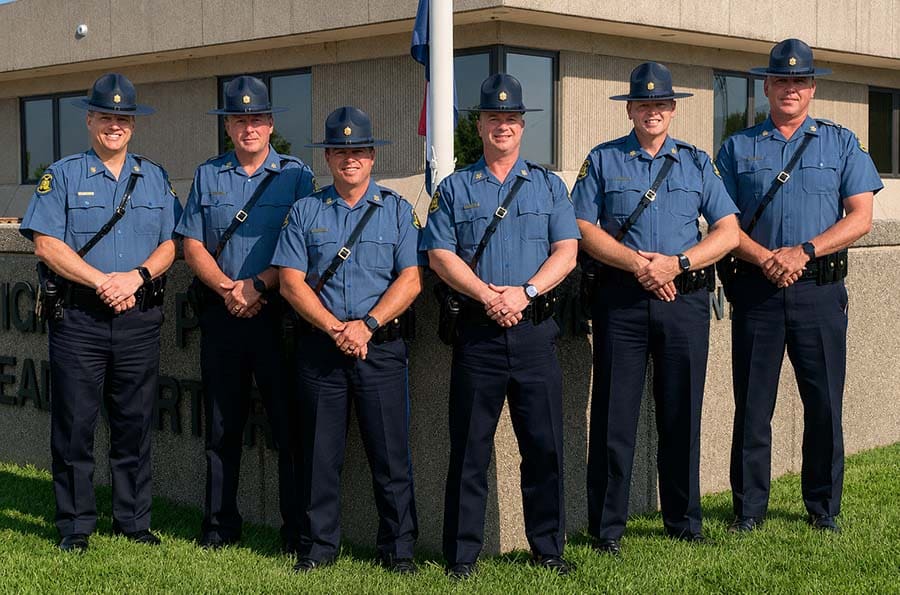
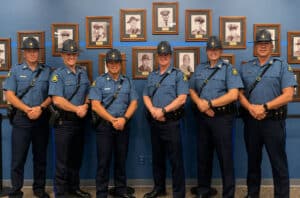
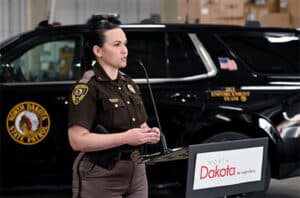

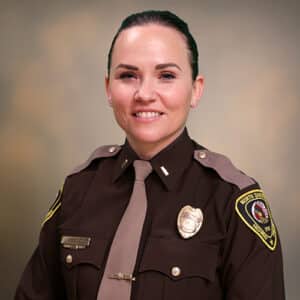


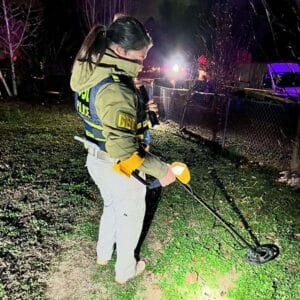
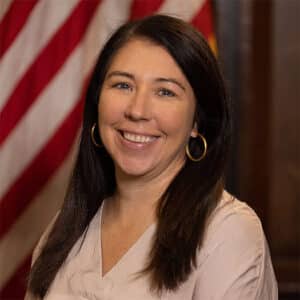
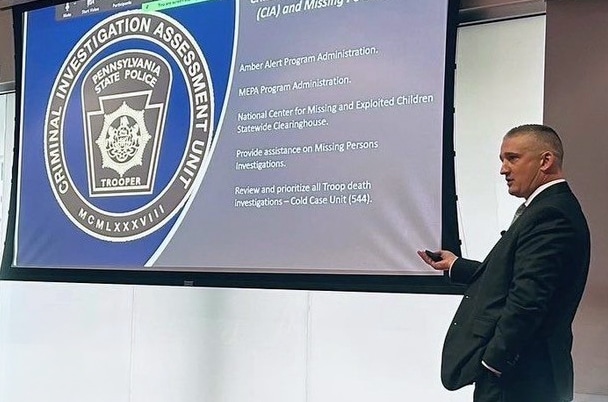
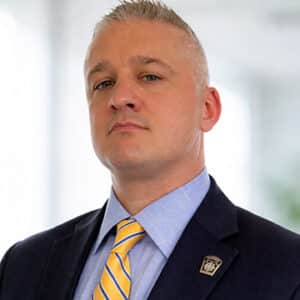
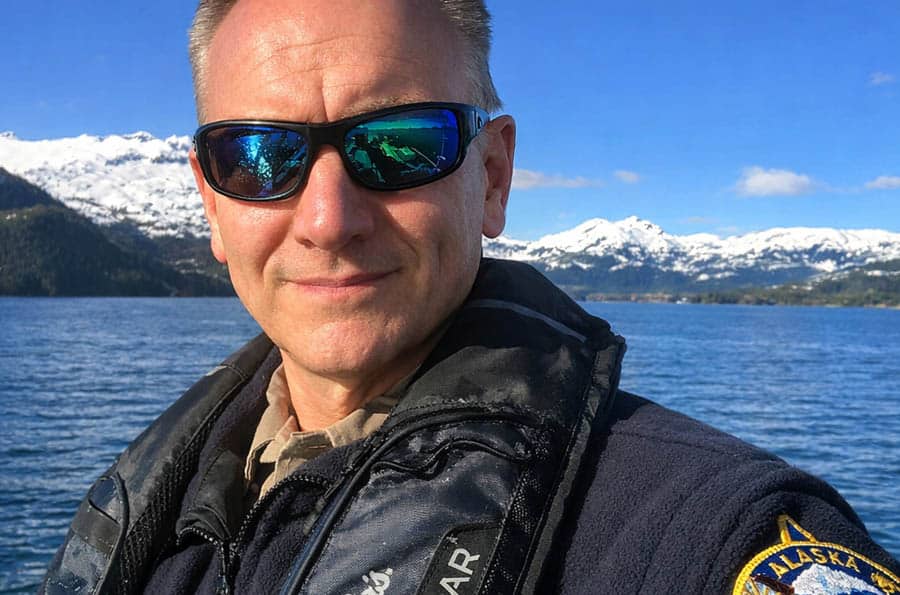
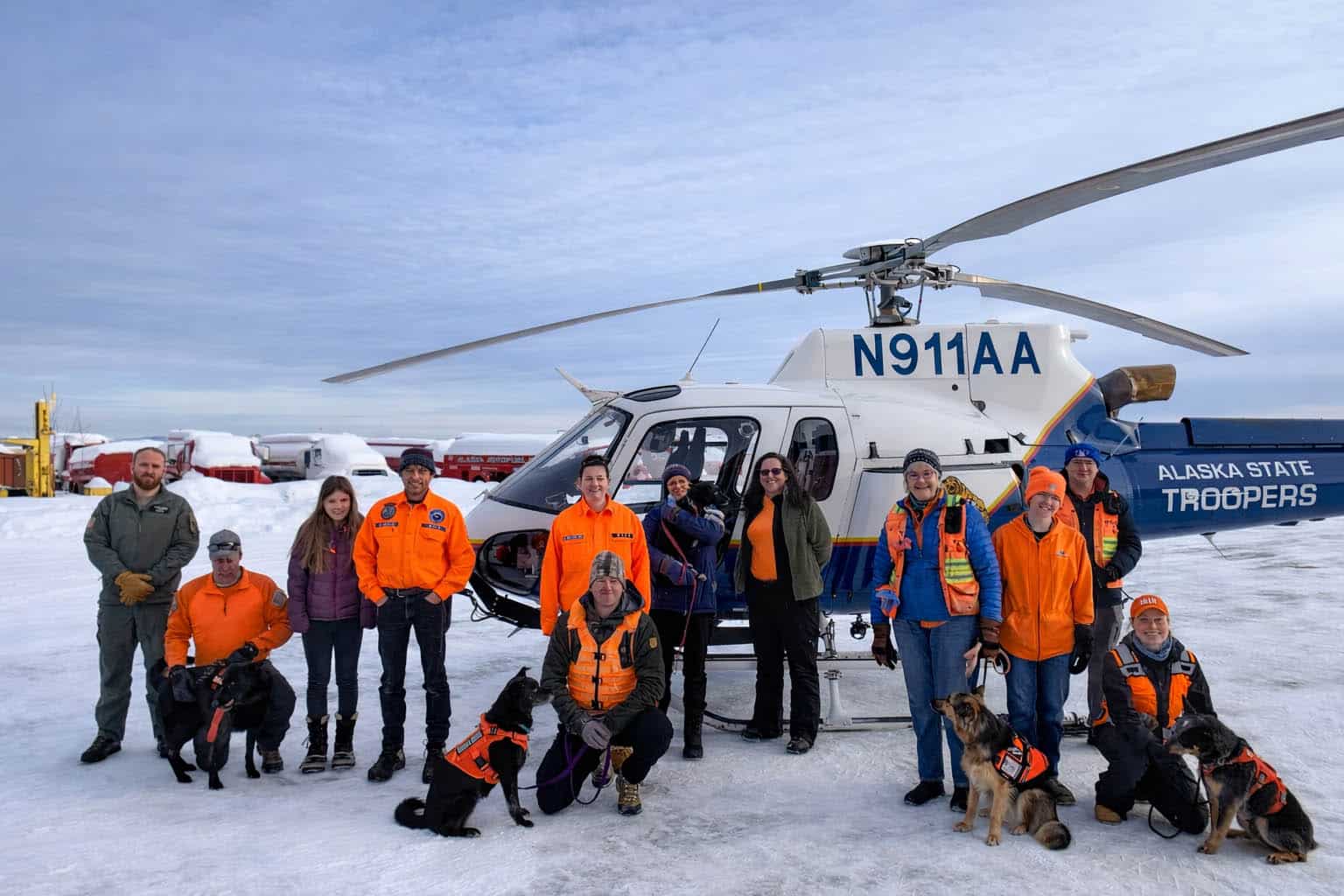

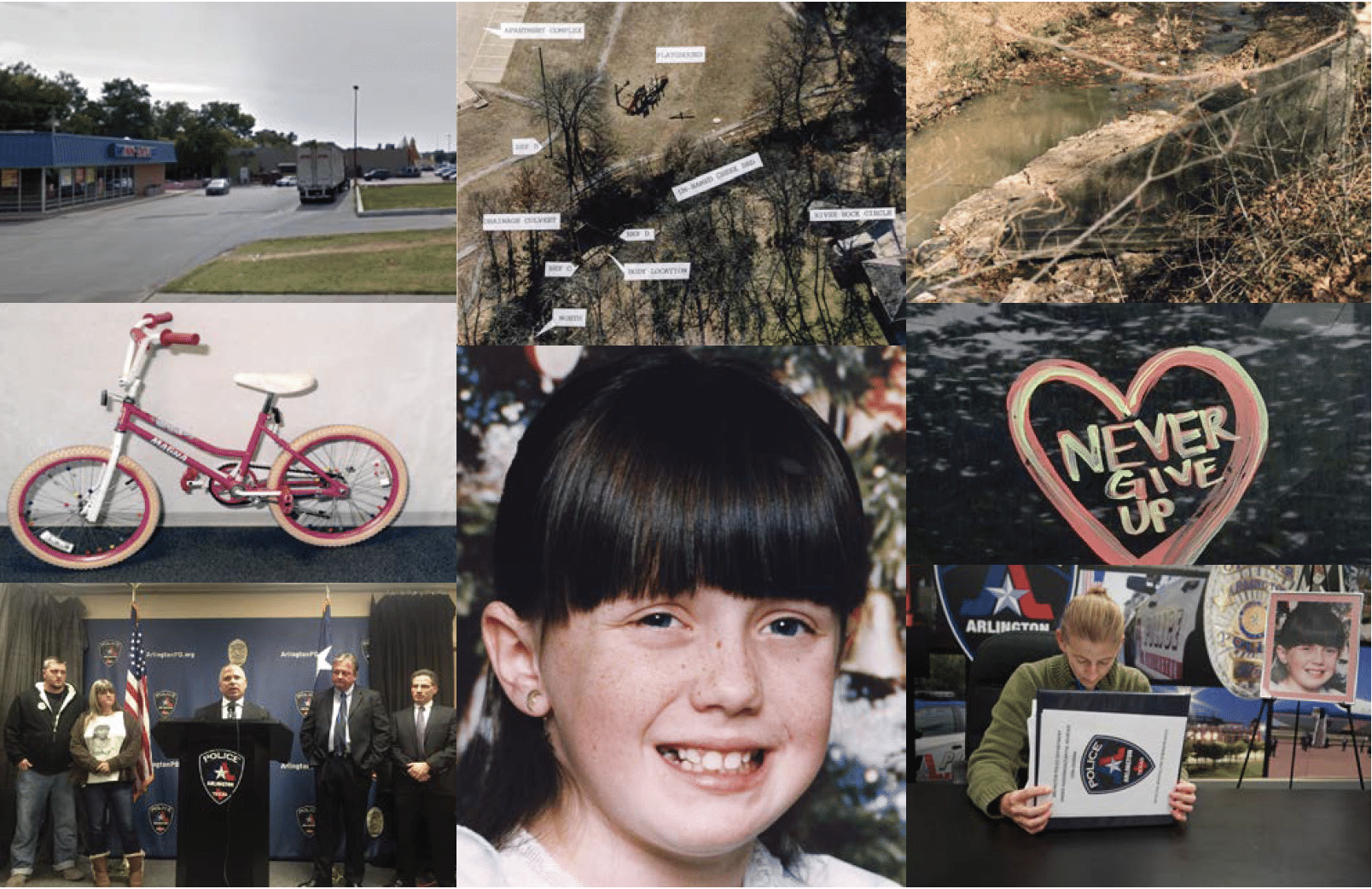
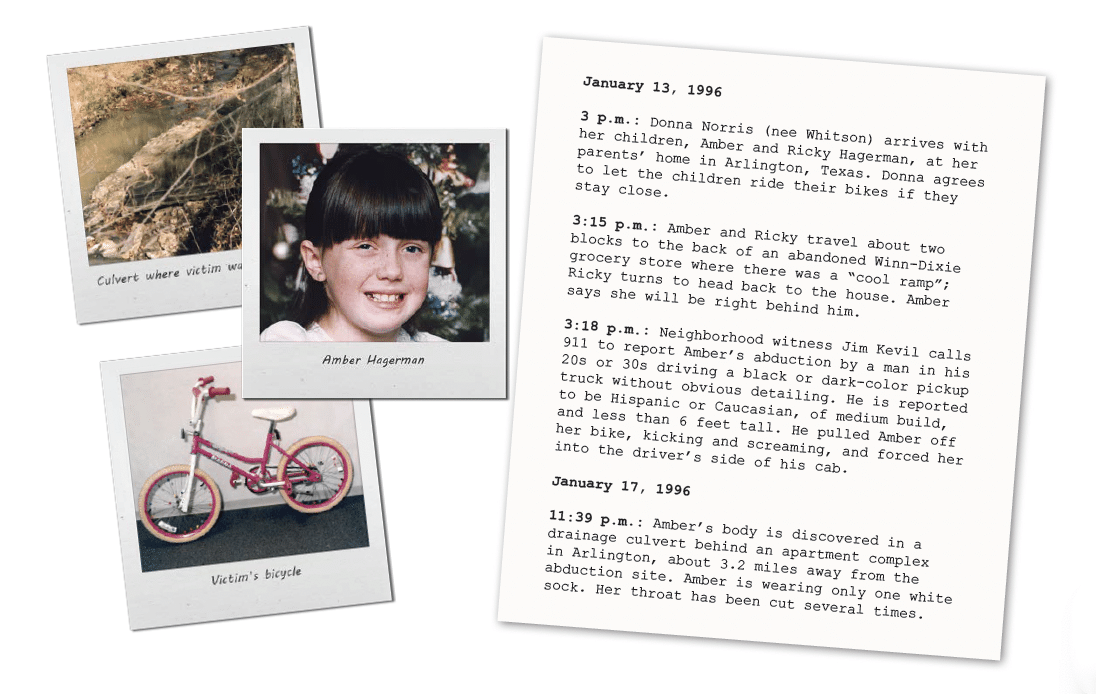

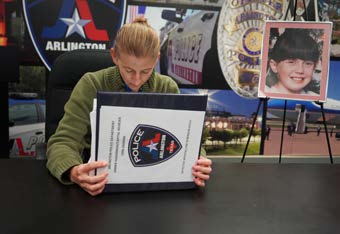





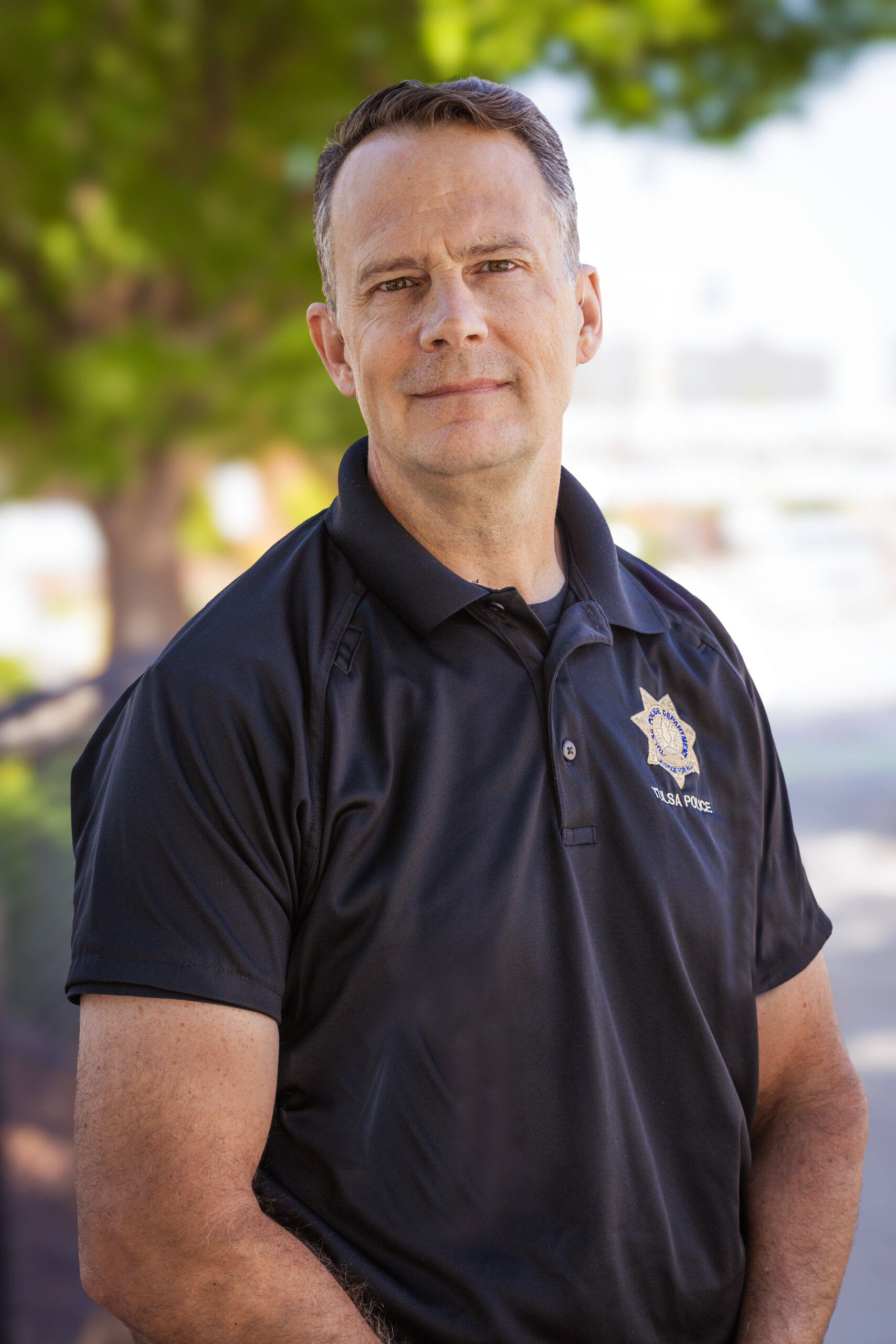



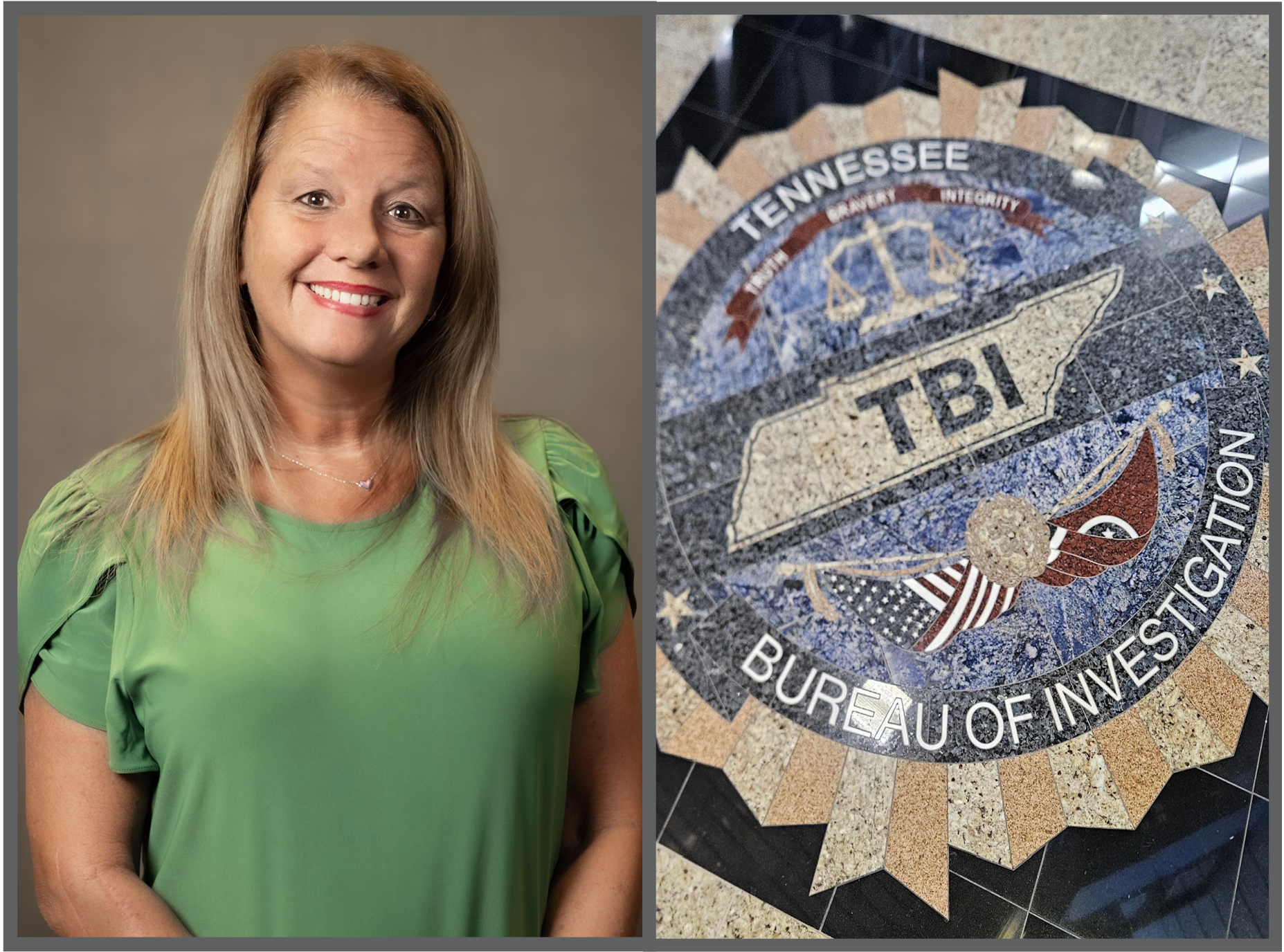



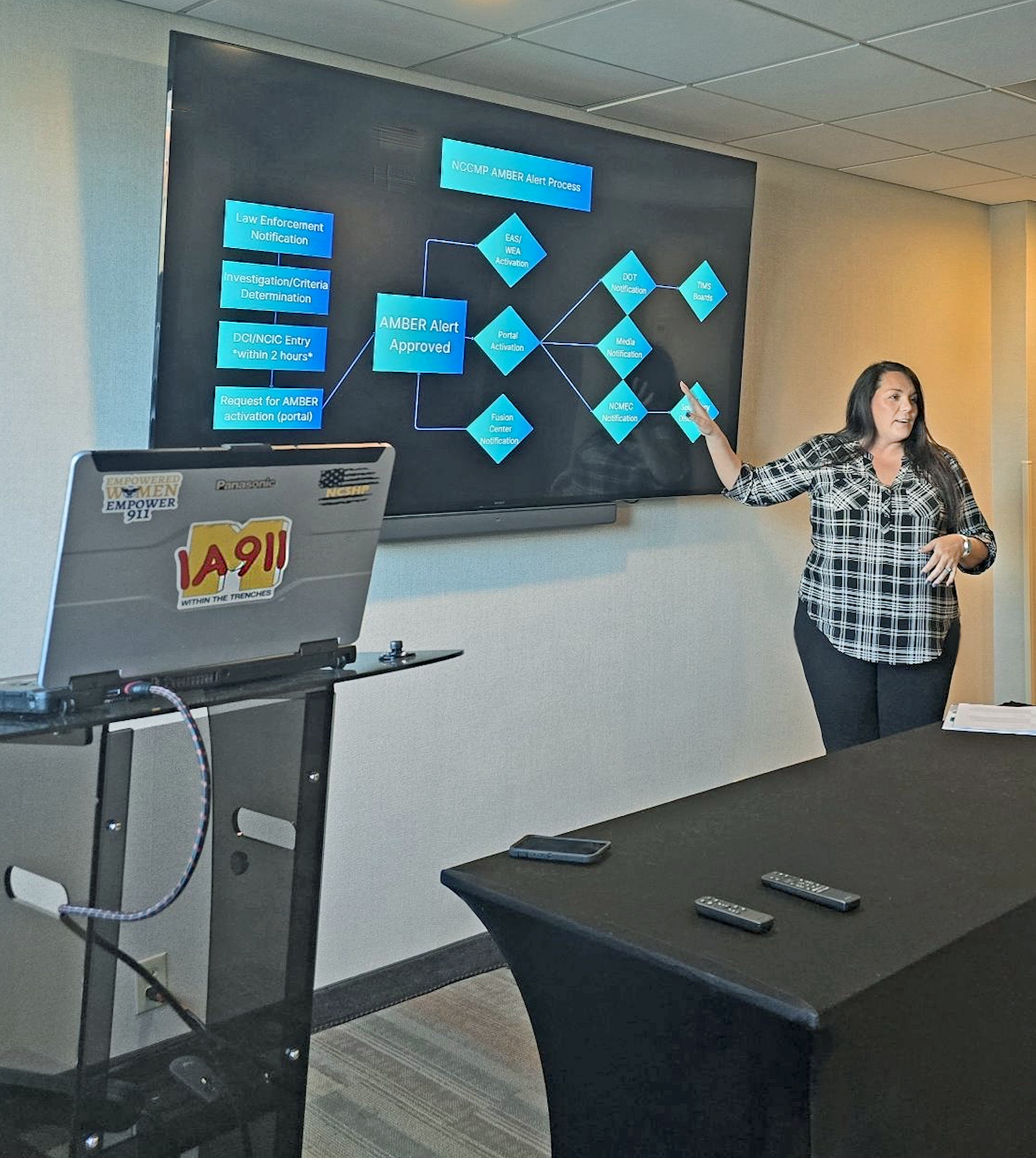

 AATTAP’s course, 911 Telecommunicators and Missing & Abducted Children (“911 T-MAC,” for short) is essential not only for law enforcement and public safety telecommunicators but also for any members of law enforcement and support staff who address public calls for help.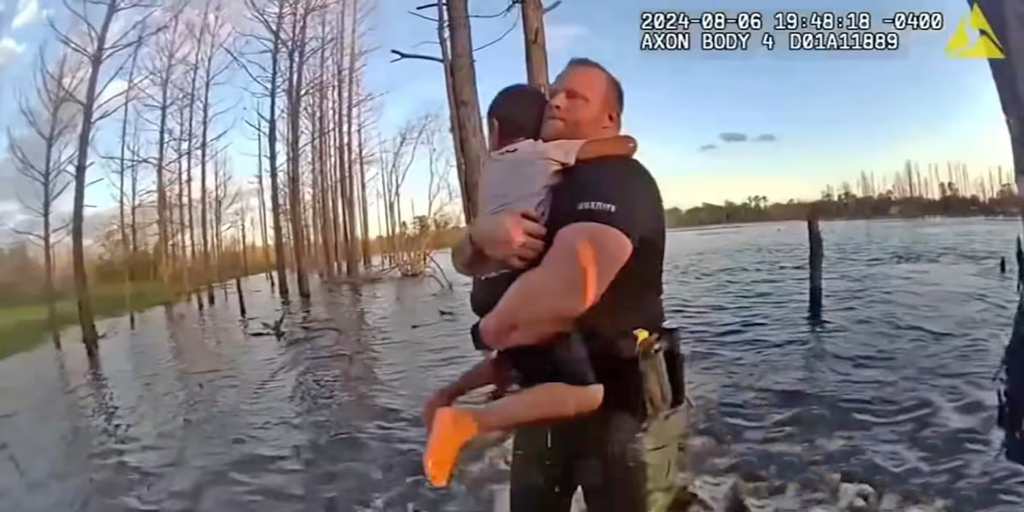
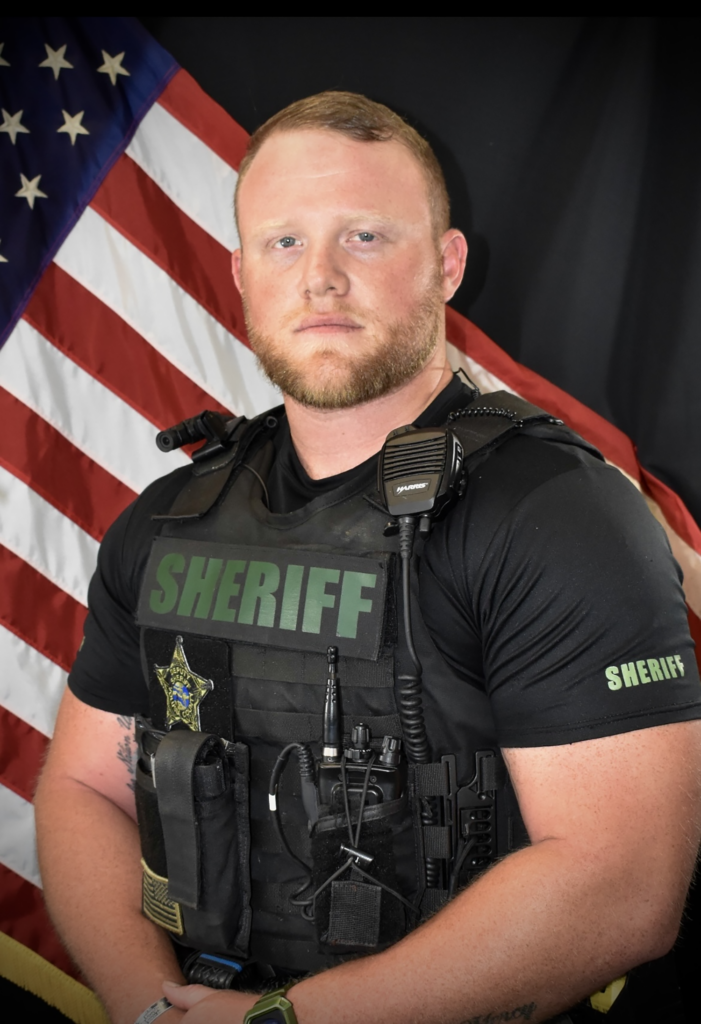
 Brough was first on the scene, followed shortly by another officer who helped search the family’s house to confirm the boy wasn’t there. Dispatched officers soon arrived and the search area expanded.
![SIDEBAR with headline "4 tips: Be in the know about autism" [TEXT] Children with autism spectrum disorder (ASD) wander or go missing at a higher rate than other children—a behavior known as elopement. They may be trying to get away from loud sounds or stimuli, or seeking out places of special interest that pique their curiosities. The National Autism Association (NAA) shares the following tips all first responders should know. • Know the signs: A person with autism may have an impaired sense of danger, and, as such, may wander into water, traffic, or other perils. They may not speak or respond to their name, and may appear deaf. They need time to process questions, may repeat phrases, and may try to run away or hide. And they may rock, pace, spin, or flap their hands. • Know how to search: Act quickly and treat the case as critical since a child with autism may head straight to a source of danger, such as water, traffic, or an abandoned vehicle. First search any nearby body of water, even if the child is thought to fear it. Ask about the child’s likes and dislikes, including potential fears such as search dogs or siren sounds. • Know how to interact: Don’t assume a person with autism will respond to “stop” or other commands or questions. If they’re not in danger, allow space and avoid touching. Get on the child’s level and speak in a reassuring tone, using simple phrases—even if the person is nonverbal. Offering a phone to a nonverbal person to communicate via typing may be helpful. • Know about resources: Beyond agency training, law enforcement officers can find online resources. The National Autism Association offers a downloadable brochure with tips for first responders on its website. Additionally, the National Center for Missing & Exploited Children also offers excellent online resources (visit missingkids.org).](https://amberadvocate.org/wp-content/uploads/2024/10/AA60-sidebar-autism-1.png)
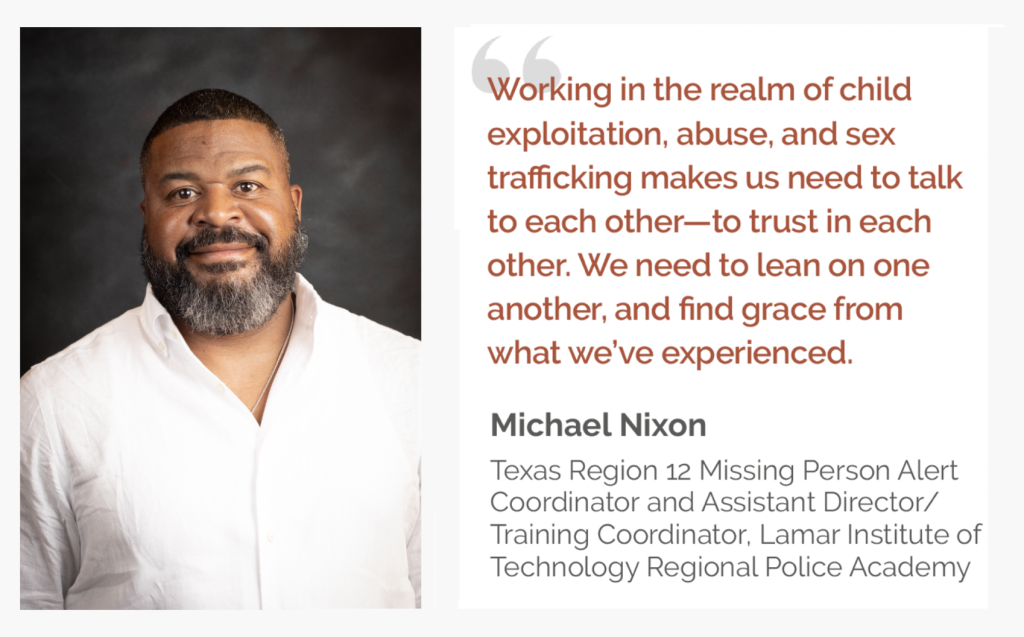
 Share your feelings with a trusted friend or professional.
 What has prepared you for the position?


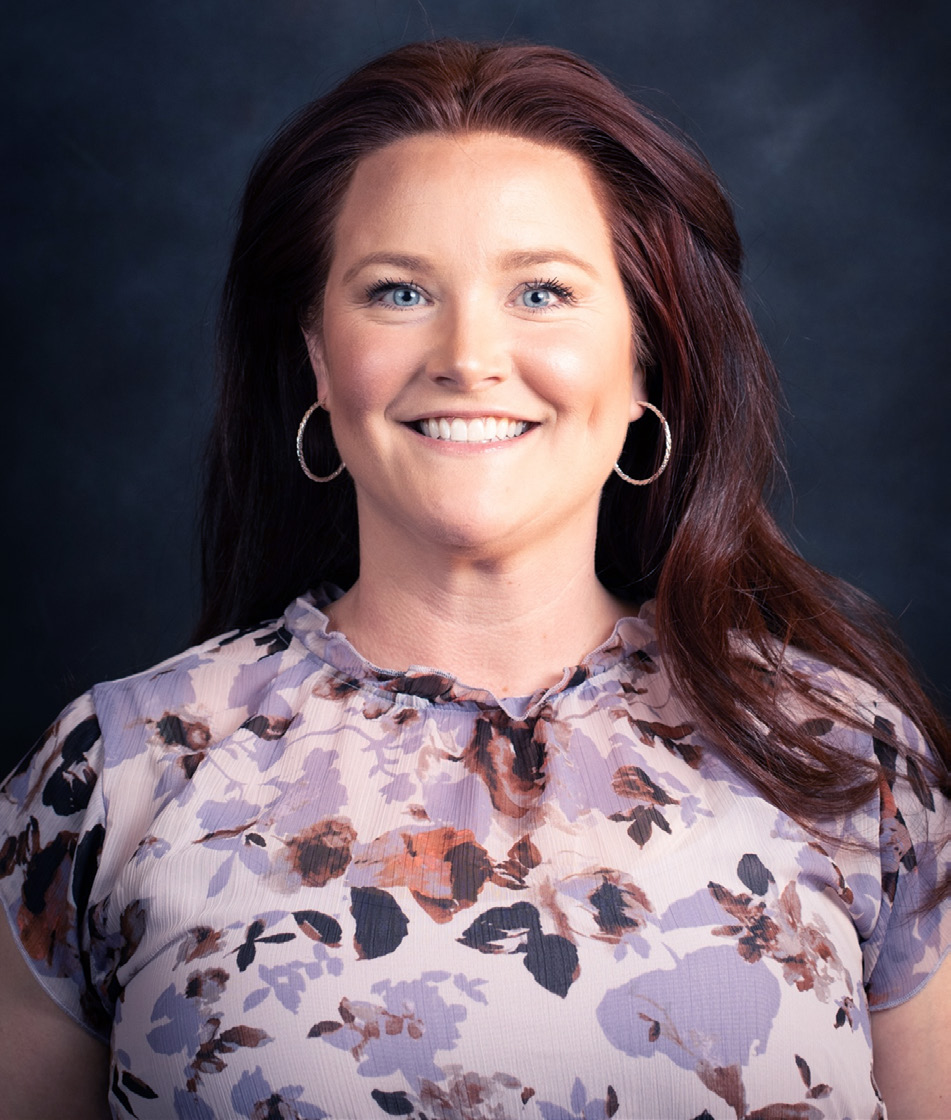
![Information sidebar: Not Invisible Act: Key findings Jolene Hardesty shares thoughts from her Not Invisible Act Commission work. Resources are desperately needed. “We heard testimony from an Alaska Native woman whose sister was murdered in her home—and she lay dead on the floor for three days because no police came to investigate,” Hardesty says. “There are also villages in Alaska that don’t have a fire department; villages that take a State Trooper three days by airplane to reach; and villages where Tribes don’t have a police department—or if they do, officers are not staffed 24/7. These departments lack the funding, resources, people, or skill sets to have an appropriate response, much less an immediate one.” Jurisdiction can be a problematic puzzle. In Oklahoma, where nearly half the land is Tribal owned, “you have a checkerboard of different Tribes, and criminal jurisdiction isn’t clear,” she says. For instance, a crime that happens on the northwest quadrant of a street may be the responsibility of a different Tribe than one on the southwest quadrant. And if the crime is murder, another jurisdiction may need to be involved. “Keeping up with the matrix needed to determine who’s going to respond to a crime can be overwhelming,” she says. Justice is often meted out differently. “Tribal law enforcement and courts are limited in what they can do [and often include social-rehabilitation measures]. If a murder occurs on Indian land, the most jail time imposed [may be] nine years,” Hardesty says.](https://amberadvocate.org/wp-content/uploads/2024/04/16b-Key-Findings.png) How does the way data is collected present a problem?
How does the way data is collected present a problem?


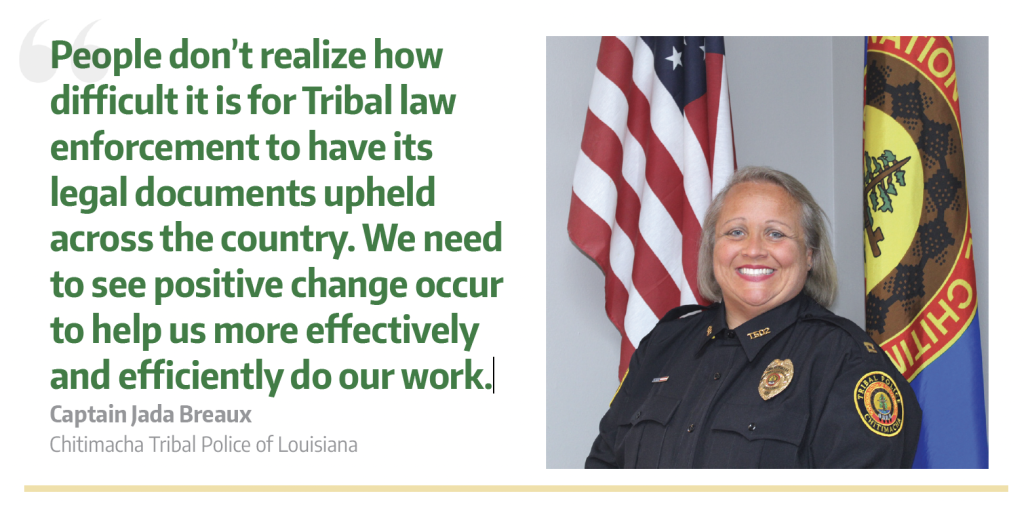
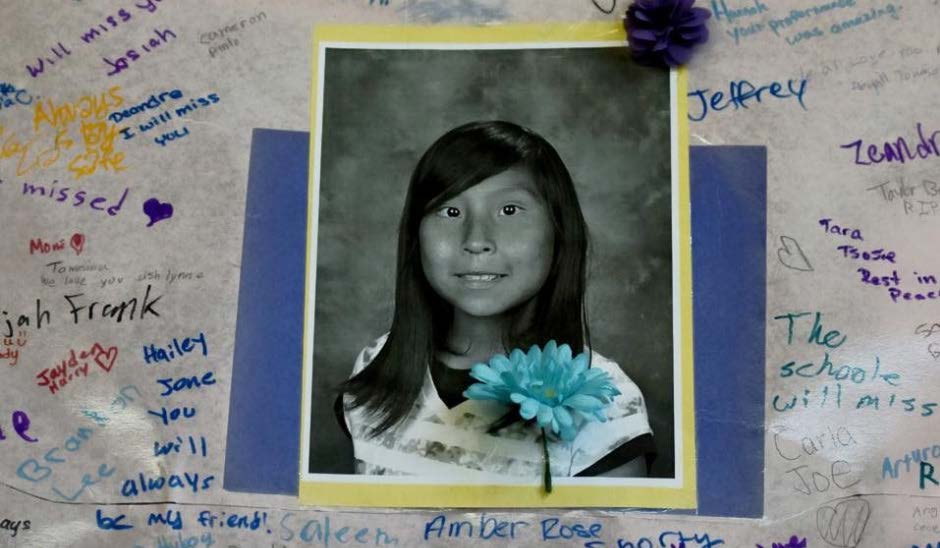
 By Rebecca Sherman
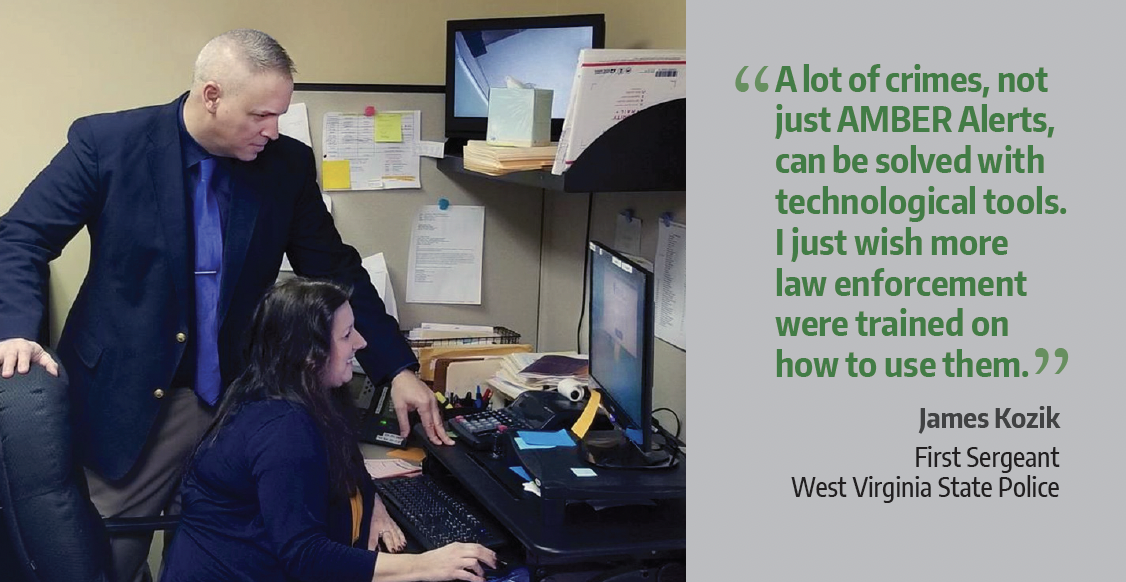 Though he no longer investigates cases himself, Kozik works closely with law enforcement agencies throughout West Virginia when a child goes missing. “I’m the one who gets called in the middle of the night to find out whether an AMBER Alert can be activated or not,” he says. He also triages cases from NCMEC, a heartbreaking job sometimes requiring him to watch unspeakable videos of child abuse. “I just want to reach through the screen and help those kids,” he says.


 Detective Sergeant Patrick Beumler is the Family Violence/ Missing Persons Supervisor for the Glendale, Arizona, Police Department’s Criminal Investigations Division Special Victim’s Unit. He has served with the Glendale Police Department for more than 19 years. Beumler is an Arizona POST Domestic Violence Investigations Trainer and recipient of the Maricopa County Attorney’s Office Distinguished Service Award for his assistance implementing the Domestic Violence Strangulation Program in 2013. In 2014, he received the International Association of Chiefs of Police Leadership Award for First- Line Supervisor Training on Violence Against Women.
 Sara Hennessey has been the New Hampshire AMBER Alert Coordinator since September 2012, and began her service with the New Hampshire State Police as a trooper in 1998. Hennessey is a sergeant in the agency’s Major Crime Unit and commands the Family Services Division. Her husband John is also a commander with the New Hampshire State Police.
 Sarah Krebs has been the Michigan AMBER Alert Coordinator since 2014. At that time, she also served as the Missing Persons Clearinghouse Manager and the Unidentified Remains Manager, which have since been reorganized into three different positions. Krebs began as a Michigan State Police Trooper in 2000 and took on additional duties as a forensic artist in 2002. She later became an investigator before transferring to the Missing Persons Unit. Krebs still offers investigative training and assists with cold cases.


 Shea Reliford has overseen the Indiana Clearinghouse for Missing Children & Missing Endangered Adults since September 2016. He is also a First Sergeant with the Office of Intelligence and Investigative Technologies and serves as the Administrative Officer for the Indiana Intelligence Fusion Center. He began his career with the Indiana State Police in 2006. Previous duties include serving as a state trooper, police academy counselor and instructor, human resources sergeant, field training officer, recruiter, emergency vehicle operations instructor and background investigator.
 Margie Quin was promoted in 2007 to Assistant Special Agent in Charge at the Tennessee Bureau of Investigation (TBI) which included duties as the state AMBER Alert Coordinator and Missing Person Clearinghouse Manager. She also began working on human trafficking cases in 2010. Quinn specialized in electronic surveillance for drug cases when she started with TBI in 1998. Prior to joining TBI, Quinn served for 5 years with the Cobb County, Georgia, Police Department.