

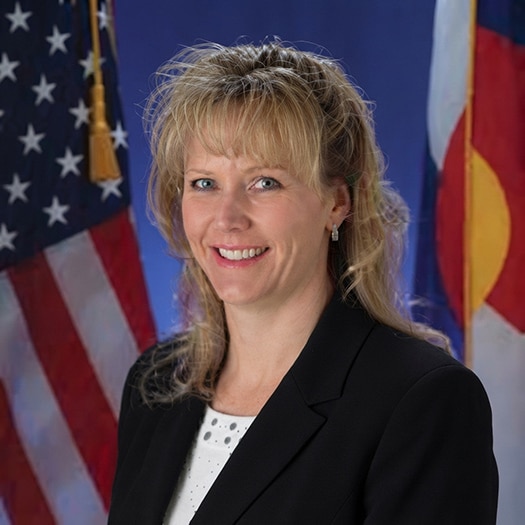
Kristina Bomba became Colorado's AMBER Alert Coordinator when very few states had an AMBER Alert program. Bomba had been working as an intelligence analyst for the Colorado Bureau of Investigation (CBI) for four years when she was asked to help launch the nation’s eighth statewide child abduction alert on April 1, 2002.
“It was a learning experience,” Bomba said. “There were only a few states to ask, ‘how do you do this?’ and find out what was working.”
Colorado was the first state where the legislature passed a law to create an AMBER Alert system. Lawmakers put the plan in place, but Bomba had to reach out to other partners to make it work. “We had to clarify everyone's role,” she said.
Broadcasters wanted a single point of contact instead of having more than 200 law enforcement agencies issuing an alert. They also wanted to make sure that measures were in place to ensure each alert was legitimate.
It started with a three-step process: the law enforcement agency would contact CBI; CBI would call the radio station in charge of the state's Emergency Alert System; and CBI would send emails and faxes to law enforcement and broadcasters.
“It was a big learning curve for law enforcement,” said Bomba. “Initially they were calling us on everything. We had to teach them the criteria and whether the alert could be used.”
For example, Colorado issued 12 AMBER Alerts in 2003 but lately only three or four alerts are activated each year. “I think we have done better because of education, and everyone now understands the criteria better,” added Bomba. “The public has also been receptive to the AMBER Alert because we have been cautious not to overuse it.”
Colorado now has a much more robust system to distribute AMBER Alerts. The alerts go out to electronic highway signs, lottery terminals, local busses, trains and underground utility companies. The public can register to receive the alerts by email, and a new website will automatically post the alerts online and send the messages to the public through an RSS feed.
Beyond changes in technology, Bomba has also noticed more states using the same criteria for the AMBER Alert. “Everybody was all over the board. Now we are similar,” she said. Colorado legislators had to change the state's AMBER Alert law so Colorado could issue alerts originating out of other states.
Even though she has been around longer than most people in the AMBER Alert Program, Bomba is still eager to learn from others and share with others. “Networking is probably the most important thing you can do,” she said.
Colorado's first AMBER Alert coordinator grew up wanting to be in law enforcement, even visited with a private investigator specializing in missing person cases when she was in high school. Now she is the mother of a 6-year-old son and nearly 2-year-old daughter and finds enormous satisfaction bringing abducted children home. “I am more sensitive since I had children,” she said. “I have more of a connection with the cases.”
Editor’s Note: Shortly after Bomba was interviewed for this story she was transferred to an analyst position at the Colorado State Police. CBI Assistant Director of Investigations Steve Johnson wrote this when he announced the change: “I cannot begin to describe the impact Kristina has had for children and victims of crime in her 15 and 1/2 years with CBI. Kristina has raised the bar for us, and we are a better organization for her efforts and dedication and will look for many of her traits and qualities in her replacement.”