



“Progress moves at the speed of trust.”
For Lieutenant Jenna Clawson Huibregtse, this principle is the foundation of effective emergency response. Serving with the North Dakota Highway Patrol (NDHP) and operating as the state's AMBER Alert Coordinator/Clearinghouse Manager, she navigates the intense intersection of urgent missing persons cases and strict policy enforcement. From pioneering cultural liaison programs to implementing North Dakota's newly established Feather and Missing Endangered Persons Alerts, Clawson Huibregtse shares her expert perspective on managing high-stakes alerts, overcoming interjurisdictional complexities, and maintaining resilience in a demanding field.
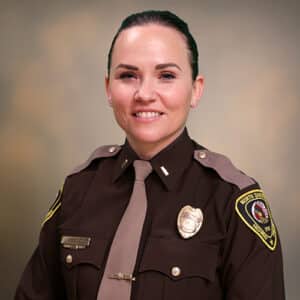
Could you share a bit about your current role, the region you serve, and your background?
As a NDHP lieutenant, my responsibilities span public information, social media, dignitary protection, Capitol security, recruitment, and the crash/victims assistance program. I am also North Dakota’s Missing Persons Clearinghouse Manager/AMBER Alert Coordinator, overseeing statewide activations including Blue, Silver, Feather, and Missing Endangered Persons Alerts.
I grew up in Plentywood, Montana, and began my career with the agency in 2015 after earning a master’s degree from North Dakota State University. Proudly, I am a first-generation college graduate and a first-generation law enforcement officer.
What led you to your position as an AMBER Alert Coordinator and Missing Persons Clearinghouse Manager?
I always desired a dynamic career, and my path was heavily influenced by personal and community experiences. After joining the NDHP in 2015, I helped create our Cultural Liaison Officer Program following the 2016 Dakota Access Pipeline protests. The program's goal was to build relationships, increase trust, and reduce jurisdictional complexities with Tribal nations. Since then, I have worked closely with local, county, Tribal, state, and federal partners.
Throughout my tenure, I have served as a patrol trooper, cultural liaison officer, planning officer, safety and education officer, and dignitary protection officer. Managing the Clearinghouse has been exceptionally rewarding, allowing me to strengthen statewide communication while helping locate missing and endangered individuals.
How has the Clearinghouse approached training and communication since the introduction of new adult alerts?
The Feather Alert and Missing Endangered Persons Alert were established during the 2025 legislative session to address a critical gap for endangered adults 18 and older at risk of serious bodily injury or death. While we have utilized these alerts a few times over the last year, we maintain strict activation criteria, particularly concerning Wireless Emergency Alerts.
Expanding a clearinghouse mandate naturally impacts day-to-day operations, but our successful implementation stems from pre-existing relationships with law enforcement agencies and Tribal nations. One of my personal rules is that relationships must be built before an emergency occurs; trying to forge them in the middle of a crisis rarely works well.
Following the legislation, our team took proactive steps:
- We conducted more than 15 training sessions directly in communities across North Dakota.
- The training was provided to licensed law enforcement officers, emergency managers, and telecommunicators.
- We delivered training to four of the five Tribal nations that share geography with North Dakota, with the fifth pending scheduling.
- We emphasized front-end education to clarify alert criteria, reducing unqualified requests and helping agencies navigate cases that fall into a gray area.
- We actively guided local agencies to maximize existing resources like reverse 911 systems, social media, and media releases.
With every alert request, we continue learning and refining the process. This success is a shared team effort among the NDHP, the Bureau of Criminal Investigation, the State Emergency Communications Center, and the North Dakota Department of Emergency Services.
What essential skills make someone effective in this demanding role?
Coordinators require strong relationship-building abilities, excellent communication skills, and the capacity to lead with empathy while making firm, decisive choices. These rapid-moving cases involve numerous partners and require balancing extreme urgency with strict policy compliance. Success demands building trust beforehand and sustaining it under pressure. The role also brings heavy public scrutiny, especially when cases do not meet alert criteria, making a strong support system essential for staying grounded and effective.
What is the biggest public misconception about issuing alerts?
The public often believes law enforcement can activate an AMBER Alert or Missing Child Advisory anytime a child goes missing. In reality, these tools are reserved for the highest-risk scenarios where immediate public awareness can save a life, and they are only utilized when public assistance is actively needed.
Another misconception is that an unissued alert means law enforcement is ignoring the case. Extensive behind-the-scenes investigative work, agency coordination, and local outreach happen continuously without a statewide broadcast being activated. Overusing alerts outside established guidelines causes "alert fatigue," leading the public to ignore true emergencies. Our goal is always to use the right tool at the right time.
Can you share a specific success story?
One profound success involved an AMBER Alert issued from the Fort Berthold Reservation for a 2-year-old child trapped in the backseat of a stolen vehicle. The rapid alert activation generated multiple public sightings and made the suspect aware of the massive law enforcement response, resulting in the child's safe return. That outcome hinged on several factors: quick reporting, swift law enforcement action, and seamless interagency partnerships. Cases like that reinforce why these alert systems exist and how important timing can be.
We also handle a high volume of Silver Alert requests. By working these cases aggressively from the beginning with local technology and resources, we often resolve them safely before a public broadcast even becomes necessary. Ultimately, our extremely high success rate comes directly from collaboration between law enforcement, emergency communications, media, Tribal nations, and an attentive public.
How do you manage the stress of the job and recharge?
This heavy work stays with you, especially cases involving vulnerable children. No one does it alone. I rely on trusted colleagues and focus on the core mission: protecting vulnerable people and supporting families on some of the worst days of their lives. I stay motivated by watching local, Tribal, state, and federal partners unite to bring loved ones home.
To recharge, I coach youth sports, stay active, and prioritize intentional time with my family. Law enforcement can easily consume your entire identity; maintaining balance allows me to keep perspective and continue showing up for the communities we serve.
What advice do you have for fellow coordinators and new professionals?
- Build relationships before you need them, because progress moves at the speed of trust.
- Invest time in getting to know your partners before a crisis hits, as these collaborative partnerships cannot be created in the middle of an emergency.
- Remember that policies, criteria, and technology matter, but communication and empathy matter just as much when guiding families and agencies through difficult, fast-paced decisions.
- Stay collaborative by finding mentors, asking questions, and being willing to learn from every single case.
- Stay humble and never lose sight of why the work matters in the first place.
Connect with Lt. Jenna Clawson Huibregtse through the Portal.