

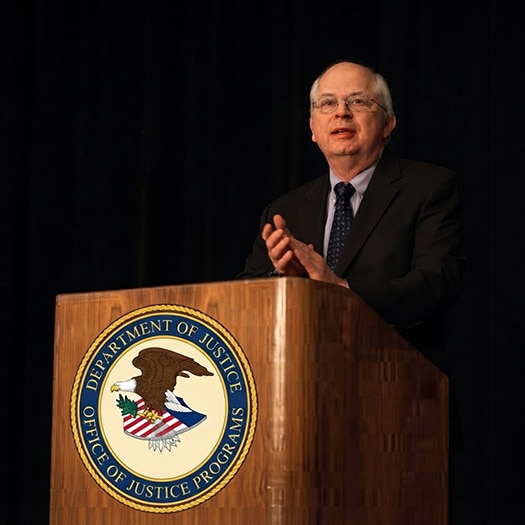
An unprecedented gathering of more than 175 Tribal representatives from 54 Tribes and 20 states took place in Santa Ana Pueblo, New Mexico, to develop a multiagency approach to protecting Native American children. The National Symposium on Child Protection in Indian Country was held March 9-11, 2010, to confront faltering graduation rates and increased incidents of suicide, rape, child abuse, and abduction.
“We need to stop the rising crime rate, especially against women and children,” said Assistant Secretary of Indian Affairs Larry Echo Hawk, a member of the Pawnee Nation. “The real agenda is to empower tribal governments so they can govern their own people. We need to teach parents about parenting skills so children are safe in their homes.”
The Department of Justice’s Office of Juvenile Justice and Delinquency Prevention sponsored the symposium as part of the AMBER in Indian Country Initiative (AIIC). The initiative was recently expanded to address the following challenges:
- Abuse, Neglect and Exploitation
- Runaway and Thrownaway Children
- Family Violence
AIIC is now offering additional training concerning high-risk runaways, including Native American trackers, bloodhounds and Tribal border issues. “The idea is to create the same level of service and safe return of children in Native American Communities as what is found in any other community,” said AIIC Liaison Jim Walters. “We always wanted a voice for children in Indian Country.”
Gena Tyner-Dawson, Senior Advisor to the Assistant Attorney General for Tribal Affairs, announced that more grants are available to help tribes protect children. “We want to improve public safety, reduce alcohol crimes, create correctional facilities, provide more assistance to sexual assault victims, reach out to victims of elder abuse and prevent juvenile delinquency,” said Tyner-Dawson. “We have one goal: to improve public safety in Tribal communities.”
U.S. Attorney for New Mexico Greg Fouratt encouraged law enforcement leaders to become involved in the lives of children so they will be trusted when a crime is committed. “We have to introduce ourselves to kids before they ever meet a prosecutor, judge or jury,” said Fouratt. “They desperately need our help.”
Native American Children’s Alliance Executive Director Linda Logan shared that she was a victim of child sexual abuse, as was her mother, grandmother and two sisters. She also identified ways to stop Indian children from being abused. “Tribal leaders need to acknowledge family abuse is a problem,” said Logan. “We also need to hold offenders accountable in a way that is fair, swift and sure.”
Under federal law, the maximum penalty for child abuse in Indian Country is one year in jail and a $5,000 fine. “What we are doing now is not working,” said Jerry Wiseman-Foley, a Tribal prosecutor in Oklahoma. “We need to look at our own ways to address what is going on with our people.”
Indian Pueblo Council Chairman Joe Garcia said the problems will not be addressed unless Tribes, states, and the federal government work together. “We cannot do it alone,” said Garcia. “People must work together or we won’t make a dent in the system.”
Representatives from the Native American Community Academy (NACA) and the National Indian Child Welfare Association (NICWA) also participated in the symposium to help in their advocacy work for Tribal communities and children.