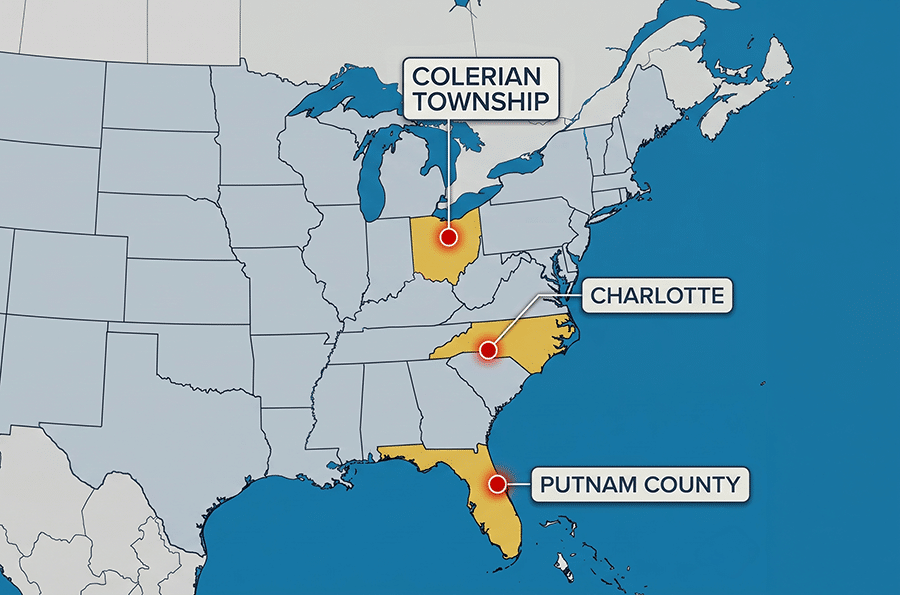

Map of the United States with Colerian Township, Ohio, Charlotte, North Carolina, and Putnam County, Florida marked.

On March 13, a joint effort by the FBI, Ohio Bureau of Criminal Investigation, and local police led to the successful recovery of a 16-year-old from Colerain Township, Ohio, in a Palatka, Florida, hotel. Investigators traced a suspect from Tennessee to Florida after quickly locating a vehicle connected to the case. A central factor in the disappearance involved encrypted messaging platforms, including Session and Snapchat, which the suspect used to quietly contact the teen. The deployment of the FBI Hostage Rescue Team and interstate coordination clearly highlight the value of rapid intelligence sharing. Law enforcement officials now strongly advocate for active digital monitoring to prevent future online threats.

The suspect used fully encrypted applications to contact the teenager. One platform used, Session, requires no phone number or email address to register. This creates a highly secure channel that easily hides conversations from parents and law enforcement. This covert digital behavior serves as a strong precursor to physical abduction. It demonstrates how modern predators bypass normal safety boundaries to lure vulnerable youth.

The case quickly expanded across state lines, moving from Ohio to Tennessee. When the suspect escaped a raid by the FBI Hostage Rescue Team at his Tennessee home, officials immediately sent a regional alert. This alert focused entirely on the suspect's vehicle. FBI agents and local police in Florida spotted the car in a hotel parking lot, leading to the rescue. Fast intelligence sharing across state boundaries remains the most effective tool in rapidly moving investigations.

Finally, law enforcement stressed the need for preventative digital technologies. Officials urged the use of location-tracking applications, such as Life360, to help keep teenagers safe. Predators are increasingly willing to travel hundreds of miles to exploit minors. Active parental monitoring tools and rapid law enforcement vehicle alerts are necessary strategies to counter these growing online threats.

Key Findings

  • Suspect utilized fully encrypted platforms like Session and Snapchat to communicate with the victim without detection.

  • The investigation crossed multiple state lines, moving from Ohio to Tennessee, and finally to Florida.

  • A regional alert for the fleeing Tennessee suspect's vehicle directly resulted in the successful rescue in a Florida hotel parking lot.

  • The mobilization of the FBI Hostage Rescue Team indicates the elevated threat level involved in recovering the teenager.

  • Law enforcement officials heavily recommend proactive tracking tools, such as Life360, to help prevent similar digital enticements.

Sources

  • FBI Press Release (Mar 13, 2026): FBI, Colerain Police, and BCI Announce Safe Rescue of Missing Teen (Link)

  • Action News Jax (Mar 13, 2026): Missing Ohio teen found safe at Palatka hotel; second teen found in Putnam County within a week (Link)

  • Criminally Obsessed Podcast (Mar 10, 2026): Transcript of The Terrifying Disappearance of Madison Fields — Her Parents' Plea for Help (Link)

"In that moment, I knew I wanted to dedicate my life to helping protect children like him, and I decided I wanted to become a police officer." For Assistant Special Agent in Charge Lisa Vorrasi, Georgia's AMBER Alert Coordinator, a childhood memory of a missing child flyer forged a 20-year career in law enforcement. Juggling intelligence operations at the Georgia Bureau of Investigation with the urgency of missing child investigations, Vorrasi knows that success requires preparation, resilience, and strong alliances. In this Q&A, she shares her strategies for managing high-stakes crises, the vital importance of building partnerships before disaster strikes, and how she finds joy off the clock. 


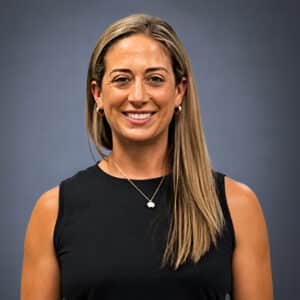
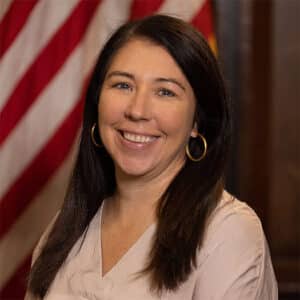
Lisa Vorassi profile pic
Assistant Special Agent in Charge Lisa Vorrasi, Georgia's AMBER Alert Coordinator

What inspired you to dedicate your career to law enforcement and protecting vulnerable children?

Growing up in Wisconsin, a seemingly small event profoundly impacted the direction of my life. One day after school, I found a flyer in the mail with an image of a young boy about my age. My parents explained he had been kidnapped, and the flyers were distributed to help find him. I remember crying in my room for hours, thinking of that happy boy in the picture who was now scared and separated from his family. Even though I had never met him, the pain was very real. In that moment, I knew I wanted to dedicate my life to protecting children like him, and I decided to become a police officer.

What is the most significant challenge you encounter in your daily work, and how do you navigate it?

Serving as the Georgia AMBER Alert Coordinator represents only a portion of my responsibilities. I am also a supervisor at the GBI’s Georgia Information Sharing and Analysis Center, one of 80 intelligence fusion centers across the United States. I also supervise the Georgia Bureau of Investigation's Information Sharing and Analysis Center, one of about 80 intelligence fusion centers in the U.S. I help oversee a nearly 65-person unit providing criminal and counterterrorism intelligence to our partners. Working in metro Atlanta brings unique challenges, including a massive, diverse population and a sheer volume of complex investigations.

However, my most significant daily challenge is prioritizing tasks. Because of the nature of our work, emerging issues of varying urgency constantly arise. Navigating this requires continuous reprioritization, focusing on "what is important now"—even as that changes by the minute. It requires flexibility, organization, and learning to give myself and others grace.

The nature of this work can be heavy. What keeps you motivated and focused on the mission?

Law enforcement officers are often present on the worst day of someone’s life. For a long career, you must stay grounded in the positive impact you're making rather than dwelling on the sadness. One of the most rewarding aspects is the sense of righteous conviction when victims of horrific crimes receive justice. Holding predators accountable is a powerful motivator, but recognizing small wins—like helping a victim access service, getting a confession, or just listening to someone—is equally vital.

Some days are harder than others, but we are making a difference, one child at a time. If we improve even one life, it is worth the setbacks. Sometimes, getting through tough days comes down to a decent cup of coffee, a good night’s sleep, and a lot of laughter.

How do you manage stress and find joy outside of work?

A great blessing has been my involvement with Special Olympics Georgia's Law Enforcement Torch Run. For 16 years, it has provided a deep source of joy and purpose. The athletes bring incredible positivity, and being part of that community has been life-changing. I also organize Hockey Fun Day, a fundraiser combining my love of ice hockey with my passion for the Special Olympics.

Additionally, my 10-year-old son, Nolan, and I are unified partners on a soccer team, North Fulton United. Stepping onto the field on Sunday afternoons makes the stress of the week fade away.

Recently, I was honored to participate in the 2025 Special Olympics World Winter Games in Turin, Italy. I joined 80 law enforcement officers worldwide to run the Flame of Hope across northern Italy before the opening ceremony. It was a powerful reminder of this movement's global impact. I also recharge by traveling, playing hockey, coaching two Atlanta Ice Lynx girls' youth hockey teams, and spending time with my family and animals.

What advice would you offer to your counterparts across the country or someone brand new to this field?

I have been with the GBI for 20 years, but I have only served as the AMBER Alert Coordinator for the past three years. My biggest lesson is the importance of building relationships with law enforcement partners before a critical incident occurs. The side of the road, in the pouring rain, in the middle of the night, is not the time to establish those connections.

Child abduction investigations evolve rapidly, and every second matters. Knowing you can call a trusted partner directly in the middle of the night makes a tremendous difference. I am especially grateful for the partnerships among AMBER Alert Coordinators and Missing Children Clearinghouse Managers across the country, particularly in Region 2. They are an invaluable resource. Stay engaged, communicate regularly, attend training, and exchange ideas.

Biography

Assistant Special Agent in Charge Lisa Vorrasi of the GBI is assigned to the state’s Fusion Center, the Georgia Information Sharing and Analysis Center. A 20-year veteran of the GBI, she serves as Georgia's AMBER Alert Coordinator and Child Abduction Response Team Commander. She previously served as an ASAC at the Atlanta Regional Office and as an agent for the Atlanta-Carolinas High Intensity Drug Trafficking Area and the Atlanta Regional Office.

Vorrasi holds a bachelor’s degree from the University of Dayton and a master’s degree from Georgia State University. She initiated the GBI’s involvement in the Special Olympics Georgia Law Enforcement Torch Run in 2010 and continues to serve as the agency coordinator and is the Co-Assistant Director for the Special Olympics Georgia Law Enforcement Torch Run Executive Council. Additionally, Vorrasi serves as the long-standing secretary on the executive board of the DeKalb County Chiefs' Association.


Connect with Lisa Vorassi through the Portal.


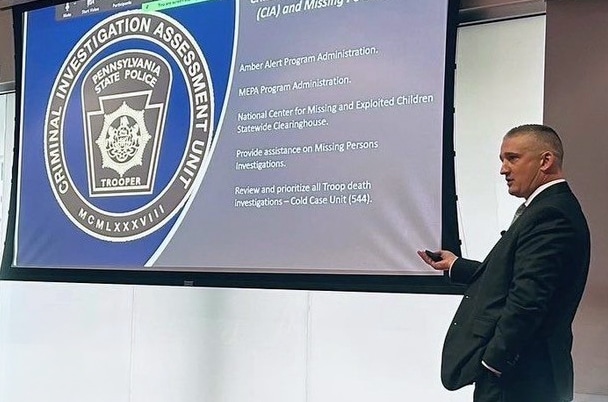
Corporal Todd McCurdy teaching a class standing near a projection screen with a bio slide
Corporal Todd McCurdy teaching a class.

"Everything starts with compassion." For Corporal Todd McCurdy, Pennsylvania’s AMBER Alert Coordinator and supervisor of the State Police's Criminal Investigation Assessment and Missing Person units, this is more than a motto—it’s the foundation of his work. Meeting victims on their worst days, McCurdy understands the heavy toll of abduction cases. In this Q&A, he discusses his path to this demanding role, clarifies common misconceptions about the alerting process, and offers no-nonsense advice for his fellow coordinators.


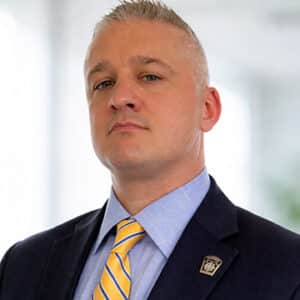
Corporal Todd McCurdy headshot
Corporal Todd McCurdy

Could you share a bit about your current role, the region you serve, and where you grew up?

I supervise the Pennsylvania State Police Criminal Investigation Assessment (CIA) Unit and the Missing Person Unit, which includes serving as the state's AMBER Alert Coordinator. My statewide unit provides criminal investigative analysis support for violent crimes. CIA Unit members serve on all Major Case Activations throughout Pennsylvania, assisting with homicides, kidnappings, sexual assaults, and any other complex crimes that benefit from our analysis. We also administer the Missing Endangered Person Advisory System, Pennsylvania’s alerting system for missing persons who do not meet AMBER Alert criteria.

I grew up in Lancaster, Pennsylvania, and began my career with the State Police in 2005. Before this assignment, I primarily worked as a criminal investigator in Lancaster and Chester counties in south-central and southeastern Pennsylvania.

What career path led you to your current position as an AMBER Alert Coordinator and Missing Persons Clearinghouse Manager?

I became a criminal investigator in 2009, and my training and experience have always focused on resolving violent crimes, particularly child abuse and homicide investigations. In 2016, I transitioned to a unit supervisor and Major Case Team supervisor. During that time, I was exposed to several long-term missing person investigations involving suspicious circumstances. These cases tax both investigators and agencies because they are incredibly difficult to resolve.

The challenging nature of these cases pushed me to become more proficient. Then, in 2020, I was directly involved in investigating the abduction of a female in Lancaster County. My role in that case solidified the dedication I have to this work today.

In your experience, what essential skills and personal characteristics make someone effective in this demanding role?

Everything starts with compassion. In police work, we handle numerous calls for service daily. But the average citizen will only be a victim of a violent crime once. We encounter these people on their absolute worst day, and we owe them everything we have to offer.

Varying skills are essential to this role, but they all branch from that foundation of compassion. Pennsylvania has a team of eight AMBER Alert designees. Each brings a unique skillset to the table, which makes us stronger together, but our shared compassion for victims is what drives us to be our best.

What do you believe is the biggest public misconception about the process of issuing AMBER Alerts or missing child advisories?

The biggest misconception is the belief in a mandatory waiting period before an alert can be issued. When we teach AMBER Alert procedures and missing person investigations in Pennsylvania, we are very clear: Just call us. Don’t wait, don’t hesitate, and don’t guess. Call us right away, and we will work through the incident together.

My team encourages all law enforcement and civilians to engage immediately when a child goes missing. These cases often begin under unknown circumstances, which is to be expected. Let us assist from the outset to reach a successful conclusion as efficiently as possible. Even if an alert isn't ultimately issued, my team is trained and ready to help move the investigation forward.

The nature of this work can be heavy. What keeps you motivated and focused on the mission day in and day out?

My unit is tasked with the cases that victims and their families never truly recover from. Each time the phone rings, it’s a new opportunity to attempt to bring resolution to those victims. We owe them everything we have. That mindset drives me and my team to show up every day, prepared for whatever case presents itself.

What advice would you offer to your counterparts across the country, or to someone brand new to this field?

Become proficient. Strive to fully understand the alerting process and the research surrounding child abductions. You can’t do the job of an AMBER Alert Coordinator in half measures. You have to be all in, and you have to want it. This work is not for everyone, and that’s okay.

Finally, lean on your resources, your peers, and your supporting agencies. This work cannot be done on an island. There are people all around you ready and willing to help. Take advantage of that, and your AMBER Alert program will be more successful for it.


Connect with Corporal McCurdy through the Portal.

An international conference in Slovenia offered tips and best practices for finding missing persons in August 2021. The Slovenian police, Police Expert Network on Missing Persons and AMBER Alert Europe organized the conference that included participants from 26 countries. Slovenian Minister of Interior Aleš Hojs said searching and investigating missing person cases is a top priority for Slovenia and the EU—especially for vulnerable populations like children and the elderly.

Kentucky Governor Andy Beshear signed a bill in March 2021 requiring law enforcement to alert the public within four hours after law enforcement is notified about a lost or missing person. The law requires using existing resources like the AMBER Alert and similar notification systems.

The Kansas Bureau of Investigation (KBI) launched a new website in October 2019, www.kbi.ks.gov/MissingPersons, to spread information about missing person cases originating in the state. Users can search by name, county, gender, age, or by the date the missing person was last seen; and can submit tips or information to the KBI directly through the website. The site also includes links to AMBER and Silver Alert program information.

Michigan legislators are proposing a bill that would require law enforcement officers to enter all missing person cases into the U.S. Department of Justice NamUs database. Proponents say it will help solve more missing person cases. The legislation would also require details about unidentified bodies to be submitted to the database. Similar laws have been passed in Tennessee, Connecticut, New Jersey, and New York. While these other states have differing requirements regarding when the information must be entered, the Michigan law would require entries to be made as soon as the preliminary investigation is completed.