

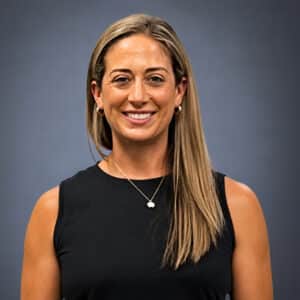
"Even if I knew that tomorrow the world would go to pieces, I would still plant my apple tree," says Mary Jo Margeson, program manager for the Washington State Patrol's Missing and Unidentified Persons Unit (MUPU). As the AMBER Alert coordinator and clearinghouse manager for Washington's Region 5, Margeson navigates the relentless and emotionally taxing daily influx of missing persons cases — a list that never seems to get shorter, made up of repeat runaways, presumed-deceased cases, and the unidentified. It's a job that can feel impossible. It's also one she wouldn't trade.
From Dispatch to the Clearinghouse
Margeson grew up in Oregon and moved to Washington at 20. Her path into missing persons work started in 2018, when she joined the Washington State Patrol as a 911 call taker and dispatcher. After about three years, she moved into the Criminal Records Division, then into the Investigative Assistance Division as an intelligence analyst — home to MUPU. About a year later, she stepped into her current role as MUPU program manager.
"I had very limited knowledge about MUPU at the time," she says. "I don't think anyone can fully understand what my unit does until you're in it. We are so much more than a group of people activating alerts."
Law enforcement offered Margeson career stability. What she didn't expect was to find her calling within it — including the chance to work alongside her agency's Missing and Exploited Children's Task Force, which targets the state's worst offenders.
A Special Kind of Person
Ask Margeson what it takes to do this work, and she doesn't sugarcoat it. "It takes a special kind of crazy person to tolerate this work," she says, only half-joking. "All day, every day, my team and I are seeing names of missing people. The list never seems to get smaller." Repeat runaways. People presumed deceased. Cases in between. And a separate list of the unidentified. It can be exhausting, she says, knowing that no matter how much the team pours into the work, the number of missing keeps climbing and people remain unidentified.
Correcting the Record on AMBER Alerts
Ask Margeson about the biggest misconception in her field, and she doesn't hesitate: that every missing child case should trigger an AMBER Alert.
"We're fortunate in Washington because we have a secondary alert that nearly every child could qualify for — the Endangered Missing Person Advisory," she says. The public, she adds, often doesn't realize alerts can't be issued the moment a child is reported missing. Her team acts at the discretion of the investigating agency, which has its own required steps to work through first. "People are questioning why my team didn't activate an alert sooner, but the truth is there are steps that must be taken prior to our involvement — for good reason."
That gap between public expectation and process is also her hardest daily challenge. MUPU doesn't drive the investigations themselves, which means families searching for answers are often referred back to the investigating agency. "I can't save or find everyone, and that's a reality I have to accept because I can't change it."
A Case That Reshaped Her Approach
When asked about a case that stands out, Margeson points to the Decker case — a set of circumstances no alert could have changed, she says, but one that changed how her team communicates. In the aftermath, she faced intense public scrutiny over how the alert process was handled.
"It was so hard to read the horrible things people were saying, but those weeks reshaped how I deal with the public and the media during subsequent events," she says. The team spent weeks re-examining and redesigning how alerts are written, aiming for the clearest, most concise message possible. "You can't ask for the public's help if you aren't painting a clear picture of what you're looking for — without needing the full case details, and while respecting the privacy of the missing person and their loved ones."
Staying in the Work
For coordinators wondering how to keep going when the list keeps growing, Margeson comes back to the same mantra that opens this piece: it's not about solving everything in a day, she says, it's about making a difference where you can. "Any little thing has the potential to help at least one family."
Off the clock, she's intentional about staying present with her kids, whether that's baseball practice or whatever's next on their schedule. She also leans on physical activity — heavy lifting and long walks, usually early in the morning before the world wakes up. "It's the best way I've found to remove distractions and give myself that much-needed 'me time.'"
Connect with the Mary Jo Margeson through the Portal.