On January 13, 1996, 9-year-old Amber Hagerman’s life was stolen by a stranger who dragged her kicking and screaming from her bicycle in broad daylight. Despite an unrelenting search and dedicated efforts by law enforcement, the media, and the public, Amber would never make it home. She was found brutally murdered. Her loss devastated her family and community, leaving a wound that has yet to heal.
In the months following the third-grader’s abduction and killing, Dallas-Fort Worth-area broadcasters worked with local police to establish what they hoped would be an antidote to future crimes: the America’s Missing: Broadcast Emergency Response (AMBER) Alert—named in Amber’s honor, both to remember her and to protect children in the future. It would harness the power of technology, the media, and community action to spread urgent news when a child’s life was in danger.
It took almost a decade to get every U.S. state to adopt the alert system, but as of Dec. 18, 2025, AMBER Alerts have helped recover more than 1,292 children nationwide—241 of them rescued because of wireless emergency alerts (WEAs).
Though Amber’s life was heartbreakingly short, her legacy has been to save countless lives. Each time an AMBER Alert flashes across a screen or sounds on a phone, her name is carried forward—not just as a reminder of tragedy, but as a symbol of hope, protection, and action.
Janell Rasmussen Administrator, AMBER Alert Training & Technical Assistance Program / Director, National Criminal Justice Training Center
Amber’s case also underscores fundamental lessons that child protection professionals should consider as they navigate missing child incidents.
Rapid public communication is vital. Before Amber’s case, police lacked a formal framework for instantly broadcasting information about child abductions to the public.
The AMBER Alert system was created specifically to fill this gap, leveraging radio, TV, and eventually wireless technology to send out critical information like descriptions of the child, suspect, and vehicle.
“Amber’s case was a witnessed abduction—the rarest of all—and there was credible information available about the suspected abductor and his truck,” says Chuck Fleeger, Region 3 Liaison for the AMBER Alert Training & Technical Assistance Program (AATTAP). “There just wasn’t a mechanism then to get that information out quickly and to the widest possible audience.”
AATTAP’s Region 3 spans 10 states, from Louisiana to Nebraska to Arizona. It also encompasses Fleeger’s home state of Texas, where since 2003 he has served as executive director of the AMBER Alert Network Brazos Valley, a non-profit in central Texas that assists with regional AMBER Alert coordination, provides public education, and partners with local law enforcement and other responders in alerting, response, and investigative readiness.
In 2020 Fleeger retired as Assistant Chief of Police with the College Station Police Department, where he served for more than three decades. He now teaches AMBER Alert investigative best practices courses for the AATTAP.
Time is of the essence. Experts recognized that the first few hours are the most critical in a child abduction case. The AMBER Alert protocol emphasizes speed, ensuring that law enforcement, broadcasters, and transportation agencies react swiftly to reports.
Long-term cases like Amber Hagerman’s are solvable. Technology continues to evolve and so do peoples’ lives. People will decide to talk for whatever reason when circumstances change.
Chuck Fleeger Region 3 Liaison, AMBER Alert Training & Technical Assistance Program
Balancing that need for speed with a desire for accuracy can be a struggle for AMBER Alert Coordinators. “Law enforcement wrestles with the desire to verify information is complete and accurate, but then it’s not timely; conversely, you can have timely information but some of it’s not completely accurate. That’s OK. It’s better to get the process going even if an activation package isn’t perfect,” Fleeger says. “We all know how crucial time is, so any moments that can be saved could potentially make the difference in a child’s recovery.”
Successfully navigating such a high-stakes process “takes a combination of continuing education, experience, and good communication with others,” says Fleeger’s colleague Joan Collins, Liaison for AATTAP’s Region 1 (encompassing 11 states in the Northeast, from Maine to West Virginia).
Collins’ career has involved 39 years of work for Rhode Island law enforcement. She spent 28 of those years with the Rhode Island State Police, where she helped audit and train users of the Rhode Island Law Enforcement Telecommunications System (RILETS); was central to increasing the state’s various emergency alerts; managed the state’s sex offender/“Most Wanted” databases; and worked with the state’s Internet Crimes Against Children task force.
The creation of the AMBER Alert system has become an important public global safety tool for child abductions, and there is ongoing hope for the resolution of Amber Hagerman’s case. The goal is to safely recover an abducted child. The decisions made by AMBER Alert Coordinators are often stressful, made quickly and under pressure, following established protocols and using their best judgment based on the information at hand.
Joan Collins Region 1 Liaison, AMBER Alert Training & Technical Assistance Program
“Doing this line of work involves being an active listener—of knowing what questions to ask,” she says. Collins now teaches such AATTAP courses as AMBER Alert: To Activate or Not Activate as well as 911 Telecommunicators and Missing & Abducted Children (aka “911 T-MAC”).
Coordination is key. The AMBER Alert system functions through the seamless cooperation of multiple groups, including law enforcement, broadcasters, transportation agencies, and the media.
Reviews of every alert help to improve the process over time by getting input from these various partners.
Collins recommends that partners include not only those within one’s own law enforcement agency, but also those from surrounding states (“with whom you’re likely to work with more often than not”). “It’s important to connect with your counterparts elsewhere and build relationships with them early so you can act together quickly and successfully,” she says. “It’s always a relief to know others are ready and willing to help out during times of high stress, and they in turn will appreciate your advice and support.”
Protocols must be followed carefully. For any case—which can potentially become a high-profile one—there is a need for law enforcement to meticulously follow established protocols. This includes the difficult decisions an AMBER Alert Coordinator must make with the limited information available at the time, which may be criticized by the public later.
“With any missing child case, law enforcement should first assume the child is at risk until evidence presents otherwise,” Fleeger says.
He also recommends patrol first responders consider the long-term implications of their efforts, avoiding any pass-the-buck mentality of case stewardship. “Think about the officers dispatched to Amber’s case. They certainly didn’t know when they started their shift that three decades later the case would be unsolved—and how dramatically changed available resources and response models would become.” It’s essential to remember that “the right documentation of information really matters. And if we’re doing good, solid police work from the earliest moments, that work should stand the test of time and hold up well.”
Use targeted, advanced technology. Modern AMBER Alerts benefit from geotargeting, which focuses alerts on the people most likely to have seen the child. This prevents citizens in a wider area from being desensitized and ignoring alerts.
The public can help. AMBER Alert’s success is a testament to the power of community vigilance. It allows millions of people to serve as the “eyes and ears” for law enforcement by reporting tips to the authorities. To keep the public from “information burnout” on a case, Fleeger recommends using multiple photos of a missing child at different times. “If someone is scrolling through their feed on social media and see the same photo time and again, they’ll assume they’ve already read that information,” he says. “A new or different photo will make somebody pause and think, ‘I didn’t realize he is still missing.’ The goal is to keep the case a priority in the public’s mind until we can get that person found.”
Don’t assume benign circumstances. Before the AMBER Alert system, bystanders witnessing a child struggling with an adult may have assumed it was a family dispute or the child misbehaving. Amber’s case highlights the danger of assuming an abduction is a benign event and reinforces the importance of reporting suspicious activity immediately—even if it seems inconsequential.
Collins refers to the barking dog analogy in her teaching. She encourages dispatchers in training to ask questions and gather more information. “For example, is the dog that someone is calling about normally outside barking, or does it rarely bark? This could indicate whether something unusual is occurring. It’s important not to make assumptions, as callers may have relevant information that can be discovered by asking further questions
Stranger abductions are real. While statistically rare—the National Center for Missing & Exploited Children reports that stranger abductions account for 1% of reported abductions—they are a real danger. Amber’s case serves as a reminder of the vulnerability of children, especially when a predator targets them. According to NCMEC, victims are most often girls, and the average age for attempted abductions is 11 and completed abductions is 14.
Justice is a long process. Despite the creation of a system that has saved countless lives, Amber’s murder remains unsolved decades later. The lesson is that the fight for justice continues, and the public can still assist by reporting any strange observations. “Long-term cases like Amber Hagerman’s are solvable,” Fleeger says. “Technology continues to evolve and so do peoples’ lives. People will decide to talk for whatever reason when circumstances change. Consider the Austin [Texas] yogurt shop murder case that was recently solved. You just never know.”
A year and a half ago, nationally
recognized CART expert Stacie Lick became AATTAP’s CART
Liaison.
James Holmes joins Stacie Lick in providing guidance from the perspectives
of former CART Commanders who know
the ins and outs of a rapid response
team’s creation and sustainability.
Organizational charts help first responders see the big picture of how
a CART will be structured during a missing child incident.
By Denise Gee Peacock
“Sometimes the solution to a problem is right in front of you, which may be a good sign you’re on the right track,” says Derek VanLuchene, AMBER Alert Training & Technical Assistance Program (AATTAP) Program Manager for child abduction response team (CART) training and certification.
VanLuchene’s task was to help others overcome a significant hurdle: “Certain CARTs were struggling with getting up and running, despite days of training and support. And our goal is, and always has been, to create more active teams across the country.”
With all that law enforcement agencies juggle and with seemingly fewer resources to tap, “maybe the agencies were just feeling overwhelmed,” VanLuchene says. Knowing that the burgeoning CARTs needed more follow-up and mentoring, one way to help struggling teams was to connect them with “the best of the best.” A year and a half ago, nationally recognized CART experts James Holmes and Stacie Lick became AATTAP’s CART Liaisons. Lick and Holmes now offer guidance to CARTs from the perspectives of former CART Commanders who know the ins and outs of a rapid response team’s creation and sustainability. So, problem solved, right?
Not quite. In some cases, fledgling CARTs also needed reminders of the core essentials needed to build a strong team. To resolve that, “maybe we needed to look again at how we were teaching the implementation course,” VanLuchene recalls.
For two decades, the AATTAP—part of the National Criminal Justice Training Center (NCJTC) of Fox Valley Technical College—has been providing CART training and certification support funded by the U.S. Department of Justice. The process for managing and updating its training curriculum involves continually reviewing participant evaluation feedback, current research and case law, updated investigative resources, case studies, current trends, relevant adult learning strategies, input from subject matter experts, and more.
As a result, scores of CARTs have received assistance to create (and ultimately, federally certify) an effective, efficient, organized response team prepared for a missing child incident.
A eureka moment hit VanLuchene last fall, when he found himself updating the CART program’s two essential instructional manuals (see related sidebar, page 9) streamlining their content for ease of understanding.
Essential to any CART’s implementation are “12 Core Components” (see related sidebar)—which include agreed-upon deployment criteria, experienced and committed team members, well- crafted callout methods, and the like. But as important as those core concepts are, it dawned on VanLuchene that the instructional module centered on them received only two hours of focus time during three days of CART training. Perhaps that’s why the essential information wasn’t sticking, he wondered. They needed to spend more time on the components. “And frankly, while the old curriculum was good stuff, those components were worthy of their own course—or at least an updated course,” VanLuchene says.
After discussing it with AATTAP Curriculum Manager Cathy Delapaz and Deputy Administrator Byron Fassett, the group agreed. “Derek’s observation was brilliant,” Fassett recalls. As a team they set out to restructure the CART implementation course. The 12 Core Components would be front and center throughout a new two-day intensive course. What’s more, the class wouldn’t just address CART theory and best practices, “it would become a hands-on workshop, one in which the 12 Core Components are used to actually create a working CART in real-time,” VanLuchene says.
A Three-Pronged Approach The reformatted curriculum—the CART- smart restart, if you will—is achieved via a three-pronged approach to building a CART in real-time as opposed to discussing its eventual creation.
The first prong involves a pre-meeting with agency stakeholders who will review the types of CART members that are needed and resources available. “That’s when we confirm that they’re ready to make the CART happen via the second prong of planning”—the new two-day class, or workshop, on the 12 Core Components—a deep dive into a successful CART’s key ingredients, which can be applied to the agency’s matrix of strategic personnel through a sample organizational flow chart that’s proven its value in CARTs across the country. “This way they can better visualize and understand the CART’s standard operating procedure (SOP),” VanLuchene says.
The third prong is a post-workshop meeting to confirm the CART team members and resources; it also includes mentoring from VanLuchene and one of the AATTAP Liaisons to help tie up any loose ends in CART configuration. “After all the prep work we’ve provided, when they come out the other side, they’ll be ready,” he says.
Louisiana as Pilot Project
Nine months ago, Louisiana State Police (LSP) Captain Jay Donaldson, who oversees Region 3 Criminal Investigations, was tasked by his superiors to form a statewide CART team that could work independently in each of the state’s three regions while also working as a cohesive whole in case of a major disaster involving missing people (one on the scale of Hurricane Katrina, he notes).
To create the regional/state CART, Donaldson knew right where to turn: to Derek VanLuchene, whom he had gotten to know over the years during various AATTAP-NCJTC trainings. Progress was swift, VanLuchene says. “No grass was growing under their feet; they wanted to get right on it.” The meetings took place over a four-month period, “which was fantastic considering some CARTs can take a year or more to form.”
After hearing about the updated CART curriculum, Donaldson was eager to get started. The first meeting was on February 19, with the more intensive hands-on sessions occurring on May 28 and 29. “I’m more of a workshop person myself,” Donaldson recalls of the two-day workshops. “I was just hoping everyone else on our teams would be too. Thankfully they were.”
With Louisiana serving as the new pilot project for the CART course that would soon play out around the country, Donaldson watched closely.
“What Derek did for us was exceptional,” Donaldson says. “Whenever we were doing tabletops, he broke us up by region. He said, ‘let’s put people together who are going to actually work together. That way we’ll see what happens, what ideas form.’ And then, once he did that, everything just started working, everything just started clicking.”
Finding the right people to be involved in planning and execution of the CART details is crucial. In any agency, people will do things because they’re told to. Then they’ll want to do so because their heart is in the mission. The commitment Donaldson witnessed in the room during the two-day planning session “had me realizing we had all the people whose hearts would be in the right place,” he says.
Donaldson had faith that the new way of learning-by-doing was working not only for his team, but also for others.
VanLuchene was equally pleased: “If they get a call tomorrow about a missing child, they could activate their CART team in whatever region it was needed. Their organizational chart is in place, their SOP is in place. They’re ready for deployment.”
Smart Solutions Ahead
A key obstacle to creating a CART is falling prey to misconceptions surrounding them. Some administrators may look at a CART as another task force that needs to be managed—without the budget or staffing to do so. They need as many resources as possible for their regular caseload of crimes.
“But in helping teams formulate a CART, we’re not asking people to suddenly put aside their normal duties. We’re asking people to think differently about how they work together on a missing child case,” VanLuchene says.
“Why not take the 12 Core Components of a CART and apply them to your response so you get the most effective, organized, efficient outcome?” he asks. “It’s just that simple.”
In other cases, where there are preexisting major incident response teams to tackle emergencies, those groups of responders can learn the 12 components of a successful CART and walk away with an SOP. “You become an active CART team based on your ability to respond to cases involving missing kids,” VanLuchene says.
Finding the resources can also seem overwhelming until stakeholders are invited to become a part of the process, says LSP Captain Donaldson. He cites one partnership in particular. “We invited the Department of Wildlife and Fisheries to be involved in the training for the first time,” he says. “They were keen to observe and see if being in a CART was a space they wanted to share with us.”
That decision would be a natural. “Louisiana has so many bodies of water, and these guys know the camps or lakes or rivers or streams—which is where a child with autism, for instance, may be drawn to after a wandering incident,” Donaldson says. “And thankfully, they’re all in. They have the tools and resources, and these guys love what they do. Now they’re waiting for a mission. They’re all about saving children, if they can.”
The methodology for the new CART implementation course will also be used for AMBER Alert in Indian Country (AIIC) trainings. AIIC Program Manager Tyesha Wood and her team are currently observing the new curriculum in action and will be applying it to a forthcoming Tribal Response to Abducted Children (TRAC) initiative, which will help Tribal law enforcement bridge any gaps in child recovery knowledge and planning.
Meanwhile, CART Liaisons Lick and Holmes are working daily to ensure all current CARTs and ones in the making are taken care of. Both have managed CART teams so they relate to others’ challenges. “They say, ‘Here’s what we recommend based on our experience,’ ” VanLuchene says. “The Liaisons are helping bring the total CART training package together.”
Derek VanLuchene understands the audience; he relates well to police officers. I like the way he delivers training. It’s more conversational, more engaging.
Captain Jay Donaldson Louisiana State Police
12 Core Components of a CART
Response Criteria: This is a memorandum of understanding about the CART’s criteria and area of service and should have complete buy-in by all of the stakeholders involved
Team Composition: The predetermined callout team should include an experienced and committed group of subject matter experts in areas including search and rescue, interview and interrogation, expert witness testimony, command post operations, major case investigations (including cold cases), and more.
Notification and Deployment Protocols: For the CART to respond in a quick, preestablished timeframe, it must have a well-constructed and agreed-upon method to activate the callout and an updated list of contacts.
Communications: Each team should have a plan for how it will communicate with the CART commander, command post, and others during an activation. This includes having a well-staffed call center for public tips and dedicated personnel monitoring social media accounts. A leads tracking and management system is crucial for disseminating leads for follow-up.
Command and Control: This involves the structuring and outfitting of a command center, incident command system (command structure), and operational team leaders (search leads, volunteer management, and others).
Search, Canvass and Rescue Operations: Establish a plan for searching, canvassing, and rescuing that includes response time and deployment logistics, as well as tactics for the successful use of volunteers with predetermined tasks.
Training: Individual and CART agency training provides an opportunity for the team to test activation and callout procedures, revise rosters and contact information, update team members’ training and specialized skill records, inspect equipment inventory, adjust assignments, and review protocols.
Legal Support: The goal in an endangered missing or abducted child case is to rescue the child, develop a solid prosecutorial case against the offender, and do both without violating the constitutional rights of members of the community. Issues such as search and seizure and the role of the prosecutor in the CART command post should be incorporated into the CART protocols. Every CART should include a prosecutor and/or legal adviser who should be involved in all trainings.
Equipment/Resources Inventory. The inventory list goes well beyond tangible deployment needs, but includes detailed instructions on how every possible resource (including experts not part of the CART core team) can be accessed regardless of time or day. Every resource should have backup contact information (telephone and email), as well as procedures for making an after-hours callout.
CART Protocols: Established protocols, along with operating procedures and manuals, will help ensure consistency in a CART’s functionality. These documents must be shared among and accepted by all participating agencies, and any changes to policies and procedures must be documented in a consistent, singular location.
Victim Assistance and Reunification: When a child is recovered, it is critical for a variety of services to be made available as soon as possible—not only to address and physical/medical needs, but also the psychological distress resulting from the incident.
Community: Utilizing members of the team to provide training and awareness to the public may generate volunteering when an incident occurs.
The simple path forward was not to reinvent the wheel. You just learn the CART process and 12 components—and apply them.
Derek VanLuchene AATTAP CART Program Manager
In 2023, 59% of AMBER Alerts were for family abduction cases, according to the National Center for Missing & Exploited Children. The abductions tend to occur at transition points, such as when court-ordered exchanges of the child are scheduled to take place. Staff photo illustration.
By Jody Garlock
Engaging the public has always been at the heart of AMBER Alerts. The program, after all, was built on the premise of instantly galvanizing citizens and motorists to serve as an extra set of eyes to help law enforcement safely locate an endangered missing or abducted child. The power of that concept played out literally and figuratively in a case that gripped the quiet county-seat town of Fallon, Nevada.
On March 31, 2025, the Nevada Department of Public Safety issued an AMBER Alert that was disseminated to broadcast media and cellular devices around Washoe County. Ten-month-old Lyric Smitten had been taken by his noncustodial mother, Chelsea Daniels, earlier that day. According to information released by the Churchill County Sheriff’s Office, authorities were advised that Daniels had been distraught after a court removed the boy from her care and custody. She was reported to have a handgun and had threatened to harm herself and her son.
The case solidly met the criteria for activating an AMBER Alert. These criteria included the belief that the child was in imminent danger and there was enough descriptive information for the public to aid in the recovery.
Unlike most AMBER Alerts, this case had an additional layer of urgency: The child was scheduled to undergo heart surgery the following day.
As news of the missing boy quickly spread around Fallon and the other high desert communities of western Nevada, tips to 911 came in. Because the vehicle Daniels was driving was relatively common—a black SUV (specifically a Ford Explorer) with a Nevada license plate— several tips matched a general description.
Although the AMBER Alert provided the license plate number, motorists aren’t always able to capture the exacting details. Officers knew the dire situation required taking all tips seriously, even those where the information matched just a general description of the SUV. One such tip led to a Fallon elementary school being placed on lockdown until authorities confirmed that the vehicle reported on the grounds wasn’t Daniels’.
One particular tip, however, stood out. A caller reported seeing a vehicle matching the description and that was being driven by a woman in an area that aligned with earlier cell phone pings from the mother’s phone. Patrol and investigative units were already in the area and took swift action. They spotted the SUV traveling on a mountain road.
HOW IT UNFOLDED (from left, top to bottom): The AMBER Alert pinged cell phones shortly after 2 p.m. for the Nevada infant taken by his noncustodial mother and believed to be in imminent danger. The last reported siting of the child was at a Walmart. An elementary school was placed on lockdown after a tip matched a general description of the mother’s vehicle there. About an hour after the alert was issued, authorities acting on another tip spotted the vehicle and safely recovered the boy. Local media reported the news, to the relief of residents.
After initially failing to stop, Daniels pulled over the vehicle, heeding the emergency lights and sirens from a sheriff’s deputy’s patrol vehicle. The infant was found safe; emergency medical responders also assessed the child’s health.
Authorities did not release information on the boy’s heart condition or surgery.
The Fallon Police Department took Daniels into custody on various charges, including kidnapping. Fallon authorities noted after the incident that concern about the child’s medical condition played a factor in the case rising to the level of an AMBER Alert.
Similar to how the public responded with tips, local authorities were quick to praise the public for its vigilance that contributed to the safe resolution. Churchill County Sheriff Richard Hickox also credited the multiple agencies and emergency medical responders who were involved. “We are grateful for the citizens who called in with sightings and information,” Hickox posted on Facebook. “The successful resolution of this situation is a prime example of a collaborative effort by many agencies striving toward one goal—and that is the safety of the public.”
Residents greeted news of the child’s safe recovery with similar gratitude. “Thank you to the people who spoke up and reported!” one person wrote on the Churchill County Sheriff’s social media page.
Carri Gordon, AMBER Alert Training & Technical Assistance Program (AATTAP) Liaison for Region 5 (which includes Nevada), considers the case an example of the AMBER Alert system working as it was intended: by engaging the public to prompt a swift recovery. “I’ve activated alerts in the past where the tip came in within six minutes of the Wireless Emergency Alert (WEA) hitting cell phones, and it was from someone directly behind the suspect’s vehicle,” she recalls. “Law enforcement contacted and safely recovered that child in less than 15 minutes of the AMBER Alert going out. It’s literally lifesaving.”
During her 13 years as the state of Washington’s AMBER Alert Coordinator (AAC), Gordon handled more than 100 AMBER Alerts. Although alert activations for noncustodial parent abductions, such as in this case, have always been higher than stranger abductions, she reminds AACs that this doesn’t mean the child is free of danger. “Parents will—and do— harm their own children,” she says, dispelling a common misconception.
Gordon also knows from experience the pressure AACs feel every time an AMBER Alert is issued, even though they aren’t directly investigating the case. “As AACs we monitor our alerts as they go out and monitor the involvement on social media, such as the shares and likes,” she says. “When you see a case with a lot of public involvement—and tips that eventually lead to the location of the child—it makes you aware of how critical and valuable a tool like the AMBER Alert system is.”
Law enforcement relies on the public to be on the lookout for critically endangered missing and abducted children. This case illustrates how critical it is to follow those leads.
Carri Gordon AATTAP Region 5 Liaison and former AMBER Alert Coordinator
In 2023, 59% of AMBER Alerts were for family abduction cases, according to the National Center for Missing & Exploited Children. The abductions tend to occur at transition points, such as when court-ordered exchanges of the child are scheduled to take place.
Tim Williams, center, manager of the New York State Missing Persons Clearinghouse (NYSMP) checks progress with David Fallon, retired FBI investigator and NCJTC-AATTAP Associate.
: Intelligence Analyst Joy Johnston of the New York State Police answers questions during a rescue operation to locate children reported missing as runaways.
Samuel Lizzio and Mark Baney, New York State Police senior investigators, work a case. In 2024, New York closed 12,310 cases involving children reported missing as runaways, according to the Division of Criminal Justice Services.
Alan Lapage, NYSMPC investigative supervisor, rings a bell to signal a missing child was safely located.
By Jody Garlock
It’s an early morning in March, and about 100 law enforcement officials, social services professionals, legal experts, and others are gathered in a hotel ballroom in Latham, New York. Wearing lanyards with name tags and sitting at tables with laptops and papers in front of them, they seem poised for a routine conference. But there’s a seriousness in the air and laser focus as they work on their computers or huddle into small groups.
Eventually, the ringing of a bell sounds across the room. Heads turn toward a man holding a brass school bellas the realization sets in: A missing child has been located.
By the end of the three-day Capital Region Missing Child Rescue Operation, that bell will have been rung an impressive 63 times. Simultaneously, a computer screen projected onto a wall showed the number in big, bold lettering. Both served as uplifting motivators for the agencies and experts who united for a goal of finding missing children at risk of endangerment, exploitation, or harm. “After the first or second bell ring, everyone gets it—it’s powerful,” says Tim Williams, manager of the New York State Missing Persons Clearinghouse (NYSMPC), one of organizers. “You could feel the energy in the room continue to increase.”
More than 60 local, state, and federal law enforcement agencies, nonprofit organizations, and private partners came together to explore new leads, review case notes, and leverage technology to find at-risk youth reported missing as runaways.
The 63 children and teens located during the first-ever rescue operation for the Albany, Schenectady, and Troy areas ranged in age from 2 to 17 years old when they were reported
missing, and from 6 to 22 when found, according to the New York State Division of Criminal Justice Services (DCJS). And the overall number of those safely located continued to climb, as work that was started wrapped up after the event. Williams says 71 missing children have now been located as a direct result of the rescue operation.
“These are emotional events,” says Kevin Branzetti (shown below right under quote), CEO of the National Child Protection Task Force (NCPTF), which partnered with NYSMPC on the operation and has similar recovery missions scheduled in other states.
“We know these cases can be emotional roller coasters. You see a lot of tears.”
To drive home the importance of such ventures, Branzetti and Williams point to statistics. At the end of 2024, New York had slightly more than 1,000 active missing children cases. The majority of the 12,000-plus cases annually—95 percent— are reported as runaways.
“Every missing child is an endangered missing child,” Williams says. “Our focus was the runaway population because it’s often overlooked.”
Strategic Teamwork
The Capital Region event grew out of training sessions between NYSMPC and the Arkansas-based NCPTF. “We started to think ‘Could we put all these people in the same room with the sole mission of finding kids and closing cases?’ “ Williams says.
In October 2024, NYSMPC and NCPTF spearheaded their first joint rescue operation. That venture in the Buffalo area safely located 47 children reported missing as runways. Branzetti and Clearinghouse staffers, including Williams and Cindy Neff, who recently retired as NYSMPC manager, applied lessons they learned from the Buffalo operation. Comparatively, the Capital Region operation was more complex, involving coordination among three police departments, three district attorney’s offices, and three county social services agencies, along with many other entities.
“One of the most critical components is securing full buy-in from local partners, law enforcement, social services, district attorneys, and child advocacy centers,” Neff says. “Their collaboration is essential because these operations go beyond just locating missing youth. It’s also about understanding the underlying reasons they went missing and identifying the support needed to help prevent it from happening again.” (For more on Neff see the sidebar that follows this feature.)
The Capital Region operation required months of planning and meetings to review cases with agencies and coordinate logistics. Participants were ultimately organized into four teams— two for Albany and one each for Schenectady and Troy. A pre-operation meeting was held for all the teams prior to the operation.
Each team had a similar composition: a Clearinghouse representative who acted as the organizer, a crime analyst who had access to local police records, at least one detective from the agency working the case, representatives from NCTPF and the National Center for Missing & Exploited Children (NCMEC), a probation official, someone from social services, and various other law enforcement officials. The goal was to ensure that each team had a variety of resources and skill sets, be it public records searching, tracking a cell phone, understanding social media work, or open-source intelligence. “No two police departments have the same sets of tools,” Branzetti says. “Everyone brings their tools to the game, and we get to share them.”
Adding a social services component—and having those professionals in the room prepared to go out when a child was recovered—was one of the lessons learned from the prior operation. Branzetti, Williams, and Neff note that the goal wasn’t just to find the child, but also to try to ensure the child doesn’t go missing again. “What we promote deeply is ‘Find. Listen. Help,’ “ Branzetti says. “It takes more than police to do that. It’s a society problem.”
The state’s Office of Children and Family Services coordinated with nonprofit organizations and victim assistance programs to assist the investigations and provide services and support for recovered children. “There was a whole support-service side of this ready to go and available—and put into action many times,” Williams says. If a child already had an assigned case worker, that person was notified.
A unique component was providing gift cards to ensure a child or teen had essentials, such as food, clothing, or haircare services. In some cases, the gift cards became an outreach opportunity for the social services worker to schedule a follow-up to take a teen shopping. “We wanted her to see that something is different today,” says Branzetti, whose organization secured donations to provide the gift cards. “We wanted her to understand that this isn’t the same old story. It’s about changing the trajectory.”
Additionally, the rescue operation also helps destigmatize the word “runaway.” “It’s a matter of changing the mindset of what that means,” Williams says.
“Everyone in the room is getting a better sense of the word as they work on the cases and realize that we can’t treat a runaway as ‘I’ll get to it when I get to it’ and instead say ‘Let’s make sure we’re doing something.’ “
‘Remarkable’ Collaboration
Heading into the rescue operation, the organizers didn’t have a set goal for the number of children they wanted to find. “If we can find even one missing child, that’s a positive,” Williams says. Because team members had started pre-work, some of the cases were able to be swiftly closed. A side benefit, Branzetti says, is that the rescue operation helps broaden or hone skills, and participants leave with added knowledge they can apply to their own cases. “These rescue operations turn into partial training events,” he says. “You actually may be writing a first search warrant or doing a first cell tower dump, or someone is walking you through how to track an IP address. You can’t beat that.”
The organizers also note that it’s heartening to see the camaraderie develop on the mixed teams, where members typically start out the rescue operation as strangers.
Williams says the operation proved to him how beneficial it is to bring together diverse groups. “We all tend to fall into the silo that we’re comfortable in, but we hear so many times, ‘Oh I wish I had reached out to you sooner,’ ” he says. “Sitting down at the same table, talking through cases, and sharing resources that are available is so important. Don’t be afraid to have those difficult conversations or continue to talk weekly or monthly to stay on top of things.”
For Neff, the rescue operation was a gratifying culmination to her long career. “When professionals from different agencies are brought together in the same room with a shared mission,” she says, “remarkable things can happen.”
Every time a child runs away, it’s a cry for help. That child is screaming out for our help, and it’s our job to do something.
Kevin Branzetti CEO, National Child Protection Task Force
Empathy & Respect: Hallmarks of Cindy Neff's Child Protection Career
'Force of Nature': Cindy Neff recently retired after two decades of remarkable work.
For Cindy Neff, the Capital Region Missing Child Rescue Operation was a fitting end to a long career of helping children. In April, Neff retired from the New York State Missing Persons Clearinghouse, where she worked for 20 years—the past 11 years as manager. “She’s a force of nature,” says Kevin Branzetti, CEO of the National Child Protection Task Force who worked with Neff on the New York rescue operations and various other initiatives.
Over the years, Neff has been a familiar face at national AMBER Alert symposiums, serving as an Associate for NCJTC-AATTAP. She also led the charge for establishing the New York State Cold Case Review Panel and developing the Find Them web application to support law enforcement working missing persons cases.
The issue of children with multiple missing episodes has always been close to her heart. In New York, about half of the missing children classified as runaways involve repeat episodes. Neff likens it to her personal experience of her mother being shuffled from one nursing home to another until she landed in a place where she was treated with compassion and dignity. Like with her mother, she feels runaway children are placed wherever there is an open bed, not necessarily where they will receive the care and services they need.
To address the issue, she helped form a statewide partnership that promotes a systems-based approach to supporting vulnerable children. This led to launching RIPSTOP (Runaway Intervention Program: Services, Training, Opportunity, Prevention), which identifies root causes and connects youth to targeted services. The hope is that RIPSTOP becomes a model for the state.
“I believe it represents the future of how we must address missing child cases: with empathy, data-driven solutions, and collaboration across systems,” Neff says. “We must reject the mindset of ‘They’re just a runaway—they’ll come back.’ Every missing child is at risk until proven otherwise, and every case deserves our full attention.”
In her immediate retirement, Neff is recharging and enjoying time with her grandchildren. She also plans to thoughtfully consider how she may stay involved in the field in the future. She encourages fellow Clearinghouse managers and AMBER Alert Coordinators to carry on the mission on behalf of missing children by setting clear goals, regularly assessing priorities, and building strong partnerships at every level. “This work cannot be done in isolation,” she says.
By Denise Gee Peacock
Our children are the heart of our communities—the keeper of our legacies. But sometimes the unthinkable happens. A child goes missing. And in those desperate moments, every second counts. So do AMBER Alerts.
Thus begins a new eight-minute AMBER Alert in Indian Country-focused video filmed in Santa Fe. It is the longest of three videos that focus on AMBER Alert being a lifeline—a rapid response system that mobilizes entire communities to help find missing and abducted quickly and safely.
In Indian Country, implementing AMBER Alert comes with unique challenges: jurisdictional rights, infrastructure and resources limitations, crime reporting complexities, and the need for cultural understanding and multiagency collaboration.
The AMBER Alert in Indian Country (AIIC) initiative—part of the AMBER Alert Training & Technical Assistance Program (AATTAP) of the National Criminal Justice Training Center (NCJTC) of Fox Valley Technical College—is a bridge meant to overcome such issues.
“We all have a role to play in protecting our children,” says NCJTC Director and AATTAP Administrator Janell Rasmussen. “By working together, we can ensure that every community in Indian Country has the resources and support they need to implement AMBER Alert effectively.”
A Pueblo of Pojoaque smudging ceremony took place to bless the occasion and its participants.
A member of the Bravebird film crew looks out at bison en route to Santa Fe.
Pamela Foster holds a medallion necklace showing her and her daughter Ashlynne.
Sunrise over Santa Fe.
A member of the Pueblo of Pojoaque Police Department answers a call for help.
Filming took place on the Pueblo of Pojoaque.
Members of Tribal police departments from across the nation greeted each other on the first day of filming.
Deputy Chief Taylor Patterson of the Miccosukee Tribal Police in Florida answers questions during filming of the new videos.
Director of Photography Ashley Siana operates a drone over the Santa Fe landscape.
Chitimacha Tribal Police Captain Jada Breaux sits for questions during filming.
Video participants, members of the film crew and AMBER Alert in Indian Country team members enjoy some down time.
Following completion of the video filming, all those involved gathered for a group photo.
We all have a role to play in protecting our children. By working together, we can ensure that every community in Indian Country has the resources and support they need to implement AMBER Alert effectively.
Janell Rasmussen Director, National Criminal Justice Training Center / Administrator, AMBER Alert Training & Technical Assistance Program
Although we are many nations, we are one in this commitment.
Tyesha M. Wood Manager, AMBER Alert in Indian Country initiative/AMBER Alert Training & Technical Assistance Program
The goal of the new video (one of three in total) and AIIC training, is to:
Cultivate awareness and build knowledge of available resources and support systems for Indian Country.
Encourage American Indian/ Alaska Native (AI/AN) communities to implement effective response plans.
Help Tribes understand the basics of the AMBER Alert system and evaluate their community’s preparedness.
Promote the relationship-building between AI/AN, state agencies, and law enforcement.
Emphasize the need for cultural awareness in handling missing/ abducted children cases.
Build agency among AI/AN communities to take proactive measures to safeguard their children—and their children’s children.
The AATTAP-AIIC team worked with two Indigenous filmmakers who form the heart of Bravebird, a company that regularly collaborates with the nationally respected marketing firm 6 AM. (See the sidebar “Telling Stories,” below.) Both firms are based in Wisconsin, and both “were perfect to work with based on their understanding of the sensitivity of this story,” says Tyesha M. Wood, Program Manager for AATTAP’s AMBER Alert in Indian Country initiative.
“We wanted to bring together voices of child protection officials from Tribes across the nation—law enforcement leaders and others who could feel comfortable in expressing what their concerns are and how the AMBER Alert in Indian Country program has helped them. And how it can help others too,” Wood says.
The video was filmed on the Pueblo of Pojoaque reservation, known to have existed since 500 AD. The New Mexico Tribe played host to the video’s participants, who came from northern California, south Louisiana, northern Florida, and all points in between.
AIIC’s main champion in the video series is Pamela Foster, who figured prominently in the first video produced for the initiative after passage of the Ashlynne Mike AMBER Alert in Indian Country Act of 2018. Foster is the mother of Ashlynne, who on May 2, 2016, was abducted—along with her brother Ian—and murdered in a remote area on the Navajo Nation. Ian managed to escape and run several miles to seek help. But while Ashlynne’s parents made frantic efforts to locate her, misunderstandings and jurisdictional hurdles on the reservation prevented an AMBER Alert from being issued until the next day, robbing authorities of critical hours in their search efforts.
“On that day, a part of me died, and life has never been the same,” Foster says. But it also propelled her to lobby forlegislative change that would prevent another Tribal family from experiencing what hers did.
“I made a promise to Ashlynne that I would do my part to fix the loophole that exists in the system,” Foster says. “I would fight with every fiber of my being to bring AMBER Alert to Indian Country.”
The video underscores the urgency of implementing AMBER Alerts through the lens of law enforcement professionals and others working on the front lines of protecting Tribal children.
“For far too long, an epidemic has been playing out in Indian Country as it relates to missing and murdered Indigenous children, adults, wives, relatives, brothers, and fathers. And it is a monster,” says Major Nathan Barton of the Pueblo of Pojoaque Police Department.
In the video, Foster makes a direct appeal to Tribal leaders. “If you haven’t already received the AIIC training, please reach out. Thanks to Ashlynne’s law, we can work with you to establish an AMBER Alert plan,” she says. “What’s more, the training is free and accessible, and it’s adaptive to your needs. We just need more Tribal participation for this to be effective.”
After the process, Foster had this to reflect on: “Sitting with the Tribal leaders and law enforcement officials who participated in the shoot was heartening. I was happy to hear them talk about how vital it is to protect our children on and off the reservation, and they each came with a powerful message to share,” she says. “It was good to see that we are building a connection with one another, and others—and that we are committed to being supported and heard.”
Contact your local Tribal leaders to discuss the importance of having a response plan in place.
"Ashlynne's love is like a bright light that shines over Indian Country." —PAMELA FOSTER
Words like ‘sovereignty’ and ‘jurisdiction’ have almost become taboo. But any child who is missing should be the priority. It doesn’t matter where the resources are coming from. Let’s locate that child.
Jada Breaux Captain, Chitimacha Tribal Police (Louisiana)
You don’t have to do it alone. Tribes across the U.S. are willing to share what works in getting AMBER Alert in Indian Country.
Greg O'Rourke Chief, Yurok Tribal Police Department (California)
When missing children go silent, it’s a scream you cannot hear. Reach out to the AMBER Alert in Indian Country program nowto be prepared.
Joshua Keliikoa Public Safety Manager, Rincon Band of Luiseño Indians (California)
AMBER Alert is the safety net for our children in danger. It’s our job and our responsibility to fight for them and be their voice.
Freddie Trujillo Chief, Pueblo of Pojoaque Police (New Mexico)
Howcanwe protect our children? How can we ensure the best response is made when a child is missing or kidnapped?
Jenelle Roybal Governor, Pueblo of Pojoaque (New Mexico)
Whenachild goesmissing I can see the hurt in their family’s eyes. Thatempowers ourteamtowork quickly, and diligently, on their behalf.
Nathan Barton Major, Pueblo of Pojoaque Police (New Mexico)
Just because nothing’s happened doesn’t mean it won’t. The wolf is at the door. And we need to help each other or we won’tsolve this problem.
Laurie Gonzalez Councilwoman, Rincon Band of Luiseño Indians (California)
Being fortunate doesn’t alleviate the responsibility of having a comprehensive plan for prevention and response in place.
Taylor Patterson Deputy Chief, Miccosukee Police Department (Florida)
'Telling Stories With Care, Authenticity & Dignity'
The Bravebird crew in Santa Fe: Director Alex Miranda (far left), Director of Photography Ashley Siana, Director of Photography James Kwan, Sound Engineer Michael Twombly, and Producer Tim Peters.
The new video’s director, Alex Miranda, and producer, Tim Peters,are the principals of Bravebird, an Indigenous-led filmmaking group based in Wisconsin that specializes in telling the stories of Indian Country.
“For us, and our families and communities, it’s important to share our stories with care, authenticity, and dignity," Miranda says.
One aspect of their work that shines through: “The land. Mother Earth,” he says. “She helps us realize that stories such as Ashlynne’s will never be forgotten.”
Bravebird was enlisted by the 6 AM Marketing team, also based in Wisconsin, for the care the group takes with delicate subject matter.
“Aaron [Hughes] and Laura [Fernandez] at 6 AM made this very easy,” Miranda says. “Everything was well thought through. We’re so complementary in our skills with each other. That just creates a very holistic experience.”
The goal was to create an emotional hook, front and center, explains 6 AM Creative Director Hughes. “That really starts with Pamela Foster [Ashlynne’s mother]. That’s what puts everybody in their seats paying attention at the start of this because of her experience,” he says. “Everything about her makes you pay attention.”
Foster was appreciative of the care that Bravebird and 6 AM crews devoted to helping her talk through the worst thing in life she has ever experienced: Ashlynne’s abduction and murder.
Says 6 AM Account Manager Laura Fernandez, “We had to make sure from the beginning that we had a deep understanding of Pamela's story, the [AATTAP-AIIC] program and the issues surrounding it, and the importance of those we would be speaking to—to try not to create the narrative,” she says. “It was a weight of emotional importance unlike anything I've ever done.”
Hughes adds: “We all felt like we were assembling something that could profoundly alter the course of someone’s life,” Hughes says. “If one child’s life can be spared because an AMBER Alert is in place, think of the ripple effect that will have. What a tremendous gift to participate in something like that.”
Lieutenant Chris O’Keefe appeared in several episodes of the A&E series “The First 48” driving fast, procuring warrants, and arresting violent criminals in Tulsa, Oklahoma, where he serves as AMBER Alert Coordinator for the Tulsa Police Department (TPD). Because of his expertise he’s now a TPD driving instructor. “It can be a little hairy sometimes teaching other people how to drive fast when you’re sitting in the passenger seat.”
By Denise Gee Peacock
Lieutenant Chris O’Keefe of the Tulsa, Oklahoma, Police Department (TPD) has a handful of cameo appearances in the reality-crime TV series “The First 48.” But off screen, the real-life search for bad actors and innocent victims has been his calling for several decades.
Much of O’Keefe’s 24-year TPD career has focused on the rapid identification and apprehension of homicide suspects and other violent criminals, most recently in the TPD’s Fugitive Warrants Unit. In April 2023 he began supervising the TPD’s Sex and Violent Offender Registration Unit, where he also serves as AMBER Alert Coordinator (AAC). As AAC, O’Keefe weighs missing child-related factors as they are known before deciding whether to contact Jason Matheson of the Oklahoma Highway Patrol to initiate an AMBER Alert in partnership with the Oklahoma State Bureau of Investigation.
We met the De Pere, Wisconsin, native at this year’s AMBER Alert and AMBER Alert in Indian Country Symposium in Washington, D.C. We reconnected with him in Tulsa to discuss his work.
What led you into law enforcement? I knew I wanted to get into public service, something to help people on a daily basis. Maybe I just read too many superhero comic books as a kid. But after getting a B.A. in sociology from St. Norbert College in De Pere, I did some law enforcement training at Fox Valley Technical College (FVTC) in Appleton before joining the U.S. Army. Then, when my wife was offered a job in Tulsa, I tapped into my FVTC training and Army experience to sign up for the TPD academy. I joined the organization in 2001.
O’Keefe discusses an arrest warrant with his TPD colleagues during an episode of "The First 48."
TACTICAL TIP
“The U.S. Marshals are a great resource,” says O’Keefe, who has served on several U.S. Marshals Service (USMS) task forces. “At the recent [National AMBER Alert and AMBER Alert in Indian Country] symposium, Bill Boldin explained how they’re using their fugitive-search skills to find missing children. I hope people use them more. They’re always quick to offer their help to us, especially when we lack resources to conduct out-of-state investigations.”
How does being an AAC mesh with the other work you do for the TPD? It’s a natural fit. An AMBER Alert is essentially a manhunt, and I’ve developed an expertise in finding people. Now I oversee the process after countless directives to “Go, go, go—find them!” I also manage the sex offender registration process, and those are the individuals we look at right away whenever there’s a missing child case.
How many AMBER Alerts do you issue on average? In the last two years, we’ve issued about six AMBER Alerts. But I couldn’t even begin to count the number of times we’ve discussed if a missing child case should warrant an AMBER Alert, or an Endangered Missing Alert, or be addressed some other way.
What are your biggest challenges? One involves a perception that if we don’t issue an alert, we’re ignoring the situation. But truth is, we bring plenty of resources to bear to find a child. This was a topic of conversation at the recent AMBER Alert and AMBER Alert in Indian Country Symposium. There’s a lot we can do if a case doesn’t meet our criteria—issue social media posts, work with license plate readers, ping a cell phone. The case can get resolved even quicker if we have solid information to work with right away.
What guides your ultimate decision? I go by informed instinct, combining that with what I hear from people on the front lines—particularly the responding officers or in some cases our dispatchers, digging into what their first impression of the situation is, and whether they believe the child to be in danger. That’s why first-responder training is essential.
Do you enlist a child abduction response team (CART)? We have a call tree of people on our incident management team (IMT) who are paged during an AMBER Alert or Endangered Missing situation, and the IMT includes a crisis unit that focuses on child molestation cases. They’re truly an organizational force. We have an AMBER Alert Center within our headquarters and the IMT will use it as its command post, manning the phones, sorting through tips, procuring resources. All the tips flow through me and I decide the priority of them. We then keep track of who we’ve sent where to check out the tip, and I organize all that. We also try to keep the family as close as possible and have a victim advocate on hand.
What types of missing child cases are the most complex? Stranger abductions—the real nightmare ones, with no information on vehicles or suspects—are thankfully very rare. Parental abductions are the most common—and complicated. Generally, a parent can’t abduct their child if they have the legal right to be with that child, whether all the time or just some of the time. It’s only when the parent says they’re going to go harm themselves and/or the child that we immediately know it warrants an AMBER Alert.
What helps you navigate such complexities? If there’s even a chance that a parent could hurt the child, we’ll err on the side of caution and issue an AMBER Alert. The challenge lies within the legalities. We worry about unleashing the full force of law enforcement on a parent who hasn’t committed any crime. That can result in liability issues. And that’s where our training and experience have to come into play—and asking the right questions.
Being an AAC is stressful work. What motivates or inspires you? The times we’ve had AMBER Alerts I’m never short of help. It’s not just from the people on call; we see that every patrol officer is going to stop what they’re doing to help find the child. I also get calls from the regional sheriff’s department, Oklahoma Highway Patrol, FBI, and the U.S. Marshals. It’s amazing. I’m also grateful to have a family that’s been supportive of my work.
Parental abductions are the most common and complex. We have to be careful with custody disputes—unless the parent indicates he might hurt the child. At that point, an AMBER Alert is clear.
Lieutenant Chris O’Keefe Tulsa Police Department
Sex and Violent Offender Registration Supervisor/AMBER Alert Coordinator
By Jody Garlock
Red Lake, Minnesota, set on the idyllic shores of one the state’s largest lakes, is typically a tranquil community. But on March 15, 2024, it bore witness to an unfathomable chain of events. The sirens of fire trucks and police cars echoed throughout the Red Lake Nation’s towering pine and birch trees as first responders raced toward a one-story home from which smoke was billowing.
Tragically, emergency responders found two young boys with knife wounds inside the house; both boys died. The area was a crime scene, and agents from the FBI and Minnesota Bureau of Criminal Apprehension (BCA) were among those who joined the investigation.
Red Lake Police authorities would also soon learn that a third child lived at the house. Three-year-old Ethan Stately, authorities realized, was missing and feared to be in danger, taken by his mother (who also was the mother of the two other boys).
Although the Red Lake Department of Public Safety had never before initiated an AMBER Alert, Department Director Kendall Kingbird Sr. and Lieutenant Geoff Pierre sensed how dire the situation was. “We had to get it solved and find our missing boy and mother,” Kingbird says. “And we needed to do that as soon as possible.” The AMBER Alert that followed would be the first one issued for any Minnesota Tribe.
“With this AMBER Alert, we hit all the components,” says Minnesota AMBER Alert Coordinator Janell Twardowski (right), who worked on the case with BCA Assistant Special Agent in Charge Ricky Wuori (left) and others.
The case’s participating law enforcement agencies consider the collaboration a textbook example of an AMBER Alert response. From the beginning, state, Tribal, and federal partners coordinated efforts and shared information. The FBI immediately partnered with the Red Lake public safety department and BCA—responsible for issuing AMBER Alerts in Minnesota—and avoided communication silos to ensure resources were aligned and deployed. And the on-site presence of BCA Assistant Special Agent in Charge Ricky Wuori, alongside FBI agents and Red Lake officers, facilitated rapid decision- making and an efficient, unified response.
The AMBER Alert itself solidly met all of the criteria. There was an abundance of information: the mother’s and child’s photos, a picture of the vehicle, the complete license plate number, and a distinctive Red Lake Nation tag. The alert also provided enough descriptive information to prompt a motorist who had seen the AMBER Alert to call authorities. “He spotted the vehicle, confirmed the license plate, and called 911,” says Janell Twardowski, AMBER Alert Coordinator (AAC) with the BCA’s Operations Center. “With any AMBER Alert, we’re relying on the public to respond, and that’s exactly what happened in this case.”
Less than two hours after the statewide AMBER Alert was issued around 9 p.m., authorities acting on the motorist’s tip pulled over the mother’s vehicle on a Minnesota highway. The toddler was safe inside, but showed signs of neglect. The mother, Jennifer Stately, was arrested and has since been federally charged with various counts of murder, arson, and child neglect. (An indictment alleges that Stately fatally stabbed one of her boys and slashed the other before setting the house on fire and fleeing with Ethan. She has filed an insanity defense.)
Red Lake Public Safety Director Kendall Kingbird Sr. (on right) and Lieutenant Geoff Pierre led Red Lake’s AMBER Alert case that safely recovered 3-year-old Ethan Stately.
We couldn’t have asked for a quicker response and a better outcome. We’re glad the child was located, and it wouldn’t have been possible without an AMBER Alert.
Kendall Kingbird Sr. Public Safety Director, Red Lake Nation (shown above)
The Red Lake Nation, one of the state’s 11 federally recognized Tribes, has full sovereignty, subject only to the federal government. (It’s one of two Minnesota Tribes exempt from Public Law 280; therefore state courts/government have no jurisdiction.)
The fact that Kingbird and Pierre made the swift decision to initiate the department’s first-ever AMBER Alert stems in part from a trusted relationship with Wuori, who works out of the BCA’s regional office in Bemidji. “They have assisted us with a lot,” Kingbird says.
Wuori credits ongoing communication as key to building trust between agencies. “When you have a good relationship, it’s easier to get things moving,” he says. “It’s constant communication—stopping in and checking on everybody from time to time, not just when you need something.” Tribal investigators regularly meet with BCA agents, and BCA has held training specific to AMBER Alerts. Additionally, over the years, Minnesota’s Tribal communities have received ongoing training and support from the AMBER Alert Training & Technical Assistance Program (AATTAP) and its AMBER Alert in Indian Country initiative, which are funded by the U.S. Department of Justice and supported by the Ashlynne Mike AMBER Alert in Indian Country Act.
As Minnesota’s AAC, Twardowski points to similar relationship-building needed to ensure an AMBER Alert reaches as many people as possible. She credits the state’s media with timely stories and the state’s transportation department with posting roadside alert messages. “As an agency, we are committed to leveraging our partnerships to reach as many Minnesotans as possible,” she says.
In the aftermath of the incident, an outpouring of emotion filled the Red Lake community. A walk of remembrance and candlelight vigil were held to honor the 5- and 6-year-old brothers who died. Yet despite the profound grief, displays of hope and strength emerged. “We’re a tight-knitcommunity,” Kingbird says. For him, the tragedy instilled confidence in the AMBER Alert process. “We couldn’t have asked for a quicker response and a better outcome,” he says. “We’re glad the child was located, and it wouldn’t have been possible without an AMBER Alert.”
In the face of such tragedy, the partnership between local, state, Tribal, and federal agencies proved crucial. Through our combined efforts and the vigilance of the public, we were able to locate a missing child and hold those responsible accountable.
Alvin M. Winston Sr. Special Agent in Charge, FBI Minneapolis
This case is yet another example of how AMBER Alerts save lives. They get critical information out quickly to millions ...[whoare]willing to step up to help rescue a child in mortal danger.
Drew Evans BCA Superintendent (in statement from the U.S. Attorney’s Office, District of Minnesota)
By Jody Garlock
Working on behalf of children has been the crux of Shelly Smitherman’s 28-year career with the state of Tennessee. Early on, she investigated abuse cases for the Department of Children’s Services in Nashville.
Later, as a drug agent with the Tennessee Bureau of Investigation (TBI), she was assigned to help search in the case of Holly Bobo, a nursing student whose abduction and murder led to the state expanding TBI’s Endangered Child Alerts to include persons over the age of 18. But it was when she began working as an agent in the TBI’s Criminal Intelligence Unit that she saw firsthand the impact of AMBER Alerts.
In her first case involving a missing child, a TBI AMBER Alert for a 15-year-old girl kidnapped by her 50-year-old teacher sparked a nationwide search. Public tips ultimately led to the teen’s safe recovery in California. “I feel like we had the whole nation looking for this child,” Smitherman says of the 2017 case.
Later that year, Smitherman became Tennessee’s AMBER Alert Coordinator (AAC) and Assistant Special Agent in Charge overseeing TBI’s Missing Persons Unit, a position she has held for eight years.
“I’ve always been passionate about working investigations when children are in danger,” she says of her varied roles.
Time matters on every AMBER Alert, so the pressure is always there. As soon as I get a call, I’m in that mode to locate the child and pull in every resource to find them.
Shelly Smitherman AMBER Alert Coordinator / Assistant Special Agent in Charge, Tennessee Bureau of Investigation
Nearly three decades into her career, that passion hasn’t changed. But the processes have, as technology dramatically shifted alerting and investigations. “I remember a time when intelligence meant writing information on a spreadsheet on a piece of paper,” Smitherman says.
It’s been five years since The AMBER Advocate talked with Smitherman, so we caught up with the law enforcement veteran to discuss changes and challenges. As it happens, she had spent the previous day issuing an AMBER Alert in a case involving a noncustodial parent who had threatened to harm his 2-year-old; the girl was safely recovered. “It’s a reminder of the importance of agencies working together for one goal,” she says.
How has the process of issuing an AMBER Alert changed in the past five years?
In the past five years, we have definitely improved the process to request an AMBER Alert from local agencies. We now have a digital request form—the “push-packet”—that can be completed on scene from a cell phone or computer. The form contains all of the essential information that we will need to rapidly issue the alert. We provide training to local agencies across the state on a regular basis to ensure agencies are equipped before a child goes missing in Tennessee.
What are some specific advancements that are helping after an alert is issued? One of our biggest advancements is license plate readers (LPRs). Those have been a game-changer for us if there’s a vehicle involved in locating a missing child. They also give us access to find a vehicle in a different state. Microsoft Teams has been another game-changer. We can put criminal intelligence, a suspect’s driver’s license, criminal history, and the AMBER Alert poster in a Teams chat and everybody gets that information in real time. Even someone on the ground in the middle of “Nowhere, Tennessee” can have access to real-time intelligence.
Smitherman’s storied career with the TBI includes the joy of being on scene when a baby was safely recovered in the middle of the night. She also has benefited from networking with agencies working to find missing children.
Luring is a growing issue due to more children using social media. How are you addressing this in your state?
The majority of our Endangered Child Alerts—we have about 40 a year—are kids meeting with someone they met online. Luring is going to be a continued problem as long as kids have cell phones or ways to access social media. There’s no way to control it. Kids don’t understand the risks of talking to a complete stranger until maybe they’ve met up and they’re put in danger. We’re always steps behind in an investigation that involves social media because the apps and platforms they use change every day. We have to figure out ways to find them quicker, and that’s the hard part.
Shelly Smitherman (second from left) is pictured at an AATTAP Region 2 meeting earlier this year, along with TBI Special Agent Emily Keifer, AATTAP Associate Kimber Biggs, and AATTAP Administrator Janell Rasmussen.
On average, Tennessee has more than 700 missing children reports each year. In 2024, there were seven AMBER Alerts and 50 Endangered Child Alerts.
On the flip side, how does TBI use social media to its advantage?
One thing we do is issue alerts through Bitly. On average, about 800,000 people view them on social media. Having 800,000 people helping us look for that missing child—we definitely want that help. With that many people looking, we’re going to find the child faster.
What about any accomplishments—what makes you proud?
I’m really proud of TBI’s role in missing children investigations. We don’t stop after we issue an AMBER Alert. We’ll have at minimum 10 to 20 agents assisting on the case. Everybody stops what they’re doing and helps. Our crisis team is obviously involved. We’ll also have the criminal investigations, criminal intelligence, and cybercrime units assisting. And our Child Abduction Response team (CART) responds statewide to all AMBER Alerts. [TBI’s CART program is certified by the U.S. Department of Justice.]
What advice do you have for fellow AACs?
It’s really important for AMBER Alert Coordinators, especially new ones, to get to know the coordinators in surrounding states. I have a good relationship with the other state coordinators in our Southeast Region. We share and discuss information and ideas with each other. Tennessee is connected to so many states, so having contacts where I can reach out at any time has been a great tool. So often, I need assistance from another state during an alert, and being able to call someone I met at AATTAP [AMBER Alert Training & Technical Assistance Program] meetings or the National Symposium for help is truly an advantage and saves so much time getting to the right person in another state.
How important has your networking been?
So often, I need assistance from another state during an alert, and being able to call someone I met at AATTAP [AMBER Alert Training & Technical Assistance Program] meetings or the national symposium for help is truly an advantage. It saves so much time getting to the right person in another state, especially when time is of the essence.
What would you like local law enforcement agencies to know?
Reach out. If an agency isn’t sure if something meets the AMBER Alert requirements, call and we’ll talk it through. Sometimes local agencies may take steps—such as interviews and surveillance—that could be done after we issue the AMBER Alert. That’s time where something could have gone in a bad direction for the child, and it puts us behind in getting the public’s help to search. Every second counts, so reach out.
A thermal imaging drone (top left) helped rescuers locate a 10-year-old girl who had sleep-walked her way into the dark piney woods near her North Louisiana home. Bienville (Louisiana) Parish Deputy Sheriff Jeremy Gros was the first rescuer to reach Peyton Saintignan (shown sleeping, top right, and with Gros at bottom). Photos: Webster Parish (Louisiana) Sheriff’s Office
By Jody Garlock
On the afternoon of Sunday, September 15, 2024, a call came into the Webster Parish Sheriff’s Office (WSPO) in Minden, Louisiana: 10-year-old Peyton Saintignan was missing.
The girl had seemingly vanished while sleepwalking. This was something she had reportedly done inside her Dubberly home (35 miles east of Shreveport), but she had never left the house. Family members and neighbors had already spent an hour searching for the brown-haired girl, who was last seen at bedtime the previous night. With dense woods and dangerous wildlife such as wild hogs and rattlesnakes in the area, authorities knew that bringing Peyton to safety required quick action.
As the Sheriff’s Office dispatched its resources, the Louisiana State Police issued a Level II Endangered/Missing Child Advisory—a notification of a child believed to be in danger, but whose case doesn’t meet the criteria for an AMBER Alert.
The intensive 10-hour search that ensued brought together numerous law enforcement agencies, Homeland Security, and hundreds of volunteers. Tracking dogs, off-road vehicles, a helicopter, and aerial surveillance drones were all activated. But it would be a drone equipped with cutting-edge thermal technology that saved the day—and the girl.
At around 10:30 p.m. that evening, the operator set up his specialized equipment and onward and upward the drone went. Remarkably, within about 20 minutes, the drone’s ability to detect heat signatures was penetrating what by then was extreme darkness—and zeroed in on Peyton in the piney woods.
The riveting rescue footage that went viral showed the pajama-clad girl curled up on the ground and then waking as rescuers approached her in the woodsy terrain.
Local and national media alike recounted the happy ending. “Other than some mosquito bites, she was perfect,” Webster Parish Sheriff Jason Parker told ABC’s “Good Morning America.” “It’s truly a miracle.”
The case spotlights not only the importance of enlisting emerging technology to find missing children, but also the need to engage the public: The drone operator who spotted the girl had traveled from out of state, volunteering his services after hearing the breaking news about the search.
Josh Klober, co-owner of Drone Management Services in Magnolia, Arkansas, operates the equipment he volunteered for the search. Photo: Webster County (Louisiana) Sheriff's Office
Heat of the moment
In neighboring Arkansas, Josh Klober, who co-owns Drone Management Services in Magnolia, was watching a Sunday football game at his home when reports of the massive search in north Louisiana spread across the region. Knowing his drone’s thermal-imaging camera could detect body heat with pinpoint accuracy, even in areas obscured by dense woods, the father of two felt compelled to make the 90-minute drive to the search area.
Klober offered his assistance and waited until authorities gave the go-ahead after a search helicopter finished its work. He set up his equipment, which included a generator and a large flat-screen TV to monitor the drone footage in real time from the bed of his pickup truck. It was parked in the vicinity of where a hunter’s trail camera had earlier captured an image of the wandering girl.
His strategy at piloting the drone was simple: Think like a child. “There’s big, wooded areas around, but I’m trying to think like a 10-year-old,” Klober told Arkansas’ KNWA-TV. His hunch was that a child (albeit one who was sleepwalking) may not stray too far from the road, so he decided to contain his search within 40 yards of it.
Less than 30 minutes in, Klober could see a hot spot, which upon zooming in, revealed an image of the girl lying on the ground. The location was about 1 ½ miles from her home and 300 yards from where the trail camera recorded her.
Video footage shows how initial claps turned to silence when authorities gathered around the pickup truck realized the girl wasn’t moving. Klober kept the drone’s spotlight on her to guide rescuers to the exact location. As the TV screen showed Bienville Parish Deputy Sheriff Jeremy Gros making his way to her, the girl slowly raised her head. A joyful cry of “She’s awake!” was followed by claps from the group around Klober’s truck who were witnessing the rescue in real time.
After the rescuer lifted her up from the ground, the grateful girl put her arms around his waist in a hug. “It was pretty emotional for everybody,” Klober told “Inside Edition.”
Watch the remarkable drone rescue of the missing 10-year-old girl here.
I can’t tell you how thrilled we all are to have a happy ending to this. A lot of prayers were answered.
Sheriff Jason Parker Webster Parish, Louisiana
Grateful community
The viral video of the rescue garnered thousands of comments from people impressed with the precision of the drone’s thermal-imaging technology that cut through the dense, dark forest.
They also praised rescuers, including Klober, who was singled out as a hero. “Drone operator deserves a medal!” one person commented on YouTube. “How altruistic of him to take it upon himself to rush over, dedicate his time and effort.” “Citizens helping other citizens—that’s how it’s done!” said another person.
The WPSO used its Facebook page to update the public on the story and express gratitude to Klober, Drone Management Services, and the agencies and volunteers who helped search forand safely recover Peyton.
While Klober stated in a local news interview “there’s a little bit of luck involved” in any type of drone search. “But whether someone else found her, or we found her,” he said, “I’m just glad she was found.” Sheriff Parker appeared more pragmatic about the recovery operation, praising it as a “truly cooperative effort.”
By Jody Garlock
Fred Rogers’ famous advice to “look for the helpers”—intended to steer children toward safety in times of chaos or tragedy—has endured for decades. And Morrissa Ahl-Moyer definitely falls into the category of a helper. Her 20-plus years in public safety took her from being a volunteer first responder, to a 911 telecommunicator, and now, Director and Clearinghouse Manager of the North Carolina Center for Missing Persons (NCCMP), a division of the state’s Department of Public Safety based in Cary. The NCCMP receives more than 10,000 missing persons reports annually.
“I’ve always been a helper of sorts with my career choices,” says Ahl-Moyer, whose job includes being North Carolina’s AMBER Alert Coordinator (AAC). “For me now, it’s getting to make sure troopers and dispatchers have what they need.”
Since stepping into her role in June 2023, Ahl-Moyer has stepped up NCCMP’s training, including working with law enforcement authorities to ensure they understand the state’s AMBER Alert process and the online portal.
Her outreach during her first year on the job included hosting a missing persons resources class in her hometown of Dunn, North Carolina, where she started as an EMT. To her surprise, more than 200 officers and public safety personnel showed up for the event.
“It confirmed I was on the right track,” Ahl-Moyer says. “It’s training we need, and we need to do more of it.”
That message is something she champions whether she’s training law enforcement or participating in or attending state and national conferences.
We caught up with Ahl-Moyer when she was in another form of helper mode: voluntarily working night shifts at a communication center to lessen the load on 911 telecommunicators handling calls after Hurricane Helene’s destruction in western North Carolina.
Telecommunicators tend to be overlooked in the [AMBER Alert] decision-making process, but they can be the best source of information. They’re truly the ‘first’ first responders—the ones who get the initial call when a child goes missing. And often they have the knowledge to say, ‘Hey this might fit the criteria for an AMBER Alert.’
Morrissa Ahl-Moyer Director/Clearinghouse Manager,
North Carolina Center for Missing Persons
Morrissa Ahl-Moyer uses a flow chart during a training session to help participants visualize the steps in activating an AMBER Alert: “I tell them the part on the left is what they need to worry about, and I handle everything else.”
How does having 911 telecommunicator experience inform your AMBER Alert Coordinator (ACC) work?
As a telecommunicator who answered after-hours calls for NCCMP, I had a basic knowledge of how the alert process worked, the criteria, and the information needed before we contacted the AMBER Alert Coordinator for approval. I also recognized a knowledge gap. Most of the agencies had never requested an AMBER Alert before and weren’t sure of the process. This was further exacerbated when there was a transition from faxing forms to an online portal. I’ve been working to ensure everyone knows how the process works.
How do you help people understand AMBER Alerts and other endangered missing advisories? Training is everything. It’s vital in our line of work. That’s why I’ve conducted sessions at symposiums, the state’s 911 Conference, local law enforcement agencies, communication centers, and more. Doing so gets important information out to those who need it the most. I go over the basic criteria for issuing an AMBER Alert and give them an overview of the process. Beyond discussing the essentials, getting out and meeting people gives me the chance to say, “Here’s my cell phone number. Even if you think a case doesn’t meet our AMBER Alert criteria, let’s talk about it.”
After transitioning from 911 to ACC did you experience any challenges?
Understanding the technical side of IPAWS [Integrated Public Alert & Warning System] was an initial hurdle. Luckily, one of the on-call team members is a guru and has helped me learn more about it. In my previous role, we would only do the EAS [Emergency Alert System]—and we were done. I’ve now realized that it’s so much deeper than that. I’m still learning it all.
What’s new with NCCMP in terms of projects you’re working on?
One project is that we’re in the building phase of a missing child repository. It will update weekly from the NCIC [National Crime Information Center] files, but it also gives me the option of real-time manual entry. If a missing child doesn’t meet AMBER Alert criteria, I can put the word out and it will send a media notification. It will increase awareness when every minute matters. It’s a first for our state, and I’m excited about it.
What issues regarding missing children concern you the most?
Human trafficking is a major problem. I really was blinded to it before coming into this role. It’s scary to see how easy it can be to end up in trouble, especially when there are so many at-risk young people across the nation. Online enticement is another growing concern. I’m also seeing that 15-year-old minority females are reported missing more than any other demographic, which needs more of our research and understanding.
Bright idea: A training test pageis available on the NCCMP website. An agency can “fake enter” an AMBER Alert without actually activating it as a way to become familiar with the intake process.
Calling All 911 Telecommunicators
AATTAP’s course, 911 Telecommunicators and Missing & Abducted Children (“911 T-MAC,” for short) is essential not only for law enforcement and public safety telecommunicators but also for any members of law enforcement and support staff who address public calls for help.
The interactive training session equips 911 telecommunicators with needed skills and resources by:
Analyzing real cases to recognize various types of missing child incidents and how they are reported.
Exploring optimal practices using systems and standards from the National Crime Information Center (NCIC) and the Association of Public-Safety Communications Officials (APCO ANS 1.101.4-2022).
Addressing resilience-building strategies to cope with emotionally demanding cases.
The course represents a full update of AATTAP’s “Telecommunications Best Practices for Missing and Abducted Children” (TELMAC) class, which launched in 2010 as both a classroom offering and as a self-paced online class.
The 911 T-MAC class launched this past fall in Appleton, Wisconsin, where more than 60 telecommunicators from around the country attended the pilot training session.
“The amount of information presented during the class was perfect,” one participant said. “It was all presented in a way that wasn’t overwhelming, but engaging and easy to understand.”
The class will be offered in person and online starting this spring. Watch for training opportunities at bit.ly/911tmac.
CART on Camera: Burlington County, New Jersey
By Denise Gee Peacock
AATTAP Child Abduction Response Team (CART) Assessors James Holmes, Stacie Lick, Vonyale Montgomery, and Lead Assessor/CART Manager Derek VanLuchene (in neon vests) can be seen working with multiple law enforcement agencies from Burlington County, New Jersey, during a large-scale training exercise to strengthen responses to missing and endangered children incidents.
Nearly 100 members of law enforcement joined in the exercise “to enhance their knowledge of how to handle cases involving our most vulnerable populations,” said Burlington County Prosecutor LaChia Bradshaw.
“The training was designed to be a worst-case scenario involving a missing boy who suffers from epilepsy,” reported Fox 29. “Following protocol, the investigation gradually ramps up to a full-scale activation of CART,” one involving about 30 actors.
Burlington County is expected to be the fifth team in New Jersey to receive CART certification from the U.S. Department of Justice with AATTAP/NCJTC's help.
“This is definitely an excellent educational experience for all our personnel,” noted Medford Township Police Chief Arthur Waterman.
“Thank you to Fox 29 for reporting on the excellent work being done by Burlington County to bring together partners to prepare to respond to missing and abducted children,” said AATTAP Administrator Janell Rasmussen.
David Boots, Battalion Chief of the Denton, Texas, Fire Department, was at home listening to radio communications when the call went out. It was 8:30 p.m. on June 5, 2024, and the sun was beginning to set. Two teenage boys on bikes were stranded deep inside Denton’s Greenbelt Corridor, a 20-mile, heavily forested nature trail connecting the Ray Roberts Dam with the headwaters of Lake Lewisville.
Chief Boots felt a knot in his stomach. He knew the area well; the department had rescued hikers who had become lost on the trail before, but this time was different. Storms earlier in the week had created treacherous flooding conditions that forced the closure of the Greenbelt.
Getting the teens out in the dark would be difficult and risky, not only for them, but also his rescue teams. Worse still was the news that high winds and torrential rains would soon be barreling in from Oklahoma. “A flooded greenbelt is not a good place to be during a storm,” Boots says.
Top left: Denton, Texas, Fire Department Battalion Chief David Boots. Top right: A flooded section of the north Texas Greenbelt Corridor.
Thankfully one of the teens had a cell phone with him. And the Denton Police Department had access to what3words, a revolutionary new geolocation tool.
A Call for Help
The boys’ day had begun well enough, with sunny skies accompanying them on their morning ride to the lake. But after wheeling onto the Greenbelt trail, bypassing closure barriers, they found themselves in dire straits. They had lost their bearings trying to navigate around impassable, and at times impossible to see, pathways to safety. They had no real sense of where they had meandered, or the danger they were in, and needed to be located and brought to safety quickly. Their lives were in danger.
“They got down into swampy water—deep at times—and muddy, with logs covering the trails,” Boots says. The boys had been there for hours. “One of their cell phones went dead,” Boots continues. “When the sun went down, they were well into the Greenbelt and surrounded by water. They knew they were in trouble.”
When the boys called 911, the Denton Police Department Dispatch Center enlisted what3words technology to immediately pinpoint their precise location—as well as the best route to find them. That data was then forwarded to rescue teams.
In the past, the Denton Police Department relied solely on triangulated pings from nearby cell phone towers to get a general idea of where to find missing individuals when mobile devices were involved. And while they could also request helicopter assistance, such resources take time to deploy. Thus, the location data provided by what3words has proven to be invaluable, says Suzanne Kaletta, Assistant Director of Public Communications for the City of Denton. The app’s accuracy has been “a game-changer” since they began using it in 2022, Kaletta says. It has shaved hours from searches involving difficult terrain.
Harrowing Rescue Mission
Racing against time, Boots led more than 20 rescuers who were deployed to find the teens. “We put an ATV in at the halfway point between the lakes, but it couldn’t get to them,” he says. “Another team in an inflatable boat had to paddle the creek upstream to try to get close enough, but debris blocked the way.” The team abandoned the boat and set out on foot, in the dark and through deep, snake-infested waters.
In the summer heat, the rescuers were “soaked to the bone and sweating so much they had trouble holding onto their phones for navigation,” Boots recalls. A drone crew attempted to guide their way, but the forest’s dense tree canopy below made it difficult to spot them.
Rescuers reached the teens at around 11:25 p.m., some three hours after their call to 911. They were hot, wet, tired, and scared—and their ordeal was far from over. A journey with rescuers leading the way back to the boat through swampy floodwaters and nighttime conditions still lay ahead. So did the storm’s approach from the north.
Everyone was on edge as they did the mental countdown of when it would hit. “We knew we had an hour; then just 30 minutes,” Boots says. “We finally got them out with 15 minutes to spare. It was unnervingly close.”
And this much is certain: Without the geolocation assistance from what3words—coupled with the tenacity and skill of the North Texas emergency responders—the boys may not have made it out of the woods.
The child clung tightly as Deputy Wes Brough carried him to safety. Brough received an email from the boy’s out-of-state relatives who watched the rescue footage. “They said that they could tell how thankful he was by the way he touched my face,” Brough says.
Volusia County, Florida, Sheriff's Deputy Wes Brough
By Jody Garlock
Deputy Wes Brough has been in law enforcement for what he matter-of-factly describes as “a crazy” five years. In that short time with the Volusia County Sheriff’s Office in DeLand, Florida, he has worked AMBER Alerts, saved a teen who was contemplating jumping off a bridge, and, most recently, been hailed a hero for rescuing a missing 5-year-old boy with autism.
In the latter case, the dramatic body-cam footage of Brough running into a large pond to carry the missing child to safety put him in a national spotlight after the video went viral—and showed how dangerously close the story was to a sad outcome.
That August 2024 day remains fresh in his mind. Brough (pronounced “Bruff”) was on routine patrol in Deltona (in east-central Florida) when a 911 call reporting the child missing came in—a call he and other officers were able to hear in real time thanks to a new telecommunication system.
Brough was first on the scene, followed shortly by another officer who helped search the family’s house to confirm the boy wasn’t there. Dispatched officers soon arrived and the search area expanded.
After hearing of a possible sighting of the child behind a nearby home, Brough’s autism awareness training kicked in. Knowing that area had wooded wetlands and that children with autism are drawn to water, Brough took off running. Hurling tree debris and calling the boy’s name as he approached a nearby trail and pond, the breathless deputy would momentarily stop to look for any signs of movement in the water or footprints on the swampy ground.
At first Brough didn’t see any signs of the child. But then the boy, who is nonverbal, made a noise, likely after noticing Brough through the trees. The deputy ran toward the sound, and after spotting the boy in the pond, yelled, “I got him! I got him!” as he ran into the near-waist-high water where the 5-year-old was holding on to a branch. He would soon cling safely to Brough as they made their way back to land. There, as darkness neared, medics checked the boy’s health before he was reunited with his frightened family. The swift recovery was completed about 20 minutes after the 911 call that reported the child missing.
We talked with Brough about the incident and the lessons it may hold for others in law enforcement.
How does it feel to be called a hero? That’s a big title honestly—especially when anybody in my position would have done the exact same thing. I’m very honored, but I’m staying humble and giving the glory to God for helping me do the right thing in the right moment.
What type of training helped prepare you for such an incident? We have critical incident training when we come through the sheriff’s office, and it focuses on different types of behavior. We also go through autism awareness training which includes meeting with children with autism and their families who live in our community; it’s very in depth. It covers the dangers a child with autism can face, and understanding the biggest cause of death: drowning. That’s a big factor here in Florida, where there’s so much water. We learn how to interact with children with autism and the different levels of the autism spectrum. We also look at different scenarios that we in law enforcement might face, whether it’s responding to a runaway child or a suspicious person. You never know when the person you’re interacting with may have autism, so being aware, and picking up on social cues, is important.
Are there ways to better engage the public about missing autistic children? There’s always room for more communication between an agency and the public, especially on a subject like this. An easy way is through social media posts. Also, parents should be encouraged to never hesitate to call 911 if their child goes missing. The boy’s family did a wonderful job of calling as soon as they heard the alarm on their door go off. We’d rather have the call get canceled on the way to search for a missing child instead of being 20 minutes behind the curve.
What lessons did you learn that others could apply—what are your takeaways? One, a lot of good work gets done when you stay calm under pressure. And two, it’s important to have a sense of urgency. Too often complacency can kick in; you think a missing kid may be at a friend’s house or hiding in a shed. You might walk rather than run. When I picked up the log the boy was holding onto in the water, it broke in half. It was only a matter of time before it broke while he was holding on to it, or that he went out deeper into the water. Hindsight is 20/20, but I’m glad I had the sense of urgency to run from the road to the pond. It was moving with a purpose. There can’t be hesitation when the priority is someone’s life.
By Denise Gee Peacock
National Missing Children’s Day has long been a lodestar for families of missing children—a safe harbor for gathering with child protection professionals who on that day are recognized by the U.S. Department of Justice (DOJ) for being at the top of their game.
This year that star shone brighter than ever, largely fueled by the unwavering advocacy work of nearly a dozen surviving family members—including parents and siblings—who have endured the nightmare of a missing child, brother, or sister. Their presence at the May 22 commemoration, and related events, was deeply moving—despite the fact that “all of us belong to a club that no one ever wants to belong to,” says parent survivor Ahmad Rivazfar.
That club’s members include parents and siblings desperate to find their missing loved ones, whose whereabouts remain unknown. They are also families who will forever grieve a child who was abducted, sexually assaulted, and murdered; families of children illegally taken out of the country by an estranged parent; families who have fortunately been reunited with their once-missing child, but now work to become whole again.
These family survivors’ stories were invaluable to discussions during the 2024 National Missing Children’s Day events. The AMBER Alert Training & Technical Assistance Program (AATTAP) and National Criminal Justice Training Center (NCJTC) hosted the family members at the events, with support from the DOJ’s Office of Justice Programs (OJP) and Office of Juvenile Justice and Delinquency Prevention (OJJDP).
The AATTAP-NCJTC team and surviving family members were unified in promoting their work on two updated DOJ resources for parents and families of missing children: When Your Child Is Missing: A Family Survival Guide (released last year) and the forthcoming sibling-focused survival guide, What About Me? Finding Your Path When Your Brother or Sister Is Missing.
Collaboration for a clearer path forward
The day before the National Missing Children’s Day commemoration, surviving family members paid a visit to the Alexandria, Virginia, headquarters of the National Center for Missing & Exploited Children (NCMEC). Afterward they attended a private AATTAP reception recognizing their contributions to ensuring family members across the nation have access to the latest information and resources.
They also previewed video segments from a filming project completed earlier this year, one in which contributors to the forthcoming What About Me? sibling survival guide shared their insights and advice to illuminate its content for readers. The videos will be offered alongside the sibling guide (after its release later this year) on the Family Survival Guidewebsite.
During the National Missing Children’s Day ceremony, the group received thanks for their efforts from U.S. Assistant Attorney General Amy L. Solomon, OJJDP Administrator Liz Ryan, and NCMEC President and CEO Michelle DeLaune—as well as attendee applause—when they were asked to stand for recognition.
They also heard from nationally revered parent-advocate and retired AATTAP-NCJTC Associate Patty Wetterling, who was a featured speaker at the event. Wetterling is the mother of Jacob Wetterling, who was abducted and murdered in 1989. (Read more about her search for him, and her new book, Dear Jacob, here—and an excerpt from her Missing Children’s Day talk below.) Wetterling also helped update the new edition of the Family Survival Guide, released in 2023.
During the session, the family members discussed their experiences with being a part of these survival guide projects, along with their ongoing needs and goals as surviving family members who have experienced a missing child or sibling.
They also offered OJJDP and AATTAP leaders recommendations on ways to best support families and more broadly promote awareness and distribution of critically important resources for families, law enforcement, and child advocates.
Following through on a commitment made by OJJDP Administrator Ryan last year during her impactful meeting with the Family Survival Guide contributors at the conclusion of the Missing Children’s Day ceremony, this year’s event included an inaugural, private Family Roundtable discussion with sibling guide family contributors.
Commemoration highlights
Each year, the DOJ honors agencies, organizations, law enforcement officials, and others whose exemplary and heroic efforts have helped recover missing children and prosecute those who harm them.
“Our commemoration is taking a new format this year,” Ryan explained. “OJJDP decided not only to highlight the tremendous work of those who protect children, but also address the challenges in this work—to learn more about issues involving missing kids, and hold in-depth conversations with youth and families of missing and murdered children and other experts on these topics.”
After the commemoration, a cadre of experts, including a youth advocate with lived experience in the foster care system, joined a panel discussion on why so many children and young adults go missing from care. “They will suggest ways to improve collaboration and ensure the well-being of these children,” Ryan said. She next recognized members of the Family Roundtable—parents, siblings and others with a loved one who has gone missing. “Each of them has contributed to two very important [survival] documents.”
When Your Child Is Missing: A Family Survival Guide was announced at the 2023 Missing Children’s Day event. The new fifth edition provides a wider range of missing child situations; gives families instant access to information online; and allows them to hear advice and encouragement from the parents themselves, who speak in powerful videos.
As was the case with the Family Survival Guide, the What About Me? project was developed by AATTAP’s publications team with guidance and oversight from the OJJDP. Both initiatives were stewarded by Helen Connelly, retired FVTC-NCJTC Program Administrator who continues to share her expertise as an Associate employee.
Looking back—and ahead
“As you know thousands of children go missing in the U.S. every year,” Ryan said. “While most are safely recovered, others are found deceased and never identified. Currently there are more than 1,000 children whose remains have been found, but have not been identified. We want to help name them, and return them to their families, communities, and loved ones.”
The OJJDP and NCMEC, with support from the DOJ—and training and technical assistance from the AATTAP and NCJTC—will work with state and local law enforcement agencies to identify these children, Ryan explained, adding, “they deserve no less.”
The forthcoming sibling survival guide, What About Me?, will help a missing child’s siblings understand the emotional turmoil surrounding the crisis as well as the search process. It will offer trusted advice and firsthand insight into what to expect; tips for managing self-care and family dynamics; and guidance on how to deal with law enforcement, the courts, and the media.
Parent-advocate Patty Wetterling to DOJ and NCMEC: ‘You save lives. You saved mine.’
Patty Wetterling (right) greets NCMEC’s Director of Special Projects Sherry Bailey during the family survivors’ visit to NCMEC headquarters in Arlington, Virginia.
NCMEC President and CEO Michelle DeLaune welcomed parent-advocate Patti Wetterling to speak, recognizing her as “a longtime friend and a personal source of inspiration.”
“Her son, Jacob, who went missing when he was 11 years old, was abducted near their home in Minnesota,” DeLaune said. “Patty has given her life to advocating for her son. She’s raised a beautiful family. And she’s a fierce mother, one who changes this world with every person she speaks to.”
Assistant U.S. Attorney General Amy L. Solomon added, “We’re so honored that you could be with us today, Patty. We’re indebted to you for your years of advocacy on behalf of missing children, and for the work you continue to do to claim a brighter future for our children.”
What follows is an excerpt of Wetterling’s remarks given at this year’s National Missing Children’s Day commemoration.
I want to thank you, Liz Ryan, for meeting with this amazing group. [Wetterling gestures to the family-survivor group attending the ceremony.] I belong over there with you, my heart is with you, and we draw strength from you. I also want to thank everybody at NCMEC and the DOJ. You save lives. You saved mine.
National Missing Children’s Day is a time to shine a light on a dark topic. When my son, Jacob, was kidnapped, I knew nothing about crimes against children. ‘Who would do that?’ I cried, ‘Who would harm a child?’ It is an unimaginable pain.
After a few days, sleep deprived and depressed, I crawled into bed and pulled the covers over my head, deciding I’m never gonna get out of bed again. It’s too hard. It hurts too much. I can’t do it. But with tears streaming down my face, I suddenly saw Jacob curled up in a ball somewhere saying the same thing. ‘I can’t do this anymore. It’s too hard. They’re never going to find me.’
Screaming, I got up and said, ‘Hold on Jacob, we will find you! But you have to stay strong!’ I got out of bed. That decision to get out of bed was the first of many choices that I had to make.
That was in the early days, and in the 34 years that have followed, I decided I couldn’t live in the darkness. I chose to seek light instead. I chose to fight for the world that Jacob knew and loved—a world that was fair, kind, and safe for kids.
When I was given the phone number for the National Center for Missing & Exploited Children, I learned so much about the problem—how many children were missing and exploited, and what we all needed to do to bring them home. Most kids come home because somebody is aware of their abduction. They look at the pictures. And if they see something unusual about a child, or a child in a bad situation, they trust their instincts and call the police.
We tried to make sure everybody got Jacob’s pictures. We had to mail out pictures back in 1989. We sent them all over. My favorite story was when a couple was traveling from Minnesota to Florida and thought they saw Jacob. They recognized the picture and said, ‘He was with a man who’s very thin, and he didn’t look like he wanted to be with this guy.’ But they didn’t know who to call. So eventually they called the FBI in Minneapolis. When they described the man that this boy was with, the FBI agent knew who they were talking about…and caught up with him in Flagstaff, Arizona. And clearly [the child they found with him] wasn’t Jacob.
But at least one 12-year-old boy got to go home because somebody was aware of the problem. They looked at the pictures and took that extra step of being there for the child. In those 34 years since Jacob was kidnapped, I’ve learned we are stronger when we collectively pool ideas and resources through Team HOPE and the family and sibling survival guides, we support each other and offer assistance to other families walking down this difficult path.
We have to keep missing children in our hearts until we can hold them in our arms again.
We are all the hope for all missing children, as well as all children who are home safe today.
We can never give up hope.
And together, we can, and we will, build a safer world for all of our children.
Hawaii County Mayor Mitch Roth’s social media post showed his gratitude for the safe recovery of a 15-year-old who was abducted from a beach (where searchers are seen). A news report and an alert poster spread the good news—located, canceled—on two other MAILE AMBER Alert cases.
By Jody Garlock
When the Honolulu Police Department issued a MAILE AMBER Alert in February 2024 for two brothers whose mother reported them missing and in potential danger, not even HPD officers could have predicted such a swift recovery. Within five minutes of the alert’s distinct alarm sounding on cellphones across Oahu Island, the mother’s former boyfriend said he would surrender the 10- and 11-year-old boys in a gas station parking lot. The case serves as a testament to the power of AMBER Alerts—or, as it’s called in Hawaii, the MAILE AMBER Alert, named in memory of 6-year-old Maile Gilbert (see “Three for three: lessons learned,” below)who was abducted and murdered in 1985, prior to the alert’s existence.
“With alert activations in a state like Hawaii with an isolated population, we find that abductors may feel the pressure to turn themselves in after either seeing the alert or being told there is one,” says Amanda Leonard, coordinator of the Missing Child Center Hawaii and statewide MAILE AMBER Alert Coordinator. Additionally, as in this case, local news reports stated that customers at the gas station who received the alert had promptly called in sightings to police.
Soon after police arrived at the scene, the mother and her boys were able to drive away safely in the gray Honda Odyssey. The van belonged to the mother, who had given the former boyfriend permission to use it and take the boys on an errand. When he failed to return the children and stopped answering her calls after an argument, she contacted police. A subsequent report of a family member learning the man had struck one of the boys in the face, and therefore they may be in danger, escalated the case to meet the criteria for a MAILE AMBER Alert. The 54-year-old suspect was not immediately charged.
This recent case is the latest in a string of MAILE AMBER Alerts in a state that historically has had none. And for Leonard, it also serves as an example of the importance of public awareness and quick-thinking citizens willing to be an extra set of eyes to help keep children safe.
“Part of our culture here is really about family and children,” Leonard says. “We pride ourselves in not just looking out for our own children, but other people’s children in our community.”
Case by case
Hawaii put its MAILE AMBER Alert system in place in 2005, becoming the final state to join the nationwide AMBER Alert program. In a ceremony with Hawaiian officials, Tracy Henke, who at the time was Acting Assistant Attorney General for the U.S. Department of Justice’s Office of Justice Programs, called the establishment of statewide AMBER Alert plans in all 50 states “a landmark achievement that makes America’s children safer.”
Just four months later, the state had its first activation. In that case, a 4-month-old baby was safely recovered in Honolulu thanks to an attentive delivery truck driver. The driver had received a message about the missing infant from his dispatcher after an office worker saw the alert. (This was before the text-like wireless emergency alerts, or WEAs, began appearing on phones in subsequent years.) He spotted the stolen pickup truck, which had been abandoned with the infant safe inside.
Seventeen years then went by without any MAILE AMBER Alerts. Leonard speculates that had more to do with a lack of understanding about the program than about no cases meeting the criteria for issuing an alert. So when she began working at the Missing Child Center in 2018, she made it her mission to build relationships and enhance the education and training—including monthly tests of the system—with the state’s four county police departments. (In January, Hawaii’s statewide police force became operational; it stems from a 2022 bill then-Governor David Ige signed into law in an effort to allow more efficient and effective emergency response.) The MAILE AMBER Alert program will remain under the Hawaii Department of the Attorney General.
“We started to really revamp and aggressively work on improving our program with the help of the National Criminal Justice Training Center [NCJTC],” Leonard says.
“My joy is really for a family, knowing that they’re going to get the news that their child has been recovered alive,” says Amanda Leonard (right) coordinator of the Missing Child Center Hawaii and statewide MAILE AMBER Alert Coordinator. “That makes all the really tough stuff we do on a daily basis worth it.” She’s shown with program assistant Leina Diamond in front of their MAILE AMBER Alert signage.
Preparedness pays off
In September 2022, authorities faced their most dramatic case—a rare stranger abduction that garnered national attention. This marked the first MAILE AMBER Alert on Hawaii Island, and also was the first time the state used a WEA to alert the public. A 15-year-old girl who was at a beach on the Big Island was forced at knifepoint to tie up her boyfriend and was led through a wooded area and across lava fields to the abductor’s vehicle. The man took her to his home on the opposite side of the island some 70 miles away, where he chained her up in an old school bus on the property.
As a massive air and ground search, which included volunteers from the community who galvanized after receiving the MAILE AMBER Alert, continued the next day, the teen convinced her abductor to take her to a café in the nearby town of Hilo to get something to eat. The café host felt something seemed off when he first spotted the duo, then it clicked: “That’s the AMBER Alert girl!” he yelled as he rushed to grab the girl from the man’s grasp and safely whisk her to a back room in the café.
Another person began taking photos as the abductor fled in his SUV. A few hours later, authorities arrested 52-year-old Duncan Mahi, who witnesses identified in a photo lineup. Mahi remains in custody as he awaits trial for charges that include kidnapping and sexual assault.
“It was really incredible,” Leonard says of the two citizens who were dubbed the “Hilo Heroes.” When Leonard asked them what gave them the courage to intervene knowing the man was armed, they both said they felt compelled by the MAILE AMBER Alert. “The café host said he responded in the way he would want someone else to respond if it had been his little sister or cousin,” she says. “It was definitely a testament to the power of the program and the Big Island community.”
On the heels of that case, about five months later the Maui Police Department issued its first MAILE AMBER Alert. In February 2023, an island-wide alert was disseminated for a 3-month-old boy whose mother had fled with him after the father was granted sole legal and physical custody. Shortly after the alert was issued around 2 a.m., authorities received a tip on the whereabouts of the mother, who was wanted for custodial interference and was in violation of a temporary restraining order between herself and the child. The baby was safely recovered.
“We have a 100 percent success rate so far—knock on wood,” Leonard says. “When you look at these three consecutive alerts, I think it shows we’re on the right track.”
Partnering for a cause
For Leonard, the fact that Hawaii has had an increased number of alerts—with about 300 recoveries a year when factoring in other types of missing children cases—is a direct correlation to increased education and training. “The criteria for issuing a MAILE AMBER Alert did not change—it was the program development that we’ve worked on since 2018 that changed,” she says.
Leonard considers partnerships with organizations such as the NCJTC a key to success. National and regional NCJTC meetings have provided training by national experts, the ability to meet survivors from across the country, and valuable networking.
“We wouldn’t be able to be successful without those partnerships and being able to meet other folks who have our jobs in other states,” she adds. “It’s been absolutely instrumental.”
She also praises the dedication of law enforcement authorities and those working on behalf of children who consider their work a lifestyle and a calling more than a job.
“There’s no better feeling than getting a call that a child has been safely located alive,” Leonard says. “It makes me feel like we have one of the most important jobs in our state.”
Remembering Maile
Maile Leilani Gilbert (1979–1985)
The “MAILE” acronym in Hawaii’s AMBER Alert program is in memory of 6-year-old Maile Gilbert, who was abducted by a family acquaintance from her Kailua home and murdered in August 1985. MAILE stands for “Minor Abducted in Life-threatening Emergency.”
Hawaii opted to add a local connection to the national AMBER Alert program—created as a legacy to 9-year-old Amber Hagerman. Amber’s 1996 abduction and murder in Arlington, Texas, sparked nationwide efforts to prevent future incidents.
California Highway Patrol Assistant Chief Ken Roberts, who started the CHP's challenge coin program, stands near a collection of special coins.
By Jody Garlock
A California Highway Patrol (CHP) AMBER Alert challenge coin is shown in its display case. The CHP has activated more than 320 AMBER Alerts since the state plan’s origins in 2002.
Challenge coins—insignia medallions traditionally awarded to law enforcement and the military—have held special meaning to California Highway Patrol (CHP) Assistant Chief Ken Roberts ever since learning about a World War II pilot who used his medallion to prove his identity after being shot down. After Roberts became a section commander with oversight of the state’s AMBER Alert program about four years ago, he introduced challenge coins as a way to honor law enforcement personnel who proved instrumental in helping solve child abduction cases.
Without the necessary funding to facilitate the project—meant to boost morale in the CHP’s Counterterrorism and Threat Awareness (CTTA) Section in Sacramento—Roberts spent $1,000 of his own money to create AMBER Alert challenge coins that honor officers and allied partners for going above and beyond in their duties to recover abducted children. Commending the AMBER Alert work from among his section’s varied efforts was easy: “It’s one of the most nationally recognized alerts, and it hits the heartstrings,” Roberts says.
CHP Lieutenant Justin Howlett, who has overseen the program in recent times, says the coins are an exclusive honor, not something casually bestowed or shared.
Since the program’s inception, each year only two or three people or agencies have received the “Recognition of Excellence”—typically fewer than half of the cases that required an AMBER Alert activation. “It’s genuine gratitude,” Howlett says of the CHP AMBER Alert program’s highest honor, only bestowed on personnel actively involved in an AMBER Alert case.
From left: Tanea Parmenter, Idaho’s AMBER Alert Coordinator, and Detective Sam Kuoha of the Rupert (Idaho) Police Department show off their California Highway Patrol (CHP) AMBER Alert challenge coins. Parmenter helped Kuoha investigate and activate resources that led California officers to locate a missing girl. It was the Rupert department’s first AMBER Alert.
In one case that involved a cross-border collaboration, an Idaho teen believed to be a victim of human trafficking was safely recovered in California after an AMBER Alert was initiated in her home state. CHP personnel who helped recover the girl from an interstate rest stop near Truckee, California, were awarded, as were Idaho State Police AMBER Alert Coordinator/Missing Persons Clearinghouse Manager Tanea Parmenter and Rupert (Idaho) Police Department Detective Sam Kuoha.
The shiny gold coins bearing the AMBER Alert logo aren’t merely tokens for display. They can help provide closure in child abduction cases, which are some of the most difficult in law enforcement. They also are a source of pride that extends beyond the office or patrol vehicle.
Howlett and Roberts recount the story of an officer whose teenage son teared up after seeing his dad’s challenge coin—and realizing his dad helped save children. “The officer said that was the best feeling ever—to have his son say how proud he was of him,” Roberts says.
While some organizations informally share their coins, the CHP is selective to ensure that “when we give them, it means something,” Roberts says. Award presentations are low key to avoid seeming like it’s being done for the publicity. “We keep it very internal so it feels personal,” Howlett adds.
Roberts credits his officers’ support for creating the challenge coin recognition. One of them even handled the coin’s design. “They were the catalyst; I was just the means to make it happen,” Roberts says. “It’s not a heavy lift to do something like this, as long as you set a few parameters.”
For Howlett, the program has proven well worth the administrative time. “It’s something that has value to us, and it has value to the people who receive the coins,” he says.
By Denise Gee Peacock
The work of the AMBER Alert Training & Technical Assistance Program (AATTAP) and its Minnesota-based partners was front-page news this week in the state’s largest newspaper, the Minneapolis Star Tribune.
The June 9, 2024, article—entitled “Amber Alerts help avert nightmares: State’s system finds kids, builds on success”—was written by reporter Kim Hyatt.
“AMBER Alert finds missing children with efficiency, spreading lifesaving information statewide in an instant and leading to swift recoveries,” Hyatt reports. “Since Minnesota launched the program in 2002, all but one of the 46 children subject of the alerts here were safely recovered—most within the same day.”
The state’s success with AMBER Alert “does not mean the system is static,” Hyatt noted. “It continues to improve through training and by spreading to new communities 22 years after it was initiated by the state Bureau of Criminal Apprehension (BCA).”
The AATTAP’s AMBER Alert in Indian Country (AIIC) team provided free Technology Toolkits to Minnesota’s 11 federally recognized Tribes in May 2023. The AIIC was created after passage of the Ashlynne MikeAMBER Alert in Indian Country Act of 2018, which provides training and technical assistance to Tribes to foster stronger and faster communication and with regional, state, and federal law enforcement partners.
The article includes these highlights:
Since inception of the state’s AMBER Alert program in 2002, 46 children have been the focus of AMBER Alerts. Nearly half of those children (22) were safely recovered in less than three hours. One child, Alayna Ertl, was not able to be safely recovered.
In 2013, Minnesota became the first state in the nation to successfully send AMBER Alerts to cellphones, which led to the quick recovery of a baby in Minneapolis.
The state’s most recent AMBER Alert was the first to be issued by a Minnesota Tribe (the Red Lake Tribal Police). The alert led to the successful recovery of a missing 3-year-old child.
Interviews with two native (and current) Minnesotans who not only have made significant impacts in Minnesota, but in the nation—and beyond:
Patty Wetterling, a longtime advocate for missing children. She is the mother of Jacob Wetterling, who was abducted at age 11 on October 22, 1989, by a masked gunman near their home in St. Joseph, Minnesota. (Jacob’s remains were found nearly 27 years after his abduction, and his abductor charged with murder.) Wetterling co-founded and is past director of the National Center for Missing & Exploited Children’s counseling network Team HOPE, and has shared countless victim impact sessions with law enforcement across the U.S.—much of them for the AATTAP and its parent organization, the National Criminal Justice Training Center of Fox Valley Technical College. (Read more about Wetterling’s work for U.S. Department of Justice resource, When Your Child is Missing: A Family Survival Guide, and her new book, Dear Jacob: A Mother’s Journey of Hope.)
Child protection expert Janell Rasmussen. Rasmussen serves as Administrator of the AATTAP, which is funded by the U.S. Department of Justice to provide training and technical assistance to law enforcement throughout the United States and its territories, Indian Country, and abroad. Early in Rasmussen’s career she worked as AMBER Alert Coordinator for the Minnesota BCA—and became a good friend of the Wetterling family. Read more about her AATTAP work here.
Insight into the state’s AMBER Alert work from BCA Superintendent Drew Evans. “There’s only so many law enforcement officers that are out working at any given time. Yet we have nearly six million Minnesotans that can be our eyes and ears out in the community, and everybody has a vested interest in recovering our children,” he told the Star Tribune. (Note: The Star Tribune reported that access to AMBER Alerts is spreading to new communities, but everyone in the state has had the ability to request AMBER Alerts since the state plan was created in 2002.)
At the first national AMBER Alert Conference in 2003, Patty Wetterling (second from right) and Janell Rasmussen (far right) are photographed with Donna Norris (center), the mother of AMBER Alert namesake Amber Hagerman. Also shown are then-U.S. DOJ Assistant Attorney General Deborah J. Daniels (second from left), and abduction survivor Tamara Brooks (far left). “There’s strength in the resilience of these searching parents,” Wetterling told the Star Tribune. Rasmussen notes that when this photograph was taken, she was pregnant with her daughter, who is expected to graduate next year with a degree in criminal justice.
By Denise Gee Peacock
At the 41st National Missing Children’s Day commemoration May 22, 2024 in Washington, D.C., staff members from the AMBER Alert Training & Technical Assistance Program and National Criminal Justice Training Center accompanied family members of missing children who have helped produce two multimedia resources for the U.S. Department of Justice Office of Justice Programs (OJP) and Office of Juvenile Justice and Delinquency Prevention (OJJDP): When Your Child Is Missing: A Family Survival Guide and the forthcoming What About Me? Finding Your Path When Your Brother or Sister Is Missing.
On the day before the Missing Children’s Day commemoration, the AATTAP-hosted family members paid a visit to the Alexandria, Virginia, headquarters of the National Center for Missing & Exploited Children (NCMEC). Afterward they attended an AATTAP reception recognizing them for their contributions to ensuring family members across the nation have access to the latest information and resources. They also were shown highlights of videos that will be featured on the Family Survival Guide website along with the publication once released. (Stay tuned to The AMBER Advocate for more details.)
Recognition and collaboration for better understanding—and a clear path forward
During the National Missing Children’s Day ceremony, the group received thanks for their efforts from U.S. Assistant Attorney General Amy L. Solomon, OJJDP Administrator Liz Ryan, and NCMEC President and CEO Michelle DeLaune—as well as attendee applause when they were asked to stand for recognition. They also heard from nationally revered parent-advocate and retired AATTAP-NCJTC Associate Patty Wetterling, who was a featured speaker at the event. Patty is the mother of Jacob Wetterling, who was abducted and murdered in 1989. (Read more about her search for him, and her new book, Dear Jacob, here.) Wetterling also helped update the new Family Survival Guide.
Following through on a commitment made by OJJDP Administrator Liz Ryan last year during her impactful meeting with the Family Survival Guide contributors at the conclusion of the Missing Children’s Day ceremony, this year’s event included an inaugural, private Family Roundtable meeting during which both Family Survival Guide and Sibling Guide family members discussed their experiences with being a part of these projects, their ongoing needs and goals as surviving family members who have experienced a missing child or sibling, and offered OJJDP and AATTAP leaders recommendations on ways to best support families and more broadly promulgate awareness and distribution of these and other critically important resources for family, law enforcement, community and child advocates.
“The AATTAP was honored to be invited by Administrator Ryan and other OJJDP leadership to facilitate a discussion with the families of missing and murdered children. We discussed ways to improve law enforcement response, preparedness, family support and protecting children. Bringing the important perspectives of both parents and siblings, they bravely and earnestly offered their personal stories and messages of hope for those facing the same unthinkable situation.”
Janell Rasmussen Administrator, AMBER Alert Training & Technical Assistance Program
Commemoration highlights
Each year, the Justice Department also honors agencies, organizations, law enforcement officials, and others whose exemplary heroic efforts to help recover missing children and prosecute people who harm them.
“Our commemoration is taking a new format this year,” Ryan said. “OJJDP decided not only to highlight the tremendous work of law enforcement others in efforts to protect children, but also to take this opportunity to address the challenge is in this work— to learn more about issues related to missing kids, and hold in depth conversations with youth and families of missing and murdered children and other experts on these related topics.”
Following the commemoration, a cadre of experts, including a youth advocate with lived experience in the foster care system, participated in a panel discussion on the reasons why so many children and young adults go missing from care. “They will suggest ways we can improve collaboration and to ensure the health and well-being of these children,” Ryan explained.
Ryan next recognized “members of family roundtable—parents, siblings and other family members with a loved one who has gone missing. They know firsthand the torment, confusion and emotional exhaustion of losing a child,” she said. “They lived it and they have channeled that sorrow into resources to helping others. Each of the family roundtable members here today has contributed to two important guidance documents."
When Your Child Is Missing: A Family Survival Guide was announced at the 2023 Missing Children’s Day event. The new fifth edition provides a wider range of missing child situations; gives families immediate access to information via its online format; and allows them to hear parents’ advice and encouragement from the parents themselves, who speak directly to them through powerful videos.
As was the case with the Family Survival Guide project, the What About Me? project was developed by AATTAP’s publications team with guidance and oversight from the OJJDP. And both projects where shepherded by Helen Connelly, a former program administrator for Fox Valley Technical College (FVTC)—home to AATTAP and the NCJTC.
The new sibling survival guide will help a missing child’s siblings understand both the emotional turmoil surrounding the crisis and the ongoing search for their sibling. It will offer advice and resources; tips on self-care, mental health, and family dynamics; guidance on dealing with law enforcement, the media, and court; first-hand insight on what to expect and how to cope.
“While more than 1,200 children have come home safely as a direct result of AMBER Alerts, we must not forget that while the system is at work, searching for that missing child, that child’s loved ones are scared, frustrated, and mentally isolated. Providing emotional support to these family members is one of our most important jobs.”
Amy L. Solomon Assistant U.S. Attorney General
Looking back—and ahead
This year marks the 40th anniversary of NCMEC, which has contributed to the safe recovery of more than 400,000 missing children.
Additionally, the OJJDP is celebrating 50th anniversary of the Juvenile Justice and Delinquency Prevention Act. The law that established our office OJJDP has supported youth and families across the nation, providing federal funds owing to states, territories, Tribes, and communities to protect children prevent delinquency and transform juvenile justice systems.”
“As you know thousands of children go missing in the U.S. every year,” Ryan said. “While most are safely recovered, others are found deceased and never identified. Currently there are more than 1,000 children whose remains have been found, but have not been identified. We want to help name them and return them to their families, communities and loved ones.”
The OJJDP and NCMEC, with support from the DOJ—and training and technical assistance from the AATTAP and NCJTC—will work with state and local law enforcement agencies to identify these children, Ryan explained, adding, “they deserve no less.”
“I’m honored to reflect on our shared responsibility of responding to [cases involving] missing children and supporting their loved ones. And it's especially meaningful to be in the company of parents and family members of missing children. Your presence honors your loved one, and helps represent the thousands of families still searching for their children.”
Michelle DeLaune President and CEO, National Center for Missing & Exploited Children
Wetterling to DOJ & NCMEC: ‘You Save Lives. You Saved Mine.’
NCMEC President and CEO Michelle DeLaune welcomed Patti Wetterling to speak, recognizing her as “a longtime friend and a personal source of inspiration.”
“Her son, Jacob, who went missing when he was 11 years old, was abducted near their home in Minnesota,” she said. “Patty has given her life to advocating for her son. She has raised a beautiful family. She is a fierce mother and has changed this world with every person she speaks to.”
“We're so honored that you could be with us today,” added Attorney General Solomon. “We’re indebted to you for your years of advocacy on behalf of missing children and for the work that you continue to do to claim a brighter future for our children.”
The following is an excerpt of Wetterling’s remarks at the 2024 National Missing Children’s Day event:
I want to thank you, Liz Ryan, for meeting with the group, this amazing group. [She gestures to the families group attending the ceremony.] I belong over there with you, my heart is with you, and we draw strength from you. And I also want to thank everybody at NCMEC and the DOJ. You save lives, you saved mine.
National Missing Children's Day is an amazing time to shine a light on a dark topic. When my son Jacob was kidnapped, I knew nothing about crimes against children. ‘Who would do that?’ I cried! ‘Who would harm a child?’ It is an unimaginable pain.
After a few days, sleep deprived and depressed, I crawled into bed and pull the covers over my head and decided I'm never gonna get out of bed again. It's too hard. It hurts too much. I can't do it. With tears streaming down my face, I suddenly saw Jacob curled up in a ball somewhere saying the same thing. “I can't do this anymore. It's too hard. They're never going to find me.”
Screaming I got up and said, ‘Hold on Jacob, we will find you! But you have to stay strong!’
I got out of bed. That decision to get out of bed was the first of many choices that we made. And for me, it was in the early days—and 34 years that have followed—I decided I couldn’t live in the darkness, and I chose to seek light. Instead, I chose to fight for the world that Jacob knew and loved—a world that was fair and kind and safe for kids.
When I was given that phone number for the National Center for Missing & Exploited Children, I learned so much about the problem; how many children were missing and exploited and what we all needed to do to bring them home. Most kids come home because somebody is aware of their abduction. They look at the pictures. And if they see something unusual about a child, or a child in a bad situation, they trust their instincts and call the police.
We tried to make sure everybody got Jacob’s pictures. We had to mail pictures out back in 1989. We sent them all over. But my favorite story was when a couple was traveling from Minnesota to Florida, and they thought they saw Jacob. They recognized the picture and said, ‘He was with a man who's very thin and he didn’t look like he wanted to be with this guy.’ But they didn't know who to call. So eventually they called the FBI in Minneapolis. When they described the man that this boy was with the FBI agent knew who they were talking about… they caught up with him in Flagstaff, Arizona. And clearly [the child they found with him] wasn't Jacob.
But one 12-year-old boy got to go home because somebody was aware of the problem. They looked at the pictures and they took that extra step of being there for the child. In those 34 years since Jacob was kidnapped, I've learned that collectively, we are strong when we pool ideas and resources. Through Team HOPE and the family and sibling survival guides. We support each other and offer assistance to other families walking down this difficult path.
When a when a child is missing, it affects the entire world. Classmates, teachers, neighbors, cousins, friends—all have their worlds turned upside down… We have to keep missing children in our hearts until we can hold them in our arms again.
We are all the hope for all missing children, as well as all children who are home safe today. We can never give up hope. And together, we can, and we will, build a safer world for all of our children.
AATTAP Project Coordinator Derek VanLuchene and Symposium keynote speaker Pamela Foster show the art quilt Foster made for VanLuchene—and gave him during the Symposium. {Photo: AATTAP}
By Denise Gee Peacock
For those fortunate enough to witness it, one of the Symposium’s most moving moments came in the guise of a small package—one that guest speaker Pamela Foster quietly handed to AATTAP CART Project Coordinator Derek VanLuchene.
Both share a unique bond: Foster is the mother of Ashlynne Mike, who was abducted and murdered on the Navajo Nation in New Mexico when she was 11. And VanLuchene is the brother of Ryan VanLuchene, abducted at age 8 (in the presence of Derek, then 17) and later found murdered not far from his home in rural Montana. Like Ashlynne, Ryan was sexually assaulted before being killed. “The trauma of knowing that can be unbearable,” Foster says.
Foster and VanLuchene first met in 2019 at a Montana training conference with the Blackfeet Nation. “That’s when I heard his story,” she says. “I had no idea he and I were going through such similar emotions. And since then, our talks have given me such comfort.”
Around the time of their meeting, Foster was trying her hand at designing and sewing textile art.
“Quilting gave me an outlet to disappear from the world,” she says. “I started giving the quilts to others I’d befriended who were also going through grief.”
But she kept thinking of VanLuchene. What could she create for a former police officer “who’d pretty much seen it all—but also was a gentle soul,” a sibling-survivor of a violent crime? “I wanted to give him something from my heart—especially because he’s doing such good work to help others find missing children,” she says.
She pondered the possibilities until last fall, when she learned VanLuchene’s beloved dog, Herschel, had died.
“That’s when the image came to me. I worked up the courage to design a quilt showing Ryan and Herschel together.” Whenever she found time, she worked on the gift, but only finished it the night before leaving her Southern California home to fly to New Orleans.
The quilt depicts Derek VanLuchene’s late dog, Herschel, watching over Derek’s late brother, Ryan VanLuchene, during a fishing outing. {Photo: AATTAP}
VanLuchene was deeply moved by the gesture. “What a special gift,” he says. “Herschel and I always shared a special connection. It was devastating when he passed this last October. In so many ways he was my comfort dog. So it gives me great peace to see him comforting my brother, Ryan, near the water, which they both loved.”
Derek VanLuchene has given the quilt pride of place in his home office. Pamela Foster is happy to know he will look at it often there. “I hope each time he sees it he’ll know just how much love it holds for him,” she says.
After her appointment to the Not Invisible Act Commission (NIAC), Joelle Hardesty (far right) served with 35 people from across the nation to fulfill the NIAC’s goal to effectively address the missing and murdered Indigenous peoples’ (MMIP) crisis. Commission members received testimony from more than 250 surviving victims, families, and others.When Michigan Governor Gretchen Whitmer appointed Hardesty to the NIAC in 2022, she praised her “extensive experience collaborating with local, state, and federal law enforcement to find and recover missing children.” Hardesty serves as Missing Children’s Clearinghouse Analyst and Missing Persons Coordinator for the Michigan State Police.
By Rebecca Sherman
Jolene Hardesty has faced challenges in her 20 years of public service—from her early days as a 911 sheriff’s office dispatcher to her current role as Missing Children’s Clearinghouse Analyst and Missing Persons Coordinator for the Michigan State Police.
And while she has helped rescue an estimated 600 children by providing analytical, resource, and training support to regional, state, federal, and Tribal law enforcement, she can now count another challenging assignment as a win: 15 months of service on the Not Invisible Act Commission.
For Hardesty, the experience was equal parts daunting, rewarding, and eye- opening. She worked with 35 others from across the nation to fulfill the Commission’s goals, as follows.
Identify, report, and respond to cases of missing and murdered Indigenous people (MMIP) and human trafficking.
Develop legislative and administrative changes to enlist federal programs, properties, and resources to help combat the crisis.
Track and report data on MMIP and human trafficking cases.
Consider issues related to the hiring and retention of law enforcement officers.
Coordinate Tribal, state, and federal resources to combat MMIP and human trafficking on Indian lands.
Increase information-sharing with Tribal governments on violent crimes investigations and criminal prosecutions on Indian lands.
The Commission held hearings across the nation, receiving heartbreaking yet critically important testimony from hundreds of victims, survivors, family members, family advocates, and members of law enforcement.
In the fall of 2023, Hardesty and her fellow Commissioners submitted their final report to U.S. Attorney General Merrick Garland, the U.S. Department of the Interior Secretary Deb Haaland, and Congress.
Tell us a bit about your work on the Not Invisible Act Commission.
Each day was spent gearing up and prepping for meetings. I read a lot—federal statutes, statistical reports, and notes from other initiatives prior to the Not Invisible Act, such as Operation Lady Justice. Many weeks we met multiple times and brought in subject-matter experts to answer questions. I also gave in-person [congressional] testimony in D.C. as an expert on missing children, and traveled to Minnesota and Montana for public testimony. We were organized into subcommittees based on our experience. I was co-chair of Subcommittee Two, which focused on MMIP data. And on Subcommittee Four, we looked at coordinating resources, criminal jurisdiction, prosecution, and information sharing— for instance, understanding how the NCIC [National Crime Information Center] database is aggregated, and what shortfalls it presents.
How does the way data is collected present a problem?
In NCIC, there aren’t enough race categories—it’s either “Alaska Native” or “American Indian.” Beyond that, it’s also important to know if a person is a member of the Cherokee or Crow Nation, for instance, or maybe also affiliated with another Tribe. Grouping people into one category doesn’t serve justice when you are at the granular level of an investigation.
Why is the term “Indian” still used by government officials?
Growing up I was taught that term was offensive, but during my work for the Commission, I learned that when you’re speaking about Native American land, the legal term is “Indian Country.” Additionally, Alaskan Natives don’t like being called “Indian”—they live on Alaskan land. But if we explain why we need to use the term in certain circumstances, it goes a long way to show respect. I found that changed the entire conversation when talking with Native partners.
How have you built bridges of respect with your Native American partners?
By creating relationships. I reached out to our Mount Pleasant post in Michigan and the Saginaw Chippewa Tribe Police Chief and asked them to be experts on relationship matters. Michigan is home to 12 federally recognized Tribes and a few that are not. And in the state’s not-so-distant past, there were at least three state-funded Indian boarding schools, where Indigenous people were not allowed to speak their language, celebrate traditions, or practice their religion. Because of that, Native American law enforcement partners and citizens often associate non-Native [law enforcement/legal] personnel with trauma. It’s important to acknowledge that, to tell them you understand why they may not trust us. Relationships built on a foundation of mutual respect are critical. You’ve got to be able to have difficult conversations with one another honestly and openly, and still be able to respect each other. Accomplishing this is possible, but takes intentional work on both sides.
Tell us about the importance of cultural awareness and historical training.
Learning about the culture really helps. For example, when non-Native people get sick, they go to the doctor. But for Native peoples, it’s very different. [When going to] Indian Health Service care, a person is asked, “How much Indian are you, and what kind?” Some clinics only serve members of certain Tribes. All that matters before treatment. So that’s the kind of thing our Indian partners face on Indian land. Historical awareness is also important [to understand inherent conflicts between Tribes]. Many were warring Tribes for generations before [the U.S. government] put them on the same reservation and said, “Be happy.”
How have you approached the complexities involved in working with different Tribes?
Every Tribe needs its own voice to be heard, and this takes significant communication and collaboration. The best way to address our Tribal partners’ needs is to ask them. We should ask them not only “What do you need?” but also, “What can I help you with?”
As you reflect on your Commission work, what’s next for you?
My work on the Commission was some of the hardest I’ve done. It was frustrating at times, and I had a huge learning curve, but I feel like I’ve helped, and know I’ve made connections with some phenomenal people. And while I’m sad to see the Commission’s work come to an end, I look forward to the next goal: Implementing AMBER Alert in Indian Country. For many of us on the Commission, the focus will be to bring our Native American partners to the table as advisors, equals, and subject-matter experts. Together, we can really address their needs.
By Jody Garlock
As the disappearance of 9-year-old Charlotte Sena from an Upstate New York park in the fall of 2023 began to garner national media attention, the parallels to another case flashed through the mind of Victoria Martuscello, Investigator/Assistant AMBER Alert Coordinator for the New York State Police (NYSP).
New York State Police Senior Investigator and AMBER Alert Coordinator Erika Hock (center) was among the relieved authorities at the command center during Charlotte’s safe recovery.
Shortly before Charlotte was reported missing by her family, her bike had been found abandoned on the side of a road at Moreau Lake State Park. For Martuscello, the report evoked a familiar sense of doom. “It felt like we had a classic case of Amber Hagerman playing out right in front of our faces,” she says, referencing the 9-year-old Texas girl whose 1996 abduction and murder led to the creation of our nation’s AMBER Alert program.
Meanwhile, as the critical window of time for the best odds of recovery loomed, Erika Hock, Martuscello’s supervisor and the NYSP Senior Investigator and AMBER Alert Coordinator who issued the AMBER Alert for Charlotte, couldn’t help but feel hope was waning.
Conversely, Hock and Martuscello were uplifted to see the hundreds of law enforcement professionals engaged in Charlotte’s search, as well as public interest in the case—heightened by the rallying call of New York Governor Kathy Hochul.
After an expansive search lasting nearly two days, the words “We got her! We got her!” bellowed through a speaker phone at the Saratoga County command post. The fact that the fourth-grader was alive and well brought cheers throughout the post and community at large.
Charlotte’s rescue was nothing short of a miracle. Her case had defied the odds. But it would also test the fortitude of New York’s AMBER Alert plan—and offers lessons for other agencies. (See “Five key takeaways” at the end of this story.)
Saturday, September 30, 2023, was a beautiful autumn day in the foothills of New York’s Adirondack Mountains. The Sena family was enjoying the weekend with friends in two wooded camping spots at Moreau Lake State Park, about 45 miles north of Albany (and 20 minutes from the Sena’s home).
Throughout the day, Charlotte, clad in a tie-dye T-shirt, had been riding her green and blue mountain bike with her siblings and friends around the camping loop, a tree-canopied road ringed with campsites close to the park’s entrance. By dinnertime, most of Charlotte’s group were ready to call it a day, but she wanted to make one final loop on her own. When she didn’t return as expected, her parents began searching for her, as did other campers—all of them calling out for the girl in the forested park.
Within 20 minutes (about 6:45 p.m.), Charlotte’s dad and a friend found her bike on the side of the camping loop road, but she was nowhere in sight. That alarmed her mother enough to call 911.
During the search for Charlotte, “I promised her parents we’ll find their daughter,” said New York Governor Kathy Hochul. “She’s all of our daughters.”
New York State Police Troopers arrived on the scene to canvass for information. They soon learned that shortly before Charlotte went missing, a couple at the campground had come across a bike blocking the middle of the road where they were driving. With its kickstand down, they assumed the rider had parked there temporarily, so the driver beeped the horn, hoping its owner would come back and move it. But after several minutes without a response, they decided to move it to the side of the road and continue their drive.
Based on the bike’s orderly position, officers initially didn’t think foul play was involved, Hock explains. “They thought she’d wandered into the woods and gotten lost. Nothing pointed to an abduction.”
With nightfall looming, the search intensified. Around 11 p.m., the Missing Persons Clearinghouse issued a missing child alert and distributed a poster with Charlotte’s photo. Ultimately hundreds of searchers—including police officers, forest rangers, trained canines, drone operators, underwater recovery teams, firefighters, technology experts, volunteers, and the state’s Bureau of Criminal Investigation—joined in to try to find the missing girl.
Without any sign of Charlotte by early Sunday morning, a NYSP lieutenant and support staff updated Hock, who agreed there was “reasonable cause” to conclude she was in danger, and likely had been abducted, thereby meeting New York’s criteria to issue an AMBER Alert.
At 9:30 a.m., Hock issued an AMBER Alert geo-targeting two regions skirting the park. At that pointin the investigation, an FBI Child Abduction Rapid Deployment (CARD) team joined the investigation. (New York’s statewide Child Abduction Response Team (CART) was in development at the time.) The governor put out a plea for the child’s safe return. Major news outlets began reporting the story, and hundreds of tips poured in. Still, the 9-year-old’s whereabouts remained a mystery.
As word of Charlotte’s disappearance circulated, the Sena home in Greenfield received a steady flow of traffic from well-wishers—known and unknown—who dropped off messages of support. While the distraught family remained at the park, their house was under police surveillance. Nothing seemed unusual until around 4:30 a.m. Monday, when a dark F-150 pickup truck pulled up to the mailbox and placed something in it.
The trooper watching the home, unable to record the license plate, immediately retrieved the item, and saw it was a crudely produced ransom note—and a critical piece of evidence. As authorities began a search for vehicles matching the truck’s description and conducted other analytical data, they also expedited a fingerprint analysis on the ransom note. Then came a lucky break: A fingerprint was found on the note. And what’s more, it matched that of 46-year-old Craig N. Ross Jr., who had been arrested in 1999 for driving while intoxicated.
By then, the state’s Cellular Analysis Response Team had verified that Ross’s cellular device was in the vicinity of the park when Charlotte disappeared, so authorities obtained search warrants for addresses linked to Ross.
Around 6:30 that evening, tactical teams swarmed a ramshackle camper on Ross’s mother’s property. Ross briefly resisted arrest, but ultimately Charlotte was found safe in a bedroom closet. Ross was arrested and charged with kidnapping, and later would be charged with sexual assault. In February 2024, he pleaded guilty to those charges.
Craig N. Ross Jr. was booked at the Saratoga County jail shortly after tactical teams found Charlotte concealed in his camper.
As Ross awaits sentencing, Hock and Martuscello continue to field questions about how the case was handled. While there are lessons to learn from every case, the key takeaway for both investigators was that adhering to the state’s protocol for issuing AMBER Alerts worked.
From the outset, their investigative team worked quickly to find Charlotte using comprehensive investigative strategies and tools. The public was alerted once the criteria had been met—and only in a specific area where the 9-year-old was likely to be. The goal is to provide the public with information that can help, rather than confuse, efforts to locate a missing child. Strategic, targeted alerting helps prevent people from becoming de-sensitized to AMBER Alerts, which can be a deadly consequence of public indifference.
Both Hock and Martuscello remain confident in their roles and the established protocols.
“I have friends ask why AMBER Alerts aren’t issued for every missing child, but if you get an AMBER Alert every time a child goes missing, your phone would be going off all day long,” Martuscello says. “I ask them what they think they would do because of that. They say, ‘You’re right, I would turn off that alert.’”
“This case had so many aspects that defied the odds,” says Erika Hock, New York State Police Senior Investigator and AMBER Alert Coordinator. Here she shares insights on what she learned—with lessons other Coordinators can apply.
Be prepared for scrutiny and criticism. Any case—but especially a high-profile one—underscores the need to meticulously follow protocols. Members of the public and media often don’t understand how and why AMBER Alerts are issued, Hock explains, so “as an AMBER Alert Coordinator, you can’t have a weak spine. These cases aren’t cut and dried—each one has a gray area. It’s not easy to make the decisions but you have to [using the information you have at the time].”
Act without delay on the information you have. Having critical details—a license plate number or description of the suspected abductor—helps find missing children faster, but sometimes AMBER Alert Coordinators must alert the public using only a photo and description of the missing child. Geo-targeting focuses the information on the people most likely to see the child, and prevents citizens within a large area from receiving alerts that might prompt them to disable their cellphone’s AMBER Alert function.
Understand that cases are fluid. Some New Yorkers questioned why there wasn’t an immediate AMBER Alert, or why they didn’t receive the notification in their region—which prompted a New York legislator to begin pushing a bill to allow parents or guardians to request early activation. New York’s criteria for an activation specifies “reasonable cause”—defined as an eyewitness account or the elimination of other possibilities—to believe a child has been abducted. Without an eyewitness, Hock knew to let the initial search rule out possibilities, such as Charlotte being injured from falling down an embankment. She was also prepared to expand the alert to other activation regions in the state if new information warranted.
Make it a team effort. Hock advises AMBER Alert Coordinators to loop in their Public Information Officer as soon as the decision to activate is made. That person or team can then help the media and public understand the criteria.
Cultivate relationships with state law enforcement. In the Sena case, some officers had previously worked in Hock’s unit, and thus were familiar with the activation criteria. “In the past we’ve had demands to activate an AMBER Alert when it’s not even close to meeting our criteria,” Hock says. “But we have these criteria for a reason, and take the time to explain it to agencies [and the public] so they can understand.”
By Denise Gee Peacock
Hundreds of state and regional AMBER Alert Coordinators, Missing Person Clearinghouse Managers, Tribal law enforcement officers, public alerting/emergency management experts, and federal officials gathered in New Orleans February 27–28 to attend the 2024 National AMBER Alert and AMBER Alert in Indian Country Symposium.
The no-fee training and collaborative learning event, funded through the U.S. Department of Justice, Office of Justice Programs, and administered by the AMBER Alert Training and Technical Assistance Program (AATTAP), engaged attendees in discussing developing trends and case studies, sharing best practices, and training with other child protection partners to better respond to endangered missing and abducted child cases.
Held at the historic Hotel Monteleone in New Orleans’ French Quarter, the Symposium featured 26 workshops led by dozens of subject-matter experts as well as three keynote speakers. It also included six regional and Tribal breakout sessions that allowed for in-depth discussions on issues of importance to their states and Tribes.
Amanda Leonard, Coordinator for the Missing Child Center-Hawaii/Department of the Attorney General, flew more than 4,200 miles to attend the Symposium with Honolulu Police Department Detective William “Billy” Oku.
“The survivors and trainers at this event give us the needed reminder of why we serve as AMBER Alert Coordinators,” Leonard said. “It’s an incredible opportunity to excel in our important collective work. One team, one fight!”
AATTAP Administrator Janell Rasmussen welcomed hundreds of participants representing nearly every state in the nation, as well as the program’s Northern Border Initiative partner, Canada.
In crediting the grant support that the AATTAP and its AMBER Alert in Indian Country (AIIC) Initiative receives from the Office of Juvenile Justice and Delinquency Prevention (OJJDP), Rasmussen recognized two OJJDP attendees—AATTAP Grant Manager Alex Sarrano, and Lou Ann Holland, Grant Manager for the National Center for Missing & Exploited Children (NCMEC), “for their dedication to protecting children, and their passion for the work being done” by those at the Symposium.
Rasmussen praised attendees’ “hard work—work most people could not do—on behalf of missing children. Many of them are home today, but some are not. Let’s remember Elijah Vue in Wisconsin, Morgan Nick in Arkansas, Mikelle Biggs in Arizona, and Navaeh Kingbird in Minnesota. These children and so many others deserve to be found, to be reunited with their families, and to grow up in a safe environment.”
Training ‘for you, by you’
The AATTAP team develops and delivers training opportunities crafted “for you, by you”—and each Symposium is the standard bearer of that.
“ ‘For you, by you’ isn’t just a catchphrase—it’s our guiding principle,” said Byron Fassett, AATTAP Deputy Administrator. “Everything on the agenda is the result of our team asking everyone at last year’s Symposium—and everyone who participated in hundreds of our classes since then—‘What do you want to see?’ and ‘What are your needs?’”
Additionally, Symposium-goers had a digital, interactive tool for planning, collaborating, and providing feedback: the event app Whova. The platform let participants review the agenda, plan for sessions they wished to attend, map out class locations, check into sessions, weigh in on discussion topics, connect for lunch or dinner, share photos, and much more. Attendees also could suggest topics and locations for next year’s Symposium.
Guest speaker Brad Russ, Executive Director of the National Criminal Justice Training Center (NCJTC) of Fox Valley Technical College (FVTC), said he was proud to see how far training topics and techniques have advanced from what he experienced during his early days in law enforcement in New Hampshire.
Russ’s respected work would ultimately lead the OJJDP to seek his involvement in nationwide training that began more than 30 years ago. During that time, missing child advocate Patty Wetterling of Minnesota “helped open the eyes and hearts of stoic police officers with her powerful insight into what parents face when their child goes missing,” he recalled.
Russ also commended an early mentor—OJJDP/FVTC instructor and retired Pennsylvania Police Sergeant Gary O’Connor—for advancing traditional training techniques that historically involved staid presentations full of statistics into curriculum and instructional design employing more dynamic approaches, such as engaging participants through robust discussions, knowledge checks, and tabletop exercises. Russ has ensured such effective strategies have carried forward since the NCJTC’s creation in 2009.
Symposium attendees received copies of the newly updated resource, When Your Child Is Missing: A Family Survival Guide. They also learned about its companion website, which gives caregivers and law enforcement instant access to the Guide’s multimedia content, including videos of the parent-survivors sharing powerful stories and advice.
“When we released the Guide on Missing Children’s Day 2023, the families involved in its production joined us for a meeting with OJJDP Administrator Liz Ryan and her team,” said AATTAP Administrator Rasmussen. “The parent-authors were adamant that law enforcement needed more guidance on how to best work with, and understand, families of missing children. They also emphasized that missing child cases, and relevant training, should be a priority for law enforcement.”
Two family members who are helping produce the new sibling guide served as keynote speakers for the Symposium.
Kimber Biggs spoke about the devastating loss of her 11-year-old sister, Mikelle Biggs. On January 2, 1999, Mikelle was abducted while riding her bike near her family’s Arizona home—and never seen again. Biggs was 9 years old when that trauma took place, but she has spent 25 years advocating on her sister’s behalf. She now works as an Associate with the AATTAP-NCJTC.
Mikelle Biggs is shown shortly before she was abducted near her Arizona home in 1999. She is still missing. {Photo: Courtesy Biggs family}
Biggs shared several distressing interactions with law enforcement “that I hope you all can learn from.” The biggest blow, she said, was set in motion after detectives learned that her father was having an affair at the time of her sister’s disappearance.
“And instead of looking at other suspects—including a registered sex offender on our street—they fixated on my dad and the affair. That was a huge setback for the case,” Biggs said. “Their thinking that he was guilty of harming my sister only added to our family’s trauma.”
While it’s taken more than two decades to see renewed interest “in what was a very cold case,” a new detective has been assigned to it, Biggs said. “That’s a great relief. It’s nice to have someone now who is trustworthy and proactive. We communicate at least weekly. And the fact that he’s eyeing a significant suspect in the case makes it feel like something is finally happening.”
On the Symposium’s second day, Pamela Foster shared her powerful story. Foster is the mother of the late 11-year-old Ashlynne Mike, whose May 2016 abduction and murder on the Navajo Nation in New Mexico led to Foster becoming a self-described “warrior mom”—not only for her daughter, but for all children in Indian Country.
“Words cannot describe the brokenness I felt when I learned Ashlynne had been murdered,” Foster said. “Words cannot describe the sheer anguish my family and the community felt at the sudden death of our precious little girl. A deep heartache followed.”
Her anguish would be further heightened after learning that the Navajo Nation—the nation’s largest Indian reservation, spanning three states—was not equipped to quickly issue an AMBER Alert. And confusion by outside law enforcement over who had the proper jurisdiction to issue the alert created a major delay in finding Ashlynne.
“Within weeks, I started petitions to bring the AMBER Alert to Indian Country,” she said. “I called for action from my friends, the Navajo Nation, and the federal government. And though I was physically exhausted and spiritually broken, I poured my heart into effecting legislative change.”
With the support of late U.S. Senator John McCain and Representative Andy Biggs, both of Arizona, by 2018, the Ashlynne Mike AMBER Alert in Indian Country Act was signed into law—and ultimately lead to the creation of AATTAP’s AMBER Alert in Indian Country Initiative. “I’m always reassured whenever I see an AMBER Alert doing what it’s supposed to do,” Foster said.
COVER STORY EXTRA: Parent-survivor/2024 Symposium keynote speaker Pamela Foster surprised sibling-survivor/AATTAP Project Coordinator Derek VanLuchene with an art quilt that she made in tribute to VanLuchene’s late brother, Ryan, and his dog, Herschel. Read “Healing Through Comfort.” https://amberadvocate.org/amber-feature/aa58-healing-through-comfort-quilt/
After Foster’s talk, AATTAP Administrator Rasmussen and AIIC Program Manager Tyesha Wood presented her with a gift “in recognition of her ongoing bravery, generosity, and never-ending commitment to moving AMBER Alert in Indian Country initiatives forward in memory of Ashlynne—and all missing children,” Rasmussen said. “Pamela’s tireless work has changed the way we respond to missing children in Indian Country. Today, the Navajo Nation has an AMBER Alert Plan, and many other Tribal nations are working with state and regional partners to ensure that what happened to Ashlynne never happens again.”
“As painful as Kimber and Pamela’s experiences are to hear, it’s important that we do hear them to help improve our response,” said keynote speaker Marlys Big Eagle. A member of the Crow Creek Sioux Tribe in South Dakota, Big Eagle serves as the National Native American Outreach Services Liaison for the U.S. Department of Justice, and has worked in criminal justice for more than two decades. Her work centers on the Missing and Murdered Indigenous Persons (MMIP) Initiative and other public safety issues in Indian Country.
Over and out—and energized
At the conclusion of the Symposium, Rasmussen reminded attendees of what family members of missing children said after finalizing their work on the Family Survival Guide. “When we asked them, ‘If you could tell law enforcement what they need to hear, what would you say? ’ One of the parents mentioned earlier, Patty Wetterling, said, ‘We know the work that you do is hard; that you have families to go home to; that the work you’ve done during the day remains with you. But remember: We’re suffering the most horrific event of our lives. So we’re counting on you to do everything possible to bring our child home. But also know that we thank you for everything you do.’”
These and other words of advice and encouragement bolstered conversations long after the Symposium ended. Using the Whova app, attendees could continue discussing how to fund new technology; start and sustain a CART; improve leads management; navigate the changing social media landscape; adapt to the growing number of emergency alert classifications; develop ways to capture data; and keep people properly trained during staffing shortages. They also used the Whova platform to provide important feedback for next year’s Symposium.
Calling the conference “one of the most outstanding ones to date,” Hawaii’s AMBER Alert Coordinator Amanda Leonard also shared this: “On my way home to Honolulu via Houston, as soon as the plane landed, I received an AMBER Alert for a 12-year-old girl abducted in the city. I felt so connected to the Texas law enforcement team working her case and helping her terrified loved ones. The work never ends—and abducted children need us to be prepared to issue a lifesaving AMBER Alert for them.”
Each second felt like an eternity as Eddie Bertola stared at the blank screen in front of him. While composing an AMBER Alert for the California Highway Patrol, then-Sergeant Bertola was all too aware that a child’s life depended on him getting the procedure right. That’s why he dedicated himself to learning everything he could about alerting technology—and became very good at his job.
We recently caught up with Bertola, and fellow AMBER Alert Training & Technical Assistance Program (AATTAP) Associate Instructor Tony Godwin, to find out what new or emerging technological tools are on their radars for 2024—and think they should be on yours too.
While Eddie Bertola and Tony Godwin have taken different paths in law enforcement, both nationally respected professionals embrace the significant role that technology plays in helping prevent, and find, missing and exploited children.
After 15 years with the California Highway Patrol, Bertola now serves as an Associate with the National Criminal Justice Training Center (NCJTC) and AATTAP, helping train law enforcement to use the latest technological tools and resources to operate better and faster. He’s also working with the Federal Emergency Management Agency (FEMA) to test new software that can generate exacting emergency messages with just a few clicks.
NCJTC-AATTAP Associate Godwin is a veteran detective with the Garland Police Department in Texas, and a member of the North Texas Internet Crimes Against Children (ICAC) Task Force. He remembers when “high tech” meant the ability to send emails. Now he’s a certified cellphone and computer forensics examiner who investigates child exploitation and other crimes against children that occur in areas where young people may be lured into a false sense of safety, such as a gaming app’s chat room. The combined knowledge of Godwin and Bertola is invaluable for law enforcement trainees.
1) Message Design Dashboard: Building a better WEA
New message-writing software is in development that will allow for more effective Wireless Emergency Alerts (WEAs)—not only to spur the public into action, but also to lessen the pressure on officials tasked with writing and disseminating the alerts.
The Message Design Dashboard, developed by the Center for Technology in Government at the University at Albany in New York, creates a common structure so that alerting authorities can compile consistent messaging via easy-to-use dropdown menus and prompts.
The Dashboard stems from a FEMA-funded project to support the agency’s Integrated Public Alert and Warning System (IPAWS), which powers and authenticates the nation’s emergency alerts. The Dashboard project used research to develop the software, which factored in social science to form clear, actionable messaging.
The software should be ready for use with AMBER Alert messaging in early 2024 says Jeannette Sutton, a University at Albany professor who heads the project and specializes in disaster and risk. Bertola and Sutton emphasize the ease of using the Dashboard, where users can click desired descriptors from dropdown menus. As answers are selected, the message is automatically built in a preview box at the side of the screen, with all content remaining editable. “We believe a common structure will improve messaging and get people to follow a consistent set of information and style of writing,” Sutton says.
The software tracks the character count, building a 90-character message that IPAWS requires, along with a 360-character message that most of today’s devices can receive. Hyperlinks are also checked to ensure they don’t go to an invalid page, which can erode public trust in the process.
2) Flock Safety: Real-time vehicle intelligence
One product that’s making a marked difference in how police officers do their jobs is Flock Safety, a system with high-quality cameras, video, and other technology (shown at right) that reads license plates in order to provide real-time actionable intelligence.
“It’s been the biggest game-changer for us,” Godwin says. “It’s really altered how we work in law enforcement.”
Thirty years ago, the process of running tags and finding a vehicle was “almost like trying to catch a unicorn,” he says. With Flock Safety, officers receive alerts when a wanted vehicle passes by a camera. The notifications give the reason for the alert, date/time, and which camera the vehicle drove past. The alert also sends a picture of the vehicle, the license plate, and a map location.
In September 2023, Flock Safety equipment helped Elizabethtown, Kentucky, police safely recover a toddler caught up in a carjacking.
“Of all the years I’ve been doing this, I can’t think of … a more game-changing piece of technology for law enforcement,” said Elizabethtown Police Chief Jeremy Thompson when asking the city council for more Flock cameras to be added to the system installed six months earlier. “I’ve heard council members say that if we recover one kidnapped child, it was worth it. And in my opinion, no truer words have been spoken.”
Flock gathers only open source data, such as car tag information. The cameras read license plates only; they don’t identify motorists (there’s no facial recognition) or record speeds. The system, which uses artificial intelligence (AI) and machine learning, sends an alert to law enforcement only if the vehicle has been entered into the National Crime Information Center (NCIC) database, such as if it’s a stolen vehicle or wanted in connection with an AMBER Alert, or if an officer has entered it as a follow-up on an investigation. Data collected is deleted after 30 days.
At $2,500 per camera per year, the system is decidedly an investment. But if such a cost is prohibitive, Godwin says traditional license plate recognition (LPR) technology is still beneficial.
In 2022, a Ring doorbell camera documented the attempted abduction of a 6-year-old Ohio girl who was taking out the family’s trash. A man grabbed her and started dragging her down the sidewalk but released her due to her screams. The video helped authorities apprehend the abductor.
3) Doorbell cameras: Public-engaging technology
Crime-fighting technology is branching beyond expensive equipment in patrol cars and computers in the office. Everyday consumer technology, such as doorbell cameras available for as little as $60, has emerged as a valuable resource to help law enforcement piece together investigations and prosecute cases.
“The growing public engagement in this area is one of the things I’m most excited about,” Bertola says.
He expects a continued increase in the public’s proactive sharing of video from doorbell, security, car dashboard, and cellphone cameras when they think it may help—rather than officers having to knock on doors and ask for the information.
“This type of rapid exchange of information is huge,” Bertola says. “Law enforcement seems to be starting to focus on harnessing that.” Some agencies have begun mapping subdivisions and other areas to note places with doorbell or other security cameras.
“Doing little things like that is going to help with trust in the community,” he says. “And as the community sees this, they’re going to become even more willing to share and become a partner.”
4) Open Source Intelligence: Digging deep for answers
“Any investigation into a child’s disappearance should include Open Source Intelligence (OSINT),” Godwin says. He considers it “one of the most crucial law enforcement techniques in the digital world.”
OSINT is an umbrella term for collecting and analyzing data from publicly available sources, much of it via the Internet, for intelligence purposes. Its origins date to World War II, when William Donovan began using it for the Office of Strategic Services, the forerunner of the Central Intelligence Agency.
“It’s an important tool as we are looking into investigations, especially reactive ones where we don’t know much about our person,” Godwin says.
Godwin suggests investigators use the multiple layers of research tools available at OSINTFramework.com.
Most crimes today leave digital traces, and OSINT picks up those fragments of data. The information is vast, so an OSINT framework provides links to the best resources to easily find information about a target and browse various OSINT tools.
The main types of OSINT resources are mass media (such as print, digital, TV, radio); “gray literature” (such as documents and reports from charities, census data, and academic publications); and social media.
Web searches encompass three categories: • Surface web, which is the traditional method/platform;
• Deep web/dark net, which requires a specific URL or IP address; and
• Dark web, which requires special tools, such as the anonymizing browser Tor.
The OSINT cycle starts with planning to ensure there’s a clear understanding of the types of information needed. It then proceeds to collecting, processing, and analyzing the data before the intelligence is ultimately disseminated.
The process is time-consuming, which is why Godwin is encouraged to see departments hiring full-time crime analysts to lead the charge and ensure information is gathered effectively and ethically.
5) Artificial intelligence: Growing & evolving
No technology has exploded more in recent times than artificial intelligence (AI). It’s considered the next big thing, even though machine learning dates to the 1950s. “AI is not yet widely used internally, but it will be,” Godwin says.
Police departments around the United States already use a form of AI in image recognition technology that reads license plates and other vehicle information. Similarly, Godwin expects facial recognition technology to become a “more powerful and more important” tool in improving efficiencies in law enforcement and getting criminals off the streets.
“There are so many cameras everywhere you go,” he says. “I think that’s where the future will go for us, making it much easier to solve crimes.” (Facial recognition technology helped authorities identify some of the rioters who stormed the U.S. Capitol on January 6, 2021. More recently, authorities in the United Kingdom used it to investigate child exploitation cold cases, which led to the arrest of a Missouri man.)
Analytically, AI is being used in criminal investigations to help sift through vast amounts of data. The National Center for Missing & Exploited Children (NCMEC) uses Logikcull to filter, gather, and package information for law enforcement and prosecutors. The AI tool has saved NCMEC thousands of hours, allowing its legal staff to operate more efficiently.
The downsides of AI include deepfake technology that can convincingly mimic a person’s physical appearance and voice. Last year, federal officials even issued warnings about virtual kidnapping fraud that uses AI to clone a loved one’s voice.
Godwin expects deepfake detection apps and tools to make strides, though they are evolving.
Detection tools already available include Google’s SynthID and Meta’s Stable Signature, which embed digital watermarks in video and audio; Pindrop and Veridas, which examine details such as how sounds of words sync up with a speaker’s mouth; and AntiFake, which scrambles an audio signal to make it harder to be cloned by AI.
As deepfake technology becomes more sophisticated, some experts are calling on the federal government to regulate it. Additionally, critics claim that law enforcement’s use of AI technology could infringe on privacy and civil rights, leading to false arrests. And there’s concern that “automation bias”—a person’s propensity to trust automated systems over their own judgment—could have authorities failing to look at the information critically.
Godwin knows that organizations will need to balance the risk and rewards of AI, which U.S. Department of Justice Deputy Attorney General Lisa Monaco calls one of “the most important issues we face in law enforcement, national security, the protection of privacy, and civil liberties.”
Be on the Lookout: More Tech Advances
Better Equipping Indian Country
FEDERAL WINS:
On November 30, 2023, the U.S. Department of the Interior established a new Office of Indigenous Communications and Technology (OICT) to assist Tribal Nations in managing, developing, and maintaining broadband infrastructure, new electromagnetic spectrum easing mechanisms, and in providing technical assistance for the establishment of wireless, digital, and technological projects on Tribal lands.
The Biden administration has pledged nearly $3 billion to expand access to broadband on Tribal lands. The Tribal Broadband ConnectivityProgram, part of the White House’s “Internet for All Initiative,” has so far awarded $1.86 billion in grants to 226 Tribal communities to build highspeed Internet infrastructures, establish affordable Internet access programs, and support digital inclusion projects.
AMBER ALERT IN INDIAN COUNTRY:
The AATTAP’s AMBER Alert in Indian Country (AIIC) team is continuing to distribute Technology Toolkits to Tribal law enforcement agencies from Alabama to Washington. Equipped with a rugged portable case, Toughbook tablet, digital camera, and more, the toolkits provide Tribal authorities with additional resources to best respond to cases of missing and abducted children. “Tribal communities have long lacked access to high-speed Internet, limiting their ability in the field—especially in remote areas where rugged terrain makes it difficult to build infrastructure,” says AIIC Program Manager Tyesha Wood.
The AIIC has partnered with the First Responder Network Authority (FirstNet) to offer high-speed, wireless Internet service to select Tribes. Congress established the independent authority to develop a nationwide broadband network dedicated to public safety. More than 70 Tribal nations use FirstNet, and in the last two years, coverage (through AT&T) has increased more than 40 percent on federally recognized Tribal lands.
The Navajo Nation—the largest Indian reservation in the U.S., spanning three states—is building a vast modern communications system. The Navajo Tribal Utility Authority earmarked its $50 million grant to fund 11 new telecommunications towers, install more than 200 miles of fiber and cable/wireless broadband equipment, and increase or connect high-speed Internet to more than 20,000 Native American households. It also aims to enhance mobile broadband connectivity for first responders.
NCMEC’s QR Code to the Rescue
The National Center for Missing & Exploited Children (NCMEC) is confident one of its newest tech-smart initiatives—using a QR code on missing child posters—can revolutionize the search for endangered missing children.
By scanning the poster’s QR code with a cell phone, the user can get much more information than what a poster typically would allow. Users can also access photos and descriptive details for all missing children reported within a 50-mile radius. “Instead of sharing one missing child poster, the public can view all missing children in their immediate area, whether they are at home or traveling,” said Dr. John E. Bischoff, Vice President of NCMEC’s Missing Children Division, at the 2023 AATTAP-AIIC National Symposium.
NCMEC’s posters will also have larger photos of the missing child and eliminate extraneous details, such as date of birth, when the child’s age will suffice.
Policing Bad Apps
A tool powered by artificial intelligence (AI) is identifying risky apps concerning child exploitation. The App DangerProject, a website designed to create a safer online environment and help parents determine what apps are safe for their children to use, lists more than 180 apps across Apple’s App Store and Google’s Play Store that meet its criteria for being considered dangerous. The website also includes a search tool to easily analyze user reviews of specific apps. As a result of the initiative, Apple has removed 10 apps to date that violated the company’s guidelines.
Data Mining is Gold—But Tricky
With the amount of data law enforcement can leverage through technology, it’s crucial to have a strategy to mine the information efficiently and ethically. According to a recent article in Police Chief Magazine, the data should be stored in a single platform that can be accessed by everyone in the department, while ensuring the public’s trust is maintained. Some agencies are innovating to effectively create real-time crime centers (RTCC) that bring together data from various sources to improve efficiencies and enhance public safety.
For Searches, the Heat is On
Drones with thermal cameras are becoming a must-have tool in missing persons searches. The drones, which can be deployed quickly and cover vast areas, are able to detect body heat, even if the person reported missing is in thick brush or dark conditions. The heat signature from the thermal camera provides real-time intelligence to direct searchers to the location.
Forensic Genetic Genealogy Cracks Cold Cases
Even as the debate about DNA-related privacy issues persists, forensic investigative genetic genealogy (“FIGG”) is solving high-profile cases previously thought to be unsolvable. The emerging practice combines DNA analysis with traditional genealogy research to identify suspects and the remains of missing persons. Using FIGG, law enforcement can search ancestry databases containing DNA profiles of consenting people who are tracking family history. FIGG took hold in 2018 after authorities used GEDmatch to identify the Golden State Killer; and one researcher estimates more than 500 cold cases have been solved since.
Geolocation Finds Favor
Police in Pennsylvania have an iPad to thank for the swift recovery of an abducted 11-year-old girl—and the case serves as an example of how geolocation has become a proven investigative tool. Authorities were able to ping the location of the girl’s tablet to track her whereabouts, and ultimately arrest a man on luring charges. Geolocation uses GPS, cell phone towers, and WiFi signals to track a device (such as a cell phone, tablet, or computer), and the pings have become a key part of searches. More recently, geolocation satellite data is being integrated into artificial intelligence to enhance data analysis.
Carlos Morales Rojas, Mexico’s Alerta Amber National Coordination Liaison, showed faces of missing children—even as he was working a developing case that prompted issuance of a national AMBER Alert.
By Rebecca Sherman
On the morning of August 29, 2023, as AMBER Alert Coordinators from northern Mexico gathered in a Monterrey hotel ballroom for a three-day child protection training conference with top U.S. officials, a real-life child abduction
emergency was unfolding behind the scenes.
Hours earlier, and some 230 miles away, 15-month-old Angela Chávez had been taken from her home in Ciudad Juárez, Chihuahua, by armed criminals during a home invasion that left her parents and another adult dead.
Angela was discovered missing by her distraught grandmother, who arrived at the home with local authorities after the murders. Realizing the infant was in grave danger, officials immediately notified Yubia Yumiko Ayala Narváez, Regional Coordinator of the Gender-Based Violence Unit of the Regional de la Fiscalia del Estado de Chihuahua, or Chihuahua North Prosecutor’s Office. But like many of her colleagues in Mexico, Narváez was at the conference, organized by the U.S. Department of Justice’s Office of Overseas Prosecutorial Development, Assistance and Training (OPDAT) team (based in Mexico City’s U.S. Embassy) and attended by leaders of the AMBER Alert Training & Technical Assistance Program (AATTAP).
Even while at the event, Narváez discreetly sprang into action, issuing a regional Alerta Amber, Mexico’s version of a U.S. AMBER Alert. Posters of Angela—a cherubic girl with large brown eyes—were circulated on social media, and alerts buzzed on cellphones throughout the region.
Narváez also briefed fellow conference attendee Carlos Morales Rojas on the situation. As Alerta Amber National Coordination Liaison, Rojas works with Mexico’s 32 state AMBER Alert Coordinators while based in the Special Prosecutor’s Office for Crimes of Violence Against Women and Human Trafficking for the Fiscalía General de la República (FGR), or Office of the Attorney General.
A view of conference attendees.
Amid intense and hushed conversations, Narváez and Rojas exchanged information on the abduction during the conference presentations taking place. “Given the seriousness and urgency of the case, we knew we had to work quickly to activate the (national) AMBER Alert, but we also maintained a certain confidentiality of the information,” Rojas recalls.
The effort to rescue baby Angela quickly became a real-time case study that had officials drawing from a deep well of collective experience and training. “That allowed us to disseminate the alert with urgency, encouraging the media to reach as many people as possible,” Rojas says.
Several hours after the first alert was issued—and still with no sign of baby Angela—Rojas elevated the alert to the national level, an expanded presence that would no doubt heighten public awareness of the child’s case. Then, once the national AMBER Alert was activated, Rojas and Narváez informed conference attendees about the developing situation.
Fortuitously, the room was filled with experts on missing and endangered children who collaborated to ensure a swift response in the emerging case. They included: AATTAP Administrator Janell Rasmussen; Yesenia “Jesi” Leon Baron, AATTAP’s Project Coordinator of International and Territorial Programs (including the Southern Border Initiative) and Certification Manager for Child Abduction Response Team (CART) training initiatives; and top officials with the U.S. State Department and U.S. Embassy in Mexico City, including Gigi Scoles, Gabriela Betance, Flor Reyes, and Oswaldo Casillas.
“All of them facilitated our work, allowing us to carry it out right there at the conference,” Rojas says.
Media and public response came swiftly. Kidnappers, likely aware the case was receiving national attention, abandoned Angela in a doorway in Ciudad Juarez. A woman spotted the infant and promptly called 911, helping authorities to safely recover her 30 hours after the first AMBER Alert was issued.
“Those who took baby Angela definitely felt pressure due to the wide dissemination of the AMBER Alert,” Rojas says. “They knew that many people were looking for her.”
Mexican authorities had baby Angela in their caring hands 30 hours after the first Alerta Amber was activated. The toddler is now living with relatives.
With Angela’s rescue occurring on August 31—the last day of the OPDAT conference—Narváez and Rojas were offered the opportunity to present what had just unfolded as a successful case study, “one that was the result of excellent coordination between Mexican authorities and the public,” Rojas says.
“With the conference focused on sharing AMBER Alert success stories, the case of baby Angela was significant. Training is the most important aspect of our work; that’s why we constantly share our experiences.”
AMBER Alerts, along with media reports and the public’s help in searching for a missing child, are powerful tools in the effort to recover endangered missing children, as conference attendees witnessed in real time. “Without the support of our citizens, our work would essentially be futile,” Rojas says. “We would simply be spectators of what happens.”
Dr. Noelle Hunter shares a happy moment with her daughter, Maayimuna “Muna.”
By Jody Garlock
Sitting in a McDonald’s restaurant in Kentucky on New Year’s Day 2011, Dr. Noelle Hunter had a sinking feeling that something was wrong. Her ex-husband was three hours late to their planned meeting spot, where he was to return their 4-year-old daughter, Maayimuna “Muna” from a holiday visit. Her maternal instinct proved to be right. She and Muna had become victims of international parental child abduction (IPCA).
It was the start of an ordeal that Dr. Hunter never could have imagined.
After the FBI was able to confirm that her ex-husband had illegally taken Muna to Mali, West Africa, Hunter thrust herself into a tireless effort to bring her daughter home. She navigated cultural nuances and complex international law, staged protests in front of embassies in Washington, D.C., pleaded with United Nations members, and worked with a congressional delegation to pressure the Mali government to return Muna. In 2014, she was finally able to bring Muna, almost 7 by that time, home safely. But Hunter never took her foot off the gas.
Dr. Noelle Hunter (shown far right) walks with her fellow advocates for the iStand Parent Network in Washington, D.C.
For the past decade, the mother-turned-advocate has led the iStand Parent Network, which she co-founded in February 2014 to provide resources, support, and advocacy to IPCA survivors—parents and children alike. With Muna’s help (as an iStand Youth Ambassador), she has been a champion for change to ensure other parents don’t suffer the same fate—and a support for those enduring a similar struggle. Hunter was one of eight parent co-authors of the newly updated multimedia resource, When Your Child Is Missing: A Family Survival Guide.
In September 2023, the iStand Parent Network held its final annual conference and gala as the organization concluded nearly a decade of important and committed work to bring greater awareness and better understanding about the problem of IPCA, and support families impacted by it. Hunter—a clinical assistant professor at The University of Alabama in Huntsville (UAH)—is now transitioning from advocacy work to a behind-the-scenes role in research and policy analysis through the university’s new International Child Abduction Prevention and Research Office (ICAPRO), which she spearheaded. “I’m just hard-wired to fight for children,” she says. We spoke with her about her journey—and what’s ahead.
How are you and Muna doing? How have you managed to move forward?
Muna is having the best year of her life. She’s 16 and a 10th-grader. She has a close friend group who shares her quirky humor and love for anime. She’s a naturally gifted visual artist, and just started her first job at a supermarket to earn her own money. Most of all, though, she is a truly gracious young lady—very kind, respectful, gentle—with a very strong sense of self. I marvel because she could justifiably be angry, non-trusting, or generally unhappy after her abduction. But she was never that way. As for me, my bedrock faith has always sustained and empowered me—first to bring Muna home, and then to help other families, and speak truth to power. It’s the simplest and greatest reason I thrive.
Did you imagine the iStand Parent Network would last a decade?
I honestly envisioned iStand enduring in perpetuity. Our motto is [the hashtag] #iStandUntilAllChildrenComeHome, so there is grief. But it was time to sunset the organization since its parent-driven engagement had decreased. It had become basically two parts—myself and Jeffery Morehouse [also a Family Survival Guide parent-author]—doing the policy work, with a few others helping. But iStand has catalyzed other organizations to form and continue the work, including iHOPE, a Lebanon-based NGO that will take it to the next level of global engagement. And most importantly, we’ve helped empower parents to bring children home. We’ve seen most elements of our 10-point vision statement come to life. So we can rest knowing that iStand has impacted generations.
What has changed with IPCA—good or bad—in the past 10 years?
We’ve seen legislation enacted, such as the Sean and David Goldman International Child Abduction Prevention and Return Act (aka “the Goldman Act” or ICAPRA) designed to ensure compliance with the Hague Abduction Convention, which set standards of practice between countries to resolve abductions. We’ve seen the U.S. government fully implement an abduction prevention program that includes a no-fly list for at-risk children—I’m most proud of that. We’ve also seen Congress recognize April as IPCA Awareness Month.
In 2014, Hunter, her daughter Maayimuna “Muna,” and a family friend visited U.S. Senator Mitch McConnell. McConnell was part of the Kentucky delegation Hunter worked with to secure Muna’s safe return.
But during the pandemic, we lost a great deal of our momentum. We also believe Congress has rested on its laurels after passing ICAPRA, not giving weighty consideration to stronger enforcement of it and other laws. And tragically, there’s been little global reform on this issue. Some nations, such as the U.K., perform relatively well, while others, such as Japan, India, and Brazil, continue to disregard the Hague treaty and international norms concerning abducted children. This is brutal policy work and we’ve been doing it from a parent-advocate prospective, which gets us only so far. It’s time to shift to a data-driven approach.
Tell us about your new research initiative at UAH.
The goal is to begin to create a body of current literature in research on IPCA. Existing research is almost 20 years old and the information is woefully out of date. We want data to illustrate the scope of the problem, the gaps in federal and international responses. We want to take what we learn from the initial research to make policy recommendations to Congress. This all came about in a beautiful way. I teach classes at UAH, and in one of them we created a IPCA think tank. Students did such a wonderful job that I asked permission to develop it into an office concept, which took a year. Our 10th point of vision with iStand was to establish an independent entity that would guide research and engagement, so this is really an evolution of that.
>>WATCH: Dr. Hunter speak before the U.S. House Foreign Affairs subcommittee hearing “Bring Abducted Children Home,” televised in May 2023.
What do you want law enforcement to know about IPCA cases?
No. 1, it is not a civil matter. The response tends to be, “We can’t do anything unless you get a court order,” and a court order is by definition a civil matter. But a parent is not required to have a court order to report their child missing. Federal law requires the child to be immediately entered into the NCIC database. No. 2, there are other laws that require law enforcement to fulfill first-responder duties without waiting for a court order. And No. 3, consider a child to be at risk when they’ve been taken internationally, regardless of if he or she is with a parent.
What was it like being one of the parent-authors of the updated When Your Child Is Missing: Family Survival Guide?
Eye-opening and transformative. I honestly had only thought about international abductions and didn’t see the number of similarities with domestic ones. I was also truly humbled by the grace of my co-authors whose children were murdered. What magnificent valor to continue to help others after the unimaginable. I was honored to be in their company and work with them on this project—which I already know is helping people: I received a call from a parent who was going down the checklist. Our hope is for it to be a widely known go-to source—for law enforcement, attorneys, social services, child and victim advocates, and others—as the first step to empower parents on this awful journey.
What’s next for you?
Besides the work I plan to do with the new International Child Abduction Prevention and Research Office, it’s time for me to live a little. Time to rest. I haven’t stopped since 2011 when my daughter was taken. It’s time to slow down and enjoy life knowing I’ve been a good soldier. And perhaps it’s time to start writing a book of this amazing story that doesn’t seem to have an end.
IPCA Myth Busters
Dr. Noelle Hunter dispels three common myths surrounding international parental child abduction (IPCA) cases
Myth:It’s feuding parents, not criminal action, that harms children and families. Reality: Local law enforcement initially brushed off Hunter’s abduction claim, assuming she and her ex-husband had simply had a fight that would resolve itself. “I remember the exact words from them: ‘Well, I guess he just got tired of dealing with you and took her.’ ” She urges law enforcement to take parental child abduction seriously and treat it as the criminal matter it is.
Myth: Parents can just go get their child. Reality: To get her daughter home safely, it took Hunter nearly three years of nonstop work, which involved developing a network of attorneys in both the U.S. and abroad. Despite court rulings in her favor, her ex-husband would file appeals to delay the process. Fortunately for Hunter, Muna’s return happened shortly before she turned 7—the age when a mother’s custodial rights greatly decrease in Mali. Hunter also contends that governments have been lax in enforcing the Hague Abduction Convention and holding non-compliant countries accountable.
Myth:The child is fine because he/she is with the other parent. Reality: Even if there’s no physical harm, abducted children who have their life uprooted and are forced to adapt to a different culture takes an emotional toll, Hunter says. “My daughter was in a foreign country—she didn’t know anyone.”
>>Click here to learn more about the parent-authors and their children.
“I remember standing in the middle of chaos, wishing I had a book to tell me what to do.” Colleen Nick Mother of Morgan Nick, abducted at age 6 while catching fireflies with friends during a Little League baseball game in 1995
The Guide’s advice reflects the hard-won lessons of eight parents, including Colleen Nick, who have faced “the worst thing any of us could ever imagine—and no parent ever wants to think about: having their child go missing,” says parent-author Patty Wetterling.
Organized with numerous checklists and resources, the fifth edition of the Guide is a compass for parents in the midst of chaos. Its new iteration is fully digital, with a website offering a downloadable, printable guide, plus searchable online content and more than 100 videos covering the myriad of issues a parent may face during the search for their child.
Officially released on National Missing Children’s Day in May 2023, the Family Survival Guide was a labor of love for its parent-authors, who worked with the AMBER Alert Training and Technical Assistance Program (AATTAP) publications team and others for nearly two years to bring it to fruition. Reliving their experiences “is never easy; in fact, it’s agonizing—but it’s important for us,” Patty says.
>>Visit the “Family Survival Guide” website to download the publication or browse its searchable content and videos.
When first published in 1998, When Your Child Is Missing: A Family Survival Guide was the first comprehensive resource of its kind, offering parents of missing children guidance on effectively working with law enforcement, the media, and volunteers; managing rewards and donations; and “simply surviving to fight another day in the search for their child,” Colleen says.
She and Patty were among a small group of families that Ron Laney of the U.S. Department of Juvenile Justice and Delinquency Prevention (OJJDP) invited to work on the project with help from Helen Connelly, then a senior consultant for the U.S. Department of Justice (DOJ)—and later a Program Administrator for Fox Valley Technical College (FVTC), home to AATTAP and the National Criminal Justice Program (NCJTC).
The Guide quickly became the go-to source for people who “speak the language of missing”—not only in this country, but also abroad, where agencies from the United Kingdom to Australia include it on their websites. “But a lot has changed in 25 years,” Patty says. “It was time for a new look, both in its content and design.”
Patty and Colleen rejoined Helen to work with six other parents to produce the Guide’s update with the AATTAP publications team—an initiative funded and guided by the DOJ’s Office of Justice Programs (OJP) and the OJJDP.
“Though there have been several prior updates to the Guide, this one is especially important,” Helen says. “It incorporates the most current information on a wider range of missing child situations. It also gives families immediate access to information via its online format. And there they can hear the parents’ advice and encouragement from the parents themselves, who speak directly to them through powerful videos.”
The parents share these goals: To give voice to children who have been forever silenced. To give hope to parents of missing children when life is at its lowest point. And to help law enforcement best work with parents who desperately want to find their missing child.
For 18 months beginning in fall 2021, the parents worked with the AATTAP project team to begin analyzing every aspect of the Guide: deciding what needed revision, what information needed emphasis, and what new resources and guidance should be added.
Getting the Guide to completion took numerous virtual meetings, independent work spanning weeks, and multiple rounds of peer review that included input from top law enforcement professionals with expertise in finding missing children. The parents aimed to highlight more advanced technology, new and helpful laws, better ways of investigating, and expanded resources. Another goal was to speak more directly and clearly to parents.
Beyond being able to download a PDF of the document, they wanted to ensure parents could access its content from any place with WiFi. They worked diligently to develop information on topics relevant to today: broader classifications of missing children; the impact of social media and communication apps; ever-growing concerns about trafficking; increased public alerting options; and “how to work with law enforcement who may not be trained on new laws, or know how to access specialized resources,” says parent-author Jeffery Morehouse.
The parent-authors shared advice for searching parents as well as law enforcement during filming.
In January 2023, a week of filming took place in Salt Lake City. The parents flew in from New York, Washington, Minnesota, Tennessee, Arizona, Colorado, and Alabama to help contribute to what would become a vast library of video segments for the Guide’s website. (Colleen was unable to attend the session due to her work on the documentary “Still Missing Morgan.”)
The film crew and AATTAP team worked carefully and compassionately with families to capture the parents’ heart-wrenching stories and invaluable guidance available only from those who have survived what they have and been left resilient. Tears flowed. Hugs were plentiful. Connections were electric.
On the final day, parents were asked to speak directly to law enforcement to share advice that could be used for both the Guide and AATTAP training events. And at the end of the session, not a dry eye was visible.
AATTAP Administrator Janell Rasmussen was in attendance—and awe. “The strength in this room is so powerful,” she said. “The wisdom you’ve shared inspires me to share a quote [from Saint Augustine] that I think is appropriate for this moment.”
Parent-author Dr. Noelle Hunter replied, “As Ahmad says, ‘This is the club that none of us ever wanted to be in.’ But we’re in it. And, oh, my goodness—the power of solidarity you feel with people who get you exactly is transformative. It’s one of the reasons I never gave up working to see my child returned, and why I stay in this cause to help parents reunite with their children. There is no substitute for the new family that we have built through this work.”
For parent-author Yvonne Ambrose, “this process has been like going to counseling,” she said. “We all had a support system in place until our child went missing. Then we lost people who didn’t understand what we were going through. But even though we’ve lost them, we’ve found each other. That gives us the strength to keep fighting—and be there for others.”
Parent-author Dr. Noelle Hunter replied, “As Ahmad says, ‘This is the club that none of us ever wanted to be in.’ But we’re in it. And, oh, my goodness—the power of solidarity you feel with people who get you exactly is transformative. It’s one of the reasons I never gave up working to see my child returned, and why I stay in this cause to help parents reunite with their children. There is no substitute for the new family that we have built through this work.”
For parent-author Yvonne Ambrose, “this process has been like going to counseling,” she said. “We all had a support system in place until our child went missing. Then we lost people who didn’t understand what we were going through. But even though we’ve lost them, we’ve found each other. That gives us the strength to keep fighting—and be there for others.
Four months after filming, the Family Survival Guide “family” (or “FSG power team,” Yvonne calls them) reunited in Washington, D.C., to attend this year’s National Missing Children’s Day—where the completed Guide was first announced May 23. They also were invited to participate in a roundtable discussion with OJJDP Administrator Elizabeth Ryan and her team.
Prior to the DOJ-hosted Missing Children’s Day event, the FSG family gathered at their Alexandria, Virginia, hotel for a reception hosted by AATTAP staff. They held the first bound copies of the 96-page Family Survival Guide and previewed the new companion website. They also watched “The Power of Support,” a video encapsulating some of their most powerful messages shared during the Family Survival Guide filming sessions.
“You all embody incredible courage,” Janell said, “and your wisdom and candor will be immensely valuable to both parents and law enforcement, who can learn from it and share it with others.” The parents said they plan to continue helping train law enforcement by working with the AATTAP and NCJTC of Fox Valley Technical College. They also want to continue advocating for legislative changes that support parents facing situations similar to theirs.
They also emphasized the value of volunteering with Team HOPE, a cornerstone program of the National Center for Missing & Exploited Children (NCMEC). The group is made up of trained parent and family volunteers who have experienced the trauma of having a missing or exploited child. Counseling is offered 24/7 to families coping with all the complex issues surrounding the search for their missing child.
Parent-author Ahmad Rivazfar tends to the Family Survival Guide table during the 2023 National Missing Children’s Day event at the U.S. Department of Justice.The parent-authors joined members of the AMBER Alert Training and Technical Assistance team during National Missing Children’s Day 2023.
The parents were front and center when the Guide was announced at the 40th annual National Missing Children’s Day event at the U.S. Department of Justice Great Hall in Washington, D.C. “The terror felt by a parent when their child has disappeared is overwhelming,” said U.S. Attorney General Merrick B. Garland. “I have great respect for the brave and resourceful professionals who work every day to protect children from harm, reunite missing children with their families, and provide support in the aftermath of a traumatic event. There is no cause more worthy of honor.”
Following the event, the FSG team gathered at the OJJDP office to talk with Administrator Elizabeth Ryan and OJJDP Program Managers Lou Ann Holland and Alex Sarrano. The parents thanked the OJJDP team for inviting them to participate in the project, and discussed ways to increase awareness of the Guide and further help searching parents.
One conversation addressed the need for parents and law enforcement to understand what types of financial support are available for crime victims. “The criteria around accessing these funds is not clearly defined or understood,” Ahmad said. Patty then described hardships that her son, Trevor—who witnessed is brother’s abduction—has experienced while trying to receive victim resource support as an adult.
Administrator Ryan assured the parents that her team would help address such obstacles, and assist families of missing children in every way possible. Yvonne expressed her gratitude.
Shown at the OJJDP Family Survival Guide meeting in D.C. are, front row from left: Lou Ann Holland (OJJDP), Janell Rasmussen (AATTAP/NCJTC), and parents Nacole Svendgard, Elaine Hall, Yvonne Ambrose, and Patty Wetterling; shown back row from left: Denise Gee Peacock (AATTAP), Alex Sarrano (OJJDP), Brad Russ (NCJTC), parent Ahmad Rivazfar, Elizabeth Ryan (OJJDP), Bonnie Ferenbach (AATTAP), and parents Dr. Noelle Hunter and Jeffery Morehouse.
“The fact that you all are supporting this new Guide, and allowing us to help others—and having us here today to talk about what families need—means the world to us,” she said. In response, Ryan told the group, “What you have built together is immensely powerful—and greatly needed.”
At the meeting’s close, Patty returned the focus on the parent-authors’ children—some of them found, but some still lost—as well as all children who remain missing.
“Why not get ahead of the problem?” she said. “How do we raise our kids to be the way we want them to be, and not cause harm to another human being? I can talk forever about how we want the world to be—the world that Jacob knew, that innocent world in St. Joseph, Minnesota. We refuse to let the man who took Jacob take that too.”
“One of my favorite quotes is by Pablo Casals, who said, ‘We must work to make the world worthy of its children.’ So why not do that?,” Patty proposed. “Let’s all work to build a world where kids can feel safe enough to follow their dreams.” – Denise Gee Peacock
>> Learn about the parent-authors’ advocacy work here. Shown above: Jeffery Morehouse and Dr. Noelle Hunter outside the U.S. Department of Justice in Washington, D.C.>> Check out “So What Can You Do?” to learn how to best use and promote the Family Survival Guide by clicking here.>> Read the Family Survival Guide authors’ advice for law enforcement by clicking here. >> Click here to read about Patty Wetterling’s new memoir, Dear Jacob: A Mother’s Journey of Hope.
Lieutenant Kathy Zysek, above, was a key contact with the parents of the teen missing from the University at Buffalo, shown at top, where about 30,000 students are enrolled.
By Jody Garlock
Deputy Chief of Police Joshua Sticht has been with the New York State University Police long enough to know the ebbs and flows of student stress levels at the University at Buffalo (UB). The first six weeks of fall semester, and a few weeks toward the end of spring term, one is likely to find students either adjusting to their new environs or finalizing exams and often concerned about their grades. That’s when Sticht and his team are most likely to field missing persons calls, typically from a parent unable to reach their child.
“We get a fair number of missing persons calls, but usually find students reported missing within the first hour,” Sticht said. “It might be something like a student is at a friend’s house and no one has seen them for days.”
But a May 2023 call from a worried mother unable to reach her son before his final exams proved to be far from routine. The wide-ranging case would lead investigators south to Mexico and involve numerous law enforcement authorities, including New York State’s Missing Persons Clearinghouse (NYMPC), the Federal Bureau of Investigation (FBI), and the AMBER Alert Training and Technical Assistance Program (AATTAP) of Fox Valley Technical College.
The case’s outcome was a positive one, with the teen swiftly and safely located, thanks in large part to a word all involved in the case mentioned: “Collaboration.” There was collaboration between the parents and UB police; between UB police, the NYMPC, and FBI; and between the NYMPC and AATTAP. Collaboration was also strong between AATTAP and contacts developed through its Southern Border Initiative (SBI), which works to support the seamless operation of AMBER Alert plans in cross-border abduction cases.
“We have access to a lot of technical tools here, but once someone is out of the state, we’re really stuck,” Sticht explained. “Collaborating early and bringing in a number of different resources was key.”
The case also reflects how AMBER Alert programs are used more broadly as a cornerstone tool to locate endangered missing youth. In this case, the missing student was 19—making him too old for an AMBER Alert. But his age, combined with facts uncovered by New York law enforcement, proved he was indeed vulnerable and perhaps in grave danger.
The investigation unfolds
On May 11, a resident adviser—responding to a welfare check prompted by the boy’s mother— discovered the student had not been seen for two days. The adviser promptly reported the student missing to UB police, who in turn visited his dorm room. There they discovered two “red flags”: His cellphone had been left behind (“College students just don’t do that,” Sticht said) and his university-issued ID card— needed to access campus buildings and his meal plan—had not been used in several days.
“This ramped up our concern,” Sticht said. “Sometimes we have situations where everyone is in full-blown panic mode, and we find the person studying in the library. But this was different. No [electronic] devices were hitting the networks. And every tool we would normally use [to locate someone] was hitting a dead end.”
Within hours, UB police added the missing teen to the National Crime Information Center (NCIC) database in accordance with Suzanne’s Law (enacted after another endangered missing New York college student was ineligible for an AMBER Alert; see related sidebar).
The following day, New York State’s Missing Persons Clearinghouse (NYMPC) received additional information from the boy’s mother that led them to consider issuing a Missing Vulnerable Adult Alert for him.
The mother had reported to NYMPC that her son was on the autism spectrum and had poor decision-making skills. Online luring seemed a possibility. The parents had learned their son had been communicating via the Discord app with individuals in Mexico and had used PayPal to send someone money.
They also noted that on May 8—the last day their son had used his university meal plan—he had withdrawn funds from his bank account. What’s more, he had recently asked his mother for his passport, explaining he planned to visit Niagara Falls, which straddles the Canadian border.
After a review of his cell phone records showed he had made a 3 a.m. phone call to Delta Airlines, all indications pointed to his attempt to travel to Mexico. Meanwhile, UB officers were able to confirm the student had flown out of Buffalo to Shreveport, Louisiana, giving them “a lucky break” in the case, Sticht said. But with 1,200 miles separating the New York team from the boy’s last known location, collaboration with other law enforcement agencies would need to happen quickly.
Tim Williams, Missing Persons Investigative Supervisor at the NYMPC, contacted the New York State Intelligence Center (SIC) to inquire about getting help from U.S. Border Patrol, and together they learned the youth had flown from Shreveport to Dallas, and on to Mexico City. With confirmation that the teen was no longer in New York—or even the country—a Missing Vulnerable Adult Alert was nixed. Instead, after Williams briefed NYMPC Manager Cindy Neff on what was now a cross-border case, she decided to contact Yesenia “Jesi” Leon-Baron, who coordinates AATTAP’s international and territorial training and outreach, including the Southern Border Initiative.
That proved to be a smart move, Neff said. Leon-Baron had FBI contacts at the U.S. Embassy in Mexico City, and within an hour Leon-Baron was talking with the U.S. Office of Overseas Prosecutorial Development, Assistance and Training (OPDAT). In turn, the OPDAT source was briefing the U.S. State Department’s American Citizen Services group on the case.
Surprisingly swift resolution
On May 13—roughly 48 hours after the teen was reported missing—Mexican authorities located him in Querétaro, about 135 miles north of Mexico City. The youth had begun using a different name and living in an apartment with two people close to his age. Local authorities and the FBI interviewed the teen, who said he was fine. But he wanted to stay in Querétaro. The parents confirmed his identity via photos and spoke with their son.
While the parents are exploring ways to best help their son, those involved in the search for him are proud of how quickly they were able to locate him in another country—and how relieved they were to know he was found unharmed.
Neff credits Leon-Baron for accelerating the search due to her connections in Mexico: “Once Jesi reached out, they got right on it.”
The case represents “the very essence” of AATTAP’s mission to build relationships and collaborate, Leon-Baron said. “The success of this investigation is due to the partnerships built with AMBER Alert Coordinators in the U.S., and Southern Border Initiative relationships established in Mexico,” she said.
Having solid relationships ahead of time was crucial, Leon-Baron says. “It’s being the bridge, if you will, to pass it on. Without that, it would have prolonged the opportunity to recover the teen quickly.”
Back on the UB campus, Sticht is pleased with the work of his officers, who remained the point of contact for the parents even after the case left his team’s jurisdiction. “Collaboration is really what got this done,” he said.
By Denise Gee Peacock
“It’s fitting, these images,” said Pascua Yaqui Tribal Councilman Francisco Munoz, pointing to a colorful depiction of Arizona life—one of many created by Salt River Elementary School students that wafted across a giant screen. “Children view the world totally different than we do—through magical eyes. And they need our assistance.”
Munoz was speaking to more than 150 law enforcement professionals who came from nearly every state in the nation—plus Puerto Rico and Mexico—to attend the 2023 AMBER Alert Training and Technical Assistance Program and AMBER Alert in Indian Country National Symposium.
The event, held April 19-20 at the Casino Del Sol Resort & Casino in Tucson, Arizona, was made possible by the U.S. Department of Justice, Office of Justice Programs, Office of Juvenile Justice and Delinquency Prevention. To support robust participation, lodging scholarships were made available to Tribal participants with funding from the McCain Institute. And hospitality was provided to attendees by the resort’s owners, the Pascua Yaqui Tribe.
Thank you for ensuring the safety and wellbeing of our nation’s children,” said OJJDP Associate Administrator Jim Antal. “Your job is not easy, but it’s a worthwhile one.”
The occasion marked the first time since the COVID-19 pandemic that law enforcement officers, AMBER Alert Coordinators, Missing Persons Clearinghouse Managers, Child Abduction Response Team (CART) leaders, and other key partners were able to meet in person for collaborative learning.
Attendees had their pick of 36 learning sessions presented by more than three dozen subject matter experts. They received updates from U.S. Attorney for the District of Arizona, Gary N. Restaino, whose Office works with 22 federally recognized Tribes (including the nation’s largest, the Navajo Nation). Participants also heard from Marlys Big Eagle, the DOJ’s first Native American Outreach Services Liaison —and a member of the Crow Creek Sioux Tribe of South Dakota.
What follows is an overview of key topics addressed at the event, with participants’ compelling thoughts about them.
Alerting and Investigating
NCIC entry is essential. “Nothing is more important than nationwide accessibility to essential and timely records about the event, the child, and the abductor. That’s why NCIC entry is federally mandated,” said AATTAP Region One Liaison Joan Collins, a law enforcement telecommunications expert who recently retired after three decades with the Rhode Island State Police.
Follow the leads management system. After conducting a live polling session via participants’ cell phones, retired FBI Special Agent David Fallon found that 73% of attendees had not used a leads management system. “Without one, you’ll be behind the eight ball,” he said. The best systems have a lead assignment log; lead sheet with the lead number; the date information was received and assigned; its priority; the assigned investigator; the information source; related task(s), completion(s), and their follow-up status.
“Don’t be in a homicide frame of mind.” That’s the important lesson El Paso Police Department Sergeant David Camacho learned from Mike Simonds, the on-call sergeant (since retired) who investigated the Amber Hagerman case in 1996. “Race to safely recover the children in peril; then focus on justice for the perpetrator.”
Ensure a recovered child returns to a safe environment. “Look at the big picture. How many 911 calls have come from the child’s house, or domestic violence reports that mention the child?” said Cindy Neff, Missing Persons Clearinghouse Manager for the New York State Division of Criminal Services.
Neff shared an eight-question screening tool for use in beginning important conversations:
What made you want to leave home?
How long have you been away?
Who have you been staying with?
Did someone touch you?
Do you have health issues?
Has anyone hurt you or tried to hurt you while you were gone?
Are you afraid for your safety or the safety of someone else?
Do you have someone you can talk to at home or school?
Child Abduction Response Teams
Having a CART is smart. “By being CART-certified, you’re telling your community, the missing child’s parents, even the nation, that your team is ready,” said Yesenia “Jesi” Leon-Baron, AATTAP CART Certification Manager. “Training and certification make child recovery much more successful.”
CARTs can deploy for any type of missing child incident, not only for abductions, which represent less than 1% of children who go missing, said Derek VanLuchene, AATTAP Coordinator for CART training.
CART training for Tribal law enforcement is a goal for many in Indian Country.
Indian Country
Savanna’s Act guidelines are being developed and implemented for use in missing and murdered Indigenous persons (MMIP) case protocols training, said U.S. Attorney for the District of Arizona Gary N. Restaino. After conducting listening sessions with the state’s Tribes, Restaino and his team are focusing on respectfully preserving physical and cultural remains; involving a broader group of family members in investigation updates; and ensuring procedural due process.
AIIC Technology Toolkits, launched in spring 2022 have been making their way to Tribal law enforcement agencies across the country. Funded by the U.S. DOJ and administered by the AIIC, the kits provide an array of portable devices allowing Tribal officers to quickly communicate data involving missing children while working in remote locations. And now, thanks to AIIC’s work with FirstNet (in partnership with AT&T), the toolkits include a Franklin A50 WiFi hotspot device and six months of free AT&T service. And $75,000 has been allocated for select Tribes to receive additional toolkits.
PL280 challenges: Northern California’s Yurok Tribe is a Public Law (PL) 280 state, one of only six in the nation that puts criminal jurisdiction solely in the hands of state, or federal law enforcement. “This hinders a Tribe’s ability to directly respond to, or access data about, crimes that occur on their lands, such as abductions of Native American children or the sexual trafficking or exploitation of Tribal youth,” said Yurok Tribal Prosecutor Brie Bennett. But the Tribe has found workarounds. It recently joined forces with the U.S. Marshals for an MMIP-focused initiative.
Border/International Collaboration
Relationship building is key: El Paso Police Department Sergeant David Camacho credits the strong partnership that Texas law enforcement and U.S. federal agencies have established with Mexican law enforcement and Mexico’s Office of the Attorney General, which oversees its Alerta AMBER. “We’ve established a healthy working relationship with Mexico when it comes to searching for U.S. citizens. “Their officers meet with us quarterly to bread together, and ensure contacts are current.”
So is swift communication: “Since many agencies can’t make international phone calls without permission, we’ve found the WhatsApp tool very helpful,” Comacho said. “You can plug in any number in the world and be instantly connected.”
Bias in Alerting Decisions
Re-thinking the term ‘runaway’: Chitimacha Tribal Police Captain Jada Breaux of Louisiana noted that children categorized as runaways “should be seen as 1) missing and 2) at risk of exploitation,” adding, “Chronic runaways often get lost in the system—or not even put into the system.” Program Manager Byron Fassett agreed: “I would argue that we should no longer even use the term.”
“A lot of officers think sex trafficking victims volunteered to be abused,” said Region 3 Liaison Sarah Krebs-Qureshi. “They’ll say, ‘She was making good money,’ or ‘She’s an entrepreneur.’ And I’ll say, ‘No, she’s a victim. And even if she did get herself into a bind, it’s our responsibility to rescue her.”
Outreach and Understanding
Trust is earned: Black communities have a lot of mistrust about law enforcement, said Texas AAC Mike Nixon. That leads them to try to solve a missing child incident themselves—with parents calling their child’s friends, other family members, the child’s school, pastor, or barber to ask for help. “We need to take more initiative to get into these communities, build trust, and educate them about the need to act quickly so we can help recover their child safe.”
Be OK with discomfort: In working with Tribal or minority communities, “You will be uncomfortable constantly,” said North Dakota Highway Patrol Trooper Erin Quinn. “You’re showing up to meetings where you were not invited. You’re showing up to places where people will stare at you. So cultural liaisons should be outgoing enough to overcome that.”
Wellbeing
Mental health counseling should be “like an annual physical, which no one questions the need for,” said one participant. Though symposium attendees believe things are changing for the better, unfortunately some command staff see an officer who asks for help as unfit for duty. “Truth is, all the terrible things we’ve seen never leave our heads,” said Texas Region 2 AAC John Graham. “But if someone mentions they’re struggling, it can be a career-ender.”
This subject hits home, and hard, for one Symposium presenter. For Pete Bailey, the suicide of his Dallas Police Department partner led the DPD Sergeant to earn a master’s degree in clinical mental health counseling after his retirement. “Everyone has different stress points; it’s important to be a ‘subject matter expert’ on yourself,” he said.
NCMEC Updates
Dr. John Bischoff, Vice President for the National Center for Missing & Exploited Children’s Missing Children Division (NCMEC), shared some alerting updates:
A redesigned poster will soon launch. Expect mobile design-friendly posters with bigger pictures and pared-down descriptive language; a QR code leading to their website, with more details about the child (such as height, weight, and eye color; and ways to make the poster easier to share on social media. “We want to make it clear what we want the public to actually do,” Bischoff said.
Watch for a streaming service. NCMEC is working with Walmart and others to have large monitors prominently display digital posters of missing children updated in real-time.
Leemie Kahng-Sofer, NCMEC’s Director of Case Management, shared several reporting trends:
Children missing from care comprised more than 75% of total endangered runaway reports to NCMEC from 2018-2022, representing a 250% increase.
Black and Native American children are disproportionately over-represented among missing children reported to NCMEC compared to U.S. Census data. Of all the NCMEC Endangered Runaway intakes from 2016 to 2020, 31% of the children were Black, despite 14% of the U.S. population being Black; 1.5% of were Native American, though only .8% of the population is Native American; and 10% were Multiracial, compared to 4% of U.S. Census representation.
Regarding missing children with autism, 2,496 cases were reported to NCMEC from 2013-2022, with 74% of them involving a male juvenile. And of those total cases, 3% were recovered deceased, with 83% of those deaths due to drowning.
Symposium-goers get preview of new Family Survival Guide
An updated and multimedia fifth edition of the U.S. Department of Justice resource, When Your Child Is Missing: A Family Survival Guide, was officially announced on Missing Children’s Day, held May 24, 2023, in Washington DC. But during the Symposium, participants were shown a video of the Guide’s parent-contributors, who spoke about the power of the resource—for them and for others.
“This Guide is critical to the work each of you do in the field,” AATTAP Administrator Janell Rasmussen told attendees. “When you’re working with families, it’s nice to give them a resource explaining what they can expect, and what they do, to help in the search for their missing child,” she added.
Symposium participants also heard from a legend in the field of child protection: Ron Laney, a retired OJJDP veteran who was instrumental in not only creating the National Center for Missing & Exploited Children, but also the national AMBER Alert initiative.
Laney helped create the first edition of the Guide in 1998 by teaming up with Helen Connelly (retired FVTC Program Administrator and current NCJTC Associate) and a small group of dedicated parents, including Patty Wetterling and Colleen Nick, who also contributed to the new fifth edition.
The original Guide was the first of its kind, offering clear, actionable information on how parents of missing children could work with law enforcement, the media, and volunteers; manage donations and rewards; and simply survive to fight another day in the search for their child. It became a go-to source for parents needing guidance and strength.
The Guide’s new iteration, which has been peer-reviewed by leading law enforcement experts and child/victim advocates, will build on that legacy by offering updated advice and information in easy to navigate online and print formats.
Hernando County, Florida, Sheriff’s Office SUVs and other law enforcement vehicles line the verdant rural road near where 2-year-old Joshua “JJ” Rowland went missing.Search volunteer Ray Link found the toddler and carried him to safety. Photo: Tampa Bay10
By Rebecca Sherman
ON THE MORNING of February 23, 2023, toddler Joshua “JJ” Rowland was fast asleep. His grandmother, who had been caring for him, dropped him off at his parents’ house at 9:45 a.m. With JJ’s mother still asleep, his grandmother quietly placed the drowsy boy in his bed. And all was quiet when she left. But that peace would be broken within an hour, when JJ’s mother awoke to find the front door open, the family dogs in the front yard, and her son nowhere to be found.
JJ’s mother began a frantic search of their property in Brooksville, Florida. The Rowland home sits on an expanse of land surrounded by dense areas of trees and brush that characterize this rural region of west-central Florida. The land also has a deep pond, plus barns and sheds—all potential hazards and hiding spots for their lost 2-yearold. After an hour of searching for JJ, his mother called 911.
Hernando County Sheriff’s Office (HCSO) deputies arrived and quickly combed the area for the blond curly haired toddler who was wearing a Batman T-shirt and space themed pajama pants. A witness reported seeing JJ playing in his front yard at 10:40 a.m., but he had not been seen since. By this point, JJ had been missing for nearly an hour. And time was not anyone’s side.
As a search operation got underway, law enforcement began canvassing the area. They interviewed family members and neighbors, and contacted registered sex offenders in the area, all of whom gave permission for their homes to be searched. But after five hours, there was still no sign of the toddler.
“As of now, we have no indication [whether] he was abducted, or if he just wandered off,” Hernando County Sheriff Al Nienhuis said during a roadside press conference near the Rowland home. “We’ve been scouring the woods with bloodhounds and our K-9s. Deputies have been coming back just covered in sand spurs looking for little JJ.”
Nienhuis described JJ as a “rambunctious” child and more mature than his age would indicate. “He might have gotten farther away than we might anticipate, and [may be] hiding in someone’s shed or garage,” he said, acknowledging that chances for a positive outcome were dwindling as the hours passed. “Our hope is to find him alive and well.” (Story continues below)
A massive search and rescue effort involved nearly 100 law enforcement officers from area agencies, including sheriff’s deputies from four nearby counties, members of the state’s Fish and Wildlife Conservation Commission, Highway Patrol, Department of Corrections, and Probation and Parole.Due to the vast and complex terrain involved, specialized search and rescue operations were deployed to thoroughly examine woods and water using drones, K-9 units, horseback patrols, dive teams, and all-terrain vehicles.
“It’s a difficult area to search,” Nienhuis told a gathering of reporters. “The woods make it difficult to see even a few feet—the grass is so high—and JJ is so small.”
At 6 p.m., as daylight faded and spirits waned, a statewide Enhanced Missing Child Alert was issued. Within hours the ground search for JJ would be called off due to darkness, but Hernando County deputies continued their desperate quest to find the boy from the air, using helicopters and drones equipped with heat-sensing infrared cameras. Then fog rolled in, hindering the air search. The long night ended without locating JJ.
At dawn the next day, nearly 100 Child Abduction Response Team (CART) members from five agencies arrived on the scene to assist. An amazing 500 volunteers also joined the search, led by a Volunteer Coordinator from the Hernando County Sheriff’s Office (HCSO). Thanks to the voracity of the first day’s efforts, and the swift and comprehensive response with vast resources enlisted on day two, all those involved in the physically taxing search would see their efforts rewarded.
Volunteer Roy Lick was well-suited for the task at hand. The former U.S. Marine and retired Hernando County Parks Department employee knows the area well, so when volunteers were needed in the search for JJ, he answered the call. His pre-planned fishing trip would have to wait.
By now it was about 11 a.m.—some 24 hours after JJ had disappeared. Link was crossing a field about a half-mile behind the boy’s house when he heard a soft whimpering. Link followed the sound about 100 feet into the woods. He then spotted JJ’s curly blond head. Standing barefoot in briars and covered in bug bites and scratches, the boy instantly held out his arms to be picked up. Link obliged.
“He then started hollering for his mom,” Link told local reporters. “I kept telling him, ‘Your mama’s comin’, your mama’s comin’.” Everyone involved in the search was elated to hear JJ had survived the 24-hour ordeal with only minor injuries. “Not many adults would want to be in that place at night … where who knows what’s out there? We have coyotes and other wild animals,” Link said.
Sheriff Nienhuis noted that JJ had crossed a residential road behind his house and crawled through barbed wire fences, “which was extremely unusual and unanticipated.”
After JJ was given water and treated by EMS for cuts and scrapes, he was reunited with his family—while the community cheered. “I’ve got to admit, I’m a little emotional. I thought we were going to have bad news,” Nienhuis told reporters. ”It’s a very good day in Hernando County.”
Members of the AMBER Alert Training and Technical Assistance Program (front row center) joined child protection/law enforcement partners from Virginia and New York—and Bosnia-Herzegovina and Serbia—to outline key considerations for creating a successful AMBER Alert plan.
By Denise Gee Peacock
The AMBER Alert Training and Technical Assistance Program (AATTAP) joined regional partners from Virginia and New York to discuss AMBER Alert best practices with child protection/law enforcement delegations from Bosnia-Herzegovina and Serbia on June 12, 2023, in Washington, DC.
During the meeting, held at the U.S. Department of State, the AATTAP team discussed the history and effectiveness of the nation's AMBER Alert plans. Those in attendance were Janell Rasmussen, Program Administrator; Jenniffer Price-Lehmann, Program Manager; and Yesenia “Jesi” Leon-Baron, Project Coordinator for International and Territorial Programs.
Additionally, Virginia State Police AMBER Alert Coordinators Sergeant Connie Brooks and Lieutenant Robbie Goodrich outlined how their state AMBER Alert activations are decided and disseminated. Also, New York State Police AMBER Alert Coordinator Erika Hock, New York State Missing Persons Clearinghouse (NYSMPC) Manager Cindy Neff and NYSMPC Investigative Supervisor Timothy Williams appeared virtually to discuss their state’s AMBER Alert system and training/technology requirements.
The U.S.-based AMBER Alert experts answered numerous questions from the delegations, which were especially interested in each state’s activation criteria, processes and protocols, and the technology used to alert the public in various formats/locations. Both states also shared their AMBER Alert plan’s documentation and related checklists, while the AATTAP provided numerous foundational resources.
Representing the Republic of Serbia were members of its Bureau of International Narcotics and Law Enforcement (INL) Affairs; Ministry of the Interior; and the Center for Missing and Abused Children from the Republic of Serbia, a non-governmental organization.
The Bosnia-Herzegovina delegation included representatives from the Ministries of the Interior in several districts; the Ministry of Security; the IFS Emmaus Center for Safe Internet; and the country’s INL program officer.
The goal is to help each country successfully create its own AMBER Alert plan—and we look forward to seeing that happen. We’re honored to help them do everything possible to strategically prevent, and find, missing children.
Yesenia “Jesi” Leon-Baron Project Coordinator AATTAP International
and Territorial Programs
Gary E. Timm, left, and Michelle Vetterkind, President and CEO of the Wisconsin Broadcasters Association, at the May 25, 2023, Missing Children’s Day event in Madison.
By Denise Gee Peacock
Legendary WTMJ broadcast engineer Gary E. Timm—who retired earlier this year after more than 30 years as Wisconsin’s Emergency Alert System (EAS) Chair—was recently honored for his pioneering work and public service volunteerism during a Missing Children’s Day event in Madison.
Timm was recognized May 25, 2023, as the Emergency Alert System (EAS) Chair Emeritus guest of honor during the Wisconsin Department of Justice Missing Persons Remembrance Ceremony.
Asked what he is most proud of accomplishing during his career, Timm has said, “I would say getting our Amber Alert program off the ground in 2003. This year we are celebrating the program’s 20th anniversary.”
AMBER Alert Training and Technical Assistance Program Manager Jenniffer Price-Lehmann, who served Wisconsin law enforcement for 24 years in key leadership roles—many of them focused on alerting the public to missing and endangered children and adults and investigating their disappearances—is honored to have benefitted from Timm’s EAS efforts. “Gary is a humble man who had a passion for AMBER Alerts,” she said. “He definitely will be missed—not only in the Wisconsin AMBER Alert program but in the larger emergency alerting community across the country.”
With Timm’s help, Wisconsin was the first state to file its required EAS plan with the Federal Communications Commission (FCC) in 1996 — a plan submitted on a floppy disk.
Timm would then work tirelessly to enhance the state’s EAS by making it more than a daisy chain of cobbled-together radio stations. His primary focus was ensuring the EAS was able to work perfectly when needed—and helping other states do the same.
AATTAP Program Manager Jenniffer Price-Lehmann, left, is shown with Wisconsin Department of Justice AMBER Alert Coordinator/Missing Persons Clearinghouse Manager Melissa Marchant.
“Gary’s biggest contribution in my mind is that he connected broadcasters to the public,” said Steve Wexler, Vice President of Radio, EW Scripps Company. “Gary made those [EAS] tones really mean something. That they’re dependable. And consistent.”
Michelle Vetterkind, President and CEO of the Wisconsin Broadcasters Association, praised Timm for having “the ability to bring many different people and agencies together” and for being “tremendously passionate about keeping Wisconsin children safe.”
In March 2010, Timm retired from full-time broadcast engineering after 37 years at Journal Broadcast Group in Milwaukee, WTMJ and WKTI Radio. He then worked in a part-time capacity as an alerts and warnings consultant for SRA International for five years, where his work supported the Department of Homeland Security.
Following his second retirement in 2015, Timm continued to devote time to EAS volunteer efforts such as membership on the FCC’s Communications Security, Reliability and Interoperability Council, emergency-alerting advocacy with other EAS experts through the Broadcast Warning Working Group and outreach to Wisconsin emergency managers.
Timm is recognized nationwide as an EAS expert who has authored numerous articles and handbook chapters on the subject—garnering respect for his ability to explain technical issues to a non-technical audience.
Timm received the inaugural Service Award from Wisconsin Emergency Management in 2022, was inducted into the Wisconsin Broadcasting Hall of Fame in 2018, and in 2005, received a Certificate of Commendation from the Wisconsin Governor.
Gary Timm circa 1975—soldering connections behind a broadcast console at WTMJ.
“How can you thank someone who has given what he has given? He’s saved lives. He’s kept people safe,” Vetterkind said. “He is a very special man.”
Timm’s humble take on his career will no doubt endure. “I think engineers as a class are probably unsung heroes. At times we feel like we’re just part of the equipment. You kind of melt into the background—until something doesn’t work,” he said with smile.
Overall, however, “It’s been a privilege to volunteer my service all these years for the people of Wisconsin, and for [EAS advances] on a national basis,” he said. “I will truly miss my EAS colleagues and friends, and thank them for their support and rewarding relationships.”
The Wisconsin State Emergency Communications Committee has named Christopher Tarr, Group Director of Engineering for Magnum Media, as Timm’s successor.
U.S. Attorney General Merrick B. Garland awarded seven members of the North Texas Internet Crimes Against Children (ICAC) Task Force for their outstanding work in preventing child exploitation. “There is no cause more worthy of honor,” the Attorney General said during the 40th annual National Missing Children’s Day commemoration. Task Force members (shown holding awards) are, from left, Anthony Newson, Chris Meehan, Tony Godwin, Jeffrey Rich, Bruce Sherman, Kellie Renfro, and Cyrus Zafrani.North Texas ICAC Task Force Member/AATTAP Instructional Associate Tony Godwin accepts his Commendation Award from U.S. Attorney General Merrick B. Garland on May 24, 2023, at the U.S. Department of Justice.Tony Godwin, an Instructional Associate with the AMBER Alert Training and Technical Assistance Program (AATTAP) and veteran detective with the Garland Police Department—is one of seven North Texas Internet Crimes Against Children (ICAC) Task Force members who were honored with the Attorney General’s Special Commendation Award during the 40th annual National Missing Children’s Day commemoration in Washington, DC.
Tony Godwin, an Instructional Associate with the AMBER Alert Training and Technical Assistance Program (AATTAP) and veteran detective with the Garland Police Department—is one of seven North Texas Internet Crimes Against Children (ICAC) Task Force members who were honored with the Attorney General’s Special Commendation Award during the 40th annual National Missing Children’s Day commemoration in Washington, DC.
The ceremony took place May 24, 2023, in the Great Hall of the U.S. Department of Justice.
The Attorney General’s Special Commendation honors an ICAC task force individual or team for extraordinary efforts to hold those who commit child sexual abuse and crimes against children legally responsible for their actions.
“Whether a child has been abducted, or has just wandered away, the terror felt by a parent when their child has disappeared is overwhelming,” said U.S. Attorney General Merrick B. Garland. “I have great respect for the brave, resourceful, and dedicated professionals who work every day to protect children from harm, reunite missing children with their families, and provide support in the aftermath of a traumatic event. There is no cause more worthy of honor.”
Additional North Texas ICAC Task Force honorees included Lieutenant Cyrus Zafrani, Task Force Commander; Sergeant Kellie Renfro, Deputy Task Force Commander; Detective Tony Godwin; Detective Chris Meehan; Texas Ranger Bruce Sherman; Detective Jeffery Rich; and Community Outreach Officer Anthony Newson.
The North Texas ICAC Task Force encompasses 112 counties, spans more than 96,000 square miles, and involves more than 250 active affiliate agencies.
“What a tremendous honor to be recognized along with the best group of task force men and women working in child protection anywhere,” Godwin said after the event. “The dedication, commitment, and sacrifice is so very worth it.”
Godwin has served the Garland Police Department for nearly three decades and worked with the North Texas ICAC Task Force since 2006. He is responsible for proactively investigating child sexual assault cases, child sexual abuse material, and online child sexual exploitation. He has conducted more than 3,900 criminal investigations involving such crimes.
Godwin also is a certified computer and cell phone forensic examiner. He has handled more than 5,500 cell/computer forensic acquisitions during the past 10 years, collaborating with the Federal Bureau of Investigation, the U.S. Department of Homeland Security, U.S. Secret Service, U.S. Postal Service, and numerous law enforcement agencies working to combat Internet child exploitation.
“In addition to their successful investigative work, they have also dedicated themselves to training others on investigative techniques related to Internet Crimes Against Children cases,” said Attorney General Garland. “For that, they have my unending gratitude.”
AATTAP Curriculum Development Project Coordinator Cathy Delapaz feels the same.
“Tony isa hard charger who has relentlessly pursued exploiters of children for years,” she says. “His willingness to share his extensive knowledgethrough AATTAP training impacts the work of so many who are dedicated to finding missing children and holding their exploiters accountable.” – Denise Gee Peacock
Nearly two dozen law enforcement leaders from six federally recognized Tribes in Minnesota recently met with representatives from the AMBER Alert Training and Technical Assistance Program and AMBER Alert in Indian Country initiative as well as the state’s Bureau of Criminal Apprehension and Department of Public Safety.
By Denise Gee Peacock
The AMBER Alert in Indian Country (AIIC) team recently provided Technology Toolkits to six Tribal nations in Minnesota during a quarterly meeting with leaders from state Tribal law enforcement as well as the Minnesota Bureau of Criminal Apprehension (BCA) and Minnesota Department of Public Safety (DPS).
The Technology Toolkits—durable cases with high-tech equipment to help Tribes act quickly when a child goes missing—were provided for free to the Fond du Lac Band of Lake Superior Chippewa; Leech Lake Band of Ojibwe; Lower Sioux Indian Community; Mille Lacs Band of Ojibwe; Upper Sioux Community; and the White Earth Nation. Five other Minnesota Tribes also have received the Toolkits.
The May 4 regional meeting took place at the Cedar Lakes Casino and Hotel, which is owned by the Leech Lake Band of Ojibwe.
Since the meeting was held just prior to the National Day of Awareness for Missing and Murdered Indigenous Women and Girls on May 5, special attention was paid to to the profoundly important issue during the half-day discussion.
“This is also an important week for another reason: May 2 marked the seventh anniversary of Ashlynne Mike’s murder on the Navajo Nation,” said AATTAP Administrator Janell Rasmussen.
“At the time of her abduction there wasn’t really an AMBER Alert plan in place, so her mother, Pamela Foster, fought very hard to see the AMBER Alert in Indian Country Act become law. Tribes now have access to the AMBER Alert system through training, technology, and collaboration with state AMBER Alert Coordinators—all of which is central to the work we do.”
Leech Lake Band of Ojibwe Holistic Health Spiritual Care Coordinator Gary Charwood blessed the event with a smudging ceremony, which involves using an eagle feather to waft a cleansing smoke over each participant. “We are relatives,” he said. “We all do the work to take care of one another.”
“Our children are our most precious commodity,” Minnesota BCA Superintendent Drew Evans told the group. “Our entire existence is literally to serve the people in this room.”
The meeting underscored these best practices:
The need for families or caregivers to quickly report a child missing, instead of trying to first find the youth on their own.
The importance of immediately entering a case involving a missing child into the National Crime Information Center (NCIC) database and to “never, ever take them out of the system until they are located,” said Minnesota DPS Tribal Liaison Jenna Lehti. “NCIC entries also help us keep up with much-needed data on Tribal missing.”
The importance of having current photo(s) for a missing poster or alert.
The careful wording of missing posters related to any health issue a child may have. “Instead of saying a child ‘suffers from’ a medical condition, for privacy reasons we recommend saying, ‘There is great concern for his safety,’ ” Lehti said.
Ongoing efforts to strengthen community trust in Tribal, state, and national law enforcement through greater cultural outreach and understanding.
“We’re always available to help Tribes with any guidance or resources,” said AATTAP/AIIC Project Coordinator Valerie Bribiescas, a former detective and member of the Navajo Nation.
About the 2023 Symposium
The 2023 National AMBER Alert Training and Technical Assistance Program and AMBER Alert in Indian Country Symposium—the first in-person event in two years—drew hundreds of law enforcement and child protection professionals to Tucson, Arizona, April 19-20, 2023. The event was held at Casino Del Sol, owned and operated by the Pascua Yaqui Tribe. Participants chose amongst a broad array of sessions, including case studies involving endangered missing and abducted children, best practices for AMBER Alert and Endangered Missing Alert activations, Child Abduction Response Team (CART) readiness and certification, essential and emerging technologies and tools, cultural sensitivities important for work in Indian Country, regional trends and training/technology issues, and the need for more and better wellness care for those whose work involves all the above.
From Staff Reports
AATTAP team members visited Puerto Rico in January to conduct “Rescue, Recovery, and Reunification” field-training exercises for Child Abduction Response Teams (CART) and other members of law enforcement.
“The CART training was a success, and for the first time ever we had a member of Congress at our training,” said AATTAP Administrator Janell Rasmussen.
Congresswoman Jenniffer González-Colón of Puerto Rico
Congresswoman Jenniffer González-Colón told the large crowd in attendance, “I’d like to thank the National Criminal Justice Training Center of Fox Valley Technical College and the AMBER Alert Training and Technical Assistance Program for their help. They visited last November and were eager to offer training in Puerto Rico, where law enforcement officers are always ready when it comes to helping our kids.”
To see related video and photos from the event, visit bit.ly/PRaattap.
Shown celebrating Iowa’s recent CART certification are, from left, Derek VanLuchene, AATTAP Project Coordinator; Mitch Mortvedt, Assistant Director, Iowa Department of Public Safety (DPS)/Division of Criminal Investigation (DCI); Medina Rahmanovic, Coordinator, Iowa DPS/DCI Missing Person Information Clearinghouse; Stephan K. Bayens, Iowa DPS Commissioner; AATTAP Administrator Janell Rasmussen; and Adam DeCamp, Iowa DPS/DCI Special Agent in Charge.
From Staff Reports
The Iowa Department of Public Safety (DPS) Child Abduction Response Team (CART) recently earned national certification from the U.S. Department of Justice for its work to develop, train, and activate a multidisciplinary team equipped to respond to and recover missing children.
The certification event, held February 17, 2023, in Des Moines, was the culmination of the Iowa DPS’s work with the AMBER Alert Training and Technical Assistance Program (AATTAP) in partnership with the DOJ and Office of Juvenile Justice and Delinquency Prevention (OJJDP).
The Iowa DPS CART was recognized as the 36th certified team in the nation and just the seventh team in the state to obtain such certification.
Designed to further the Iowa DPS’s commitment to protecting children, the Iowa DPS CART provides dedicated assets in response to a reported missing or abducted person and offers incident management, expertise, and resources for search and recovery.
Since its inception, the state’s CART program has grown through the training and experience of its nearly 900 employees, and the relationships forged with law enforcement, first responders, emergency management agencies, search professionals, and the public. The certification aligns with the Iowa DPS’s continued efforts to the protect all Iowans, whether through the Internet Crimes Against Children (ICAC) task force, AMBER Alert, Missing Person Information Clearinghouse, Office to Combat Human Trafficking, or the Governor’s School Safety Bureau.
Throughout the certification process, Iowa DPS CART members demonstrated the knowledge and capacity required to locate and recover a missing or abducted child and exceeded the requirements set forth by AATTAP.
In May 2022, a mock abduction exercise was held at the Dallas County Fairgrounds. The exercise, monitored onsite by AATTAP members, allowed the CART to showcase its operational readiness, implementation of protocols, and coordination with local agencies and non-governmental services. The exercise also served to prepare the team for an actual CART deployment.
“Having the Department’s Child Abduction Response Team become nationally certified recognizes our ongoing commitment to provide professional service to our law enforcement partners and our communities,” said Iowa DPS Commissioner Stephan Bayens. “Having witnessed a CART deployment firsthand, I am honored to have the Department of Justice join me in recognizing the professionalism and determination that CART puts towards the recovery of missing or abducted children.”
AATTAP’s Child Abduction Response Team (CART) Certification Program works to assist local, Tribal and state jurisdictions in the creation and implementation of CART Programs. Leading subject matter experts, practitioners, policymakers, and other child protection specialists have developed operational standards of excellence and evidence-based best practices related to the recovery of missing children. These professionals have worked with the U.S. DOJ and AATTAP to develop the certification process and criteria for jurisdictions to voluntarily seek an opportunity to demonstrate CART policy, procedures, and continuous improvement strategies that meet 47 standards of compliance for operational readiness.
The CART certification process culminates in a rigorous practical field exercise that is observed, and evaluated by a team of trained professionals who can attest to a CART program’s ability to rapidly and effectively deploy, work as a team and with specialized resources, and maintain critical documentation and equipment during an endangered or missing child incident.
Kalei Grant of the Missing Child Center Hawaii (MCCH) – a survivor of sex trafficking and advocate for missing, endangered, and exploited children – will be the guest of U.S. Senator Mazie K. Hirono (D-HI) at President Biden’s State of the Union Address this evening, February 7, 2023, in Washington, D.C.
The nationwide address will air live at 9 p.m. ET. Click here to watch it online.
“As a native Hawaiian survivor of gender-based violence, Kalei is working to help combat the crisis of violence against native women and girls,” said Senator Hirono. “I admire and appreciate her commitment to raising awareness and supporting other survivors, and I’m honored to have her as my guest for the State of the Union Address. I’ll continue working with the Biden Administration, my colleagues in Congress, leaders in Hawaii, and advocates like Kalei, to advance justice for native Hawaiian women and girls.”
Grant has worked since 2018 with the MCCH, under the leadership of state Attorney General Anne Lopez. She works to protect missing, endangered, and exploited children across Hawaii while promoting public awareness of the problem of human trafficking, especially for native women and girls.
The MCCH is a specialized criminal justice program in the Department of the Attorney General’s Crime Prevention and Justice Assistance Division and operates as the state’s missing-children clearinghouse and resource for law enforcement, social services, and families.
“Kalei has made it her life’s work to protect and advocate for other survivors of sex trafficking and gender-based violence in our state,” said Attorney General Lopez.
“I am proud and inspired by Kalei’s exemplary service to the people of Hawaii and as a proud native Hawaiian survivor leader on the national stage," Lopez said. "We fully support Senator Hirono’s granting this great honor for Kalei’s contributions, and for the Senator’s tireless efforts to ensure native Hawaiian survivors of gender-based violence have access to programs and resources through the Violence Against Women Act.”
“Native Hawaiian women and girls experience a disproportionate rate of gender-based violence, and alongside the Attorney General’s team, we are committed to providing the resources needed to end this deeply horrifying issue,” said Hawaii Governor Josh Green.
Grant has received the National Child Protection Award from the U.S. Department of Justice in recognition of her efforts in Operation Shine the Light – a cooperative effort between the MCCH; federal, state, and local law enforcement agencies; and four nonprofit organizations.
MCCH Coordinator Amanda Leonard says Grant is "a prominent survivor leader and advocate who works every day to combat human trafficking in Hawaii and beyond. Kalei is a symbol of hope and limitless potential.”
“She is a reminder to all of us in this field that we are making a real difference in the lives of victims and their loved ones."
Last month, Hirono participated in a roundtable discussion with Grant that followed passage of federal legislation, sponsored by Hirono, that allows native Hawaiian survivors of gender-based violence to access critical programs and resources provided by the Violence Against Women Act.
From Staff Reports
PITTSBURGH – The Allegheny County Child Abduction Response Team (CART) was certified by the U.S. Department of Justice, Office of Juvenile Justice and Delinquency Prevention (OJJDP) at a formal presentation in December.
“Since 1932, the Allegheny County Police Department has provided investigative services and other assistance to local, state and federal agencies,” said Fitzgerald. “The department’s leadership in convening a child abduction response team, and pursuing its certification, is another tool to assist those in our community who are in need. I’m extremely proud of the work that they’ve done to get to this point and congratulate everyone involved with this effort.”
Allegheny County CART is a multi-disciplinary, rapid response team that is trained and prepared to respond to a missing, endangered or abducted child through investigation. Organized and managed by the Allegheny County Police Department, CART pulls together resources to aid in the search and rescue effort and to assist the agency of jurisdiction in its investigation using an Incident Command Model (ICM). CART creates a mutual aid resource inventory and allows for the rapid and organized response required in these investigations.
The team is comprised of, but not limited to, law enforcement, victim advocates, child protection team members, mental health specialists, public information officers, search and rescue groups, and district attorneys in addition to resources from other government and non-government organizations. The current composition includes representation from the Allegheny County Police Department, the District Attorney’s Office and the Allegheny County Office of the Medical Examiner Mobile Crime Unit as well as these agencies:
Allegheny Mountain Rescue Group
Bethel Park Police Department
Federal Bureau of Investigation Pittsburgh
Mt. Lebanon Police Department
Ohio Township Police Department
Penn Hills Police Department
Ross Township Police Department
Allegheny County CART also includes supplemental support from Allegheny County Emergency Services, A Child’s Place at Mercy Advocacy Center, State Probation and Parole, and US Marshal Service.
The purpose of CART is to quickly and effectively recover a child that has been abducted or is missing under suspicious circumstances by utilizing resources and a team of individuals with prior training and experience related to child abductions. The swift deployment of pre-identified resources and personnel is the primary CART objective as well as a key factor in the safe recovery of a missing and endangered or abducted child.
“In our investigative efforts, we never work alone. We rely on our partner agencies,” said Police Superintendent Christopher Kearns. “The CART is another collaborative venture to provide the organized and professional response the community expects when a child is missing. We appreciate the DOJ’s guidance and the recognition of the team through accreditation.”
In 2005, OJJDP launched the CART Program as part of its AMBER Alert Training and Technical Assistance Initiative. As a result of its effectiveness and acceptance by law enforcement professionals, OJJDP create the Child Abduction Response Team Certification Program. Leading subject matter experts, practitioners, policymakers, and other child protective specialists developed operational standards of excellence and evidence-based best practices related to the recovery of missing children. When a CART team is certified, it means the team has met those standards and can effectively respond to any missing and endangered or abducted child incident. Specifically, a CART must comply with 47 standards that cover 12 topic operational areas.
Requests for the CART will be handled like all other investigative and emergency service requests, through the local municipal police department.
Those at the Gloucester County, New Jersey, CART certification ceremony Oct. 21, 2022, included, from left, Erik Wolfe, New Jersey Search & Rescue; Richard Hershey, New Jersey State Police; Vito Roselli, Federal Bureau of Investigation; Deputy Chief Matthew Decesari, Franklin Township Police Department; Gloucester County Commissioners Jim Jefferson and Nicholas DaSilva; Paulsboro Police Chief Gary Kille, President of the Gloucester County Chiefs Association; Janell Rasmussen, AATTAP Program Administrator/National Criminal Justice Training Center of Fox Valley Technical College; Gloucester County CART Coordinators Lieutenant Stacie Lick and Sergeant Greg Malesich; AATTAP CART Project Coordinator Yesenia “Jesi” Leon-Baron; Joseph Ward, Gloucester County Office of Emergency Management; John Nemec, National Center for Missing & Exploited Children/Team Adam; and Byron Fassett, AATTAP Program Manager.
By Denise Gee Peacock
New Jersey’s Gloucester County Child Abduction Response Team (CART) recently became the state’s first CART to earn certification from the U.S. Department of Justice (DOJ) – an accomplishment recognized at a Oct. 21, 2022, ceremony in Woodbury.
The rigorous certification process, overseen by subject matter experts with the AMBER Alert Training and Technical Assistance Program (AATTAP) of the National Criminal Justice Training Center (NCJTC), determines if a CART meets 47 standards for effectively investigating and recovering missing children.
Gloucester County CART Coordinator Lieutenant Stacie Lick's daughter Maddie (right) helped her mother (left) during the CART certification field exercise this spring. “She went missing as part of the drill, and was proud to help law enforcement learn how to investigate missing kids,” Lick said. “I could tell she enjoyed the process.”
“Certification confirms a CART’s ability to rapidly deploy well-trained personnel able to follow well-structured guidelines, maintain all critical documentation/records, and access specialized resources when time is of the essence to find a missing child,” said Yesenia “Jesi” Leon-Baron, who works with AATTAP Project Coordinator Derek VanLuchene to support CART program development and training/certification efforts across the nation.
Upon completion of all application requirements that involve reviewing a CART’s policy and procedural guidelines, an onsite assessment is scheduled. The certification drill, which typically spans two full days, is a full-scale exercise evaluated by a team of trained subject matter experts/assessors.
“Successful completion of the field exercise and subsequent field report documentation establish that the CART program has demonstrated the highest standards of excellence both in policy as well as practice,” said Lieutenant Stacie Lick with the Gloucester County Prosecutors Office. Lick has served as her county’s CART Coordinator since 2008.
Fittingly, Gloucester County’s CART was the first of its kind to formed in New Jersey in 2008, paving the way for the state’s 20 other counties to follow suit at the direction of former state Attorney General Anne Milgram. Milgram made it a requirement for every county in the state to have a CART overseen by each prosecutor’s office.
Gloucester County’s CART certification process began in April 2021 with the submission of its 100-page manual, which outlines the CART’s response to missing children in their region – but also has proven helpful to CARTs across the nation. The manual, which features protocols, forms, and sample questions for parents, caregivers, and/or family members, is touted by the AATTAP, NCJTC, and DOJ as a model for CART best practices.
The Gloucester County CART’s field exercise was held April 26, 2022, with the assistance of the Franklin Township Police Department at Malaga Lake Park. During the field exercise a volunteer child went missing and the Gloucester County CART had to respond to locate the child safely. After conducting neighborhood and roadblock canvasses, door-to-door interviews, reviewing evidence and following up on leads, the child was recovered safely by the Gloucester County CART.
Another Gloucester County law enforcement strength is that investigations of missing children under age 13 are handled by the Special Victims Unit of the Gloucester County Prosecutor’s Office, housed at Child Advocacy Center of Gloucester County in Woodbury.
“Our Child Advocacy Center serves the children of Gloucester County by reviewing and responding to approximately 400 allegations of abuse and/or neglect a year, with about 50 of those being missing children under the age of 13,” Lick said. “All children to date have been located successfully.”
Leon-Baron noted that the AATTAP continues to expand the number of U.S. DOJ-certified CART programs; increase the number of trained CART programs in Indian Country; and assist previously trained teams in maintaining operational capacity and readiness by working with a talented team of CART trainers to assess the status of CART programs across the country and beyond.
“As the chief law enforcement agency in Gloucester County, it is the goal of the Prosecutor’s Office to ensure that every child who is reported missing is recovered safely through a professional collaboration of our local, state, and federal law enforcement partners,” said Acting Prosecutor Christine A. Hoffman. “By receiving this certification, we ensure that evidence-based practices are being implemented and the highest quality of service is being provided.”
“Children are safer in Gloucester County,” said AATTAP Program Administrator Janell Rasmussen, who commended the Gloucester County CART for being the first team in the state to receive certification during the ceremony.
“Our Gloucester County Commissioners were also in attendance at the ceremony and commented on the hard work and dedication of the Gloucester County CART members who assisted in achieving the certification,” Lick said. “The Gloucester County CART is fortunate to have ongoing cooperation and support from our county commissioners who support the CART mission of recovering children safely and offering services that support them through the Child Advocacy Center of Gloucester County.”
Janell Rasmussen spent more than 20 years working in public safety, developing, implementing, and operating multiple statewide law enforcement programs. In March 2021, she became the AMBER Alert Training and Technical Assistance Program (AATTAP) Administrator, following Jim Walters’ retirement.
Early Life and Career
Rasmussen grew up in Mapleton, a small town in southern Minnesota. She was 13-years-old, close to the same age as Jacob Wetterling when he was abducted in 1989. That crime left an indelible impression on Rasmussen and everyone in Minnesota.
Rasmussen followed the case through Jacob’s mother, Patty Wetterling, and the rest of their family. “She taught me the meaning of real hope,” she said. “She amazed me in her fight to bring Jacob home. I could never have believed how this tragedy could impact my life.”
Rasmussen attended the University of St. Thomas in St. Paul, Minnesota, and then went to work for the Minnesota Bureau of Criminal Apprehension (BCA). There, she managed the Minnesota Crime Alert Network, a program that started after the abduction and murder of a boy in Eden Prairie. This position gave her the opportunity to work with Wetterling and a small committee to put together a statewide AMBER Alert Plan. Minnesota’s AMBER Alert Plan was implemented in 2002 and was the seventh statewide plan in the U.S. During her time at the BCA, Rasmussen oversaw the Minnesota AMBER Alert Plan, Missing Children’s Clearinghouse, Communication & Duty Officer Program, the Crimes Against Children in Indian Country Conference, and the President’s Initiative on Missing & Unidentified Persons.
Rasmussen continued working with Wetterling, and they attended the first National AMBER Alert Symposium together. Rasmussen said she was heartbroken when Jacob’s body was found in 2016, 27 years after his abduction.
“Patty believed every day that Jacob was alive and coming home,” Rasmussen said. “She has changed the entire way that law enforcement responds to missing children. She inspired Minnesota and the rest of the world to work together. She is the reason that my and your children are safer today. She is a big reason I fight to bring missing children home.”
In 2016, Rasmussen left the BCA to continue her work in child protection as Deputy Director at the Catholic Archdiocese of St. Paul & Minneapolis. She helped set up protocols and policies to establish a culture and environment where children are safe and those who hurt children are held accountable.
Back to the AMBER Alert
Rasmussen was humbled when Jim Walters approached her to consider the AATTAP Administrator position, because she has worked with so many talented people who have been involved in the effort over the years. Walters not only recognized her passion for protecting children but also her experience in management, training, and technical assistance.
“The thought of any child suffering and any parent having to endure that pain forces me to work as hard as possible to look for strategies to do better for our children,” she said. “Every child deserves the right to grow up in a safe environment where they can learn, play, and live without being hurt. We need to work hard every day to make that happen.”
Rasmussen has been in her new position for a year. The AMBER Advocate asked her to reflect on that time and learn what she hopes to accomplish in the future.
You have been involved in the AMBER Alert program since the beginning–how do you think AMBER Alerts have changed the way we think about missing and abducted children?
(Right to left): Janell Rasmussen, then Minnesota State AMBER Alert Coordinator, at the first National AMBER Alert Conference
(2003), with Patty Wetterling (mother of Jacob Wetterling), Donna Norris (mother of Amber Hagerman), USDOJ Assistant AG
Deborah Daniels, and Tamara Brooks (abduction survivor)
I am very fortunate to follow two previous AATTAP Administrators whose passion and diligent work in protecting children I greatly respect. I feel my work as an AMBER Alert Coordinator brings a unique perspective to the program. I have done the same work as our state AMBER Alert Coordinators and Clearinghouse Managers and I know many of the unique issues they face. I also bring insight into working with victims and survivors, given my past work.
I have been blessed while growing up, and, in my career, to have mentors who have taught me to lead with compassion and dedication, with strength and persistence. I feel I bring leadership qualities that highlight that no one person can do this alone, but rather, it takes a team of individuals coming together to be successful. You must allow others to contribute, to lead, to add value, and share their strengths and expertise. Without this incredible support and strong partnerships, you will get nowhere; yet together you can accomplish great things. I know the best leaders aren’t the ones who know everything; they are the ones who continue to learn each day.
What do you think were the biggest successes for AATTAP in 2021? Is there a specific program event or accomplishment that stands out for you?
I have witnessed so many accomplishments. Overcoming the challenges and restrictions of COVID-19 has had a significant impact on our ability to continue providing our core services. With shutdowns and travel restrictions, our entire AATTAP team had to pivot rapidly – working incredibly hard to
transition effectively from providing onsite training and technical assistance (T/TA) in the field, to 100% virtual delivery of T/TA events. That work constituted a complete shift of business processes, resource management, and how we work together.
Moreover, the readiness of our AMBER Alert partners across the nation to work with us in this ‘virtual journey,’ rapidly shifting from being on the road, in the field, to being fully ‘online,’ made all the difference. We have seen a great willingness to approach training and meetings in new ways, and have welcomed amazing participation with our events during the pandemic. All of us in AATTAP – and across our partner disciplines – learned that even as the world ‘shut down’, and with restrictions everywhere, children are still being abducted. Law enforcement still needs to respond. And we still need to provide our T/TA so they are prepared to respond.
We also held our first “virtual” AMBER Alert Symposium in 2021. The symposium had great attendance and important topics, and while we would have rather done this in person, it was a complete success. We had the technical support to accomplish what was needed and exceptional speakers, topics, and discussion rooms where participants could discuss and collaborate on those topics ‘face-to-face’ via our Zoom and Whova platform integration. We
gleaned important takeaways from the event, and actively incorporated them into our 2nd virtual symposium held in March 2022. And with future events, we will ensure we continue to build an even greater array of content and engagement activities that fully represent our partner audiences.
Even with the symposium’s success, one of our biggest accomplishments was the first-ever “virtual” Family Roundtable event. In the past, we brought together the families of missing and murdered children to learn from their experiences in-person to enhance our training. But with COVID-19 travel and gathering restrictions, that simply was not an option. We were able to partner with Arizona State University to facilitate these discussions, through carefully designed and respectfully administered one-on-one virtual interviews.
We learned so much from this process, particularly that family members respond differently when they’re in the comfort of their own home. This is a safe place for them, which makes it easier for them to share more easily and openly. We have heard from some family members that the anxiety of traveling
somewhere to talk about the most horrific event of their lives can be too much, and this format provided a better environment. So going forward, when restrictions are lifted, we will consider a combined approach to these events.
Will training go back to what it was before the pandemic? Or will it be a mixture of live-virtual training, self-paced eLearning, and classroom/onsite training?
We are continually evaluating each area of training we provide. We know our symposium is most effective in person because AMBER Alert Coordinators and Clearinghouse managers have an opportunity to more fully network and share information on cases, best practices, or issues they face in their states. I know first-hand from my past work the impact that relationship building has on the effectiveness of the program. From my relationship with the Utah AMBER Alert Coordinator that resulted in the successful recovery of a child abducted from Minnesota and taken to Utah, to cases involving Iowa, Wisconsin, Canada, and others – I know that relationships developed from working together prior to an abduction can have an incredible impact on the recovery of a missing child.
What are the major accomplishments of the AMBER Alert in Indian Country initiative since you joined the team? And what remains to be done?
Northwest Florida CART Certification exercise held in February 2018
We know our efforts in Indian Country have been successful, as we are witnessing children being safely recovered because of the issuance of AMBER Alerts. However, COVID-19 restrictions have made our work in carrying out T/TA established through the 2018 Ashlynne Mike AMBER Alert in Indian Country Act very difficult. There are unique challenges, and in many cases outright barriers, to meeting virtually with tribal community members. Internet
coverage, bandwidth and devices needed to connect virtually can be limited or altogether unavailable. This has impacted not only our training, but also our efforts to help tribes develop and implement their AMBER Alert Plans.
While this has been difficult, we continue to push forward where we can. We are working to combat these issues by providing specially designed Technology Toolkits for the tribes. These toolkits provide technology and resources to support the tribes’ ability to attend virtual events, and provide critically important resources for operational response when a child goes missing or is abducted in Indian Country. We look forward to providing the critical training needed in Indian Country in person.
We need to continue our work in Indian Country to ensure all tribes have access to the AMBER Alert program. If you have heard Pamela Foster, the warrior mother who led the grassroots efforts to establish AMBER Alert in Indian Country after her daughter Ashlynne’s abduction and murder, you
know the importance of these efforts. Our endeavors moving forward are focused on the work that Pamela started – engaging tribal leaders and government officials across the country to implement AMBER Alert.
What are your top goals for strengthening AMBER Alert planning and strategy with our border countries Canada and Mexico?
We have been working virtually this past year with both Canada and Mexico. We have been successful in working with Canada on virtual training and meetings. We also held the first virtual training for Mexico and worked with a translation service. Over the next year, we plan to partner with the McCain Institute on our work related to sex trafficking in Mexico. We have reached out to the Vice President’s Office for assistance with the ‘Collaboration on Interagency Agreement with Mexico’ to help resolve more than 82,000 missing persons cases there. We also will use our past work, experience, and relationships with Mexican officials, and our established law enforcement training curricula, to continue training law enforcement in the country.
Additionally, we will continue to collaborate on the best plans of action and training for when children are taken across the border, in either direction, to respond with established protocols.
What will be important in the coming years for working with international AMBER Alert partners?
Our work with our international partners is incredibly important. We continue to collaborate with the International Centre for Missing & Exploited Children (ICMEC) to provide training and technical assistance. We have learned our training is beneficial to our international partners, and in turn, we learn about different trends, best practices, and issues they are experiencing so we can collaboratively find solutions.
AATTAP’s work with human trafficking (HT) and child sex trafficking (CST) in training related to endangered missing and at-risk youth has grown over the years. How do you see this continuing to evolve as AATTAP works to ensure law enforcement understand the risk factors, investigative processes, and critically-important victim needs in the future?
We have former Dallas Police Department Child Sex Trafficking experts Byron Fassett and Cathy De La Paz on our AATTAP team.
They provide us with a unique opportunity to incorporate these topics into our training and technical assistance areas where appropriate. This is an area that continues to grow and we will provide all T/TA requested, and partner on plans to combat CST.
What do you hope can be accomplished in 2022 for both AATTAP and AIIC?
Our focus throughout 2022 is to develop action plans that will result in the greatest success for safely recovering missing and abducted children. We recently began the “50 state” initiative in which we are working with each state AMBER Alert team to review existing plans and discuss ways we can provide resources to help improve plans, processes, and programs. These meetings have been critical during a time when we have not been able to work together in person. The need to continually evaluate our programs at a state and national level is crucial to the AMBER Program’s growth, success, and effectiveness.
(From left): Janell Rasmussen with Tyesha Wood, Pamela Foster, and Chelsa Seciwa at an AMBER Alert in Indian Country event.


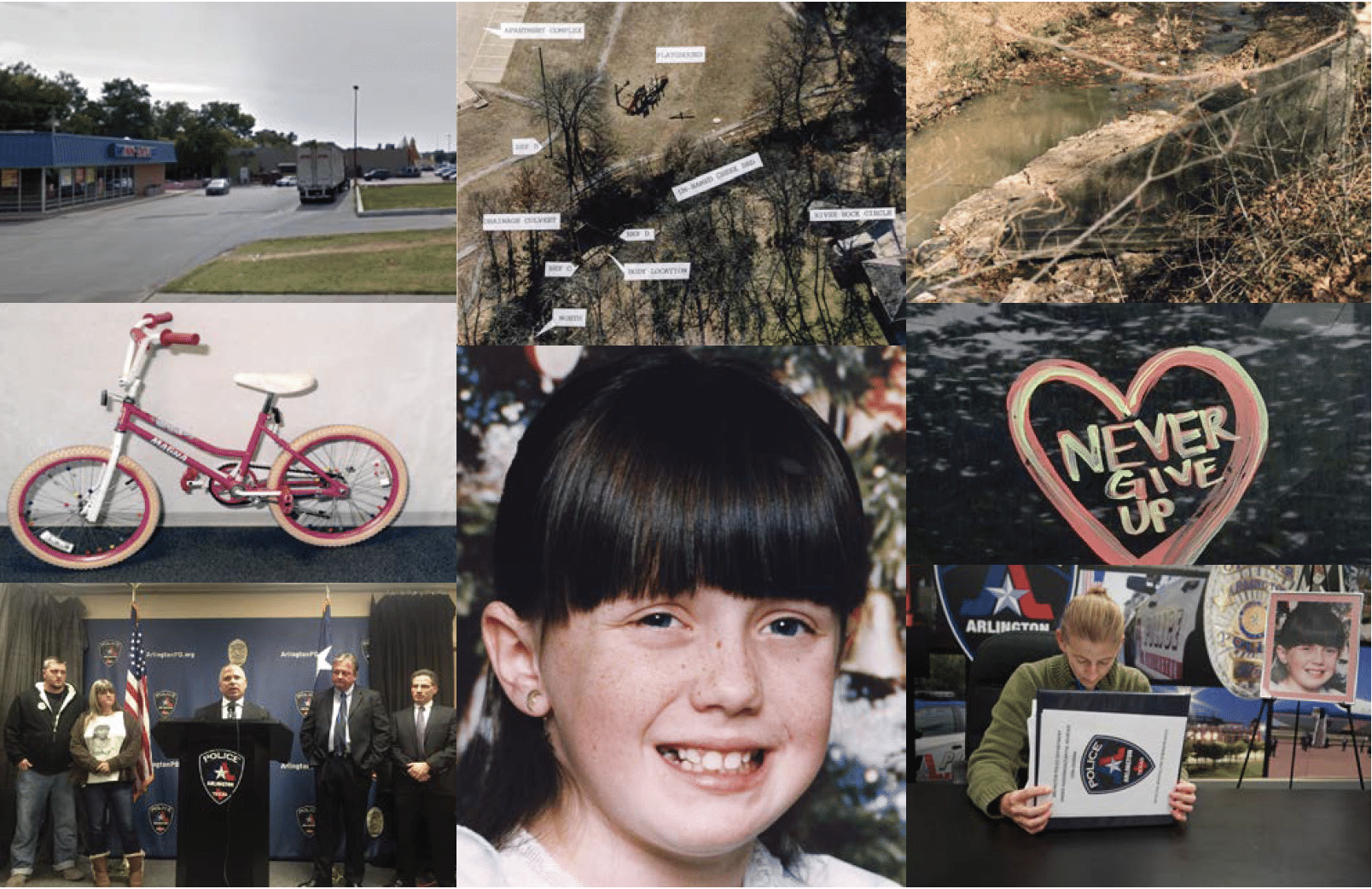




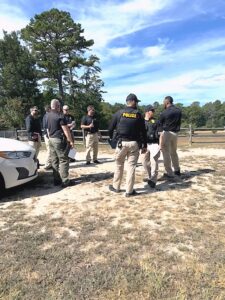
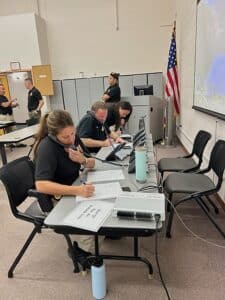

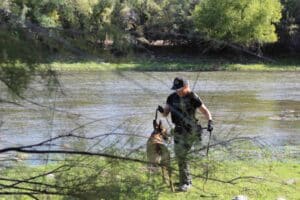


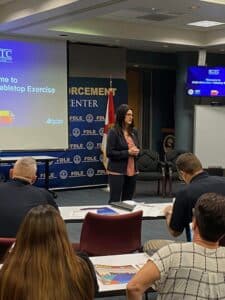
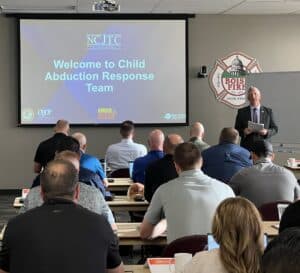


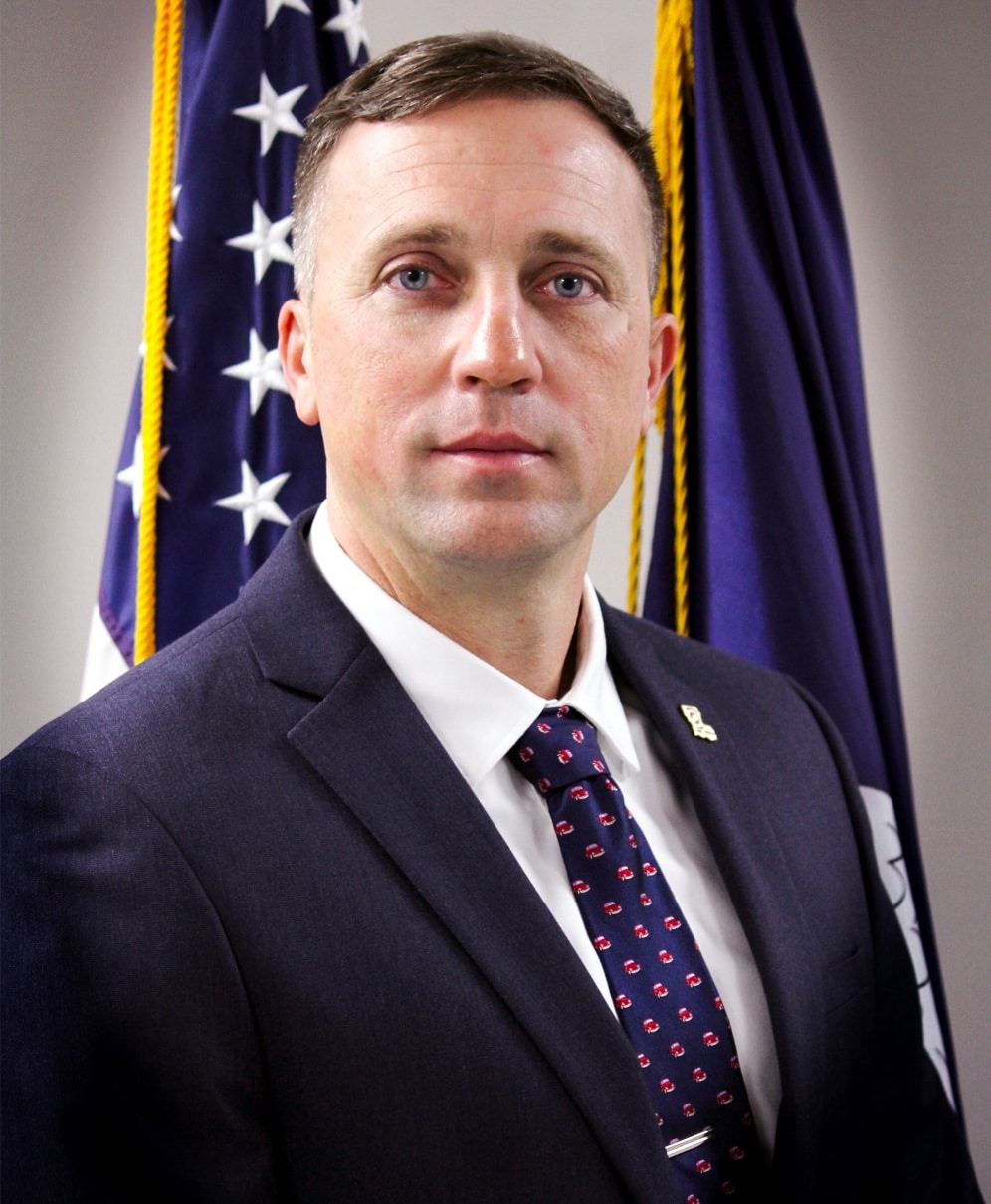
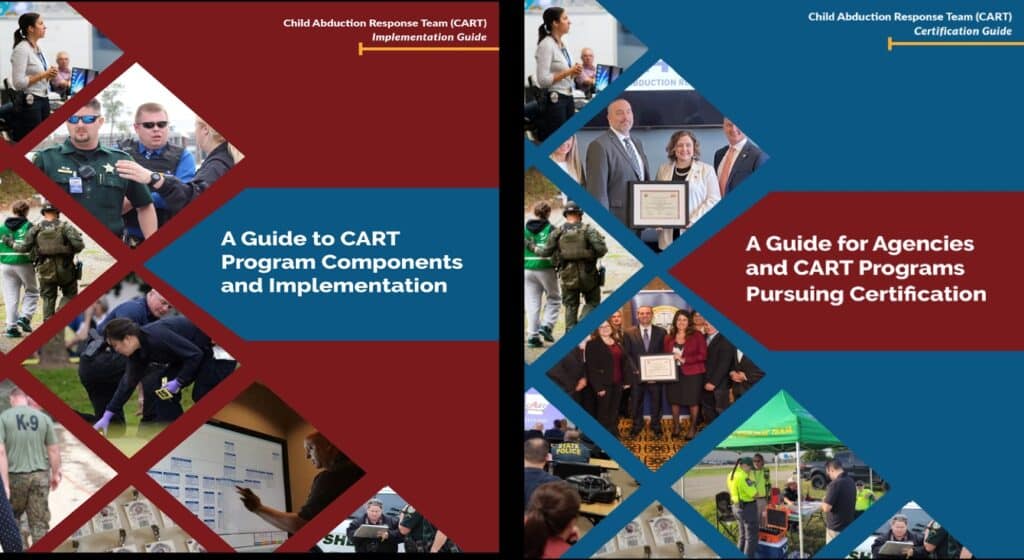
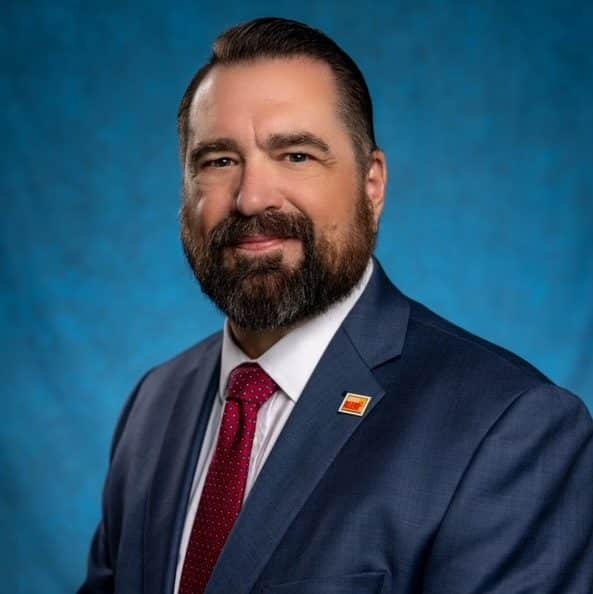


 In 2023, 59% of AMBER Alerts were for family abduction cases, according to the National Center for Missing & Exploited Children. The abductions tend to occur at transition points, such as when court-ordered exchanges of the child are scheduled to take place.



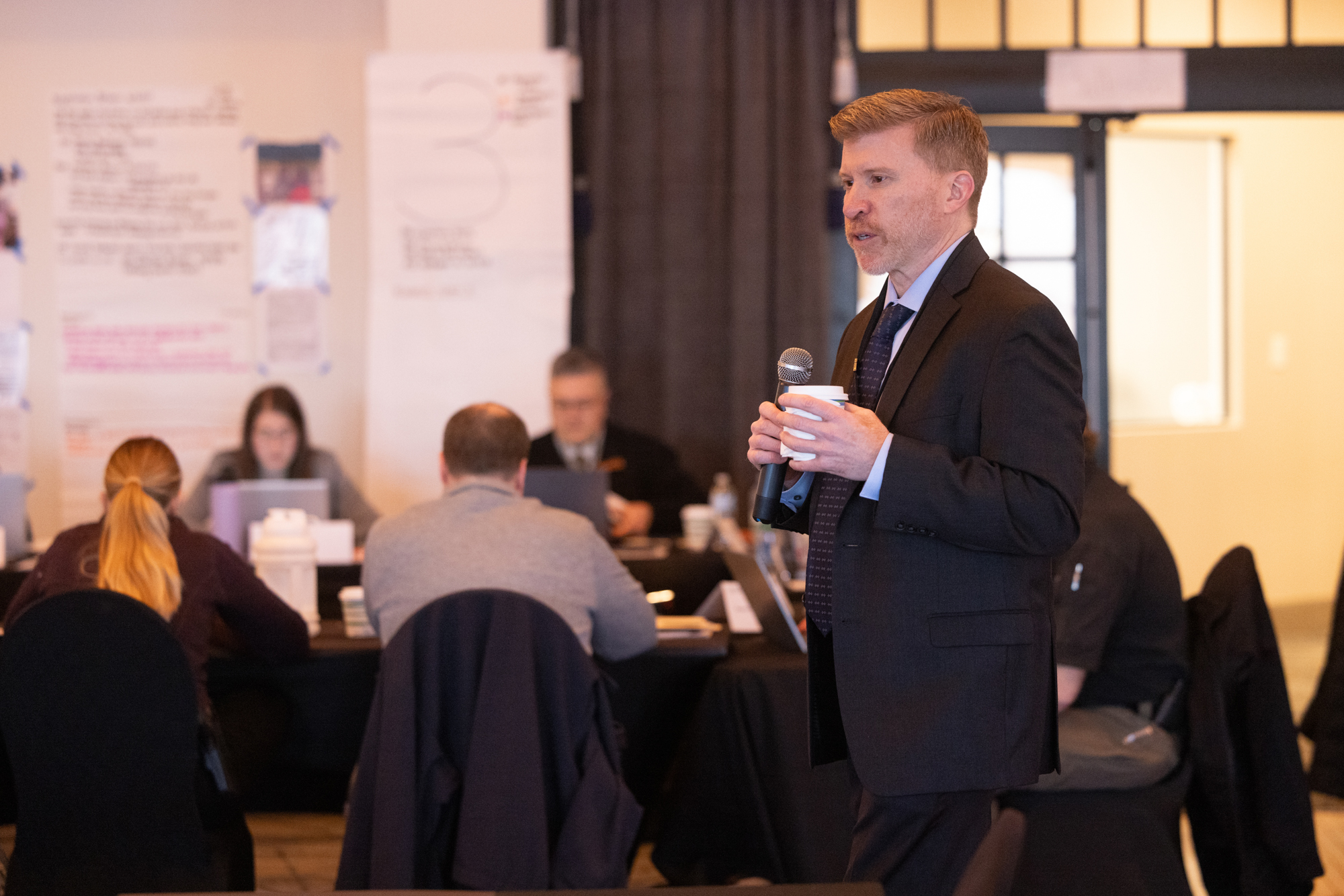






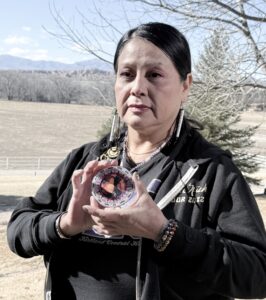






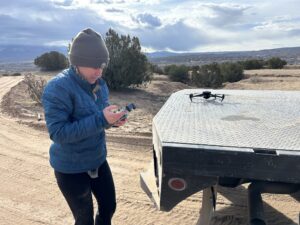
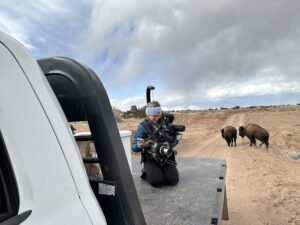



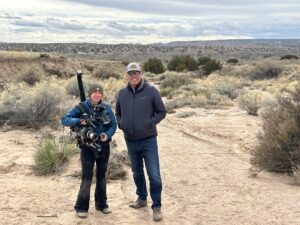


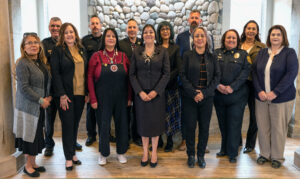


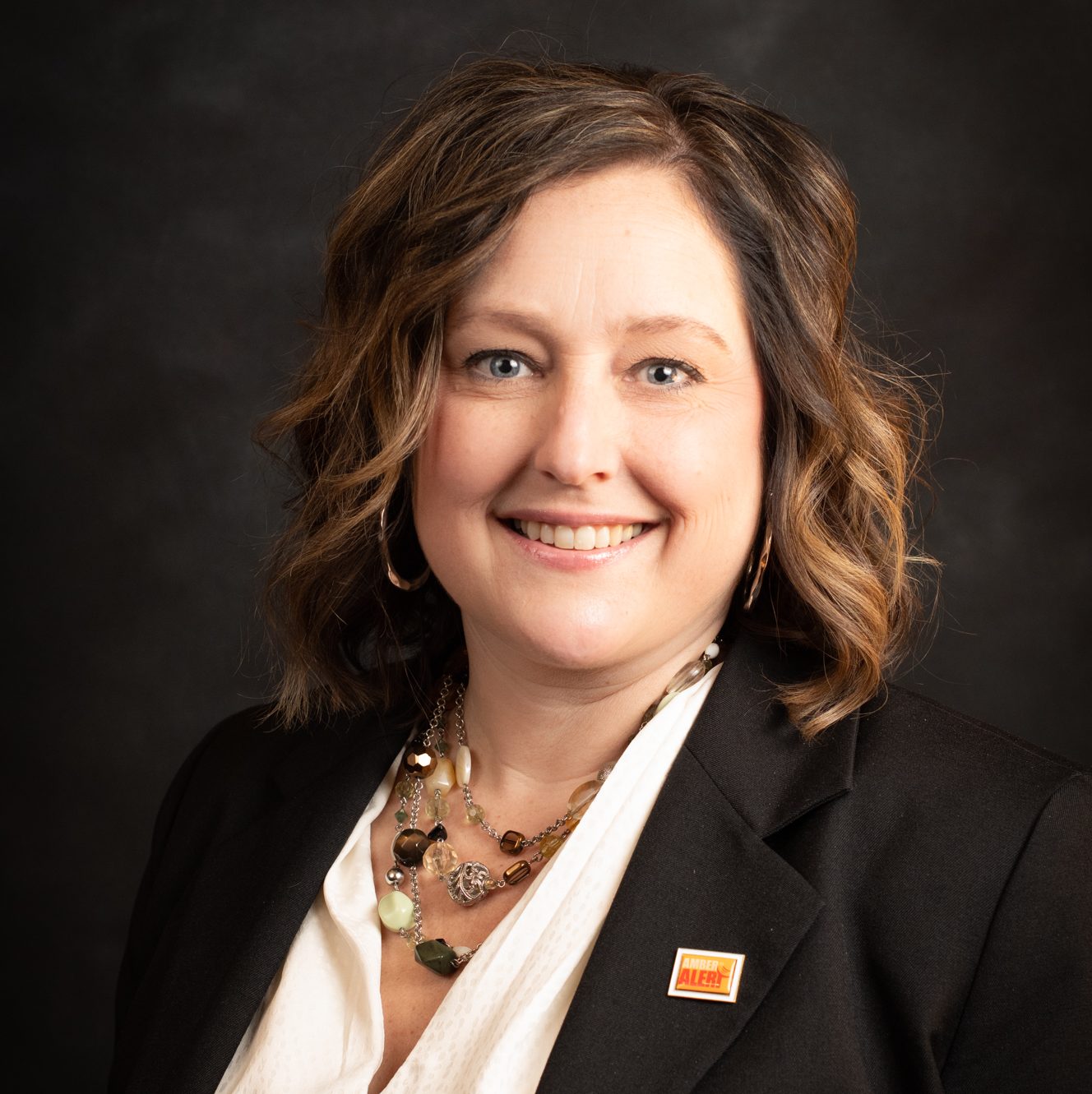





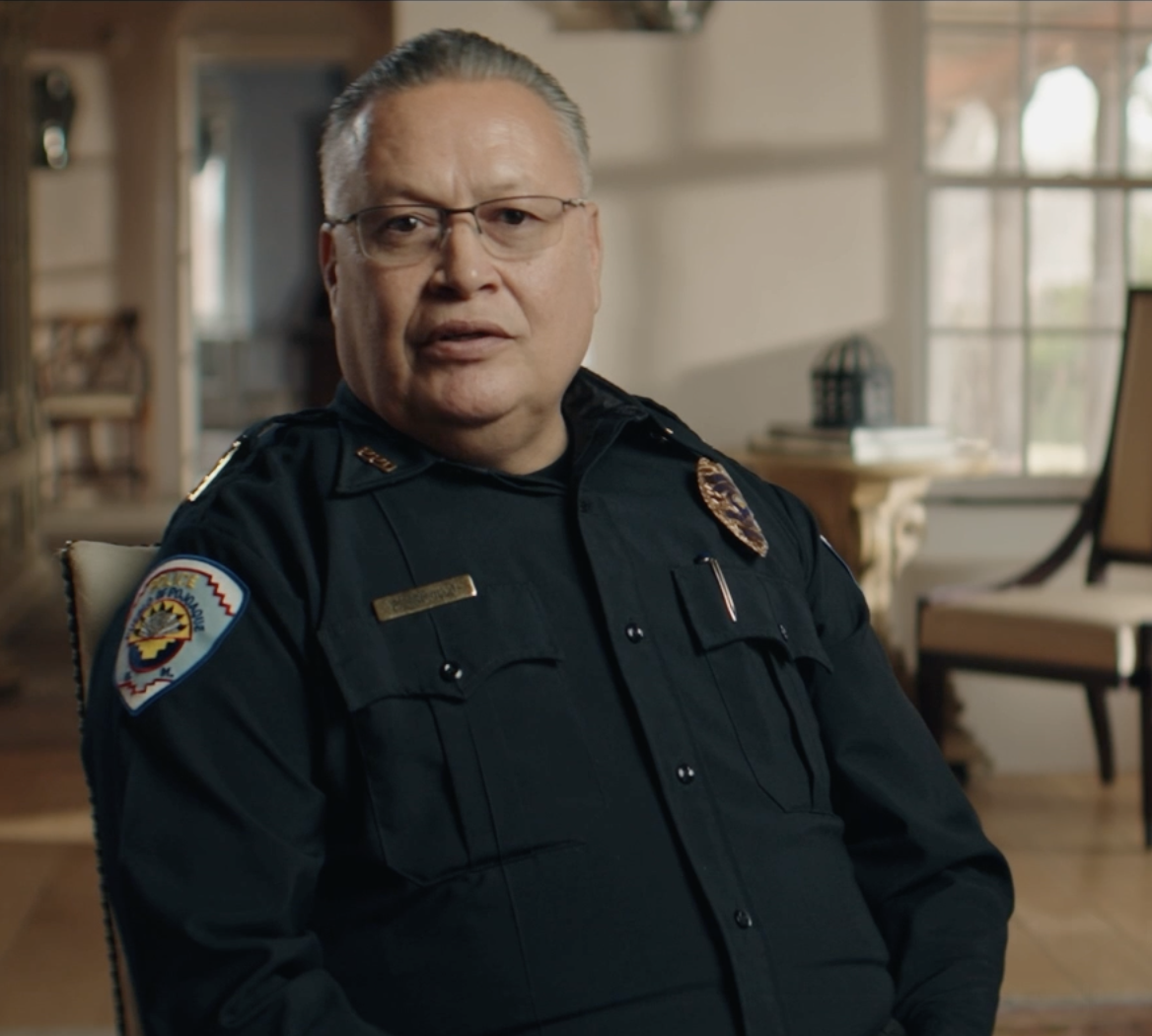


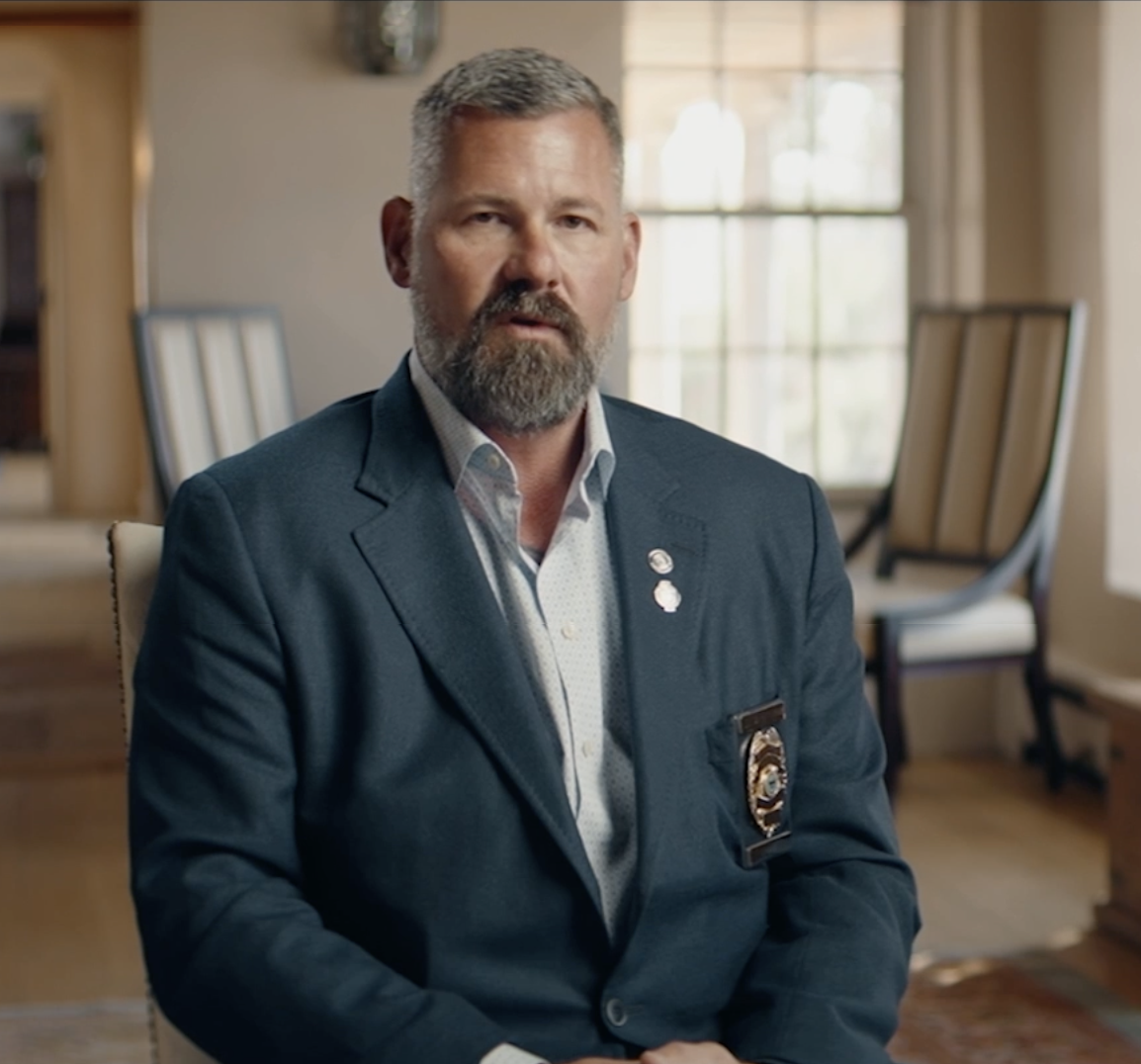




 TACTICAL TIP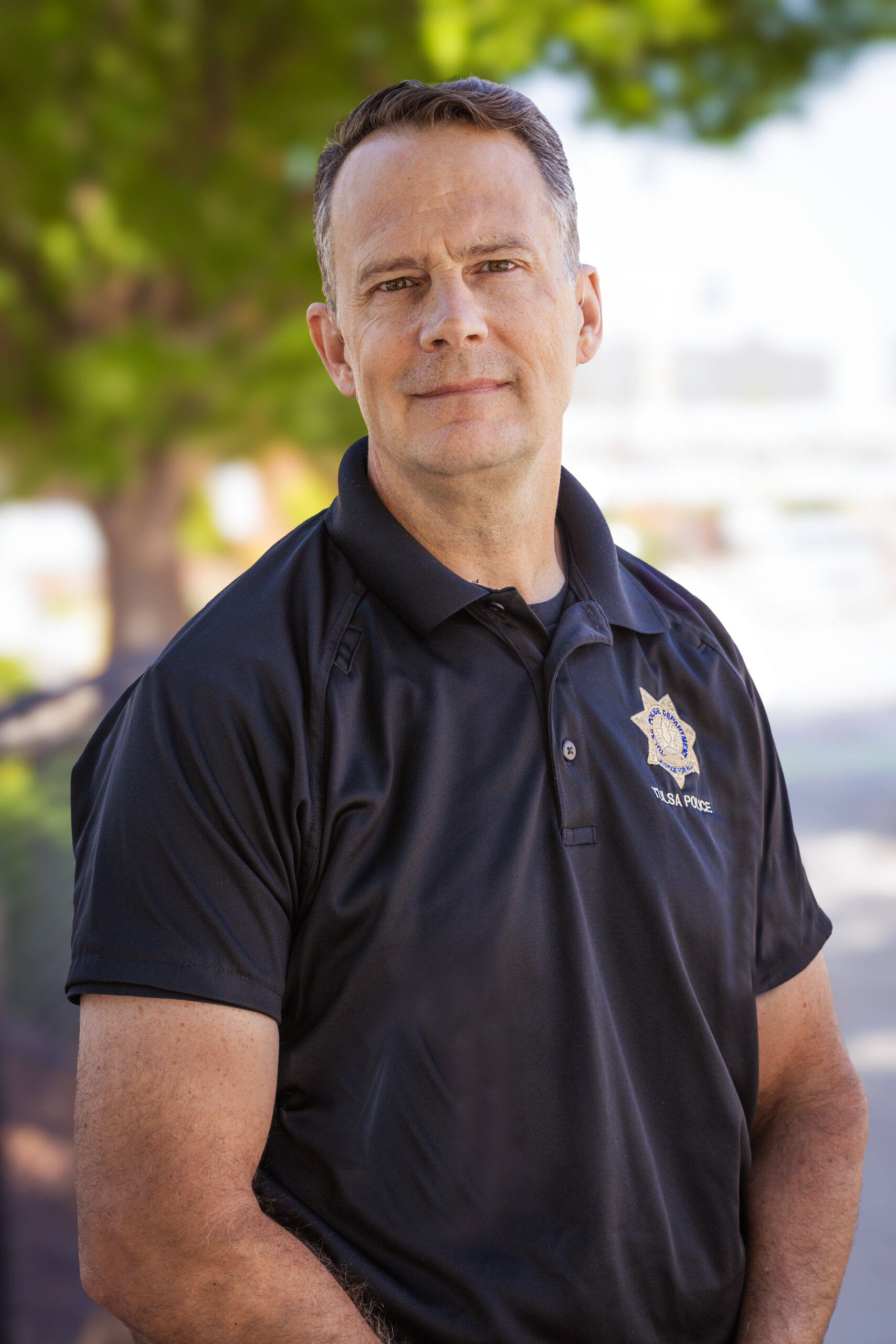

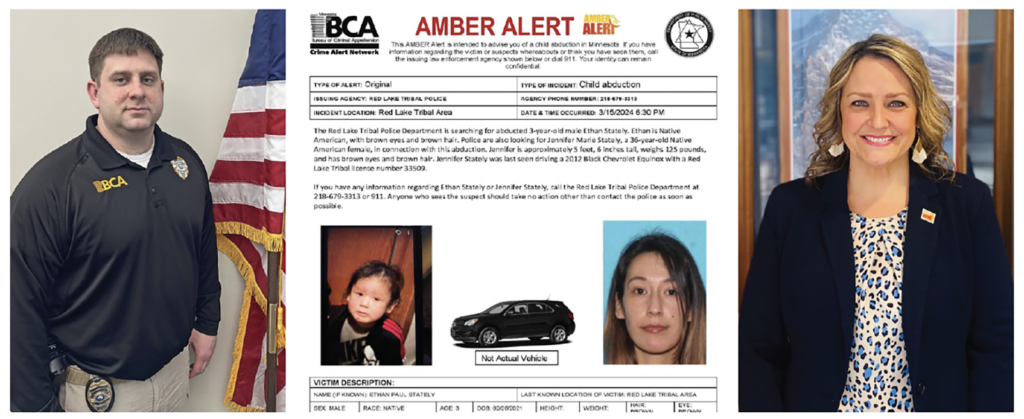
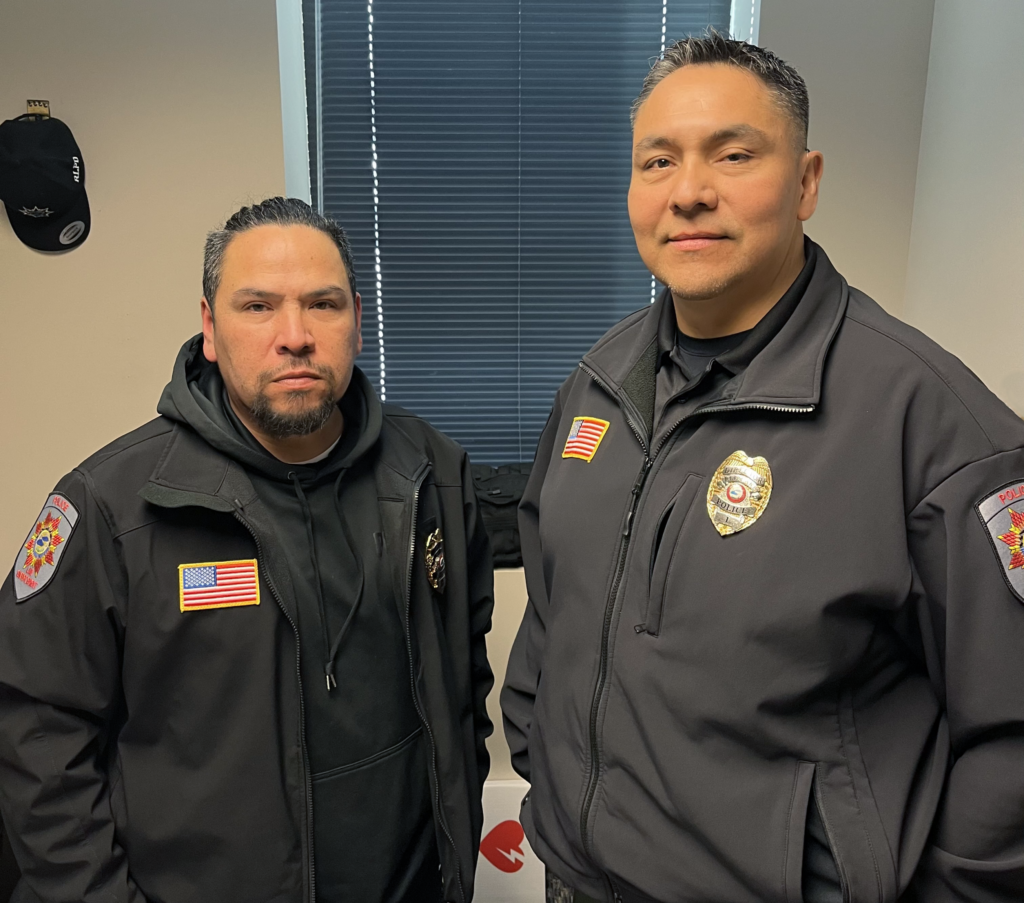

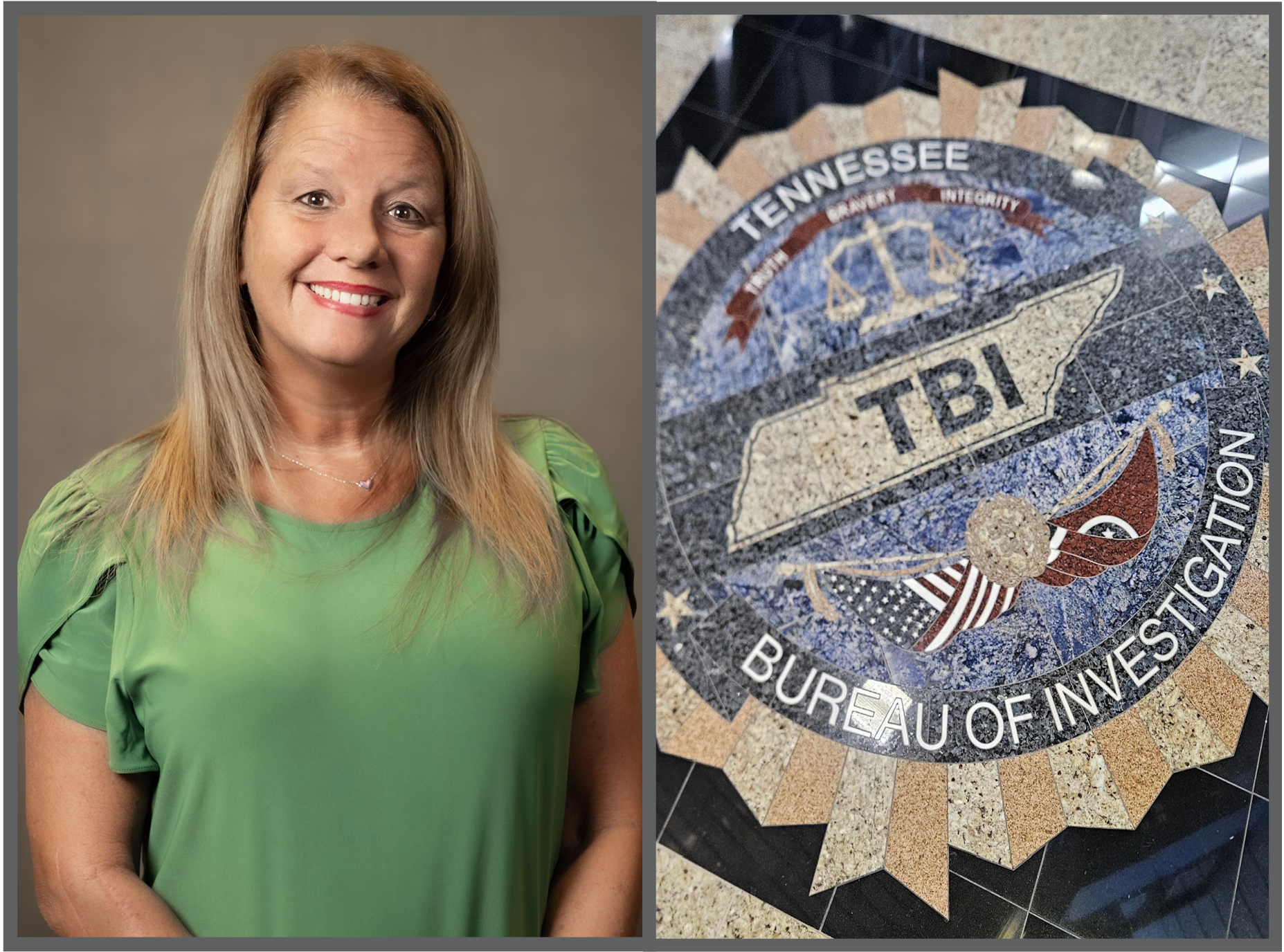
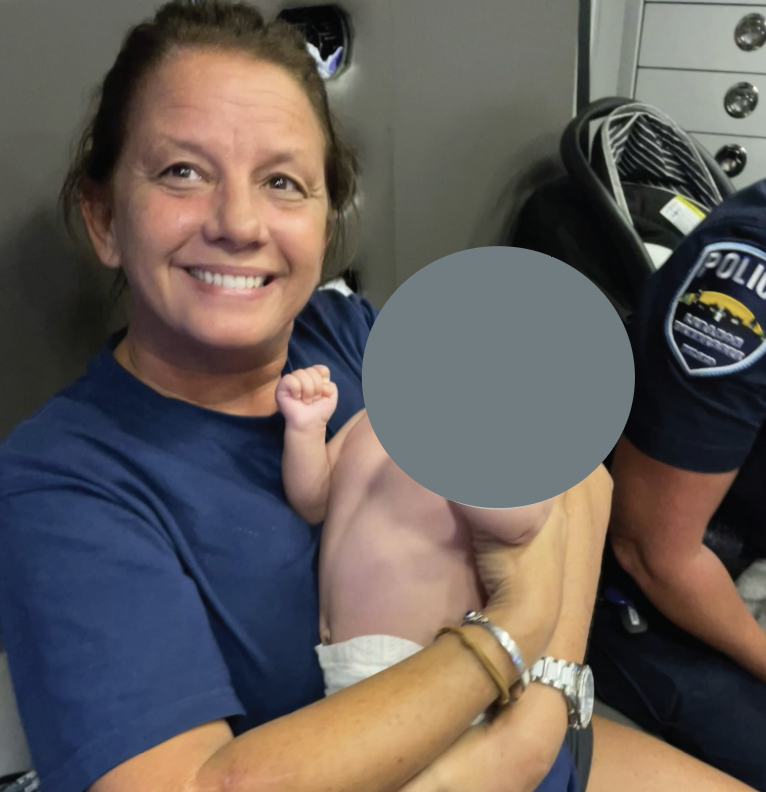


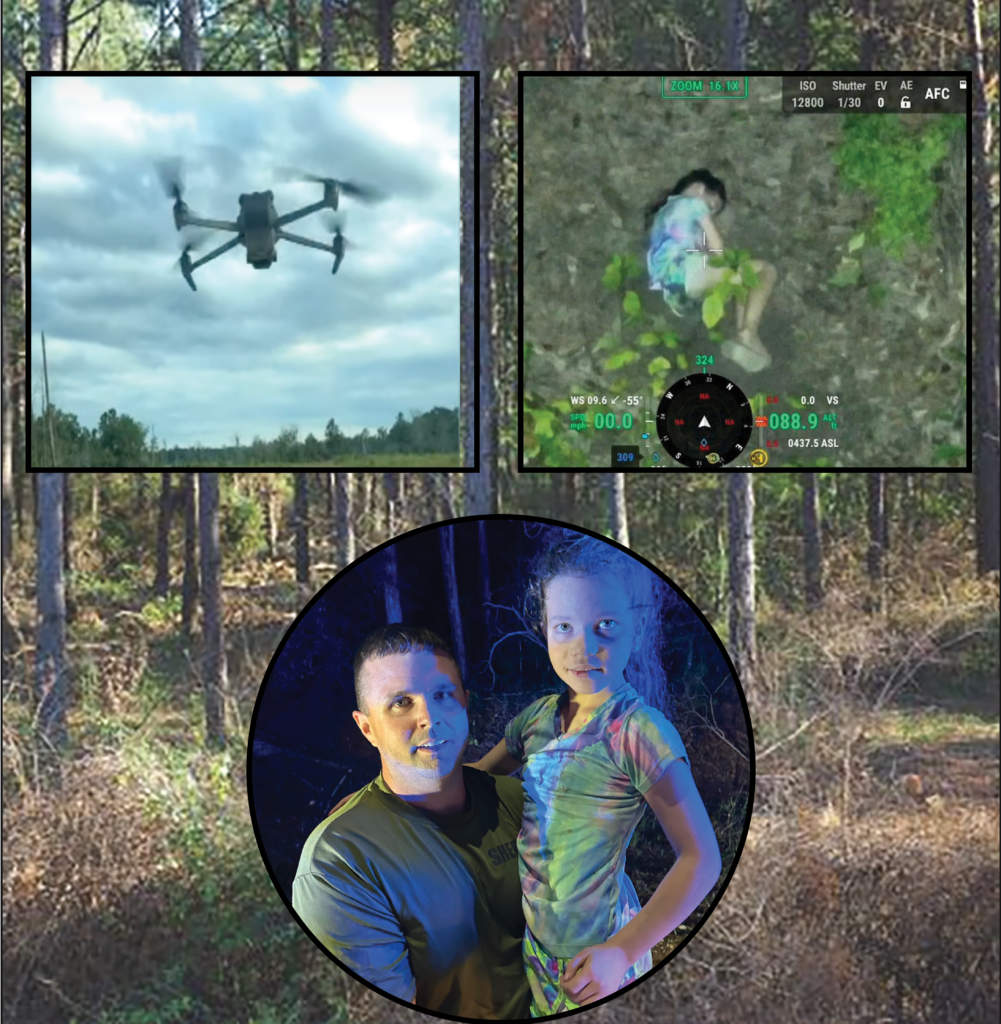




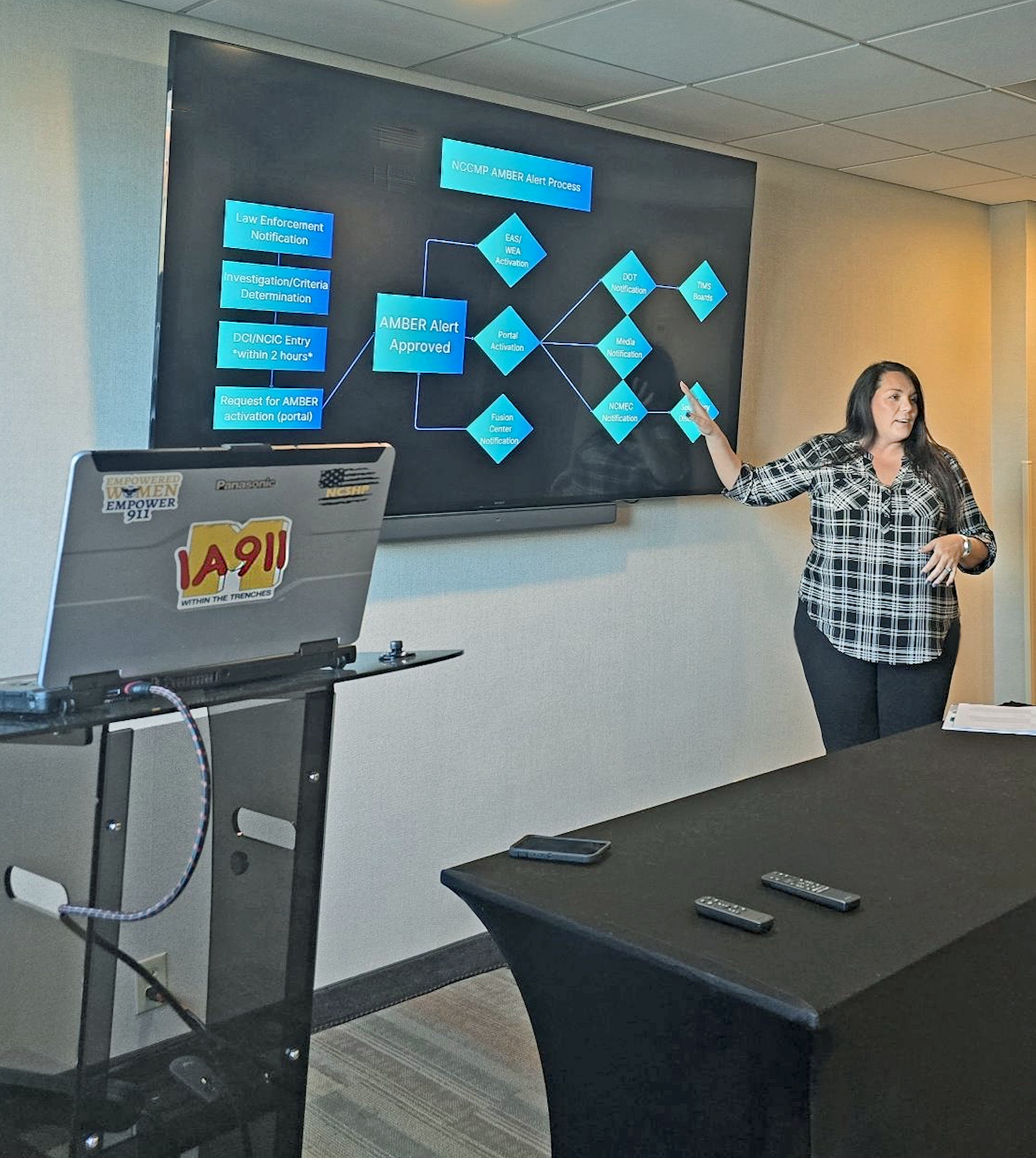

 AATTAP’s course, 911 Telecommunicators and Missing & Abducted Children (“911 T-MAC,” for short) is essential not only for law enforcement and public safety telecommunicators but also for any members of law enforcement and support staff who address public calls for help.



 A Call for Help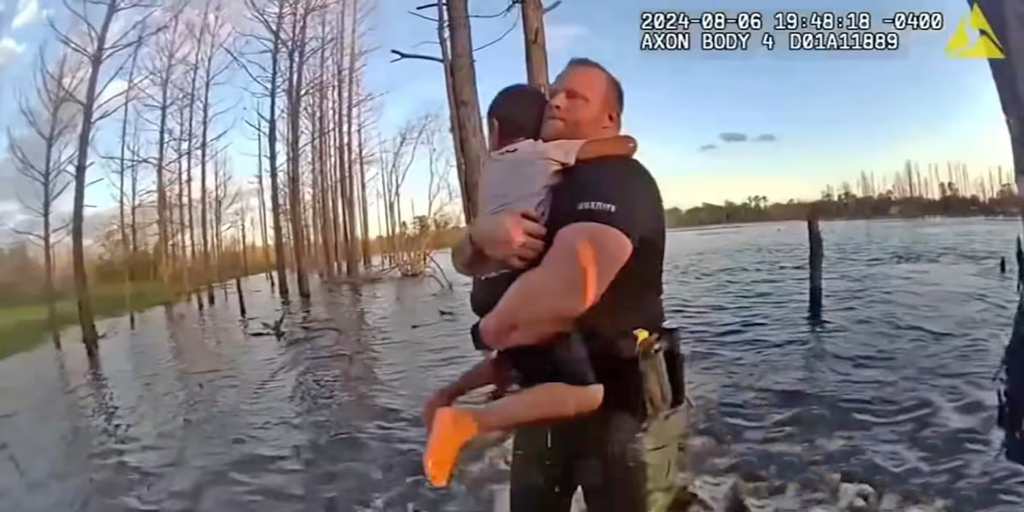
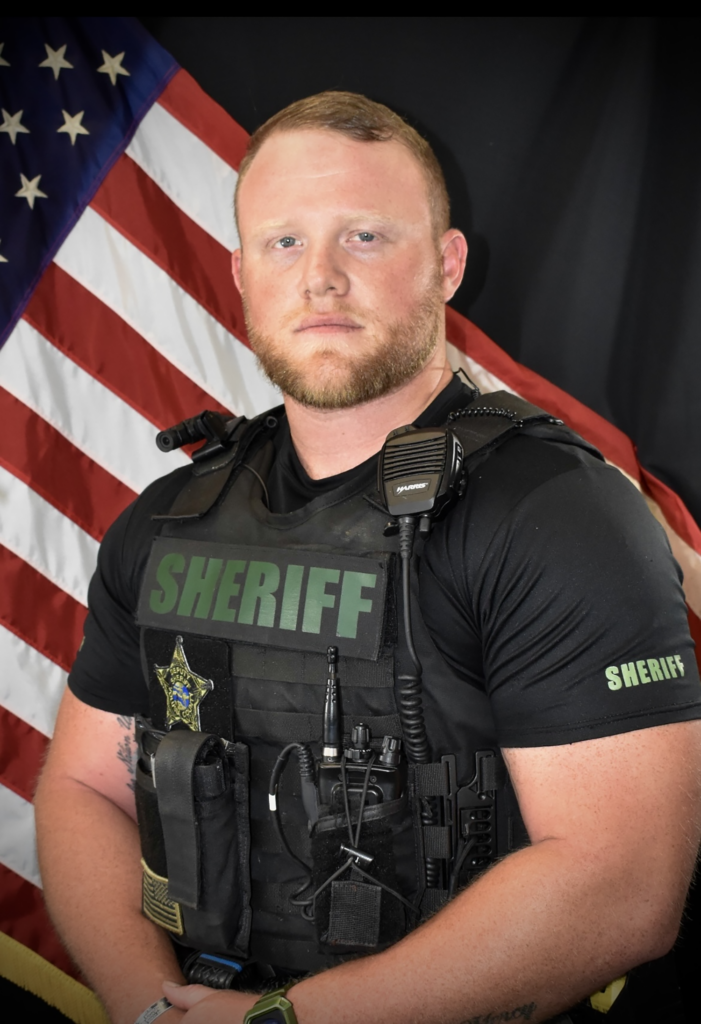
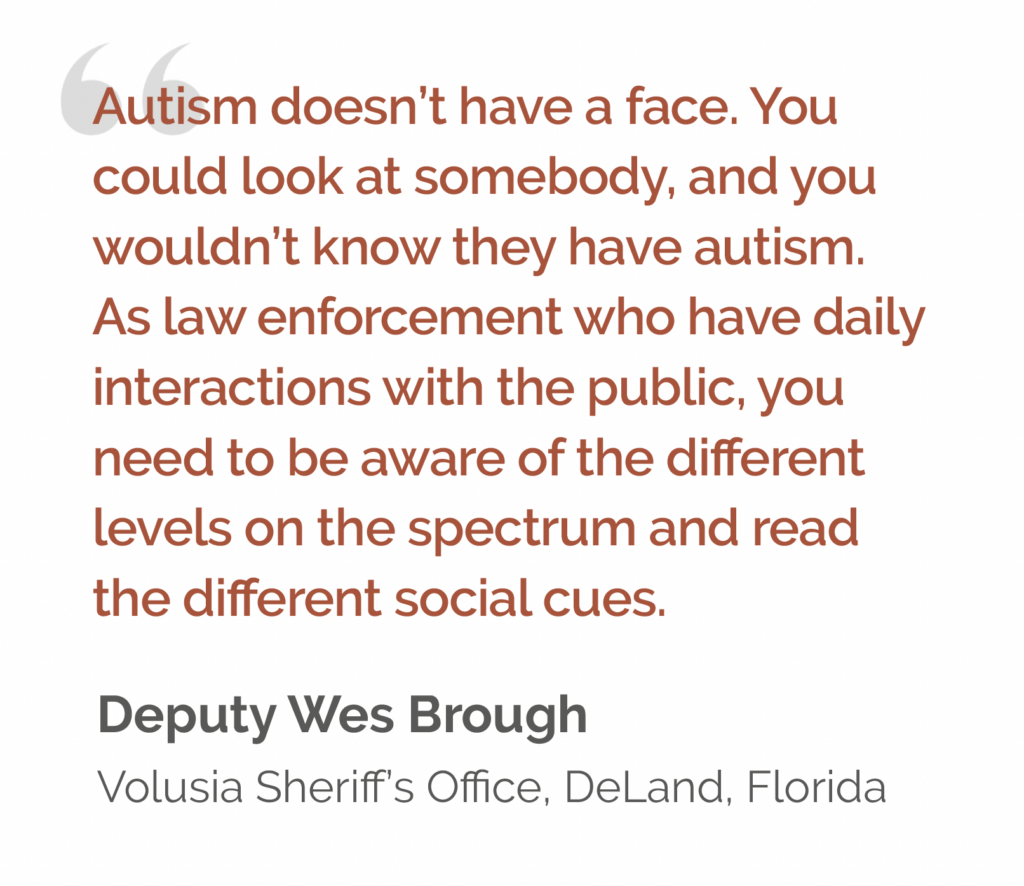 Brough was first on the scene, followed shortly by another officer who helped search the family’s house to confirm the boy wasn’t there. Dispatched officers soon arrived and the search area expanded.
![SIDEBAR with headline "4 tips: Be in the know about autism" [TEXT] Children with autism spectrum disorder (ASD) wander or go missing at a higher rate than other children—a behavior known as elopement. They may be trying to get away from loud sounds or stimuli, or seeking out places of special interest that pique their curiosities. The National Autism Association (NAA) shares the following tips all first responders should know. • Know the signs: A person with autism may have an impaired sense of danger, and, as such, may wander into water, traffic, or other perils. They may not speak or respond to their name, and may appear deaf. They need time to process questions, may repeat phrases, and may try to run away or hide. And they may rock, pace, spin, or flap their hands. • Know how to search: Act quickly and treat the case as critical since a child with autism may head straight to a source of danger, such as water, traffic, or an abandoned vehicle. First search any nearby body of water, even if the child is thought to fear it. Ask about the child’s likes and dislikes, including potential fears such as search dogs or siren sounds. • Know how to interact: Don’t assume a person with autism will respond to “stop” or other commands or questions. If they’re not in danger, allow space and avoid touching. Get on the child’s level and speak in a reassuring tone, using simple phrases—even if the person is nonverbal. Offering a phone to a nonverbal person to communicate via typing may be helpful. • Know about resources: Beyond agency training, law enforcement officers can find online resources. The National Autism Association offers a downloadable brochure with tips for first responders on its website. Additionally, the National Center for Missing & Exploited Children also offers excellent online resources (visit missingkids.org).](https://amberadvocate.org/wp-content/uploads/2024/10/AA60-sidebar-autism-1.png)




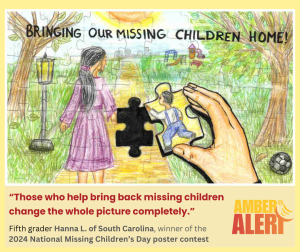
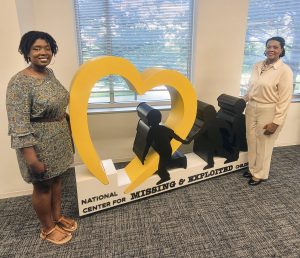





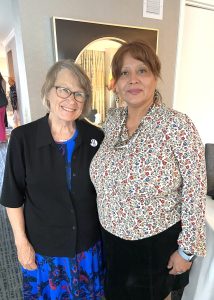
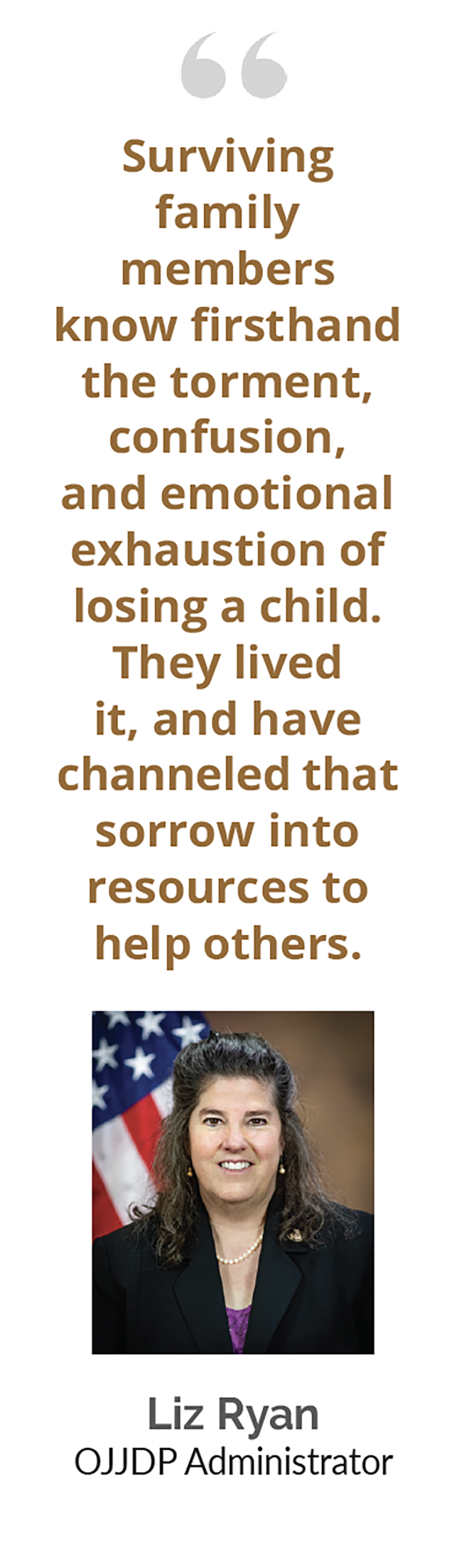 That club’s members include parents and siblings desperate to find their missing loved ones, whose whereabouts remain unknown. They are also families who will forever grieve a child who was abducted, sexually assaulted, and murdered; families of children illegally taken out of the country by an estranged parent; families who have fortunately been reunited with their once-missing child, but now work to become whole again.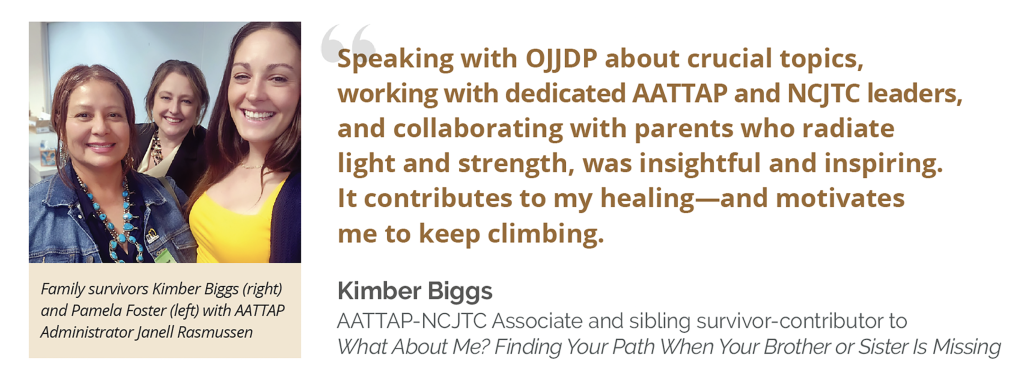
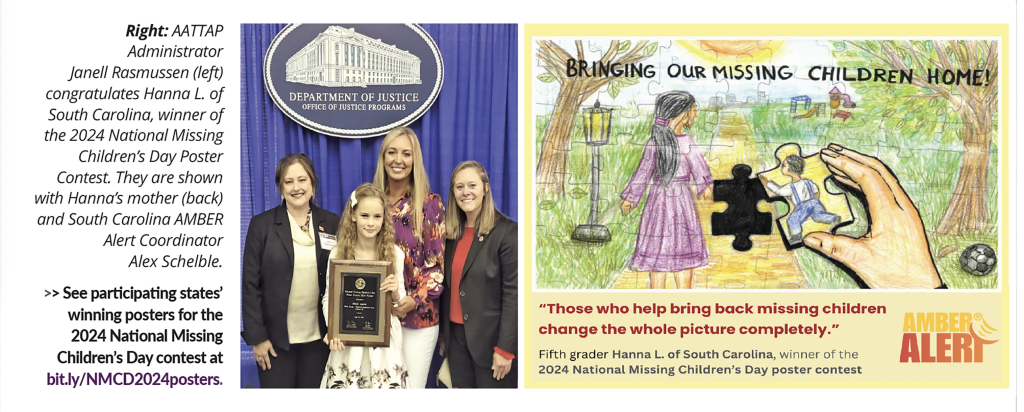
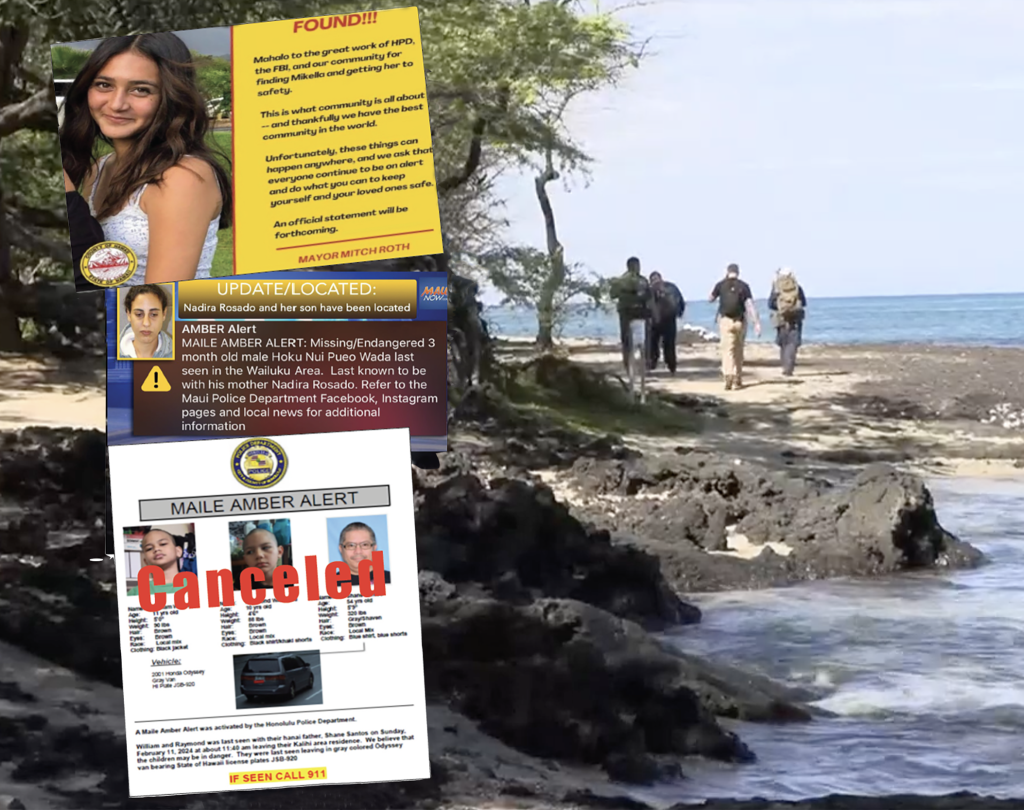
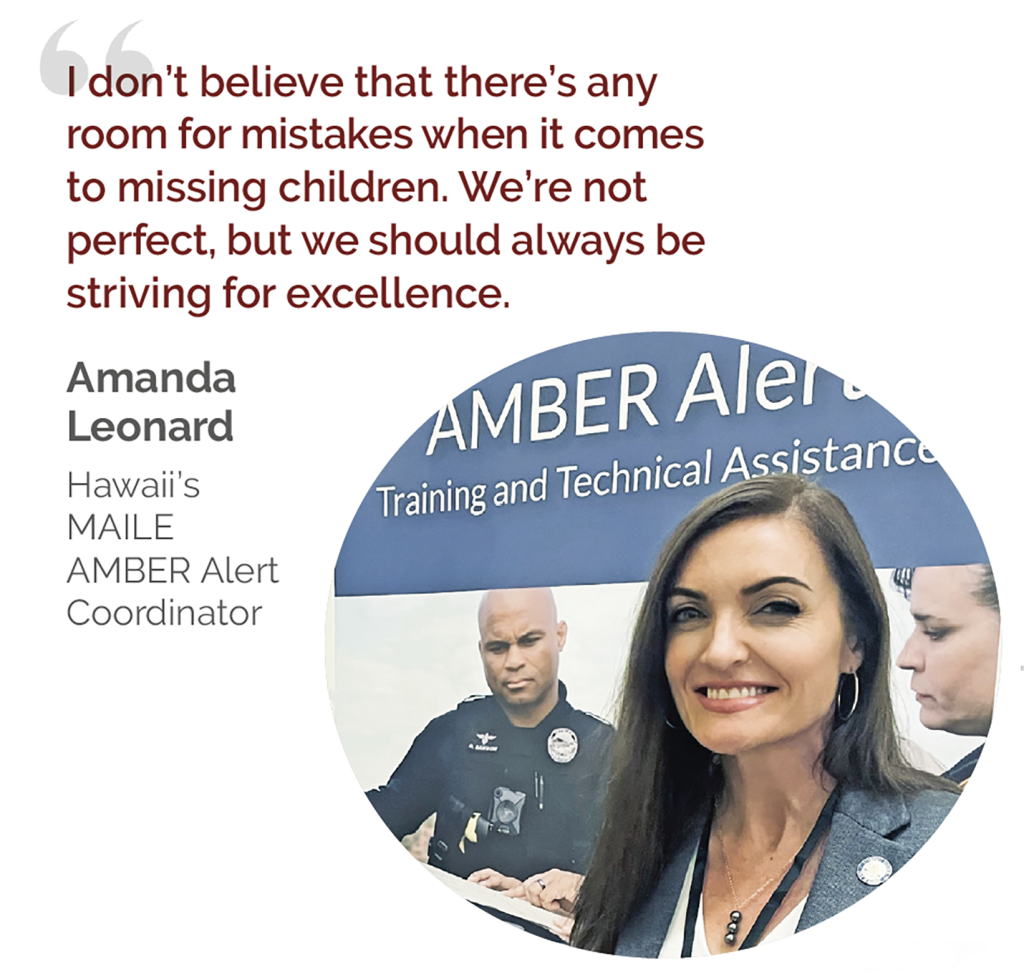
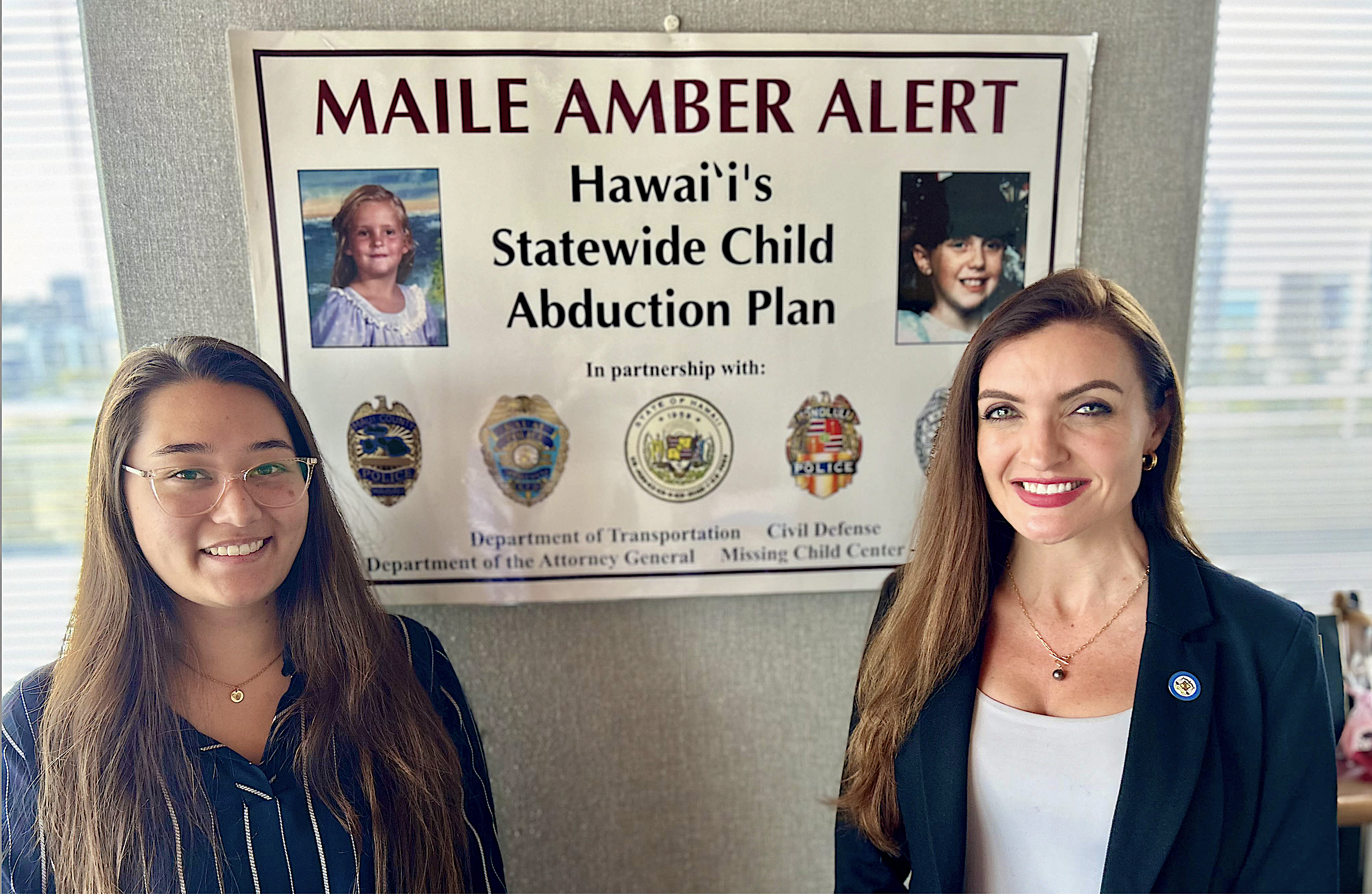
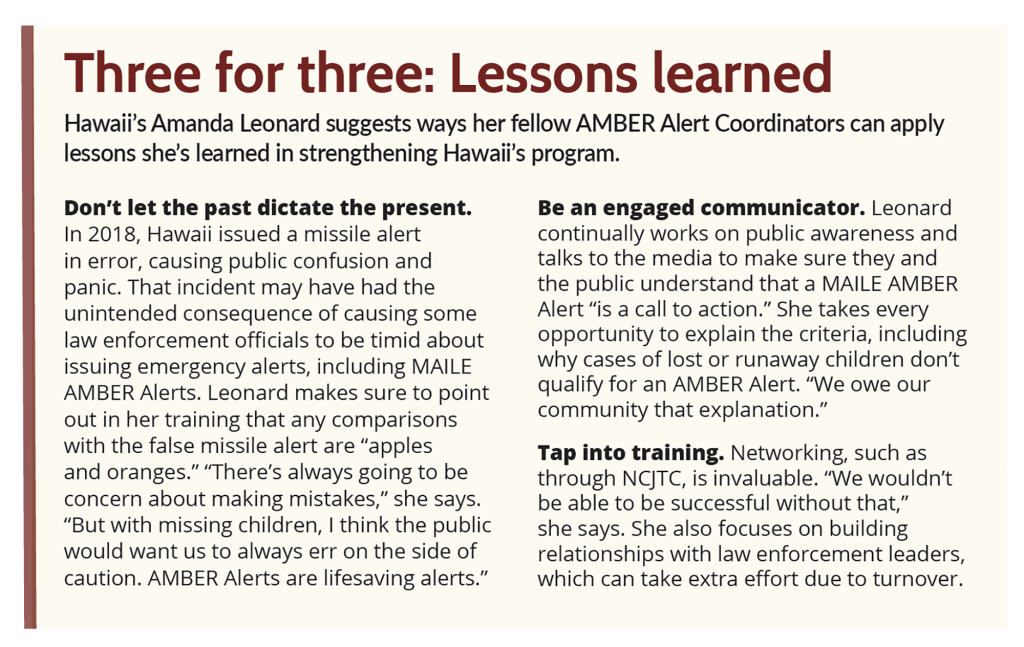 On the heels of that case, about five months later the Maui Police Department issued its first MAILE AMBER Alert. In February 2023, an island-wide alert was disseminated for a 3-month-old boy whose mother had fled with him after the father was granted sole legal and physical custody. Shortly after the alert was issued around 2 a.m., authorities received a tip on the whereabouts of the mother, who was wanted for custodial interference and was in violation of a temporary restraining order between herself and the child. The baby was safely recovered.
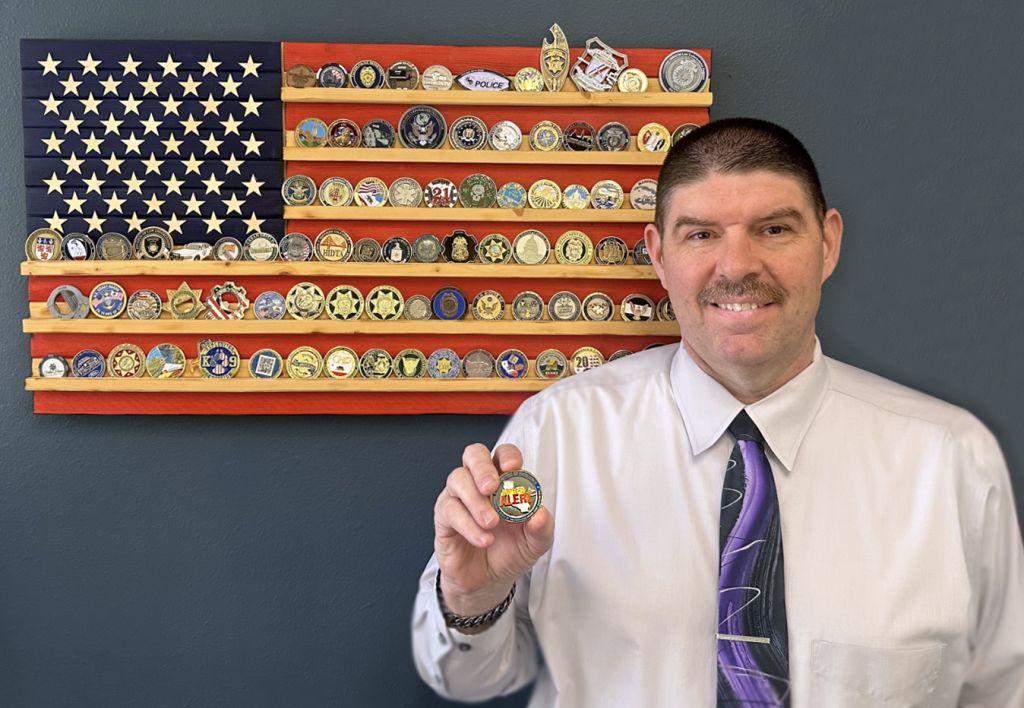

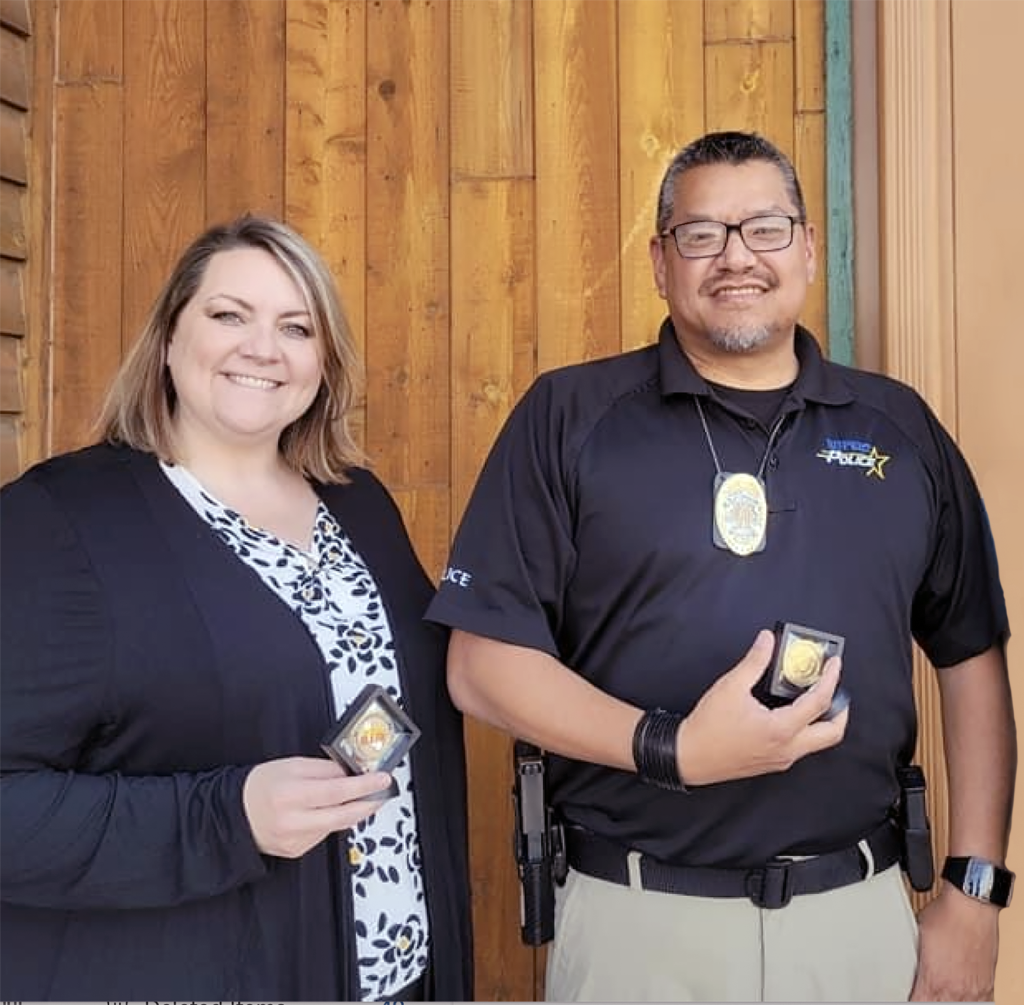
 By Denise Gee Peacock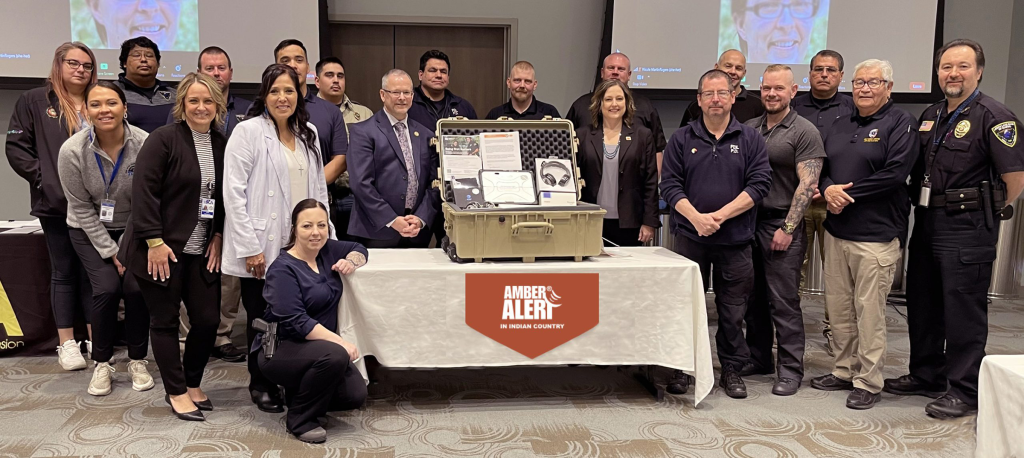

 But she kept thinking of VanLuchene. What could she create for a former police officer “who’d pretty much seen it all—but also was a gentle soul,” a sibling-survivor of a violent crime? “I wanted to give him something from my heart—especially because he’s doing such good work to help others find missing children,” she says.
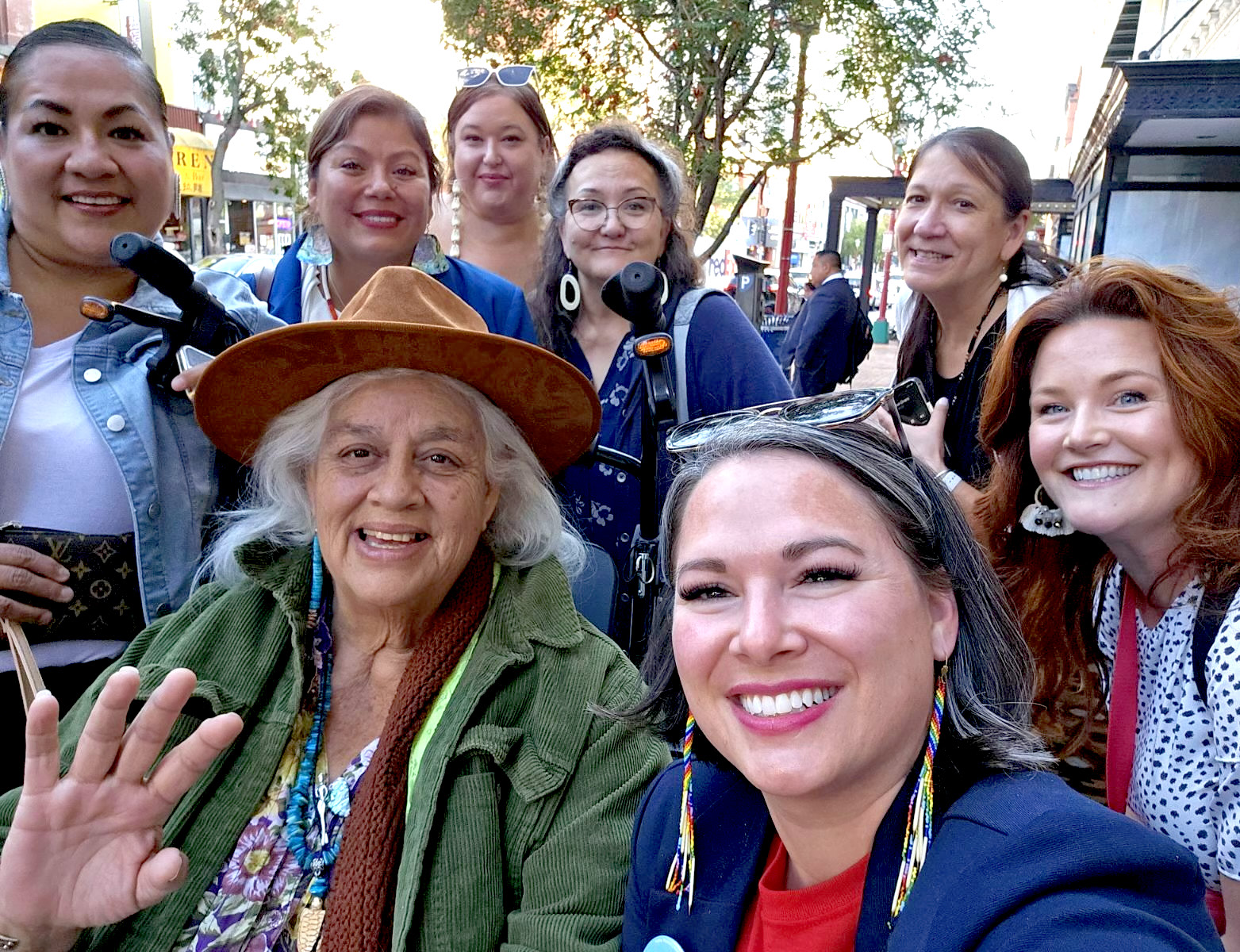
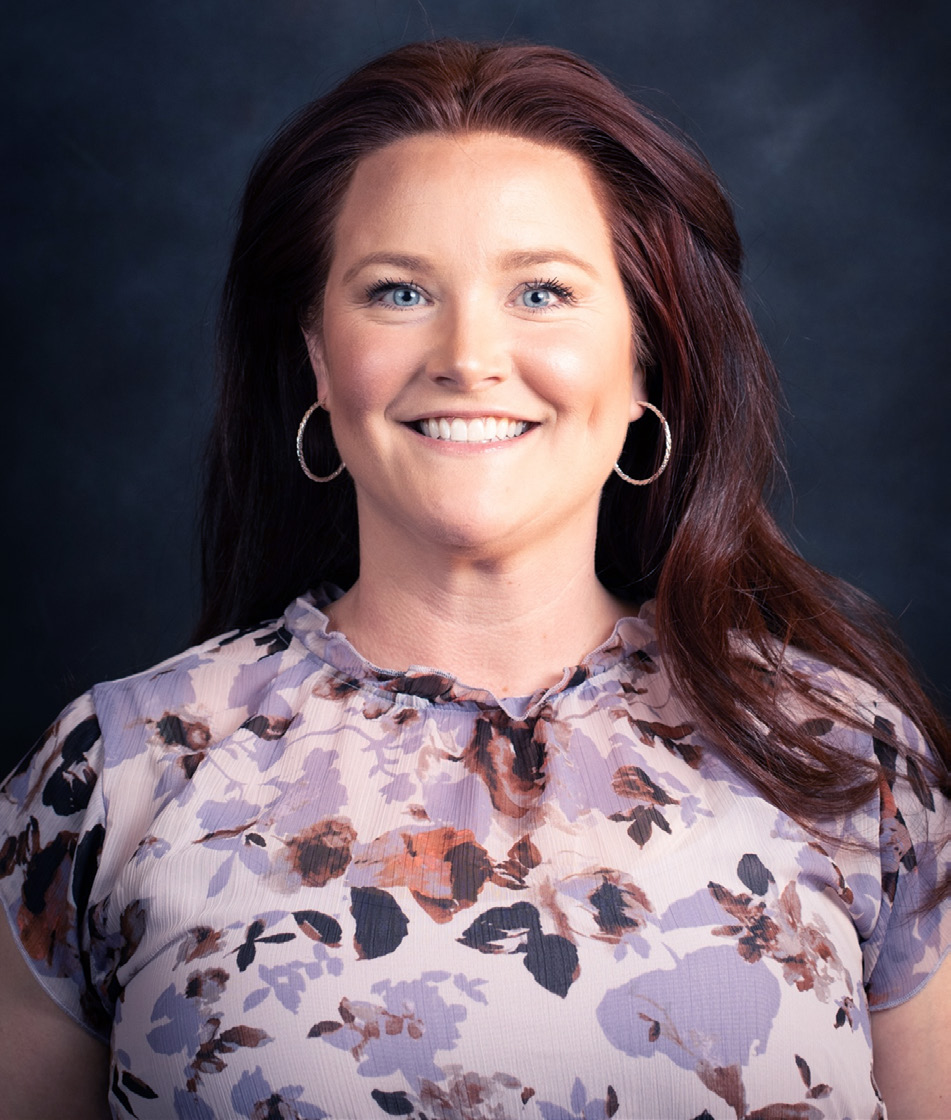
![Information sidebar: Not Invisible Act: Key findings Jolene Hardesty shares thoughts from her Not Invisible Act Commission work. Resources are desperately needed. “We heard testimony from an Alaska Native woman whose sister was murdered in her home—and she lay dead on the floor for three days because no police came to investigate,” Hardesty says. “There are also villages in Alaska that don’t have a fire department; villages that take a State Trooper three days by airplane to reach; and villages where Tribes don’t have a police department—or if they do, officers are not staffed 24/7. These departments lack the funding, resources, people, or skill sets to have an appropriate response, much less an immediate one.” Jurisdiction can be a problematic puzzle. In Oklahoma, where nearly half the land is Tribal owned, “you have a checkerboard of different Tribes, and criminal jurisdiction isn’t clear,” she says. For instance, a crime that happens on the northwest quadrant of a street may be the responsibility of a different Tribe than one on the southwest quadrant. And if the crime is murder, another jurisdiction may need to be involved. “Keeping up with the matrix needed to determine who’s going to respond to a crime can be overwhelming,” she says. Justice is often meted out differently. “Tribal law enforcement and courts are limited in what they can do [and often include social-rehabilitation measures]. If a murder occurs on Indian land, the most jail time imposed [may be] nine years,” Hardesty says.](https://amberadvocate.org/wp-content/uploads/2024/04/16b-Key-Findings.png) How does the way data is collected present a problem?
How does the way data is collected present a problem?


 From the outset, their investigative team worked quickly to find Charlotte using comprehensive investigative strategies and tools. The public was alerted once the criteria had been met—and only in a specific area where the 9-year-old was likely to be. The goal is to provide the public with information that can help, rather than confuse, efforts to locate a missing child. Strategic, targeted alerting helps prevent people from becoming de-sensitized to AMBER Alerts, which can be a deadly consequence of public indifference.
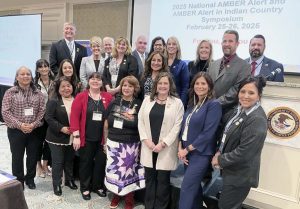


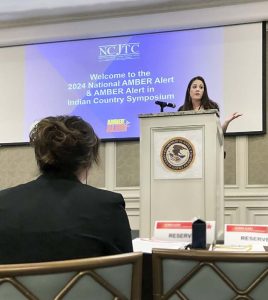
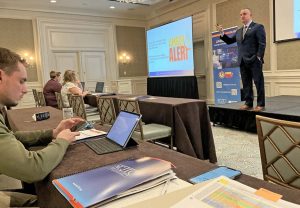

 The no-fee training and collaborative learning event, funded through the U.S. Department of Justice, Office of Justice Programs, and administered by the AMBER Alert Training and Technical Assistance Program (AATTAP), engaged attendees in discussing developing trends and case studies, sharing best practices, and training with other child protection partners to better respond to endangered missing and abducted child cases.

 Her anguish would be further heightened after learning that the Navajo Nation—the nation’s largest Indian reservation, spanning three states—was not equipped to quickly issue an AMBER Alert. And confusion by outside law enforcement over who had the proper jurisdiction to issue the alert created a major delay in finding Ashlynne.


 While Eddie Bertola and Tony Godwin have taken different paths in law enforcement, both nationally respected professionals embrace the significant role that technology plays in helping prevent, and find, missing and exploited children.
 1) Message Design Dashboard: Building a better WEA
 The software should be ready for use with AMBER Alert messaging in early 2024 says Jeannette Sutton, a University at Albany professor who heads the project and specializes in disaster and risk. Bertola and Sutton emphasize the ease of using the Dashboard, where users can click desired descriptors from dropdown menus. As answers are selected, the message is automatically built in a preview box at the side of the screen, with all content remaining editable. “We believe a common structure will improve messaging and get people to follow a consistent set of information and style of writing,” Sutton says.
 One product that’s making a marked difference in how police officers do their jobs is Flock Safety, a system with high-quality cameras, video, and other technology (shown at right) that reads license plates in order to provide real-time actionable intelligence.
 “Of all the years I’ve been doing this, I can’t think of … a more game-changing piece of technology for law enforcement,” said Elizabethtown Police Chief Jeremy Thompson when asking the city council for more Flock cameras to be added to the system installed six months earlier. “I’ve heard council members say that if we recover one kidnapped child, it was worth it. And in my opinion, no truer words have been spoken.”
 4) Open Source Intelligence: Digging deep for answers
 4) Open Source Intelligence: Digging deep for answers
 No technology has exploded more in recent times than artificial intelligence (AI). It’s considered the next big thing, even though machine learning dates to the 1950s. “AI is not yet widely used internally, but it will be,” Godwin says.
 Godwin expects deepfake detection apps and tools to make strides, though they are evolving.
 Better Equipping Indian Country
 The National Center for Missing & Exploited Children (NCMEC) is confident one of its newest tech-smart initiatives—using a QR code on missing child posters—can revolutionize the search for endangered missing children.
 A tool powered by artificial intelligence (AI) is identifying risky apps concerning child exploitation. The App Danger Project, a website designed to create a safer online environment and help parents determine what apps are safe for their children to use, lists more than 180 apps across Apple’s App Store and Google’s Play Store that meet its criteria for being considered dangerous. The website also includes a search tool to easily analyze user reviews of specific apps. As a result of the initiative, Apple has removed 10 apps to date that violated the company’s guidelines.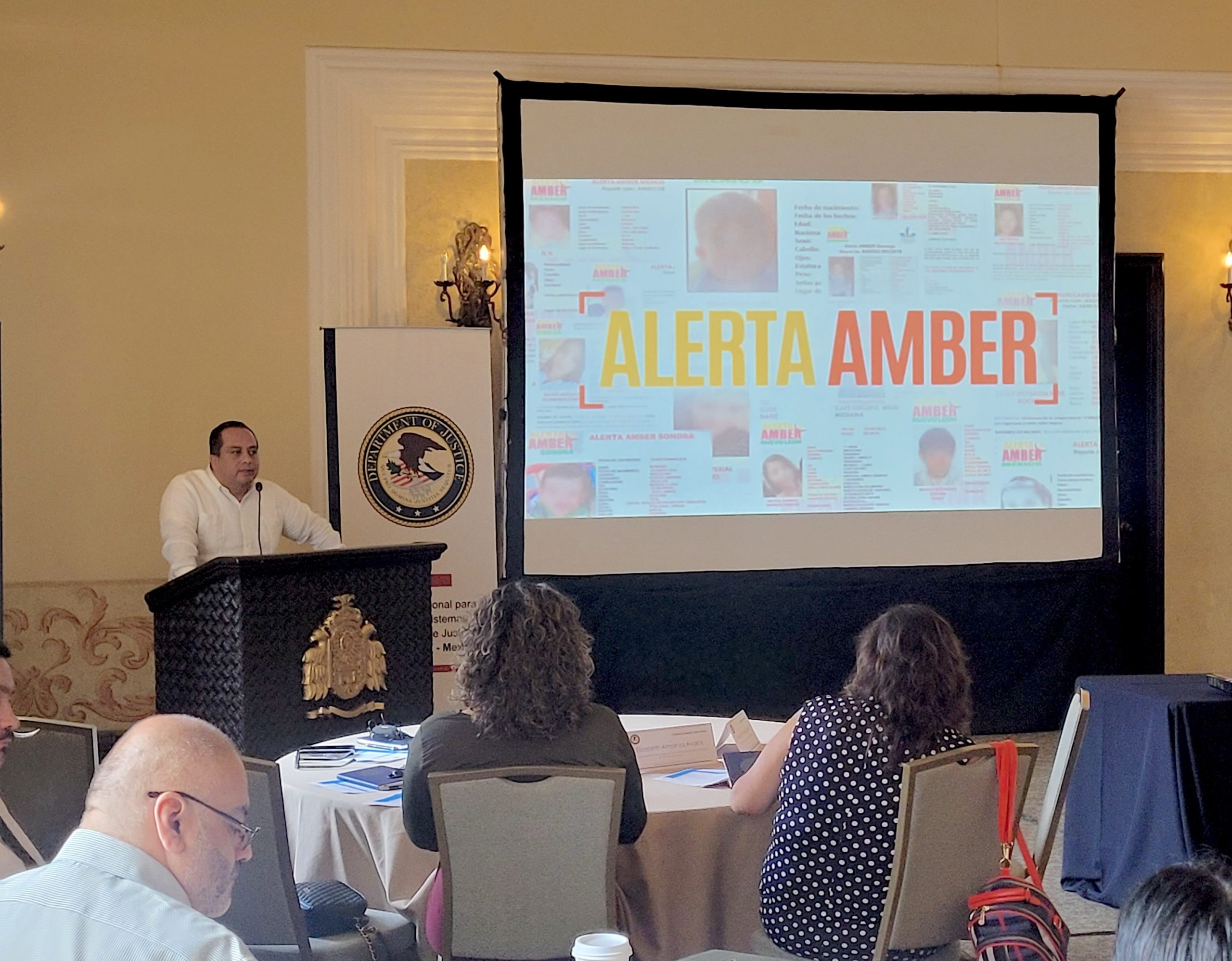
 Even while at the event, Narváez discreetly sprang into action, issuing a regional Alerta Amber, Mexico’s version of a U.S. AMBER Alert. Posters of Angela—a cherubic girl with large brown eyes—were circulated on social media, and alerts buzzed on cellphones throughout the region.
 “All of them facilitated our work, allowing us to carry it out right there at the conference,” Rojas says.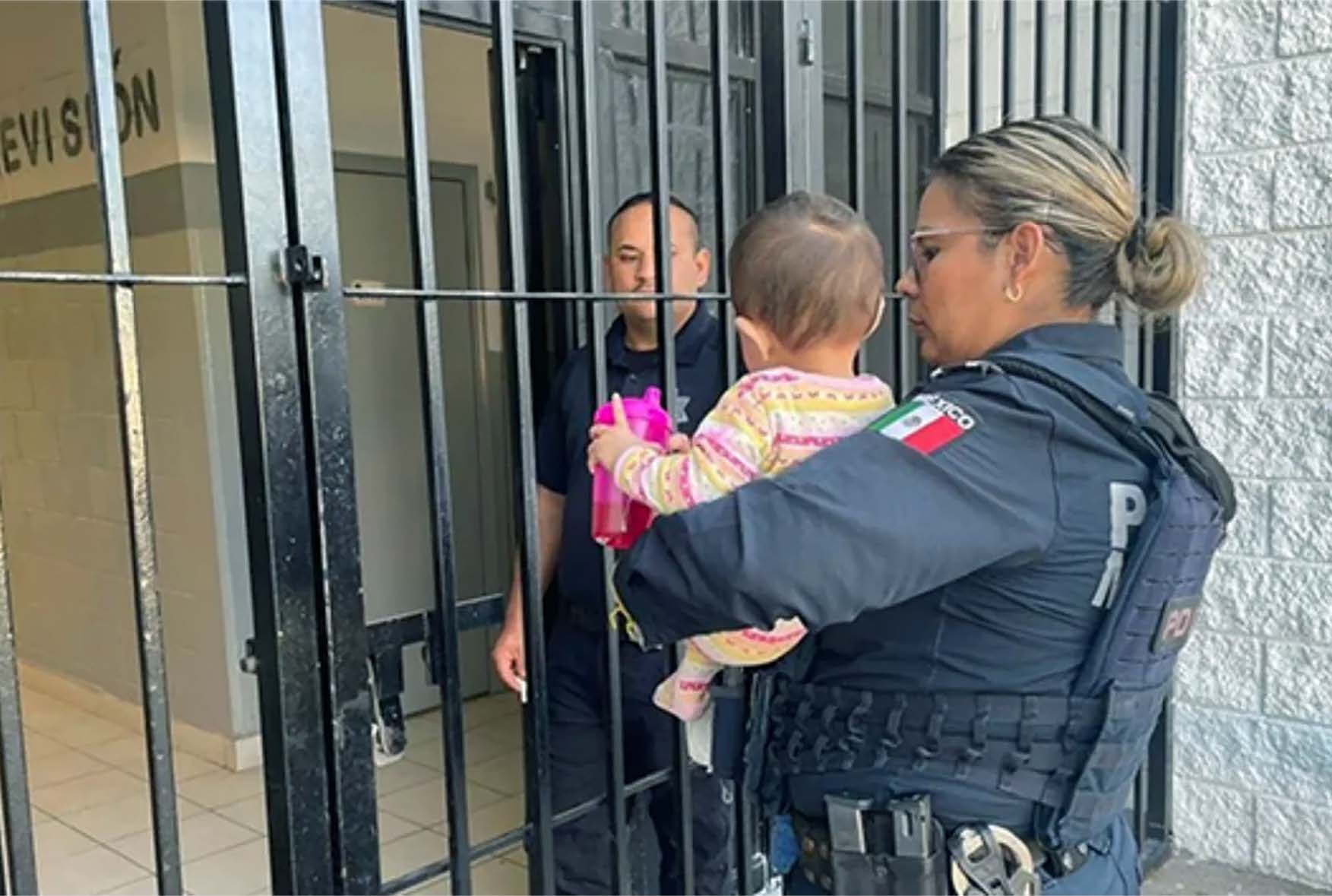


![Sidebar titled: "What’s in the Guide?" Copy reads: When Your Child Is Missing: A Family Survival Guide [[LINK]] (Fifth Edition) is a multimedia compendium of peer-reviewed best practices, helpful checklists, and supportive insight from families who have endured missing child incidents. Each aspect of the resource—in print, digital, or video—walks parents with a missing child through the process of working with law enforcement, the media, search and rescue professionals, volunteers, and others. It also addresses how to manage finances and safeguard well-being. And it provides numerous resources that will be updated and expanded in the years ahead. Here are its key sections: • “Steps to take when your child is missing” provides a checklist of things to do or know before, when, and after law enforcement arrives to the missing child’s home. • “The search: Understanding the work of law enforcement and volunteers” outlines actions to take during the first 48 hours and beyond; how to best collaborate and communicate with law enforcement; and how to effectively enlist and manage volunteers. • “The media and public engagement” focuses on maintaining public awareness of a missing child’s case, strategically working with the media, effectively producing and sharing missing posters, and enlisting the help of public officials. • “Financial considerations” covers offering rewards plus accepting and managing monetary donations. It also offers advice on handling family finances throughout the missing child case. • “Personal and family well-being” suggests ways to regain and retain emotional and physical strength; care for the siblings of the missing child; and shares important considerations for reuniting missing children with their families. • “A framework for understanding missing children” explains the different types of missing persons cases and their unique dynamics, including family and non-family abductions, endangered missing cases, international parental child abductions, and children lured from home or missing from care. • “Resources and readings” highlights the best resources for specialized assistance and insight.](https://amberadvocate.org/wp-content/uploads/2023/10/Whats-in-the-Guide-new-402x1024.png)

 The Guide quickly became the go-to source for people who “speak the language of missing”—not only in this country, but also abroad, where agencies from the United Kingdom to Australia include it on their websites. “But a lot has changed in 25 years,” Patty says. “It was time for a new look, both in its content and design.”
![The parent-authors shared advice for searching parents and law enforcement during video filming sessions earlier this year in Salt Lake City. See highlights of their advocacy work by visiting [ADD HERE]](https://amberadvocate.org/wp-content/uploads/2023/10/Group-during-filming-1024x612.png)


 Four months after filming, the Family Survival Guide “family” (or “FSG power team,” Yvonne calls them) reunited in Washington, D.C., to attend this year’s National Missing Children’s Day—where the completed Guide was first announced May 23. They also were invited to participate in a roundtable discussion with OJJDP Administrator Elizabeth Ryan and her team.





 Within hours, UB police added the missing teen to the National Crime Information Center (NCIC) database in accordance with Suzanne’s Law (enacted after another endangered missing New York college student was ineligible for an AMBER Alert; see related sidebar).
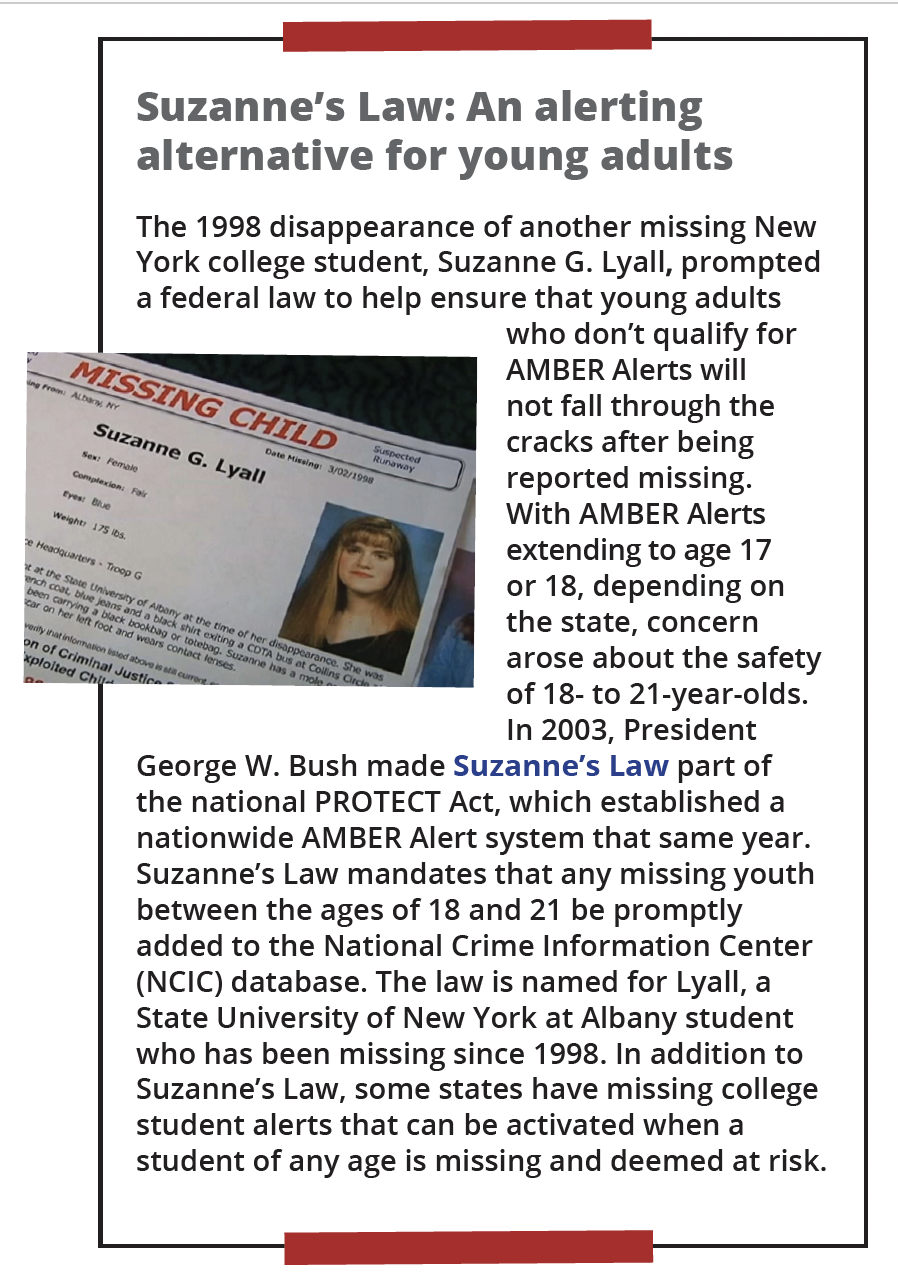 They also noted that on May 8—the last day their son had used his university meal plan—he had withdrawn funds from his bank account. What’s more, he had recently asked his mother for his passport, explaining he planned to visit Niagara Falls, which straddles the Canadian border.


 Thank you for ensuring the safety and wellbeing of our nation’s children,” said OJJDP Associate Administrator Jim Antal. “Your job is not easy, but it’s a worthwhile one.”

 Indian Country
 Indian Country
 Bias in Alerting Decisions
 Bias in Alerting Decisions

 An updated and multimedia fifth edition of the U.S. Department of Justice resource, When Your Child Is Missing: A Family Survival Guide, was officially announced on Missing Children’s Day, held May 24, 2023, in Washington DC. But during the Symposium, participants were shown a video of the Guide’s parent-contributors, who spoke about the power of the resource—for them and for others.
 Symposium participants also heard from a legend in the field of child protection: Ron Laney, a retired OJJDP veteran who was instrumental in not only creating the National Center for Missing & Exploited Children, but also the national AMBER Alert initiative.
 Laney helped create the first edition of the Guide in 1998 by teaming up with Helen Connelly (retired FVTC Program Administrator and current NCJTC Associate) and a small group of dedicated parents, including Patty Wetterling and Colleen Nick, who also contributed to the new fifth edition.


 Volunteer Roy Lick was well-suited for the task at hand. The former U.S. Marine and retired Hernando County Parks Department employee knows the area well, so when volunteers were needed in the search for JJ, he answered the call. His pre-planned fishing trip would have to wait.


 “Whether a child has been abducted, or has just wandered away, the terror felt by a parent when their child has disappeared is overwhelming,” said U.S. Attorney General Merrick B. Garland. “I have great respect for the brave, resourceful, and dedicated professionals who work every day to protect children from harm, reunite missing children with their families, and provide support in the aftermath of a traumatic event. There is no cause more worthy of honor.”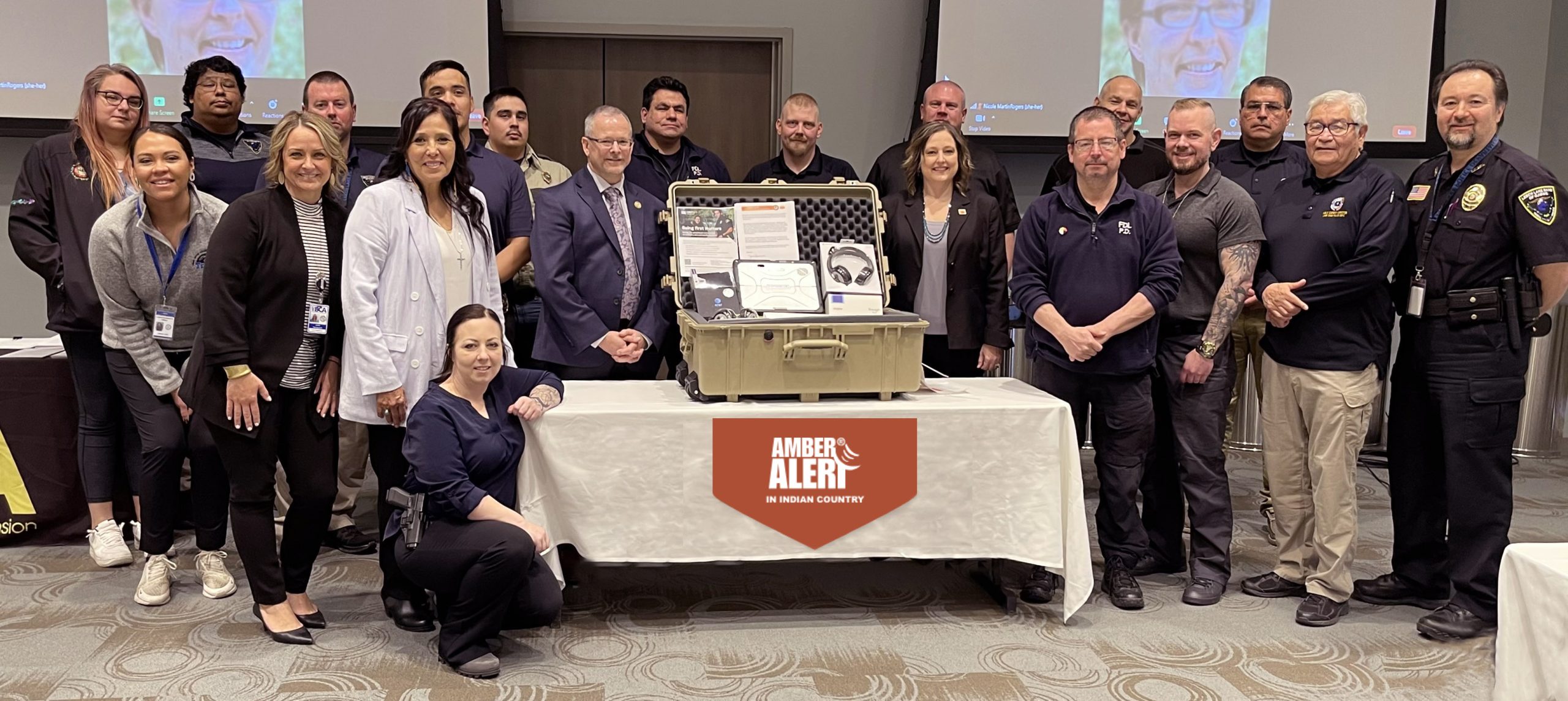
 The Technology Toolkits—durable cases with high-tech equipment to help Tribes act quickly when a child goes missing—were provided for free to the Fond du Lac Band of Lake Superior Chippewa; Leech Lake Band of Ojibwe; Lower Sioux Indian Community; Mille Lacs Band of Ojibwe; Upper Sioux Community; and the White Earth Nation. Five other Minnesota Tribes also have received the Toolkits.

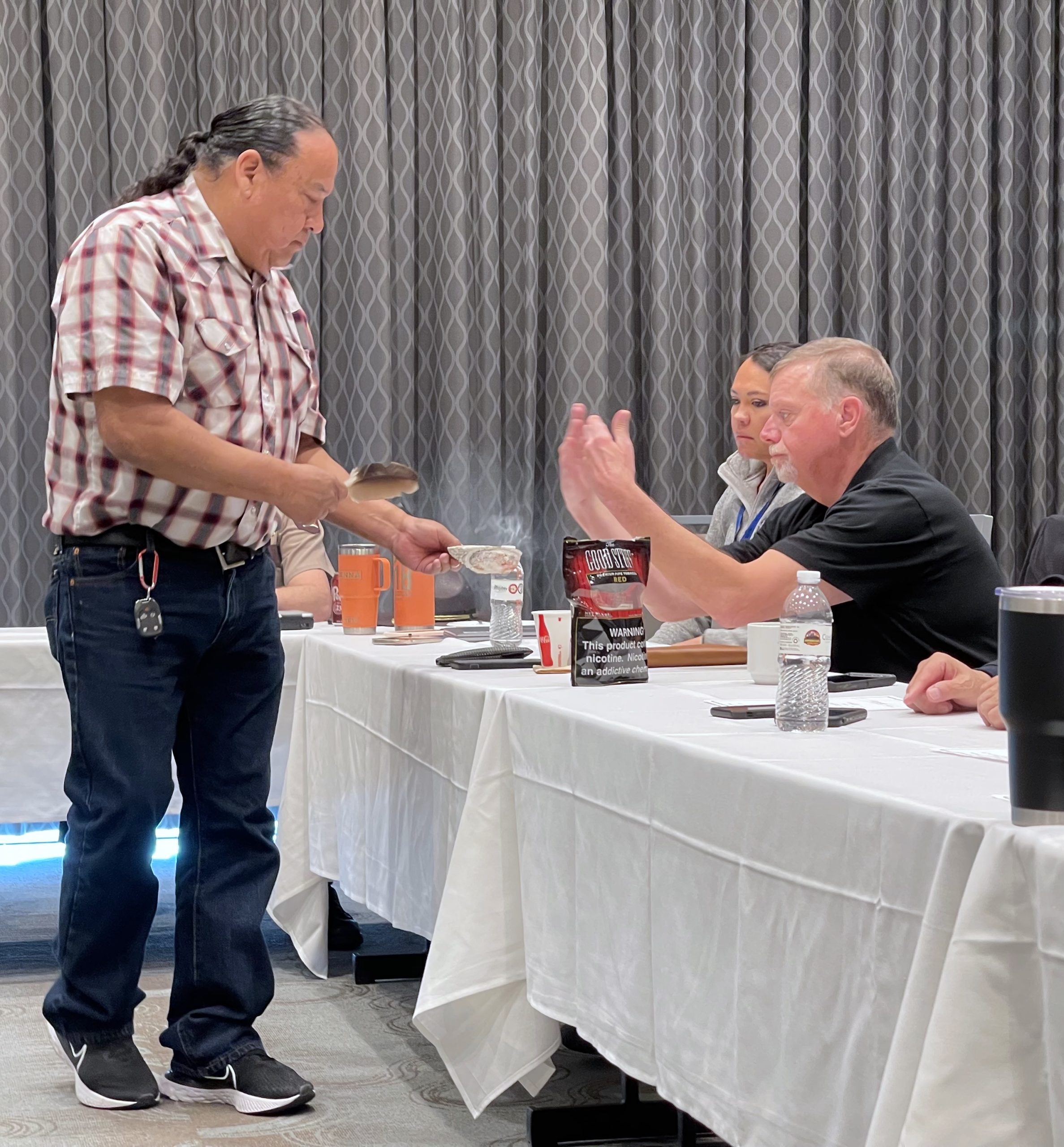


 To see related video and photos from the event, visit bit.ly/PRaattap.

 Grant has worked since 2018 with the MCCH, under the leadership of state Attorney General Anne Lopez. She works to protect missing, endangered, and exploited children across Hawaii while promoting public awareness of the problem of human trafficking, especially for native women and girls.
 MCCH Coordinator Amanda Leonard says Grant is "a prominent survivor leader and advocate who works every day to combat human trafficking in Hawaii and beyond. Kalei is a symbol of hope and limitless potential.”