

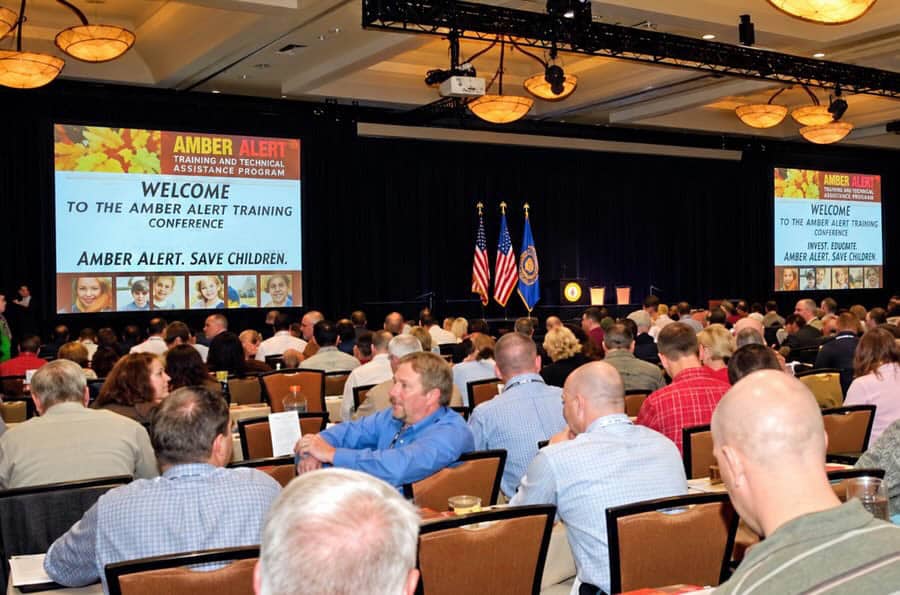
Members of Child Abduction Response Teams (CART) will be the newest partners to participate in the 2008 National AMBER Alert Conference, held October 14-16, 2008, in Orange County, California. Some presentations will be geared towards CART, but the focus will remain the same: the safe recovery of missing and abducted children.
“When a child is abducted, time is of the essence. CART programs are critical resources for law enforcement and others who work to find abducted children,” said Assistant U.S. Attorney General Jeffrey L. Sedgwick. “Bringing CART members together with our AMBER Alert partners is a logical next step in strengthening the AMBER Alert network.”

The conference will bring together CART members, AMBER Alert Coordinators, broadcasters, Missing Persons Clearinghouse Coordinators, Tribal, law enforcement and transportation leaders and representatives from Canada, Mexico, United Kingdom, Greece, France, Belgium, and the Netherlands.
“Our hope is to capture the momentum of CART and take it to another level,” says Phil Keith, AMBER Alert Program Director for Fox Valley Technical College. “We will be developing best practices for AMBER Alert Coordinators to work with CART.”
The conference will include training tracks that will be divided by discipline and region. Some sessions will be devoted to Southern and Northern bordered states and participants working to bring AMBER Alerts to Indian Country. Family members of child abduction victims will also participate in roundtable discussions.
Broadcasters and other AMBER Alert partners will also receive training coordinated through Newsplex, the scenario-based training facility at Columbia, S.C. “We hope to reinforce the progress all participants have made and stimulate everyone's thinking about how new technologies create new possibilities for alerting the public at those critical times when an unseen child is depending on us,” said Charles Bierbauer, University of South Carolina Dean and former CNN White House Correspondent. “The simple and gratifying truth about AMBER Alerts is that they work. They save lives.”
AMBER Alert partners will also consider how to maintain and expand their child abduction response plans during a time when state budgets are shrinking. “I hope to learn how states work around a budget crisis and move forward instead of taking a step backward,” said Florida AMBER Alert Coordinator Donna Hodges. She is also looking forward to learning more about new technology, the updated Emergency Alert System, and strides to bring AMBER Alerts into Indian Country.
Conference participants will also weigh the pros and cons of using limited-criteria notices such as Silver Alerts and Officer Down Alerts versus the Endangered Person Advisory, an emergency notice for all cases that do not meet the criteria of an AMBER Alert. Another session will ask this provocative question: What if AMBER Alert existed when Amber Hagerman was abducted?
Conference Reflection from Ron Laney

At the first AMBER Alert National Conference in 2003 in Dallas, 287 representatives from law enforcement, transportation, and media/broadcast came together to increase awareness, improve cooperation, establish protocols, share information, and create a seamless national AMBER Alert network. Since that time, I have seen the tremendous work that has been done around the country and within individual states and communities to meet these goals. Through increased collaboration, training, and understanding, the AMBER Alert network is solid and effective.
We have come a long way in five short years. But there is still more that can be done and challenges to be met. Together, we must continue to find ways to improve our understanding of the roles and responsibilities of every agency and organization involved in the AMBER Alert program. We must be open-minded when communicating with each other about how we can work together more effectively. We must step out of our own comfort zone and realize that this is a collaborative effort, that we are all in this together, and that the ultimate goal is to keep children safe. And we must never forget, it is only by working together that we can and do make a difference. This national conference provides us all the opportunity to address these challenges and to continue to move in the positive direction that we have been heading.
— Ron Laney, Associate Administrator, Child Protection Division, Office of Juvenile Justice and Delinquency Prevention, a component of the U.S. Department of Justice's Office of Justice Programs