





By Denise Gee Peacock
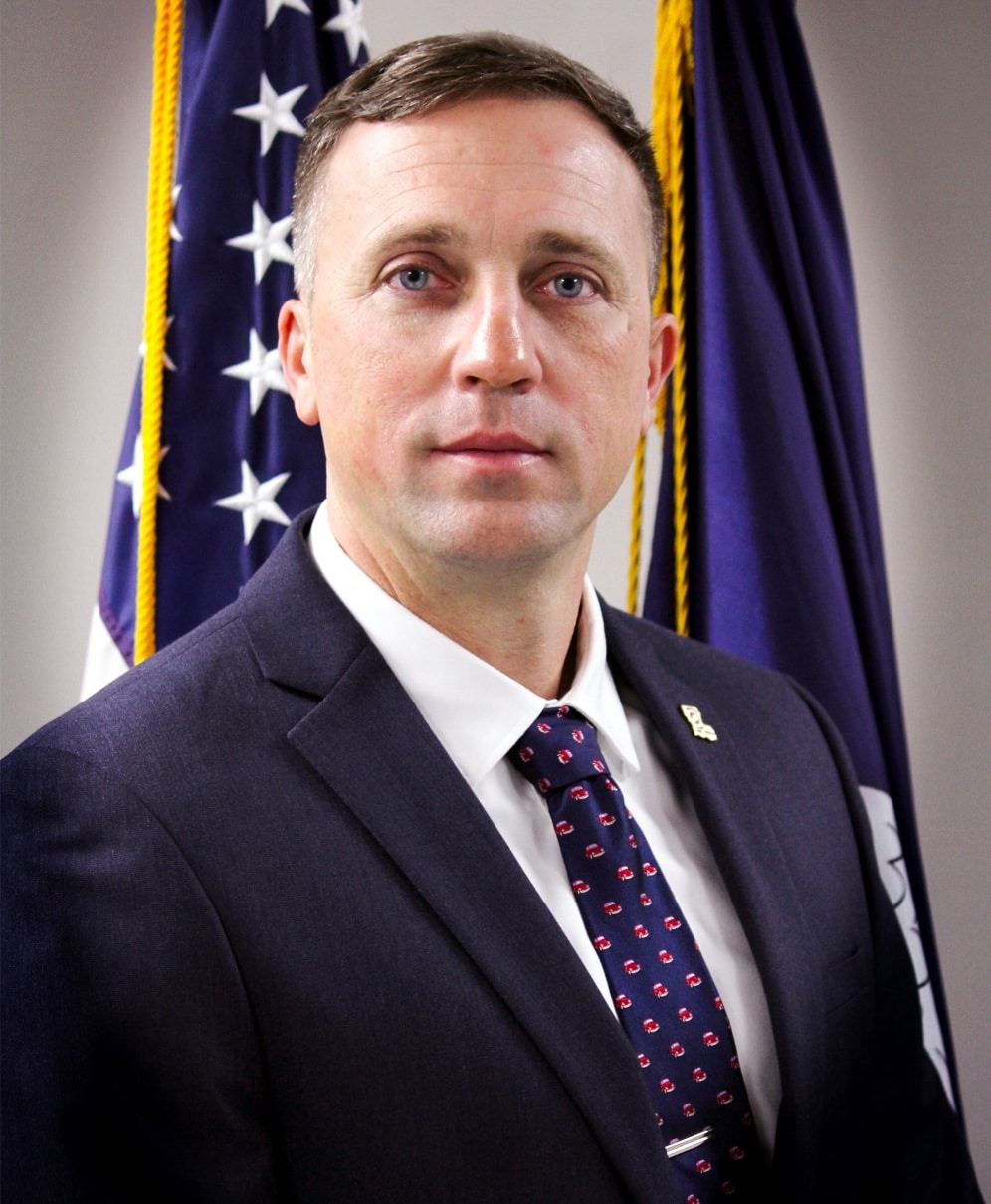
“Sometimes the solution to a problem is right in front of you, which may be a good sign you’re on the right track,” says Derek VanLuchene, AMBER Alert Training & Technical Assistance Program (AATTAP) Program Manager for child abduction response team (CART) training and certification.
VanLuchene’s task was to help others overcome a significant hurdle: “Certain CARTs were struggling with getting up and running, despite days of training and support. And our goal is, and always has been, to create more active teams across the country.”
With all that law enforcement agencies juggle and with seemingly fewer resources to tap, “maybe the agencies were just feeling overwhelmed,” VanLuchene says. Knowing that the burgeoning CARTs needed more follow-up and mentoring, one way to help struggling teams was to connect them with “the best of the best.” A year and a half ago, nationally recognized CART experts James Holmes and Stacie Lick became AATTAP’s CART Liaisons. Lick and Holmes now offer guidance to CARTs from the perspectives of former CART Commanders who know the ins and outs of a rapid response team’s creation and sustainability. So, problem solved, right?
Not quite. In some cases, fledgling CARTs also needed reminders of the core essentials needed to build a strong team. To resolve that, “maybe we needed to look again at how we were teaching the implementation course,” VanLuchene recalls.
For two decades, the AATTAP—part of the National Criminal Justice Training Center (NCJTC) of Fox Valley Technical College—has been providing CART training and certification support funded by the U.S. Department of Justice. The process for managing and updating its training curriculum involves continually reviewing participant evaluation feedback, current research and case law, updated investigative resources, case studies, current trends, relevant adult learning strategies, input from subject matter experts, and more.
As a result, scores of CARTs have received assistance to create (and ultimately, federally certify) an effective, efficient, organized response team prepared for a missing child incident.
A eureka moment hit VanLuchene last fall, when he found himself updating the CART program’s two essential instructional manuals (see related sidebar, page 9) streamlining their content for ease of understanding.
Essential to any CART’s implementation are “12 Core Components” (see related sidebar)—which include agreed-upon deployment criteria, experienced and committed team members, well- crafted callout methods, and the like. But as important as those core concepts are, it dawned on VanLuchene that the instructional module centered on them received only two hours of focus time during three days of CART training. Perhaps that’s why the essential information wasn’t sticking, he wondered. They needed to spend more time on the components. “And frankly, while the old curriculum was good stuff, those components were worthy of their own course—or at least an updated course,” VanLuchene says.
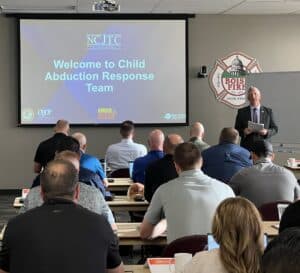
After discussing it with AATTAP Curriculum Manager Cathy Delapaz and Deputy Administrator Byron Fassett, the group agreed. “Derek’s observation was brilliant,” Fassett recalls. As a team they set out to restructure the CART implementation course. The 12 Core Components would be front and center throughout a new two-day intensive course. What’s more, the class wouldn’t just address CART theory and best practices, “it would become a hands-on workshop, one in which the 12 Core Components are used to actually create a working CART in real-time,” VanLuchene says.
A Three-Pronged Approach
The reformatted curriculum—the CART- smart restart, if you will—is achieved via a three-pronged approach to building a CART in real-time as opposed to discussing its eventual creation.
The first prong involves a pre-meeting with agency stakeholders who will review the types of CART members that are needed and resources available. “That’s when we confirm that they’re ready to make the CART happen via the second prong of planning”—the new two-day class, or workshop, on the 12 Core Components—a deep dive into a successful CART’s key ingredients, which can be applied to the agency’s matrix of strategic personnel through a sample organizational flow chart that’s proven its value in CARTs across the country. “This way they can better visualize and understand the CART’s standard operating procedure (SOP),” VanLuchene says.
The third prong is a post-workshop meeting to confirm the CART team members and resources; it also includes mentoring from VanLuchene and one of the AATTAP Liaisons to help tie up any loose ends in CART configuration. “After all the prep work we’ve provided, when they come out the other side, they’ll be ready,” he says.
Louisiana as Pilot Project
Nine months ago, Louisiana State Police (LSP) Captain Jay Donaldson, who oversees Region 3 Criminal Investigations, was tasked by his superiors to form a statewide CART team that could work independently in each of the state’s three regions while also working as a cohesive whole in case of a major disaster involving missing people (one on the scale of Hurricane Katrina, he notes).
To create the regional/state CART, Donaldson knew right where to turn: to Derek VanLuchene, whom he had gotten to know over the years during various AATTAP-NCJTC trainings. Progress was swift, VanLuchene says. “No grass was growing under their feet; they wanted to get right on it.” The meetings took place over a four-month period, “which was fantastic considering some CARTs can take a year or more to form.”
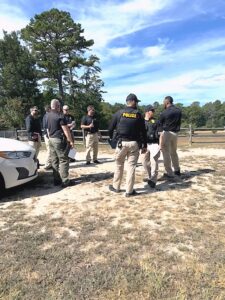
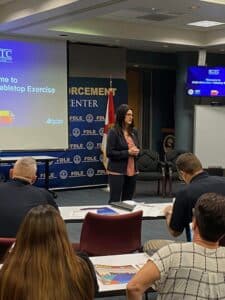
After hearing about the updated CART curriculum, Donaldson was eager to get started. The first meeting was on February 19, with the more intensive hands-on sessions occurring on May 28 and 29. “I’m more of a workshop person myself,” Donaldson recalls of the two-day workshops. “I was just hoping everyone else on our teams would be too. Thankfully they were.”
With Louisiana serving as the new pilot project for the CART course that would soon play out around the country, Donaldson watched closely.
“What Derek did for us was exceptional,” Donaldson says. “Whenever we were doing tabletops, he broke us up by region. He said, ‘let’s put people together who are going to actually work together. That way we’ll see what happens, what ideas form.’ And then, once he did that, everything just started working, everything just started clicking.”
Finding the right people to be involved in planning and execution of the CART details is crucial. In any agency, people will do things because they’re told to. Then they’ll want to do so because their heart is in the mission. The commitment Donaldson witnessed in the room during the two-day planning session “had me realizing we had all the people whose hearts would be in the right place,” he says.
Donaldson had faith that the new way of learning-by-doing was working not only for his team, but also for others.
VanLuchene was equally pleased: “If they get a call tomorrow about a missing child, they could activate their CART team in whatever region it was needed. Their organizational chart is in place, their SOP is in place. They’re ready for deployment.”
Smart Solutions Ahead
A key obstacle to creating a CART is falling prey to misconceptions surrounding them. Some administrators may look at a CART as another task force that needs to be managed—without the budget or staffing to do so. They need as many resources as possible for their regular caseload of crimes.
“But in helping teams formulate a CART, we’re not asking people to suddenly put aside their normal duties. We’re asking people to think differently about how they work together on a missing child case,” VanLuchene says.
“Why not take the 12 Core Components of a CART and apply them to your response so you get the most effective, organized, efficient outcome?” he asks. “It’s just that simple.”
In other cases, where there are preexisting major incident response teams to tackle emergencies, those groups of responders can learn the 12 components of a successful CART and walk away with an SOP. “You become an active CART team based on your ability to respond to cases involving missing kids,” VanLuchene says.
Finding the resources can also seem overwhelming until stakeholders are invited to become a part of the process, says LSP Captain Donaldson. He cites one partnership in particular. “We invited the Department of Wildlife and Fisheries to be involved in the training for the first time,” he says. “They were keen to observe and see if being in a CART was a space they wanted to share with us.”
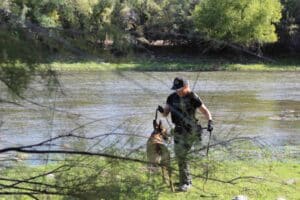
That decision would be a natural. “Louisiana has so many bodies of water, and these guys know the camps or lakes or rivers or streams—which is where a child with autism, for instance, may be drawn to after a wandering incident,” Donaldson says. “And thankfully, they’re all in. They have the tools and resources, and these guys love what they do. Now they’re waiting for a mission. They’re all about saving children, if they can.”
The methodology for the new CART implementation course will also be used for AMBER Alert in Indian Country (AIIC) trainings. AIIC Program Manager Tyesha Wood and her team are currently observing the new curriculum in action and will be applying it to a forthcoming Tribal Response to Abducted Children (TRAC) initiative, which will help Tribal law enforcement bridge any gaps in child recovery knowledge and planning.
Meanwhile, CART Liaisons Lick and Holmes are working daily to ensure all current CARTs and ones in the making are taken care of. Both have managed CART teams so they relate to others’ challenges. “They say, ‘Here’s what we recommend based on our experience,’ ” VanLuchene says. “The Liaisons are helping bring the total CART training package together.”

The simple path forward was not to reinvent the wheel. You just learn the CART process and 12 components—and apply them.

12 Core Components of a CART
- Response Criteria: This is a memorandum of understanding about the CART’s criteria and area of service and should have complete buy-in by all of the stakeholders involved
- Team Composition: The predetermined callout team should include an experienced and committed group of subject matter experts in areas including search and rescue, interview and interrogation, expert witness testimony, command post operations, major case investigations (including cold cases), and more.
- Notification and Deployment Protocols: For the CART to respond in a quick, preestablished timeframe, it must have a well-constructed and agreed-upon method to activate the callout and an updated list of contacts.
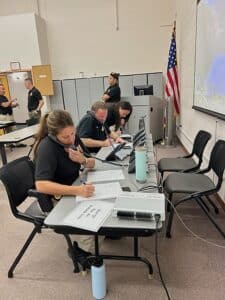
- Communications: Each team should have a plan for how it will communicate with the CART commander, command post, and others during an activation. This includes having a well-staffed call center for public tips and dedicated personnel monitoring social media accounts. A leads tracking and management system is crucial for disseminating leads for follow-up.
- Command and Control: This involves the structuring and outfitting of a command center, incident command system (command structure), and operational team leaders (search leads, volunteer management, and others).
- Search, Canvass and Rescue Operations: Establish a plan for searching, canvassing, and rescuing that includes response time and deployment logistics, as well as tactics for the successful use of volunteers with predetermined tasks.
- Training: Individual and CART agency training provides an opportunity for the team to test activation and callout procedures, revise rosters and contact information, update team members’ training and specialized skill records, inspect equipment inventory, adjust assignments, and review protocols.
- Legal Support: The goal in an endangered missing or abducted child case is to rescue the child, develop a solid prosecutorial case against the offender, and do both without violating the constitutional rights of members of the community. Issues such as search and seizure and the role of the prosecutor in the CART command post should be incorporated into the CART protocols. Every CART should include a prosecutor and/or legal adviser who should be involved in all trainings.
- Equipment/Resources Inventory. The inventory list goes well beyond tangible deployment needs, but includes detailed instructions on how every possible resource (including experts not part of the CART core team) can be accessed regardless of time or day. Every resource should have backup contact information (telephone and email), as well as procedures for making an after-hours callout.
- CART Protocols: Established protocols, along with operating procedures and manuals, will help ensure consistency in a CART’s functionality. These documents must be shared among and accepted by all participating agencies, and any changes to policies and procedures must be documented in a consistent, singular location.
- Victim Assistance and Reunification: When a child is recovered, it is critical for a variety of services to be made available as soon as possible—not only to address and physical/medical needs, but also the psychological distress resulting from the incident.
- Community: Utilizing members of the team to provide training and awareness to the public may generate volunteering when an incident occurs.
— From A Guide to CART Program Components and Implementation.
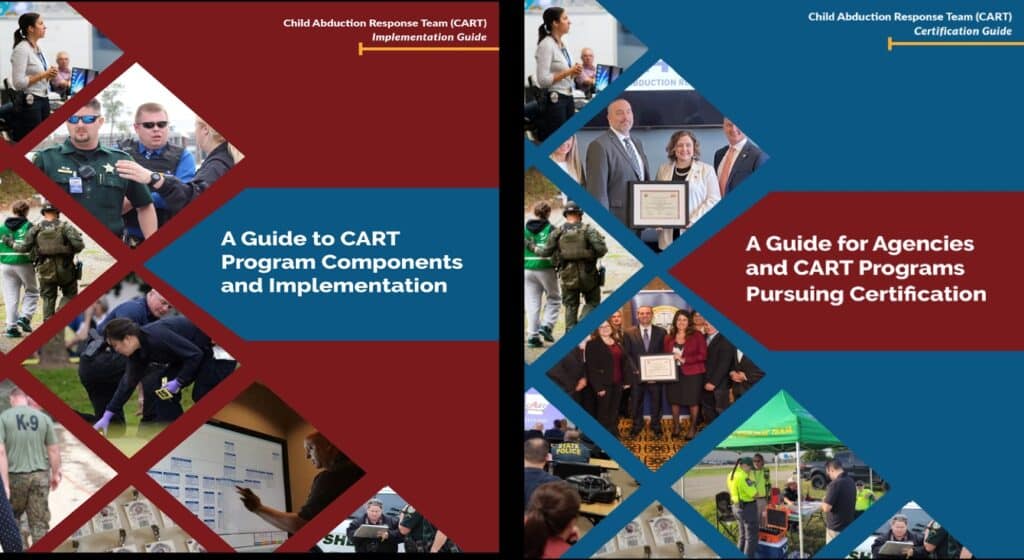
>> Find AATTAP’s two recently updated implementation- and certification- focused guides at AMBERAdvocate.org/CART/resources.
>> Find all the information you need to stay up to date on CART training objectives at AMBERAdvocate.org/CART/training
Derek VanLuchene understands the audience; he relates well to police officers. I like the way he delivers training. It’s more conversational, more engaging.