

On March 31, 2022, Washington Governor Jay Inslee signed into law the nation’s first Indigenous Alert for missing Native Americans. The alert will send messages to law enforcement, news agencies, social media, and electronic highway signs. The alert is designed to address a much needed and improved response to the high rate of missing and murdered Indigenous women. Women in some Tribal communities face a murder rate 10 times higher than the national average, according to the Department of Justice. Additional efforts are underway to help indigenous communities from the DOJ’s Missing and Murdered Indigenous Women and People Task Force, which is led by the Washington Attorney General’s Office.
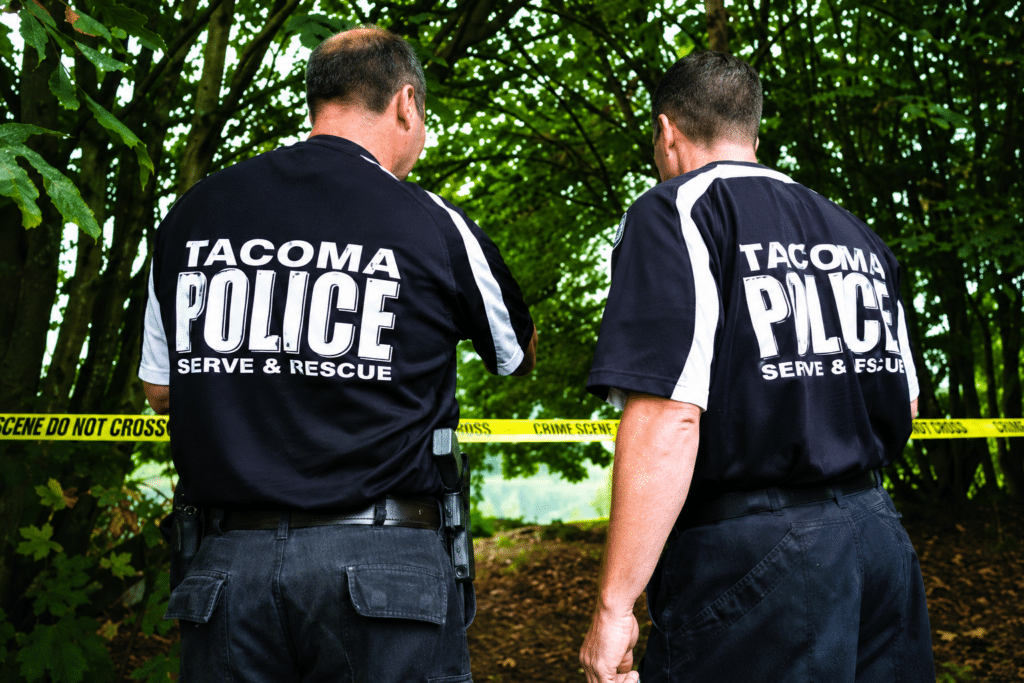 The Tacoma, Washington, Child Abduction Response Team (CART) is breaking new ground by investigating the rapes and murders of two girls that happened three decades ago. Michella Welch, 12, was found shortly after she disappeared on March 26, 1986, in Puget Park. Jennifer Bastian, 13, vanished from a Tacoma park on August 4, 1986, and was found 24 days later.
“I wanted to do something for the 30-year anniversaries and at the same time I knew new information could be released to the public in order to elicit new tips,” said Lindsey Wade, Tacoma Police Cold Case Detective and Assistant CART Coordinator. “These cases are well known in our area and the public is still very interested in solving the cases.”
While an AMBER Alert was not issued, the team held a press conference that received local and national attention. No canvassing or searching was needed, but the CART tip line was activated and a leads management system is being used to manage and prioritize all information. More than 125 tips have come in so far and they are still being received.
Investigators initially believed the same person killed both girls, but DNA evidence later indicated two different suspects were involved. More than 60 members of the CART are investigating new tips and re-interviewing witnesses.
“We just need to know who this person is so we either need to do something or know it is over for him and he can't hurt other people,” said Pattie Bastian in an interview with KING-TV.
Detectives have more than 2,000 possible suspects, with DNA samples collected on more than 100 of them. However, none of the samples have matched a convicted offender, so many of those sampled have been eliminated as suspects.
“Knowing we have two different suspects changed the investigations in many ways,” added Wade. “Many suspects were eliminated previously because they were not available for one of the crimes or because they were in jail or out of the area.”
The CART also used a new type of DNA testing called “phenotyping” that looks for unique or distinguishing traits. This testing makes it possible to predict elements of a person's physical appearance.
Wade suggested other CART programs may want to take on cold cases because it can strengthen skills and build experience for team members while working to bring resolution to a long-term missing case. “Using a cold case for a CART activation also allows the team to work through many of the same challenges they would face during a real-time activation with a slower pace and less stress,” she said.
Working on the cases in conjunction with an important anniversary year also proved to be an effective way to maximize media attention. With such a large response, the team also learned that social media should be carefully monitored because so many people are using the sites to share details about these cases.
In 2013, the Tacoma Police Department CART became the first team certified in Washington State. The CART covers the city of Tacoma and is made up of 12 multidisciplinary agencies. The team has been activated 4 times and team members assisted a neighboring jurisdiction with a child abduction homicide in 2014.
Wade has been with the Tacoma Police Department for 19 years. Her first abduction homicide case involved a 12-year-old girl in 2007. The suspect was arrested 4 days later and he was linked to an unsolved abduction and rape of an 11-year-old girl in 2000. The 1986 Welch and Bastian cases on which the Tacoma CART is working represent two of 156 unsolved homicides and long-term missing person cases in the state.
“I have always been passionate about solving crimes against children,” she said. “I feel they are the worst crimes imaginable, and children are truly innocent victims who deserve professional and dedicated men and women in law enforcement to seek justice for them.”
Two more Child Abduction Response Teams (CART) have received national certification from the U.S. Department of Justice. The Metropolitan Law Enforcement Council (MetroLEC) CART of Massachusetts and the Tacoma, Washington Police Department CART received the honors after meeting 47 standards of identified best practices and an onsite assessment of a mock child abduction exercise.
“These agencies are sending a message to the community that they are committed to recovering missing children,” said Alan Wolochuk, CART Certification Manager. “They are also sending a message to the bad guys that the children in this community have the best protection available.”
The MetroLEC is made up of law enforcement officers from several cities, towns and sheriff's offices. On July 23-24, 2013, MetroLEC members conducted a mock child abduction drill in the Town of Norwood. The exercise was used to assess the team, but it was also helpful to make their protocols stronger. “They did really well,” said Wolochuk. In February 2014, the MetroLEC CART became the second team in the northeast to earn the national certification from the U.S. Department of Justice.
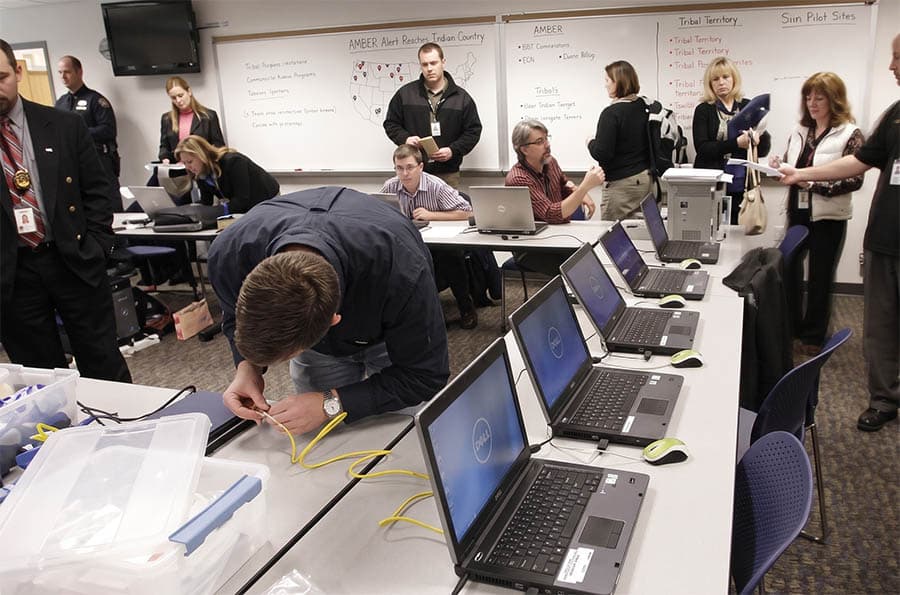
The Tacoma Police Department CART responded to a mock abduction on September 11-12, 2013. More than 150 law enforcement officers and civilian personnel did their best to find a 14-year-old girl who had been taken from a bus stop near a park. A witness saw the struggle and called for help. “The Tacoma CART's response was professional, coordinated and excellently managed,” said Wolochuk.
On December 20, 2013, the Tacoma Police Department received official notification from the U.S. Department of Justice of its certification, becoming the first CART to earn that distinction in the state of Washington. The U.S. now has 19 certified teams.