Tribal courts could soon have easier access to electronic evidence such as emails and social media messages in criminal cases—a move that would be beneficial, among other things, in Internet crimes against children investigations. U.S. Senators Catherine Cortez Masto of Nevada and Mike Rounds of South Dakota introduced the bipartisan Tribal Access to Electronic Evidence Act as a way to give Tribal courts equitable access and better equip them to deliver justice for victims. “We know that criminals are using online tools to traffic drugs and commit other crimes in Indian Country,” Cortez Masto said. “What we also know is that Tribal courts struggle to get electronic evidence because tech companies won’t honor those Tribal warrants.” Rounds added that it’s important that Tribal law enforcement is able to do its job “without the federal government getting in the way.”
South Dakota Governor Kristi Noem signed a bill establishing an office for missing and murdered Indigenous persons. The law establishes an investigator to analyze data involving Native American cases and create a program to prevent future abductions. The bill has strong support from Tribal leaders.
A South Dakota family is promoting a Serenity Alert for missing and endangered children whose cases do not meet AMBER Alert criteria. The alert would be named for Serenity Dennard, who at the time of this writing, remains missing after running away in February 2019 from a children’s home in Rockerville, South Dakota. The family wants the legislature to create a system so the public would receive a text message about a missing child.
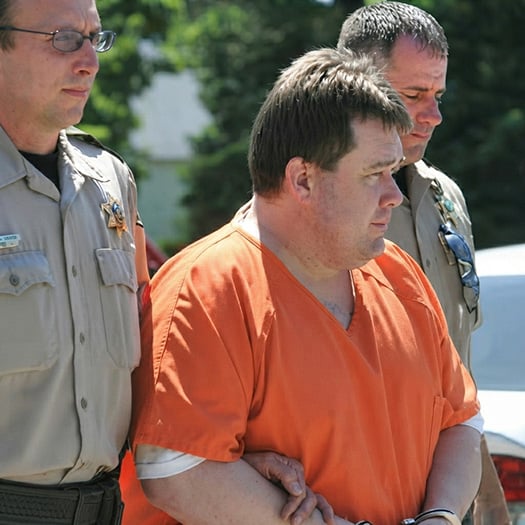
Suspect Thomas Petersen being escorted by law enforcement.
On June 4, 2011, Thomas Petersen allegedly stabbed and killed his wife Judy and then fled in a red pickup with their 2-year-old son Jacob. Iowa issued an AMBER Alert and asked South Dakota to issue an alert the next day when detectives learned the suspect was using credit cards near Kadoka, South Dakota.
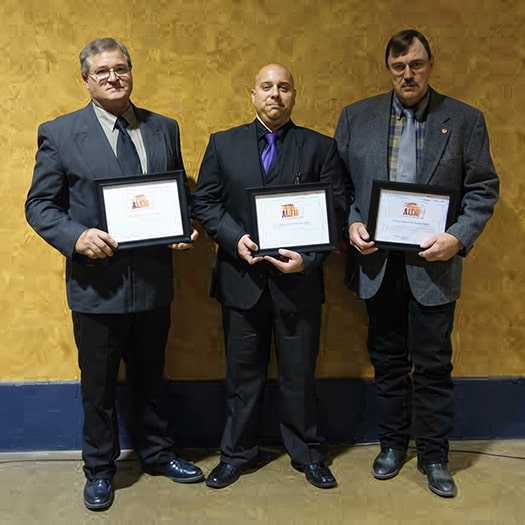
The 2011 AMBER Alert Law Enforcement Leadership Award was given to two sheriffs and a park ranger who risked their lives trying to bring young Jacob home safely.
Badlands National Park Ranger Bryan Warner heard the AMBER Alert and had a hunch that the suspect would travel by an exit on I-90. About 20 minutes later, Warner saw the suspect's truck, and he pulled Petersen over.
“I thought he was going to comply,” said Warner. “But he was talking really erratic and ran on me.”
Petersen raced off at speeds exceeding 120 miles per hour. Meanwhile, Jackson County, South Dakota Sheriff Ray Clements was asleep when he heard the AMBER Alert on the radio. He got up and was checking convenience stores in the area when he heard on the police scanner that a park ranger was following Petersen. The sheriff joined the park ranger in the high-speed pursuit of the suspect.
“Petersen looked at me and pointed to his 2-year-old boy to let me know he was in there,” said Clements. “I tried to get him to pull over and he would not stop.”
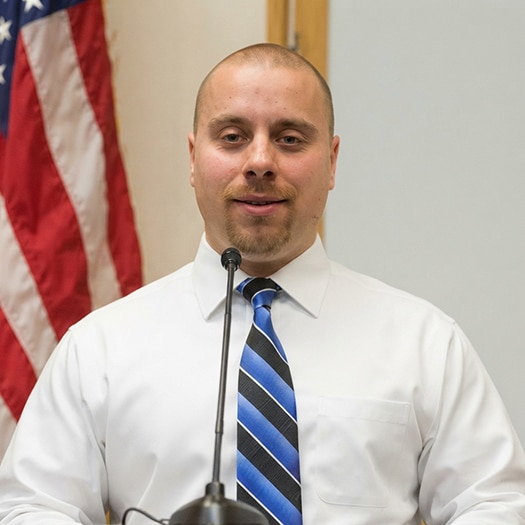
Badlands National Park Ranger Bryan Warner
Petersen nicked the park ranger's car and then rammed and sideswiped the sheriff. “I had a sick feeling this was going to get pretty bad, pretty quickly,” said Warner.
The sheriff's vehicle was hit three times, went into a spin, and rolled over four or five times. The suspect stopped; Warner pulled his gun. As Petersen drove away, he threw his son from the pickup. Warner grabbed the boy and put him in his car and went to check on Clements.
“I thought the sheriff was dead,” said Warner. “I was worried the suspect threw the kid out as a diversion to come back and kill us.”
The sheriff's vehicle was upside down, and Clements had three broken ribs. Despite his injuries, he urged Warner to continue the pursuit and leave the boy with him.
“This kid was so nice,” said Clements. “He was scared obviously, but he would not let go of me when the ambulance came. My number one goal was to protect that kid.”
Other law enforcement agencies joined the chase, including Haakon County, South Dakota Sheriff Mel Smith. Petersen was driving at more than 90 miles per hour when he tried to crash into Smith's vehicle.
“He was trying to hit me head on,” said Smith. “But I think he thought ‘This is it!’ and closed his eyes and the truck hit me on the side and forced me in a ditch. I thought it was over for me, as well.”
The suspect's truck caught fire and Petersen jumped out and tried to come after Smith. “I was ready to shoot him,” said Smith. “I lost my glasses in the accident and thought he had a gun on me.”
Within moments other law enforcement officers arrived, including Ranger Warner. A standoff ensued, and Petersen begged officers to shoot him.
“Time stood still,” said Warner. “He hid a weapon under his shirt while we were talking to him.” Another deputy used a taser gun, and Petersen was finally taken into custody.
Sheriff Clements was taken to the hospital, but he returned to work the next day. “I was only doing my job,” said Clements. “If I had to do it all over again I would do it again. I was not going to let him hurt somebody.” Clements started in law enforcement in 1994 and has been sheriff of Jackson County for three years. The sheriff was also involved with the first AMBER Alert in South Dakota, and he credits this alert for bringing the boy safely home.
Ranger Warner has been with the National Park Service since 2010 and recently relocated to Washington. Prior to that, he was a sheriff's deputy in Grand Traverse, Michigan. He became involved with another AMBER Alert in California, and he is grateful park rangers receive the same child abduction training as other law enforcement officers.
“Next to my marriage, the second happiest day of my life was seeing the sheriff walk out and having the kid safe,” said Warner. “It is just part of being a police officer. I was honored to get the award, but I never thought I would get anything more than someone saying, ‘Hey good job.’”
Sheriff Smith was a homebuilder and a rancher before he was elected sheriff of Haakon County in January 2011. He was treated for his injuries and returned to work the next day.
“The award is a great honor. The AMBER Alert made it possible for us to reach the suspect quickly. We should support the AMBER Alert and stay behind it because it works,” said Smith.
Petersen has been charged with the attempted murders of the two sheriffs in South Dakota and the murder of his wife in Iowa.
Law Enforcement Leadership Award winners (from left) Mel Smith, Bryan Warner, and Ray Clements.