
Numerous people received a text message on their cell phones with this alarming message: “AMBER ALERT! two little girls kidnapped the suspect is driving a brown jeep liberty. Headed towards billings area license plate #43-6519. KEEP THIS GOING!”

The message had punctuation problems but it was also missing some key information: where and when the girls were abducted; which law enforcement agency issued the alert; what the girls and the suspect looked like and what they were wearing; and what state issued the license plate on the vehicle.

A real AMBER Alert was actually issued in Montana on April 11, and the two girls were recovered two days later. However, the text message continued to spread across the country well after the recovery and message details were modified in different states.

“This ultimately caused confusion and put the integrity of the AMBER Alert system into question,” said National AMBER Alert Coordinator Jeffrey L. Sedgwick. “Maintaining a solid reputation by guarding against the spread of misinformation is vital to our continued success.”

Sedgwick encouraged AMBER Alert Coordinators to educate the public to only respond to AMBER Alerts sent through legitimate channels like radio and television, highway advisory signs, and the Wireless AMBER Alert Initiative.

“These alerts are well intentioned, but they are creating mass confusion,” says Robert Hoever, Associate Director of Training for the National Center for Missing & Exploited Children (NCMEC). “I am really concerned that this is going to cause the AMBER Alert to lose credibility with the public.”

The text message is the latest example of misguided and even fake AMBER Alerts being sent nationwide. Many of the so-called AMBER Alerts that circulate by text message and email involve cases that have already been resolved or outright hoaxes, including: 9-year-old Penny Brown, who has been missing for two weeks (this hoax has been circulating by email since 2001); 15-year-old Evan Trembley, who has been missing for two weeks (a Wichita Falls TV station reported the prankster behind this fake AMBER Alert is the “missing boy” in the picture); and 13-year-old Ashley Flores from Philadelphia, who has been missing for two weeks (this email has been circulating since 2006 and NCMEC has never found a missing child by this name or description).

Most states can file criminal charges against a person for sending a false AMBER Alert and for making a false report to law enforcement. Some states have specific laws dealing with sending a false AMBER Alert.

The pranksters are not only breaking the law, but they are also taking advantage of people who simply want to save an abducted child. Broadcasters involved with the AMBER Alert program are very troubled by this trend. “The AMBER Alert is too valuable a law enforcement tool to have damaged by thoughtless actions,” said Utah Broadcasters Association President Dale Zabriskie.
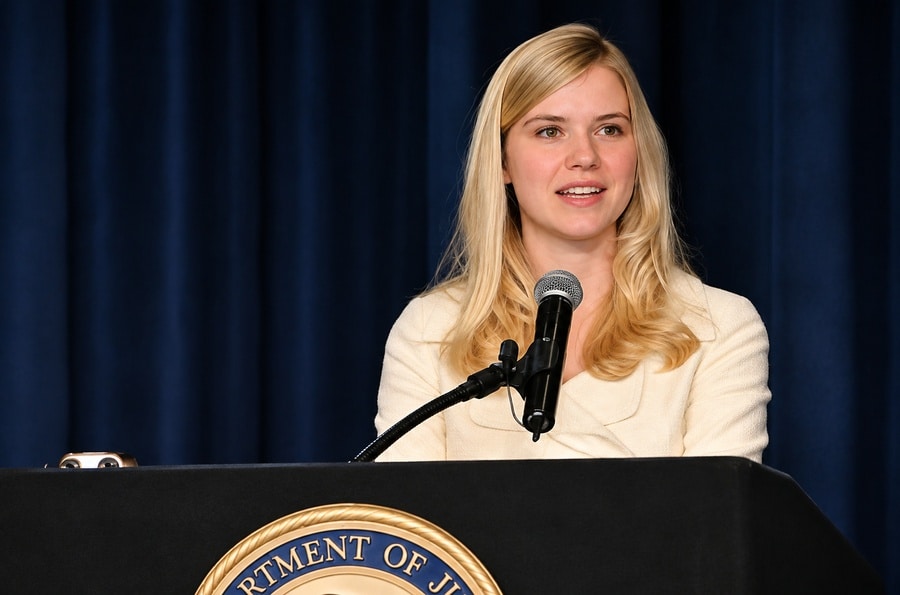
After a man broke into her home and put a knife to her throat, Elizabeth Smart feared the worst. “I am going to die,” she said. “I know I am going to die.”

Elizabeth Smart speaking at the 2008 National AMBER Alert Conference
Elizabeth Smart

The abduction of the 14-year-old Salt Lake City girl in 2002 brought worldwide attention to AMBER Alerts. Smart is now a 19-year-old college student. She shared her tale of survival and hope on the final day of the 2007 National AMBER Alert Conference in Denver.

Smart said her perfect life was shattered when an assailant broke into the bedroom where she and her sister were sleeping. “Don't say anything or you will be killed,” she recalled him saying. “He took me into the mountains, and I kept thinking this is the end.”

After being held for nine months, some ordinary citizens recognized Smart with her captors and called police. “I knew I was returned because people kept looking for me,” she said.

“Nothing could have prepared me,” Smart said. “I don't think anyone can be prepared, but the community can be prepared. That's why the AMBER Alert is so crucial to this nation.”

On the opening day of the conference, former Acting Assistant Attorney General and former National AMBER Alert Coordinator Cybele K. Daley shared the story of a kidnapper who dropped off a 7-year-old victim after he heard there was an AMBER Alert. “When we hear AMBER Alerts talked about now, we hear it as a deterrent and means of prevention,” said Daley. “Its reputation as a crime stopper is fully established.”

Daley said the unofficial theme of the three-day conference is “strengthening partnerships.”

Ron Laney, Associate Administrator for the Office of Justice Programs’ Office of Juvenile Justice and Delinquency Prevention, said those partners have become like family. “We’re one big family and we can make a difference,” he said. “We are the driving force in protecting children.”

But the stakes are high if the partnerships fail, said Phil Keith, AMBER Alert Program Director for Fox Valley Technical College. “Our weakest link will in fact cause us to lose a child,” he said.

Knoxville Police Department Assistant Chief Gus Paidousis shared the history of AMBER Alerts and offered details about the changes that have occurred during the past 11 years. He said AMBER Alert plans keep getting better but warned that no one will ever be finished. “No matter how good we get, you have to practice every day,” said Paidousis. “You can't ever say we're as good as we will ever be.”

Robert Hoever, Associate Director of Training and Outreach at the National Center for Missing & Exploited Children, offered a statistical breakdown of all AMBER Alerts from January 1, 2004, to September 15, 2007. During that period, more than 889 alerts were issued for 1091 children. “A staggering figure is that 99% of all of those cases have been resolved,” said Hoever. “Only 15 cases are still unresolved.” The study also found that 98% of the children were recovered within 72 hours. One out of five children were recovered directly from the AMBER Alert.

Nevada AMBER Alert Coordinator Bob Fisher talked about the role of broadcasters in AMBER Alerts. “The love-hate relationship between law enforcement and broadcasters needs to become a relationship of respect,” he said. “Broadcasters are part of the family of first responders.”

Broadcasters were included in the first mock activation of Florida's new Child Abduction Response Team. Floy Turner, a retired special agent for the Florida Department of Law Enforcement, talked about how the CART is becoming increasingly important for every AMBER Alert plan. “With a CART, we can hit the ground running,” she said. “We're not standing around waiting for a task.”

The conference included breakout sessions for AMBER Alert coordinators, broadcasters, transportation officials, and law enforcement officers. Conference participants also learned more about the Adam Walsh Act, new tools for child abuse investigations and new resources for AMBER Alert plans. Coordinators from three states shared their first-hand experience on cases where they did and did not activate alerts.

It's been said that without a vision, the people perish. Although the AMBER Alert program is in no danger of perishing, the 2007 National AMBER Alert Conference in Denver will be critical to creating a vision for keeping the AMBER Alert network strong and focused on the safety of our children.

“The annual conference is a crucial means of reinforcing and maintaining ongoing communication about the AMBER Alert program,” said Acting Assistant Attorney General Cybele K. Daley. “The ultimate mission is to develop innovative strategies to safely return children to their families.”

The vision for AMBER Alert actually started to take focus last year at a strategic planning session that was also held in Denver. More than 40 AMBER Alert partners met in October 2006 to discuss how AMBER Alerts will work in 18 months, three years and five years from now. Participants discussed what is needed to make improvements and who will get it done.

“We are a family and we have come together to take care of our children,” said Ron Laney, Associate Administrator for the Office of Justice Programs' Office of Juvenile Justice and Delinquency Prevention's Child Protection Division, at the planning session. “Please don't forget the children who don't meet the AMBER Alert criteria. They are in danger and at risk.”

The original AMBER Alert Plan began with one child and one person with a good idea. However, it took visionaries from law enforcement, broadcasting and other disciplines to take that idea and turn it into the expansive child abduction recovery plan that exists today. More than 10 years after AMBER Alerts started, this question is still being asked: How can we make it better?

“History is the best predictor of the future. We can learn from our mistakes,” said Robert Hoever, Associate Director of Training and Outreach for the National Center for Missing & Exploited Children.

Some of the areas being explored to improve AMBER Alerts are creating a seamless AMBER Alert network; providing comprehensive training and resources; educating the public; sharing new technology; and creating standardized criteria.

“There are lots of issues out there,” said Washington State Patrol Missing Persons Clearinghouse Coordinator Sue Miller. “The strategic planning session helped us focus on what needs immediate attention with AMBER Alerts.”

A more detailed look at the strategic planning session is included in a publication called “AMBER Alert Program and Initiatives: 2007 – 2008 Strategic Plan.” The Department of Justice's Office of Justice Programs will provide this publication, as well as reports on an emancipated missing children project and a victims' (survivors') roundtable, at the conference.

“We want to make sure all of our AMBER partners have the very best information possible to help them recover children,” said Daley.

The beginning of AMBER Alerts started with one child. The future of AMBER Alerts will require a vision to make sure every child is safe.