




By Jody Garlock

It’s an early morning in March, and about 100 law enforcement officials, social services professionals, legal experts, and others are gathered in a hotel ballroom in Latham, New York. Wearing lanyards with name tags and sitting at tables with laptops and papers in front of them, they seem poised for a routine conference. But there’s a seriousness in the air and laser focus as they work on their computers or huddle into small groups.

Eventually, the ringing of a bell sounds across the room. Heads turn toward a man holding a brass school bellas the realization sets in: A missing child has been located.

By the end of the three-day Capital Region Missing Child Rescue Operation, that bell will have been rung an impressive 63 times. Simultaneously, a computer screen projected onto a wall showed the number in big, bold lettering. Both served as uplifting motivators for the agencies and experts who united for a goal of finding missing children at risk of endangerment, exploitation, or harm. “After the first or second bell ring, everyone gets it—it’s powerful,” says Tim Williams, manager of the New York State Missing Persons Clearinghouse (NYSMPC), one of organizers. “You could feel the energy in the room continue to increase.”

More than 60 local, state, and federal law enforcement agencies, nonprofit organizations, and private partners came together to explore new leads, review case notes, and leverage technology to find at-risk youth reported missing as runaways.

The 63 children and teens located during the first-ever rescue operation for the Albany, Schenectady, and Troy areas ranged in age from 2 to 17 years old when they were reported

missing, and from 6 to 22 when found, according to the New York State Division of Criminal Justice Services (DCJS). And the overall number of those safely located continued to climb, as work that was started wrapped up after the event. Williams says 71 missing children have now been located as a direct result of the rescue operation.

“These are emotional events,” says Kevin Branzetti (shown below right under quote), CEO of the National Child Protection Task Force (NCPTF), which partnered with NYSMPC on the operation and has similar recovery missions scheduled in other states.

“We know these cases can be emotional roller coasters. You see a lot of tears.”

To drive home the importance of such ventures, Branzetti and Williams point to statistics. At the end of 2024, New York had slightly more than 1,000 active missing children cases. The majority of the 12,000-plus cases annually—95 percent— are reported as runaways.

“Every missing child is an endangered missing child,” Williams says. “Our focus was the runaway population because it’s often overlooked.”

Strategic Teamwork

The Capital Region event grew out of training sessions between NYSMPC and the Arkansas-based NCPTF. “We started to think ‘Could we put all these people in the same room with the sole mission of finding kids and closing cases?’ “ Williams says.

In October 2024, NYSMPC and NCPTF spearheaded their first joint rescue operation. That venture in the Buffalo area safely located 47 children reported missing as runways. Branzetti and Clearinghouse staffers, including Williams and Cindy Neff, who recently retired as NYSMPC manager, applied lessons they learned from the Buffalo operation. Comparatively, the Capital Region operation was more complex, involving coordination among three police departments, three district attorney’s offices, and three county social services agencies, along with many other entities.

“One of the most critical components is securing full buy-in from local partners, law enforcement, social services, district attorneys, and child advocacy centers,” Neff says. “Their collaboration is essential because these operations go beyond just locating missing youth. It’s also about understanding the underlying reasons they went missing and identifying the support needed to help prevent it from happening again.” (For more on Neff see the sidebar that follows this feature.)

The Capital Region operation required months of planning and meetings to review cases with agencies and coordinate logistics. Participants were ultimately organized into four teams— two for Albany and one each for Schenectady and Troy. A pre-operation meeting was held for all the teams prior to the operation.

Each team had a similar composition: a Clearinghouse representative who acted as the organizer, a crime analyst who had access to local police records, at least one detective from the agency working the case, representatives from NCTPF and the National Center for Missing & Exploited Children (NCMEC), a probation official, someone from social services, and various other law enforcement officials. The goal was to ensure that each team had a variety of resources and skill sets, be it public records searching, tracking a cell phone, understanding social media work, or open-source intelligence. “No two police departments have the same sets of tools,” Branzetti says. “Everyone brings their tools to the game, and we get to share them.”

Adding a social services component—and having those professionals in the room prepared to go out when a child was recovered—was one of the lessons learned from the prior operation. Branzetti, Williams, and Neff note that the goal wasn’t just to find the child, but also to try to ensure the child doesn’t go missing again. “What we promote deeply is ‘Find. Listen. Help,’ “ Branzetti says. “It takes more than police to do that. It’s a society problem.”

The state’s Office of Children and Family Services coordinated with nonprofit organizations and victim assistance programs to assist the investigations and provide services and support for recovered children. “There was a whole support-service side of this ready to go and available—and put into action many times,” Williams says. If a child already had an assigned case worker, that person was notified.

A unique component was providing gift cards to ensure a child or teen had essentials, such as food, clothing, or haircare services. In some cases, the gift cards became an outreach opportunity for the social services worker to schedule a follow-up to take a teen shopping. “We wanted her to see that something is different today,” says Branzetti, whose organization secured donations to provide the gift cards. “We wanted her to understand that this isn’t the same old story. It’s about changing the trajectory.”

Additionally, the rescue operation also helps destigmatize the word “runaway.” “It’s a matter of changing the mindset of what that means,” Williams says.

“Everyone in the room is getting a better sense of the word as they work on the cases and realize that we can’t treat a runaway as ‘I’ll get to it when I get to it’ and instead say ‘Let’s make sure we’re doing something.’ “

‘Remarkable’ Collaboration

Heading into the rescue operation, the organizers didn’t have a set goal for the number of children they wanted to find. “If we can find even one missing child, that’s a positive,” Williams says. Because team members had started pre-work, some of the cases were able to be swiftly closed. A side benefit, Branzetti says, is that the rescue operation helps broaden or hone skills, and participants leave with added knowledge they can apply to their own cases. “These rescue operations turn into partial training events,” he says. “You actually may be writing a first search warrant or doing a first cell tower dump, or someone is walking you through how to track an IP address. You can’t beat that.”

The organizers also note that it’s heartening to see the camaraderie develop on the mixed teams, where members typically start out the rescue operation as strangers.

Williams says the operation proved to him how beneficial it is to bring together diverse groups. “We all tend to fall into the silo that we’re comfortable in, but we hear so many times, ‘Oh I wish I had reached out to you sooner,’ ” he says. “Sitting down at the same table, talking through cases, and sharing resources that are available is so important. Don’t be afraid to have those difficult conversations or continue to talk weekly or monthly to stay on top of things.”

For Neff, the rescue operation was a gratifying culmination to her long career. “When professionals from different agencies are brought together in the same room with a shared mission,” she says, “remarkable things can happen.”

Quote icon
Every time a child runs away, it’s a cry for help. That child is screaming out for our help, and it’s our job to do something.
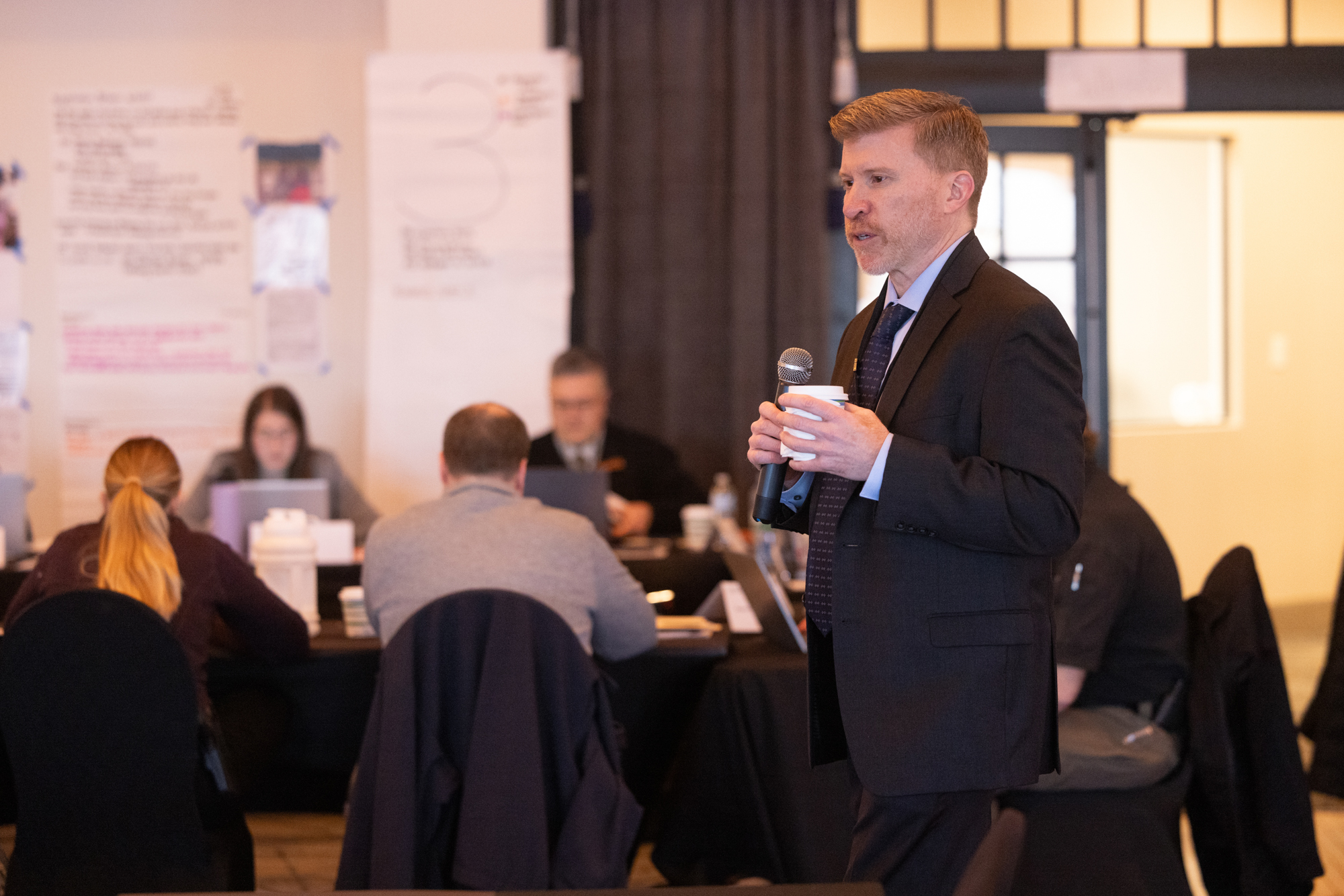
Kevin Branzetti CEO, National Child Protection Task Force
Quote image

Empathy & Respect: Hallmarks of Cindy Neff's Child Protection Career

Photo of woman (Cindy Neff)
'Force of Nature': Cindy Neff recently retired after two decades of remarkable work.

For Cindy Neff, the Capital Region Missing Child Rescue Operation was a fitting end to a long career of helping children. In April, Neff retired from the New York State Missing Persons Clearinghouse, where she worked for 20 years—the past 11 years as manager. “She’s a force of nature,” says Kevin Branzetti, CEO of the National Child Protection Task Force who worked with Neff on the New York rescue operations and various other initiatives.

Over the years, Neff has been a familiar face at national AMBER Alert symposiums, serving as an Associate for NCJTC-AATTAP. She also led the charge for establishing the New York State Cold Case Review Panel and developing the Find Them web application to support law enforcement working missing persons cases.

The issue of children with multiple missing episodes has always been close to her heart. In New York, about half of the missing children classified as runaways involve repeat episodes. Neff likens it to her personal experience of her mother being shuffled from one nursing home to another until she landed in a place where she was treated with compassion and dignity. Like with her mother, she feels runaway children are placed wherever there is an open bed, not necessarily where they will receive the care and services they need.

To address the issue, she helped form a statewide partnership that promotes a systems-based approach to supporting vulnerable children. This led to launching RIPSTOP (Runaway Intervention Program: Services, Training, Opportunity, Prevention), which identifies root causes and connects youth to targeted services. The hope is that RIPSTOP becomes a model for the state.

“I believe it represents the future of how we must address missing child cases: with empathy, data-driven solutions, and collaboration across systems,” Neff says. “We must reject the mindset of ‘They’re just a runaway—they’ll come back.’ Every missing child is at risk until proven otherwise, and every case deserves our full attention.”

In her immediate retirement, Neff is recharging and enjoying time with her grandchildren. She also plans to thoughtfully consider how she may stay involved in the field in the future. She encourages fellow Clearinghouse managers and AMBER Alert Coordinators to carry on the mission on behalf of missing children by setting clear goals, regularly assessing priorities, and building strong partnerships at every level. “This work cannot be done in isolation,” she says.
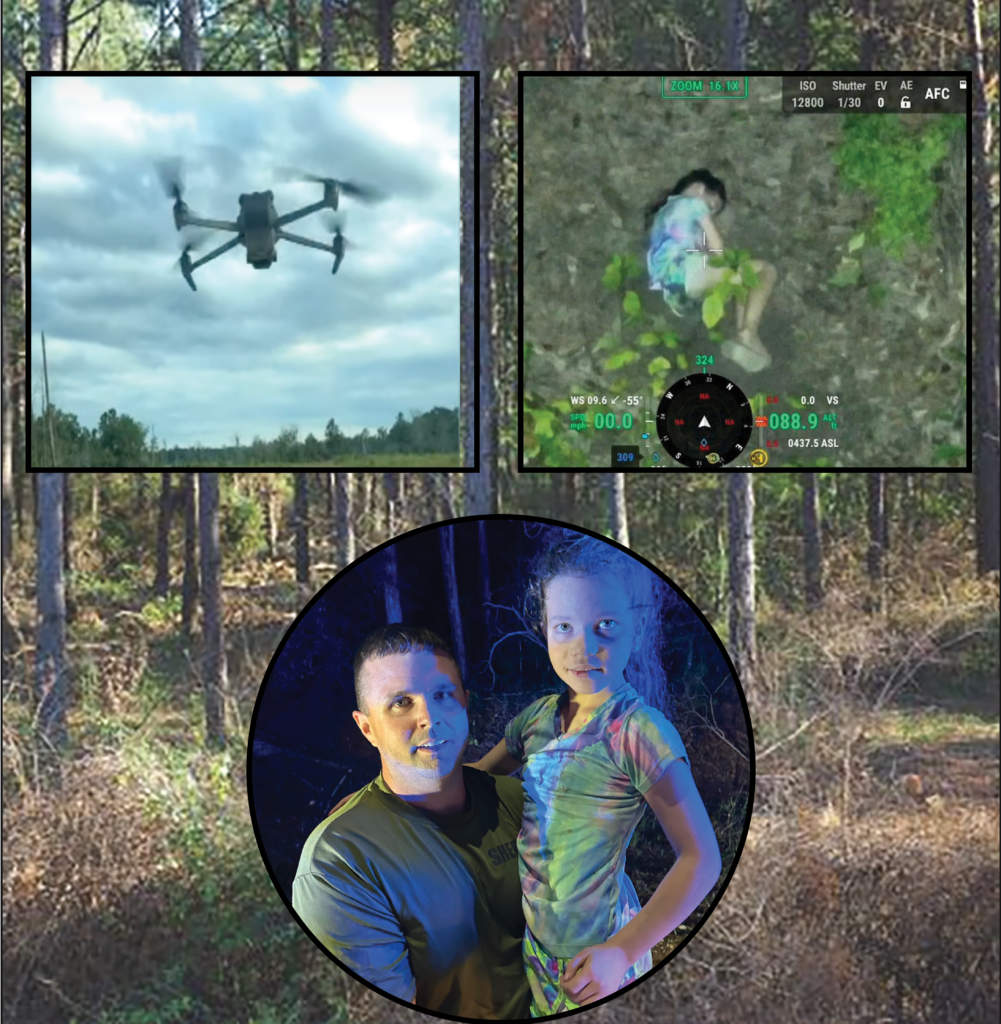
Photo of a man holding a small girl outside in darkness, with trees visible in background. Caption for photo reads: Bienville (Louisiana) Parish Deputy Sheriff Jeremy Gros holds the 10-year-old after she was found safe in the woods. Gros was the first rescuer seen on the drone footage. The grateful child hugged him after he helped her up from the ground, where she had been sleeping. She returned home safe—and, according to authorities, also hungry. Photo credit reads: (Rescuer) Webster Parish Sheriff’s Office
A thermal imaging drone (top left) helped rescuers locate a 10-year-old girl who had sleep-walked her way into the dark piney woods near her North Louisiana home. Bienville (Louisiana) Parish Deputy Sheriff Jeremy Gros was the first rescuer to reach Peyton Saintignan (shown sleeping, top right, and with Gros at bottom). Photos: Webster Parish (Louisiana) Sheriff’s Office

By Jody Garlock

On the afternoon of Sunday, September 15, 2024, a call came into the Webster Parish Sheriff’s Office (WSPO) in Minden, Louisiana: 10-year-old Peyton Saintignan was missing.

The girl had seemingly vanished while sleepwalking. This was something she had reportedly done inside her Dubberly home (35 miles east of Shreveport), but she had never left the house. Family members and neighbors had already spent an hour searching for the brown-haired girl, who was last seen at bedtime the previous night. With dense woods and dangerous wildlife such as wild hogs and rattlesnakes in the area, authorities knew that bringing Peyton to safety required quick action.

As the Sheriff’s Office dispatched its resources, the Louisiana State Police issued a Level II Endangered/Missing Child Advisory—a notification of a child believed to be in danger, but whose case doesn’t meet the criteria for an AMBER Alert.

The intensive 10-hour search that ensued brought together numerous law enforcement agencies, Homeland Security, and hundreds of volunteers. Tracking dogs, off-road vehicles, a helicopter, and aerial surveillance drones were all activated. But it would be a drone equipped with cutting-edge thermal technology that saved the day—and the girl.

At around 10:30 p.m. that evening, the operator set up his specialized equipment and onward and upward the drone went. Remarkably, within about 20 minutes, the drone’s ability to detect heat signatures was penetrating what by then was extreme darkness—and zeroed in on Peyton in the piney woods.

The riveting rescue footage that went viral showed the pajama-clad girl curled up on the ground and then waking as rescuers approached her in the woodsy terrain.

Local and national media alike recounted the happy ending. “Other than some mosquito bites, she was perfect,” Webster Parish Sheriff Jason Parker told ABC’s “Good Morning America.” “It’s truly a miracle.”

The case spotlights not only the importance of enlisting emerging technology to find missing children, but also the need to engage the public: The drone operator who spotted the girl had traveled from out of state, volunteering his services after hearing the breaking news about the search.

Photo of a man sitting on an outdoor chair and looking down at a drone control in his hands; he is sitting by a pickup truck that has its gate down and a flat-screen TV in the bed of the pickup. Photo credit reads: (Sheriff/drone operator) Webster County Sheriff’s Office
Josh Klober, co-owner of Drone Management Services in Magnolia, Arkansas, operates the equipment he volunteered for the search. Photo: Webster County (Louisiana) Sheriff's Office

Heat of the moment

In neighboring Arkansas, Josh Klober, who co-owns Drone Management Services in Magnolia, was watching a Sunday football game at his home when reports of the massive search in north Louisiana spread across the region. Knowing his drone’s thermal-imaging camera could detect body heat with pinpoint accuracy, even in areas obscured by dense woods, the father of two felt compelled to make the 90-minute drive to the search area.

Klober offered his assistance and waited until authorities gave the go-ahead after a search helicopter finished its work. He set up his equipment, which included a generator and a large flat-screen TV to monitor the drone footage in real time from the bed of his pickup truck. It was parked in the vicinity of where a hunter’s trail camera had earlier captured an image of the wandering girl.

His strategy at piloting the drone was simple: Think like a child. “There’s big, wooded areas around, but I’m trying to think like a 10-year-old,” Klober told Arkansas’ KNWA-TV. His hunch was that a child (albeit one who was sleepwalking) may not stray too far from the road, so he decided to contain his search within 40 yards of it.

Less than 30 minutes in, Klober could see a hot spot, which upon zooming in, revealed an image of the girl lying on the ground. The location was about 1 ½ miles from her home and 300 yards from where the trail camera recorded her.

Video footage shows how initial claps turned to silence when authorities gathered around the pickup truck realized the girl wasn’t moving. Klober kept the drone’s spotlight on her to guide rescuers to the exact location. As the TV screen showed Bienville Parish Deputy Sheriff Jeremy Gros making his way to her, the girl slowly raised her head. A joyful cry of “She’s awake!” was followed by claps from the group around Klober’s truck who were witnessing the rescue in real time.

After the rescuer lifted her up from the ground, the grateful girl put her arms around his waist in a hug. “It was pretty emotional for everybody,” Klober told “Inside Edition.”

Quote icon

Watch the remarkable drone rescue of the missing 10-year-old girl here.

Photo of Webster Parish (Louisiana) Sheriff Jason Parker
Quote icon

I can’t tell you how thrilled we all are to have a happy ending to this. A lot of prayers were answered.

Sheriff Jason Parker Webster Parish, Louisiana

Grateful community

The viral video of the rescue garnered thousands of comments from people impressed with the precision of the drone’s thermal-imaging technology that cut through the dense, dark forest.

They also praised rescuers, including Klober, who was singled out as a hero. “Drone operator deserves a medal!” one person commented on YouTube. “How altruistic of him to take it upon himself to rush over, dedicate his time and effort.” “Citizens helping other citizens—that’s how it’s done!” said another person.

The WPSO used its Facebook page to update the public on the story and express gratitude to Klober, Drone Management Services, and the agencies and volunteers who helped search forand safely recover Peyton.

While Klober stated in a local news interview “there’s a little bit of luck involved” in any type of drone search. “But whether someone else found her, or we found her,” he said, “I’m just glad she was found.” Sheriff Parker appeared more pragmatic about the recovery operation, praising it as a “truly cooperative effort.”

Text graphic reads "Hot Topic: Drones with thermal cameras are becoming a must-have tool in missing persons searches. The drones, which can be deployed quickly and cover vast areas, can detect body heat, even if the person reported missing is in thick brush or dark conditions. The heat signature from the camera provides real-time intelligence to direct searchers to the location."

Forty-seven missing and endangered children were reunited with their families in a first-of-its-kind rescue operation in New York. More than 55 experts, including 22 law enforcement agencies, collaborated in the mission to locate missing Erie County children who had been taken by non-custodial parents or had run away. “I have 30 years of doing this, and this has been the proudest, most impactful moment of my career,” said Kevin Branzetti, co-founder and CEO of the National Child Protection Task Force. Branzetti and Cindy Neff, manager of New York’s Missing Persons Clearinghouse (and AATTAP/NCJTC Associate), spearheaded the initiative in which law enforcement provided investigative support to Amherst and Buffalo police departments. Investigators gained valuable knowledge and now have “more tools in our toolbox” to tackle future cases of missing children, Branzetti said.