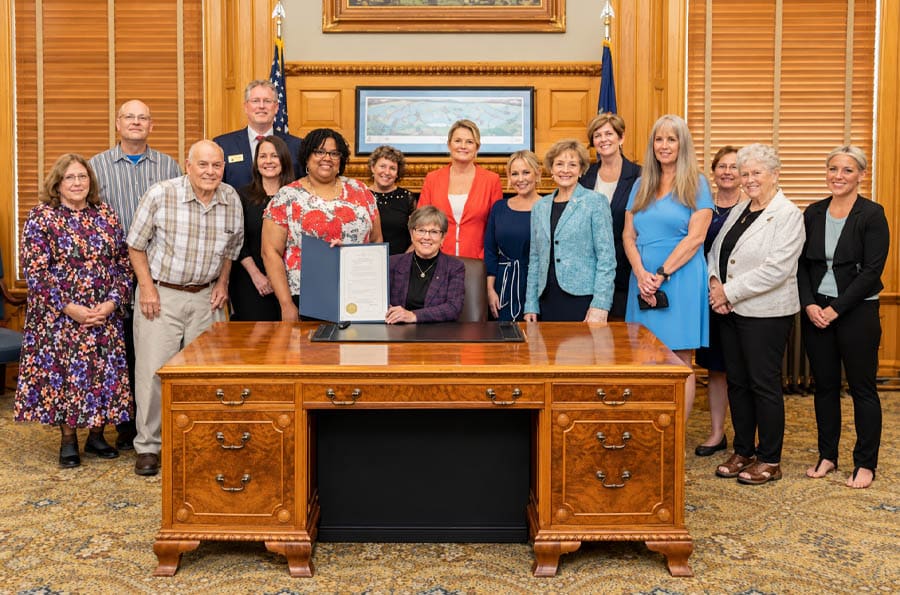
Missouri Governor bill signing ceremony for RJ Law Purple Alert. Group pose at large desk. Seated woman holding the signed document.

The recent enactment of RJ's Law in Missouri introduces a dedicated Purple Alert System designed specifically to aid in locating missing persons with developmental disabilities. Effective August 28, 2026, this legislation directly impacts how local law enforcement agencies, state highway patrols, and emergency response teams manage search operations for highly vulnerable individuals. By July 2027, the state is expected to fully implement specialized alert protocols that field personnel must integrate into their immediate response workflows. 

A primary operational focus of RJ's Law involves specialized crisis intervention training for field personnel. The program equips responding officers with specific tactical skills to safely interact with individuals who have intellectual disabilities, brain injuries, or severe emotional conditions. Because missing persons with developmental disabilities may not respond predictably to standard verbal commands, training officers to de-escalate interactions ensures significantly safer recoveries. Understanding unique behavioral precursors and the specific risks associated with wandering or elopement allows search teams to adapt their physical approach and communication strategies during an active rescue. 

The legislation also mandates strict communication workflows for local law enforcement immediately upon receiving a missing person report. Agencies are now required to rapidly contact media outlets across the affected region and all surrounding jurisdictions to broadcast the alert. Furthermore, dispatchers must quickly inform all on-duty law enforcement officers about the missing individual. This guarantees an immediate, widespread distribution of critical physical descriptions and behavioral information, mobilizing both the community and active patrols simultaneously. 

For operational clarity, the Purple Alert distinctly targets individuals with developmental, physical, or emotional disabilities not related to substance abuse. It strictly excludes missing persons aged 60 or older with Alzheimer's disease or dementia-related disorders, as those specific cases continue to fall under existing Silver Alert protocols. By establishing clear classification criteria, mandating immediate media broadcasts, and requiring targeted crisis intervention training, RJ's Law provides field personnel with a highly effective tactical framework to rapidly identify, locate, and safely recover missing persons with developmental disabilities. 

Key Findings

  • Establishing a dedicated Purple Alert provides a specific reporting mechanism for missing persons with developmental disabilities. 
  • Equipping field personnel with crisis intervention training enables officers to effectively de-escalate interactions with individuals experiencing cognitive or emotional distress. 
  • Mandating immediate notifications to regional media and all on-duty officers accelerates the distribution of actionable intelligence. 
  • Differentiating the Purple Alert from existing Silver Alerts ensures that search protocols are accurately tailored to the specific cognitive profile of the missing individual. 

Sources

  • Missouri General Assembly (Aug 28, 2026): Revised Statutes of Missouri, RSMo Section 650.535 (Link) 
  • KFVS 12 (Aug 28, 2026): RJ's Law takes effect creating Purple Alert for missing people with developmental disabilities (Link) 
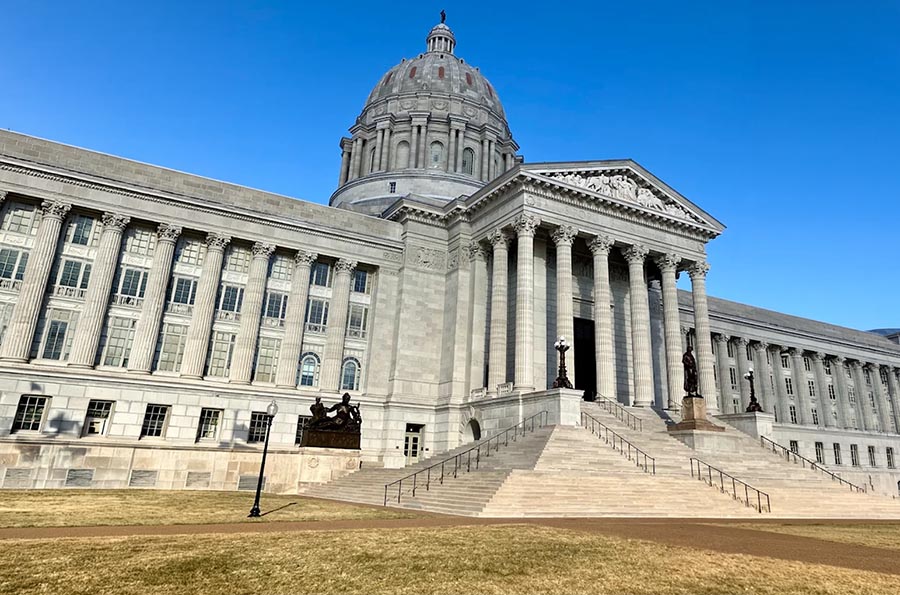
 

Missouri State Capitol building

Missouri enacted House Bill 1840, also known as RJ's Law, creating a statewide Purple Alert System within the Department of Public Safety. Signed into law on July 13, 2026, the legislation aids in locating missing individuals with developmental disabilities, including brain injuries and cognitive impairments, whose disappearance poses an immediate danger. The law requires the development of law enforcement training programs that include crisis intervention techniques for interacting with developmentally disabled populations. Additionally, the bill incorporates Mason's Law, allowing individuals with communication-impairing conditions to voluntarily add a specific designation to their driver's license or vehicle registration. This designation is accessible through the Missouri Uniform Law Enforcement System to ensure appropriate interactions during emergencies.

The enactment of Missouri's Purple Alert System provides tools for managing cases involving highly vulnerable individuals. When an individual with a cognitive or developmental disability goes missing, they can be especially vulnerable to bad actors or accidents. If lost, intellectually disabled individuals may become confused, be unable to recognize signs of danger, or not know how to ask for help. The new alert system helps disseminate information to media and surrounding law enforcement agencies.

The legislation mandates specialized law enforcement training. This training includes crisis intervention techniques specifically designed for handling individuals with developmental disabilities. Some individuals may be nonverbal or not understand how to respond to commands from law enforcement. Knowing the nature of a missing person's disability informs law enforcement and enables a more calm and appropriate interaction when the person is located.

Furthermore, the inclusion of Mason's Law creates a voluntary database designation. Individuals with health conditions that impair communication can apply for a designation on their state vehicle registration or driver's license. This critical data is accessible through the Missouri Uniform Law Enforcement System (MULES) during traffic stops or other encounters. This ensures appropriate interaction when law enforcement communicates with these individuals in the field.

Key Findings

  • Missouri enacted House Bill 1840 on July 13, 2026, establishing the Purple Alert System for missing persons with developmental disabilities.

  • The legislation requires the Department of Public Safety to develop law enforcement training focused on crisis intervention techniques for these populations.

  • Missing individuals with intellectual disabilities may be nonverbal, unable to recognize danger, or unable to follow law enforcement commands.

  • Mason's Law allows for a voluntary communication-impairment designation on state IDs and vehicle registrations, accessible via the Missouri Uniform Law Enforcement System.

Sources

  • BillTrack50.com (July 13, 2026): MO HB1840 | BillTrack50 (Link)

  • SpecialNeedsAnswers.com (Sept 16, 2025): How Can Purple Alerts Help People With Disabilities? (Link)

  • TrackBill.com (April 8, 2026): SB1409 | Missouri 2026 | Creates the "Purple Alert System" within the Department of Public Safety (Link)


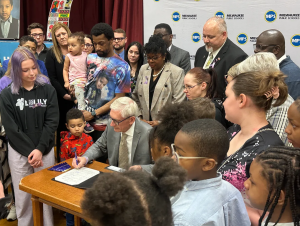
Wisconsin Governor Tony Evers is shown signing the Prince Act into law in March 2024

Wisconsin Governor Tony Evers signed dozens of bills in March that would invest $10 million in support of crime and human trafficking victims. A new formal partnership between Wisconsin Anti-Human Trafficking Task Force (WAHTTF) and the Missing and Murdered Indigenous Women and Relatives (MMIWR) addresses the prevalence of human trafficking in Wisconsin’s Indigenous communities. In April, Wisconsin signed two new missing person alerts into law, an effort to strengthen the state’s existing AMBER Alert system. The Prince Act expands Wisconsin’s missing person alerts for children after the murders of 5-year-old Prince McCree in 2023 and 10-year-old Lily Peters in 2022. In both cases, law enforcement didn’t have enough information to satisfy the strict requirements for issuing an AMBER Alert. As part of the Act, a new Purple Alert includes missing children under age 10 and children under the age of 18 incapable of returning home without help due to a disability.

The Wisconsin legislature is considering creating a Purple Alert to help find missing and endangered domestic violence survivors. The law would eliminate any waiting period before law enforcement can issue a statewide notification with the missing person’s picture and information.

Florida lawmakers are considering a Purple Alert also; however, it would be used by law enforcement for a missing adult with a developmental disability. State Senator Lori Berman says she wants the alert in place after a man died while wandering away from a care center.