

Former AATTAP Administrator Phil Keith has been asked to oversee the nation's community-oriented policing program. Keith has been named as the Director of the U.S. Department of Justice Department's Office of Community Oriented Police Services, or COPS Program. Keith oversaw the AMBER Alert Training & Technical Assistance program from 2004 until 2014. From 1988 until 2004, he served as the Chief of Police for Knoxville, Tennessee, and has worked with the Tennessee Police Chiefs Association, the Major Cities Chiefs Association, the International Association of Chiefs of Police, and other notable organizations. He has received numerous awards and commendations for his expertise and leadership in law enforcement, community safety and child protection work. “My first priority will be carrying out the mission of the Attorney General's violent crime plan,” said Keith. “We'll primarily be going back to basics, listening to law enforcement in the field, which has not been occurring for a while.”
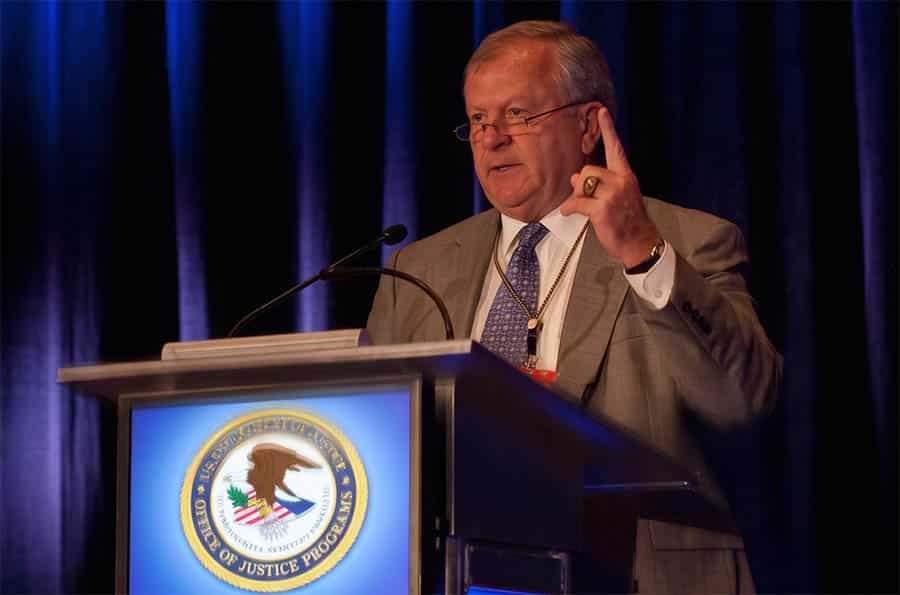
Phil Keith had just retired in 2004 as the police chief of Knoxville, Tennessee, when he was given a monumental task: make sure every state, territory and the District of Columbia have a consistent and effective AMBER Alert program within two years. Many states and communities had a child abduction alert system but the programs varied in size, criteria, and capability.
"One of the driving tenants of the development of the AMBER Alert system was to not decide what level of participation there would be but to make the network seamless and let the local, Tribal, regional, and state governments make the most informed decision best meeting their needs," said Keith. "This strategy is still in place today."
Keith put together a small team of professionals who understood teamwork, a strong work ethic and a "relentless sense of urgency to help recover missing children." The team listened to law enforcement officers who knew what did and did not work. They reached their goal in 18 months and wanted to do more.
"It was very clear the U.S. Department of Justice AMBER Alert Initiative was more than highway signs and messaging," said Keith. "The program had to create a voluntary seamless network of AMBER Alert Plans designed to rescue and recover missing, endangered and abducted children."
The team used best practices on investigations, searches, policies, and technologies to help good AMBER Alert programs become better. Team members invited abduction victims and their families to learn about the strengths and shortfalls they witnessed firsthand. They discovered and developed new ways to recover children like the Child Abduction Response Team, Endangered Missing Advisory, AMBER Alert in Indian Country Initiative and the Southern Border Initiative and using social media, including sending AMBER Alerts through the National Center for Missing & Exploited Children's secondary distribution program.
"This is not to say there were not 'bumps in the road,' bruised feelings or some unintentional temporary derailments, but the bottom line was the focus on protecting children," said Keith. "We pushed the envelope at times to gain acceptance, secure sincere team efforts at all levels of government and were very careful to be inclusive rather than exclusive."
Funding for training has always been difficult to obtain on a federal, state, and local level. Keith had to find ways to teach more people with less money. Instead of bringing hundreds of people to be trained by a few experts, he began sending the experts to train hundreds of AMBER Alert partners where they worked. More than 18,700 people have also been trained through eLearning courses.
Now nearly a decade later, Keith has retired from the AMBER Alert Program. Jim Walters, who has been involved with the AMBER Alert Program since its beginnings, has assumed the position as Director of the AMBER Alert Training & Technical Assistance Program. He credits the team for bringing the AMBER Alert Program to its current level and he believes teamwork will be essential to keep the momentum going.
"We have already seen 'bad guys' let children go once they hear AMBER Alerts have been issued, so we are headed in the right direction," concluded Keith. "However, we have to be ever vigilant in our efforts as there are some really evil people in the world who bring great risk and harm to our children."
Keith's Parting Thoughts on:
Child Abduction Response Team (CART)
These teams are built from the bottom up in most communities and represent the true intent of state, local, and Tribal communities to be prepared to respond to episodes of missing, endangered, or abducted children. This model program should remain the flagship initiative of the U.S. Department of Justice and be expanded into as many communities as possible.
Endangered Missing Advisory
The common recurring question about AMBER Alerts was “what to do if my child does not meet the criteria.” The Endangered Missing Advisory addresses the gap for persons over the age of 17, special needs persons, and addresses a population neglected by most everyone, the “endangered missing and runaways.” Today over 43 states and a number of local communities have adopted a form of the Endangered Missing Advisory Program.
AMBER Alert in Indian Country
This initiative was designed to meet the culturally sensitive needs of life in Tribal communities and the unique challenges Tribal members face every day. We learned early on not to layer another program on the Tribes, but rather utilize existing programs and efforts to compliment the work achieved and give AMBER Alert a true meaning of creating greater capacity and skills to respond to children in crisis among Tribal communities.
The Southern Border Initiative
Our partners on both sides of the border demonstrated their dedication and resolve to make a difference in missing children and after only 18 months we had “Alerta AMBER” throughout Mexico. Many of the officials supported the Alerta AMBER, even though there is a potential grave consequence by organized criminal enterprises not interested in the welfare of children and were most likely involved in the trafficking of children for commercial sexual exploitation.
AMBER Alerts in Social Media
Technology has been a great tool to advance the AMBER Alert messaging. In the coming years use of the social media will become a more localized effort as it should be, as the local communities know best what is needed and the urgency in getting “other eyes” looking for missing children.
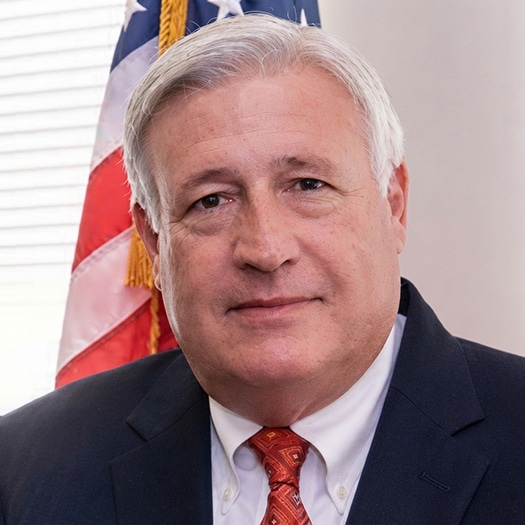
Bill Bryan was always soft-spoken but his efforts with the AMBER Alert Training & Technical Assistance Program communicated volumes about his commitment to recovering abducted children. Bryan started working for the program in January 2005 and retired July 2013.
“There are many fond memories from my days with the AMBER Alert Program,” said Bryan. “The one thing that, of course, stands out the most is the wonderful relationships that were developed over the years.”
Bryan started as a consultant and helped develop the Investigative Strategies for Missing and Abducted Children (ISMAC), Leadership for Missing and Abducted Children (LMAC) and Basic Forensic Response to Missing and Abducted Children courses. In 2006 he became a program manager, and those programs and others started being offered on a regional basis about ten times a year.
“There was a shift from regional programs to onsite technical assistance programs which are more cost effective and allowed the programs to reach more people,” added Bryan. “Many of those early technical assistance programs were run in Indian Country and were very well received there.”
Bryan also took on additional duties including instructor coordination, consultant supervisor, onsite facilitation, curriculum review, coordination of case study development and coordination of the annual AMBER Alert award program.
“A friend and colleague for more than 36 years, Bill is dedicated to a common mission of working together and doing things right; and respecting others with the highest of regards,” said Phil Keith, AMBER Alert Training & Technical Assistance Program Director.
“Personally, I am grateful for the help Bill gave me in refining our AMBER Alert Plan,” said former Utah AMBER Alert Coordinator Paul Murphy. “He identified strengths and weaknesses and made suggestions that helped improve our plan.”
Bryan is now Deputy Secretary with the North Carolina Department of Administration where his responsibility includes issues involving women, human relations, Indian Affairs and youth advocacy. “Many of my AMBER experiences have served me well in this new position and I continue to stay involved in issues involving child protection and the prevention of human trafficking,” said Bryan.

Some parents found their son or daughter safe. Some learned their child was murdered. But some still do not know what happened to their little boy or girl. The 50 people gathered May 6-7, 2013, in Jacksonville, Florida, for the Family Roundtable include parents, siblings, and survivors of child abductions.
The Office of Juvenile Justice and Delinquency Prevention has brought the Family Roundtable together eight times as part of the National AMBER Alert Training & Technical Assistance Program. Each time family members and survivors of child abductions provide insight on what law enforcement officers, media representatives, prosecutors and other AMBER Alert partners can do better when a child is taken.
Cameron Moulton was only 2 years old when his 10-year-old brother Christopher was kidnapped and brutally stabbed to death in 1995. Cameron said it took him years before he could finally talk about his feelings about losing his brother.
“I grew up afterwards with this weight on my shoulders,” he said. “The feeling you have on a day-to-day basis and not being able to talk about having a brother or sister…or withdrawing from people so you do not have to tell them.”
Jessica Clifton's 8-year-old sister Madelyn Rae was murdered by a 14-year-old neighbor in 2006. She said it was very difficult to be isolated from her parents during such a traumatic time. “A detective called me at 2 a.m. and told me I could not go back to my parent's home,” she said. “I understand it now, but I did not understand it then. I just wanted to help, and I felt helpless during the entire investigation.”
Many of the siblings of child abduction victims said they felt forgotten. They said they want to be “true survivors” and not just victims. Participants helped make a list of things a family should know when a child is abducted, including: you are not alone, you are not crazy, you are not at fault, you will be a suspect, you do not have to know what to do, and you need to take care of your basic needs of sleep, eating and drinking.
During a breakout session with siblings and survivors, participants offered some advice to family members and those who come into contact with families during a child abduction: law enforcement should tell the family first about new leads and keep the press out of the recovery site; siblings should be assertive, keep their identity and not be afraid to get counseling; parents should give their children age appropriate tasks to help in the case; the media should have clear boundaries; and social media is a place where rumors and hurtful comments can spread and not be retracted.
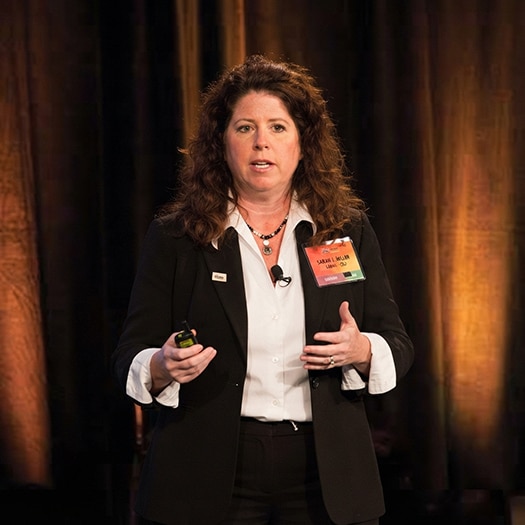
Clinical psychologist Dr. Veronique Valliere shared with the group some of her findings from working with violent and non-violent sex offenders for more than 20 years. She said pedophilia is not curable, only containable. She added that 90% of the pedophile population will sexually assault anyone while the remaining 10% only assault children.
Dr. Valliere said strict housing ordinances for sex offenders actually causes sexual assault rates to increase. However, she said sex offenders should be closely watched because they prey on fear, ignorance and not being held accountable.
The 2-day roundtable also included a case study on lessons learned from the Jaycee Dugard case. Dugard was kidnapped in 1991 and held hostage by a convicted sex offender for more than 18 years. Participants also heard a presentation on how technology is used to exploit children and ways parents can prevent exploitation.
Some of the parents had children who were abducted and taken to another country. They said it was difficult to get law enforcement in other countries to respond because it was often considered a custody dispute and it was very difficult to communicate. They also said the media and the public showed very little interest in their plight.
“It is clear that many of the issues facing families involved in domestic U.S. abductions were different than those encountered on the international side,” concluded Phil Keith, Program Director for the AMBER Alert Training and Technical Assistance Program. “It seemed that law enforcement was poorly informed on what could be done for the victim's family. Because of the danger of serious bodily injury or death, the police in the U.S. are more focused and consequently so is the media.”
 Hugh Emerson Munn, who passed away October 19, 2012, in Columbia, South Carolina, is remembered for his bridge-building efforts that improved the AMBER Alert Program.
Munn developed innovative ways to provide AMBER Alert training to thousands of broadcasters and law enforcement officers at the University of South Carolina School of Journalism and Mass Communications.
“A pioneer in bridging the gap between law enforcement and the media, Hugh understood the perspectives of both but insisted both must focus on children. Hugh made an incredible impact and left a lasting legacy for others to follow in his footsteps of protecting children,” said Phil Keith, AMBER Alert Training & Technical Assistance Program Director.
Munn was a longtime journalist when he became the first public information officer for the South Carolina State Law Enforcement Division in 1979.
He served in that capacity for 26 years before going to the University of South Carolina. Munn was 70 years old and is survived by his wife and two daughters.
 Editors' Note: This special Spring/Summer edition of The AMBER Advocate contains extensive coverage of the Trafficking in Persons Symposium held April 10-13, 2012, in Salt Lake City, Utah. The Department of Justice's AMBER Alert Training & Technical Assistance Program (AATTAP) conducted the symposium, which brought together more than 100 subject matter experts from a variety of disciplines including law enforcement, medical and legal representatives, social services, non-government organizations, educators, faith-based organizations and researchers to gather valuable insights and lessons surrounding the topic of trafficking. The symposium included collaboration from Harvard University, Johns Hopkins University, University of Texas at El Paso, and Southern Methodist University.
Change in Perspective
A 15-year-old Phoenix girl was invited on MySpace to meet up with a friend she knew from school. When she showed up to see her friend, four men grabbed her, wrapped her in duct tape, and took her to an apartment where they gang-raped her.
For the next 43 days, the men forced the girl to live in a dog cage and trafficked her. The men fed her dog biscuits and threatened to kill her every day. No AMBER Alert was issued. Even though the girl was a model student and did not have a history of problems, the police and parents thought she had run away. The incident happened in 2005 and at that time detectives thought any girl who offered sex for money had made a lifestyle choice.
“We did not understand that a prostitute is not a criminal, rather a prostitute is a trafficking victim,” said Phoenix Police Lieutenant James Gallagher. “We thought we knew everything, and we would solve everything. Our mind set changed when we found a girl in a dog crate.”
The Trafficking in Persons Symposium included horrifying stories of children who were abducted and forced into slavery. The Office of Juvenile Justice and Delinquency Prevention (OJJDP), which is a component of U.S. Department of Justice, hosted the symposium.
“We realized it was important to focus on human trafficking because the AMBER Alert did not address the problems we were seeing with endangered, runaway, and thrownaway children,” said Phil Keith, AMBER Alert Training & Technical Assistance Program Director. “It is difficult to separate child abductions from human trafficking because the research shows a strong connection between endangered and abducted children and trafficking.”
Keith said lessons learned from developing the AMBER Alert program could inform the development of a national response to human trafficking. Likewise, learning more about human trafficking will give AMBER Alert partners more insight into their response to child abductions.
The Numbers
Estimating the number of people trafficked into or out of the United States is inherently difficult because of the secretive nature of sex and labor trafficking. Using different methodologies, populations (adults versus children), units of analysis (states, counties, continents), researchers have produced wildly disparate estimates of the problem. Lacking consistency, estimates for trafficking within the United States range from 2 million to 14,000 annually; and international figures reach as high as 27 million victims per year.
Without methodologically sound techniques for determining the number of trafficking victims, some studies have turned to at-risk populations, a logical approach given the link between at-risk youth and adults, and exploitation. For instance, the second National Incidence Studies of Missing, Abducted, Runaway and Thrownaway Children (NISMART-2) published by OJJDP in 2002 estimated that 1,315,600 children were missing from their caretakers for at least an hour in 1999. The annual total includes nearly 800,000 runaway, thrownaway, injured or endangered children and 150,200 child abductions.
Taking even the lowest estimate of human trafficking within the United States reveals that more than 10,000 people face labor or sexual exploitation each year in this country. Turning to at-risk populations reveals an even larger issue with at least 100,000 in danger of sexual or forced labor situations.
People who work with human trafficking agree that even one case of a child being forced to work as a sex slave, or forced to work in agricultural fields for pennies is reason enough to take this issue seriously.

A Survivor's Story
Holly Smith was 14 years old when an older man approached her at a mall. After that, he started calling her frequently and buying her gifts. “He talked to me like an adult, which was important to me,” said Smith. “Most boys and girls were sarcastic, and I did not feel like I was being heard.”
The man told her they could run away to Hollywood so she could be a songwriter or a model. Smith said running away seemed like a good idea because she had been abused as a child and had a bad relationship with her parents.
Smith said she knew something was wrong when the man took her to a hotel and raped her to “test his goods.” He then told her about the rules regarding having sex with men for money. After weeks as a domestic minor sex trafficking victim a police officer approached her and asked if she was underage.
“I asked ‘What if I was not 18?’” said Smith. “The officer arrested me, searched me, and threatened me with juvenile detention and that I would get beat up. My family members did not understand what happened to me.” She said the officer's treatment convinced her that she could not trust law enforcement.
Eventually, Smith received the help she needed and now works as a microbiologist. She speaks to audiences across the nation to convince people to treat girls like her as a trafficking victim instead of a child prostitute or sex worker. “My main point is: These girls are worth saving.”
A New Approach
Detectives at the Dallas Police Department found they started making a dent against human trafficking when they began treating women and girls as victims instead of prostitutes. Between 2005 and 2010, they recovered 994 high-risk runaways; 506 identified themselves as trafficking victims, and detectives had evidence that many of the others were also victims.
“It is truly not that difficult to find trafficking victims,” said Dallas Detective Cathy Delapaz. “It is important to know what to do once they are contacted. The interviewer must help the victim find services and get help. If your sole purpose is to win a case, you are doomed to fail.”
Dallas Police soon realized these victims are different than other crime victims. “Our system is set up for compliant victims,” said Dallas Police Sergeant Byron Fassett. “It is not set up for foul-mouthed, angry, mean and scared victims who will fight you tooth and nail. We need to change the system to help them.”
Fassett said most trafficking victims do not contact police and so a community-wide approach is needed to make it safe to seek help. Law enforcement must team up with juvenile probation, state and federal prosecutors, social service agencies, and non-profit groups to make a real difference.
The Dallas Police Department is now rescuing about 90 girls each year from sexual exploitation compared to about 12 girls a year when they were simply making vice arrests.
The Phoenix Police followed the Dallas model and started partnering with federal agencies and national and local organizations that could offer help to trafficking victims. The department also started targeting pimps instead of prostitutes.
“We tried to arrest our way out of the problem and had no understanding of victimization,” said Phoenix Police Sergeant George Sutherlin. “We did not focus on the pimp or john and had no partnerships with service providers. Our partnerships are now the most important resources in trafficking cases.”
Phoenix police have partnered with Arizona State University's Project Rose, a program that provides an alternative to incarceration for women charged with prostitution. The project offers services and restores dignity to victims so they will not return to prostitution. Not everyone finishes the program, but none of the women who have finished it has been re-arrested. “Arrest alternatives do work and partnerships can help save victims,” said Associate Professor Dominique Roe-Sepowitz.
Lessons for AMBER Alert Partners
When the AMBER Alert Program began to grow across the country, many believed communities would use the alert only for stereotypical child abductions. AMBER Alert partners quickly realized that family members and people who know the victim commit most abductions. They also realized that family and acquaintance abductions can be extremely dangerous for the child.
The symposium provided an eye-opening look at the alarming numbers of child abductions that occur for the sole purpose of sex trafficking. Pimps and gangs physically abduct some of the victims. Many victims are missing children or runaways who have been lured to leave their homes without knowing the full consequences. Findings from the symposium will be essential for AMBER Alert partners to develop a comprehensive child abduction response plan that can provide for the safe recovery of all victims.
Letters to the Advocate
“I am going through all of my Trafficking in Persons Symposium notes and just wanted to say thanks for inviting me. I have lots of information that will really help our program. I learned a lot during the conference and felt that it was very well done. We are now working on putting together a task force on human trafficking.” — Amy Thurston, Trafficking in Persons Program Coordinator, Asian Association of Utah Refugee and Immigrant Center
Report: Trafficking in Persons Symposium
Survivors Offer Solutions to Get Trafficked Victims Off the Streets

One of the most valuable lessons that the AMBER Alert Training & Technical Assistance Program has taught is the value of listening to victims and their families when seeking solutions to child abductions. The Trafficking in Persons Symposium brought 12 survivors of child sex trafficking to offer a real-world perspective on what will and will not work to help victims.
“We thought it was very important to have a face on this mission,” said Phil Keith, AMBER Alert Training & Technical Assistance Program Director. “When you have the face of a child, it deals with our values and our heart.”
The 12 women who now call themselves “sister survivors” offered practical ways to help human trafficking victims. “We know what it takes to bring victims into becoming survivors,” said Keisha Head. She and the other survivors provided examples of what is needed to help trafficking victims, including being careful with the language and labels used during the first contact, being prepared to provide shelter, food, education, and long-term support, considering the trauma the victim experiences, and coordinating services while using survivors to help victims.
Head said her experience with law enforcement was not positive after she was forced into trafficking. She said one police officer even gave her advice on where the “pretty girls” sell themselves. Later, she went to the police after she was raped. “The officer said, ‘You were not raped, you are a prostitute.’”
In conclusion, she said, the one word all of the survivors could relate to is slavery. “This is modern-day slavery, and this is taking place under our eyes, and we need to take a stand and stop this from happening.”
Lessons From Human Trafficking Symposium Offered Online
On May 16, nearly 400 people participated in an online training course about the connection between missing children and sex trafficking. The hour-long Webinar, “Missing to Trafficking,” identified the correlation between the unknown missing child, chronic runaway, repeat victims of sexual abuse, abducted children, and the child victimized through sex trafficking.
“Child sex trafficking victims are missing kids,” said Dallas Police Sergeant Byron Fassett. “A child on the street has the highest risk of victimization. They are often approached by a pimp and forced into trafficking.”
AMBER Alert Liaison Jim Walters offered this advice from the Trafficking in Persons Symposium when assisting victims: offer help unconditionally, learn to be culturally appropriate, provide basic needs, and use a survivor advocate to assist. “It is our responsibility to give victims control and let them take charge of their own lives,” said Walters.

If there was a theme to the 2010 National AMBER Alert Symposium, it would be the Boy Scouts' motto, “Be prepared.”
Clay County, Florida, Sheriff's Captain David Senters put it this way: “The only type of case that has ever scared me is a child abduction. Having been through a child abduction, I'm even more scared. You must have a plan in place.”
The symposium held November 16-18 in Phoenix was an opportunity for AMBER Alert partners to consider if they have a plan in place or if they must improve their current plan. The symposium provided three days of discussions designed to replace fear with knowledge.
“We have come a long way, but we still have a way to go,” said AMBER Alert Training Program Director Phil Keith.
The 7-Year Review
The AMBER Alert Training & Technical Assistance Program staff shared a review of all U.S. and Canadian AMBER Alert Plans during the past 7 years to see how they have evolved.
The good news: name recognition for AMBER Alert is up, the activation criteria is more uniform, the methods for disseminating alerts have improved, and more plans use tools to identify proper activation procedures.
The review noted some other positive developments: more plans employ comprehensive child recovery strategies and automatic alert cancellations and better details about the frequency of alerts and out-of-state activations. In addition, more plans use Endangered Missing Advisories for cases that do not meet the AMBER Alert criteria.
The bad news? Most plans lack details in after-action reports; few plans reference phone banks, testing, scenarios, or tabletop exercises. Also, most plans have not been updated since 2007.
The lesson learned from this comprehensive review is there is no finish line; agencies need to constantly review their plans and make needed improvements to ensure they provide the best preparation possible.
During his keynote speech at the symposium, Utah Attorney General Mark Shurtleff quoted Benjamin Franklin, who once said, “When you finish changing, you are finished.”
“We need to change from ‘That is the way it has always been done’ to ‘That is the best way to save a child,’” said Shurtleff. “Take the smallest idea and run with it. Just one person is all it takes to turn a tragedy into a triumph.”
OJJDP Deputy Administrator Marilyn Roberts noted that the AMBER Alert Program has had many triumphs over the past seven years. “The AMBER Alert Program has significantly increased public awareness of child abduction cases and public participation has increased dramatically,” she said.
National Center for Missing & Exploited Children (NCMEC) President and CEO Ernie Allen also added that this is a time to celebrate what has been accomplished. “Few partnerships have had the impact of the AMBER Alert,” said Allen. “Individually, we can do little. Together, we can change the world.”
Technically Speaking
One constant change is technology. NCMEC Associate Director of Special Projects Bob Hoever discussed the way technology is changing AMBER Alert Programs. Some examples include Walgreens posting all AMBER Alerts on its electronic pharmacy signs, smart phones soon having applications for AMBER Alerts and missing child notifications, the U.S. Immigration and Customs Enforcement Service showing AMBER Alerts and endangered missing children notifications on its LCD screens, the Integrated Public Alert and Warning System and Commercial Mobile Alert System eventually changing the way all alerts are distributed, and the Emergency Alert System soon switching to the Common Alert Protocol (CAP) as its primary method of delivery.
Washington State Broadcasters Association President Mark Allen said CAP will make it possible for alerts to include audio, graphics, maps, and text. “In addition to the standard alert, messages will be sent to cell phones, Websites, billboards, and other alerting devices,” said Allen.
The launch date for CAP has been delayed, but, Allen said, broadcasters will eventually have to buy CAP decoders and encoders.
AMBER Alert Web Expanded and Enhanced
The AMBER Alert Extranet is also undergoing a complete makeover. The Extranet serves as a secure clearinghouse for authorized AMBER Alert partners in collaborating with one another. In 2011, the Extranet will become part of the secure sites on the Criminal Justice Collaboration Portal at www.thecjportal.org/amberalert. The portal will provide users with an expanded array of Web-based collaboration and information management tools that will enhance the Extranet's features.
“Users can collaborate with other AMBER Alert and child protection partners regarding issues relevant to their roles and responsibilities and access information regarding training and technical assistance,” said Distance Learning Coordinator Bonnie Davis.
AMBER Alert's sites on the portal will provide a wide array of training and technical assistance information for the public. Users with secure login credentials, such as AMBER Alert Coordinators, Missing Children Clearinghouse Managers, active Child Abduction Response Team (CART) Program Coordinators, and their ranking law enforcement officers, will also have access to a vast collection of secure collaboration tools, document libraries, and other resources not visible to the public. The site's security will ensure that users' information and documents are protected as they collaborate with their colleagues.
Distance Learning on the Portal
The portal will also be used to share distance learning courses. The website will include an area devoted to online course information, schedules, downloads, and links to registration.
Two courses are currently available: “Public Safety Telecommunications Best Practices for Missing and Abducted Children” and “Patrol First Response for Missing and Abducted Children.”
In the first 10 months of AMBER Alert's online learning programs, more than 2,100 law enforcement and public safety personnel successfully completed training. Registrations continue to pour in and 3 to 5 more programs are expected to be added this year, including a Spanish language AMBER Alert Basics course, blended learning opportunities for the CART program, and a new course for prosecutors to support their role in missing and abducted child investigations.
CART Has Wheels
The CART concept continues to gain momentum since it was introduced at the National AMBER Alert Symposium in 2006. A CART is made up of highly trained individuals who provide the expertise and resources needed when a child is missing or abducted. So far, more than 247 teams have attended training covering 43 states, the District of Columbia, Puerto Rico, the Bahamas, and Canada.
“AMBER Alerts and CART go hand-in-hand,” said lead CART Instructor Floy Turner. “Our short term goal is to have CARTs in all 50 states. Our long term goal is to have CARTs everywhere.”
Predatory Behavior
The symposium included some frank discussions about offenders who engage in commercial sexual exploitation of children. In a presentation on Predatory Behaviors, licensed psychologist Veronique N. Valliere said child predators manipulate victims to get what they want.
“When we are talking about compliant victims and compliant behavior, we are not talking about compliance,” said Valliere. “Compliance implies full knowledge. What we have to realize is that these offenders ruin the victim's ability to consent or comply.”
Valliere warned investigators and prosecutors that predators will also act nice, show remorse, and shift the blame on the victim to manipulate them. “The more the offender can blame the victim, the more likely it is that we are not going to take the case,” she said. “Nice is a behavior, not a character trait, it means nothing. The reality is that some of the nicest people do the worst things.”
Detective Cathy Delapaz has dealt with many predators while working for the Dallas Police Child Exploitation Squad. Her job is to stop human trafficking and child prostitution. She shared how pimps groom children to do what they want and never tell.
“Most of the victims of child prostitution could leave the lifestyle and contact police, but the grooming process prevents them from even considering that an option,” said Delapaz. “These cases are not going to walk in off the street; we have to be proactive.”
Family Roundtable Underlines Real Danger, Guides Others
Diena Thompson lit a candle at a vigil for missing and abducted children at the 2010 National AMBER Alert Symposium. A similar candlelight vigil was held for Thompson a year earlier at the symposium in Tampa after the heartbreaking news that her 8-year-old daughter Somer had been found in a Georgia landfill. Somer was walking home from school when a registered sex offender abducted and murdered her.
“It is high time for the predators to fear us rather than us and our children fearing them,” said Thompson. Since the tragedy, Thompson has joined the Surviving Parents Coalition and become a powerful voice for other parents of abducted children.
“My hope is together we can get these monsters off the street,” added Thompson. “Not one more child, not here, not anywhere.”
Thompson also joined 39 mothers, fathers, and survivors in child abduction cases who took part in the Family Roundtable discussions at the 2010 symposium. The family members shared their experiences and recommended guidelines they thought would help AMBER Alert partners during child abductions. Carol Ryan, a mother of an abducted child, shared those guidelines, including that being heard is important to healing and to solving a case, that families should be given a voice and an advocate to help them with law enforcement and the media, that law enforcement agencies should immediately investigate missing children reports rather than telling parents to call back the next day, that the worst case scenario should always be assumed when looking for a child, that runaway cases may not really involve runaways and should be investigated, that children from foster care or residential facilities get lost because cases are not reported or investigated properly, that the family should be kept informed and communicated with even when there is nothing new to say, and that the home should be left the way it was found after an investigation because it is the family's place of refuge and must be protected.
“Law enforcement plays a big part in defining the whole experience for the family,” concluded Ryan. “Remind the family that there are other victims and that what occurred was not their fault. Those affirmations are powerful and stay with the family for a long time.”
Crisis, What Crisis?
Since an AMBER Alert is by its very nature a crisis, AMBER Alert partners also received a crash course on crisis communications. Lessons shared on working with the media during an AMBER Alert included that press conferences should provide everything a reporter will need to tell a story, that the victim's family should have a voice and will help generate public interest, that traditional and new media should be used to reach as broad an audience as possible, that law enforcement should always be up front with the media since a break in trust can jeopardize future cases, and that officials should explain why certain information cannot be released during an investigation.
Clay County, Florida, Sheriff Rick Beseler said it was critical that a relationship with the media already existed when 8-year-old Somer Thompson was abducted and murdered. “The media is needed to relay critical information about the suspect and case,” said Beseler. “If a relationship does not exist, it will be difficult for law enforcement to disseminate information.”
The symposium ended with a challenge from Ron Laney, then OJJDP Associate Administrator and now Senior Policy Advisor to the Administrator, to be prepared and to share. “Be sure to take home what you have learned and share it with everyone.”
2010 AMBER Alert Award Winners
Marilyn Roberts, OJJDP Deputy Administrator, presented the 2010 AMBER Alert Awards to five outstanding individuals involved with the AMBER Alert Program.
Broadcast/Media Person of the Year
Illinois Broadcasters Association President Dennis Lyle helped develop a state AMBER Alert Program in 2001 and enlisted more than 500 broadcasters to make the plan work. Lyle promotes the state's “no budget” AMBER Alert Plan to enlist partners, to educate the public, and to create public service announcements.
Law Enforcement Leadership Award
New Mexico Department of Public Safety Public Information Officer Eric Garcia works tirelessly to educate law enforcement officers and broadcasters on AMBER Alert laws, regulations, and protocols. He developed a Missing/Endangered Alert to find children who may not meet the AMBER Alert criteria. He has also been a leading force to bring AMBER Alerts to bordering states in Mexico.
AMBER Alert Citizen Award
Mike Grant helped save a 2-year-old girl after an AMBER Alert was issued in Maine, New Hampshire, and Vermont. The girl was abducted by her father, who had assaulted the victim's mother at knifepoint. Grant was hunting in the woods when he spotted the victim and suspect and convinced him to turn himself in.
Victor Perez responded to an AMBER Alert after an 8-year-old girl was abducted and forced into a truck in Fresno, California. Perez followed the suspect until he pushed the child out of the truck. The suspect was arrested 40 minutes later.
AMBER Alert Coordinator of the Year
Lt. Charles Fleeger, College Station, Texas Police Department.
CART Certification
Roberts also recognized the Child Abduction Response Teams (CART) that received national certification in 2010. Certification is achieved after the teams are determined to follow the standards and requirements of the Department of Justice. The Utah CART was certified June 1, 2010; the Georgia CART was certified September 1, 2010; the Southern Oregon CART was certified October 1, 2010; the York County, Pennsylvania CART was certified November 17, 2010; and the Kansas CART was certified November 17, 2010.
Special Award Presented to Outstanding Advocate for Children
Phil Keith, AMBER Alert Training & Technical Assistance Program Director, was surprised to receive a special award from OJJDP and NCMEC staff for his outstanding work as an advocate for missing, abducted and endangered children during the final minutes of the symposium. Ron Laney, Senior Policy Advisor to the Administrator, presented the award to Keith for his tireless efforts to train thousands of people and develop critical programs to save the lives of missing and abducted children.