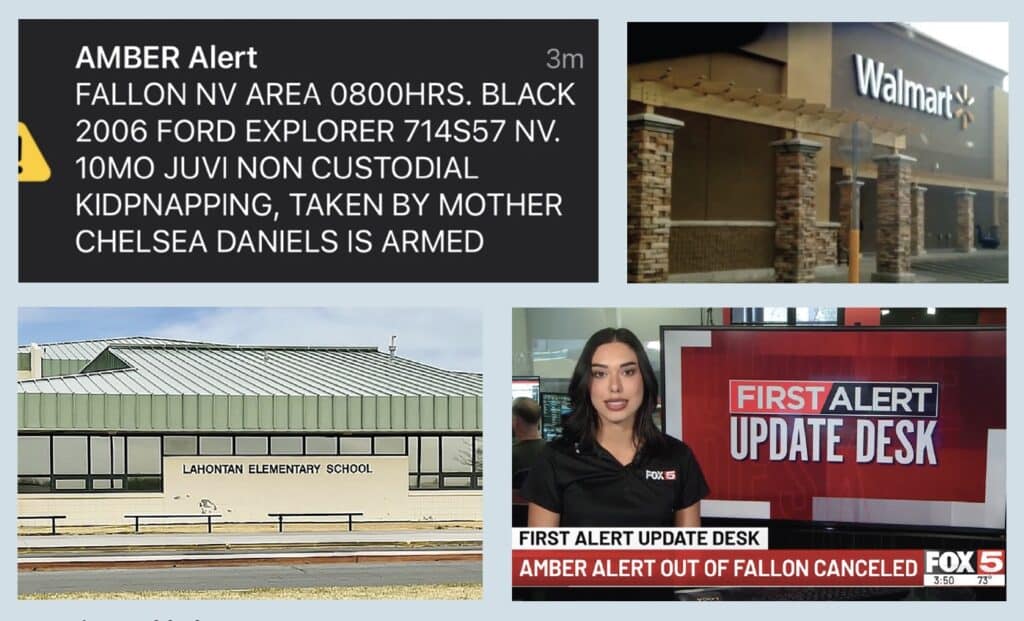
In 2023, 59% of AMBER Alerts were for family abduction cases, according to the National Center for Missing & Exploited Children. The abductions tend to occur at transition points, such as when court-ordered exchanges of the child are scheduled to take place. Staff photo illustration.
By Jody Garlock
Engaging the public has always been at the heart of AMBER Alerts. The program, after all, was built on the premise of instantly galvanizing citizens and motorists to serve as an extra set of eyes to help law enforcement safely locate an endangered missing or abducted child. The power of that concept played out literally and figuratively in a case that gripped the quiet county-seat town of Fallon, Nevada.
On March 31, 2025, the Nevada Department of Public Safety issued an AMBER Alert that was disseminated to broadcast media and cellular devices around Washoe County. Ten-month-old Lyric Smitten had been taken by his noncustodial mother, Chelsea Daniels, earlier that day. According to information released by the Churchill County Sheriff’s Office, authorities were advised that Daniels had been distraught after a court removed the boy from her care and custody. She was reported to have a handgun and had threatened to harm herself and her son.
The case solidly met the criteria for activating an AMBER Alert. These criteria included the belief that the child was in imminent danger and there was enough descriptive information for the public to aid in the recovery.
Unlike most AMBER Alerts, this case had an additional layer of urgency: The child was scheduled to undergo heart surgery the following day.
As news of the missing boy quickly spread around Fallon and the other high desert communities of western Nevada, tips to 911 came in. Because the vehicle Daniels was driving was relatively common—a black SUV (specifically a Ford Explorer) with a Nevada license plate— several tips matched a general description.
Although the AMBER Alert provided the license plate number, motorists aren’t always able to capture the exacting details. Officers knew the dire situation required taking all tips seriously, even those where the information matched just a general description of the SUV. One such tip led to a Fallon elementary school being placed on lockdown until authorities confirmed that the vehicle reported on the grounds wasn’t Daniels’.
One particular tip, however, stood out. A caller reported seeing a vehicle matching the description and that was being driven by a woman in an area that aligned with earlier cell phone pings from the mother’s phone. Patrol and investigative units were already in the area and took swift action. They spotted the SUV traveling on a mountain road.
HOW IT UNFOLDED (from left, top to bottom): The AMBER Alert pinged cell phones shortly after 2 p.m. for the Nevada infant taken by his noncustodial mother and believed to be in imminent danger. The last reported siting of the child was at a Walmart. An elementary school was placed on lockdown after a tip matched a general description of the mother’s vehicle there. About an hour after the alert was issued, authorities acting on another tip spotted the vehicle and safely recovered the boy. Local media reported the news, to the relief of residents.
After initially failing to stop, Daniels pulled over the vehicle, heeding the emergency lights and sirens from a sheriff’s deputy’s patrol vehicle. The infant was found safe; emergency medical responders also assessed the child’s health.
Authorities did not release information on the boy’s heart condition or surgery.
The Fallon Police Department took Daniels into custody on various charges, including kidnapping. Fallon authorities noted after the incident that concern about the child’s medical condition played a factor in the case rising to the level of an AMBER Alert.
Similar to how the public responded with tips, local authorities were quick to praise the public for its vigilance that contributed to the safe resolution. Churchill County Sheriff Richard Hickox also credited the multiple agencies and emergency medical responders who were involved. “We are grateful for the citizens who called in with sightings and information,” Hickox posted on Facebook. “The successful resolution of this situation is a prime example of a collaborative effort by many agencies striving toward one goal—and that is the safety of the public.”
Residents greeted news of the child’s safe recovery with similar gratitude. “Thank you to the people who spoke up and reported!” one person wrote on the Churchill County Sheriff’s social media page.
Carri Gordon, AMBER Alert Training & Technical Assistance Program (AATTAP) Liaison for Region 5 (which includes Nevada), considers the case an example of the AMBER Alert system working as it was intended: by engaging the public to prompt a swift recovery. “I’ve activated alerts in the past where the tip came in within six minutes of the Wireless Emergency Alert (WEA) hitting cell phones, and it was from someone directly behind the suspect’s vehicle,” she recalls. “Law enforcement contacted and safely recovered that child in less than 15 minutes of the AMBER Alert going out. It’s literally lifesaving.”
During her 13 years as the state of Washington’s AMBER Alert Coordinator (AAC), Gordon handled more than 100 AMBER Alerts. Although alert activations for noncustodial parent abductions, such as in this case, have always been higher than stranger abductions, she reminds AACs that this doesn’t mean the child is free of danger. “Parents will—and do— harm their own children,” she says, dispelling a common misconception.
Gordon also knows from experience the pressure AACs feel every time an AMBER Alert is issued, even though they aren’t directly investigating the case. “As AACs we monitor our alerts as they go out and monitor the involvement on social media, such as the shares and likes,” she says. “When you see a case with a lot of public involvement—and tips that eventually lead to the location of the child—it makes you aware of how critical and valuable a tool like the AMBER Alert system is.”
Law enforcement relies on the public to be on the lookout for critically endangered missing and abducted children. This case illustrates how critical it is to follow those leads.
Carri Gordon AATTAP Region 5 Liaison and former AMBER Alert Coordinator
In 2023, 59% of AMBER Alerts were for family abduction cases, according to the National Center for Missing & Exploited Children. The abductions tend to occur at transition points, such as when court-ordered exchanges of the child are scheduled to take place.
Tribal courts could soon have easier access to electronic evidence such as emails and social media messages in criminal cases—a move that would be beneficial, among other things, in Internet crimes against children investigations. U.S. Senators Catherine Cortez Masto of Nevada and Mike Rounds of South Dakota introduced the bipartisan Tribal Access to Electronic Evidence Act as a way to give Tribal courts equitable access and better equip them to deliver justice for victims. “We know that criminals are using online tools to traffic drugs and commit other crimes in Indian Country,” Cortez Masto said. “What we also know is that Tribal courts struggle to get electronic evidence because tech companies won’t honor those Tribal warrants.” Rounds added that it’s important that Tribal law enforcement is able to do its job “without the federal government getting in the way.”
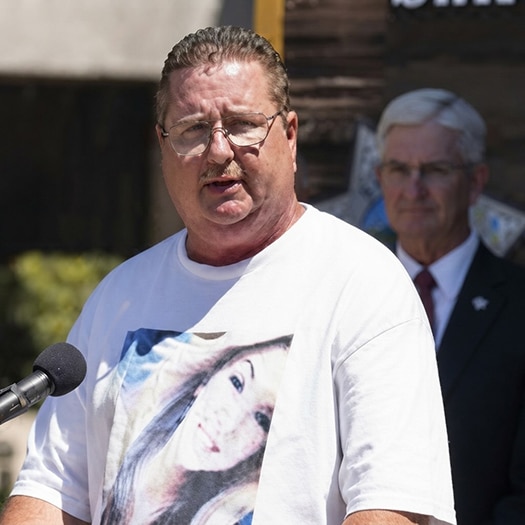
Hannah Anderson's father, Brett Anderson, addresses the media.
The search for Hannah Anderson received international attention after AMBER Alerts were issued in five states to find her. On August 4, grandparents called police to report their 16-year-old granddaughter and her 8-year-old brother Ethan were missing from their home in National City, California.
The San Diego Sheriff's Office asked the California Highway Patrol to issue a regional AMBER Alert on August 5 and later requested a statewide alert. Nevada, Oregon, Washington and Idaho also issued AMBER Alerts as the search intensified for Anderson and the suspect, 40-year-old James Lee DiMaggio.
On August 9, horseback riders in the backcountry near Cascade, Idaho recognized a man and a girl that matched the description of the victim and suspect in the AMBER Alert. The next day FBI agents shot and killed DiMaggio after he shot at them. Anderson was found with no visible injuries and taken to a hospital.
Biggest Activation Ever
An AMBER Alert being issued in five states is unprecedented and the search for the suspect and victim expanded into other states as well as Canada and Mexico. This was also the largest activation ever of the new Wireless Emergency Alert system or WEA.
“I think this case is a great example of how the AMBER Alert system should be used,” said Bob Hoever, Director of Special Programs Missing Children Division for the National Center for Missing & Exploited Children. “The expansion of the AMBER Alert was driven by the investigation.”
Hoever said the Anderson case did a lot to increase national awareness of WEA because so many people received the alert for the first time on their cell phones. He said some of the media coverage focused on people who were upset that the alert was issued late at night.
“I explained I am sorry that people were inconvenienced that late in the evening,” said Hoever. “But I was confident that when they discovered the minor inconvenience helped rescue a child, they would have a different point of view.”
While the alert was activated the Anderson case was the most searched item on Google, receiving more than 500,000 searches.
California
Initially the San Diego Sheriff's Office did not have enough information to issue an AMBER Alert because they did not have any evidence the children were abducted. Investigators soon discovered the badly burned body of the victim's mother, Christina Anderson, and a child's body that was burned beyond recognition in DiMaggio's home.
Ninety minutes after getting the initial call, the San Diego Sheriff's Office determined the criteria had been met for an AMBER Alert. The alert went out at 5:27 p.m. (Pacific Standard Time or PST) in San Diego and Imperial Counties. The AMBER Alert was disseminated to the entire state at 9:30 p.m. (PST).
California Highway Patrol Captain Greg Ferrero is also the state AMBER Alert Coordinator. He said all the components of the statewide AMBER Alert worked as designed.
“I think the human element was the most essential component of the success of the Anderson AMBER Alert,” said Ferrero.
Looking back, Ferrero said a current list of state AMBER Alert coordinators, point-of-contact information and criteria for each state would have made it easier to get the alerts out in the other states. The lack of uniformity between state plans also led to some delays and miscommunication but Ferrero said all the coordinators worked together well.
“The cooperation among the states and out-of-country coordinators was astounding,” added Ferrero. “The sense of urgency to recover the victim was a common goal of all coordinators.”
Nevada
The Nevada AMBER Alert Program got involved early on because the state's Emergency Alert System sends AMBER Alerts to Eastern California. On November 7, a caller from Utah called the Nevada AMBER Alert Coordinator about a possible sighting of the suspect and victim in Las Vegas. The caller was connected to the San Diego Sheriff's Office to see if an AMBER Alert was also needed in Nevada.
“We had to receive confirmation from the activating agency in California that they had a valid reason to believe there was a high probability that the suspect would most likely travel through Nevada,” said Nevada Statewide Emergency Alert/AMBER Alert Committee Chair Stephanie Parker.
Nevada's statewide AMBER Alert went out at 4:20 p.m. (PST) on August 7. The media coverage intensified after the alert was issued in the state because now it was a local story.
Parker said the coordination and timely responses between the National Center for Missing & Exploited Children, California and eventually other states worked well throughout the activation.
The Nevada AMBER Alert Committee plans to review the alert. In addition, the state has recently acquired Common Alerting Protocol technology that will simplify the process for issuing AMBER Alerts when an agency requests a statewide alert. The current Legacy EAS system requires agencies to call the three main EAS stations in Elko, Las Vegas and Reno for a statewide AMBER Alert.
The suspect's vehicle is shown being towed.
Oregon
Oregon activated the AMBER Alert at 4:17 p.m. (PST) on August 7 after authorities received a tip that the suspect's vehicle was seen near Alturas, California and heading north on Highway 395 towards Oregon. Another person reported seeing the vehicle in the Lakeview area, which is north of the Oregon/California border.
“One of our criminal detectives contacted the woman in Alturas to get additional information and he felt what we had was enough to activate our AMBER Alert for the state of Oregon,” said Oregon AMBER Alert Coordinator Richard Culley.
Because of the location, Culley said it would have been easy for the suspect to continue into Oregon or head back into Nevada.
Some doubts were later cast about the tips concerning sightings in Oregon, but law enforcement officials decided to keep the alert active just in case. “We are not turning our back to this, and we are doing what we can to locate that suspect vehicle and the missing children,” said Oregon State Police Lt. Gregg Hastings to a reporter.
Washington
The state of Washington also issued an AMBER Alert at 4:40 p.m. (PST) on August 7. Washington State AMBER Alert Coordinator Carri Gordon said the Washington State Police reached out to the San Diego Sheriff's Office to see if the agency could help in the search. She said the decision to activate the alert was made after receiving information the suspect may be heading to Washington.
“In my opinion we should have reached out to the San Diego Sheriff's Office earlier,” said Gordon. “As involved as they were in their investigation, extending the alert beyond California was probably a low priority.”
Washington used the Law Enforcement Alert Portal to distribute the AMBER Alert. Overall, Gordon thinks the system worked well.
“There was excellent coordination between our state and the command center in San Diego,” said Gordon. “We were included in conference calls regarding the investigation, and they kept us up to date on events as they occurred.”
Idaho
Idaho turned out to be the key state for the AMBER Alert. But the request for Idaho to issue an alert came from the Washington State Police. Idaho AMBER Alert Coordinator Dawn Peck said they had to consider whether the case met their state criteria and whether there was a real possibility the suspect and victim could be in Idaho.
“The coordination between the states is key,” said Peck. “When another state calls and asks for assistance, you need to do all you can to accommodate the request. The investigating agencies do not ask unless they feel the alert in your state will help in the recovery of the child. In Idaho, we always err on the side of the child.”
The AMBER Alert went out in Idaho at 5:52 p.m. (PST) on August 7. The alert notified broadcasters, law enforcement and the public through the AMBER Alert Portal but it did not go out initially on the EAS system or on the highway signs. Two days later the California Highway Patrol called about a credible sighting in Idaho and the alert went out again using all of the state's notification methods, including EAS and the highway signs.
Relief All Around
Peck said the conference calls between all the coordinators helped to keep them informed and to make sure the message going out to the public was consistent. “We were very happy that this team effort led to Hannah Anderson's safe recovery,” said Peck.
Everyone involved with the multistate AMBER Alert summed up what was accomplished with the alert with one word: relief.
“Relief primarily that she was alive and safe,” said Carri Gordon from Washington. “The information about her being located as a result of the AMBER Alert was very reaffirming that the system works as intended.”
“It was a relief she was found alive, and it was also an affirmation that the system worked again,” added Nevada's Stephanie Parker. “Law enforcement, broadcasters, wireless alerts, social media and the public saved a life.”
“We are glad everything worked out and that Hannah was recovered safely,” added Oregon's Richard Culley.
Greg Ferrero of California offered this closing thought: “Due to the violent events surrounding the abduction, I think we all knew that the stakes were very high in this case. All involved employees had a sense of accomplishment and felt responsible for Hannah's safe recovery.”
In Buckeye Lake, Ohio, the phone rang at the home of Terry and Laurence Noblick. Laurence picked up the phone after reading “AMBER Alert” on the caller ID. He was surprised when the person on the other end of the line said he was collecting money for the AMBER Alert Plan.
“That is rather strange to get an AMBER Alert phone call and a gentleman asking for money,” Laurence told a local reporter.
The call was even stranger because the Ohio AMBER Alert Plan does not solicit donations. Ohio Department of Public Safety Captain Rob Jackson is the Ohio AMBER Alert Coordinator, and he thinks the call is the newest twist on an old scam.
“There have been scams around for years where telephone solicitors tried to collect money and claimed association with police departments or fire departments, so it did not surprise me the scam artists would try and capitalize on AMBER Alert,” said Jackson. “It seems nothing is out of bounds for these types of scam artists.”
Laurence Noblick
Some schemes take the plan designed to protect children and use it to put children in danger. Last April in Las Vegas, NV, a man showed up at the door of Annette Rosada and asked for a picture and personal information about her 7-year-old son.
The man said he was with “AMBER Alert Protection Services” and claimed the mother requested to have her son fingerprinted. He said the information was needed in case her son ever disappeared. Rosada refused the request, but the man said he would return the next day and then left with two other people.
Annette Rosada
“That night, all kinds of things went through my head,” Rosada told a reporter. “We do not know why they want all this information. It could be to sell the information. It could be anything. That drives me crazy.”
The Las Vegas police were contacted and began searching for a car with an Oklahoma license plate. Nevada AMBER Alert Coordinator Stephanie Parker was appalled when she heard someone was using the AMBER Alert to gather personal information about children. She thinks there are many reasons these people tried to obtain this information, and the people may have also been casing homes for a robbery.
“I think it is scary,” said Parker. “I think it is alarming and people need to report any type of suspicious activity like this. If you did not ask someone to come to your house, then something is wrong, and people need to contact the authorities.”
What happened in Las Vegas also happened in Patton Township, PA. In August, a woman claiming she worked for “AMBER Alert” approached several people in the same neighborhood, saying she needed DNA from hair samples and pictures of their children “in case of an emergency.”
In October, a woman was knocking on doors in Franklin City, KY, claiming she was with the “AMBER Alert System.” The woman was attempting to sell insurance and child identification kits and told one mother, “I heard you had a newborn in your house.” The mother refused to let the woman come in to get more information about the child.
The silver lining to these scams is that AMBER Alert Coordinators are using them to educate the public. “Immediately seize upon the opportunity to get a news release out and use it as another chance to educate the public about your program and what they can expect to see during a real AMBER Alert,” advised Jackson. “The more public awareness of the branding of your programs, the better off you are in fending off these types of attacks from scammers.”
Jackson said the Ohio media got the word out quickly about the scam and the reports brought an end to the phone calls.
“I think AMBER Alert Coordinators should on a regular basis educate their communities what AMBER Alert actually is—that it is a tool for law enforcement—not businesses,” added Parker.
The Nevada AMBER Alert Coordinator has also gone after legitimate businesses that use the AMBER Alert to market and seek customers. “We had companies claiming to be part of the AMBER Alert Program,” said Parker. “They would take addresses and visit homes. It is important for them to understand the harm in providing misleading information.”
She said AMBER Alert coordinators need to be vigilant to find out what is being said about the AMBER Alert and who is claiming to be associated with the AMBER Alert Program. “The AMBER Alert is a tool, it is not a product,” said Parker.
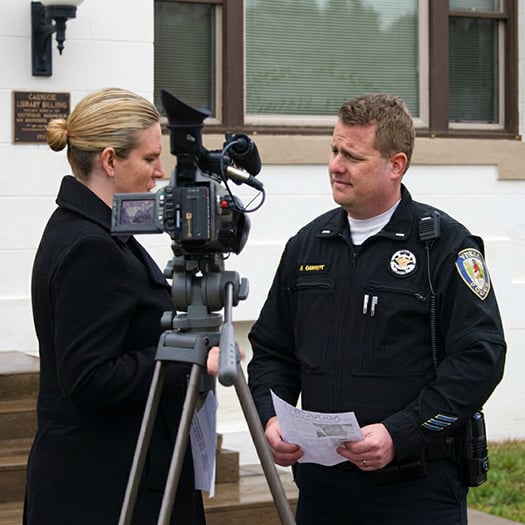
Lieutenant Dave Gamache speaks with a journalist about the case.
A late-night party turned into a nightmare for parents living in the small Northern California town of Yreka. On March 2, 2009, a stranger stopped by the party at the parent's home and later fled with their 3-year-old girl.
The victim's father heard his daughter's screams at 4:30 a.m. and saw the man leave in a 1992 Pontiac Grand Am.
Yreka Police Department's Lieutanant Dave Gamache was contacted, and an AMBER Alert was issued at 6:53 a.m. for 22-year-old Kody Lee Kaplon and a small brown-haired girl wearing a tie-dyed T-shirt.
“It was unbelievable” said Gamache. “I had no idea the AMBER Alert was so simple to use and would be so widespread in such a short period of time. Within 30 minutes after issuing the alert, I was up to my eyeballs with phone calls ringing off the hook. It worked seamlessly.”
Since Yreka is close to the Oregon and Nevada borders, the California Highway Patrol asked both states to also issue alerts. The Yreka Police Department had never handled a stranger abduction case, and this was the agency’s first AMBER Alert.
“The thing that sticks out in my mind is that we deal with bigger agencies with a lot of resources and this was a small agency and they did an amazing job handling everything that was going on,” said Captain LD Maples, California AMBER Alert Coordinator.
Ironically, Gamache said his agency had just signed up to take AMBER Alert training the following month. “We have everything but not very much of it,” he said. “I was not going to let pride get in the way of asking for help to find this girl.”
The National Center for Missing & Exploited Children also called to offer help and immediately sent two agents from Team Adam.
“The AMBER Alert went very smoothly. Everything happened by the book,” said Adrienne Abbott, Nevada Chair for the Emergency Alert System. “The California Highway Patrol, Nevada Highway Patrol, and the Yreka Police department were constantly in communication.”
The AMBER Alert was working as planned but a 3-year-old girl was still missing. Temperatures were dropping, snow was falling and authorities knew they were running out of time to save the girl.
Suspect Kody Lee Kaplon
At 2 p.m., the suspect called a designated AMBER Alert phone line to ask police why they were looking for him. Yreka had recently set up a phone bank for natural disasters and officers asked an animal control officer, a secretary, and others to handle all the calls for the alert.
At about the same time, a Yreka officer ran into people panning for gold in the search area and they offered to drop their pans and start looking for the girl. The volunteer searchers took a 4-wheel-drive vehicle and followed car tracks on a remote dirt road. They found the suspect's abandoned vehicle and discovered the girl hiding in some bushes at 3:21 p.m.
The alert was cancelled three minutes later and Kaplon surrendered to police. The girl told police that the suspect had buried her in the mud and left her, but she was able to dig herself out.
“The recovery was the direct result of the AMBER Alert,” said Abbott, and then he asked, “Isn't that the point of the AMBER Alert? You're always thankful when the child is recovered alive. As a parent what else can I say?”
Kaplon is now charged with kidnapping, sexual abuse and cruelty to a child, burglary, and attempted murder.
An AMBER Alert, the response of ordinary citizens and a small police department that was not afraid to ask for help, changed what could have been a tragedy into a miracle.
“There were so many pieces of the puzzle I hate to think what would have happened if one of the pieces would have been missing,” concluded Gamache. “I probably will never have another case that makes me feel so good that everything worked.”
A big rig trucker with a keen memory is being honored for helping recover a young girl after an AMBER Alert was issued in Utah. Kerry Hammond was given the Rachael Runyan Award, an honor given to Utah residents who respond and help save a child after an AMBER Alert.
On Jan.16, Hammond was driving his 18-wheeler near the Utah-Nevada border when he heard the AMBER Alert on the radio. Ogden Police Department issued the alert for a 14-year-old girl who was believed to be traveling in a red Honda. Moments later he saw the car and called 911.
Hammond downplays his role, but he does hope others will pay attention to AMBER Alerts. “I'm not a hero. I just did what I was supposed to do,” said Hammond. “I know the AMBER Alert works. I'm hoping other people driving a big truck or a moped will do the same thing.”
The Rachael Runyan Award is named for a 3-year-old girl who was murdered in 1982 after she was abducted while playing with her brothers at a park in Sunset, Utah.
Several AMBER Alert Coordinators did not get to take a break from duties during the 2008 National AMBER Alert Conference. Four states issued alerts before the conference was over.
Lt. Thomas Keyes is the Missing Persons Clearinghouse Supervisor for the New Jersey State Police. Keyes and New Jersey AMBER Alert Coordinator Sgt. David Jones were sitting in a training session on Oct.16 when they received a message shortly after noon, California time, that a child had been snatched from a store in Elizabeth, New Jersey.
“As soon as I heard the alert, I felt displaced,” said Keyes. “You definitely do not want to be out of the loop. I followed it on my Blackberry and Sgt. Jones followed it on his laptop. We kept asking questions to double check everything, but you could see it coming together.”
Store surveillance video showed 3-year-old Jessica Alexandra Alvarez playing in the toy area when she was taken by a woman with long curly black hair. An updated alert went out about an hour later with pictures of the victim and a picture of the suspect from the surveillance video.
New Jersey State Police Det. Bill Tietjen was back in the Garden State making sure the alert and all updates went out properly. “This was our first AMBER Alert where we did not have a vehicle,” said Tietjen. “We are pretty strict on our AMBER Alert guidelines. When we have an AMBER Alert, everyone pays attention.”
A security guard at a nearby store recognized the woman from the surveillance picture and another update was sent with detailed information and a new photo of suspect Eyvonne D. Alexander. Police found the suspect and the 3-year-old girl at a gas station seven minutes after the last update and less than an hour after the AMBER Alert was initiated.
“As a parent it is a good thing to know the alert worked as good as it did,” said Keyes. New Jersey had not had an AMBER Alert in 15 months, but a test was done in August to make sure everything worked.
“It had a positive end,” added Tietjen. “The community came together and assisted by looking at the photos and finding the child.”
Other Conference AMBER Alerts
October 15, 2008: Nevada issued an alert for a 6-year-old boy who was abducted by two men posing as police officers. The victim was found safe four days later walking on a darkened street in Las Vegas.
October 16, 2008: Michigan issued an alert for a 15-year-old girl after she went missing from her high school. The girl and her boyfriend were found by police two hours later. California issued an alert after a man allegedly beat and abducted his estranged wife and two daughters. Police found the mother and her 6 and 7-year-old daughters but the suspect is still at large.
Nevada Governor Jim Gibbons signed the “AMBER Hoax” law that will increase the penalty for anyone knowingly filing a false police report that results in an AMBER Alert activation. Violators will be charged with a Class C felony and law enforcement officials believe it will be a powerful tool to protect the integrity of the AMBER Alert plan. AMBER Alert Coordinator Bob Fisher worked with legislators, law enforcement officers, and broadcasters to get the bill passed.
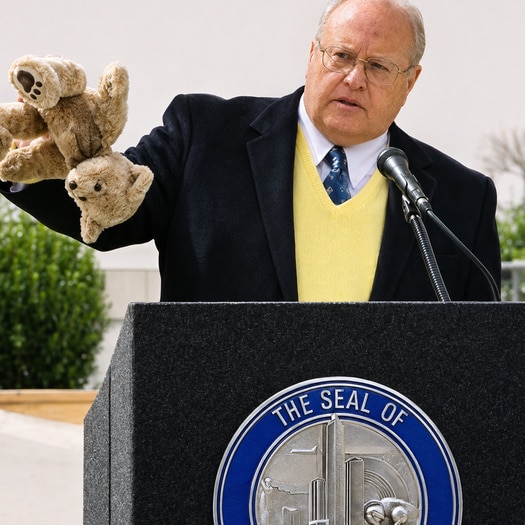
Chances are if you work with AMBER Alerts you know Bob Fisher. His colorful sweaters and fearless approach to saying what's on his mind at AMBER Alert conferences are legendary. Nevada's AMBER Alert Coordinator is one of only two broadcasters to serve as a State AMBER Alert Coordinator. Consequently, he is never shy about making sure the voice of broadcasters is heard loud and clear.
Bob Fisher
“I believe passionately in what we are doing,” says Fisher. “A leader is defined as someone who is not afraid to express his opinion even if it goes against the grain of traditional thought. Everyone brings something to the table and it's important you don't miss something.”
Fisher says he grew up learning to serve. He's the president of the Nevada Broadcasters Association and he hosts a weekly public affairs radio and TV program. He also serves on the state Homeland Security Commission.
Add “architect of Nevada's AMBER Alert Plan” to Fisher's titles. He spent two-and-a-half years rebuilding the state Emergency Alert System, drafting legislation, writing protocols and forging partnerships before he told an impatient Governor that Nevada's AMBER Alert plan was finally ready in June 2003. “Broadcasters felt the responsibility to bring AMBER Alerts to their individual states,” says Fisher.
Along the way Fisher made lots of friends with law enforcement. “Broadcasters have always had a love-hate relationship with law enforcement. I think AMBER has gone a long way to make it a stronger relationship.”
His favorite AMBER Alert story is about the Nevada trooper who pulled over the car of a suspected child kidnapper. “The suspect said to the trooper, ‘Why did you stop me?’ The trooper pointed to the AMBER Alert on the highway message sign just down the road and said, ‘That's you buddy.’”
Nevada has taken a unique approach to spreading the word about AMBER Alerts. It started when Fisher received a visit from Tanja Brown, a woman who was upset that vandals were defacing crosses placed on highways to honor murdered children. “She told me that there needs to be a permanent memorial for missing, abducted and murdered children.”
Together they began working to place a park memorial in every county in Nevada. So far, four of the planned 17 memorials have been built. Fisher dedicates each memorial with a plug for AMBER Alerts. “It ties the AMBER Alert and abducted children in a real way. The AMBER Alert is lighting the way for public awareness about missing, abducted, and murdered children.”
Fisher's newsletters for the Nevada Broadcaster Association are also filled with the latest AMBER Alert news. Those newsletters are sent to broadcasters, community leaders and AMBER Alert partners all over the country. “It's hard to get people to do what they say they are going to do. There has to be a time when politics, jealousy, and our territorial nature need to come to an end.”
Fisher's latest goal is to get Nevada legislators to pass a law that would make it a felony if a person lies to police in order to get an AMBER Alert. He says he has no plans to end his work with AMBER Alerts. “Hundreds of children will celebrate Christmas with their families this year because of the AMBER Alert. Is there anything more important than saving a child?”





 In 2023, 59% of AMBER Alerts were for family abduction cases, according to the National Center for Missing & Exploited Children. The abductions tend to occur at transition points, such as when court-ordered exchanges of the child are scheduled to take place.


 In Buckeye Lake, Ohio, the phone rang at the home of Terry and Laurence Noblick. Laurence picked up the phone after reading “AMBER Alert” on the caller ID. He was surprised when the person on the other end of the line said he was collecting money for the AMBER Alert Plan.



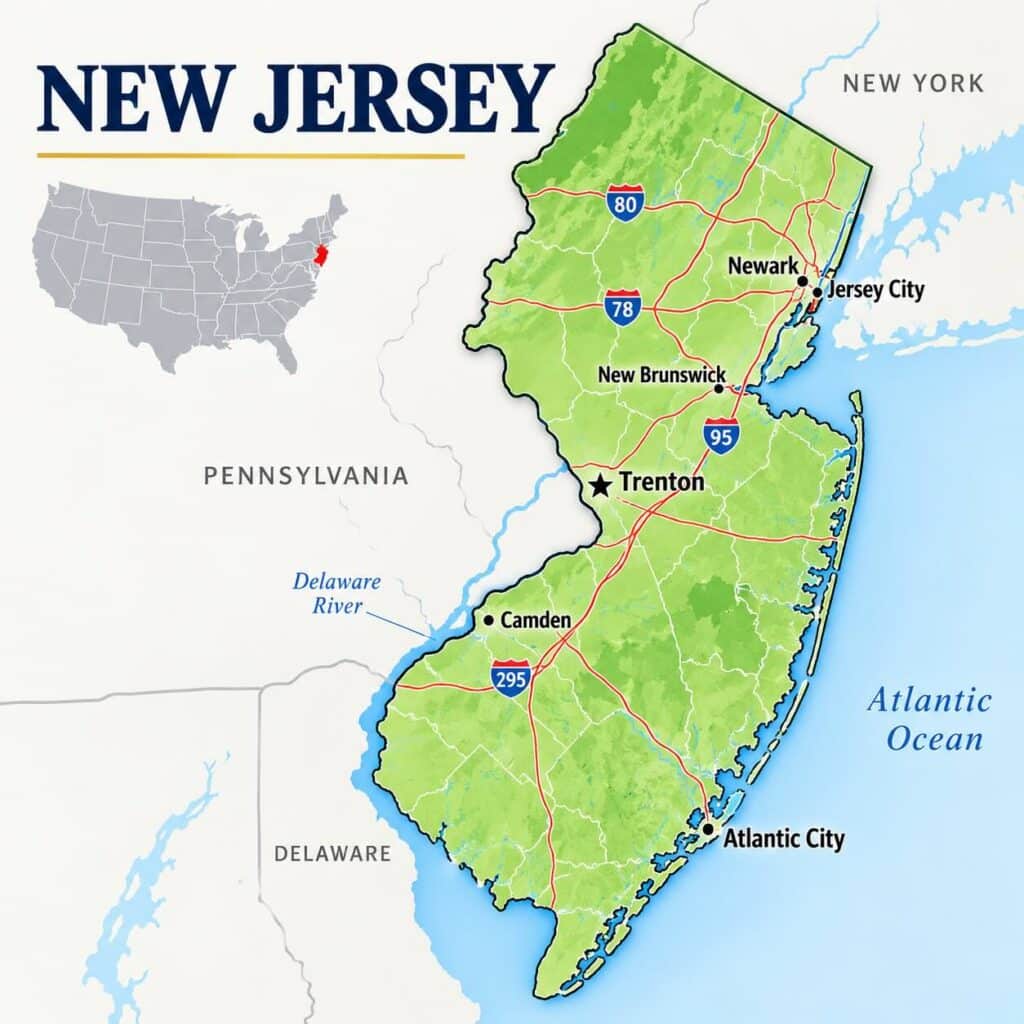 Lt. Thomas Keyes is the Missing Persons Clearinghouse Supervisor for the New Jersey State Police. Keyes and New Jersey AMBER Alert Coordinator Sgt. David Jones were sitting in a training session on Oct.16 when they received a message shortly after noon, California time, that a child had been snatched from a store in Elizabeth, New Jersey.