

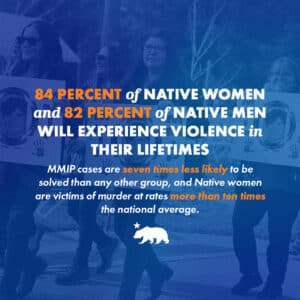
Native American Tribes in California are slated to begin a range of projects in conjunction with the state’s Missing and Murdered Indigenous People (MMIP) Grant Program. California awarded nearly $13 million in grants to support 15 projects led by Tribes or Tribal collaborations to address the MMIP crisis. The projects are designed to develop culturally based prevention strategies, strengthen community outreach, and improve responsiveness in missing persons cases. The Mechoopda Indian Tribe of Chico Rancheria plans to focus on youth programming, including establishing events to help youth understand the risks of trafficking. The Yurok Tribe’s grant includes hiring a full-time MMIP victim advocate, while the Round Valley Indian Tribe is eyeing a modular office building to use as an MMIP headquarters. The Pala Band of Mission Indians’ plans include purchasing a drone and providing training for volunteer search and rescue. The California Board of State and Community Corrections (BSCC) approved the grants under a program established in 2022.