With a common goal of finding an abducted child, the 2008 National AMBER Alert Conference addressed ways to forge stronger partnerships between two different, yet vitally important professions, law enforcement and broadcasters.

Photo of a broadcast studio with camera, monitors, and a lighted "On Air" signUniversity of South Carolina Journalism Professor Hugh Munn moderated a spirited discussion between broadcasters and law enforcement about the Elizabeth Shoaf abduction. A national news magazine did a critical story about the decision to not issue an AMBER Alert. Kershaw County, South Carolina Sheriff Steve McCaskill said his department did everything possible to investigate the case and notify the public. “What would an AMBER Alert do? Absolutely nothing,” he said. “We could end up issuing an AMBER Alert for everything.”

The broadcasters who reviewed the case agreed. “There is nothing that could have been done differently,” said Oregon Association of Broadcasters President Bill Johnstone. He added that more needs to be done to educate the public about the AMBER Alert criteria. Jacksonville, Florida News Director Mike Garber said his reporters did several stories on the criteria. “Do you think the public finally got it?” he asked. “I still don't.”

Conflict also occurred when Destiny Norton was abducted in Salt Lake City in 2006. Utah AMBER Alert Coordinator Paul Murphy presented a case study about how some media members pressured the police to end the AMBER Alert after a person of interest turned himself in. Murphy stated that reporters continued to provide excellent coverage of Destiny's disappearance but noted the lead detective still regrets cancelling the alert. Sadly, the body of the 5-year-old girl was later found in a neighbor's basement. After two after-action reviews of the case, broadcasters and law enforcement were able to work out their differences.

Charles Bierbauer, former CNN Reporter and University of South Carolina Dean of Mass Communications and Information Studies, also addressed the relationship between media and law enforcement. “As you know journalists and cops don't always see eye-to-eye,” said Bierbauer. “We ask too many questions. We file Freedom of Information requests.”

However, he said the AMBER Alert has proved to be the one place where the media and law enforcement do have a common purpose. “I'm all for having a watch dog and police dog working together,” he said. “There is a genuine benefit of getting this information out when you have the right information.”
Several AMBER Alert Coordinators did not get to take a break from duties during the 2008 National AMBER Alert Conference. Four states issued alerts before the conference was over.

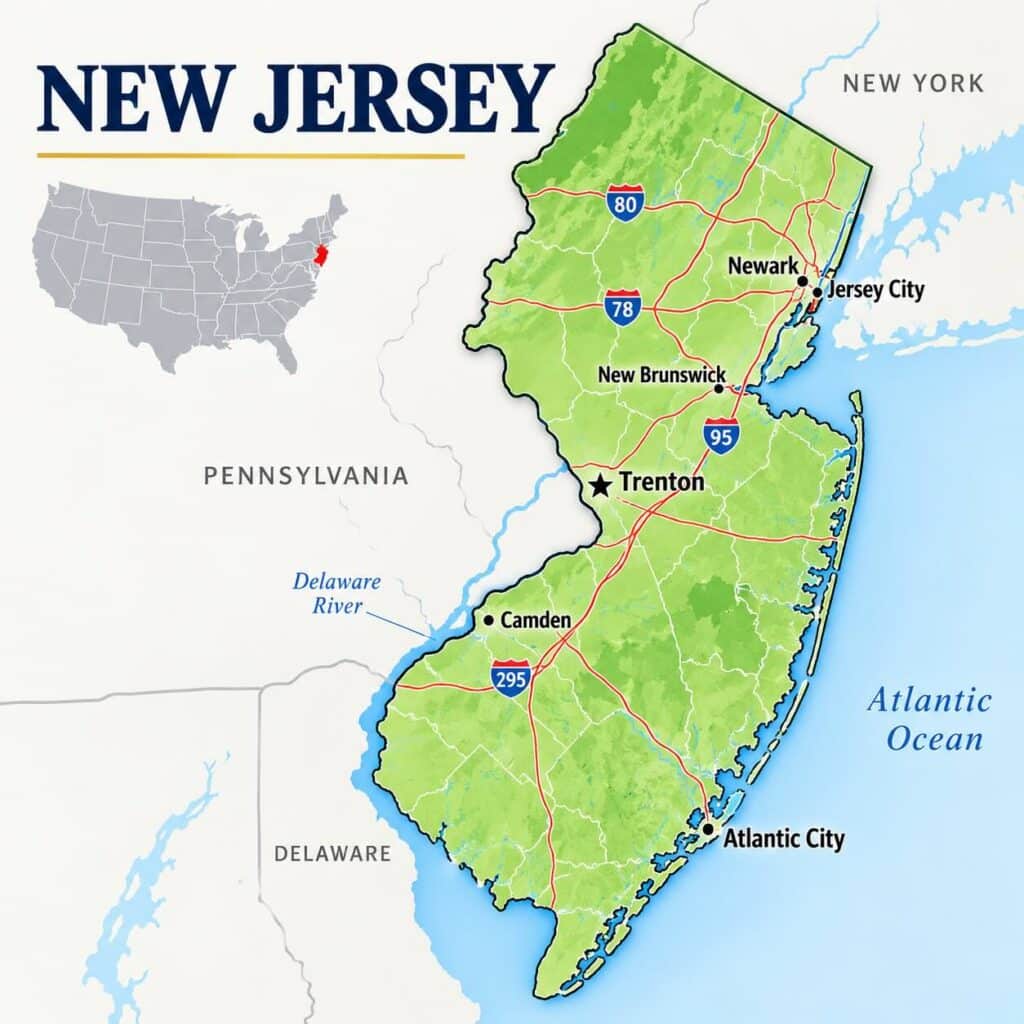
Illustration of New Jersey map with major cities shownLt. Thomas Keyes is the Missing Persons Clearinghouse Supervisor for the New Jersey State Police. Keyes and New Jersey AMBER Alert Coordinator Sgt. David Jones were sitting in a training session on Oct.16 when they received a message shortly after noon, California time, that a child had been snatched from a store in Elizabeth, New Jersey.

“As soon as I heard the alert, I felt displaced,” said Keyes. “You definitely do not want to be out of the loop. I followed it on my Blackberry and Sgt. Jones followed it on his laptop. We kept asking questions to double check everything, but you could see it coming together.”

Store surveillance video showed 3-year-old Jessica Alexandra Alvarez playing in the toy area when she was taken by a woman with long curly black hair. An updated alert went out about an hour later with pictures of the victim and a picture of the suspect from the surveillance video.

New Jersey State Police Det. Bill Tietjen was back in the Garden State making sure the alert and all updates went out properly. “This was our first AMBER Alert where we did not have a vehicle,” said Tietjen. “We are pretty strict on our AMBER Alert guidelines. When we have an AMBER Alert, everyone pays attention.”

A security guard at a nearby store recognized the woman from the surveillance picture and another update was sent with detailed information and a new photo of suspect Eyvonne D. Alexander. Police found the suspect and the 3-year-old girl at a gas station seven minutes after the last update and less than an hour after the AMBER Alert was initiated.

“As a parent it is a good thing to know the alert worked as good as it did,” said Keyes. New Jersey had not had an AMBER Alert in 15 months, but a test was done in August to make sure everything worked.

“It had a positive end,” added Tietjen. “The community came together and assisted by looking at the photos and finding the child.”

Other Conference AMBER Alerts

October 15, 2008: Nevada issued an alert for a 6-year-old boy who was abducted by two men posing as police officers. The victim was found safe four days later walking on a darkened street in Las Vegas.

October 16, 2008: Michigan issued an alert for a 15-year-old girl after she went missing from her high school. The girl and her boyfriend were found by police two hours later. California issued an alert after a man allegedly beat and abducted his estranged wife and two daughters. Police found the mother and her 6 and 7-year-old daughters but the suspect is still at large.

Florida AMBER Alert Coordinator Donna Hodges was enjoying her lunch with everyone else at the 2008 National AMBER Alert Conference when she received the surprise of her life. She had been named the AMBER Alert Coordinator of the year.

Donna Hodges
Donna Hodges, Florida AMBER Alert Coordinator

“I was shocked,” Hodges said. “I had no idea I was going to get the award. It made me proud, but I know there are a lot of people who deserve it.”

The Research and Training Specialist for the Florida Missing Endangered Persons Information Clearinghouse has experienced surprises and challenges since getting involved with AMBER Alerts. Hodges first heard about the AMBER Alert plan in Texas in 1999 and wanted to bring the plan to Florida.

“There were not too many people to contact to get background information,” said Hodges. “You had to try something and if it did not work you had to try something new.” Hodges persisted and she launched the nation's second statewide AMBER Alert in August 2000. “I took the ball and ran with it,” said Hodges.

Florida's AMBER Alert plan started simple, but Hodges makes sure she keeps up with new ideas and new technology. “I think we have our bases covered but I keep trying to reach other people,” said Hodges. “Right now, I don't know how we can.” If anything, she would like to simplify the process so all of the elements of an AMBER Alert could go out with the push of just one button.

During her career Hodges has developed a soft spot for the elderly and children because they are so vulnerable. “I just love children,” she said. “I always thought we needed to look for them. It is fulfilling, and it is sad, but we do have our happy moments when we find a child.”

“Because of her commitment, the AMBER Alert program has helped to bring 52 Florida children home,” said National AMBER Alert Coordinator Jeffrey L. Sedgwick while presenting the award to Hodges. The 52 children represent victims recovered directly by the AMBER Alert, but Florida has recovered 136 children safely since the AMBER Alert plan was launched.

Hodges' work with the AMBER Alert is also motivated by her 13-year-old granddaughter who takes a keen interest in grandma's work. “I think I have her scared somewhat,” said Hodges. “She is certainly more aware than someone else's child.”

She offered this advice to new AMBER Alert coordinators: “Be patient. I think someone coming in new may find it intimidating. When you think about it, you are putting yourself on a time frame for the AMBER Alert to go out quickly and if you get flustered it might interfere with what you are trying to do. Remain calm, have patience and know the ins and outs of your AMBER Alert system.”

Still, the veteran and now award-winning AMBER Alert coordinator said she has no intentions to rest on her laurels. “I always give 110% anyway and that is not going to stop.”


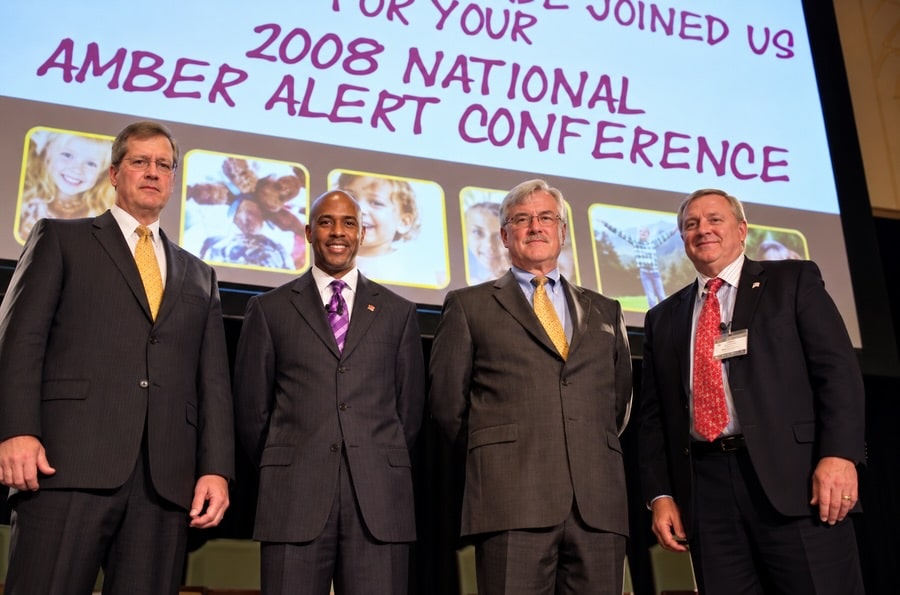
Group of speakers at the 2008 AMBER Alert Conference
Speakers at the 2008 AMBER Alert Conference.

Many firsts were noted by AMBER Alert partners at the 2008 National AMBER Alert Conference in Orange County, California. It was the first conference to include members of Child Abduction Response Team (CART) representatives, first to involve European AMBER Alert partners, and some broadcasters said it was the first conference to fully recognize and incorporate the important role of the media.

The conference was also the first and last opportunity to hear from Assistant Attorney General for the Department of Justice's (DOJ) Office of Justice Programs (OJP) and National AMBER Alert Coordinator Jeffrey L. Sedgwick. “We have a strong foundation, thanks to the selfless work of broadcasters, transportation officials, and law enforcement,” said Sedgwick. “But we have to maintain our level of vigilance. We don't have the luxury of letting our guard down.”

Several training sessions focused on incorporating the CART concept into each AMBER Alert plan. More than 160 teams of law enforcement officers, forensic experts, victim service providers and others have been trained since DOJ launched the CART initiative in November 2005. “There's no time for turf wars,” added Sedgwick. “What is needed is the full crush of resources and expertise so that the child can be recovered as swiftly as possible.”

Surprisingly, the number of AMBER Alert activations are actually going down each year. Here is the breakdown: 2005 had 275 activations, 2006 had 261 activations, and 2007 had 227 activations. Projections for 2008 indicate there will be less than 200 activations.

“We are trying to identify trends,” said Bob Hoever, Associate Director of Training and Outreach for the National Center for Missing & Exploited Children. “I think part of it is there is much better training. We are miles ahead of when we met at the first AMBER Alert Conference in 2002.”

However, secondary notifications have increased from 49% in 2005 to 85% in 2008. “When you get a text message sent directly to you saying that a child has been abducted, you take it seriously,” Sedgwick said. “Suddenly, it is personal.” However, some secondary notifications do not go out because the child has already been recovered.

Presenters noted that AMBER Alert plans should constantly be refined and training must be ongoing. “There is no finish line,” said Knoxville Deputy Chief of Police Gus Paidousis. “You may be cutting edge today but not be cutting edge tomorrow.” He stressed that telecommunicators need practice in testing and scenarios for AMBER Alerts. Volunteer coordinators also need to be prepared for all the people who will show up to help. “It doesn't matter if you want volunteers, they are going to show up,” said Paidousis.

The role of transportation also continues to be important for AMBER Alerts. The Department of Justice developed a “Best Practices Guide” in 2005 and transportation officials were urged to update their practices, policies, and messages. One presenter noted more does not always mean better and people can be desensitized to AMBER Alerts if they are not timely or displayed in an area where people can help. “Despite all the technology, it is still a very human decision made by law enforcement officers across the country,” said Dale Bonner, Secretary of the California Business, Transportation and Housing Agency.

One panel considered what would have happened if an AMBER Alert plan was in place when Amber Hagerman was abducted in 1996. The panelists were unsure if the alert would have saved her life but were certain the media and the public would have received the information about her abduction much quicker.

“We have a lot of missing children,” noted Ron Laney, Associate Administrator for Child Protection Division, OJJDP. “We need to keep in touch with each other. I know we are doing a lot, but we are not there yet. When we are working together there is nothing that we cannot do.”

Christine Merritt has always made sure Ohio broadcasters have a strong voice on how to make AMBER Alert plans work best. But the Executive Vice President of the Ohio Association of Broadcasters did not expect to be named the Broadcast/Media Person of the Year at the 2008 National AMBER Alert Conference.

“I was surprised and honored to receive the award,” said Merritt. “I think it is a great recognition of the great role the state broadcaster associations play in the AMBER Alert.”

Merritt was involved when local and regional AMBER Alert plans sprung up in Ohio and helped develop the statewide plan that was launched on January 1, 2003. She also helped create secondary AMBER Alert notifications in the state but she thinks broadcasters will always play a predominant role in recovering children.

“Broadcasters play a critical role in getting the word out immediately,” said Merritt. “We have had abductors give up the child after hearing the message on the radio or seeing their picture on TV.”

Over the years Merritt said she has been humbled and inspired by child abduction survivors to do everything she can. But she said her two small children give her the greatest incentive to do more. “I realize how precious children are and how we really need to motivate people to make sure the alerts go out.”

Mika Moulton agreed to be the voice of all parents who have experienced the nightmare of having their child abducted. Her 10-year-old son, Christopher, was abducted and murdered in 1995 by a “monster” who had been released from prison after serving a sentence for killing another child. Moulton was one of 21 family members who participated in the Family Roundtable at the 2008 National AMBER Alert Conference.

Moulton provided a list of do's and don'ts in child abduction cases. Do: provide more training for first responders, detectives and dispatchers; speak with sensitivity when talking to family members; provide other notification options for cases that don't fit AMBER Alert criteria; and involve the family in decisions about prosecution and the media. Don't: assume the child is a runaway; allow the media to tell parents the hard details; judge a family because there are dirty dishes in the sink; and let repeat offenders out of prison.

“Any child missing is in harm's way,” said Moulton. “It doesn't matter if you are poor or rich. If your child is missing a huge part of your heart has been ripped out.”

Erin Runnion also shared the experience after her 5-year-old daughter Samantha was kidnapped and murdered by a stranger in 2002. Samantha's body was found the following day about 70 miles from the family home. “When I think of the fear and confusion that a child must experience when they are abused or abducted it breaks my heart,” said Runnion. “It makes me imagine Samantha's screams.”

Samantha's abduction prompted the Governor of California to sign an emergency order to create a statewide AMBER Alert plan. Two weeks later a pair of 16-year-old girls were saved by an AMBER Alert. “We all come to the table with invisible scars from our battle and determination to do better for all of our children,” added Runnion.

Runnion noted that in the early 1980s about 62% of all abducted children were recovered. Today more than 93% are recovered. She explained why she has been working with the Surviving Parents Coalition to change laws and strengthen child recovery efforts. “We can change all the laws we want, but you can't win a war without an offensive.”

Finally, Runnion shared that her daughter wrote notes to nearly everyone with her motto: “Be brave.” She challenged everyone at the conference to “be brave enough to use our voice to keep this cause in the hearts and minds of everyone.”

Photo of attendees at the 2008 National AMBER Alert Conference
Members of Child Abduction Response Teams (CART) will be the newest partners to participate in the 2008 National AMBER Alert Conference, held October 14-16, 2008, in Orange County, California. Some presentations will be geared towards CART, but the focus will remain the same: the safe recovery of missing and abducted children.

“When a child is abducted, time is of the essence. CART programs are critical resources for law enforcement and others who work to find abducted children,” said Assistant U.S. Attorney General Jeffrey L. Sedgwick. “Bringing CART members together with our AMBER Alert partners is a logical next step in strengthening the AMBER Alert network.”

Jeffrey L. Sedwick photographed in front of the U.S. flag
Assistant U.S. Attorney General Jeffrey L. Sedgwick

The conference will bring together CART members, AMBER Alert Coordinators, broadcasters, Missing Persons Clearinghouse Coordinators, Tribal, law enforcement and transportation leaders and representatives from Canada, Mexico, United Kingdom, Greece, France, Belgium, and the Netherlands.

“Our hope is to capture the momentum of CART and take it to another level,” says Phil Keith, AMBER Alert Program Director for Fox Valley Technical College. “We will be developing best practices for AMBER Alert Coordinators to work with CART.”

The conference will include training tracks that will be divided by discipline and region. Some sessions will be devoted to Southern and Northern bordered states and participants working to bring AMBER Alerts to Indian Country. Family members of child abduction victims will also participate in roundtable discussions.

Broadcasters and other AMBER Alert partners will also receive training coordinated through Newsplex, the scenario-based training facility at Columbia, S.C. “We hope to reinforce the progress all participants have made and stimulate everyone's thinking about how new technologies create new possibilities for alerting the public at those critical times when an unseen child is depending on us,” said Charles Bierbauer, University of South Carolina Dean and former CNN White House Correspondent. “The simple and gratifying truth about AMBER Alerts is that they work. They save lives.”

AMBER Alert partners will also consider how to maintain and expand their child abduction response plans during a time when state budgets are shrinking. “I hope to learn how states work around a budget crisis and move forward instead of taking a step backward,” said Florida AMBER Alert Coordinator Donna Hodges. She is also looking forward to learning more about new technology, the updated Emergency Alert System, and strides to bring AMBER Alerts into Indian Country.

Conference participants will also weigh the pros and cons of using limited-criteria notices such as Silver Alerts and Officer Down Alerts versus the Endangered Person Advisory, an emergency notice for all cases that do not meet the criteria of an AMBER Alert. Another session will ask this provocative question: What if AMBER Alert existed when Amber Hagerman was abducted?

Conference Reflection from Ron Laney

Photo of Ron Laney speaking at the 2008 National AMBER Alert Conference
Longtime child protection advocate Ron Laney

At the first AMBER Alert National Conference in 2003 in Dallas, 287 representatives from law enforcement, transportation, and media/broadcast came together to increase awareness, improve cooperation, establish protocols, share information, and create a seamless national AMBER Alert network. Since that time, I have seen the tremendous work that has been done around the country and within individual states and communities to meet these goals. Through increased collaboration, training, and understanding, the AMBER Alert network is solid and effective.

We have come a long way in five short years. But there is still more that can be done and challenges to be met. Together, we must continue to find ways to improve our understanding of the roles and responsibilities of every agency and organization involved in the AMBER Alert program. We must be open-minded when communicating with each other about how we can work together more effectively. We must step out of our own comfort zone and realize that this is a collaborative effort, that we are all in this together, and that the ultimate goal is to keep children safe. And we must never forget, it is only by working together that we can and do make a difference. This national conference provides us all the opportunity to address these challenges and to continue to move in the positive direction that we have been heading.

— Ron Laney, Associate Administrator, Child Protection Division, Office of Juvenile Justice and Delinquency Prevention, a component of the U.S. Department of Justice's Office of Justice Programs

National AMBER Alert Coordinator Message

It has been a tremendous privilege to be part of the growth and development of the AMBER Alert network during my tenure as National AMBER Alert Coordinator. AMBER Alert has been the reason for many exciting partnerships and a number of public safety innovations. Groups that had never worked together before have formed strong alliances and accomplished some remarkable things.

In the six years since President Bush directed the Attorney General to appoint the first National AMBER Alert Coordinator, we have developed national criteria for issuing AMBER Alerts; seen statewide AMBER Alert programs created in all 50 states; developed an initiative that enables us to send text message alerts to millions of wireless subscribers; held numerous regional and national trainings on improving our response to abducted children; extended AMBER's reach into Canada, Mexico, and Indian Country; and created a powerful secondary distribution network involving groups ranging from trucking carriers to airport security screeners to outdoor advertisers.

The most important achievement of all, however, is the rescue and return to safety of more than 420 abducted children. AMBER Alert has become part of America's public safety landscape, and that success is owed to the AMBER Alert coordinators, broadcasters, law enforcement and transportation officials, and public and private partners across the country who have worked so hard to make America safe for our children.

I am proud of all that we have accomplished together. Thank you. You do good work, and you don't hear that often enough.

— Jeffrey L. Sedgwick, Assistant Attorney General and National AMBER Alert Coordinator

Group photo of family roundtable participants
Family Roundtable participants at the 2007 AMBER Alert Conference.

Abby Potash is grateful so much has been done lately to save abducted children, but she says much more needs to be accomplished. Her son, Sam, was abducted in 1997 and recovered a year later due to a mailer with Sam's picture. She challenged everyone at the 2007 National AMBER Alert Conference to try even harder to find missing children.

“Missing children should be a priority,” said Potash. “We only have one main goal and that is to find our children safely and quickly.”

Potash said officers need to start taking missing children’s cases seriously from the beginning. She said families of missing children need more help to work with the media. Finally, she said a Child Abduction Response Team should be mandatory in each community.

“It takes a village to raise a child,” said Potash. “It takes a village to search for a missing child as well.”

Potash was one of 17 people who participated in a Family Roundtable at the conference. Ron Laney, Associate Administrator for the Office of Juvenile Justice and Delinquency Prevention's Child Protection Division, asked the group to get together annually to modify training to help families. The family members were divided into four discussion groups. Here are some of their findings.

First Responders: Most family members said the first police officers to arrive at the scene did not take the situation seriously and did not have a coordinated response. Some family members said officers were often negative and accusatory instead of empathetic and sensitive. Patty and Trevor Wetterling said the first responders in their case did a great job because they had experience with another abduction case.

Investigation: Family members said investigators were hampered by jurisdictional disputes; some allowed the crime scene to be contaminated and some failed to keep the family informed about what was going on. “The law enforcement goal was prosecution. Our goal was to find Erika,” said Pam Schmidt. Pam's nine-year-old granddaughter Erika Baker was abducted in 1999. Some family members said the investigations improved with time.

Prosecutors: Mixed reactions were offered by family members about prosecutors. Some said the prosecutors were wonderful and knew what they were doing, whereas others said they were lied to and some prosecutors did not seek the stiffest punishment for offenders.

Media: Some family members offered horror stories about the media, but most appreciated how reporters were able to generate interest in searches and put pressure on law enforcement to help find their child. “No matter how much the media likes you, they are after a story,” said Don Ryce, whose nine-year-old son Jimmy was sexually assaulted and killed while trying to escape in 1995.

All conference participants had the opportunity to hear Trevor Wetterling offer a sibling's perspective of an abduction. In 1989, Trevor was riding his bike with his 11-year-old brother Jacob when they were approached by a man with a mask and a jacket with the words “Police Department” printed on it.

“‘Stop, I have a gun,’” Trevor recalled the man saying. “He told us to go to the ditch and lay down. He told me to run to the woods as fast as I could or he would shoot.”

Emotions welled up in the audience as the 911 call was played which included Trevor trying to explain to the dispatcher what had happened. Trevor said he could not talk about what happened until last year when he was asked to help put together a Sibling's Guide. He said he still has hope to see his brother again. “My brother has never been found, and we have no reason to believe that he is not out there.”

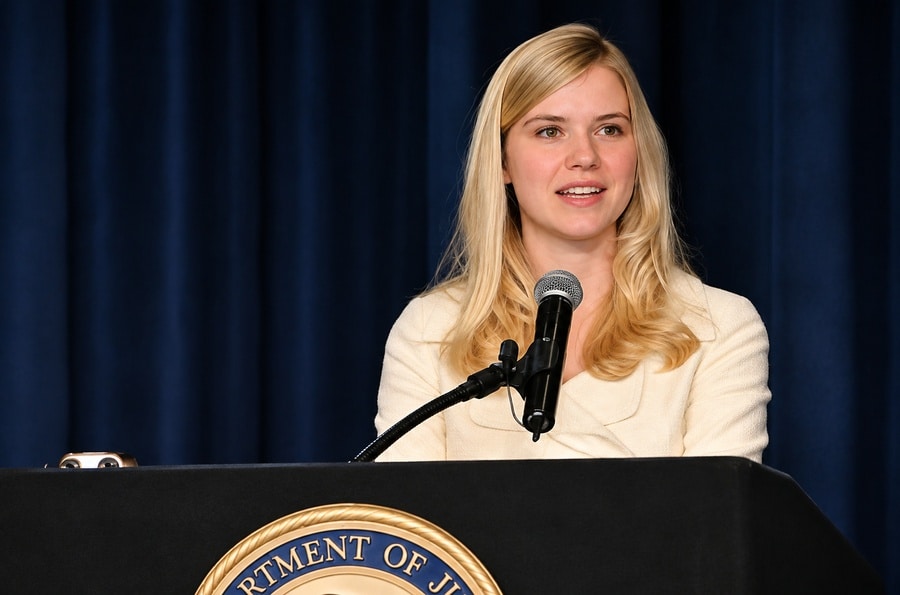
After a man broke into her home and put a knife to her throat, Elizabeth Smart feared the worst. “I am going to die,” she said. “I know I am going to die.”

Elizabeth Smart speaking at the 2008 National AMBER Alert Conference
Elizabeth Smart

The abduction of the 14-year-old Salt Lake City girl in 2002 brought worldwide attention to AMBER Alerts. Smart is now a 19-year-old college student. She shared her tale of survival and hope on the final day of the 2007 National AMBER Alert Conference in Denver.

Smart said her perfect life was shattered when an assailant broke into the bedroom where she and her sister were sleeping. “Don't say anything or you will be killed,” she recalled him saying. “He took me into the mountains, and I kept thinking this is the end.”

After being held for nine months, some ordinary citizens recognized Smart with her captors and called police. “I knew I was returned because people kept looking for me,” she said.

“Nothing could have prepared me,” Smart said. “I don't think anyone can be prepared, but the community can be prepared. That's why the AMBER Alert is so crucial to this nation.”

On the opening day of the conference, former Acting Assistant Attorney General and former National AMBER Alert Coordinator Cybele K. Daley shared the story of a kidnapper who dropped off a 7-year-old victim after he heard there was an AMBER Alert. “When we hear AMBER Alerts talked about now, we hear it as a deterrent and means of prevention,” said Daley. “Its reputation as a crime stopper is fully established.”

Daley said the unofficial theme of the three-day conference is “strengthening partnerships.”

Ron Laney, Associate Administrator for the Office of Justice Programs’ Office of Juvenile Justice and Delinquency Prevention, said those partners have become like family. “We’re one big family and we can make a difference,” he said. “We are the driving force in protecting children.”

But the stakes are high if the partnerships fail, said Phil Keith, AMBER Alert Program Director for Fox Valley Technical College. “Our weakest link will in fact cause us to lose a child,” he said.

Knoxville Police Department Assistant Chief Gus Paidousis shared the history of AMBER Alerts and offered details about the changes that have occurred during the past 11 years. He said AMBER Alert plans keep getting better but warned that no one will ever be finished. “No matter how good we get, you have to practice every day,” said Paidousis. “You can't ever say we're as good as we will ever be.”

Robert Hoever, Associate Director of Training and Outreach at the National Center for Missing & Exploited Children, offered a statistical breakdown of all AMBER Alerts from January 1, 2004, to September 15, 2007. During that period, more than 889 alerts were issued for 1091 children. “A staggering figure is that 99% of all of those cases have been resolved,” said Hoever. “Only 15 cases are still unresolved.” The study also found that 98% of the children were recovered within 72 hours. One out of five children were recovered directly from the AMBER Alert.

Nevada AMBER Alert Coordinator Bob Fisher talked about the role of broadcasters in AMBER Alerts. “The love-hate relationship between law enforcement and broadcasters needs to become a relationship of respect,” he said. “Broadcasters are part of the family of first responders.”

Broadcasters were included in the first mock activation of Florida's new Child Abduction Response Team. Floy Turner, a retired special agent for the Florida Department of Law Enforcement, talked about how the CART is becoming increasingly important for every AMBER Alert plan. “With a CART, we can hit the ground running,” she said. “We're not standing around waiting for a task.”

The conference included breakout sessions for AMBER Alert coordinators, broadcasters, transportation officials, and law enforcement officers. Conference participants also learned more about the Adam Walsh Act, new tools for child abuse investigations and new resources for AMBER Alert plans. Coordinators from three states shared their first-hand experience on cases where they did and did not activate alerts.

It's been said that without a vision, the people perish. Although the AMBER Alert program is in no danger of perishing, the 2007 National AMBER Alert Conference in Denver will be critical to creating a vision for keeping the AMBER Alert network strong and focused on the safety of our children.

“The annual conference is a crucial means of reinforcing and maintaining ongoing communication about the AMBER Alert program,” said Acting Assistant Attorney General Cybele K. Daley. “The ultimate mission is to develop innovative strategies to safely return children to their families.”

The vision for AMBER Alert actually started to take focus last year at a strategic planning session that was also held in Denver. More than 40 AMBER Alert partners met in October 2006 to discuss how AMBER Alerts will work in 18 months, three years and five years from now. Participants discussed what is needed to make improvements and who will get it done.

“We are a family and we have come together to take care of our children,” said Ron Laney, Associate Administrator for the Office of Justice Programs' Office of Juvenile Justice and Delinquency Prevention's Child Protection Division, at the planning session. “Please don't forget the children who don't meet the AMBER Alert criteria. They are in danger and at risk.”

The original AMBER Alert Plan began with one child and one person with a good idea. However, it took visionaries from law enforcement, broadcasting and other disciplines to take that idea and turn it into the expansive child abduction recovery plan that exists today. More than 10 years after AMBER Alerts started, this question is still being asked: How can we make it better?

“History is the best predictor of the future. We can learn from our mistakes,” said Robert Hoever, Associate Director of Training and Outreach for the National Center for Missing & Exploited Children.

Some of the areas being explored to improve AMBER Alerts are creating a seamless AMBER Alert network; providing comprehensive training and resources; educating the public; sharing new technology; and creating standardized criteria.

“There are lots of issues out there,” said Washington State Patrol Missing Persons Clearinghouse Coordinator Sue Miller. “The strategic planning session helped us focus on what needs immediate attention with AMBER Alerts.”

A more detailed look at the strategic planning session is included in a publication called “AMBER Alert Program and Initiatives: 2007 – 2008 Strategic Plan.” The Department of Justice's Office of Justice Programs will provide this publication, as well as reports on an emancipated missing children project and a victims' (survivors') roundtable, at the conference.

“We want to make sure all of our AMBER partners have the very best information possible to help them recover children,” said Daley.

The beginning of AMBER Alerts started with one child. The future of AMBER Alerts will require a vision to make sure every child is safe.

The National AMBER Alert Conference being held November 13-16, 2007, in Denver will break new ground by providing individualized training for all of the partners involved with AMBER Alerts. The conference will include courses specific to AMBER Alert Coordinators; Missing Person Clearinghouse Directors and Managers; broadcasters and media; transportation; law enforcement; Native Americans; Canada and Mexico as they relate to border issues; and families.

The conference will also feature presentations that will be valuable to all participants, including case studies on a child abduction; updates on the Adam Walsh Child Protection and Safety Act; the history of AMBER Alerts; efforts on Endangered Missing plans; lessons from families of missing and abducted children; and Child Abduction Response Teams.

While sitting at the 2006 National AMBER Alert Conference, AMBER Alert Coordinator Sean Ennis thought the prospect of issuing an alert in Newfoundland was quite small. Newfoundland has a small population compared to other geographic areas, living on a large island as far east as anyone can go in North America.

“You tend to think it can't happen in your backyard,” said Sergeant Ennis, Royal Newfoundland Constabulary. “But I soon realized we are truly a global community and borders don't exist for criminals.”

Three weeks after the 2006 conference, Alberta issued an AMBER Alert for a suspect who had recently lived in Newfoundland. Ennis was notified that the suspect may be heading his way with two victims. However, the suspect and victims were found before an alert was issued in Newfoundland.

Later that year Ennis was about to issue an alert for the child of a woman who had just been murdered in St. John's, Newfoundland. Patrol officers found the child safe with family members before the alert could go out.

“The AMBER Alert plan has the potential to fail if you're not ready,” said Ennis. “I'm like most people and have two fire extinguishers, not that I expect my house to catch fire, but I'm prepared just in case.”

Ennis said he learned a lot from his fellow coordinators at the last AMBER Alert conference and he is looking forward to learning more at the Denver conference. “Many AMBER coordinators have never been called on to make the final decision of issuing an AMBER Alert and starting in motion all that such a decision entails.”

“The conference provides us an opportunity to learn from those coordinators who have had experience issuing AMBER Alerts. I do not wish to reinvent the wheel and I would be a fool not to learn about the obstacles from those who have traveled the road before. The experience seated at each and every table is a resource that is rivaled by any book.”

The Royal Newfoundland Constabulary and the Royal Canadian Mounted Police launched Newfoundland's AMBER Alert plan four years ago. All of the Eastern Canadian AMBER Alert coordinators met last January in Moncton, New Brunswick to discuss their goals and try to unify their plans. “In Canada, we are trying to work out a singular interpretation of the AMBER criteria to ensure interprovincial uniformity,” said Ennis.

Ennis has found that what works in big cities doesn't always work in rural areas. “You don't need highway signs or Blackberries to get the word out here.” Ennis decided to build his province's plan by using the “community spirit” enjoyed between police, media and other partners. He also started focusing on the planes and boats that arrive and depart from the island every day.

“It is essential to have a plan in place so that if an AMBER Alert is needed, it will roll out in a timely and effective manner,” said Ennis. “Our response in the face of a child abduction can only be successful, if during the time when no threat is present, we plan for such an incident.”