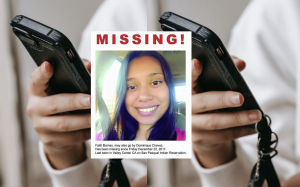
Is there hope for the hundreds of missing and murdered Indigenous women? An article by Rachel Monroe in The New Yorker begs this question, and the answer may lie in the strength of other Indigenous women. Lela Mailman became an advocate for the voiceless after her 21-year-old daughter, Melanie James, vanished in 2014 in Farmington, New Mexico, a city bordering the Navajo Nation. Local police and media outlets seemed indifferent; Melanie’s name was misspelled in reports, and wasn’t entered in the National Missing and Unidentified Persons System (NamUs) until three years later. Mailman sought strength in numbers, joining with mothers of other missing children at marches, protests, and prayer gatherings. The #MMIW social media movement traces back to 2012 when Canadian journalist Sheila North, a member of the Cree Nation, began using the hashtag to raise awareness and spark action in Canada and the United States. “North was particularly struck by how many cases went unsolved—evidence, to her, that society regarded Native women as essentially disposable,” Monroe notes. Melanie James’ case is one of more than 4,000 unsolved cases of missing and murdered American Indian and Alaska Natives, according to The Bureau of Indian Affairs. “Listening to Melanie’s family tell their story, I had the uneasy thought that justice in her case might not look like answers, arrests, and convictions but, instead, like subsequent missing persons cases being approached respectfully and rigorously the first time around.”