
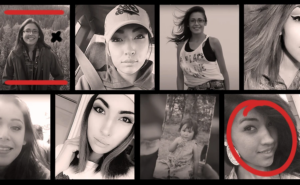
Collage of missing Indigenous Indian Country women and girls

Saying that there is “still so much more to do,” U.S. Attorney General Merrick B. Garland vowed to continue prioritizing efforts to combat the Missing or Murdered Indigenous Persons (MMIP) crisis. Initiatives include the U.S. Department of Justice’s (DOJ) MMIP Regional Outreach Program which places attorneys and coordinators in regions across the U.S. to help prevent and respond in MMIP cases. And during a visit to the Crow Indian Reservation in Montana, Garland announced that, based on the Not Invisible Act Commission’s recommendations, DOJ is working to improve funding, enhance research to better trace underlying causes, and develop guidance on engaging the public when someone is reported missing. “Tribal communities deserve safety, and they deserve justice,” Garland said in highlighting some of the efforts on National Missing or Murdered Indigenous Persons Awareness Day in May. “This day challenges all of us at the Justice Department to double down on our efforts, and be true partners with Tribal communities.”
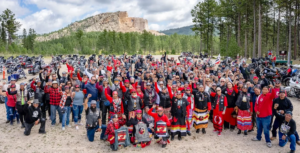
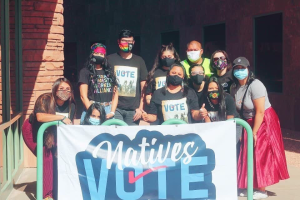
Photo of Medicine Wheel motorcycle ride in Chumash, Arizona

Indigenous female motorcyclists continue to rev up their engines—as well as their messaging—to raise awareness about the high rate of missing and murdered girls and women in Native American communities. This past July, the Medicine Wheel Ride motorcycle group from Phoenix partnered with the Santa Ynez Band of Chumash Indians in Santa Barbara County, California, for a “We Ride for Her” event. Organized through the Santa Ynez Tribal Health Clinic, the event featured a screening of the “We Ride for Her” documentary highlighting the motorcycle group’s work, which includes fundraising, assisting advocates searching for missing Native American girls and women, and raising awareness through annual rallies and rides. The Santa Ynez Band of Chumash Indians remains the only federally recognized Chumash Tribe in the nation.

Group of Native Americans holding sign that reads "Natives Vote"

Native American voters could decide major elections in 2024, and grassroots efforts are underway across swing states to get this important electorate out to vote as Democrats and Republicans vie for power. Key issues for Native Americans, particularly Native American women, include the high rate of missing and murdered Indigenous women, according to a 2023 First Nations Development Institute (FNDI) National Survey of Native Americans. This demographic is a powerful voting bloc with at least five million voters in the U.S. who identify as Native and Alaska Natives, the U.S. Census Bureau estimates.

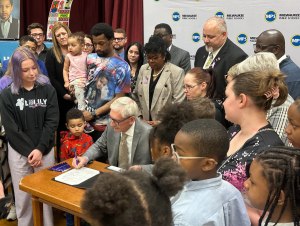
Wisconsin Governor Tony Evers is shown signing the Prince Act into law in March 2024

Wisconsin Governor Tony Evers signed dozens of bills in March that would invest $10 million in support of crime and human trafficking victims. A new formal partnership between Wisconsin Anti-Human Trafficking Task Force (WAHTTF) and the Missing and Murdered Indigenous Women and Relatives (MMIWR) addresses the prevalence of human trafficking in Wisconsin’s Indigenous communities. In April, Wisconsin signed two new missing person alerts into law, an effort to strengthen the state’s existing AMBER Alert system. The Prince Act expands Wisconsin’s missing person alerts for children after the murders of 5-year-old Prince McCree in 2023 and 10-year-old Lily Peters in 2022. In both cases, law enforcement didn’t have enough information to satisfy the strict requirements for issuing an AMBER Alert. As part of the Act, a new Purple Alert includes missing children under age 10 and children under the age of 18 incapable of returning home without help due to a disability.

Washington state lawmakers are proposing a Missing and Murdered Indigenous Women Alert System that would be similar to AMBER and Silver Alerts. Washington Representative Debra Lekanoff said the alert would be used to raise awareness of missing Native people. The National Crime Information Center has found that Indigenous women are reported missing and murdered at a rate 10 times the national average — and murder is the third leading cause of death for Native American women.

The Portland Tribal Relations Program sponsored “Strengthening the Safety Net: Missing and Murdered Indigenous Women Awareness Week” from May 3-8, 2020. Tribal, state, and federal representatives participated in a panel that included discussions on the complexities surrounding missing and murdered indigenous women and the dynamics of enforcement for Tribal protection orders.

Wisconsin Attorney General Josh Kaul launched a new task force to help fight the abduction, homicide, violence, and trafficking of Native women in the state. The Missing and Murdered Indigenous Women (MMIW) Task Force will examine contributing factors to the crimes and focus on understanding the roles of federal, state, and tribal jurisdictions. The task force will also improve and implement data collection and reporting methods.

“The problem of violence against women and children and the disproportionate impact on Native women and communities is the responsibility of all of society to address,” said Kristin Welch, Menikanaehkem Women’s Leadership Cohort-MMIW Coordinator. “For meaningful long-term reform, we must look to solutions that are Indigenous-led while addressing both historical acts of violence against Indigenous women as well as those that still exist today within modern institutions.”