

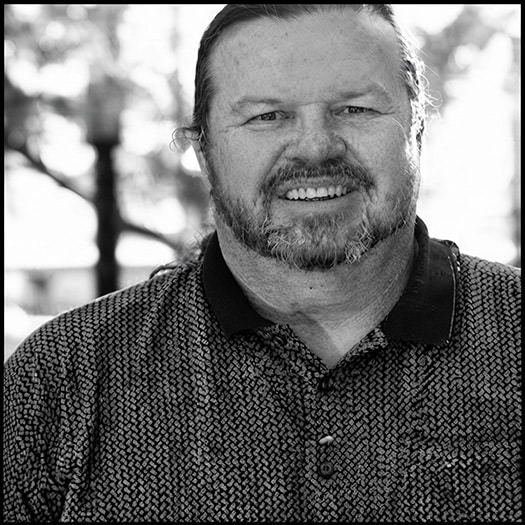
Mark Hill had just celebrated his 50th birthday when he started packing his bags for the National AMBER Alert Symposium. Another milestone for the communications engineer for Gila River Indian Community was that he was being named the 2009 AMBER Alert Coordinator of the Year.
Those plans came to an abrupt halt when Hill had a heart attack. Doctors operated and allowed him to go home the next day. “I told the doctors I could still catch a plane to Florida,” said Hill. “They told me it was way too early to fly because too many problems could happen.”
Hill missed the symposium, but his heart has been with the AMBER Alert program ever since he started with the Gila River Police Department. Former Police Chief Reynolds Nejo thought Hill could make the partnership between law enforcement and broadcasters happen because he had worked for TV and radio stations, was the volunteer Emergency Management Director for his Tribe, and used to be the Public Safety Chief in Marshall, Oklahoma. “He said ‘tag you're it,’” said Hill.
Hill is also one-quarter Lenape, also known as the Delaware Tribe in Northeast Oklahoma. He received considerable guidance through the training from Fox Valley Technical College, but he said the biggest obstacle in developing an AMBER Alert program was overcoming cultural issues. Tribal leaders and the community needed to be educated on how the AMBER Alert program would be something positive. “Indians tend to be standoffish and don't want to draw attention to themselves. Sometimes it will take 12 to 14 hours before they notify police that a child is missing,” said Hill. “We are dealing with culture.”
The Gila River Indian Community is just south of Phoenix, with about 20,000 people living in the 725-square-mile reservation. Gila River is also one of the 10 pilot sites to bring AMBER Alerts into Indian Country. Hill used the money from the pilot program for technological improvements, including a computer aided dispatch and records management system.
It took two years, but the Gila River Tribal Council approved the AMBER Alert Plan unanimously. During that time, Hill learned about the strengths of the community when a 3-year-old and a 5-year-old went missing. “We found them,” said Hill. “But the thing that amazed me is the number of people who came from all over, including some on horseback.”
Hill said the interstate freeway that runs through the community makes children on the reservation especially vulnerable. Plus, the Mexican border is only 90 minutes away. Hill said, “I want to get everything built up and developed and be ready to notify people to look for children in case an abduction ever happens.”
Gila River is now creating a Child Abduction Response Team. Hill is also starting the community's first radio station to help improve communication and disseminate AMBER Alerts. He also hopes to create a “virtual fence” by placing a surveillance camera on every entry point in the community.
Hill's goal is to promote changes that will protect children. “I get frustrated by people who don't want to change. There are those who say, ‘We've never done it before,’” said Hill. “I will keep pushing, give the best I can, and sometimes it works. I will show everyone the benefits and address any of the negatives. I can't get frustrated and quit. I have to just keep moving.”