Ashley Johnson-Barr: The Girl Who Changed the Conversation

By Denise Gee Peacock
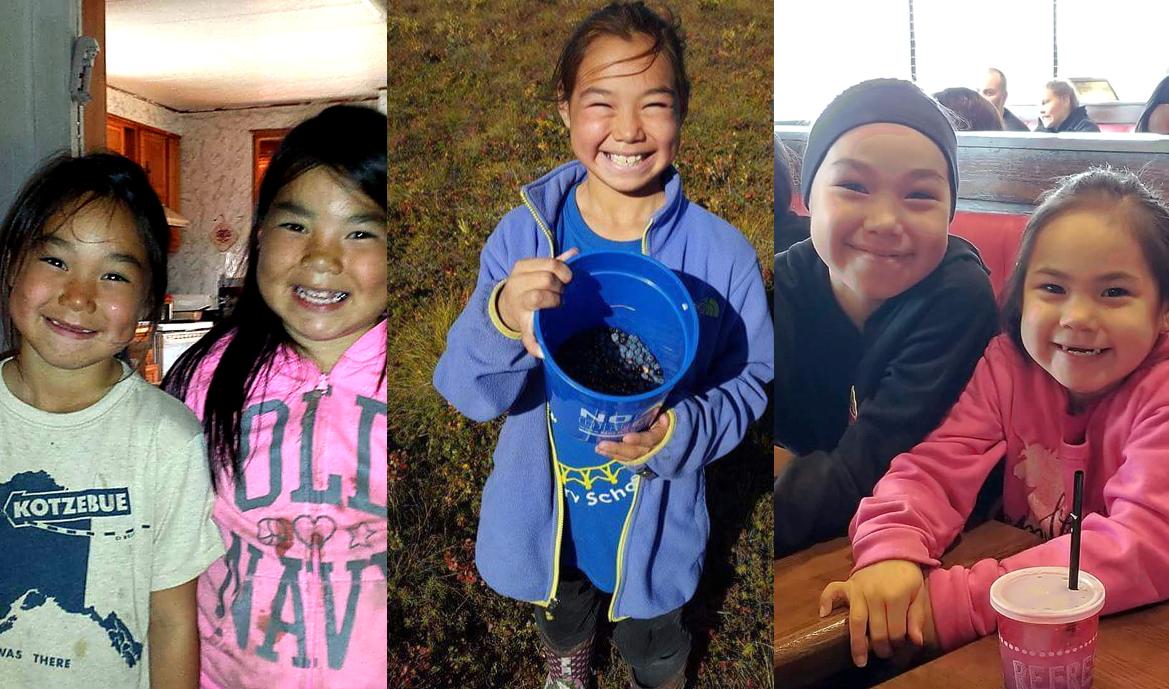
On a quiet September evening in 2018, 10-year-old Ashley Johnson-Barr walked to a nearby park in Kotzebue, Alaska, to meet a friend—and never made it home.
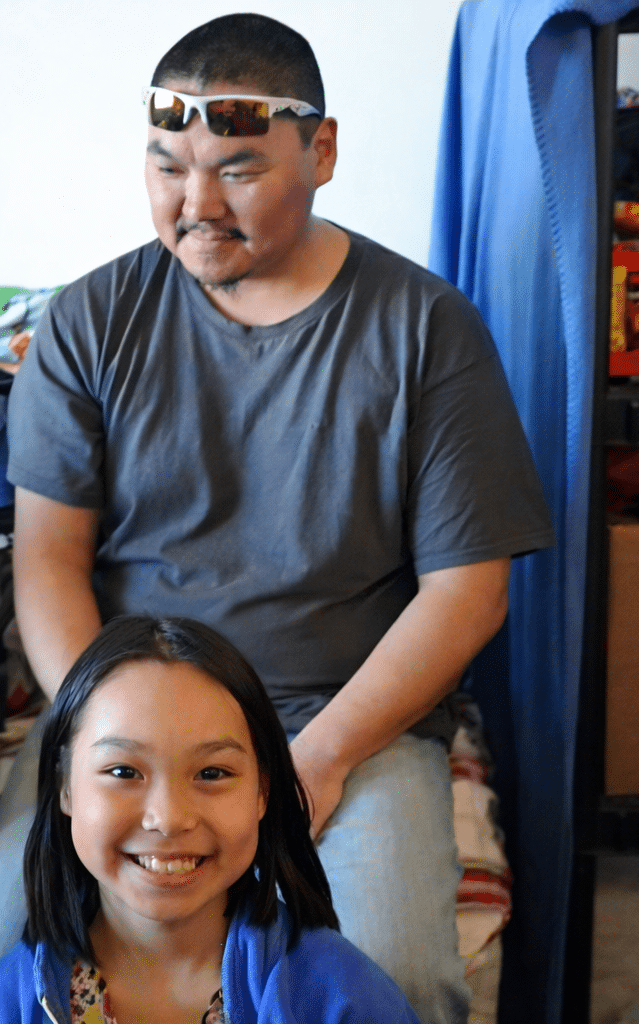
“Her legacy will live on through educating others,” says her father, Walter “Scotty” Barr. “Keep your children close. Talk to them. Do what you can to keep them safe.”
Kotzebue is a predominantly Iñupiat community of about 3,200 residents, located above the Arctic Circle in the northwest part of the state—a place accessible only by air or water. It’s a closely knit region where neighbors know one another, where children play freely in the longsummer light, and where the idea of a child vanishing feels unthinkable.
Yet within hours of Ashley’s disappearance, that sense of safety was shattered. Residents fanned out across tundra and shoreline, and hundreds of volunteers joined the search.
Eight days later, Ashley was found dead on a remote stretch of tundra more than 2 miles from the playground where she was last seen. She had been sexually assaulted and strangled. “I screamed. I cried. It’s a moment that never leaves you,” Barr recalls. “Then I had to tell Ashley’s mother, her siblings, our family. That part was unbearable.”
Ashley’s death shocked Alaska. But it did something more: It forced the state, and the nation, to confront a painful truth long known within Indigenous communities. Her story was not an isolated tragedy. It was part of a pattern that many Alaska Natives were keeping silent about.
“No more silence,” Barr says.
Missing in Alaska: The Webinars
Join us for a powerful two-part webinar series exploring the challenges of responding to abducted and missing child cases in Alaska. Using the tragic case of Ashley Johnson-Barr as a catalyst for change, these sessions highlight the critical need for community coordination, law enforcement training, and the impact of the AMBER Alert in Indian Country (AIIC) program.
Part 1: The Case & Response (Recorded)
Discover the investigative hurdles and the importance of rapid, coordinated action in rural Alaska. Available now on-demand.
Part 2: A Path Forward (Live Panel)
Delve deeper into the systemic changes needed with a panel discussion led by AIIC Associate and Alaska Native Tribal Court Judge Mary Ferguson. Mark your calendar for May 19 and register!
Ashley's Legacy in Alaska
- SB 151 & Mandated Reporting: Ashley Johnson-Barr’s case accelerated the push for mandatory entry of missing persons into federal databases (NamUs), ensuring that jurisdictional lines no longer hinder the search for the vulnerable.
- Investigative Specialization: There has been the recent establishment of dedicated MMIP investigators and Tribal Liaisons within the Alaska Department of Public Safety. These critical roles bridge the gap between rural communities and state resources.
- Data Integration: The ongoing work to reconcile state records with community-led databases is a testament to the fact that better data leads to better outcomes.
A Crisis Hidden in Plain Sight
For decades, Indigenous communities across the United States and Canada have raised alarms about the disproportionate rates at which Native people—particularly women and girls—go missing or are killed.
In Alaska, those disparities are especially stark. The state is home to 229 federally recognized Tribes, and Alaska Natives make up about 19% of the population. Yet they account for a disproportionately high share of homicide victims and missing persons cases. (See “By the Numbers,” below left.)
Advocates refer to this epidemic as the missing and murdered Indigenous people (MMIP) crisis. It is not defined by a single case, but by a troubling pattern: disappearances that receive little media attention, investigations slowed by geography or jurisdictional complexity, and families left searching for answers.
Ashley’s case broke through that silence. “It made people feel not as safe here as they once felt,” Barr says. Her death also underscored the role of substance abuse, a factor in many violent crimes in Alaska. Barr says his daughter’s killer, Peter Wilson, admitted to being on a drinking binge at the time of the attack. Wilson would be sentenced to 99 years in prison.
Barr now speaks openly about the need for prevention, treatment, and accountability. He works as a trauma-informed trainer for the Southcentral Foundation of Kotzebue. He also serves as a surviving family member Associate for the National Criminal Justice Training Center (NCJTC) of Fox Valley Technical College. As part of that work, Barr’s insights are molding trainings hosted by NCJTC’s AMBER Alert Training & Technical Assistance Program (AATTAP) and its AMBER Alert in Indian Country (AIIC) initiative.
Jurisdictions, Geography, and Delays
To understand why cases like Ashley’s can be challenging to investigate, it is necessary to understand Alaska itself, not just its daunting geography but its legal landscape.
“Alaska is a Public Law 280 state,” says Mary Ferguson, a Tribal court judge for the Sitka Tribe. The MMIP advocate, who started her career in law enforcement, is a member of Alaska’s Tlingit people. “What that means is that Tribes don’t have criminal jurisdiction. We can only handle civil matters.”
That distinction is critical and widely misunderstood. “When someone goes missing, families often turn to the Tribe,” Ferguson says. “But legally, we can’t step in the way people think we can.” (See "ANCSA and PL-280 at a Glance," below.)
Unlike much of the Lower 48, Alaska does not operate under a traditional “Indian Country” framework. There are no reservations in the same sense (except for the Metlakatla Indian Community), no Tribal police forces with broad criminal authority, and no casino revenue streams funding public safety services.
The Alaska Native Claims Settlement Act (ANCSA) fundamentally reshaped land ownership and governance in the 1970s, creating a system that continues to affect how crimes are investigated. “All of that impacts what happens when someone goes missing,” says Ferguson.
The result is a system that can be difficult to navigate—not only for families, but for professionals working within it.
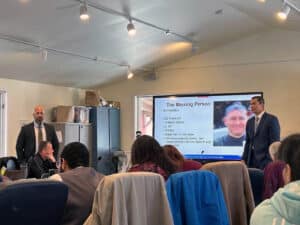
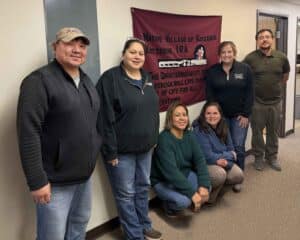
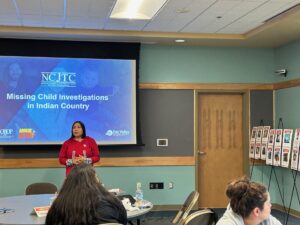
To help others alleviate uncertainty, Ferguson volunteers to help families struggling with MMIP issues while also serving as a NCJTC Associate who educates law enforcement professionals about the complexities faced by Alaska Natives. For AATTAP-NCJTC she is moderator of two webinars that focus on Ashley’s case. (See “Missing in Alaska: The Webinars,” above left.)
Even when jurisdiction is clear, the physical realities of Alaska present enormous challenges. The state spans more than 665,000 square miles, more than twice the size of Texas.
Within its extremely remote environs, many communities are accessible only by bush plane or boat. Law enforcement coverageis thin, and response times can stretch for hours, or days.
”When someone disappears in an Alaska remote area, with no road system, there could be a delayed response from law enforcement assigned to these vast regions, and specialized investigators can be hundreds of miles away,” says Tyesha Wood, Program Manager for AMBER Alert in Indian Country.
Weather adds another layer of unpredictability. “If conditions are good, it might take three hours by plane,” Wood says. “If weather prevents flying, it could take up to three days by boat.” Ferguson says these delays are compounded by infrastructure limitations.
“There’s only one crime lab for the entire state,” shesays. “Evidence, even digital evidence like cellphones, sometimes has to be sent thousands of miles away for analysis, as was thecase for Ashley’s phone.”
All of this takes time. And as Wood says: “In MMIP cases, those first hours can determine outcomes.”
Ashley’s case reflected those realities. While local responders and volunteers mobilized immediately, additional resources took days to arrive. Barr says forensic analysis of Ashley’s phone ultimately helped locate her, but it required time and specialized capabilities not always readily available in rural Alaska. “This is not unique to Ashley’s case,” Wood says. “It’s a structural issue.” For families, those delays can feel unbearable. “Families deserve urgency,” Ferguson says. “They deserve answers.” But she also emphasizes the complexity facing law enforcement.
“I want people to understand both sides,” Ferguson says. “These cases are extreme and complex. Resources are limited. Distances are vast. The constantly changing weather alone can stop searches entirely.”
Even when agencies are doing everything possible, Ferguson says, it may not feel that way to families waiting for answers.
“Sometimes people are doing everything they can, and yet it still doesn’t feel like enough,” Ferguson says. That’s because the system itself is stretched to its limits due to staffing shortages. And that tension between urgency and limitation sits at the heart of many MMIP cases.
Beyond geography, legal complexity can further slow investigations. Depending on where a crime occurs and who is involved, authority may fall to Tribal, state, or federal agencies. Those distinctions are often invisible to families, but their consequences are not. “This fragmentation can slow investigations and create confusion,” Wood says.
Data gaps have also long obscured the scope of the crisis. For years, cases involving Indigenous victims were underreported or inconsistently tracked. “But without reliable data, it’s difficult to allocate resources or identify patterns,” Ferguson says.
Advocates say these systemic challenges are compounded by a history of mistrust between Indigenous communities and institutions. And when cases receive limited attention from law enforcement or the media, mistrust can deepen.
A Community in Grief—and Action
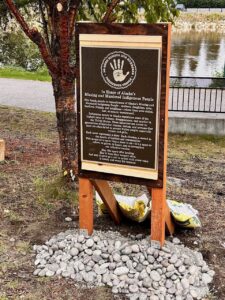
In Kotzebue, Ashley’s death left a lasting scar. The search for her had united the community. The outcome brought collective grief and resolve. Vigils were held. Families shared stories of their own missing loved ones, many of which had gone unheard. Ashley’s name became a rallying point and March 12 (her birthday) was officially designated by the state legislature as Ashley Johnson-Barr Day.
Across Alaska, similar MMIP-focused conversations began to emerge. What had once been spoken quietly was now being said aloud. Her case helped prompt change, including expanded rapid-response efforts for missing children and increased federal attention to MMIP cases. Alaska also established a task force focused on the crisis, with an emphasis on improving data collection, coordination, and support for rural communities. (See “Ashley’s Legacy in Alaska,” below.)
The changes did not solve the problem, but they marked a shift “from awareness to action,” Barr says. One of the defining features of the MMIP crisis is invisibility. Many victims’ names are never widely known. Ashley’s is. “Names matter,” Wood says. “When names fade, so does urgency.”
Awareness, she says, creates pressure—and pressure leads to resources. “These stories matter. People are still going missing. When we keep telling these stories, it helps the entire system respond.”
Ashley’s story resonated beyond Alaska because it challenged assumptions about who is at risk. She was a child, not an adult. She was playing in a park, not living on the margins.
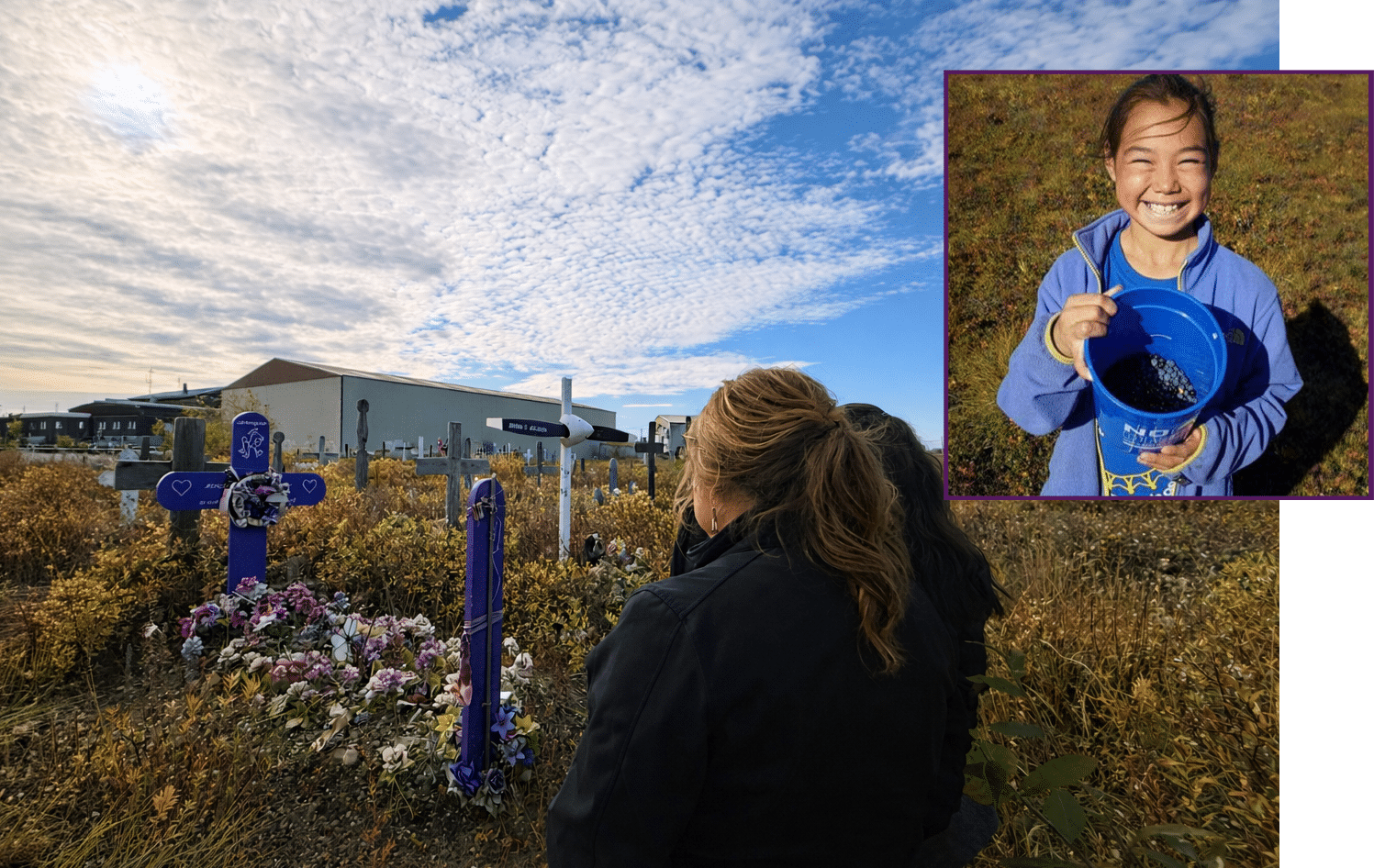
Barr works to ensure people remember Ashley as more than a victim. “She was a kind, loving girl,” he says. “She loved playing outside, going to church, swimming, and basketball. She loved picking berries, and purple was her favorite color.” (Read Barr’s moving online letter to Ashley to mark what would have been her 18th birthday.)
The Work That Remains
Despite increased awareness, factors driving the MMIP crisis continue to persist: geographic isolation, limited resources, jurisdictional complexity, and longstanding mistrust.
Advocates emphasize that awareness is only the beginning. “Families often don’t know what to do first,” Ferguson says. “They don’t know who to call or what steps to take.”
In some cases, she says, families feel as though nothing is happening at all. “I’ve helped families start searches, connect people to resources and push agencies to act,” she says. “Families are desperate, and they deserve someone who understands the system.”
Helping families understand how to advocate for themselves can make a critical difference. “That knowledge matters,” Ferguson says. “It can help bring attention and resources when they’re needed most.”
Ashley’s life was brief, but her impact endures. Her story brought national attention to an overlooked crisis. It helped change how missing-person cases are approached in Alaska. And it gave voice to families who had long been searching for answers.
“Every person matters. Every story matters,” says AMBER Alert in Indian Country Associate Alica Wildcatt. “Every life deserves to be seen.”
Barr agrees. “Ashley’s life will continue to have meaning as long as we honor it through action,” he says. “We need better training, stronger laws, and more prevention, not just awareness.”

By the Numbers
- 84.3% of American Indian and Alaska Native (AI/AN) women have experienced violence in their lifetime, while 56.1% of AI/AN women have experienced sexual violence.
- Despite being only 19% of Alaska’s population, Native women represent 47% of rape victims and are 250% over-represented in domestic violence cases.
- Alaska accounts for a disproportionate share of the 4,200 unsolved nationwide MMIP cases.
- AN people make up about 40% of the United States’ 575 federally recognized Tribes.
Sources: Bureau of Indian Affairs (BIA); compiled from multiple sources by National Congress of American Indians (NCAI).
Important Days
May 5 is the National Day of Awareness for Missing & Murdered Indigenous People (#MMIP) / Women & Girls (#MMIWG) in the United States.
March 12 is officially recognized as Ashley Johnson-Barr Day (“Wear Purple Day”) in Alaska. Held on Ashley’s birthday, the day is meant to raise awareness about violence against children and community safety.
Ashley Johnson-Barr Disappearance Timeline
September 6, 2018:
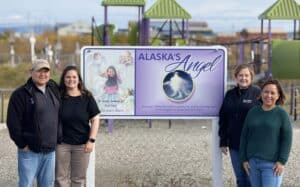
5:20 p.m. Ashley Johnson-Barr’s convicted killer, Peter Wilson, departs on a four-wheeler after being asked by friend “JJ” to pick up her child and another child (not Ashley) at Rainbow Park (now the Ashley Johnson-Barr Memorial Park), about a mile away.
5:30 p.m. Ashley is last seen alive near Rainbow Park; her parents’ calls go unanswered.
7:20 p.m. After two hours, Wilson returns to JJ’s mother’s house without children, upsetting JJ.
LATE NIGHT JJ finds a ringing phone in Wilson’s jacket, sees Ashley’s name on it, and calls Ashley’s mother; Wilson claims he found it outside.Ashley’s father retrieves the phone.
September 7:
EARLY MORNING Wilson goes to the Kotzebue Police Department and repeats the story about finding the cellphone downtown. He says he’s heard about a missing girl by the name of “Chelsea” or “Kelsie.”
September 10:
Kotzebue Police and Alaska State Troopers ask the FBI to join the investigation.
September 13:
Wilson is interviewed by the FBI. He denies using a four-wheeler on Sept. 6; ever knowing Ashley (despite them being relatives who knew each other, Scotty Barr says); and ever seeing Ashley’s name appear on the cellphone while it was ringing.
September 14:
EARLY MORNING Guided by GCI records, investigators search an area 2 miles east of downtown Kotzebue.
4:15 p.m. Ashley’s body is found in remote tundra a quarter-mile off the road, concealed by thick brush and a depression in the ground.
ANCSA & PL280 at a Glance
The Alaska Native Claims Settlement Act (ANCSA) and the state’s PL-280 status leave Alaska Native communities with limited authority, fewer resources, and heavy reliance on a strained state system. These challenges help explain why MMIP cases like Ashley Johnson-Barr’s face extraordinary challenges from the start.
ANCSA: Land Without Reservations
The Alaska Native Claims Settlement Act (ANCSA) was passed in 1971 to resolve land ownership in Alaska.
What it did: Replaced reservations with Native-run corporations; transferred 44 million acres and nearly $1 billion to those corporations; and made most Alaska Native land corporate-owned, not Tribal or federal.
Why it matters: Most of Alaska is not “Indian Country.” Tribes do not control land the way reservations do, and Tribes lack the type of funding and authority that is common in the Lower 48.
Impact on MMIP cases: ANCSA limits Tribal control over land and resources, complicating coordination when someone goes missing and reducing the tools Tribes have to respond.
PL-280: Why Jurisdiction Works Differently in Alaska
Public Law 280 (PL-280) is a federal law passed in 1953. Alaska became a mandatory PL-280 state in 1958.
What it means: The State of Alaska has primary criminal jurisdiction; Tribes do not have criminal authority (Tribal courts only handle civil cases); federal law enforcement plays a limited role.
Why it matters in missing-person cases: Tribes cannot lead criminal investigations or detain suspects (local police or Alaska State Troopers are responsible), and in some rural areas responders may be hundreds of miles away.
The impact: PL-280 limits Tribal sovereignty and local response, leaving families dependent on an often under-resourced state system—especially during the critical first hours after someone goes missing.
Working for More Just MMIP Investigations
Effective law enforcement response to the missing and murdered Indigenous people (MMIP) crisis requires moving beyond standard procedures toward active coordination and trust-building.
- Acknowledge the Scale: Alaska Native women and girls are disproportionately affected, though men and elders are also victims. Understanding this systemic context is vital.
- Turn Awareness Into Action: Awareness only protects families when combined with cultural respect, specialized training, and rapid collaboration.
- Respond Immediately: Never assume a disappearance is voluntary. In rural Alaska, distance and weather already cause delays; do not add to them by waiting to engage search resources.
- Prioritize Accurate Data: Ensure cases are entered into the NCIC quickly with correct racial and Tribal identification to prevent the historical issue of misclassification.
- Act Despite Jurisdictional Complexity: Do not let confusion over Tribal, state, or federal authority stall an investigation. Initiate the response first, then coordinate with agencies like the FBI or State Troopers.
- Build Community Trust: Past neglect has created reporting hesitance. Overcome this by partnering with Tribal leaders and providing families with regular updates, even when there is no new information.
- Partner With Families: Treat families as essential sources of information rather than obstacles. Avoid victim-blaming language and take their concerns seriously.