

Dr. Noelle Hunter talks about her daughter during the 2025 National AMBER Alert & AMBER Alert in Indian Country Symposium
Dr. Noelle Hunter discusses her daughter's abduction to Mali, West Africa, during the 2025 National AMBER Alert & AMBER Alert in Indian Country Symposium.

By Denise Gee Peacock

On New Year’s Day 2011, Dr. Noelle Hunter was approaching hour three of waiting in a Morehead, Kentucky, McDonald’s—the agreed-upon meeting place for her ex-husband to return their 4-year-old daughter, Maayimuna (“Muna”)—when she knew something was terribly wrong.
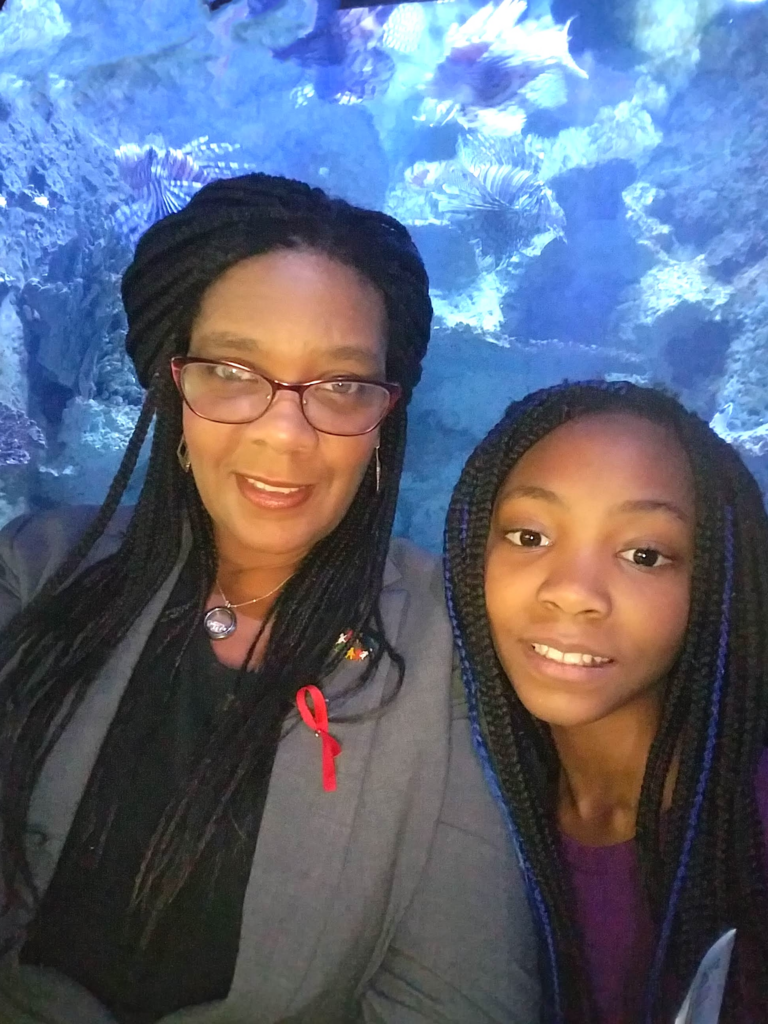
Dr. Noelle Hunter and her daughter "Muna"
Dr. Noelle Hunter with her daughter, Maayimuna (“Muna”)

Little did she know Muna’s father had taken her 5,000 miles away to live with his family in their native country of Mali, West Africa, despite Dr. Hunter, having been granted sole custody of her.

While it took more than three years for Hunter to get Muna home, during that time the university professor would learn so much: Chiefly, just how much understanding law enforcement needs to know about the complexities of international parental child abduction (IPCA)—the proactive efforts needed to avoid it, and quick actions necessary to stop it in its tracks.

Hunter’s journey of IPCA understanding began with her local police department. “They told me my problem was a civil matter, a domestic dispute; that I needed to get a court order before they could do anything,” she shared with symposium-goers. “One good thing they told me was to contact the National Center for Missing & Exploited Children (NCMEC). And that’s when I learned that federal law mandates that any child under age 18 must be entered into the National Crime Information Center (NCIC) database within two hours of being reported missing.”

NCMEC reached out to Morehead authorities to inform them of their obligation to enter Muna into NCIC. They also advised Hunter to directly contact the FBI for assistance. After learning that Muna had indeed been taken to Mali, she was connected with the U.S. State Department.

Quote icon

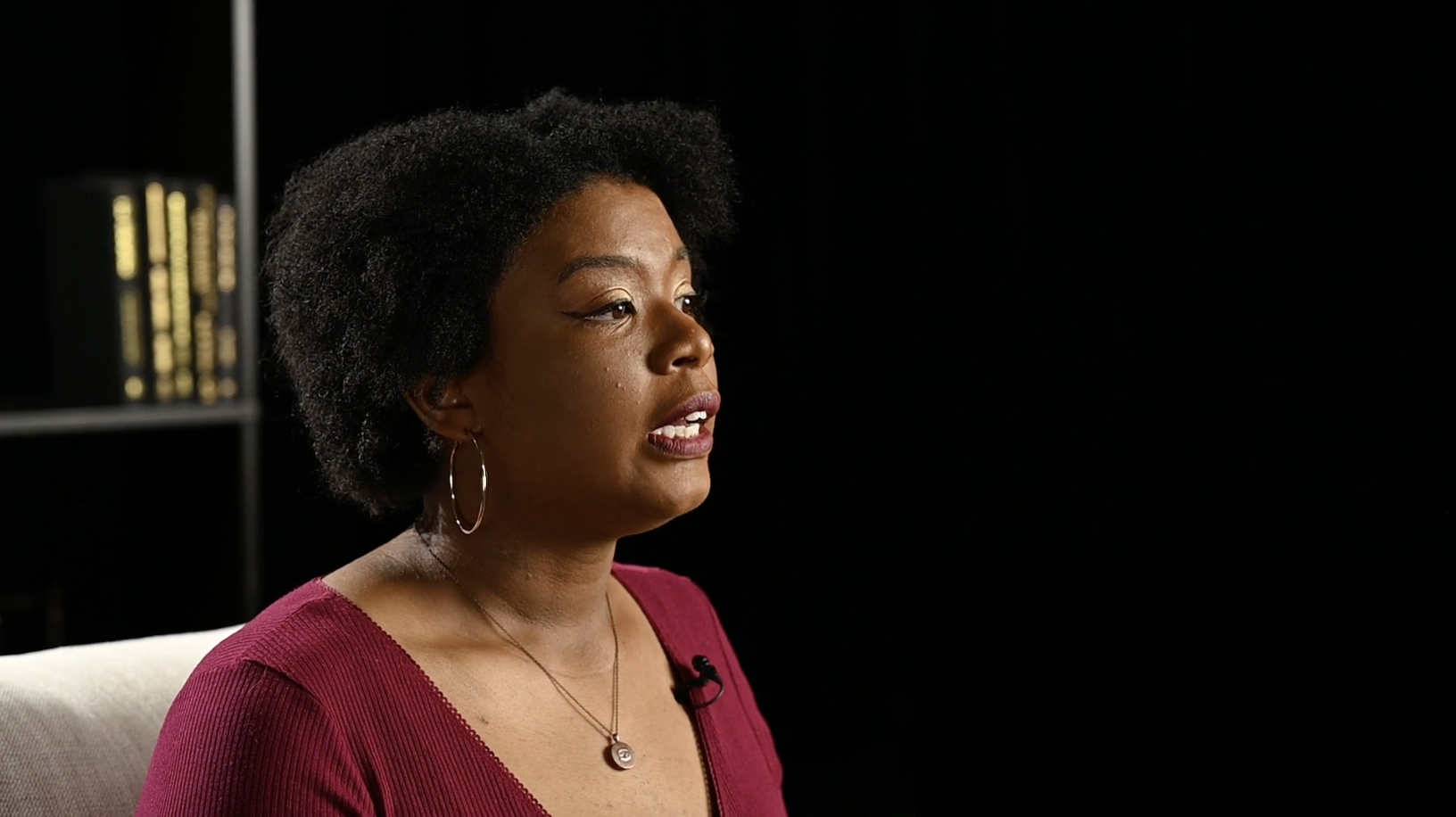
Hear Dr. Hunter share more of her story/insights on the Family Survival Guide website. Also see her daughter, Rysa Lee (shown below)—a contributor to the newly updated sibling survival guide, What About Me?—discuss her family’s IPCA experience.

Quote image
Rysa Lee

Hunter learned her ex-husband had accomplished the abduction by obtaining a passport for Muna in Mali, where she had dual citizenship because of her father (“which I had never taken into account; I thought as long as I had her passport she would have to stay in the U.S.”) She also learned about the Hague Convention on the Civil Aspects of International Child Abduction (aka the Hague Abduction Convention), a treaty in which its signatories commit to returning abducted children to their rightful guardian. But while the U.S. is a signatory, Mali is not. They had no obligation to return Muna to her. And meanwhile, the country was in the throes of a government coup.

Desperate yet determined, Hunter immersed herself into a relentless “Missing 4 Muna” campaign to get her daughter home. She read everything she could about IPCA; talked with legal experts, many of whom offered to help her pro bono; navigated the cultural nuances of working with Mali officials; staged protests in front of Mali’s embassy in Washington, D.C.; pleaded with United Nations members; helped create a nonprofit organization to assist other IPCA families; and worked with a congressional delegation from Kentucky to pressure the Mali government to safely return Muna in 2014. By then she was almost 7.

Hunter now works as an assistant professor of political science and philosophy at University of Alabama in Huntsville, which houses the program she founded: the International Child Abduction Prevention and Research Office (ICAPRO). From there, she and her daughters—Muna and her sister, Rysa Lee, advocate for IPCA awareness and support.

“Most of the parents still seeking their children are committed to doing whatever it takes to bring them home. But as I learned, we can’t do it alone,” Hunter said. “That’s why I’m glad this symposium exists, and that all of you undertake full-court-presses of your own to help find missing children and get them home where they belong. Remember, all abductions are local.”

Sweet Memory: A Maryland State Trooper’s Compassion
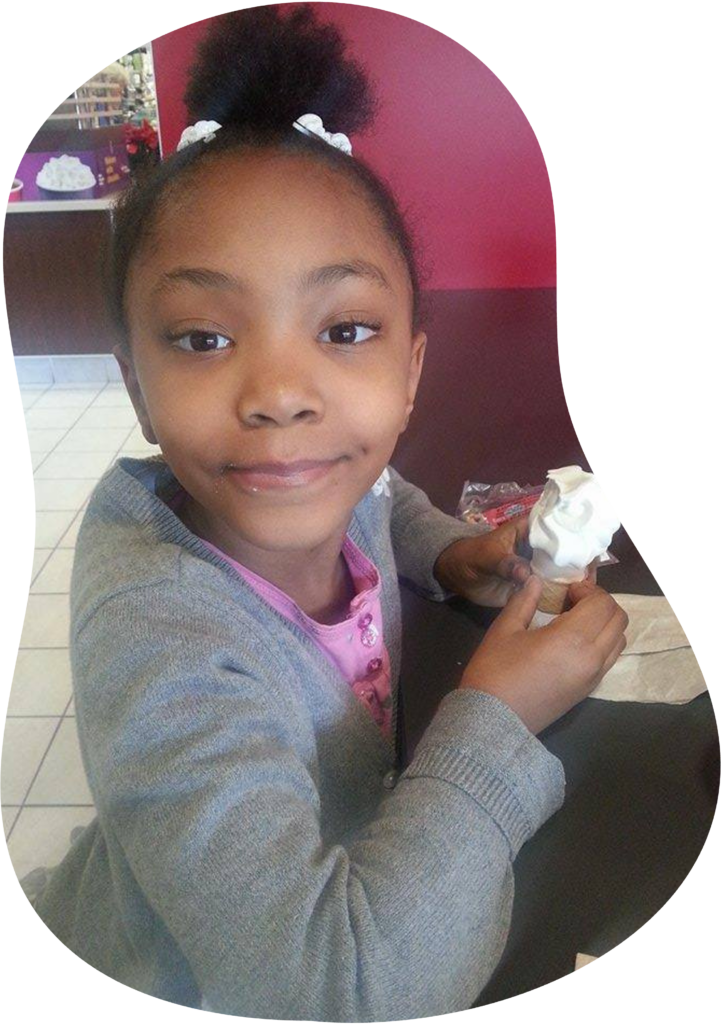
Photo of a little girl eating ice creamAt first glance, a photo of Dr. Noelle Hunter’s daughter, “Muna,” savoring an ice cream cone might be one of many impromptu images of joy a mother cherishes. But as symposium-goers learned, the photo holds special significance–both for Dr. Hunter and law enforcement. Here’s the story Dr. Hunter shared about it:

During my mission to get Muna home from West Africa, I was constantly traveling from Kentucky, where I lived at the time, to Washington, D.C., knocking on every door I could. It was exhausting work. On one drive home, I was particularly distraught, and wasn’t really paying attention to my speed. So because I was speeding, I was pulled over by a Maryland State Trooper. He took one look at me, and said, “What’s wrong?” So I told him. Everything. He then started trying to help, asking if I’d talked with the U.S. State Department, if I’d done this or done that. I told him yes—I was doing everything I could.

At that point he said he wouldn’t write me a ticket, but added, “Promise me two things. That you’ll slow down and and get home safely. And that when your daughter returns home, make sure her first ice cream is courtesy of a trooper in Maryland.”

So that's what you see in this photo: that trooper’s gift to her—and me.

I think that’s significant at a conference like this. Please consider that local law enforcement support is crucial for a parent experiencing IPCA. A little grace never hurts either.
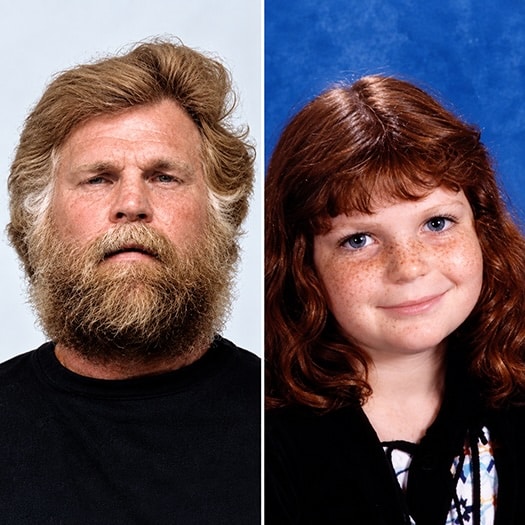
 

Photo of Ian Sousis, namesake of Kentucky's autism-focused Ian Alert

The tragic story of a 9-year-old boy with autism who drowned after running away from a children’s home has led to a new missing child alert in Kentucky. The “lan Alert,” named after Ian Sousis who died in 2022, is designed to help quickly and safely recover missing autistic children through a notification system comparable to the AMBER Alert. Children with autism are drawn to water and face drowning as the leading cause of death. The new alert will cover gaps between other alerts and use the same system as the AMBER Alert. Kentucky Emergency Management has been developing policies for implementation after Governor Andy Beshear signed the alert into law. “This is another tool in the toolbox,” said Lieutenant Phillip Ridgell of the Boone County Sheriff’s Department.

Kentucky Governor Andy Beshear signed a bill in March 2021 requiring law enforcement to alert the public within four hours after law enforcement is notified about a lost or missing person. The law requires using existing resources like the AMBER Alert and similar notification systems.

Mugshot of suspect Donnie Shelton alongside portrait of daughter Elysha Shelton
Suspect Donnie Shelton, left, and his daughter, abduction victim Elysha Shelton, right.

Donnie Shelton had a protective order forbidding him from contacting his estranged wife and their children. Authorities at the Pickens County Sheriff's Office in South Carolina said the order did not stop Shelton from breaking into the family home on Monday, November 22, 2010, and attacking his wife and 10-year-old son. The father found his 8-year-old daughter hiding in a closet and forced her into his truck.

Dispatchers received the initial call at 6 p.m. and investigators tried to find the child before contacting the South Carolina Law Enforcement Division at 11:40 p.m. about issuing an AMBER Alert. Lieutenant Cal Reighley said he considered the father's history of domestic violence and drug problems before sending the alert out just after midnight.

“We felt like the child was in danger because of his history of violence and how he took the child,” said Reighley. “It was better to be safe than sorry, and we decided to go ahead and issue the AMBER Alert.”

Reighley notified the National Center for Missing & Exploited Children and contacted all AMBER Alert partners. He also made a courtesy call to Georgia and North Carolina about the alert. Every part of the South Carolina AMBER Alert Plan seemed to be working.

At 3:30 a.m. Tuesday, a man showed up at the Baptist Regional Medical Center in Corbin, Kentucky, with a girl who said she had stomach pains. A nurse became suspicious when the girl would not make eye contact with her. Staff members checked an AMBER Alert website and discovered the child had been abducted three states away in South Carolina. The police arrived at 4:05 a.m. and arrested Shelton.

Patti Ruff, the South Carolina AMBER Alert Coordinator, said she was about to relieve Reighley when the AMBER Alert was cancelled.

“I think the alert was awesome,” said Ruff. “Whoever took the initiative to check online to see if there was an AMBER Alert should be recognized. They could have checked the little girl and sent her on her way with her father. This is a lesson for all hospital staff members to check something out even if there is not an AMBER Alert in their state.”

Ruff became the state AMBER Alert Coordinator only seven months before this alert went out. She offered this advice for other new coordinators: “Work with someone who is experienced and has been involved with AMBER Alerts. If you are a parent and you are new to the process, you will want to activate the alert as fast as you can. However, it is important to get it right, so you do not desensitize the public with too many alerts.”

“You learn something with every alert, and nothing happens exactly the same with each one,” added Reighley. “The biggest surprise was where the suspect was located. The most important lesson we learned was to check other states because the suspect can pretty much go anywhere, and you do not know where they will turn up.”

Shelton has been charged with assault and battery, burglary, custodial interference, criminal domestic violence, and trespassing.