

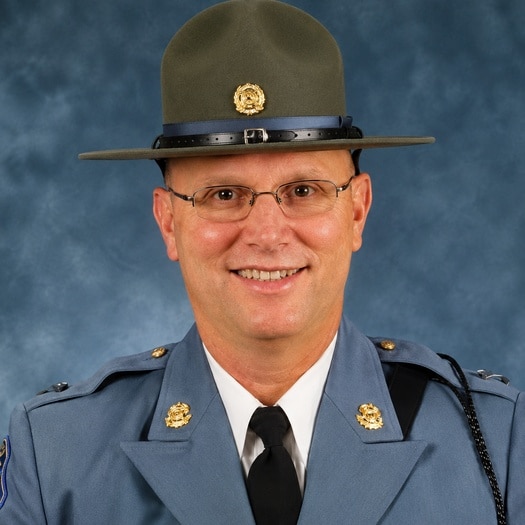
Missouri AMBER Alert Coordinator Kim Hull knew he needed something to help missing children who didn't fit the criteria for an AMBER Alert. The Missouri State Highway Patrol Captain spent six months developing an Endangered Person Advisory for his state.
“I saw a real need because we were getting AMBER Alert requests for everything, including one for the elderly that was to be called the Golden Alert,” said Hull. “People call in and ask for an AMBER Alert and it's difficult to say no.”
It turns out the Endangered Person Advisory was needed only a week after it was ready. On January 8, 13-year-old Ben Ownby got off a school bus at 3:45 p.m. with a friend but never made it home. Ben's father called for help and the sheriff considered issuing an AMBER Alert at 7:15 p.m. However, no one saw him disappear and the sheriff didn't have any proof he had been kidnapped.
“The initial call unfortunately did not meet the criteria of an Amber Alert,” said Sergeant Keverne McCollum of the Missouri State Highway Patrol. “It was good that we had something to do except tell law enforcement they needed to contact the media.”
The state's first Endangered Person Advisory went out at 8:24 p.m. Law enforcement was notified through teletype message channels, and the media received the advisory through the Public Information Officer's media email list. The media coverage was extensive and hundreds of leads started coming in for the missing boy. “The next morning someone said they saw the boy being pushed into a white pickup truck,” said Hull.
Twelve hours after the advisory went out, authorities finally had enough information to issue an AMBER Alert. Three days later deputies spotted a white pickup that matched the description from the witness. The deputies searched the truck owner's apartment and found Ben Ownby and Shawn Hornbeck, a 15-year-old boy who had been missing since 2002.
“You've got to be kidding,” Hull responded when he found out two boys had been found. “It was unbelievable that they found the other boy. We were looking for him for a long time.”
Missing Persons Clearinghouse Unit Manager Darlene Crocker calls the recovery a miracle. “I hope this encourages more people to report things that don't seem right and that law enforcement will keep looking beyond the initial ‘stop.’”
Crocker has high praises for the new advisory. “The Endangered Person Advisory is one of the best tools we have. It seems like with the public and some law enforcement, that if a situation did not meet the AMBER criteria that there was nothing being done or nothing that could be done.”
Now Hull is tweaking this newly developed tool for the next time. “We got the information out and it really helped law enforcement. It worked out pretty good.”
The 2006 National AMBER Alert Conference had lots of firsts: it was the first time for National AMBER Alert Coordinator Regina B. Schofield to meet all of the AMBER Alert Coordinators and their partners, the first conference to provide specialized training for new AMBER Alert Coordinators, and the first conference to be expanded to include Tribal police and law enforcement representatives from Canada and Mexico. Here are some notes and highlights from the conference.
“AMBER Alert has become so established and so effective that it has actually become a crime deterrent. More and more, we're seeing abductions being short-circuited by the mere issuance of an AMBER Alert. Abductors are scared straight because they know what will happen when an AMBER Alert is activated.” — Regina B. Schofield, Assistant U.S. Attorney General and National AMBER Alert Coordinator
Endangered Person Advisory
What is it? An action plan in cases that do not meet the AMBER Alert criteria. Who can be helped? Anyone in danger because of age, health, mental or physical disability, environment, weather conditions, in the company of a potentially dangerous person or some other factor that may put the person in peril. What will happen? Law enforcement, media and NCIC are notified. Flyers, automatic phone notifications and other means are also used to notify the public. What doesn't happen? Broadcasters don't use EAS and transportation doesn't use highway signs. More info: http://attorneygeneral.utah.gov/AL/EndangeredPersonAdvisory.html.
What's a CART?
A team of individuals from various agencies, jurisdictions and disciplines who are trained and prepared to respond to a missing, endangered or abducted child. The Child Abduction Response Team can go in and assist an agency at the beginning of the investigation. Why: the first hours are critical; many agencies and officers haven't investigated a child abduction; one agency will not have all necessary resources; and it promotes cooperation among agencies.
Attendance for this program requires team participation. A minimum of four and a maximum of 10 team members are permitted.

Father of Molly Bish Speaks Out
John Bish spoke at the conference about how difficult it is for a family to cope after a child has been abducted. His 16-year-old daughter Molly was kidnapped in 2000 and found murdered three years later. The search for Molly was the largest and most costly investigation of its kind in Massachusetts state history.
Emancipated Missing Children Project
Florida launched a massive project to locate missing children who have reached the age of emancipation. Investigators found that communities did not put as much effort in finding runaways and children abducted by parents. Police need to find where missing children go and what they are running from. Other findings: 28% of NCIC entries had errors; 30% of children left home because of abuse; and 67% left because of living conditions.
ICAC
The Internet Crimes Against Children Task Force has 46 teams to investigate perpetrators who use the internet to exploit children. ICAC is responsible for more than 7,300 arrests. During child abductions ICAC can investigate computers to find evidence that can lead to the recovery of the child. Other statistics: 50,000 predators are trolling the internet; one in five children receives a sexual solicitation; one in 33 children is aggressively solicited to meet the pedophile in person; and five AMBER Alerts were issued in 2005 for children lured on the internet.
Editor's Note: Ron Laney, Associate Administrator, Child Protection Unit, conducted this interview for the inaugural newsletter.
Regina, tell me about your priorities as the National AMBER Alert Coordinator.

I have many priorities but do not want to water down any of the issues so I am going to concentrate on several top issues. Certainly, continuation and support of the AMBER Alert training and the technical assistance program is critical if we are going to continue to bring home our missing children. There are some other issues that complement and support the one of overarching training, specifically border issues, Native American concerns and the endangered child alerts.
Can you tell me about the training that is occurring and then we can talk about the other issues?
Fox Valley Technical College has developed six training courses in diverse geographic areas for delivery throughout the year. In fact, the training will be delivered over 40 times and serve more than 2,000 people in the course of a year. The training courses are Child Abduction Response Teams (CART); Investigative Strategies for Missing and Abducted Children (ISMAC); Leadership for Missing Children (LMC); AMBER and the Media; Forensic Response for Missing and Abducted Children; and Prosecutors' Strategies in Child Abduction Cases.
I am particularly enthusiastic about the CART training. It requires a group of individuals, a max of 10 from a community, who might be involved in a missing or abducted child incident. It will truly make a difference in our communities to have a coordinated response. We all know it takes a village to protect our children. I do not want to minimize the other training opportunities. I encourage everyone to visit www.amberalert.gov to learn more. In addition, we have media training at Newsplex, a state-of-the-art facility at the University of South Carolina. This year we are conducting 20 sessions there, serving AMBER Alert coordinators, their PIOs, and radio and television broadcasters.
That seems like a lot of training, but I know AMBER coordinators have been asking for support in getting people trained. It certainly sounds like that is happening. I attended many of the pilot sessions of the courses you mentioned, and they were well received and informative. Now what about the other priorities you mentioned? Tell me about border issues.
There are so many difficulties that arise when a child or children are taken across the border. Issues faced on the southern border of the U.S. include communication, difficulty in checking mass transit systems such as Greyhound buses, and pedestrian traffic which often goes unchecked. In addition, the lack of a database link between the U.S. and Mexico and limited funding for equipment and additional personnel add to the problem.
At a Border Issues Summit this past November, all the issues I just mentioned were brought up, but communication and coordination seemed to be overriding themes. There is a Liaison Unit in Mexico, and they are our link to the Mexican authorities for dissemination of rapid information. So that link really needs to be strengthened. On the international front, we need to adhere to the Hague Convention, to which not all countries subscribe. If we had one central point of contact for dissemination of information, that would help. We also have the legalities of the abduction and the parent that is left behind, child abductions that involve an illegal alien, trafficking, and many other subsets of these issues. There is much work to be done on many levels.
On the northern border, we face problems such as a lack of resources, no central point of contact across the border, and problems with communication procedures from the U.S. to Canada and the border. Canada has reassured OJP that they do want to take our (U.S.) AMBER Alerts and run them. We need to make sure that it is reciprocated if a child is missing from the northern border. Representatives from Canada have been participating in our regional meetings and we want to continue their involvement and increase our dialogue with them.
In addition, there are sensitivities because of the many tribes along both the northern and southern borders. They are each a sovereign nation with different customs, beliefs, treaties, and cultures. I think you can see we have our work cut out for us.
Are there plans to further study this problem?
Yes, border issues was one area of focus at this year's national AMBER Alert conference.
Now tell me about the Native American issues. You mentioned some of the issues in your border discussion.
Well, there are 562 federally recognized Tribes in the U.S. and to my knowledge AMBER Alert systems do not exist in Indian Country. It is important to remember that they are sovereign nations, and many feel they are only obligated to deal with the federal government—the branch equal to their level of government. Furthermore, Indian Country often lacks the technology to activate and sustain an AMBER alert, and the distances served make for real challenges. There also is little collaboration with AMBER Alert Coordinators. We need to work on those relationships and to establish a point of contact within each Tribe. Capacity-building relationships need to be formed among Tribes and the state.
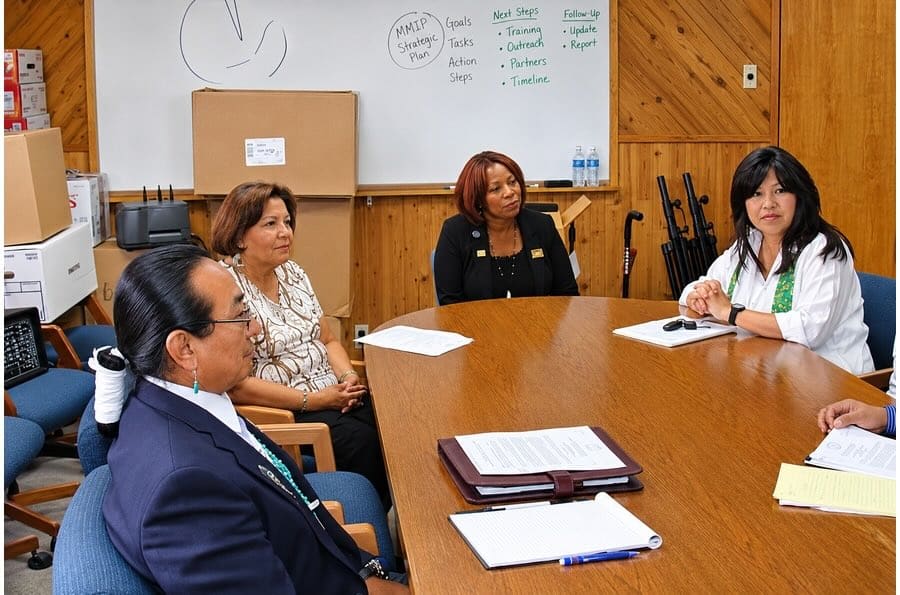
Many Tribes border Canada or Mexico, which further compounds the problem. So, you see we have many challenges and obstacles. However, as a first step we are going to work on communication with Native Americans, develop AMBER Alert plans that address the unique needs of Indian Country and work with states that have Indian Tribes to facilitate MOUs. There was a meeting in August 2005 held with AMBER Coordinators and representatives of Indian Tribes to begin strategic planning to bring AMBER Alert to Indian Country. We have been meeting with Native American communities and have worked on some of the issues pertinent to this population at the National Conference in July 2006.
The last issue you mentioned is the endangered child alerts. I know that Utah has recently instituted an Endangered Person Advisory. Tell me about this.
Yes, you are correct, Utah has an Endangered Person Advisory, which is used in instances when an AMBER Alert is not appropriate, and yet there are suspicious circumstances, issues regarding the health or mental capacity of the child, or other circumstances that make public notification critical. The Endangered Person Advisory or EPA does not involve the EAS system but rather serves as a “super press release.” There are at least six other states that have a similar program, as well as several states that have an unwritten policy for “near AMBER Cases.” I would really like to explore the variations in the states and develop guidelines for best practices. Clearly, we want to differentiate an EPA from an AMBER Alert, and still respond to the occurrence.
Let's switch gears and tell me about the positive changes you have seen in the Program since you became National AMBER Alert Coordinator.
You know, I have not been in this position long, but I am pleased with the progress of AMBER Alerts as seen in the dialogues we have initiated with our border countries and with the Native American tribes. Guam and the Bahamas have also expressed interest, which is very exciting. Certainly, expanding our training programs and requiring teams in the CART program are steps in the right direction. We're improving our responses and widening our net for these missing and abducted children’s cases.
Widening our net makes me think about the tremendous strides we have made in the secondary distribution system, and it is expanding all the time.
Can you tell me more about this system?
Secondary distribution is a secure system which redistributes AMBER Alerts issued by law enforcement to secondary distributors such as online providers and wireless carriers. This system, created at our direction in 2005 by the National Center for Missing & Exploited Children, dramatically increases the number of people who can be on the lookout for abducted children in a targeted geographic location. If your wireless carrier participates in the Wireless AMBER Alerts Initiative you can register and receive an alert for your area. Currently, there are 26 carriers and almost a half-million subscribers signed on for this service.
It is very exciting and more developments are constantly occurring such as the American Trucking Association sending AMBER Alerts to trucks equipped with the proper technology. Soon alerts also will scroll on the internet in the geographical area where they occur. Our hope is this expansion of our distribution system will act as a deterrent to a would-be abductor or increase the likelihood of a positive recovery.
Your plate seems full; how are you managing all these efforts? I know there is an AMBER Alert Working group. What exactly is their role?
There are 14 working members in this group. They are charged with providing honest feedback to the Office of Justice Programs regarding the AMBER Alert program and with engaging in open discussions about issues relating to the program, as well as problems associated with missing and abducted children. Some of the issues we have focused on and will continue to focus on include the identification of sex offenders by law enforcement, and the development of new Public Service Announcements (PSA) for parents and children. The working group has discussed possible PSA topics and focus, including border issues, cyberspace, and asking parents if they know who their children are bringing home. These are works in progress, but the group is invaluable in terms of providing feedback and insight.
I know I have taken a lot of your time, just want to ask you about one more item. I understand you were able to participate in AMBER Alert Awareness Day, an event that marked the 10th anniversary since the abduction and murder of Amber Hagerman on January 13, 1996. What activities occurred? Do you have any reflections on the occasion?
In 10 years, obviously we know we have come a long way. The most significant change during the past decade as it relates to AMBER for me is the wide recognition of what an AMBER Alert is. I think parents and the public recognize AMBER Alerts as a tool that can be used by law enforcement to recover missing children. The 10th anniversary was very memorable and moving. Amber’s mother was present to receive a plaque commemorating all she has done, and the Attorney General spoke to the group assembled as part of a larger Office of Juvenile Justice and Delinquency Prevention Conference.
Any closing comments?
I would like to end this interview on a personal note. I recently had a child and I know if anything happened to my child, I would be devastated. So many individuals—I don’t want to name names, but there are many who had that nightmare occur—who have been instrumental in developing and improving the AMBER system. I applaud these individuals for turning their nightmare into something positive. I know my child is safer because of the AMBER Alert Program.
Thanks, Ron, for giving me this opportunity to open a dialogue with the AMBER people. I think the training, the open discussion on border and Native American issues, and the national meeting will improve the consistency, expansion of, and awareness in AMBER Alert plans across the country and minimize problems and delays across states and countries. That is my charge. I have been inspired by the level of commitment and enthusiasm exhibited by all those involved in the AMBER Alert Program. I’m glad to be part of the team!