

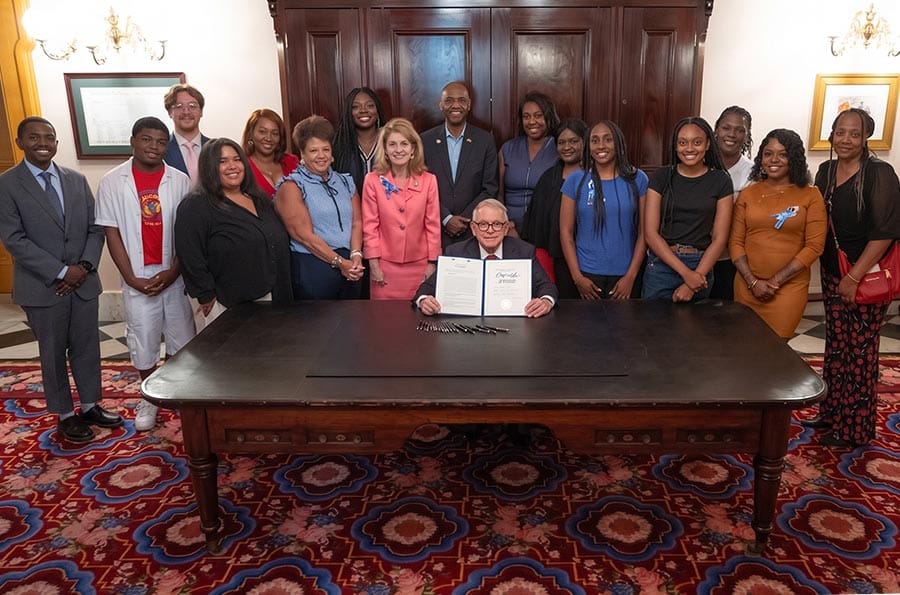
Ohio enacted House Bill 359 officially established the Joshua Alert system to accelerate the search for missing children with autism or developmental disabilities. Governor Mike DeWine signed the legislation on June 18, 2026. The mandate honors 6-year-old Joshua Al-Lateef Jr., a nonverbal autistic child who tragically drowned in 2024. The new statute legally redefines a "credible threat of immediate danger" to explicitly include children who are nonverbal, possess limited communication skills, or lack the capacity to seek help. Importantly, the law removes previous waiting periods. It legally requires local police to request a statewide emergency alert immediately upon confirming the disappearance of a vulnerable youth under age 18.
The Joshua Alert law adds clarity to imminent danger criteria by explicitly defining a child’s inability to communicate verbally or seek help as a legally recognized immediate threat. Consequently, law enforcement must immediately notify the statewide alert system without any waiting period once the disappearance of an autistic or developmentally disabled child under 18 is confirmed.
Understanding the behavioral precursors of autistic children is vital for successful search operations. The factual testimony supporting the bill highlights that children with autism are 160 times more likely to wander away and face drowning risks compared to their neurotypical peers. Because water is often sought for its calming sensory effects, operational protocols should prioritize searching nearby bodies of water first.
Furthermore, missing autistic youth may actively avoid loud noises, flashing lights, and large crowds due to sensory processing sensitivities. They might not respond to their own names being called and may hide from well-meaning searchers. The rapid deployment of the Joshua Alert ensures that localized information reaches the community faster, enabling specialized, quiet search grids before a child wanders further into environmental hazards.
Key Findings
-
Governor Mike DeWine signed House Bill 359 into law on June 18, 2026, officially creating the statewide Joshua Alert.
-
The legislation legally mandates immediate statewide alert activation for missing children under 18 with autism or developmental disabilities, removing previous waiting periods.
-
The law redefines "credible threat" to explicitly include individuals who are nonverbal or lack the capacity to communicate and seek safety.
-
Search operations for autistic youth should prioritize checking water sources first and account for sensory sensitivities when conducting searches.
Sources
-
Spectrum Local News (June 18, 2026): Joshua Alert legislation signed by governor (Link)
-
OhioHouse.gov (June 22, 2026): Rep. Thomas Announces Signing of Joshua Alert Act into Law (Link)
-
TrackBill.com (June 26, 2026): HB359 | Ohio 2025-2026 | Regards emergency Joshua Alert system for certain missing kids (Link)