

Amber Hagerman holding her baby brother, Ricky, in front of wrapped Christmas packages
Amber Hagerman with her baby brother, Ricky

By Denise Gee Peacock

On January 13, 1996, 9-year-old Amber Hagerman’s life was stolen by a stranger who dragged her kicking and screaming from her bicycle in broad daylight. Despite an unrelenting search and dedicated efforts by law enforcement, the media, and the public, Amber would never make it home. She was found brutally murdered. Her loss devastated her family and community, leaving a wound that has yet to heal.

In the months following the third-grader’s abduction and killing, Dallas-Fort Worth-area broadcasters worked with local police to establish what they hoped would be an antidote to future crimes: the America’s Missing: Broadcast Emergency Response (AMBER) Alert—named in Amber’s honor, both to remember her and to protect children in the future. It would harness the power of technology, the media, and community action to spread urgent news when a child’s life was in danger.

It took almost a decade to get every U.S. state to adopt the alert system, but as of Dec. 18, 2025, AMBER Alerts have helped recover more than 1,292 children nationwide—241 of them rescued because of wireless emergency alerts (WEAs).

 

Quote icon

Though Amber’s life was heartbreakingly short, her legacy has been to save countless lives. Each time an AMBER Alert flashes across a screen or sounds on a phone, her name is carried forward—not just as a reminder of tragedy, but as a symbol of hope, protection, and action.
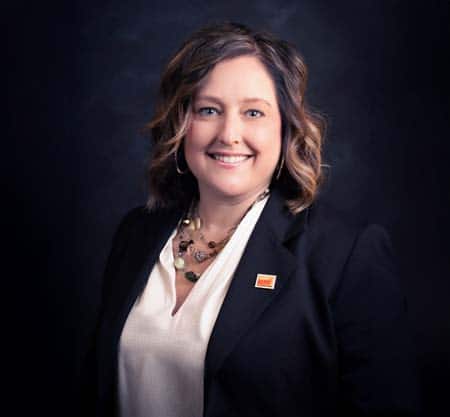
Janell Rasmussen Administrator, AMBER Alert Training & Technical Assistance Program / Director, National Criminal Justice Training Center
Quote image

Amber’s case also underscores fundamental lessons that child protection professionals should consider as they navigate missing child incidents.

Rapid public communication is vital.
Before Amber’s case, police lacked a formal framework for instantly broadcasting information about child abductions to the public.

The AMBER Alert system was created specifically to fill this gap, leveraging radio, TV, and eventually wireless technology to send out critical information like descriptions of the child, suspect, and vehicle.

“Amber’s case was a witnessed abduction—the rarest of all—and there was credible information available about the suspected abductor and his truck,” says Chuck Fleeger, Region 3 Liaison for the AMBER Alert Training & Technical Assistance Program (AATTAP). “There just wasn’t a mechanism then to get that information out quickly and to the widest possible audience.”

AATTAP’s Region 3 spans 10 states, from Louisiana to Nebraska to Arizona. It also encompasses Fleeger’s home state of Texas, where since 2003 he has served as executive director of the AMBER Alert Network Brazos Valley, a non-profit in central Texas that assists with regional AMBER Alert coordination, provides public education, and partners with local law enforcement and other responders in alerting, response, and investigative readiness.

In 2020 Fleeger retired as Assistant Chief of Police with the College Station Police Department, where he served for more than three decades. He now teaches AMBER Alert investigative best practices courses for the AATTAP.

Time is of the essence.
Experts recognized that the first few hours are the most critical in a child abduction case. The AMBER Alert protocol emphasizes speed, ensuring that law enforcement, broadcasters, and transportation agencies react swiftly to reports.

Quote icon

Long-term cases like Amber Hagerman’s are solvable. Technology continues to evolve and so do peoples’ lives. People will decide to talk for whatever reason when circumstances change.

Chuck Fleeger Region 3 Liaison, AMBER Alert Training & Technical Assistance Program
Quote image

Balancing that need for speed with a desire for accuracy can be a struggle for AMBER Alert Coordinators. “Law enforcement wrestles with the desire to verify information is complete and accurate, but then it’s not timely; conversely, you can have timely information but some of it’s not completely accurate. That’s OK. It’s better to get the process going even if an activation package isn’t perfect,” Fleeger says. “We all know how crucial time is, so any moments that can be saved could potentially make the difference in a child’s recovery.”

Successfully navigating such a high-stakes process “takes a combination of continuing education, experience, and good communication with others,” says Fleeger’s colleague Joan Collins, Liaison for AATTAP’s Region 1 (encompassing 11 states in the Northeast, from Maine to West Virginia).

Collins’ career has involved 39 years of work for Rhode Island law enforcement. She spent 28 of those years with the Rhode Island State Police, where she helped audit and train users of the Rhode Island Law Enforcement Telecommunications System (RILETS); was central to increasing the state’s various emergency alerts; managed the state’s sex offender/“Most Wanted” databases; and worked with the state’s Internet Crimes Against Children task force.

Quote icon

The creation of the AMBER Alert system has become an important public global safety tool for child abductions, and there is ongoing hope for the resolution of Amber Hagerman’s case. The goal is to safely recover an abducted child. The decisions made by AMBER Alert Coordinators are often stressful, made quickly and under pressure, following established protocols and using their best judgment based on the information at hand.

Joan Collins Region 1 Liaison, AMBER Alert Training & Technical Assistance Program
Quote image

“Doing this line of work involves being an active listener—of knowing what questions to ask,” she says. Collins now teaches such AATTAP courses as AMBER Alert: To Activate or Not Activate as well as 911 Telecommunicators and Missing & Abducted Children (aka “911 T-MAC”).

Coordination is key.
The AMBER Alert system functions through the seamless cooperation of multiple groups, including law enforcement, broadcasters, transportation agencies, and the media.

Reviews of every alert help to improve the process over time by getting input from these various partners.

Collins recommends that partners include not only those within one’s own law enforcement agency, but also those from surrounding states (“with whom you’re likely to work with more often than not”). “It’s important to connect with your counterparts elsewhere and build relationships with them early so you can act together quickly and successfully,” she says. “It’s always a relief to know others are ready and willing to help out during times of high stress, and they in turn will appreciate your advice and support.”

Protocols must be followed carefully.
For any case—which can potentially become a high-profile one—there is a need for law enforcement to meticulously follow established protocols. This includes the difficult decisions an AMBER Alert Coordinator must make with the limited information available at the time, which may be criticized by the public later.

“With any missing child case, law enforcement should first assume the child is at risk until evidence presents otherwise,” Fleeger says.

He also recommends patrol first responders consider the long-term implications of their efforts, avoiding any pass-the-buck mentality of case stewardship. “Think about the officers dispatched to Amber’s case. They certainly didn’t know when they started their shift that three decades later the case would be unsolved—and how dramatically changed available resources and response models would become.” It’s essential to remember that “the right documentation of information really matters. And if we’re doing good, solid police work from the earliest moments, that work should stand the test of time and hold up well.”

Use targeted, advanced technology.
Modern AMBER Alerts benefit from geotargeting, which focuses alerts on the people most likely to have seen the child. This prevents citizens in a wider area from being desensitized and ignoring alerts.

The public can help.
AMBER Alert’s success is a testament to the power of community vigilance. It allows millions of people to serve as the “eyes and ears” for law enforcement by reporting tips to the authorities. To keep the public from “information burnout” on a case, Fleeger recommends using multiple photos of a missing child at different times. “If someone is scrolling through their feed on social media and see the same photo time and again, they’ll assume they’ve already read that information,” he says. “A new or different photo will make somebody pause and think, ‘I didn’t realize he is still missing.’ The goal is to keep the case a priority in the public’s mind until we can get that person found.”

Don’t assume benign circumstances.
Before the AMBER Alert system, bystanders witnessing a child struggling with an adult may have assumed it was a family dispute or the child misbehaving. Amber’s case highlights the danger of assuming an abduction is a benign event and reinforces the importance of reporting suspicious activity immediately—even if it seems inconsequential.

Collins refers to the barking dog analogy in her teaching. She encourages dispatchers in training to ask questions and gather more information. “For example, is the dog that someone is calling about normally outside barking, or does it rarely bark? This could indicate whether something unusual is occurring. It’s important not to make assumptions, as callers may have relevant information that can be discovered by asking further questions

Stranger abductions are real.
While statistically rare—the National Center for Missing & Exploited Children reports that stranger abductions account for 1% of reported abductions—they are a real danger. Amber’s case serves as a reminder of the vulnerability of children, especially when a predator targets them. According to NCMEC, victims are most often girls, and the average age for attempted abductions is 11 and completed abductions is 14.

Justice is a long process.
Despite the creation of a system that has saved countless lives, Amber’s murder remains unsolved decades later. The lesson is that the fight for justice continues, and the public can still assist by reporting any strange observations. “Long-term cases like Amber Hagerman’s are solvable,” Fleeger says. “Technology continues to evolve and so do peoples’ lives. People will decide to talk for whatever reason when circumstances change. Consider the Austin [Texas] yogurt shop murder case that was recently solved. You just never know.”

The AMBER Alert Network of Brazos Valley in Texas held its first self-organized fundraiser in April 2022. The golf event in Bryan, Texas, raised funds to help with basic operational costs, as well as educational material, posters, and training courses for police on finding missing persons.

College Station, Texas, Assistant Police Chief Charles “Chuck” Fleeger was honored for his work to help missing and abducted children when he retired after serving with the agency since 1989. The U.S. Department of Justice honored Fleeger as the AMBER Alert Coordinator of the Year in 2010. Fleeger is leaving to direct the nonprofit AMBER Alert Network of the Brazos Valley and will continue teaching and consulting on issues concerning missing and exploited children.

The Brazos Valley AMBER Alert Network in College Station, Texas, formed a new committee to identify resources needed for missing children in the community. An average of 330 children in the Brazos Valley are reported missing each year. “The numbers are telling us we have a problem,” said College Station Police Assistant Chief Chuck Fleeger. “Now is the time to address it.”

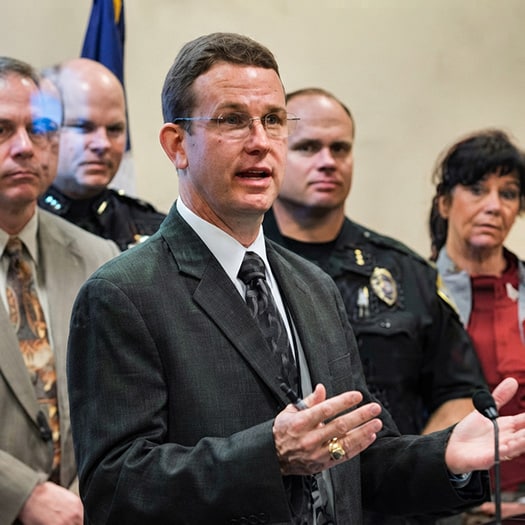
Charles Fleeger speaking at a press conference.
College Station, Texas, Police Lieutenant Charles Fleeger

What if a child were abducted in my hometown? College Station, Texas, Police Lieutenant Charles Fleeger said that question haunted him in 2001, and it started him on a journey to do more to find missing and abducted children. He said he was also motivated by his 8-year-old daughter.

“As a dad that scared the heck out of me,” recalled Fleeger. “What would happen if something happened to my daughter? Would we be ready? I know we cannot plan for every eventuality, but as a police officer and as a parent, I wanted to be able to stand before a parent and say we did everything we could and did not wait to the last second to do it.”

Fleeger gathered representatives from law enforcement, broadcasting, and dispatch centers and they began looking at other AMBER Alert programs. The radio stations in the area were not staffed 24 hours a day, but Fleeger found out that broadcasters could be notified at any time through the Emergency Alert System. In June 2003, the Texas Region 3 AMBER Alert Plan was launched for seven counties.

“We started building relationships with the AMBER Alert Program,” said Fleeger. “We were able to get representatives from all of the law enforcement agencies in the area to agree on something, and that was pretty darn unprecedented. It was actually an easy sell. Who wants to be the sheriff who is against finding missing kids?”

The new AMBER Alert Coordinator and his team started to train, hold quarterly meetings, and wait. They continued to train, find ways to improve their AMBER Alert plan, and wait. Sometimes Fleeger would use his own money and vacation time for more training. After more than 7 years, the regional AMBER Alert plan has never had to activate an alert.

“We have gotten scared a couple of times, but I keep telling people my goal in law enforcement is that we never have to use the AMBER Alert,” said Fleeger. “We will practice, train, and get people on board, but we never have to push that button.”

Fleeger said officers learn how to storm buildings, conduct high speed pursuits, and react during a gun battle, and they should be just as prepared when a child is missing.

In 2009, Fleeger heard about the Child Abduction Response Team (CART) and more questions vexed him. “What will we do after we ring this bell? Are we ready to respond to an AMBER Alert? The answer was no. We need to set up a plan to respond.”

Fleeger and representatives from all seven counties trained to start a CART. They invited social workers, search and rescue teams, fire fighters, and others who were not involved in the AMBER Alert Program to be on the CART. In January 2010, the Brazos Valley Regional CART was launched with Fleeger as the CART Coordinator.

“Our agency does not have the resources if we have a case like Amber Hagerman or Elizabeth Smart,” said Fleeger. “We continue to build relationships across jurisdictional lines so we can help each other when something big happens.”

Not surprisingly, the CART has never been activated. It is also not a surprise Fleeger was named the 2010 AMBER Alert Coordinator of the Year for his dedication to finding missing and abducted children.

“I was so shocked and humbled when I heard about the award,” said Fleeger. “I feel like I now have to go out and earn it. I definitely do not want to rest on what has occurred in the past. I want to keep chugging forward to do the best we can.”

Next year, Fleeger plans to get the Brazos Valley CART nationally certified and bring additional training to his area on how to canvass a neighborhood when a child is missing.