

Photographed from left: Pueblo of Laguna Police Chief Michelle Ray, Sergeant Ray Jose, and Criminal Investigator Frances Flores
Shown from left: Pueblo of Laguna Police Chief Michelle Ray, Sergeant Ray Jose, and Criminal Investigator Frances Flores.

It was nearly midnight when officers broke down the hotel room door at the Route 66 Casino and Hotel. Inside, they found 3-year-old Ismyella Rodriguez, her alleged abductor, and four other adults. Ismyella was safe, and no one was injured during the dramatic rescue that ended 10 hours after a violent abduction, an AMBER Alert, and the mobilization of federal, local, city, and Tribal law enforcement officers.

On April 6, 2011, 24-year-old Mario Rodriguez allegedly kicked in the door of an apartment in Albuquerque, New Mexico, and snatched Ismyella after pushing her babysitter off a second story balcony.

The Albuquerque Police Department set up a command post with phone banks and issued an AMBER Alert. Sgt. Louis Heckroth and other members of the Repeat Offender Project were called in to track the suspect.

"When they did the AMBER Alert activation, all the phones were set up and ready to go," said Heckroth.

FBI Special Agents Marcus McCaskill and Ben Bourgeois heard about the abduction on police scanners and quickly headed to the command post to offer assistance and access to their databases for all the tips coming in.

"Once we got everyone in the same room, our efficiency went through the roof," said Bourgeouis.

"We were also getting a lot of calls on the tip line because of the AMBER Alert," added McCaskill.

An out-of-state family member heard about the AMBER Alert and provided enough information to support a police search for the suspect at the Pueblo of Laguna reservation. Albuquerque police officers and FBI agents knew the Pueblo of Laguna Police Department would be critical to saving the child.

“You hear all the horror stories between tribal police and law enforcement agencies, and it has not happened here," said Pueblo of Laguna Police Chief Michelle Ray. “We all work really well together. We have a common goal, and everything seems to fall in place."

City and federal law enforcement officers traveled in the same vehicles and met with the tribal police at the Route 66 Casino and Hotel. Tribal investigators had worked with casino employees previously, and those relationships helped eliminate the red tape so police could quickly pinpoint where the suspect might be hiding with the victim.

"I had the tribal police and FBI with us, so once the investigation led to a specific hotel room, I could authorize a hostage rescue," said Heckroth.

The rescue went off without a hitch, and the victim's family was overjoyed the girl was safe. "It was like the Super Bowl! Woo-hoo! Just jumping, like oh-my-gosh!" family friend Loretta Ortega told reporters.

Investigators said it would have been very hard to catch up with the suspects if they kept on driving. They believe the AMBER Alert scared the suspects into hunkering down in a hotel room so they would not risk being caught on the road.

Everyone involved in the child abduction investigation said some valuable lessons were learned from this AMBER Alert:

  • "Our AMBER Alert training helped," said Ray. "It was great to hear how all the agencies worked together to get the child home safely."
  • "Everyone knew what their role was, which is important in this type of investigation," said Heckroth. "You need to know what to do in advance. If you wait until the day it happens, you can put lives in danger."
  • "The AMBER Alert worked exactly the way it was supposed to work," said Bourgeouis. "You get everyone up and running quicker with an AMBER Alert than any other way," added McCaskill.

Mario Rodriguez faces kidnapping charges, and three other adults have been charged in connection with the abduction. Ismyella Rodriguez is now living with relatives.


Seven-year-old Somer Thompson vanished on October 19, 2009, while walking home from school in Orange Park, Florida. She had separated from her twin brother and her sister after an argument. Somer's mother flagged down a passing deputy and reported her daughter was missing.

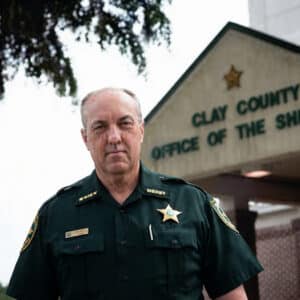
Clay County, Florida, Sheriff Rick Beseler had never handled a child abduction case and thought the chances it would happen were small. But the sheriff wanted to be ready just in case and during the past four years his deputies attended more than 20 training sessions on the AMBER Alert and missing child investigations. Six months prior to this reported missing child incident his office had a table-top exercise involving a child being abducted while walking home from school.

"It was very fortuitous we did this because we found a lot of problems in our system," said Beseler. "If we did not have the training and the table-top exercise we would have been lost." The exercise helped the sheriff's office develop a better leads tracking system and protocols for searching and canvassing.

The same day Somer went missing, the sheriff set up a command post at the local junior high school. More than 100 law enforcement officers from Clay County, two surrounding counties, the Florida Department of Law Enforcement, the U.S. Marshals Service and the FBI gathered for the first activation of the newly formed Child Abduction Response Team (CART). After eliminating all possibilities other than abduction, an AMBER Alert was issued at 10:45 a.m. the next day.

The CART had all the needed equipment, protocols and personnel in place immediately. "I had confidence because we had trained and learned from the AMBER Alert Training & Technical Assistance program offered through Fox Valley Technical College what ultimately can happen," said Beseler.

CART members called themselves Team Somer to connect with the family and community. They wore purple bracelets and gold pins with the Team Somer logo and placed a banner at the command post with Somer's picture that read "Remember this is why we are here."

More than 2,000 leads came in during the first 24 hours. Each investigative team had a member from every law enforcement agency to foster teamwork and prevent anyone's ego from getting in the way. "When other agencies come in you have to have trust," said Clay County Sheriff's Captain David Senters. "They have to trust that you aren't going to keep the good leads for yourself. You also have to have a plan and stick to that plan."

The Sheriff's Office had also developed a landfill protocol, and detectives searched every garbage truck. Somer's body was found the following day in a transfer truck 55 miles away in Folkston, Georgia. "If we didn't find the body, we would not have solved the crime," concluded Beseler.

"We would not know anything today. It would be a missing child buried under a thousand tons of garbage in another state."

Another key part of the child recovery plan was to foster good relations with the media and the victim's family. "You always want the family on your side," said Beseler. "We brought the Thompson family into our fold."

Diena Thompson, Somer's mother, issued this statement after her daughter was found: "I don't know how to describe the level of support from the Clay County Sheriff's Office. Deputies and detectives have been by my side and cried with me. The Sheriff has been there for support as well and has spared no expense in the search for Somer and now for the killer."

Just 19 days before the abduction, the Clay County Sheriff's Office had its budget cut by $1.75 million and 30 positions were eliminated. The sheriff had to solicit funds from other agencies and the community donated hundreds of thousands of dollars in goods and services. "I had nothing to pay these guys, and they were working around the clock," said Beseler.

The Sheriff also asked for the public's help to find the killer. A tip line was established so people could call in about anyone who may have made changes in their behavior, appearance or may have left the area unexpectedly. A total of 4,000 leads came in during the next five months including an early tip about Jarred Harrell.

As time passed national news organizations started doing critical stories about the investigation. Investigators were under intense pressure to resolve the case but they did not let it overshadow the need to conduct the investigation properly. On April 12, 2010, five months after Somer went missing, Harrell was arrested for the abduction, sexual assault, and murder of Somer Thompson. Detectives had followed Harrell for weeks and a DNA sample ultimately connected the 24-year-old to the crime.

Sheriff Beseler hopes other law enforcement agencies will learn from the Somer Thompson case about the need for training and having a well-prepared CART. He said a child abduction case will change a department–either for better or worse.

"There is no case that is going to generate the public pressure or the public interest like a missing or abducted child," said Beseler. "The pressure is unlike anything I have felt, and I have been in law enforcement for 36 years. It can be your finest hour, or it can be your worst nightmare. If you are not ready it will swallow you."