

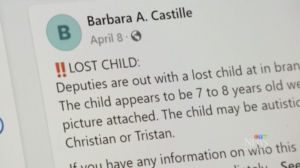
During Law enforcement authorities across Canada continue to raise concerns about fake missing children posts that are actually bait-and-switch scams. The posts, circulating on Facebook, tug at heartstrings by claiming a child is missing or has been found and needs help locating their family. After a post has been widely shared, scammers change it to promote their products or marketing schemes—sometimes with a link that, if clicked, allows access to the user’s computer or initiates a ransomware attack. The problem complicates legitimate Facebook posts about missing children. “That’s where this becomes insidious—because then people become nervous about sharing these things because they wonder if it’s real or not,” said David Gerhard, head of computer science at the University of Manitoba in Winnipeg. Scam posts are often shared in public Facebook groups and have the comments turned off. Legitimate missing person posts should be verifiable by police have a case report number, or be posted directly by a trusted organization or person, Gerhard said.
Canada tested Alert Ready, the country’s public alerting system, on May 4, 2022, during its Emergency Preparedness Week. The system is used for AMBER Alerts and other life-threatening emergencies such as tornadoes and wildfires. The test message was sent to television, radio, and compatible wireless devices. Canada regularly tests the system to confirm proper operation and create optimal preparedness in case of a real emergency.
The British Columbia mother of a woman who was found dead after she went missing wants Canada to create an “adult alert” for missing people over the age of 18. The body of Alina Durham’s 23-year-old daughter Shaelene Bell was discovered June 2, 2021, in a river four months after she went missing. Durham started an online petition to create Shaelene’s Missing Adult Alert so law enforcement can notify the public if an adult is missing and at risk of imminent danger or death.
Prince Edward Island (PEI) police in Canada are training to make sure they are prepared to use Alert Ready, Canada’s emergency alert system. The system delivers emergency notifications through radio and television bulletins as well as text messages. In the past only Emergency Management Office (EMO) officials could issue alerts but now police will able to use it. The change comes after an increase of incidents, including the 2020 mass shooting in Nova Scotia.
Law enforcement officials in Ontario, Canada, received an angry and threatening message after an AMBER Alert was issued for a missing 11-year-old. The child was found safe, but an expletive-filled message was sent to the Niagara Police Department’s social media inbox which took issue with the 4 a.m. alert. The department also received many messages of support in response to those who were angered by being awakened from the alert.
Thousands of Alberta, Canada, residents are speaking out against using the emergency alert for COVID-19 health measures because it may cause people to stop paying attention to other emergencies like AMBER Alerts. “I totally thought it was an AMBER Alert, I was panicked for whatever child was in danger and that was kind of my initial reaction to it,” said Kimberly Roy. Government officials say the alerts are needed to prevent further spread of the virus during the worst pandemic in this lifetime.
The Canadian Association of Chiefs of Police is endorsing a new search network to help in high-risk missing children investigations. The Missing Children Society of Canada’s (MCSC) Child Search Network provides police with the ability to share information and collaborate with one another and the public to help find high-risk missing children who do not meet the AMBER Alert criteria. The system has a database with real-time details about missing children cases. A date for release of the network is pending.
The Canadian Emergency Alert System was tested again on November 25, 2020, to make sure the emergency alerts are effectively reaching cellphones, radio, and TV stations. Past tests have revealed technical issues that led to notification delays. Authorities are still working to make sure the system is compatible with different networks and cell towers. The Alert Ready system has been used more than 170 times since it was launched on January 1, 2020, and its notifications can be sent by emergency management officials, warning of severe weather or when there is an imminent threat to life. The alerts have been valuable in warning the public and have also prompted the public to provide tips. The Ontario Provincial Police have also begun using Alert Ready to keep residents safe and notify the public about AMBER Alerts. The system has been used four times in Ontario since July 2020.
A U.S. hacker asserts he can break into the U.S. and Canadian Emergency Alert Systems and claims he could send a nationwide message through both systems. He said he was able to discover passwords from key manufacturers to access their systems. “Theoretically I can send anything from a volcano warning to the entire U.S. to an AMBER alert. If I really wanted, I could send out custom messages too,” he said. The hacker also warns of others with the same technological know-how.
In November 2020, hackers gained access to Florida’s emergency communications channel and sent an unauthorized message to the state’s emergency response team. “The fact that someone would use an emergency alert system for their own purpose, whatever it is, is both irresponsible and unlawful,” said Jason Mahon, communications director for the Florida Division of Emergency Management. The Florida Department of Law Enforcement has been asked to investigate.

The Native Women’s Association of Canada wants law enforcement to update how it applies the AMBER Alert criteria for cases involving Indigenous girls. The demand comes after a 14-year-old Indigenous girl was found in a wooded area with the suspect a week after she was missing. Law enforcement listed the girl as a runaway, but the group said an AMBER Alert should have been issued because of her age and the larger issue of missing and murdered Indigenous women and girls.
“They may have run away, but we have to look at it more in depth,” said Lorraine Whitman, president of the association. “We just can’t take it as a case that they wanted to leave. We have to look into it because there are more underlying areas that we have to investigate as well.”
The Royal Canadian Mounted Police (RCMP) in Nova Scotia is reviewing its protocols and policies.
Some Canadian jurisdictions are not interested in creating a national Silver Alert program for persons with Alzheimer’s disease or dementia. The Alzheimer’s Society of Canada (ASC) also opposes the idea. “We aren’t endorsing them because there isn’t robust evidence that they actually work,” said Mary Schulz, ASC Director of Education. Silver Alert advocates say the system could be a lifesaver for missing seniors. Bill VanGorder, spokesperson for the Canadian Association of Retired People (CARP) Nova Scotia said the alerts reinforce stereotypes. “We certainly don’t like the idea of suggesting that if you’re silver-haired, as I am, then somehow I’m going to automatically be prone to wander.” In 2017, Alberta and Manitoba amended their Missing Persons Act to allow for Silver Alerts. However, Alberta has yet to issue a Silver Alert.
Police chiefs in Ontario, Canada, oppose a plan to no longer require front license plates on vehicles. The law enforcement leaders say the plates are needed to track down vehicles, especially ones being sought in AMBER Alerts. “That’s not going to assist us in solving these crimes and perhaps saving these children in AMBER Alert situations,” said Jeff McGuire, Ontario Association Chiefs of Police Executive Director.
Canadian authorities tested the official emergency alert system on May 8, 2019, to make sure the loud notification tone and messages reached all cell phones. The emergency alerts are overseen by Alert Ready. Two earlier alerts went out at night, prompting a backlash from some Canadians who were wakened by the loud tones.
Ontario police are still asking the public to stop calling 911 to complain about receiving AMBER Alerts after an alert was issued in May and another one in July for two children believed to have been abducted.
One woman launched a campaign to fine people who call 911 to complain about AMBER Alerts. Dalia Monacelli is hoping her Change.org petition will convince the Ontario attorney general to levy fines against the complainers. “People have to understand that when they dial 911, they are taking time and personnel away from actual emergencies and that these actions could cost lives,” wrote Monacelli.
More than 100,000 people signed the petition as of August 8, 2019.
One AMBER Alert in Ottawa and another in Toronto prompted hundreds of 911 calls from residents angry about being disturbed by the alerts. Police in both cities urged citizens to stop tying up the emergency lines to make complaints. Prime Minister Justin Trudeau even issued a statement supporting AMBER Alerts to protect the safety of children.
Police in Ottawa sent an AMBER Alert at 11:30 p.m. on February 14 for an 11-year-old girl who was later found murdered. Residents called 911 and posted on social media how upset they were because the alert disturbed their sleep. A citizen tip helped police to capture the suspect. Most of the complaints were deleted from social media after numerous residents said they should be ashamed of themselves. “Losing a few minutes of sleep is nothing compared to the hell this family and those trying to help had to go through,” wrote one person.
The Canadian province of Manitoba is now using the Silver Alert to notify the public about missing elderly people or someone with dementia, autism or Down syndrome. Police keep a database of individuals who would qualify for a Silver Alert if they are missing. “The major criteria are that the person is missing, that they are vulnerable and that they have a cognitive disability,” said Winnipeg Police Inspector Kelly Dennison.
Canada has instituted changes to passport rules to protect children under the age of 16. The Canadian immigration minister can now issue a passport without application; and can refuse to issue or can revoke a passport to protect the child's safety. A child can now also apply for a travel document to escape abuse under the new rules.
Police in several Canadian cities tested a Silver Alert, a notification that would go out to a specific area when a senior citizen goes missing. Residents can opt-in to receive the alerts which are aimed at helping find lost seniors with Alzheimer's disease or dementia. Police teamed up with health and social services workers and volunteers during a day-long training exercise to test the new Silver Alert system.
Canada tested its new emergency alert system on May 14, 2018. The system sends messages, including AMBER Alerts, to all cell phones in the country. The Alert Ready system is similar to the U.S. Wireless Emergency Alert system. Testing identified a glitch of sorts, as some people thought an actual AMBER Alert had been issued and some areas did not receive an alert sound. “The review ultimately determined there was a gap created during a recent server migration,” said Royal Canadian Mounted Police Staff Sgt. Annie Linetau. “The test allowed us to identify a few issues, correct them, as well as implement a back-up system.”
While holding a cell phone when driving is illegal in most parts of Canada, the law does recognize the new Alert Ready system, allowing drivers to use their cell phones when alerts are issued. Most provincial laws currently allow drivers to use their cell phones to contact emergency services or to learn about an emergency in the driver's vicinity.
The Royal Newfoundland Constabulary (RNC) in Canada said a post about a fake AMBER Alert was shared nearly 5,000 times on Facebook in early March 2018. The post stated: “RNC have issued an AMBER Alert, please share. Last seen at Mount Pearl Summit Centre yesterday evening 7:30,” and included a photo of a young girl. The RNC is now investigating who made the false report.

A woman wearing a nurse's uniform walked into a hospital in Trois-Rivières, Quebec on May 26, 2014, and left with a baby who was born 16 hours earlier. The woman was not the mother of little Victoria McMahon and she drove away with the newborn in a red car with a sign that said "Baby on Board."

The hospital's security guards found a picture of the woman and staff members and patients provided details to municipal police about the suspect and her vehicle. Quebec AMBER Alert Coordinator Jean-Charles Benoit was contacted and he quickly determined the situation met the criteria for an AMBER Alert.
Quebec Provincial Police Sergeant Martine Asselin was at home when she got the call that an AMBER Alert was about to be issued. Asselin is the public information officer for her agency and she knew she needed to be ready to answer questions for the media. "The biggest challenge is to get the alert out as quickly as possible," said Asselin. "We have to be fast but the information has to be good."
This was the 10th AMBER Alert issued by the Quebec Provincial Police and every child from previous alerts had been recovered safely. Flyers with information about the latest alert went out to law enforcement, media, social media, transportation and other AMBER Alert partners.
"You have to be ready before it happens," said Asselin. "You have to have a protocol so everyone knows what to do."
They were trained and ready but everyone knew what was at stake. "Everyone is touched by this type of call," said Asselin. "It is their job but no one is immune to the emotions of a child needing help."
Charlène Plant and three friends saw the alert on Facebook and immediately joined the search. They recognized the suspect as a former neighbor and drove to her apartment and saw her car parked outside. "We just wanted to do something for the night, so we went out to find the car," Plant told a reporter.
They called the police and 50 minutes after the alert went out the baby was recovered safely and the suspect was in custody.
Not surprisingly, Victoria's mother, Mélissa McMahon, thanked everyone on Facebook. "The photo saved our daughter! In less than an hour, the photo was everywhere. You were more than thousands of people who shared the photo of this woman on social media. Know that it was this that saved her, our little Victoria. Every click, every share made the difference."
"The child was recovered safely and returned to her waiting parents within less than three hours," noted Canada AMBER Alert Coordinator Nancy Martin. "It was a proud moment for all involved."
Everyone involved in the Quebec AMBER Alert Program is also a big believer about the impact of social media. "Facebook was the reason this AMBER Alert was a success," said Asselin. "The fact that it went out on social media demonstrates that social media can really help in an AMBER Alert."
The use of social media and the fact it was the first time in recent memory that a child had been abducted from a hospital in Canada drew international attention to the case and the AMBER Alert system. "It was like a movie scenario," said Asselin. "We were very proud of the work by the police and we worked together as a team to use new tools to find a child."
Despite the success, Asselin said her agency will still look for new ways to help find abducted children. "We always can improve," she said. "We need to be sure we are on track and we need to make sure everyone is prepared."
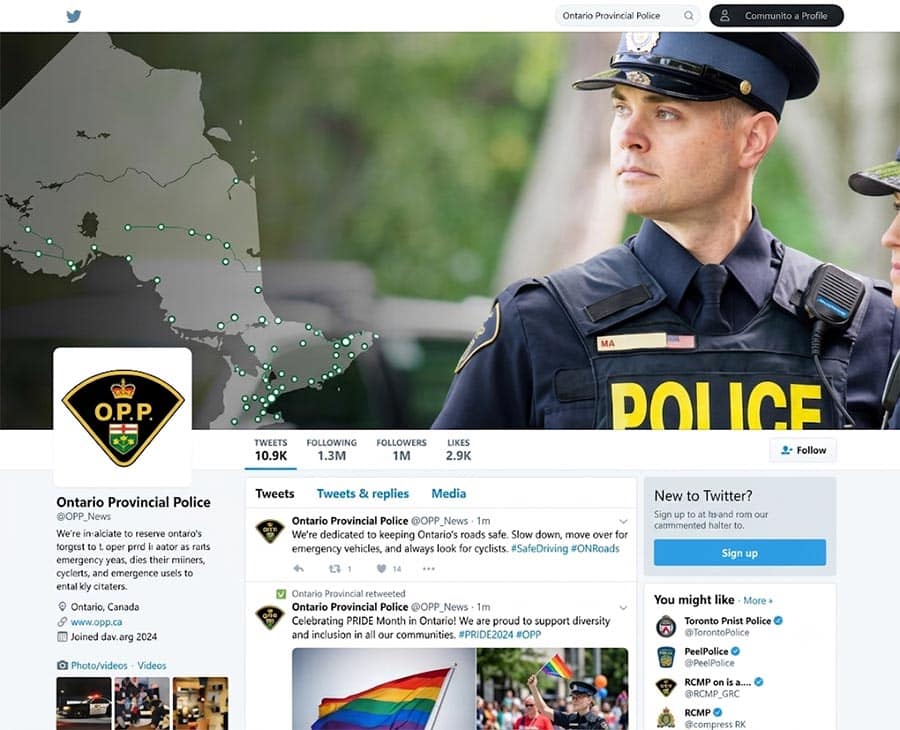
The Ontario Provincial Police (OPP) are now using Twitter and 511 road service to distribute details about an abducted child. By sending a tweet about an AMBER Alert, officers hope to reach thousands of cell phones and electronic devices within seconds. When motorists see an AMBER Alert on highway signs, they can dial 511 for more information about the suspect's vehicle and more. “The more tools we have available, the greater chance we have to safely recover a child who may be in danger,” said OPP Deputy Commissioner Brad Blair.

When Royal Canadian Mounted Police (RCMP) Constable Nancy Martin started working on Canada's AMBER Alert Program in 2009 she found the system working effectively but separately. She made it a goal to make the nation's child abduction alert program stronger than the sum of its parts.
“In years past, each province did its own thing, without any real knowledge of what other provinces were doing or how it could affect them,” said Martin. “Now, as people can travel more easily and children are often transported over provincial and even national borders, the need for cooperation and teamwork has an even greater importance.”
In 2010 the RCMP hosted the first National AMBER Alert Working Group (NAAWG) Workshop to bring all AMBER Alert partners together. All the provincial AMBER Alert coordinators and others met to discuss how they could improve the system to help recover abducted children.
Martin is the National AMBER Alert Coordinator and works closely with Sergeant Jane Boissonneault, the Missing Persons Clearinghouse Manager and the NAAWG Chair. They continue through online training courses and teleconferences and sending regular emails to update everyone about the latest tool or innovation.
“Without Martin's dedication to the AMBER Alert program, we would not have the 10 provincial programs running as smoothly and working together as well as they do,” said Boissonneault. “She is the ‘go to’ resource for inquiries about AMBER Alert from our partners across the country.”
The two officers have also worked with the provincial AMBER Alert programs to put protocols in place between provinces and states that border each other to clarify what will happen when a child is taken across the border.
“Nancy has always been quick to offer support during a provincial activation of an alert and she has been the unwavering champion for the program,” said Sgt. Steve Montpetit, Ontario Provincial AMBER Alert Coordinator. “She has been devoted to the AMBER Alert program and has provided a sound and consistent voice for the program on a national level.”
Martin said working with Boissonneault as a team has made significant improvements in the program, but being a mom is what keeps her motivated. “No parent wants to hear that politics or lack of preparedness stood in the way of their child coming home safely,” said Martin. “If I can help by providing avenues of training or the sharing of opportunities for improvement, I can't imagine not doing it. If we make it impossible for an abductor to hide, we make it possible for a child to be saved.”

