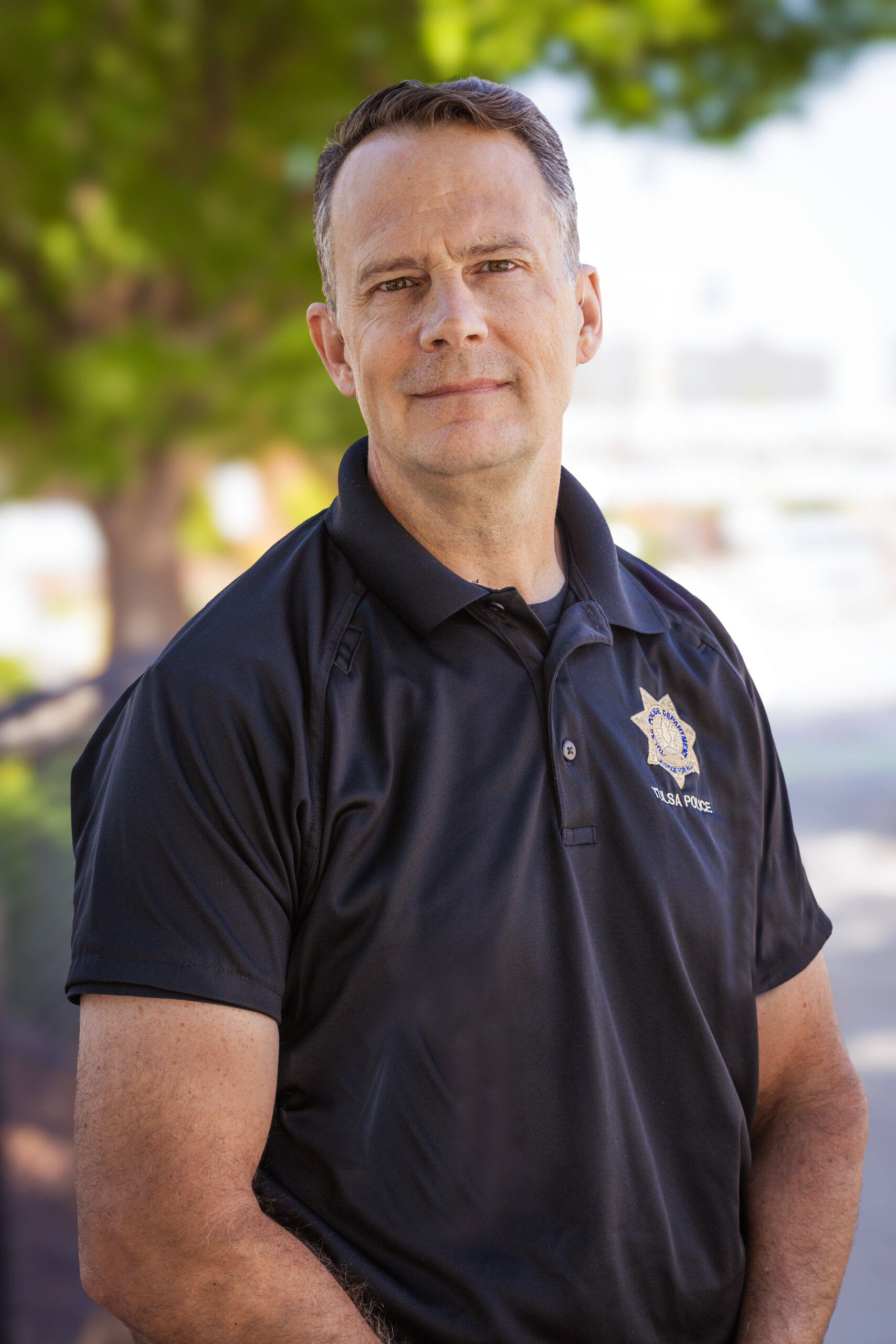
Lieutenant Chris O’Keefe appeared in several episodes of the A&E series “The First 48” driving fast, procuring warrants, and arresting violent criminals in Tulsa, Oklahoma, where he serves as AMBER Alert Coordinator for the Tulsa Police Department (TPD). Because of his expertise he’s now a TPD driving instructor. “It can be a little hairy sometimes teaching other people how to drive fast when you’re sitting in the passenger seat.”
By Denise Gee Peacock
Lieutenant Chris O’Keefe of the Tulsa, Oklahoma, Police Department (TPD) has a handful of cameo appearances in the reality-crime TV series “The First 48.” But off screen, the real-life search for bad actors and innocent victims has been his calling for several decades.
Much of O’Keefe’s 24-year TPD career has focused on the rapid identification and apprehension of homicide suspects and other violent criminals, most recently in the TPD’s Fugitive Warrants Unit. In April 2023 he began supervising the TPD’s Sex and Violent Offender Registration Unit, where he also serves as AMBER Alert Coordinator (AAC). As AAC, O’Keefe weighs missing child-related factors as they are known before deciding whether to contact Jason Matheson of the Oklahoma Highway Patrol to initiate an AMBER Alert in partnership with the Oklahoma State Bureau of Investigation.
We met the De Pere, Wisconsin, native at this year’s AMBER Alert and AMBER Alert in Indian Country Symposium in Washington, D.C. We reconnected with him in Tulsa to discuss his work.
What led you into law enforcement? I knew I wanted to get into public service, something to help people on a daily basis. Maybe I just read too many superhero comic books as a kid. But after getting a B.A. in sociology from St. Norbert College in De Pere, I did some law enforcement training at Fox Valley Technical College (FVTC) in Appleton before joining the U.S. Army. Then, when my wife was offered a job in Tulsa, I tapped into my FVTC training and Army experience to sign up for the TPD academy. I joined the organization in 2001.
Parental abductions are the most common and complex. We have to be careful with custody disputes—unless the parent indicates he might hurt the child. At that point, an AMBER Alert is clear.
Lieutenant Chris O’Keefe Tulsa Police Department
Sex and Violent Offender Registration Supervisor/AMBER Alert Coordinator
O’Keefe discusses an arrest warrant with his TPD colleagues during an episode of "The First 48."
TACTICAL TIP
“The U.S. Marshals are a great resource,” says O’Keefe, who has served on several U.S. Marshals Service (USMS) task forces. “At the recent [National AMBER Alert and AMBER Alert in Indian Country] symposium, Bill Boldin explained how they’re using their fugitive-search skills to find missing children. I hope people use them more. They’re always quick to offer their help to us, especially when we lack resources to conduct out-of-state investigations.”
How does being an AAC mesh with the other work you do for the TPD? It’s a natural fit. An AMBER Alert is essentially a manhunt, and I’ve developed an expertise in finding people. Now I oversee the process after countless directives to “Go, go, go—find them!” I also manage the sex offender registration process, and those are the individuals we look at right away whenever there’s a missing child case.
How many AMBER Alerts do you issue on average? In the last two years, we’ve issued about six AMBER Alerts. But I couldn’t even begin to count the number of times we’ve discussed if a missing child case should warrant an AMBER Alert, or an Endangered Missing Alert, or be addressed some other way.
What are your biggest challenges? One involves a perception that if we don’t issue an alert, we’re ignoring the situation. But truth is, we bring plenty of resources to bear to find a child. This was a topic of conversation at the recent AMBER Alert and AMBER Alert in Indian Country Symposium. There’s a lot we can do if a case doesn’t meet our criteria—issue social media posts, work with license plate readers, ping a cell phone. The case can get resolved even quicker if we have solid information to work with right away.
What guides your ultimate decision? I go by informed instinct, combining that with what I hear from people on the front lines—particularly the responding officers or in some cases our dispatchers, digging into what their first impression of the situation is, and whether they believe the child to be in danger. That’s why first-responder training is essential.
Do you enlist a child abduction response team (CART)? We have a call tree of people on our incident management team (IMT) who are paged during an AMBER Alert or Endangered Missing situation, and the IMT includes a crisis unit that focuses on child molestation cases. They’re truly an organizational force. We have an AMBER Alert Center within our headquarters and the IMT will use it as its command post, manning the phones, sorting through tips, procuring resources. All the tips flow through me and I decide the priority of them. We then keep track of who we’ve sent where to check out the tip, and I organize all that. We also try to keep the family as close as possible and have a victim advocate on hand.
What types of missing child cases are the most complex? Stranger abductions—the real nightmare ones, with no information on vehicles or suspects—are thankfully very rare. Parental abductions are the most common—and complicated. Generally, a parent can’t abduct their child if they have the legal right to be with that child, whether all the time or just some of the time. It’s only when the parent says they’re going to go harm themselves and/or the child that we immediately know it warrants an AMBER Alert.
What helps you navigate such complexities? If there’s even a chance that a parent could hurt the child, we’ll err on the side of caution and issue an AMBER Alert. The challenge lies within the legalities. We worry about unleashing the full force of law enforcement on a parent who hasn’t committed any crime. That can result in liability issues. And that’s where our training and experience have to come into play—and asking the right questions.
Being an AAC is stressful work. What motivates or inspires you? The times we’ve had AMBER Alerts I’m never short of help. It’s not just from the people on call; we see that every patrol officer is going to stop what they’re doing to help find the child. I also get calls from the regional sheriff’s department, Oklahoma Highway Patrol, FBI, and the U.S. Marshals. It’s amazing. I’m also grateful to have a family that’s been supportive of my work.
By Denise Gee Peacock
The 2025 National AMBER Alert and AMBER Alert in Indian Country Symposium, held February 25-26 in Washington, D.C., brought together nearly 200 state and regional AMBER Alert coordinators, missing person clearinghouse managers, Tribal leaders, and public safety officials from across the U.S. and its territories, including American Samoa, Guam, and Puerto Rico.
Presenters and speakers included more than two dozen subject matter experts in missing child investigations and rapid response teams, emergency alerting, law enforcement technology, and Tribal law enforcement. Special guests included four family survivors who shared their powerful stories—and lessons learned.
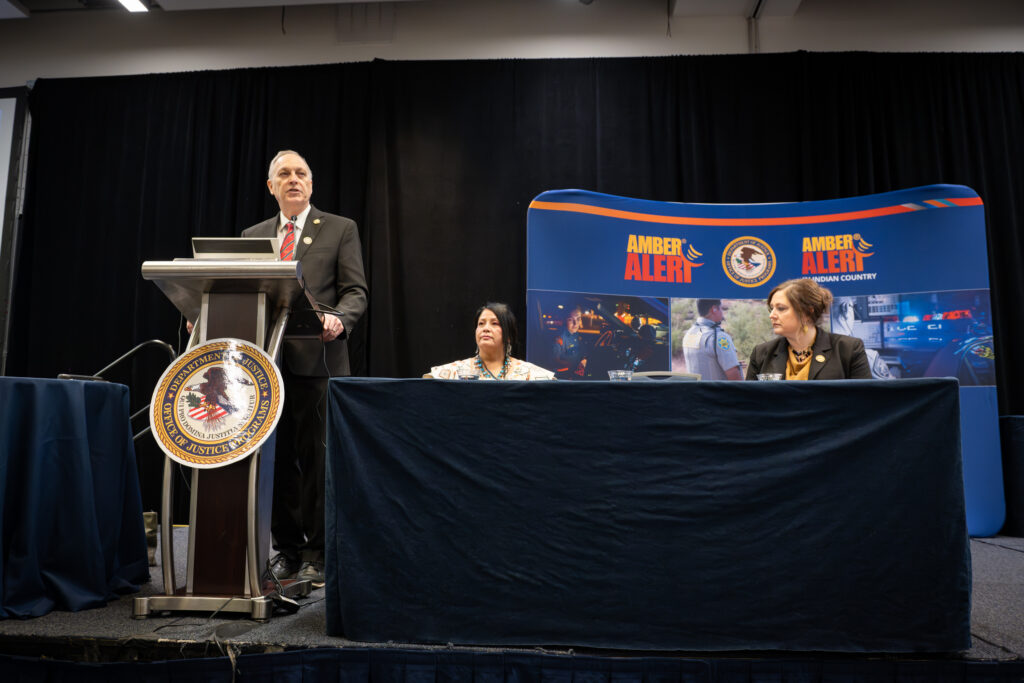
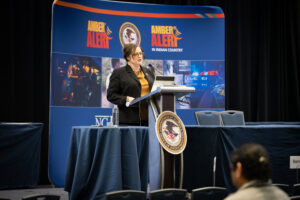
U.S. Representative Andy Biggs of Arizona addresses attendees at the 2025 National AMBER Alert & AMBER Alert in Indian Country Symposium in Washington, D.C.
Also there to address participants was Eileen Garry, Acting Administrator of the U.S. Department of Justice (DOJ) Office of Juvenile Justice and Delinquency Prevention, and U.S. Representative Andy Biggs of Arizona’s 5th Congressional District and co-sponsor of the Ashlynne Mike AMBER Alert in Indian Country Act of 2018.
The annual collaborative learning event is funded through the DOJ’s Office of Justice Programs and administered by the AMBER Alert Training & Technical Assistance Program (AATTAP) and its AMBER Alert in Indian Country (AIIC) initiative, both affiliated with the National Criminal Justice Training Center (NCJTC) of Fox Valley Technical College.
The symposium’s goal is to engage participants in discussing current issues, emerging technology, and best practices for recovering endangered missing and abducted children. Another objective is to improve the process of integration between state, regional, and rural communication plans with federally recognized Tribes from across the nation.
For the second year we enlisted the event management app Whova to help attendees plan their days, share their thoughts, and connect with each other. In keeping with that, we’ll let participants do most of the talking as we share event highlights.
This conference is a testament to the power
of collaboration. We’re here to bridge gaps,
share best practices, and innovate.
We’re here to hear the voices of those
who have experienced the unimaginable;
to honor their strength and resilience.
Janell Rasmussen
NCJTC Director / AATTAP Administrator
Never forget the difference you make in a child's
life. Ours is hard work, and sometimes gets us down.
But remember my family’s story. And never lose your
passion for keeping children safe.
AMBER Alert and Ashlynne’s Law
both save lives. Thank you for ensuring
your communities are prepared to
respond to every parent’s worst nightmare.
U.S. Representative Andy Biggs
Arizona's 5th Congressional District
I will continue to push forward and spread
awareness, particularly about Indian Country,
hoping that one day jurisdiction and sovereignty
will not play a role in the search for a child.
And that every Tribe will have a plan
in place if an AMBER Alert ever
has to be activated.
Sayeh [Rivazfar] is an incredible mother, an incredible warrior. Hearing her story was captivating, humbling, and gut-wrenching. As a mother of two young boys, I found her story beyond impactful. It provided a tangible sense of just how urgent it was to return home and continue the work.
Kelsey Commisso
Alerts Coordinator, Arizona Department of Public Safety
AMBER Alerts: To Activate or Not Activate was my absolute favorite session. Since I’m new to my position, it really made me think!
Whytley Jones
AMBER Alert Coordinator, Louisiana State Police
I’d never heard of the ‘Baby in a Box’ case [involving Shannon Dedrick], and the ending surprised me. I loved hearing the investigative lessons learned from it.
Michael Garcia
Detective, Honolulu Police Department, Hawaii
Pasco County, Florida, Sheriff’s Office Captain Larry Kraus did an excellent job in explaining the application, effectiveness, and obstacles of OSINT. He is super-smart and relatable to those of us who may be tech-challenged.
John Graham
Investigator, Taylor County (Texas) Sheriff’s Office
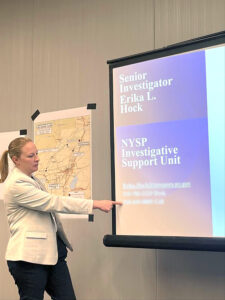
Erika Hock did a great job of presenting the Charlotte Sena case. Her humility shown through, especially when sharing the searching mother’s criticisms [of their alerting process] … and how she’s looking to implement some of the mother’s suggestions.
Ana Flores
Senior Case Manager, National Center for Missing & Exploited Children
SYMPOSIUM OVERVIEW The symposium featured 28 presentations and workshops on relevant and pressing topics within child protection—each meant to deepen attendees’ understanding of current challenges and solutions. Click here to see the full agenda and here to read the speakers’ bios.
FAMILYPERSPECTIVES
Pamela Foster: Keynote speaker (parental/ AMBER Alert in Indian Country focus)
Bill Boldin, Senior Inspector/National Missing
Child Program Coordinator for the U.S. Marshals Service (USMS), talks with attendees about how the USMS is helping find missing children.
Eileen Garry, Acting Administrator for the DOJ's Office of Juvenile Justice & Delinquency Prevention, thanks symposium participants for their child protection work.
AATTAP Administrator/NCJTC Director Janell Rasmussen welcomes 2025 Symposium participants.
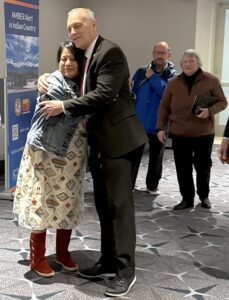
Pamela Foster shares a hug with U.S. Representative Andy Biggs of Arizona's 5th Congressional District.
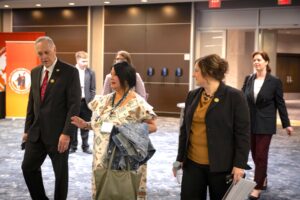
From left: Arizona Congressman Andy Biggs (5th District), AMBER Alert in Indian Country advocate Pamela Foster, and AATTAP Administrator/NCJTC Director Janell Rasmussen.
Knowing that Pamela Foster's daughter, Ashlynne Mike, loved butterflies, AATTAP Administrator/NCJTC Director Janell Rasmussen presented Foster with a meaningful gift. The sterling silver necklace features a butterfly with the name “Ashlynne Mike” intricately cut into its wings. The necklace was crafted by AATTAP-AIIC Project Coordinator
Alica Murphy Wildcatt, a member of the Eastern Band of Cherokee Indians.
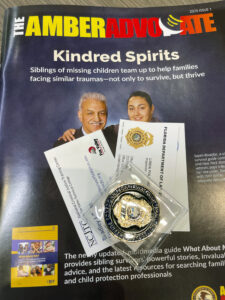
Sayeh Rivazfar is shown with her father on the cover of The AMBER Advocate. Numerous participants were moved to share their contact information with her—and their support.
Sayeh Rivazfar stands with a career shadowbox bequeathed to her by Florida Sheriff's Deputy Randy Mitchell. Mitchell had worked to see justice served after Sayeh was brutally assaulted and her sister, Sara, was murdered by a family friend in 1988. Mitchell was proud of Sayeh's decision to go into law enforcement.
Sayeh Rivazfar brought the blue and pink Punky Brewster tennis shoes she had on when she and her younger sister, Sara, were abducted and brutally assaulted in 1988. Sara did not survive.
Symposium participants lined up to thank childhood assault/abduction survivor Sayeh Rivazfar—who also is a law enforcement veteran—for her moving keynote presentation.
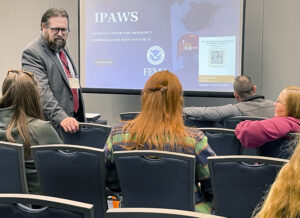
AATTAP Child Abduction Response Team (CART) Manager Derek VanLuchene visits with attendees before the IPAWS/emergency alerting workshop.
AATTAP Deputy Administrator Jenniffer Price-Lehmann, left, introduces Dr. Noelle Hunter before her powerful presentation on international parental child abduction (IPCA). Hunter's 4-year-old daughter, "Muna," was illegally taken by her non-custodial father to West Africa. She ultimately was able to return home, but only after a "full court press" by Hunter and others to make that happen.
Hawaii detectives Riley Borges and William "Billy" Oku share a friendly "mahalo" during a break.
"Finding Shannon [Dedrick] renewed our sense of hope that a child could be found alive—even after five days of searching," said
Dyana Chase (center), Special Agent/CART Supervisor,
Florida Department of Law Enforcement (FDLE)
Bill Boldin with the U.S. Marshals Service (left) talks with AATTAP Deputy Administrator Byron Fassett before the start of the symposium.
Desiree Young—mother of Kyron Horman, missing for nearly 15 years—expresses hope that she will learn more about her 14-year-old son's disappearance from his Oregon elementary school.
NCJTC Executive Director Brad Russ with OJJDP Acting Administrator Eileen Garry.
New York State Police Senior Investigator Erika L. Hock presented a study of the Charlotte Sena abduction case.
From left: FirstNet Authority's Jasper Bruner and Angel Benally join AATTAP's AMBER Alert in Indian Country Manager Tyesha M. Wood before the FirstNet-focused presentation.
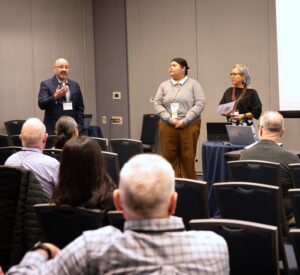
Symposium-goers filled numerous meeting rooms during the 2025 learning event.
Learning From Survivors: A Top Theme
Retired New York State Police Investigator Sayeh Rivazfar holds up one of the Punky Brewster tennis shoes she was wearing during an assault on her at age 8—a crime that also took the life of her younger sister, Sara (seen with her in the top photo, on right).
Sayeh Rivazfar’s life was forever changed on September 22, 1988. That was when her mother’s boyfriend took her, then age 8, and her 6-year-old sister Sara, from their home in Pensacola, Florida, drove them to a remote area, brutally assaulted them, slashed their throats, and left them to die. Sayeh survived; her sister did not.
While living with her father and brother in Rochester, New York, Sayeh chose to join the New York State Police. She has since retired after two decades’ work, but her child protection work continues.
“I decided early on not to let trauma take me down. I use it as fuel to help others.”
Rivazfar displayed a shadow box that belonged to Santa Rosa County (Florida) Sheriff’s Deputy Randy Mitchell. When assigned to her case, the new father was outraged over the pain inflicted on her and her sister. He and Rivazfar kept in touch over the years. “He was proud of my law enforcement career,” she said.
Then, in 2012, shortly before he died of cancer, she received a package from him—his “career in a box,” including his badge and shield, along with a poignant letter. “It means the world to me, as he did.”
Rivazfar with Randy Mitchell, who bequeathed her his “career in a box” (right).
'All Abductions Are Local'
Dr. Noelle Hunter with her daughter “Muna”
On New Year’s Day 2011, Dr. Noelle Hunter’s worst fear was realized: Her ex-husband had illegally taken their 4-year-old daughter to live in his home country of Mali, West Africa.
Thus began the college professor’s quest to have Maayimuna (“Muna”) returned to her—after nearly three years of “full-court press” work.
It’s now her mission to help others navigating the complex mire of international parental child abduction (IPCA).
As an AATTAP/NCJTC Associate, she also helps law enforcement understand how to best respond to IPCA cases. They also should understand this: “All abductions are local. The response a parent gets from that first call for help means everything.”
Click here to learn more about Dr. Hunter’s story—and a poignant encounter she had with a Maryland State Trooper.
Pamela Foster: ‘Indian Country Needs AMBER Alert’
Pamela Foster with daughter Ashlynne.
Pamela Foster—the mother of Ashlynne Mike, namesake of the Ashlynne Mike AMBER Alert in Indian Country Act of 2018—was introduced to Symposium attendees by U.S. Representative Andy Biggs of Arizona’s 5th Congressional District. Biggs worked with Foster, and Arizona Senator John McCain to ensure passage of “Ashlynne's Law” two years after her 11-year-old daughter’s abduction and murder on the Navajo Nation reservation in 2016.
The Act provides numerous resources to Indian Country to bolster Tribal knowledge, training, technology, and partner collaboration to ensure children who go missing from Native lands can be found quickly and safely.
“Those of you in Tribal law enforcement, if you haven’t already received training, please schedule it as soon as possible,” Foster said.“We need law enforcement on Tribal land to share information with outside agencies so they can quickly apprehend criminals. Every child has the right to feel safe and live life to its fullest, and my fight is based on what I have experienced as a mother and a parent. I don’t ever want what happened to me to happen to another person.”
Foster’s powerful presentation was a gift to all who experienced it. Then she was given a gift—which provided another moving moment.
Read about Pamela's message, and the gift in honor of Ashlynne, here.
From Resources to Technology: More Takeaways
Click each dropdown box below for highlights from top-rated workshops & events.
❖ Marshal More Support
U.S. Marshals Service Senior Inspector Bill Boldin (left) with AATTAP Deputy Administrator Byron Fassett
“We’re good at hunting down fugitives. We’re now putting that toward finding missing children. It’s not something we’re known for. But we want to focus our efforts on kids with the highest likelihood of being victimized, of facing violence.” – Bill Boldin, Senior Inspector/National Missing Child Program Coordinator, U.S. Marshals Service (USMS)
Proven track record: From 2021 to 2024, 61% of missing child cases were resolved within seven days of USMS assistance.
❖ Model CARTs
Leading by example:Read more about retired Captain Stacie Lick's CART success.
“Mandates are pathways to support.” – Stacie Lick, Captain (Ret.), Gloucester County (New Jersey) Prosecutor’s Office
Having a dedicated, well-trained child abduction response team (CART) is essential to finding a missing child, using all available resources, when every minute counts. But symposium-goers know that building and sustaining a CART are significant obstacles for agencies with slim staffs and budgets.
The CART experts from New Jersey and Florida who shared advice at the symposium have spent nearly two decades overcoming those challengesby thinking creatively and strategically, such as getting buy-in for the expansion of New Jersey's CARTs after the high-profile Autumn Pasquale casein 2012. Or by having a well-thought-through staffing and resource plan, one that can be applied multi-jurisdictionally.
As a result of Captain Stacie Lick’s efforts to compile CART best practices for Gloucester County, New Jersey now mandatesthat all 21 of its counties have an active CART that follows standardized policies and procedures, and learns from mandatory after-action reporting.In 2008, as Lick was building Gloucester County’s CART, she was greatly inspired by the Pasco County, Florida, Sheriff’s Office (PCSO) Missing Abducted Child (MAC) Team.
Each MAC deploys with a command post with a lead investigator assigned to it. It also has coordinators assigned to these critical tasks: leads management; neighborhood/business canvassing and roadblocks; sex offender canvassing; resources oversight; volunteer search management; search and rescue operations; logistics; public information and media relations; crime scene management; legal representation; analytics; and cybercrimes/technical support. A family liaison and victim advocate will also be on hand to provide valuable assistance.
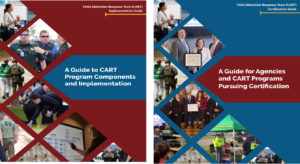
MODEL MANUALS Many of the best practices used by the New Jersey and Pasco County, Florida, CARTs can be found in two newly updated, downloadable CART resources—one on implementation and the other on certification—both produced by AATTAP.
❖ Maximize Messaging
Law enforcement technology consultant Eddie Bertola provided several updates related to the Integrated Public Alert & Warning System (IPAWS) overseen by the Federal Emergency Management System (FEMA).
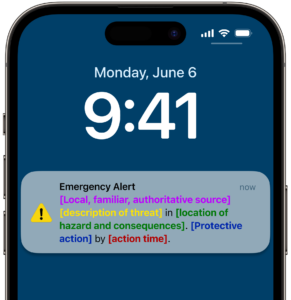
IPAWS’ new Message Design Dashboard provides templates to help law enforcement save time and ensure alerting consistency. It also offers message previews and testing.
The IPAWS portal that law enforcement uses to request AMBER Alerts now has a more streamlined interface. And within that is the new Message Design Dashboard (MDD), “an intuitive structure taking message crafting from 15 minutes to five minutes,” Bertola said.
MDD features drop-down menus that provide access to essential information that can be provided in a consistent manner and allow best usage of the 360-character limit within varied templates. It also can check for typos and invalid links and allow for easier message previews and system testing.
In other messaging news, another development is the Missing and Endangered Person/MEP Code, which was discussed in both the IPAWS workshop and updates session hosted by the National Center for Missing & Exploited Children (NCMEC).
Approved in August 2004, the addition of the MEP code to the Emergency Alert System (EAS) will enable law enforcement agencies to more rapidly and effectively issue alerts about missing and endangered persons by covering a wider range of ages and circumstances than AMBER Alerts alone. MEP alerts will utilize the same infrastructure as AMBER Alerts, thus allowing for widespread dissemination through various media channels.
❖ Intelligence Gathering
Captain Larry Krausof the Pasco County(Florida) Sheriff’sOffice, Research& Analysis Division, led the OSINT discussion.
Open Source Intelligence (OSINT) analysis is the leveraging of data from publicly available communication sources such as social media apps, messaging boards, gaming platforms, and the dark web. This research complements more traditional law enforcement databases (criminal databases, LInX, LeadsOnline) and can yield more real-time clues.
Bad actors are increasingly digital obsessed—and inadvertently work against themselves by taking photos and videos with geolocations and time stamps—while leaving other digital breadcrumbs.
OSINT analysts requires continuous training on ever-evolving information-sharing channels. They need to understand how to avoid gleaning intelligence that can be challenged in court (and potentially weaken public trust). All the while they have to battle data overload from the sheer volume of information that needs assessing.
It’s imperative that agencies hire professionals capable of navigating such complexities, Kraus said of intelligence analysts, whom he calls “the unsung heroes of law enforcement.”
FINDING LOST PERSON BEHAVIOR “I can’t believe I didn’t know about the Lost Person Behaviorresource,” one attendee said on Whova. Mentioned during Pasco County’s CART workshop, “LPB,” as its known for short, refers to the science- and data-based research of Dr. Robert J. Koester, whose field guide-style book outlines 41 missing persons categories and provides layers of behavior a person in each classification will likely follow.
❖ Welcoming U.S. Territories
Partners from American Samoa, Guam, and Puerto Rico traveled numerous time zones to attend this year’s symposium. “They really appreciated getting to meet their counterparts in the States,” said Yesenia “Jesi” Leon-Baron, AATTAP Project Coordinator for International/Territorial Programs (shown fourth from left).
❖ DNA: 'Give People Back Their Names'
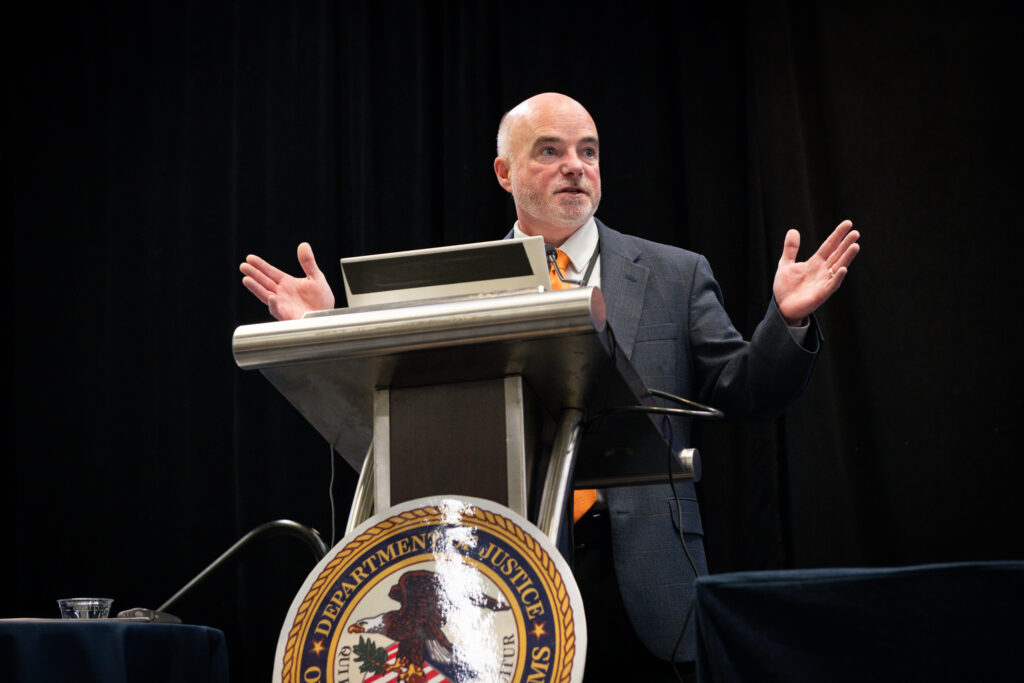
In his “Genetic Genealogy” presentation, crime scene forensics expert Ed O’Carroll cited several ways to “give people back their names,” adding “crime is more solvable than ever before.”
• Look afield: Re-open a case involving a long-term missing person, or one with unidentified human remains, and let the growing realm of reputable DNA labs help solve a crime once thought unsolvable. “Our labs are overworked, so we need to find more ways to use private ones,” O’Carroll said.
• Be a “genetic witness”: Encourage people on the genealogy sites GEDmatch and AncestryDNA to opt in to giving law enforcement a broader field of DNA samples to consider when trying to pinpoint someone who may have committed a violent crime. “As many of us know, CODIS only gives a hit about half the time we use it.”
• “Prevent tomorrow’s victim by solving today’s case today,” O’Carroll said. Know the latest technology, including Rapid DNA, an FBI-approved process that can provide a scientific correlation in as little as 90 minutes.
❖ Decoding Alerting Decisions
NEW COURSE OF ACTION: AATTAP’s new course, 911 Telecommunicators and Missing & Abducted Children (aka “911 T-MAC”) is a must for public safety telecommunicators and members of law enforcement who face public calls for help. Look for online and in-person training opportunities here.
This was the second year for AATTAP Region 1 Liaison and alerting veteran Joan Collins to teach the popular class designed to help attendees analyze real-world cases of missing children and AMBER Alert requests, noting the key factors within the criteria that determine when an alert is issued; evaluate AMBER Alert effectiveness by comparing case details with activation criteria and assessing factors that influence decision-making; and propose improved response strategies.
Collins’ style is to amiably pepper participants with more than a dozen widely varying missing child scenarios, often throwing daunting updates into the mix. Participants responded using the Poll Everywhere app, which tabulated their responses in real-time on a large viewing screen.
“The alerting sessions instill confidence in new AMBER Alert Coordinators as well as seasoned ones,” Collins said. “The scenarios spark vigorous discussions, and networking with fellow AACs underscores the fact that they all go through the same process, even if criteria may differ.”






 TACTICAL TIP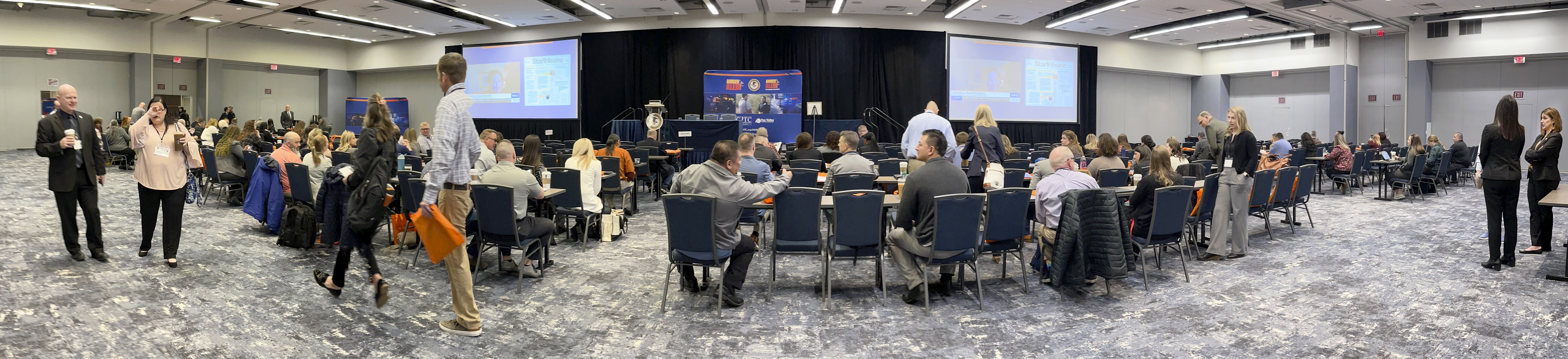

























 In his “Genetic Genealogy” presentation, crime scene forensics expert Ed O’Carroll cited several ways to “give people back their names,” adding “crime is more solvable than ever before.”
 • Be a “genetic witness”: Encourage people on the genealogy sites GEDmatch and AncestryDNA to opt in to giving law enforcement a broader field of DNA samples to consider when trying to pinpoint someone who may have committed a violent crime. “As many of us know, CODIS only gives a hit about half the time we use it.”