Ashley Johnson-Barr: The Girl Who Changed the Conversation
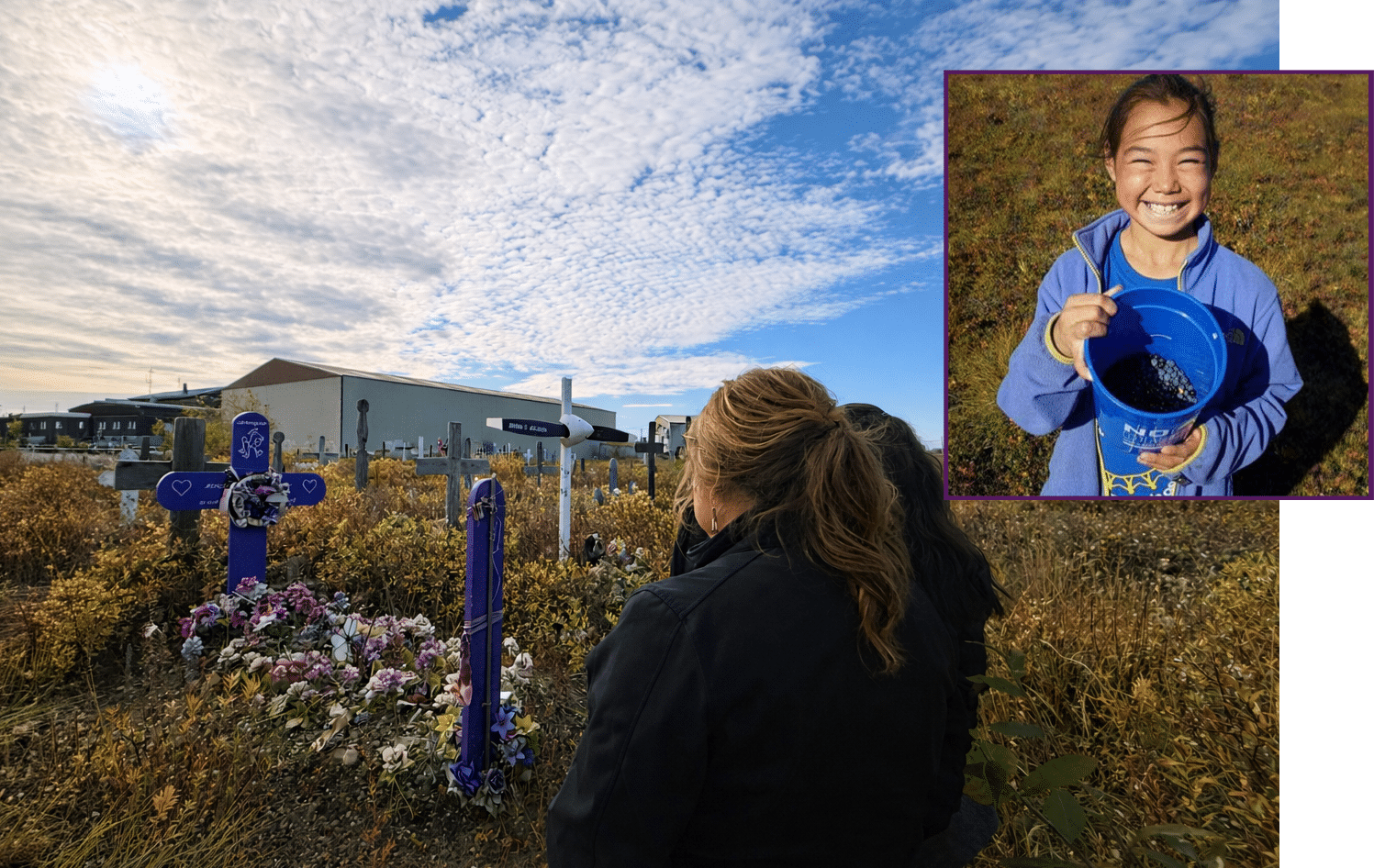
Left: Ashley Johnson-Barr's gravesite is awash in purple, her favorite color. Right: Ashley shows off a pail of just-picked blueberries.
By Denise Gee Peacock
On a quiet September evening in 2018, 10-year-old Ashley Johnson-Barr walked to a nearby park in Kotzebue, Alaska, to meet a friend—and never made it home.
“Her legacy will live on through educating others,” says her father, Walter “Scotty” Barr. “Keep your children close. Talk to them. Do what you can to keep them safe.”
Kotzebue is a predominantly Iñupiat community of about 3,200 residents, located above the Arctic Circle in the northwest part of the state—a place accessible only by air or water. It’s a closely knit region where neighbors know one another, where children play freely in the longsummer light, and where the idea of a child vanishing feels unthinkable.
Yet within hours of Ashley’s disappearance, that sense of safety was shattered. Residents fanned out across tundra and shoreline, and hundreds of volunteers joined the search.
Eight days later, Ashley was found dead on a remote stretch of tundra more than 2 miles from the playground where she was last seen. She had been sexually assaulted and strangled. “I screamed. I cried. It’s a moment that never leaves you,” Barr recalls. “Then I had to tell Ashley’s mother, her siblings, our family. That part was unbearable.”
Ashley’s death shocked Alaska. But it did something more: It forced the state, and the nation, to confront a painful truth long known within Indigenous communities. Her story was not an isolated tragedy. It was part of a pattern that many Alaska Natives were keeping silent about.
“No more silence,” Barr says.
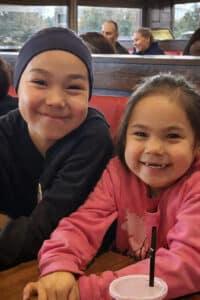
Ashley Johnson-Barr, left, with her sister Amber Kasey Barr
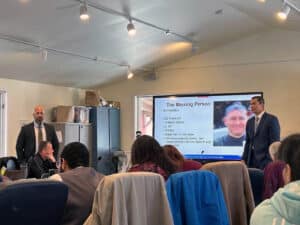
AMBER Alert in Indian Country Associates Matthew Hall, left, and Julian Garcia instructing in Chickaloon, Alaska.
From left: AMBER Alert in Indian Country Associates Walter "Scotty" Barr (father of Ashley Johnson-Barr) and Mary Ferguson with Janell Rasmussen and Tyesha Wood of the AMBER Alert Training & Technical Assistance Program/National Criminal Justice Training Center.
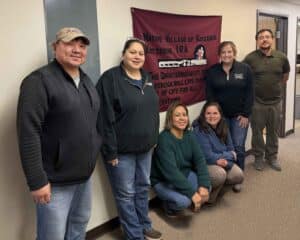
From left: Walter "Scotty" Barr, Saima Chase, Tyesha Wood, Mary Ferguson, Janell Rasmussen, and Steven Rexford at the Tribal government office in Kotzebue, Alaska.
Participants of a AMBER Alert in Indian Country class in Sitka receive a warm welcome from a local nonprofit representative.
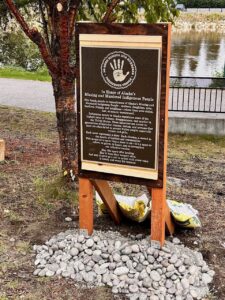
A Tanana Chiefs Conference dedication sign at a new missing and murdered Indigenous persons (MMIP) memorial in Fairbanks, Alaska.
Missing in Alaska: The Webinars
Join us for a powerful two-part webinar series exploring the challenges of responding to abducted and missing child cases in Alaska. Using the tragic case of Ashley Johnson-Barr as a catalyst for change, these sessions highlight the critical need for community coordination, law enforcement training, and the impact of the AMBER Alert in Indian Country (AIIC) program.
Part 1: The Case & Response (Recorded) Discover the investigative hurdles and the importance of rapid, coordinated action in rural Alaska. Available now on-demand.
Part 2: A Path Forward (Live Panel) Delve deeper into the systemic changes needed with a panel discussion led by AIIC Associate and Alaska Native Tribal Court Judge Mary Ferguson. Mark your calendar for May 19 and register!
Ashley's Legacy in Alaska
SB 151& Mandated Reporting: Ashley Johnson-Barr’s case accelerated the push for mandatory entry of missing persons into federal databases (NamUs), ensuring that jurisdictional lines no longer hinder the search for the vulnerable.
Investigative Specialization: There has been the recent establishment of dedicated MMIP investigators and Tribal Liaisons within the Alaska Department of Public Safety. These critical roles bridge the gap between rural communities and state resources.
Data Integration: The ongoing work to reconcile state records with community-led databases is a testament to the fact that better data leads to better outcomes.
A Crisis Hidden in Plain Sight
For decades, Indigenous communities across the United States and Canada have raised alarms about the disproportionate rates at which Native people—particularly women and girls—go missing or are killed.
In Alaska, those disparities are especially stark. The state is home to 229 federally recognized Tribes, and Alaska Natives make up about 19% of the population. Yet they account for a disproportionately high share of homicide victims and missing persons cases. (See “By the Numbers,” below left.)
Advocates refer to this epidemic as the missing and murdered Indigenous people (MMIP) crisis. It is not defined by a single case, but by a troubling pattern: disappearances that receive little media attention, investigations slowed by geography or jurisdictional complexity, and families left searching for answers.
Ashley’s case broke through that silence. “It made people feel not as safe here as they once felt,” Barr says. Her death also underscored the role of substance abuse, a factor in many violent crimes in Alaska. Barr says his daughter’s killer, Peter Wilson, admitted to being on a drinking binge at the time of the attack. Wilson would be sentenced to 99 years in prison.
Barr now speaks openly about the need for prevention, treatment, and accountability. He works as a trauma-informed trainer for the Southcentral Foundation of Kotzebue. He also serves as a surviving family member Associate for the National Criminal Justice Training Center (NCJTC) of Fox Valley Technical College. As part of that work, Barr’s insights are molding trainings hosted by NCJTC’s AMBER Alert Training & Technical Assistance Program (AATTAP) and its AMBER Alert in Indian Country (AIIC) initiative.
Jurisdictions, Geography, and Delays
To understand why cases like Ashley’s can be challenging to investigate, it is necessary to understand Alaska itself, not just its daunting geography but its legal landscape.
“Alaska is a Public Law 280 state,” says Mary Ferguson, a Tribal court judge for the Sitka Tribe. The MMIP advocate, who started her career in law enforcement, is a member of Alaska’s Tlingit people. “What that means is that Tribes don’t have criminal jurisdiction. We can only handle civil matters.”
That distinction is critical and widely misunderstood. “When someone goes missing, families often turn to the Tribe,” Ferguson says. “But legally, we can’t step in the way people think we can.” (See "ANCSA and PL-280 at a Glance," below.)
Unlike much of the Lower 48, Alaska does not operate under a traditional “Indian Country” framework. There are no reservations in the same sense (except for the Metlakatla Indian Community), no Tribal police forces with broad criminal authority, and no casino revenue streams funding public safety services.
The Alaska Native Claims Settlement Act (ANCSA) fundamentally reshaped land ownership and governance in the 1970s, creating a system that continues to affect how crimes are investigated. “All of that impacts what happens when someone goes missing,” says Ferguson.
The result is a system that can be difficult to navigate—not only for families, but for professionals working within it.
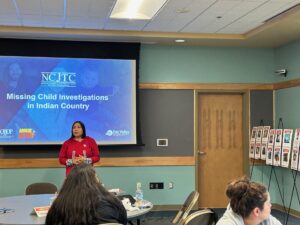
To help others alleviate uncertainty, Ferguson volunteers to help families struggling with MMIP issues while also serving as a NCJTC Associate who educates law enforcement professionals about the complexities faced by Alaska Natives. For AATTAP-NCJTC she is moderator of two webinars that focus on Ashley’s case. (See “Missing in Alaska: The Webinars,” above left.)
Even when jurisdiction is clear, the physical realities of Alaska present enormous challenges. The state spans more than 665,000 square miles, more than twice the size of Texas.
Within its extremely remote environs, many communities are accessible only by bush plane or boat. Law enforcement coverageis thin, and response times can stretch for hours, or days.
”When someone disappears in an Alaska remote area, with no road system, there could be a delayed response from law enforcement assigned to these vast regions, and specialized investigators can be hundreds of miles away,” says Tyesha Wood, Program Manager for AMBER Alert in Indian Country.
Weather adds another layer of unpredictability. “If conditions are good, it might take three hours by plane,” Wood says. “If weather prevents flying, it could take up to three days by boat.” Ferguson says these delays are compounded by infrastructure limitations.
“There’s only one crime lab for the entire state,” shesays. “Evidence, even digital evidence like cellphones, sometimes has to be sent thousands of miles away for analysis, as was thecase for Ashley’s phone.”
All of this takes time. And as Wood says: “In MMIP cases, those first hours can determine outcomes.”
Ashley’s case reflected those realities. While local responders and volunteers mobilized immediately, additional resources took days to arrive. Barr says forensic analysis of Ashley’s phone ultimately helped locate her, but it required time and specialized capabilities not always readily available in rural Alaska. “This is not unique to Ashley’s case,” Wood says. “It’s a structural issue.” For families, those delays can feel unbearable. “Families deserve urgency,” Ferguson says. “They deserve answers.” But she also emphasizes the complexity facing law enforcement.
“I want people to understand both sides,” Ferguson says. “These cases are extreme and complex. Resources are limited. Distances are vast. The constantly changing weather alone can stop searches entirely.”
Even when agencies are doing everything possible, Ferguson says, it may not feel that way to families waiting for answers.
“Sometimes people are doing everything they can, and yet it still doesn’t feel like enough,” Ferguson says. That’s because the system itself is stretched to its limits due to staffing shortages. And that tension between urgency and limitation sits at the heart of many MMIP cases.
Beyond geography, legal complexity can further slow investigations. Depending on where a crime occurs and who is involved, authority may fall to Tribal, state, or federal agencies. Those distinctions are often invisible to families, but their consequences are not. “This fragmentation can slow investigations and create confusion,” Wood says.
Data gaps have also long obscured the scope of the crisis. For years, cases involving Indigenous victims were underreported or inconsistently tracked. “But without reliable data, it’s difficult to allocate resources or identify patterns,” Ferguson says.
Advocates say these systemic challenges are compounded by a history of mistrust between Indigenous communities and institutions. And when cases receive limited attention from law enforcement or the media, mistrust can deepen.
A Community in Grief—and Action
In Kotzebue, Ashley’s death left a lasting scar. The search for her had united the community. The outcome brought collective grief and resolve. Vigils were held. Families shared stories of their own missing loved ones, many of which had gone unheard. Ashley’s name became a rallying point and March 12 (her birthday) was officially designated by the state legislature as Ashley Johnson-Barr Day.
Across Alaska, similar MMIP-focused conversations began to emerge. What had once been spoken quietly was now being said aloud. Her case helped prompt change, including expanded rapid-response efforts for missing children and increased federal attention to MMIP cases. Alaska also established a task force focused on the crisis, with an emphasis on improving data collection, coordination, and support for rural communities. (See “Ashley’s Legacy in Alaska,” below.)
The changes did not solve the problem, but they marked a shift “from awareness to action,” Barr says. One of the defining features of the MMIP crisis is invisibility. Many victims’ names are never widely known. Ashley’s is. “Names matter,” Wood says. “When names fade, so does urgency.”
Awareness, she says, creates pressure—and pressure leads to resources. “These stories matter. People are still going missing. When we keep telling these stories, it helps the entire system respond.”
Ashley’s story resonated beyond Alaska because it challenged assumptions about who is at risk. She was a child, not an adult. She was playing in a park, not living on the margins.
Barr works to ensure people remember Ashley as more than a victim. “She was a kind, loving girl,” he says. “She loved playing outside, going to church, swimming, and basketball. She loved picking berries, and purple was her favorite color.” (Read Barr’s moving online letter toAshleyto mark what would have been her 18th birthday.)
The Work That Remains
Despite increased awareness, factors driving the MMIP crisis continue to persist: geographic isolation, limited resources, jurisdictional complexity, and longstanding mistrust.
Advocates emphasize that awareness is only the beginning. “Families often don’t know what to do first,” Ferguson says. “They don’t know who to call or what steps to take.”
In some cases, she says, families feel as though nothing is happening at all. “I’ve helped families start searches, connect people to resources and push agencies to act,” she says. “Families are desperate, and they deserve someone who understands the system.”
Helping families understand how to advocate for themselves can make a critical difference. “That knowledge matters,” Ferguson says. “It can help bring attention and resources when they’re needed most.”
Ashley’s life was brief, but her impact endures. Her story brought national attention to an overlooked crisis. It helped change how missing-person cases are approached in Alaska. And it gave voice to families who had long been searching for answers.
“Every person matters. Every story matters,” says AMBER Alert in Indian Country Associate Alica Wildcatt. “Every life deserves to be seen.”
Barr agrees. “Ashley’s life will continue to have meaning as long as we honor it through action,” he says. “We need better training, stronger laws, and more prevention, not just awareness.”
By the Numbers
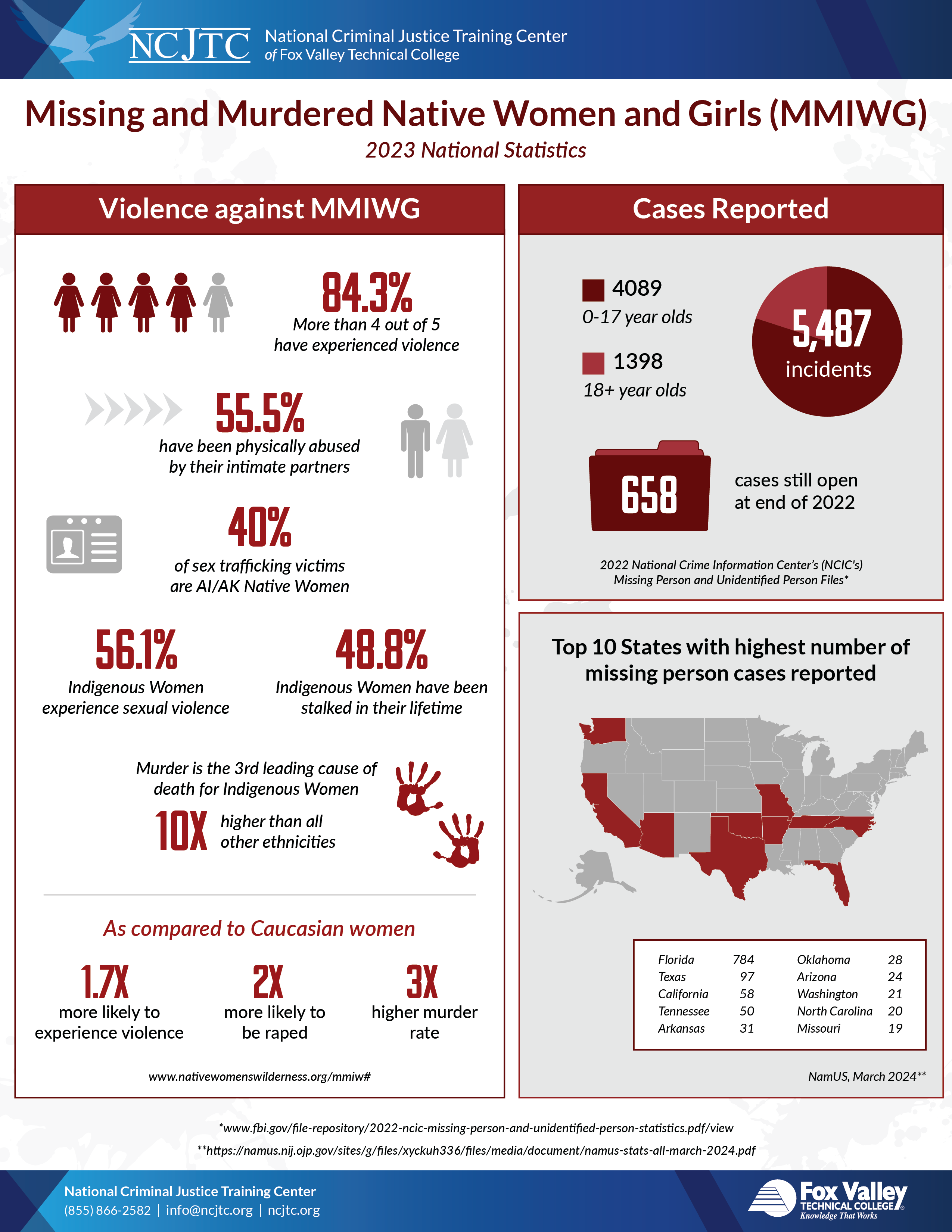
84.3% of American Indian and Alaska Native (AI/AN) women have experienced violence in their lifetime, while 56.1% of AI/AN women have experienced sexual violence.
Despite being only 19% of Alaska’s population, Native women represent 47% of rape victims and are 250% over-represented in domestic violence cases.
Alaska accounts for a disproportionate share of the 4,200 unsolved nationwide MMIP cases.
AN people make up about 40% of the United States’ 575 federally recognized Tribes.
May 5 is the National Day of Awareness for Missing & Murdered Indigenous People (#MMIP) / Women & Girls (#MMIWG) in the United States.
March 12 is officially recognized as Ashley Johnson-Barr Day (“Wear Purple Day”) in Alaska. Held on Ashley’s birthday, the day is meant to raise awareness about violence against children and community safety.
Ashley Johnson-Barr Disappearance Timeline
September 6, 2018:
5:20 p.m. Ashley Johnson-Barr’s convicted killer, Peter Wilson, departs on a four-wheeler after being asked by friend “JJ” to pick up her child and another child (not Ashley) at Rainbow Park (now the Ashley Johnson-Barr Memorial Park), about a mile away.
5:30 p.m. Ashley is last seen alive near Rainbow Park; her parents’ calls go unanswered.
7:20 p.m. After two hours, Wilson returns to JJ’s mother’s house without children, upsetting JJ.
LATE NIGHT JJ finds a ringing phone in Wilson’s jacket, sees Ashley’s name on it, and calls Ashley’s mother; Wilson claims he found it outside.Ashley’s father retrieves the phone.
September 7:
EARLY MORNING Wilson goes to the Kotzebue Police Department and repeats the story about finding the cellphone downtown. He says he’s heard about a missing girl by the name of “Chelsea” or “Kelsie.”
September 10:
Kotzebue Police and Alaska State Troopers ask the FBI to join the investigation.
September 13:
Wilson is interviewed by the FBI. He denies using a four-wheeler on Sept. 6; ever knowing Ashley (despite them being relatives who knew each other, Scotty Barr says); and ever seeing Ashley’s name appear on the cellphone while it was ringing.
September 14:
EARLY MORNING Guided by GCI records, investigators search an area 2 miles east of downtown Kotzebue.
4:15 p.m. Ashley’s body is found in remote tundra a quarter-mile off the road, concealed by thick brush and a depression in the ground.
ANCSA & PL280 at a Glance
The Alaska Native Claims Settlement Act (ANCSA) and the state’s PL-280 status leave Alaska Native communities with limited authority, fewer resources, and heavy reliance on a strained state system. These challenges help explain why MMIP cases like Ashley Johnson-Barr’s face extraordinary challenges from the start.
ANCSA: Land Without Reservations
The Alaska Native Claims Settlement Act (ANCSA) was passed in 1971 to resolve land ownership in Alaska.
What it did: Replaced reservations with Native-run corporations; transferred 44 million acres and nearly $1 billion to those corporations; and made most Alaska Native land corporate-owned, not Tribal or federal.
Why it matters: Most of Alaska is not “Indian Country.” Tribes do not control land the way reservations do, and Tribes lack the type of funding and authority that is common in the Lower 48.
Impact on MMIP cases: ANCSA limits Tribal control over land and resources, complicating coordination when someone goes missing and reducing the tools Tribes have to respond.
PL-280: Why Jurisdiction Works Differently in Alaska
Public Law 280 (PL-280) is a federal law passed in 1953. Alaska became a mandatory PL-280 state in 1958.
What it means: The State of Alaska has primary criminal jurisdiction; Tribes do not have criminal authority (Tribal courts only handle civil cases); federal law enforcement plays a limited role.
Why it matters in missing-person cases: Tribes cannot lead criminal investigations or detain suspects (local police or Alaska State Troopers are responsible), and in some rural areas responders may be hundreds of miles away.
The impact: PL-280 limits Tribal sovereignty and local response, leaving families dependent on an often under-resourced state system—especially during the critical first hours after someone goes missing.
Working for More Just MMIP Investigations
Effective law enforcement response to the missing and murdered Indigenous people (MMIP) crisis requires moving beyond standard procedures toward active coordination and trust-building.
Acknowledge the Scale: Alaska Native women and girls are disproportionately affected, though men and elders are also victims. Understanding this systemic context is vital.
Turn Awareness Into Action: Awareness only protects families when combined with cultural respect, specialized training, and rapid collaboration.
Respond Immediately: Never assume a disappearance is voluntary. In rural Alaska, distance and weather already cause delays; do not add to them by waiting to engage search resources.
Prioritize Accurate Data: Ensure cases are entered into the NCIC quickly with correct racial and Tribal identification to prevent the historical issue of misclassification.
Act Despite Jurisdictional Complexity: Do not let confusion over Tribal, state, or federal authority stall an investigation. Initiate the response first, then coordinate with agencies like the FBI or State Troopers.
Build Community Trust: Past neglect has created reporting hesitance. Overcome this by partnering with Tribal leaders and providing families with regular updates, even when there is no new information.
Partner With Families: Treat families as essential sources of information rather than obstacles. Avoid victim-blaming language and take their concerns seriously.
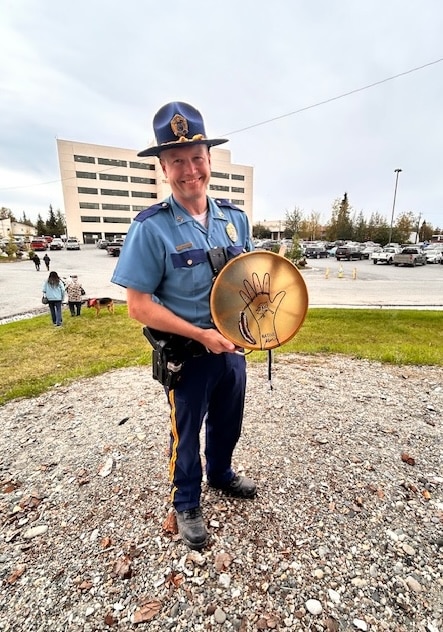
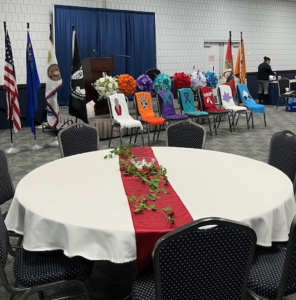
Members of AATTAP’s AMBER Alert in Indian Country (AIIC) team attended a powerful missing and murdered Indigenous persons (MMIP) memorial bench dedication in Fairbanks, Alaska, hosted by the Tanana Chiefs Conference. The event brought together families, Tribal leaders, and community members to honor the lives of those tragically taken or still missing. The dedication included heartfelt speeches and the reading of 48 names, each one representing a person, a story, and a life stolen. “We are committed to working with our partners to ensure that every community has the resources to respond swiftly when a child goes missing and to honor those we’ve lost by protecting those still with us,” said AIIC Program Manager Tyesha M. Wood. Added AATTAP Administrator/National Criminal Justice Training Center Director Janell Rasmussen, “Being surrounded by families and communities who carry such a deep pain and resilience is a powerful reminder of why we do this work.”
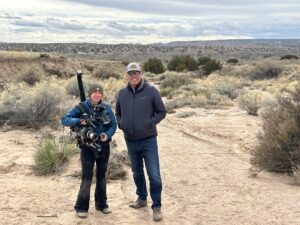
Three new online videos highlighting the AMBER Alert in Indian Country (AIIC) initiative can be a powerful resource for Tribal communities and law enforcement. The short videos—which are available to watchon the AIIC website—highlight the importance of enhanced training and collaboration to help save children’s lives. Tribes can use the videos to gain a better understanding of the AMBER Alert system and their community’s preparedness. The videos are also a tool to encourage relationship-building among Tribes, state agencies, and law enforcement. In the videos, Tribal law enforcement and government leaders from around the United States share how the AMBER Alert system is vital to helping find missing and abducted children quickly and safely. The videos also show the value of multijurisdictional collaboration and response preparedness in Tribal communities. An AMBER Alert Training & Technical Assistance Program (AATTAP) AMBER Alert in Indian Country (AIIC) team worked with an Indigenous-led production company on filming in New Mexico. AIIC is part of the National Criminal Justice Training Center (NCJTC) of Fox Valley Technical College.
Implementing AMBER Alert plans in Indian Country plans comes with unique challenges: jurisdictional rights, infrastructure and resources limitations, crime reporting complexities, the need for cultural understanding, and multiagency collaboration.
AATTAP’s AMBER Alert in Indian Country (AIIC) initiative is a bridge meant to overcome such issues—and this subject is at the core of our ongoing series, “Voices from AMBER Alert in Indian Country.”
The compelling endeavor, filmed in New Mexico by the Indigenous-led film company Bravebird, focuses on “opening eyes, finding resources and forming lasting partnerships to ensure every person matters,” says Janell Rasmussen, Director of the National Criminal Justice Training Center and Administrator of the AMBER Alert Training & Technical Assistance Program (AATTAP). – Denise Gee Peacock
By Denise Gee Peacock
Our children are the heart of our communities—the keeper of our legacies. But sometimes the unthinkable happens. A child goes missing. And in those desperate moments, every second counts. So do AMBER Alerts.
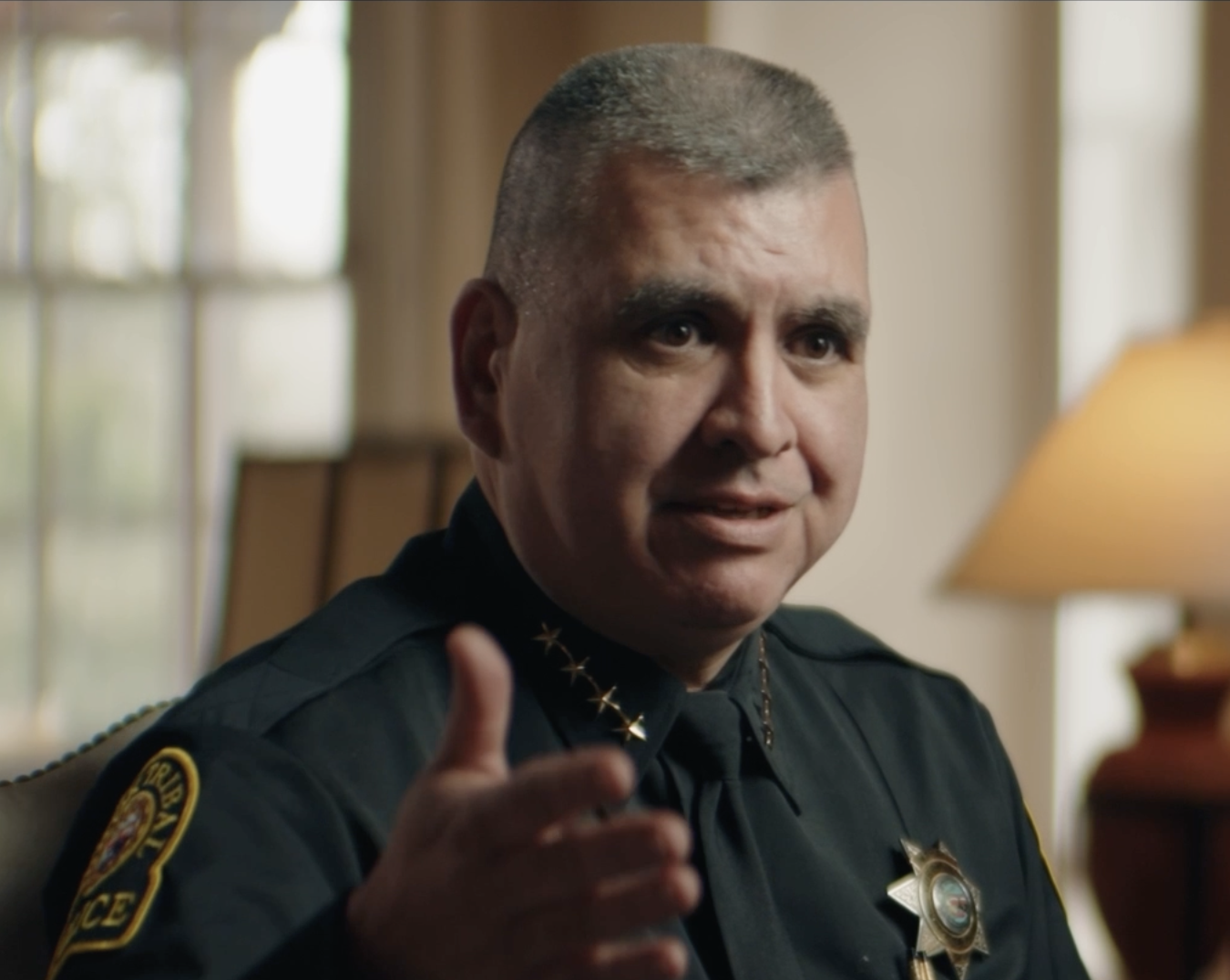
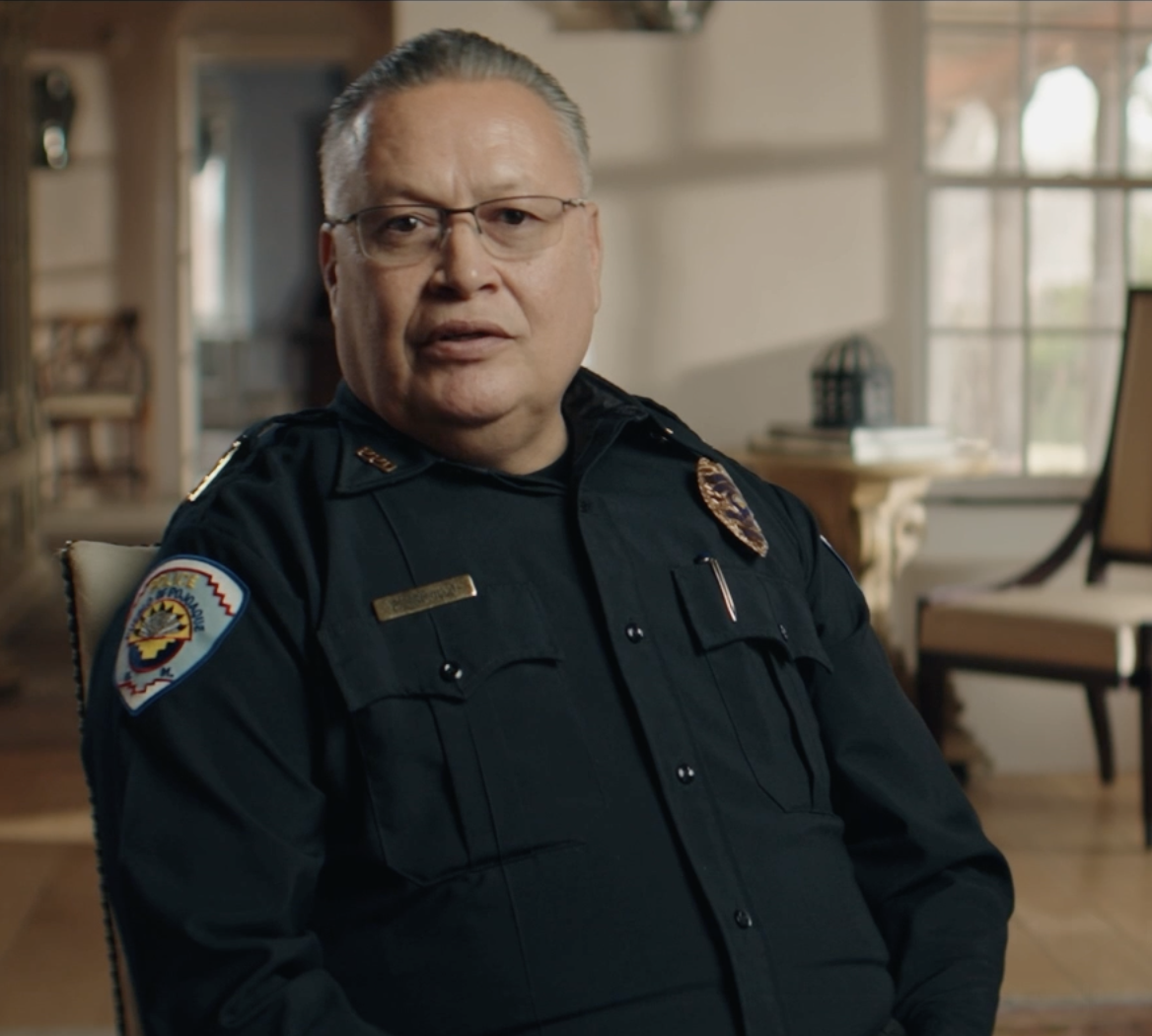
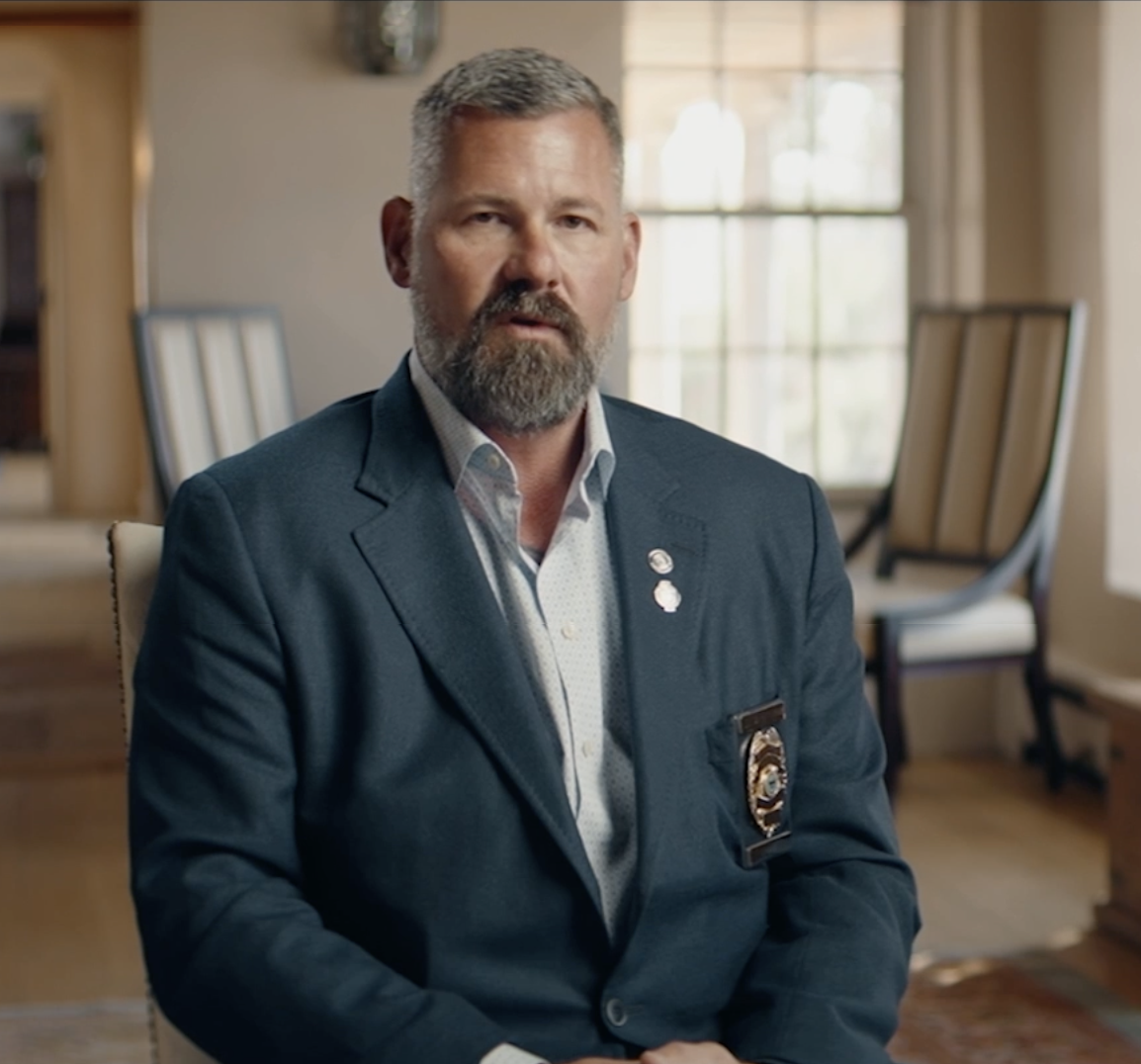
Thus begins a new eight-minute AMBER Alert in Indian Country-focused video filmed in Santa Fe. It is the longest of three videos that focus on AMBER Alert being a lifeline—a rapid response system that mobilizes entire communities to help find missing and abducted quickly and safely.
In Indian Country, implementing AMBER Alert comes with unique challenges: jurisdictional rights, infrastructure and resources limitations, crime reporting complexities, and the need for cultural understanding and multiagency collaboration.
The AMBER Alert in Indian Country (AIIC) initiative—part of the AMBER Alert Training & Technical Assistance Program (AATTAP) of the National Criminal Justice Training Center (NCJTC) of Fox Valley Technical College—is a bridge meant to overcome such issues.
“We all have a role to play in protecting our children,” says NCJTC Director and AATTAP Administrator Janell Rasmussen. “By working together, we can ensure that every community in Indian Country has the resources and support they need to implement AMBER Alert effectively.”
A Pueblo of Pojoaque smudging ceremony took place to bless the occasion and its participants.
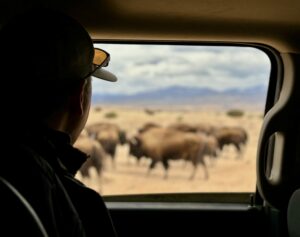
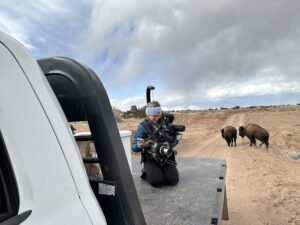
A member of the Bravebird film crew looks out at bison en route to Santa Fe.
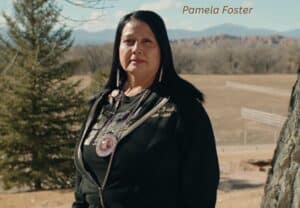
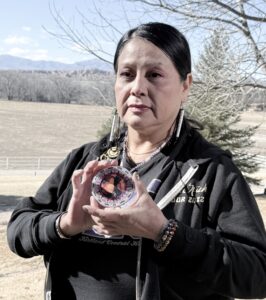
Pamela Foster holds a medallion necklace showing her and her daughter Ashlynne.
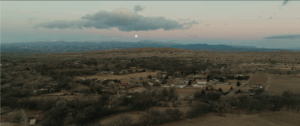
Sunrise over Santa Fe.
A member of the Pueblo of Pojoaque Police Department answers a call for help.
Filming took place on the Pueblo of Pojoaque.
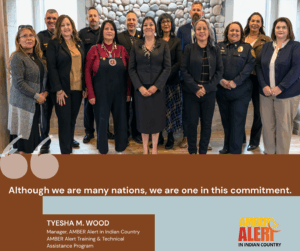
Members of Tribal police departments from across the nation greeted each other on the first day of filming.
Deputy Chief Taylor Patterson of the Miccosukee Tribal Police in Florida answers questions during filming of the new videos.
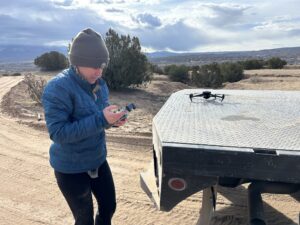
Director of Photography Ashley Siana operates a drone over the Santa Fe landscape.
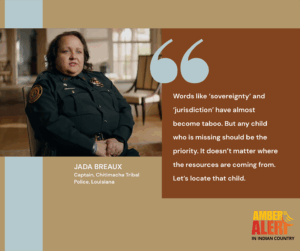
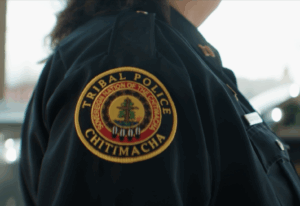
Chitimacha Tribal Police Captain Jada Breaux sits for questions during filming.
Video participants, members of the film crew and AMBER Alert in Indian Country team members enjoy some down time.
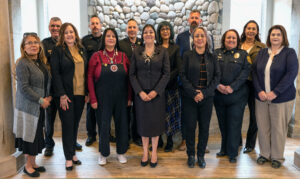
Following completion of the video filming, all those involved gathered for a group photo.
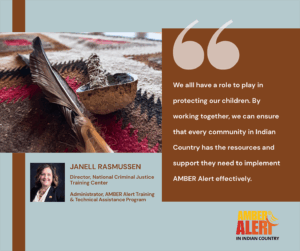
We all have a role to play in protecting our children. By working together, we can ensure that every community in Indian Country has the resources and support they need to implement AMBER Alert effectively.
Janell Rasmussen Director, National Criminal Justice Training Center / Administrator, AMBER Alert Training & Technical Assistance Program
Although we are many nations, we are one in this commitment.
Tyesha M. Wood Manager, AMBER Alert in Indian Country initiative/AMBER Alert Training & Technical Assistance Program
The goal of the new video (one of three in total) and AIIC training, is to:
Cultivate awareness and build knowledge of available resources and support systems for Indian Country.
Encourage American Indian/ Alaska Native (AI/AN) communities to implement effective response plans.
Help Tribes understand the basics of the AMBER Alert system and evaluate their community’s preparedness.
Promote the relationship-building between AI/AN, state agencies, and law enforcement.
Emphasize the need for cultural awareness in handling missing/ abducted children cases.
Build agency among AI/AN communities to take proactive measures to safeguard their children—and their children’s children.
The AATTAP-AIIC team worked with two Indigenous filmmakers who form the heart of Bravebird, a company that regularly collaborates with the nationally respected marketing firm 6 AM. (See the sidebar “Telling Stories,” below.) Both firms are based in Wisconsin, and both “were perfect to work with based on their understanding of the sensitivity of this story,” says Tyesha M. Wood, Program Manager for AATTAP’s AMBER Alert in Indian Country initiative.
“We wanted to bring together voices of child protection officials from Tribes across the nation—law enforcement leaders and others who could feel comfortable in expressing what their concerns are and how the AMBER Alert in Indian Country program has helped them. And how it can help others too,” Wood says.
The video was filmed on the Pueblo of Pojoaque reservation, known to have existed since 500 AD. The New Mexico Tribe played host to the video’s participants, who came from northern California, south Louisiana, northern Florida, and all points in between.
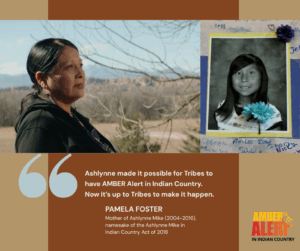
AIIC’s main champion in the video series is Pamela Foster, who figured prominently in the first video produced for the initiative after passage of the Ashlynne Mike AMBER Alert in Indian Country Act of 2018. Foster is the mother of Ashlynne, who on May 2, 2016, was abducted—along with her brother Ian—and murdered in a remote area on the Navajo Nation. Ian managed to escape and run several miles to seek help. But while Ashlynne’s parents made frantic efforts to locate her, misunderstandings and jurisdictional hurdles on the reservation prevented an AMBER Alert from being issued until the next day, robbing authorities of critical hours in their search efforts.
“On that day, a part of me died, and life has never been the same,” Foster says. But it also propelled her to lobby forlegislative change that would prevent another Tribal family from experiencing what hers did.
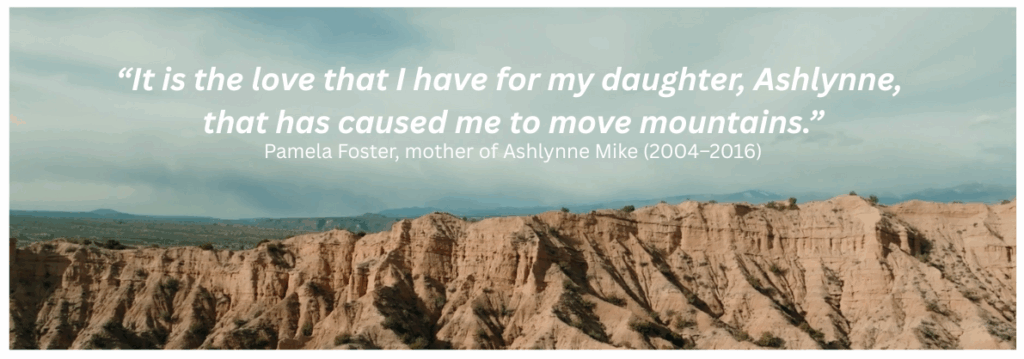
“I made a promise to Ashlynne that I would do my part to fix the loophole that exists in the system,” Foster says. “I would fight with every fiber of my being to bring AMBER Alert to Indian Country.”
The video underscores the urgency of implementing AMBER Alerts through the lens of law enforcement professionals and others working on the front lines of protecting Tribal children.
“For far too long, an epidemic has been playing out in Indian Country as it relates to missing and murdered Indigenous children, adults, wives, relatives, brothers, and fathers. And it is a monster,” says Major Nathan Barton of the Pueblo of Pojoaque Police Department.
In the video, Foster makes a direct appeal to Tribal leaders. “If you haven’t already received the AIIC training, please reach out. Thanks to Ashlynne’s law, we can work with you to establish an AMBER Alert plan,” she says. “What’s more, the training is free and accessible, and it’s adaptive to your needs. We just need more Tribal participation for this to be effective.”
After the process, Foster had this to reflect on: “Sitting with the Tribal leaders and law enforcement officials who participated in the shoot was heartening. I was happy to hear them talk about how vital it is to protect our children on and off the reservation, and they each came with a powerful message to share,” she says. “It was good to see that we are building a connection with one another, and others—and that we are committed to being supported and heard.”
Contact your local Tribal leaders to discuss the importance of having a response plan in place.
"Ashlynne's love is like a bright light that shines over Indian Country." —PAMELA FOSTER
Words like ‘sovereignty’ and ‘jurisdiction’ have almost become taboo. But any child who is missing should be the priority. It doesn’t matter where the resources are coming from. Let’s locate that child.
Jada Breaux Captain, Chitimacha Tribal Police (Louisiana)
You don’t have to do it alone. Tribes across the U.S. are willing to share what works in getting AMBER Alert in Indian Country.
Greg O'Rourke Chief, Yurok Tribal Police Department (California)
When missing children go silent, it’s a scream you cannot hear. Reach out to the AMBER Alert in Indian Country program nowto be prepared.
Joshua Keliikoa Public Safety Manager, Rincon Band of Luiseño Indians (California)
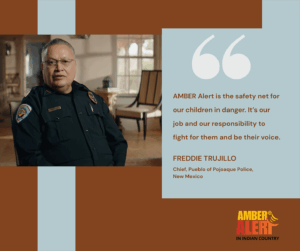
AMBER Alert is the safety net for our children in danger. It’s our job and our responsibility to fight for them and be their voice.
Freddie Trujillo Chief, Pueblo of Pojoaque Police (New Mexico)
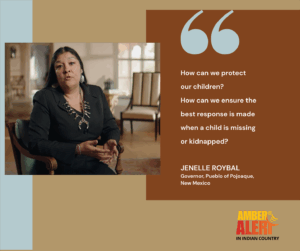
Howcanwe protect our children? How can we ensure the best response is made when a child is missing or kidnapped?
Jenelle Roybal Governor, Pueblo of Pojoaque (New Mexico)
Whenachild goesmissing I can see the hurt in their family’s eyes. Thatempowers ourteamtowork quickly, and diligently, on their behalf.
Nathan Barton Major, Pueblo of Pojoaque Police (New Mexico)
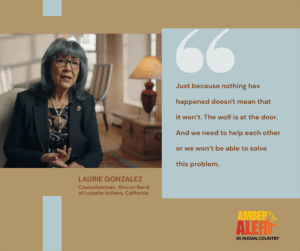
Just because nothing’s happened doesn’t mean it won’t. The wolf is at the door. And we need to help each other or we won’tsolve this problem.
Laurie Gonzalez Councilwoman, Rincon Band of Luiseño Indians (California)
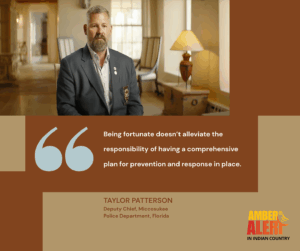
Being fortunate doesn’t alleviate the responsibility of having a comprehensive plan for prevention and response in place.
Taylor Patterson Deputy Chief, Miccosukee Police Department (Florida)
'Telling Stories With Care, Authenticity & Dignity'
The Bravebird crew in Santa Fe: Director Alex Miranda (far left), Director of Photography Ashley Siana, Director of Photography James Kwan, Sound Engineer Michael Twombly, and Producer Tim Peters.
The new video’s director, Alex Miranda, and producer, Tim Peters,are the principals of Bravebird, an Indigenous-led filmmaking group based in Wisconsin that specializes in telling the stories of Indian Country.
“For us, and our families and communities, it’s important to share our stories with care, authenticity, and dignity," Miranda says.
One aspect of their work that shines through: “The land. Mother Earth,” he says. “She helps us realize that stories such as Ashlynne’s will never be forgotten.”
Bravebird was enlisted by the 6 AM Marketing team, also based in Wisconsin, for the care the group takes with delicate subject matter.
“Aaron [Hughes] and Laura [Fernandez] at 6 AM made this very easy,” Miranda says. “Everything was well thought through. We’re so complementary in our skills with each other. That just creates a very holistic experience.”
The goal was to create an emotional hook, front and center, explains 6 AM Creative Director Hughes. “That really starts with Pamela Foster [Ashlynne’s mother]. That’s what puts everybody in their seats paying attention at the start of this because of her experience,” he says. “Everything about her makes you pay attention.”
Foster was appreciative of the care that Bravebird and 6 AM crews devoted to helping her talk through the worst thing in life she has ever experienced: Ashlynne’s abduction and murder.
Says 6 AM Account Manager Laura Fernandez, “We had to make sure from the beginning that we had a deep understanding of Pamela's story, the [AATTAP-AIIC] program and the issues surrounding it, and the importance of those we would be speaking to—to try not to create the narrative,” she says. “It was a weight of emotional importance unlike anything I've ever done.”
Hughes adds: “We all felt like we were assembling something that could profoundly alter the course of someone’s life,” Hughes says. “If one child’s life can be spared because an AMBER Alert is in place, think of the ripple effect that will have. What a tremendous gift to participate in something like that.”
By Denise Gee Peacock
May 5 is designated as the National Day of Awareness for Missing and Murdered Indigenous Persons (MMIP)/Missing and Murdered Indigenous Women and Girls (MMIWG). The day serves as a national call to action to end violence against Indigenous communities and to support families and communities impacted by the MMIP/MMIWG crisis.
Funded by the U.S. Department of Justice in support of the Ashlynne Mike AMBER Alert in Indian County Act, the AMBER Alert Training & Technical Assistance Program’s AMBER Alert in Indian Country (AIIC) initiative is committed to helping American Indian and Alaska Native Villages (AI/AN communities) combat the crisis by providing no-cost training, technology assistance, and numerous resources.
AIIC Program Manager Tyesha Wood
AMBER Alert in Indian Country Program Manager Tyesha Wood, and Project Coordinators Dave Chewiwie, Amy Hood-Schwindt, and Alica Murphy Wildcatt—are continually on the road meeting with federally recognized Tribes throughout the nation.
Their Indigenous heritage and law enforcement experience help them connect on multiple levels with AI/AN law enforcement and community leaders during AMBER Alert implementation meetings and child abduction tabletop exercises (CATEs). They also assist with specialized and/or customized training, partner outreach, and more.
“While our team proudly supports MMIP/MMIWG Awareness Day, our commitment extends beyond May 5,” says Program Manager Wood, a member of the Navajo Nation. “Every day we stand with the families of missing and murdered Indigenous people who are still seeking answers. We encourage everyone to listen and help people with cases that are unreported or under-investigated. Every voice matters—and every story deserves to be heard.”
AIIC Project Coordinator Alica Murphy Wildcatt
Behind every missing or murdered Indigenous relative “is a family waiting, a community grieving, and a life full of potential that deserves to be seen and protected,” says Wildcatt, a member of the Eastern Band of Cherokee Indians.
Much like her AIIC colleagues, “I see firsthand how our systems have the potential to fall short. Delayed responses, jurisdictional barriers, and a lack of urgency can put Native lives at risk. We can’t let our relatives become statistics. The MMIP/MMIWG movement matters because it is about justice, yes, but it’s also about love, dignity, and the right to be safe in our own homeland.”
AIIC Project Coordinator Dave Chewiwie
Children are precious in Native communities, but they also are vulnerable to “those who may be looking to abduct them, to exploit them,” says Project Coordinator Dave Chewiwie, a Pueblo of Isleta member. “We have to have effective programs and plans in place to safely recover them if they go missing. We are all stakeholders in the security of our children in Indian Country.”
Project Coordinator Hood-Schwindt, a Yavapai-Apache member, believes “an ongoing lack of thorough investigations into MMIP cases, combined with the impunity of perpetrators, has fueled a vicious cycle, one we need to break. We have to provide comprehensive investigations, meaningful prosecutions, and ensure there is justice for every stolen Indigenous life.”
AIIC Project Coordinator Amy Hood-Schwindt
While significant progress has been made in the last five years, much still needs to be done, Wood says. “We must work in unity, share resources and coordinate efforts, and carry hope that we will find, or find answers for, our missing and murdered Indigenous relatives.”
Wildcatt believes that “working together, we can confront this epidemic. We can invest in community-driven solutions, and build systems that ensure safety, accountability, and justice.”
The disproportionately high rate of violence experienced by Native American families is unacceptable. Through continued collaboration with American Indian and Alaska Native Tribes, we are dedicated to alleviating this crisis in a meaningful—and lasting—way.
JANELL RASMUSSEN Director, National Criminal Justice Training Center
Administrator, AMBER Alert Training & Technical Assistance Program/AMBER Alert in Indian Country initiative
‘Not Afraid’
AIIC Associate Jen Murphy helped produce an award-winning short film that turns a lens on the MMIP/MMIW crisis.
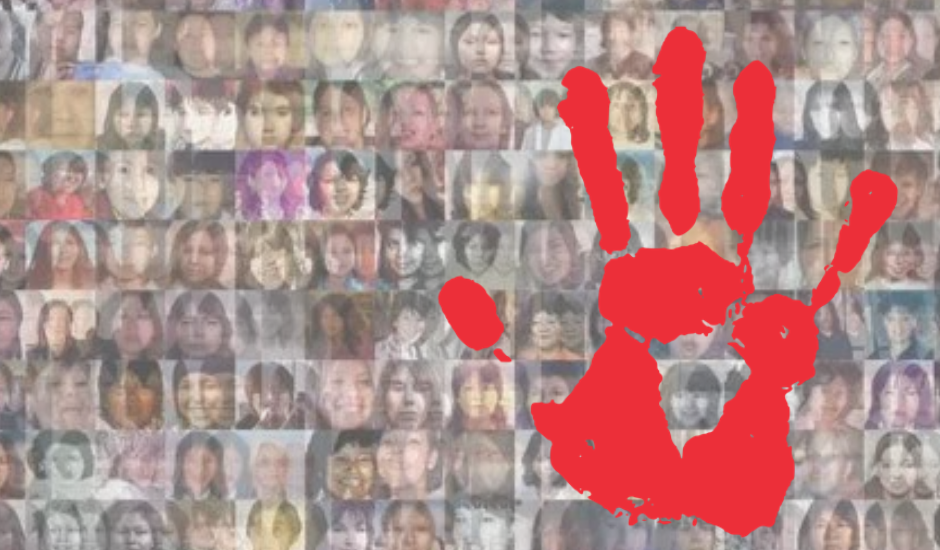
Jen Murphy is a photographer, artist, member of the Chippewa Cree Tribe in Montana, an AATTAP-AIIC Associate, and one of the more prominent faces of MMIP/MMIW awareness work. The above photograph of her with a red handprint over her mouth—symbolizing the silencing of voices—spans billboards across the Great Plains “to bring attention to issues that need to be talked about,” Murphy says.
Central among those issues is the disproportionate rate of violence, abduction, and murder experienced by women and people in the U.S. and Canada.
Another way Murphy aims to turn people’s attention to the MMIP/MMIW crisis is through a children's book she produced in 2024. Learn about and purchase More Like Herhere.
Murphy also served as executive producer for the short film “Not Afraid,” previously featured on Omeleto.
At just under 10 minutes, the film provides an intimate and powerful portrait of a young Native American woman navigating the grief of losing a loved one to the MMIW crisis. It captures both personal heartbreak and the deep resilience within Indigenous communities, and aims to be a stirring call to remembrance, justice, and healing.
Starring JaShaun St. John (“Songs My Brothers Taught Me”), the film offers a powerful, intimate look at a growing injustice impacting Indigenous families across North America.
“Not Afraid” was awarded the Indigenous Film and Culture Award from Windrider Film Showcase that runs with the Sundance Film Festival.
The film’s director, Michaela Bruce, says of Murphy—and their storytelling mission—“I feel on the deepest level that we have a responsibility to support vulnerable women through all means available to us, including the arts.”
“When we have the ability and resources to support an important work,” Murphy adds, “it is always the right thing to do.”
“The red hand over the mouth stands for all of our missing sisters who are not heard.”
JEN MURPHY
AMBER Alert in Indian Country Associate / artist and filmmaker
Get the Facts About MMIP / MMIWG
Indigenous people—especially women and girls—experience significantly higher rates of violence, murder, and being reported missing compared to other groups.
Find the latest statistics from the FBI here and view the National Criminal Justice Training center infographic (shown below right; click photo to enlarge).
Learn more about national MMIP/MMIWG efforts here and here.
Access the DOJ resource When a Loved One Goes Missing: Resources for Families of Missing American Indian and Alaska Native Adults (shown below left) here.
Moved to Act: AIIC Team Participates in Ashlynne Mike, MMIWG Events
Walking the Walk for Ashlynne Mike & MMIP/MMIWG Awareness
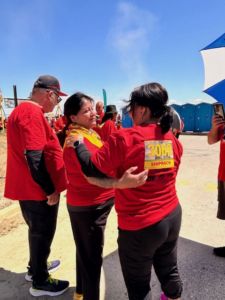
Alica Murphy Wildcatt, Project Coordinator for AATTAP’s AMBER Alert in Indian Country (AIIC) initiative, participated in the Ashlynne Mike Memorial Mile Walk & Run held in Shiprock, New Mexico, on May 2.
The event drew 111 people—the largest number of participants to date. Attendees walked and/or ran in honor of Ashlynne—namesake of the Ashlynne Mike AMBER Alert in Indian Country Act of 2018, which the AIIC initiative works to support.
The event also served to raise awareness of Missing and Murdered Indigenous Women & Girls (MMIWG) National Day of Awareness May 5.
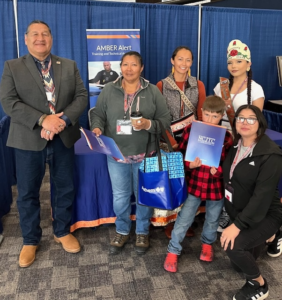
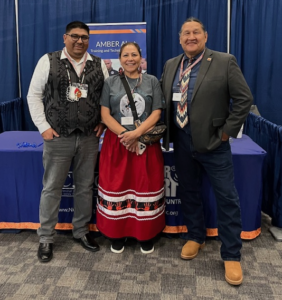
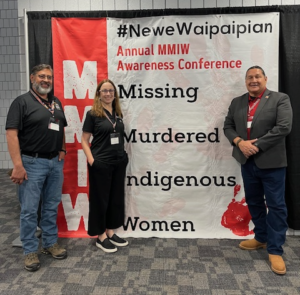
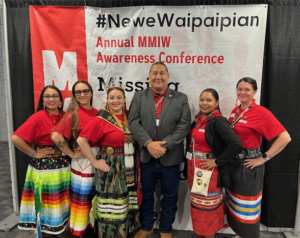
AIIC Project Coordinator David Chewiwie attended the Newe Waipaipian Missing and Murdered Indigenous Persons (MMIP) and Women (MMIW) Native Conference May 3–7 in Elko, Nevada. The conference drew numerous Indian Country Tribal leaders, Native advocates, law enforcement partners, and community members from throughout Nevada.
Chewiwie gave a presentation about the AIIC, and oversaw the information table for the National Criminal Justice Training Center/AMBER Alert Training & Technical Assistance Program/AIIC initiative, which provides a variety of free training, resources, and technological assistance to Native communities. (Learn more at here.)
“AMBER Alert in Indian country was very well received by conference organizers and attendees,” Chewiwie said. “We’ve already received an invitation to participate in next year's conference.”
By Denise Gee Peacock
While searching for their missing child, parents carry a heavy load—assisting law enforcement, rallying media and public interest in the case, and working to keep food on the table—all while not completely unraveling. But another group of family members is also struggling: the missing child’s siblings.
As sibling survivor Trevor Wetterling recalls, “People would always ask, ‘How are your parents doing?’ And I’d think, ‘What about me? Don’t they care how I’m doing?’ ” Meanwhile, he says, “I’d come home from school, and everyone was sitting around being quiet. No one would tell me what was going on.”
Like other sibling survivors, Trevor’s feelings stem not from self-centeredness, but from a need to validate his own trauma, his own sense of worth.
Trevor is the brother of Jacob Wetterling, an 11-year-old who was kidnapped at gunpoint by a masked man in 1988. Trevor was with Jacob when the abduction occurred, making the ordeal even more traumatic. The Wetterling family spent nearly three decades searching for Jacob until 2016, when his killer divulged to law enforcement where the boy’s body could be found. This, of course, came as another blow.
Trevor and his sisters, Amy and Carmen, are three of 16 sibling survivors of missing children willing to talk candidly about the challenges they faced—and sometimes continue to reckon with. If struggling siblings are lucky, they’ll find support from well-trained professionals. If they’re even luckier, they’ll find strength from those who truly understand their needs: Fellow survivors—whom Zach Svendgard calls “our chosen family.”
Zack is the brother of Jessika Svendgard, an honor student who, at age 15, left home after receiving a bad grade. Alone and vulnerable, she was lured into the hands of sex traffickers until she could break free from her abusers. Zack appreciates Jessika’s strength—and works to share it. “The world is a heavy thing to try to balance all on our own shoulders,” he says. “But powerful things can happen when kind people are enabled to take action.”
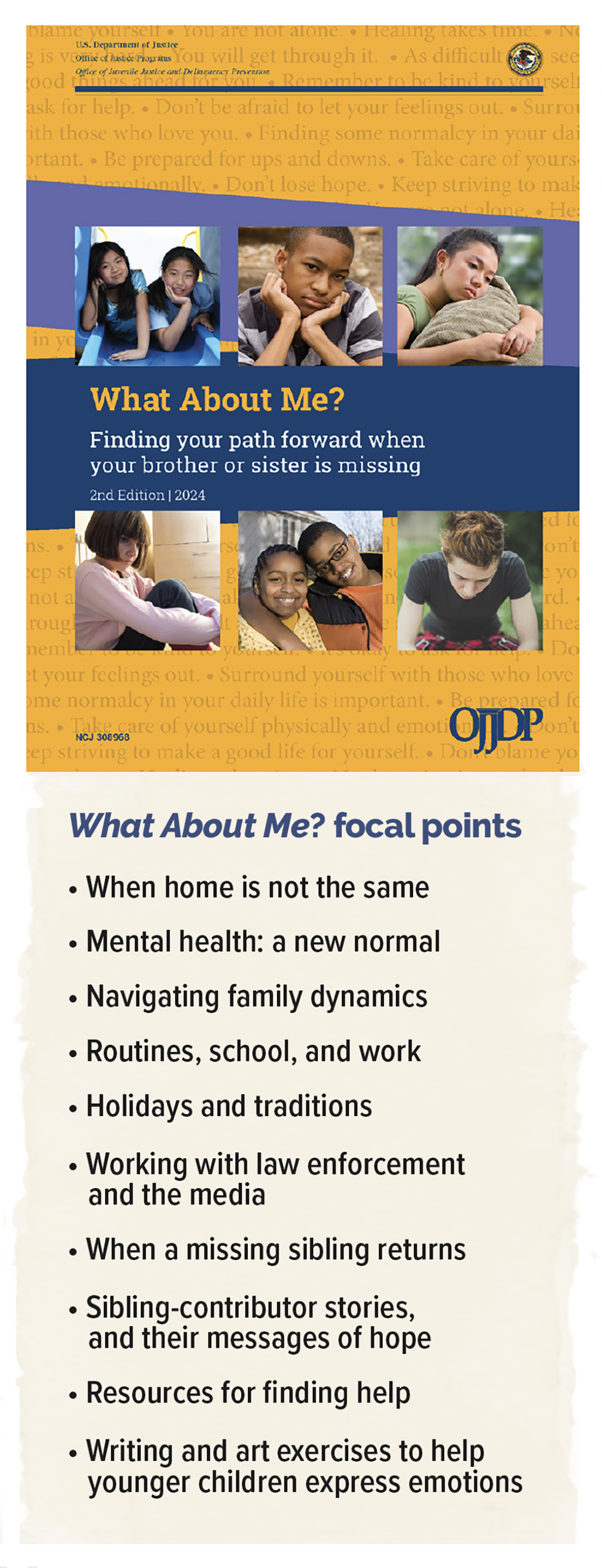
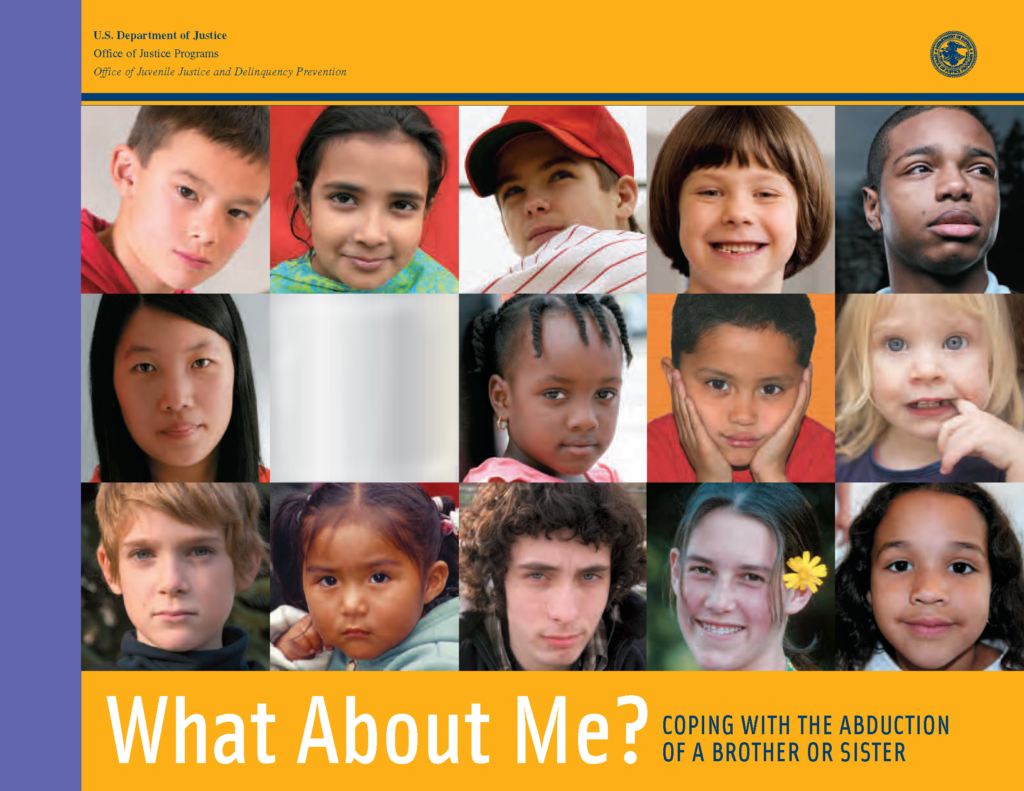
The new 98-page What About Me? is the second edition of a guide first published in 2007. It was spearheaded by the Office of Juvenile Justice and Delinquency Prevention (OJJDP) / Office of Justice Programs (OJP) of the U.S. Department of Justice (DOJ). Its development was overseen by the AMBER Alert Training & Technical Assistance Program (AATTAP) / National Criminal Justice Training Center (NCJTC) of Fox Valley Technical College.
Contributors to What About Me? bring clarity to the complex needs siblings face: Children in families with missing siblings can’t easily process what they’re experiencing. They aren’t hearing the particulars from law enforcement. They aren’t trained to respond to an intrusive or hurtful question from the media. They don’t know how to navigate their frayed family dynamics. And they need help.
The guide provides tangible ways that siblings of missing children can handle stress, the investigative process, and media interactions. It also can help them express their needs to their loved ones and family advocates, and find helpful resources during either a short or prolonged period of uncertainty, fear, and grief.
What About Me? features the voices and perspectives of eight sibling contributors while weaving in advice from seven other siblings who participated in the first edition. It also reflects the expertise of DOJ/AATTAP/NCJTC subject matter experts, child/victim advocates, and relevant, credible U.S. agencies that can help.
The sibling contributors have survived vastly different experiences: Some have missing siblings who were kidnapped by strangers or abducted by family members, while others have siblings who ran away or were lured away from home. Some of their siblings were found safe and returned home. One contributor is herself a victim of a horrific abduction and assault—in which her younger sister was murdered. Others have siblings whose whereabouts still remain unknown, or they were found deceased.
Click here to access a PDF of this advice from the sibling survivors. Share it with anyone searching for a loved one.
To produce What About Me?, OJJDP/OJP tapped the AATTAP publications team led by Bonnie Ferenbach, and NCJTC Associate Helen Connelly to coordinate the project. The group also played key roles in updating When Your Child Is Missing: A Family Survival Guide, released in 2023.
Connelly is a longtime advocate for missing children and their families. In 2005, while serving as a senior consultant for the U.S. Department of Justice, Connelly and Ron Laney, then Associate Administrator of OJJDP’s Child Protection Division, teamed up to produce the first-ever sibling survival guide, What About Me? Coping With the Abduction of a Brother or Sister, published in 2007.
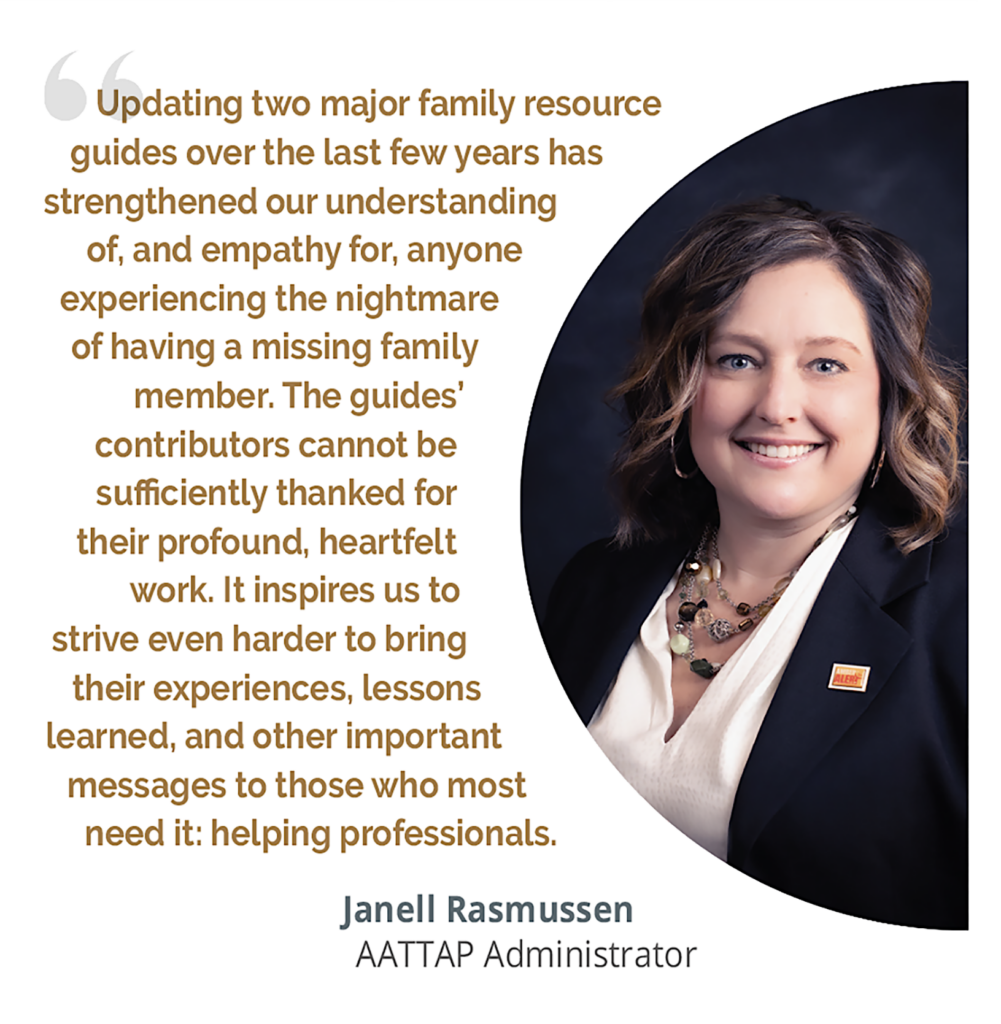
“Through Helen and Ron’s vision and compassion, this guide, as well as numerous other resources, have provided support, encouragement, help, and resources needed by so many families,” says AATTAP Administrator Janell Rasmussen.
With Connelly’s encouragement, past and present sibling contributors participated in writing the guide because they recognize shared pain—and potential dilemmas. “Trauma, if left untreated, can manifest itself in harmful ways later in life,” says sibling contributor Heather Bish.
The sibling survivors who worked on the updated resource valued the chance to collaborate with others in “the club nobody wants to belong to,” says Heather, who contributed to both editions. “But our experiences are special,” adds contributor Rysa Lee. “We have the tools that can help others.”
Watch the sibling survivors discuss their stories and readtheir advice to others.
At the project’s start, the siblings met virtually before gathering in person in Salt Lake City in January 2024. There, they bonded, and wholeheartedly shared their experiences and advice on camera for the new edition’s companion videos. “Working with the other siblings of missing persons left me shocked at the outcomes they had; in some way, they each had answers,” says contributor Kimber Biggs. “It was comforting to know that getting answers is even possible.”
Content talks continued, and the guide began to take shape. Then, on May 22, 2024, a powerful two-hour roundtable was held at OJJDP offices after the National Missing Children’s Day ceremony in Washington, D.C.
The siblings agree that “there is no right or wrong way to survive, it is just our own,” Heather says. “We hope that sharing our experiences will empower other siblings to forge ahead, and possibly empower someone else to do the same.”
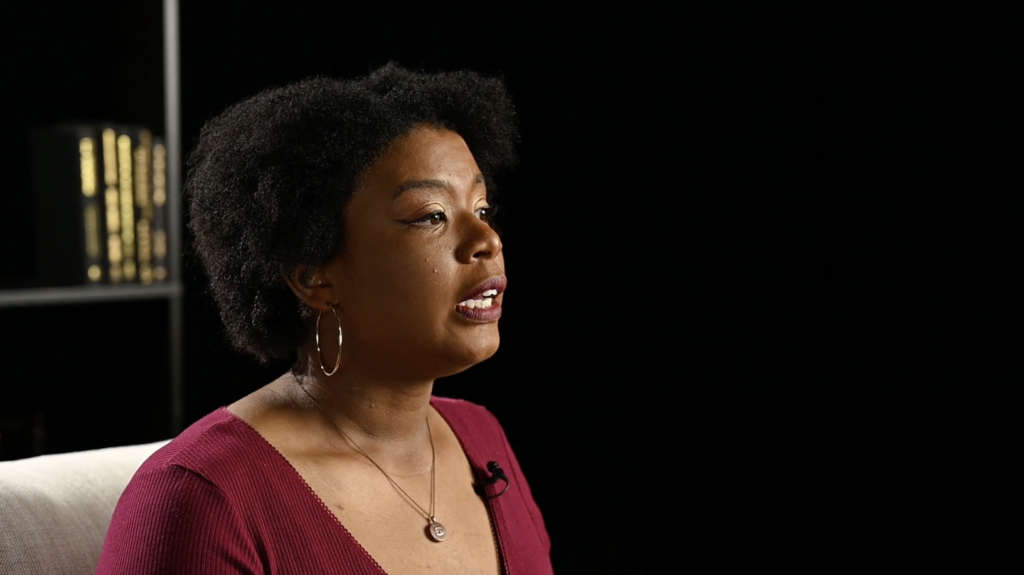
Each of the sibling contributors discussed their lives now as social workers, teachers, and counselors. Contributor Sayeh Rivazfar has dedicated two decades of her life to serving in law enforcement, investigating crimes against children, before her retirement two years ago.
Sayeh doesn’t think of herself as a victim or survivor: “It’s more than that. I see myself more as a thriver, despite the odds.” She credits this to the love and support she has received over the years from family members, friends, and caring professionals.
“A guide like this would have been so helpful to us,” she says. “But we hope that now, with its help, with our help, children can know they are not alone. That we care about them, and want them to thrive too.”
Rysa adds another positive take. There is light to be found in the darkness of tumult, she says. “Siblings do come home, and my family is living proof.”
New guide’s sibling contributors
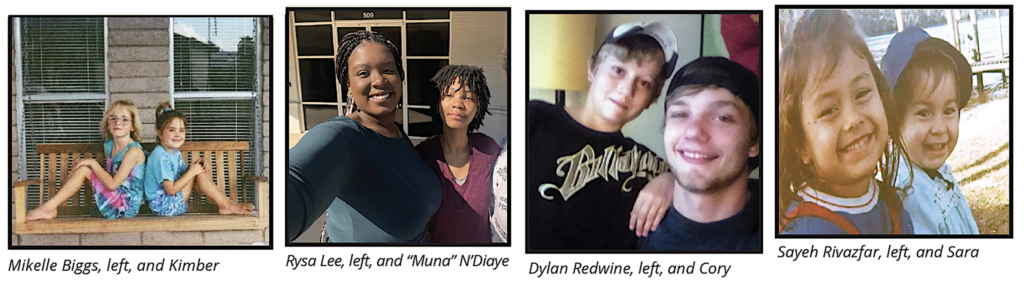
Kimber Biggs, sister of Mikelle Biggs (Arizona) Kimber was 9 when her 11-year-old sister, Mikelle, was kidnapped on January 2, 1999, while riding her bike near their family’s Arizona home. Mikelle was never seen again. Since then, Kimber has spent 25 years advocating on her sister’s behalf. Through the Facebook page Justice for Mikelle Biggs, Kimber shares updates on Mikelle’s case to more than 29,000 followers. Also, since late 2023, Kimber has worked as an AATTAP- NCJTC Associate, providing her powerful family perspective to investigators learning how to best work with victims’ families in missing persons cases. “It has taken a lot of work and therapy to get to the place I am today,” she says. She also remains hopeful that her sister’s case will be solved. “A new detective has been assigned to what was a very cold case,” she told attendees at the 2024 National AMBER Alert and AMBER Alert in Indian Country Symposium. “The fact that he’s eyeing a significant suspect in the case makes it feel like something is finally happening.”
Rysa Lee, sister of Maayimuna “Muna” N’Diaye (Alabama) Rysa was 14 when her 4-year-old sister, “Muna,” was abducted by her biological father to Mali, West Africa, on December 27, 2011. Rysa and Muna’s mother, Dr. Noelle Hunter, began a relentless campaign to bring “Muna” home—which thankfully occurred in July 2014. Since then, the family has tirelessly advocated on behalf of international parental child abduction (IPCA) cases via the organization they founded, the iStandParentNetwork. While her sister’s IPCA case was relatively short, “that year and a half was by far the most difficult and longest time of my life,” Rysa says. “To this day, I have never felt as empty and distraught as I felt during that time. The fact that my youngest sister was across an ocean and not in the room next to me sleeping every night was incredibly painful.” Rysa found comfort in high school band and color guard participation, listening to music, “and leaning on my friends to cope.” She currently works in banking and attends the University of Alabama in Huntsville, where her mother, an assistant professor of political science, oversees the International Child Abduction Prevention and Research Office (and contributed to the Family Survival Guide).
Cory Redwine, brother of Dylan Redwine (Colorado) On November 18, 2012, Cory was 20 years old when his 13-year-old younger brother, Dylan, traveled to stay with their father on a scheduled court-ordered visit. The next day his father would report Dylan as missing. The teen’s whereabouts remained unknown until 2017, when his father was convicted of second-degree murder and child abuse in Dylan’s death. Before then, Cory and his family spent nearly a decade searching for Dylan. They have since spent years seeking justice for him and educating others about the legal loopholes in parental custody issues that can prove deadly. (Cory and Dylan’s mother, Elaine Hall, is now an AATTAP/ NCJTC Associate who discusses her family’s case with law enforcement; she also contributed to the Family Survival Guide.) Cory recalls the court process being “long and arduous; it brought up so many emotions for me. But it also made me realize that I am stronger than I thought I was, that my voice and words are powerful,” he says. Now a father of two, Cory finds it an honor to helps adults facing difficult situations. “My experience, different as it is from theirs, allows me to help them through challenging times and come out better on the other side.”
Sayeh Rivazfar, sister of Sara Rivazfar (New York) After her parents’ divorce in 1985, Sayeh and her younger siblings had “child welfare officials in and out of our home due to physical and mental abuse at the hands of our mother and others,” Sayeh says. “Unfortunately, [our mother] thought having men in our lives would help us. But her boyfriends weren’t all good. In fact, one changed our lives forever in the worst way imaginable.” In the middle of the night of September 22, 1988, one of those boyfriends took the sisters from their home, drove to a remote area, brutally assaulted both girls and left them to die. Sayeh, then 8 years old, survived. Sara, age 6, did not. “From that day forward, I felt guilty for surviving and had dreams of saving my sister from this nightmare,” Sayeh says. “I was determined to bring her killer to justice.” Thankfully she was able to do just that. She and her brother, Aresh, moved to Rochester, New York, to live with their father, Ahmad (now a nationally known child protection advocate and Family Survival Guide contributor). Sayeh’s passion to help others, especially children, inspired her to join the New York State Police force, from which she recently retired after two decades of child protection and investigative work. She now focuses on being a good mother to her son. “I’m proud of the work I’ve done, and even prouder of the children I’ve helped,” she says. “The story never ends, but it can have a better ending than one might think.”
Heather Bish, sister of Molly Bish (Massachusetts) On June 27, 2000, Heather’s 16-year-old sister, Molly, went missing while working as a lifeguard. Molly’s disappearance led to the most extensive search for a missing person in Massachusetts history. In June 2003, Molly’s remains were found five miles from her home in Warren. While the investigation into her sister’s murder continues, Heather uses social media to help law enforcement generate leads and “share her story—our story,” she says. Heather was supportive of her parents’ work to create the Molly Bish Foundation, dedicated to protecting children. “I carry that legacy on today,” she says. She has filed familial DNA legislation for unresolved cases and advocates for DNA analyses for these types of crimes. She also has served on the Massachusetts Office of Victim Assistance Board and was part of the state’s Missing Persons Task Force. “As a mother and a teacher, my hope is that children never have to experience a tragedy like this.”
Zack Svendgard, brother of Jessika Svendgard (Washington) In 2010, Zack’s younger sister, Jessika, first ran away, and then was lured away from their family home near Seattle. As a result, the 15-year-old became a victim of sex trafficking. It took 108 days for Jessika to return to her family and get the help she needed, Zack says. “Her recovery in many ways was just the beginning. In many ways the broken person who came home was not the little girl who had left.” Jessika’s ordeal has been featured in the documentaries “I Am Jane Doe” and “The Long Night.” She and her mother, Nacole, have become powerful advocates for victims of sex trafficking and instrumental in passing legislation to increase victim rights, issue harsher punishments for sex offenders, and shut down websites that facilitate sex trafficking. (Nacole is an AATTAP/NCJTC Associate who provides her family perspective to law enforcement; she also contributed to the Family Survival Guide.) “We’ve joined organizations such as Team HOPE [of the National Center for Missing & Exploited Children/NCMEC] to provide counseling to others, and are ourselves committed to therapy and self care.”
Amy & Carmen Wetterling, brother of Jacob (Minnesota) On October 22, 1989, Amy and Carmen’s brother, 11-year-old Jacob, was abducted at gunpoint by a masked man while riding his bike with his younger brother, Trevor, and a family friend. His whereabouts were unknown for nearly three decades, but on September 1, 2016, Jacob’s remains were found after his killer confessed to the crime. Jacob’s abduction had an enormous impact—not only on his family, but also on people throughout the Midwest, who lost their sense of safety. Amy, Carmen, and Trevor have been inspired to help others by their mother, Patty Wetterling. Patty has shared countless victim impact sessions with law enforcement across the U.S. (many of them AATTAP/NCJTC trainings). She is co-founder and past director NCMEC’s Team HOPE, co-author of the 2023 book, Dear Jacob: A Mother’s Journey of Hope, and a contributor to the Family Survival Guide. “Jacob inspires us every day,” Amy says. “He believed in a fair and just world, a world where all children know they are special and deserve to be safe.” Adds Carmen, “Jacob believed that people were good. And he lived his life centered on 11 simple traits.”
Additional contributors: Learn about the siblings who shared their advice for the 2007 first edition of What About Me? Coping With the Abduction of a Brother or Sister here.
Sibling contributor Sayeh Rivazfar—a retired 20-year veteran of the New York State Police—with her son.
Helpful advice for the helpers
What About Me? includes a detailed section of guidance relating to law enforcement and judicial processes. It also provides tips for navigating traditional media and social media. Consider these insights from the sibling contributors.
During a law enforcement investigation
Siblings “may have a law enforcement officer with little or no experience with a missing children case, seems uncomfortable and distant, or someone who jumps in with both feet,” says Sayeh Rivazfar. The retired law enforcement professional is the survivor of a heinous crime against her and her sister, Sara, who did not survive. “If you want to talk to a different officer, speak up,” Sayeh advises.
Children are especially confused by law enforcement’s intrusion upon their home and being asked what seems like invasive questions. Help them understand that this is normal—either directly or with the help of a family/child advocate.
“Just because you don’t hear about progress doesn’t mean they’re not making any,” one sibling notes. Try to schedule regular check-in calls with the family. Let families know that while law enforcement is unable to share every detail of the investigation, they can strive to apprise the family of their progress while keeping lines of communication open and productive.
If children are expressing anger toward their parents, emphasize that “your parents are still your parents, they still love you, and they care about your feelings—even if they can’t show it right now,” contributors say.
Be prepared for such questions as: »How do I handle phone calls during the search? »How should we handle our missing sibling’s social media and email accounts? »Can I still go into my sibling’s room? »Will we get their belongings back?
Working with traditional/social media
There’s no such thing as “off the record,” contributors say.
To foster quality reporting “find the journalist who provides compassion and truth, and give them an exclusive interview,” Sayeh advises.
With nonstop anonymous, uniformed sources on social media, tell children to “be prepared for positive and negative running commentary,” Rysa Lee says.
Propose potential answers (in italics) to commonly asked media questions that often make children uncomfortable: »Do you think your sibling is still alive?I hope so. »What happened? I don’t know, and I don’t want to talk about it with you. »Was your sibling sexually abused?I don’t know, but it’s not something I want to discuss. »How does this situation make you feel? I don’t want to talk about my feelings right now.





























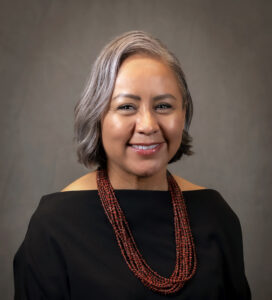
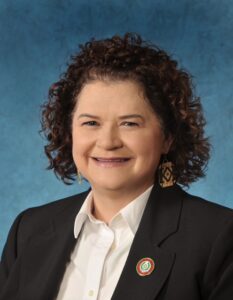
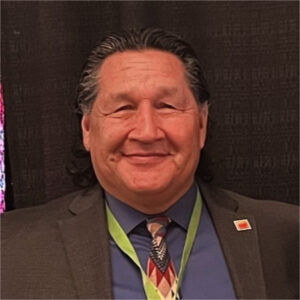

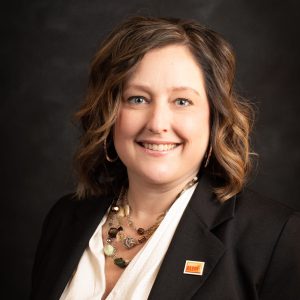 The disproportionately high rate of violence experienced by Native American families is unacceptable. Through continued collaboration with American Indian and Alaska Native Tribes, we are dedicated to alleviating this crisis in a meaningful—and lasting—way.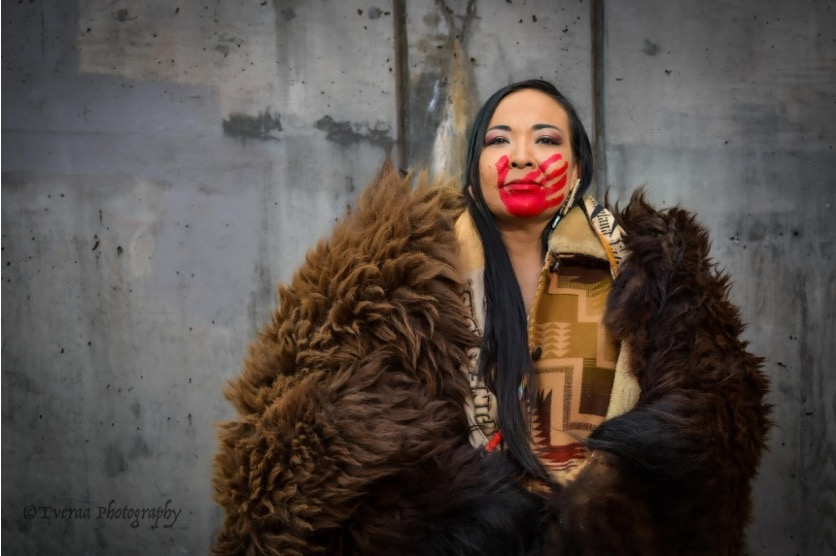


 “The red hand over the mouth stands for all of our missing sisters who are not heard.”



 By Denise Gee Peacock
 The action these siblings have taken is helping update a comprehensive resource for children going through similar struggles: the multimedia guide,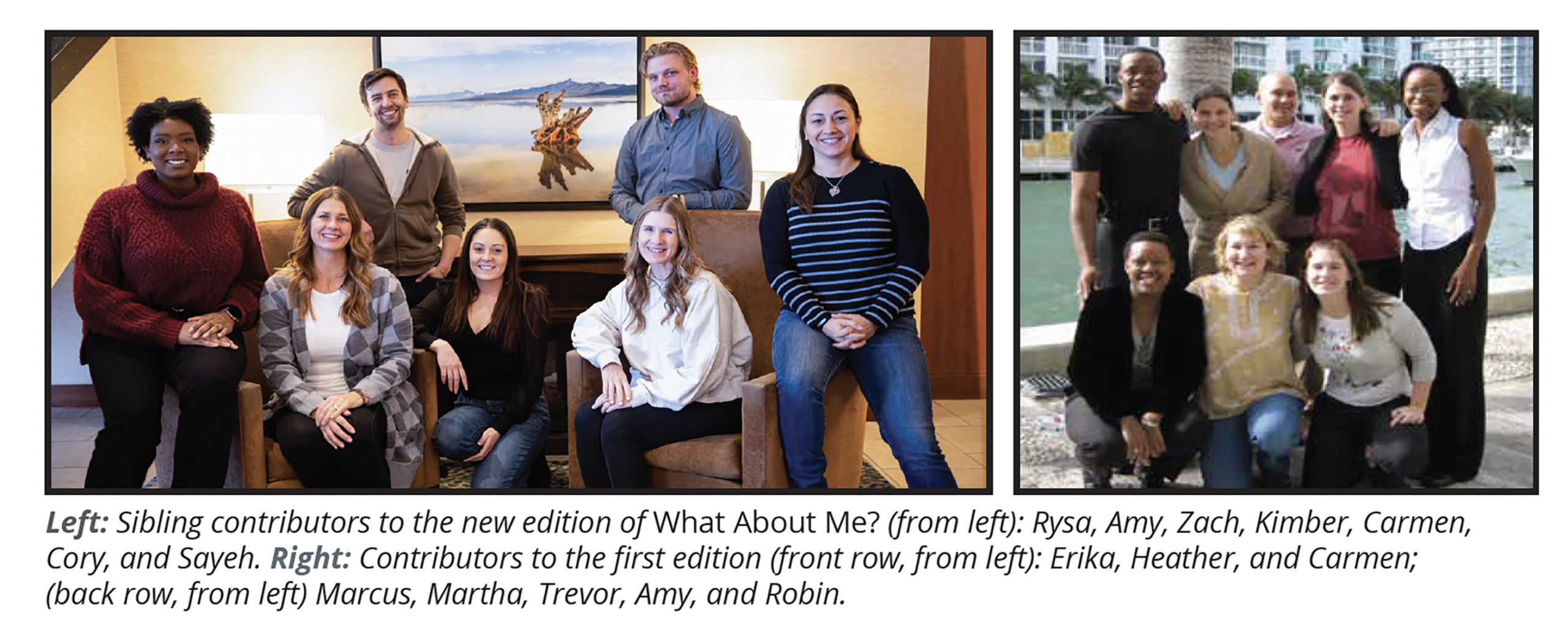


 Each of the sibling contributors discussed their lives now as social workers, teachers, and counselors. Contributor Sayeh Rivazfar has dedicated two decades of her life to serving in law enforcement, investigating crimes against children, before her retirement two years ago.
 Kimber Biggs, sister of Mikelle Biggs
![Sibling contributor Sayeh Rivazfar—a retired 20-year veteran of the New York State Police—with her son. [Photo: MaKenna Rivazfar]](https://amberadvocate.org/wp-content/uploads/2025/01/Sayeh-Rivazfar-and-little-boy-makenna-rivaz-copy.png)
