
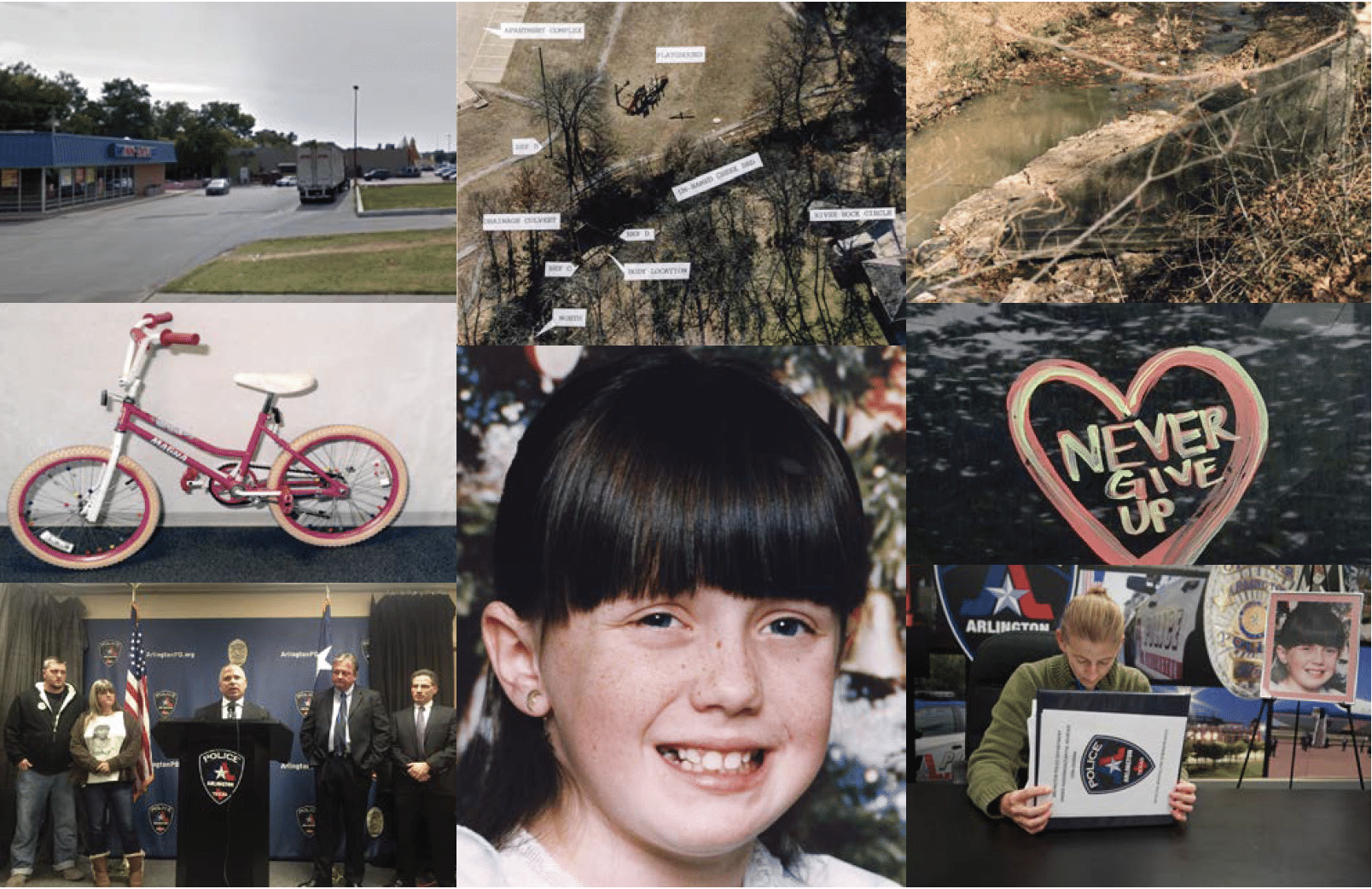

Collage of photos depicting Amber Hagerman, her bicycle, the place where she was abducted, where her body was found, and her case detectives.

A Timeline

Amber Hagerman holding her baby brother, Ricky, in front of wrapped Christmas packages
Amber Hagerman with her baby brother, Ricky

By Denise Gee Peacock

On January 13, 1996, 9-year-old Amber Hagerman’s life was stolen by a stranger who dragged her kicking and screaming from her bicycle in broad daylight. Despite an unrelenting search and dedicated efforts by law enforcement, the media, and the public, Amber would never make it home. She was found brutally murdered. Her loss devastated her family and community, leaving a wound that has yet to heal.

In the months following the third-grader’s abduction and killing, Dallas-Fort Worth-area broadcasters worked with local police to establish what they hoped would be an antidote to future crimes: the America’s Missing: Broadcast Emergency Response (AMBER) Alert—named in Amber’s honor, both to remember her and to protect children in the future. It would harness the power of technology, the media, and community action to spread urgent news when a child’s life was in danger.

It took almost a decade to get every U.S. state to adopt the alert system, but as of Dec. 18, 2025, AMBER Alerts have helped recover more than 1,292 children nationwide—241 of them rescued because of wireless emergency alerts (WEAs).

 

Quote icon

Though Amber’s life was heartbreakingly short, her legacy has been to save countless lives. Each time an AMBER Alert flashes across a screen or sounds on a phone, her name is carried forward—not just as a reminder of tragedy, but as a symbol of hope, protection, and action.
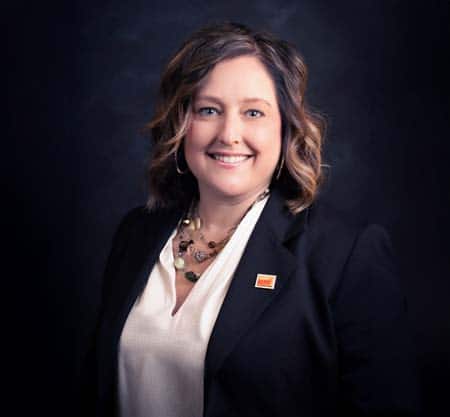
Janell Rasmussen Administrator, AMBER Alert Training & Technical Assistance Program / Director, National Criminal Justice Training Center
Quote image

Amber’s case also underscores fundamental lessons that child protection professionals should consider as they navigate missing child incidents.

Rapid public communication is vital.
Before Amber’s case, police lacked a formal framework for instantly broadcasting information about child abductions to the public.

The AMBER Alert system was created specifically to fill this gap, leveraging radio, TV, and eventually wireless technology to send out critical information like descriptions of the child, suspect, and vehicle.

“Amber’s case was a witnessed abduction—the rarest of all—and there was credible information available about the suspected abductor and his truck,” says Chuck Fleeger, Region 3 Liaison for the AMBER Alert Training & Technical Assistance Program (AATTAP). “There just wasn’t a mechanism then to get that information out quickly and to the widest possible audience.”

AATTAP’s Region 3 spans 10 states, from Louisiana to Nebraska to Arizona. It also encompasses Fleeger’s home state of Texas, where since 2003 he has served as executive director of the AMBER Alert Network Brazos Valley, a non-profit in central Texas that assists with regional AMBER Alert coordination, provides public education, and partners with local law enforcement and other responders in alerting, response, and investigative readiness.

In 2020 Fleeger retired as Assistant Chief of Police with the College Station Police Department, where he served for more than three decades. He now teaches AMBER Alert investigative best practices courses for the AATTAP.

Time is of the essence.
Experts recognized that the first few hours are the most critical in a child abduction case. The AMBER Alert protocol emphasizes speed, ensuring that law enforcement, broadcasters, and transportation agencies react swiftly to reports.

Quote icon

Long-term cases like Amber Hagerman’s are solvable. Technology continues to evolve and so do peoples’ lives. People will decide to talk for whatever reason when circumstances change.

Chuck Fleeger Region 3 Liaison, AMBER Alert Training & Technical Assistance Program
Quote image

Balancing that need for speed with a desire for accuracy can be a struggle for AMBER Alert Coordinators. “Law enforcement wrestles with the desire to verify information is complete and accurate, but then it’s not timely; conversely, you can have timely information but some of it’s not completely accurate. That’s OK. It’s better to get the process going even if an activation package isn’t perfect,” Fleeger says. “We all know how crucial time is, so any moments that can be saved could potentially make the difference in a child’s recovery.”

Successfully navigating such a high-stakes process “takes a combination of continuing education, experience, and good communication with others,” says Fleeger’s colleague Joan Collins, Liaison for AATTAP’s Region 1 (encompassing 11 states in the Northeast, from Maine to West Virginia).

Collins’ career has involved 39 years of work for Rhode Island law enforcement. She spent 28 of those years with the Rhode Island State Police, where she helped audit and train users of the Rhode Island Law Enforcement Telecommunications System (RILETS); was central to increasing the state’s various emergency alerts; managed the state’s sex offender/“Most Wanted” databases; and worked with the state’s Internet Crimes Against Children task force.

Quote icon

The creation of the AMBER Alert system has become an important public global safety tool for child abductions, and there is ongoing hope for the resolution of Amber Hagerman’s case. The goal is to safely recover an abducted child. The decisions made by AMBER Alert Coordinators are often stressful, made quickly and under pressure, following established protocols and using their best judgment based on the information at hand.

Joan Collins Region 1 Liaison, AMBER Alert Training & Technical Assistance Program
Quote image

“Doing this line of work involves being an active listener—of knowing what questions to ask,” she says. Collins now teaches such AATTAP courses as AMBER Alert: To Activate or Not Activate as well as 911 Telecommunicators and Missing & Abducted Children (aka “911 T-MAC”).

Coordination is key.
The AMBER Alert system functions through the seamless cooperation of multiple groups, including law enforcement, broadcasters, transportation agencies, and the media.

Reviews of every alert help to improve the process over time by getting input from these various partners.

Collins recommends that partners include not only those within one’s own law enforcement agency, but also those from surrounding states (“with whom you’re likely to work with more often than not”). “It’s important to connect with your counterparts elsewhere and build relationships with them early so you can act together quickly and successfully,” she says. “It’s always a relief to know others are ready and willing to help out during times of high stress, and they in turn will appreciate your advice and support.”

Protocols must be followed carefully.
For any case—which can potentially become a high-profile one—there is a need for law enforcement to meticulously follow established protocols. This includes the difficult decisions an AMBER Alert Coordinator must make with the limited information available at the time, which may be criticized by the public later.

“With any missing child case, law enforcement should first assume the child is at risk until evidence presents otherwise,” Fleeger says.

He also recommends patrol first responders consider the long-term implications of their efforts, avoiding any pass-the-buck mentality of case stewardship. “Think about the officers dispatched to Amber’s case. They certainly didn’t know when they started their shift that three decades later the case would be unsolved—and how dramatically changed available resources and response models would become.” It’s essential to remember that “the right documentation of information really matters. And if we’re doing good, solid police work from the earliest moments, that work should stand the test of time and hold up well.”

Use targeted, advanced technology.
Modern AMBER Alerts benefit from geotargeting, which focuses alerts on the people most likely to have seen the child. This prevents citizens in a wider area from being desensitized and ignoring alerts.

The public can help.
AMBER Alert’s success is a testament to the power of community vigilance. It allows millions of people to serve as the “eyes and ears” for law enforcement by reporting tips to the authorities. To keep the public from “information burnout” on a case, Fleeger recommends using multiple photos of a missing child at different times. “If someone is scrolling through their feed on social media and see the same photo time and again, they’ll assume they’ve already read that information,” he says. “A new or different photo will make somebody pause and think, ‘I didn’t realize he is still missing.’ The goal is to keep the case a priority in the public’s mind until we can get that person found.”

Don’t assume benign circumstances.
Before the AMBER Alert system, bystanders witnessing a child struggling with an adult may have assumed it was a family dispute or the child misbehaving. Amber’s case highlights the danger of assuming an abduction is a benign event and reinforces the importance of reporting suspicious activity immediately—even if it seems inconsequential.

Collins refers to the barking dog analogy in her teaching. She encourages dispatchers in training to ask questions and gather more information. “For example, is the dog that someone is calling about normally outside barking, or does it rarely bark? This could indicate whether something unusual is occurring. It’s important not to make assumptions, as callers may have relevant information that can be discovered by asking further questions

Stranger abductions are real.
While statistically rare—the National Center for Missing & Exploited Children reports that stranger abductions account for 1% of reported abductions—they are a real danger. Amber’s case serves as a reminder of the vulnerability of children, especially when a predator targets them. According to NCMEC, victims are most often girls, and the average age for attempted abductions is 11 and completed abductions is 14.

Justice is a long process.
Despite the creation of a system that has saved countless lives, Amber’s murder remains unsolved decades later. The lesson is that the fight for justice continues, and the public can still assist by reporting any strange observations. “Long-term cases like Amber Hagerman’s are solvable,” Fleeger says. “Technology continues to evolve and so do peoples’ lives. People will decide to talk for whatever reason when circumstances change. Consider the Austin [Texas] yogurt shop murder case that was recently solved. You just never know.”

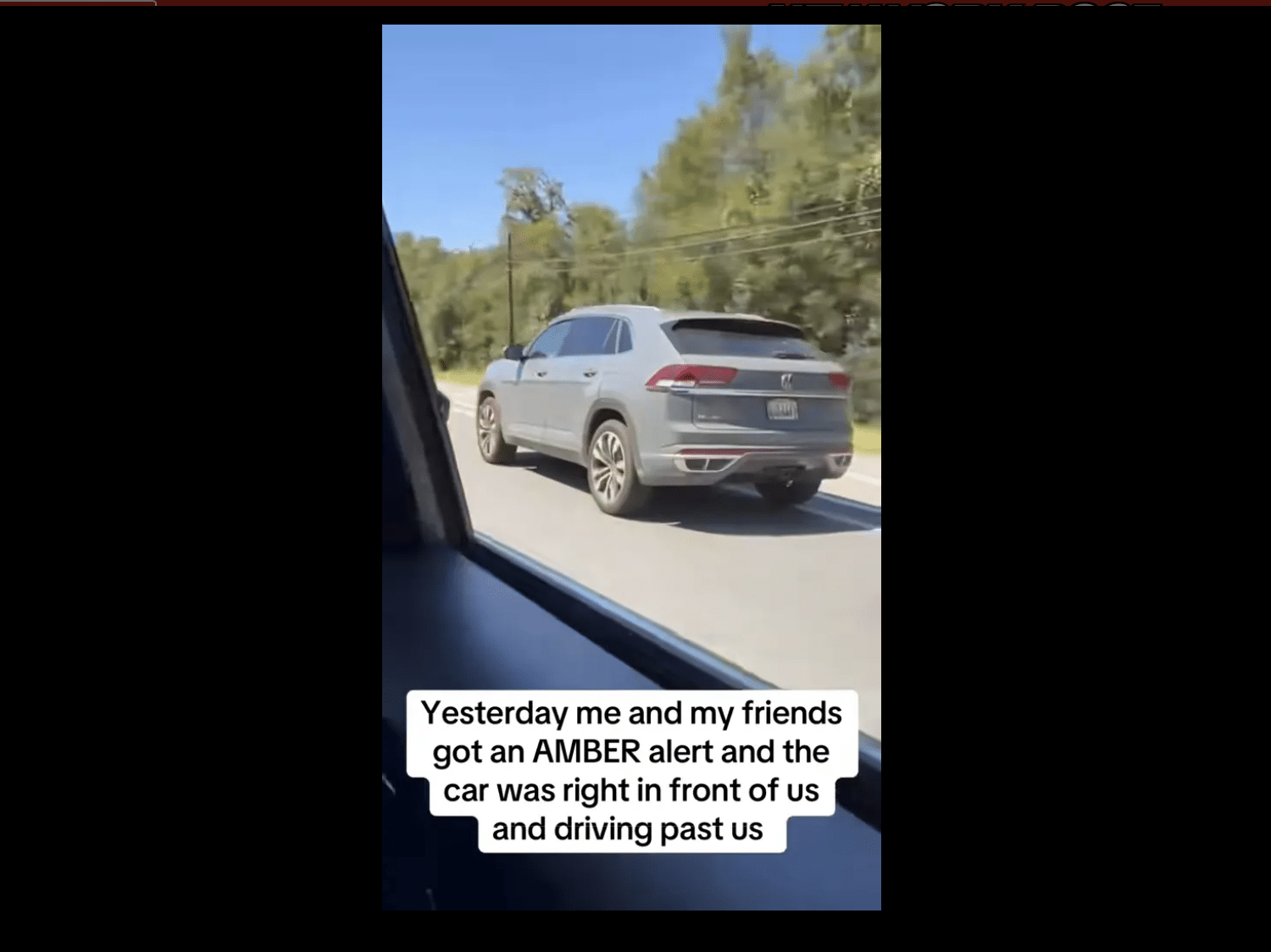
Video still of a gray SUV being sought in relation to an AMBER Alert

Shortly after phones in Prince George’s County, Maryland, began buzzing about a SUV wanted in a suspected child abduction, a group of friends captured the moment they recognized the SUV from the AMBER Alert—and started recording. In a viral TikTok video posted by one of the friends, a gray Volkswagen SUV rolls up alongside them, and they elicit excited recognition. Deciding not to engage with the suspect (as law enforcement had instructed), the clip ends with a short view of the SUV surrounded by police vehicles farther up the road. “Thanks to a great community partnership, an alert citizen [in another vehicle] spotted the AMBER Alert car,” the Prince George’s County Police Department wrote on X. “That citizen contacted [dispatch] who relayed the locations to [us] through our interoperable radio system.” The missing girl was found safe.

Photo illustration of a blue blanket with a pink heart pillow
In 2023, 59% of AMBER Alerts were for family abduction cases, according to the National Center for Missing & Exploited Children. The abductions tend to occur at transition points, such as when court-ordered exchanges of the child are scheduled to take place. Staff photo illustration.

By Jody Garlock

Engaging the public has always been at the heart of AMBER Alerts. The program, after all, was built on the premise of instantly galvanizing citizens and motorists to serve as an extra set of eyes to help law enforcement safely locate an endangered missing or abducted child. The power of that concept played out literally and figuratively in a case that gripped the quiet county-seat town of Fallon, Nevada.

On March 31, 2025, the Nevada Department of Public Safety issued an AMBER Alert that was disseminated to broadcast media and cellular devices around Washoe County. Ten-month-old Lyric Smitten had been taken by his noncustodial mother, Chelsea Daniels, earlier that day. According to information released by the Churchill County Sheriff’s Office, authorities were advised that Daniels had been distraught after a court removed the boy from her care and custody. She was reported to have a handgun and had threatened to harm herself and her son.

The case solidly met the criteria for activating an AMBER Alert. These criteria included the belief that the child was in imminent danger and there was enough descriptive information for the public to aid in the recovery.

Unlike most AMBER Alerts, this case had an additional layer of urgency: The child was scheduled to undergo heart surgery the following day.

As news of the missing boy quickly spread around Fallon and the other high desert communities of western Nevada, tips to 911 came in. Because the vehicle Daniels was driving was relatively common—a black SUV (specifically a Ford Explorer) with a Nevada license plate— several tips matched a general description.

Although the AMBER Alert provided the license plate number, motorists aren’t always able to capture the exacting details. Officers knew the dire situation required taking all tips seriously, even those where the information matched just a general description of the SUV. One such tip led to a Fallon elementary school being placed on lockdown until authorities confirmed that the vehicle reported on the grounds wasn’t Daniels’.

One particular tip, however, stood out. A caller reported seeing a vehicle matching the description and that was being driven by a woman in an area that aligned with earlier cell phone pings from the mother’s phone. Patrol and investigative units were already in the area and took swift action. They spotted the SUV traveling on a mountain road.
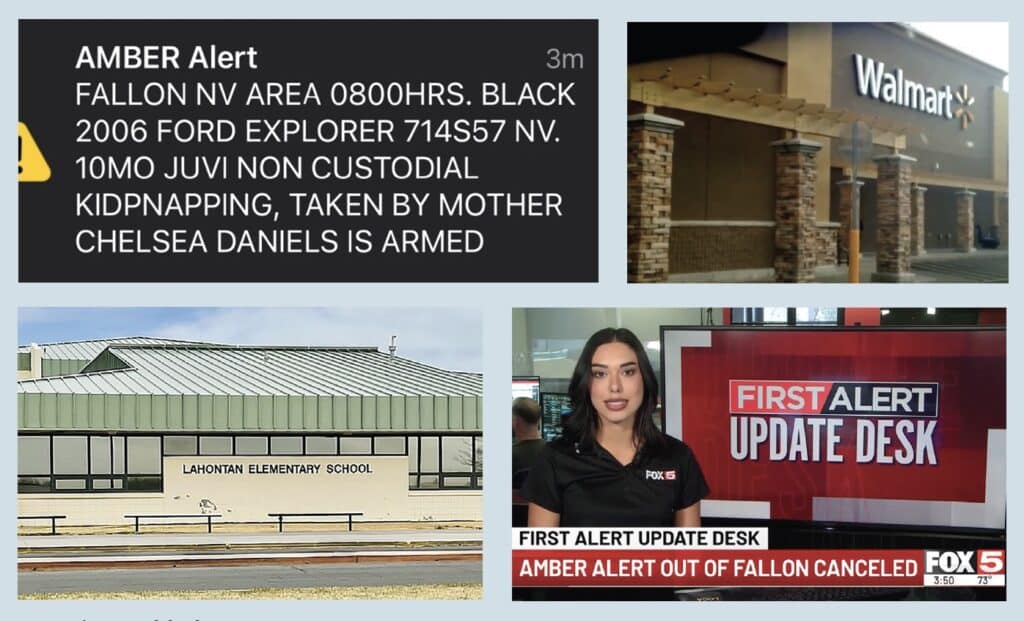
Collage of four images showing the AMBER Alert cell phone message, a Walmart, an elementary school, and a news report
HOW IT UNFOLDED (from left, top to bottom): The AMBER Alert pinged cell phones shortly after 2 p.m. for the Nevada infant taken by his noncustodial mother and believed to be in imminent danger. The last reported siting of the child was at a Walmart. An elementary school was placed on lockdown after a tip matched a general description of the mother’s vehicle there. About an hour after the alert was issued, authorities acting on another tip spotted the vehicle and safely recovered the boy. Local media reported the news, to the relief of residents.

After initially failing to stop, Daniels pulled over the vehicle, heeding the emergency lights and sirens from a sheriff’s deputy’s patrol vehicle. The infant was found safe; emergency medical responders also assessed the child’s health.

Authorities did not release information on the boy’s heart condition or surgery.

The Fallon Police Department took Daniels into custody on various charges, including kidnapping. Fallon authorities noted after the incident that concern about the child’s medical condition played a factor in the case rising to the level of an AMBER Alert.

Similar to how the public responded with tips, local authorities were quick to praise the public for its vigilance that contributed to the safe resolution. Churchill County Sheriff Richard Hickox also credited the multiple agencies and emergency medical responders who were involved. “We are grateful for the citizens who called in with sightings and information,” Hickox posted on Facebook. “The successful resolution of this situation is a prime example of a collaborative effort by many agencies striving toward one goal—and that is the safety of the public.”

Residents greeted news of the child’s safe recovery with similar gratitude. “Thank you to the people who spoke up and reported!” one person wrote on the Churchill County Sheriff’s social media page.

Carri Gordon, AMBER Alert Training & Technical Assistance Program (AATTAP) Liaison for Region 5 (which includes Nevada), considers the case an example of the AMBER Alert system working as it was intended: by engaging the public to prompt a swift recovery. “I’ve activated alerts in the past where the tip came in within six minutes of the Wireless Emergency Alert (WEA) hitting cell phones, and it was from someone directly behind the suspect’s vehicle,” she recalls. “Law enforcement contacted and safely recovered that child in less than 15 minutes of the AMBER Alert going out. It’s literally lifesaving.”

During her 13 years as the state of Washington’s AMBER Alert Coordinator (AAC), Gordon handled more than 100 AMBER Alerts. Although alert activations for noncustodial parent abductions, such as in this case, have always been higher than stranger abductions, she reminds AACs that this doesn’t mean the child is free of danger. “Parents will—and do— harm their own children,” she says, dispelling a common misconception.

Gordon also knows from experience the pressure AACs feel every time an AMBER Alert is issued, even though they aren’t directly investigating the case. “As AACs we monitor our alerts as they go out and monitor the involvement on social media, such as the shares and likes,” she says. “When you see a case with a lot of public involvement—and tips that eventually lead to the location of the child—it makes you aware of how critical and valuable a tool like the AMBER Alert system is.”

Quote icon

Law enforcement relies on the public to be on the lookout for critically endangered missing and abducted children. This case illustrates how critical it is to follow those leads.
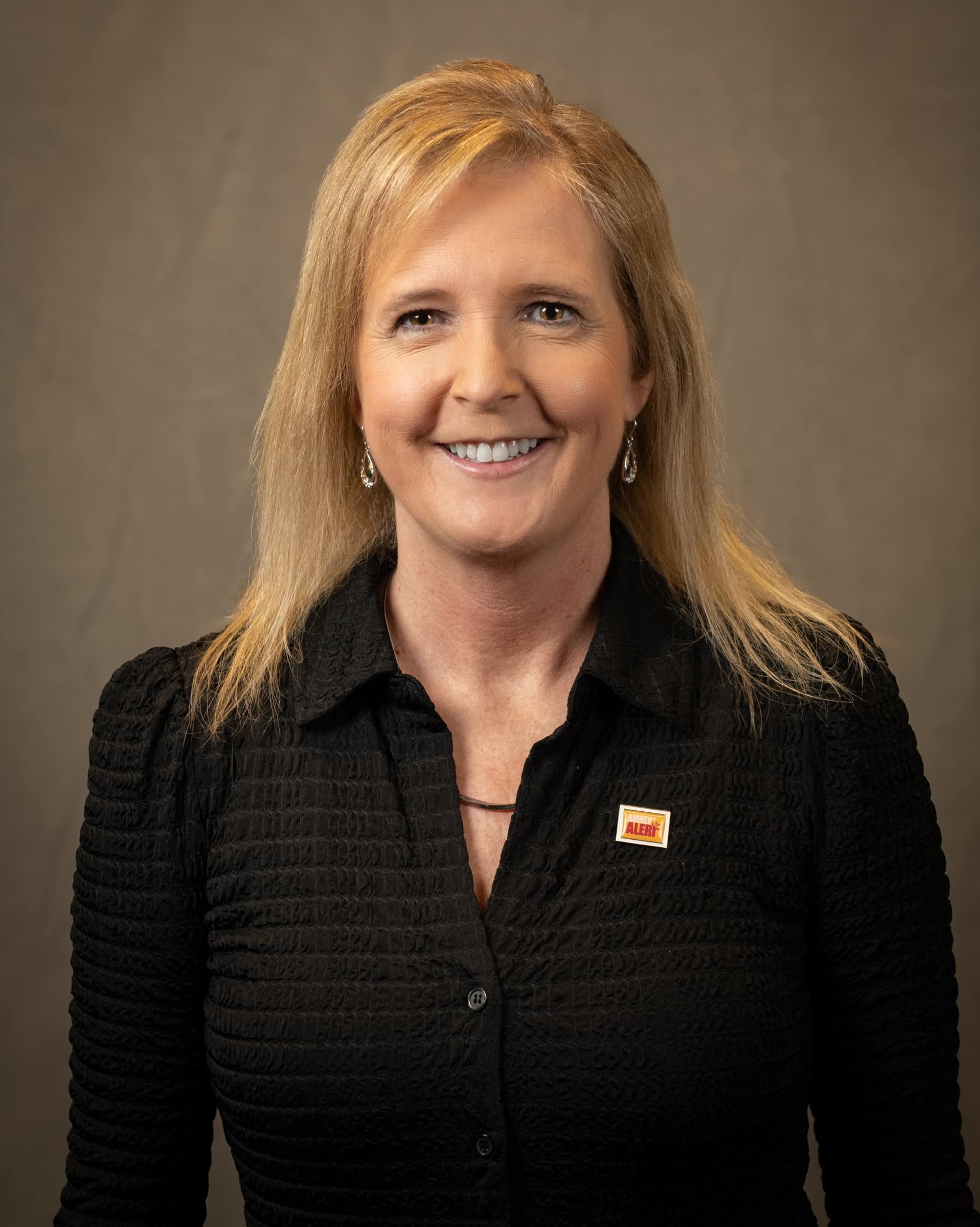

Carri Gordon AATTAP Region 5 Liaison and former AMBER Alert Coordinator
Quote image

Blue and white asterisk graphicIn 2023, 59% of AMBER Alerts were for family abduction cases, according to the National Center for Missing & Exploited Children. The abductions tend to occur at transition points, such as when court-ordered exchanges of the child are scheduled to take place.

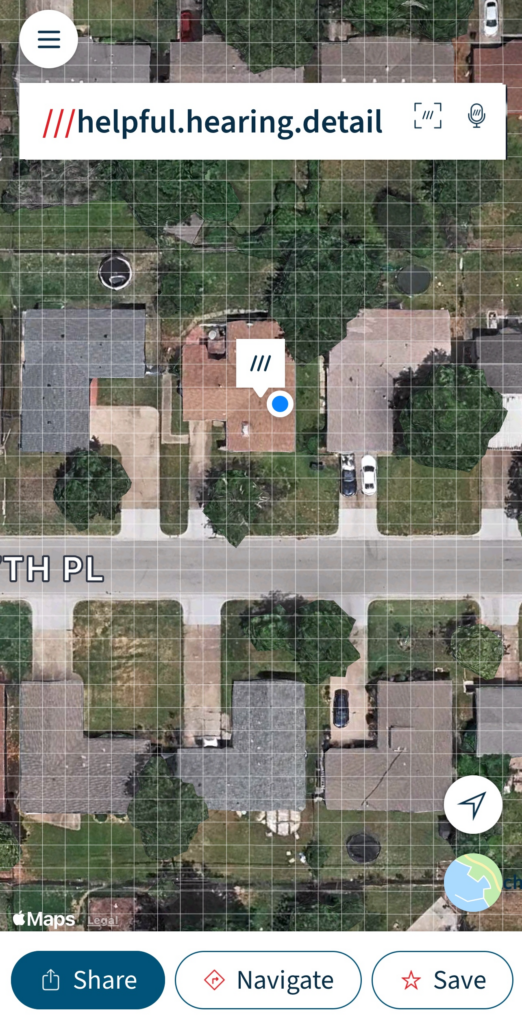
Illustration of AMBER Alert on TikTok app

TikTok is teaming up with the National Center for Missing & Exploited Children (NCMEC) to bring critical, time-sensitive information directly to people’s “For You” feeds. The goal is to raise awareness of missing children and leverage the power of the U.S. TikTok community to help reunite missing children with their families. The project was piloted in Texas from January to December 2024, when AMBER Alerts were viewed more than 20 million times and contributed to 2.5 million visits to NCMEC’s website. The AMBER Alerts will now reach more than 170 million Americans.

The software assigns a unique three-word “address” to each 10-foot by 10-foot grid within a location observed by satellite.

What is what3words?
The
a satellite-powered digital geocoding system—available free for first responders and as an iOS or Android app–helps identify precise locations. It has decided the world into a grid of 57 trillion 10-foot by 10-foot squares, and given each square a unique combination of three random words. Each three-word “address” lets emergency responders pinpoint a cellphone caller’s GPS coordinates–even in sprawling national parks and large bodies of water. All that is needed is a cellular signal and a smartphone with “location service” enabled.

What U.S. law enforcement agencies are using it—and how?
More than 400 public safety teams (including police departments in Dallas and Los Angeles) across 49 U.S. states are using
what3words technology to locate people. The software is compatible with many CAD systems and public safety communication tools, including RapidSOS, Rapid Deploy, and other software partners.

How can it help find children?
For a law enforcement agency equipped with what3words technology, any child or endangered adult who calls can be found within minutes if they call 911 from a location-service enabled cellphone. This is especially helpful if an individual does not know where they are—which often is the case if they have been transported to an unknown location.

Information box depicting two lost boys on bikes. The text reads: What3words in action – Click here to learn how the geolocator tool was used to help find two Texas boys lost in a flooded greenbelt.Who created it?
The technology—developed in 2013 by Chris Sheldrick in the United Kingdom in 2013—was created to solve issues caused by poor addressing across all sectors, including automotive, e-commerce, emergency, travel and logistics.

Is using what3words more accurate than cellphone pinging?
The use of what3words
is not meant to replace the analysis of cellphone geolocation data, which can paint a fuller picture of where a missing child (or a suspected abductor) has been and may be headed. Its advantage lies in being able to narrow a search to 10 feet, which is valuable in large urban areas (with a density of cell towers), where a cellphone ping can land thousands of feet away—up to 10 football fields—from where a phone may be.

How is the public using it?
Family members and friends of younger smartphone users are enlisting the app to more quickly and accurately find each other in large venue environments, such state fairs, large malls, and other big or crowded events.

What other countries use it?
The software is used by 85 percent of UK emergency services, as well as 50 control centers across Canada. It also is used throughout Europe, Australia, South Africa, India, and most recently, Vietnam.

How can my agency learn more about what3words?
To request free training and tech sessions, contact [email protected] or visit https://what3words.com/business/request-an-integration-form.
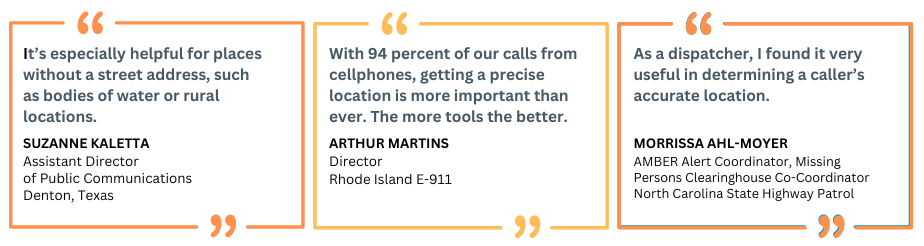
Three boxes with three quotes: 1-“It’s especially helpful for places without a street address, such as bodies of water or rural locations.” Suzanne Kaletta Assistant Director of Public Communications Denton, Texas 2-“With 94 percent of all our calls coming from cellphones, it’s more important than ever to be precise location data. The more tools we have, the better.” Arthur Martins, Director, Rhode Island E-911 3-“As a dispatcher, I found it very useful in determining a caller’s accurate location.” Morrissa Ahl-Moyer, AMBER Alert Coordinator/Missing Persons Clearinghouse Manager Co-Coordinator North Carolina State Highway Patrol


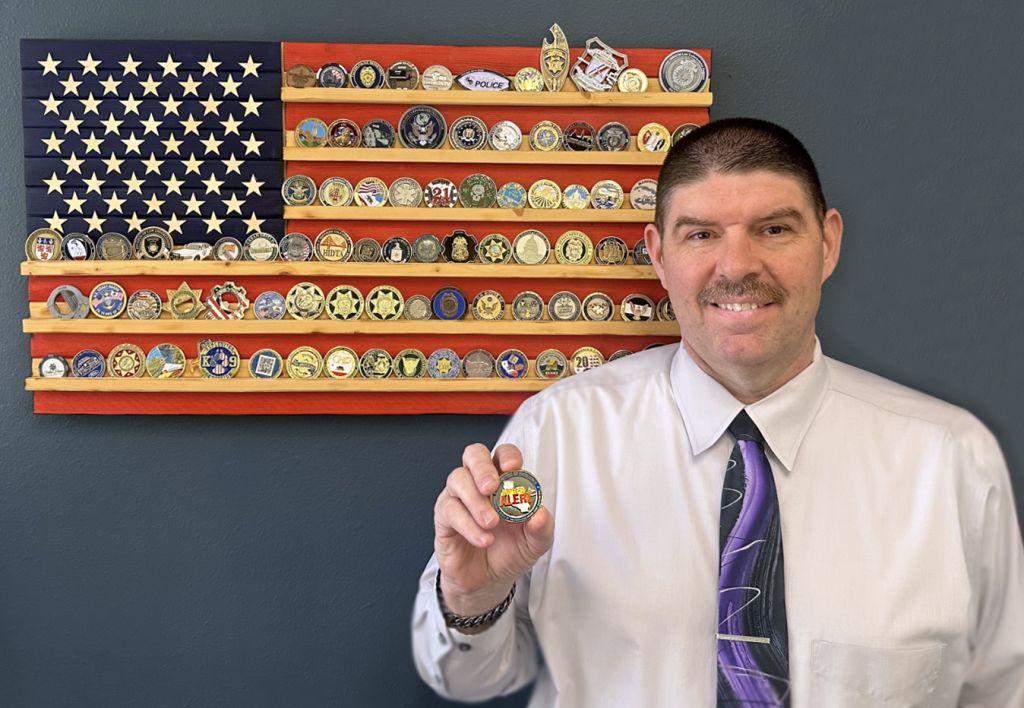
California Highway Patrol Assistant Chief Ken Roberts stands with a CHP challenge coin--in front of his collection of challenge coins.
California Highway Patrol Assistant Chief Ken Roberts, who started the CHP's challenge coin program, stands near a collection of special coins.

By Jody Garlock

California Highway Patrol challenge coin in its display case
A California Highway Patrol (CHP) AMBER Alert challenge coin is shown in its display case. The CHP has activated more than 320 AMBER Alerts since the state plan’s origins in 2002.

Challenge coins—insignia medallions traditionally awarded to law enforcement and the military—have held special meaning to California Highway Patrol (CHP) Assistant Chief Ken Roberts ever since learning about a World War II pilot who used his medallion to prove his identity after being shot down. After Roberts became a section commander with oversight of the state’s AMBER Alert program about four years ago, he introduced challenge coins as a way to honor law enforcement personnel who proved instrumental in helping solve child abduction cases.

Without the necessary funding to facilitate the project—meant to boost morale in the CHP’s Counterterrorism and Threat Awareness (CTTA) Section in Sacramento—Roberts spent $1,000 of his own money to create AMBER Alert challenge coins that honor officers and allied partners for going above and beyond in their duties to recover abducted children. Commending the AMBER Alert work from among his section’s varied efforts was easy: “It’s one of the most nationally recognized alerts, and it hits the heartstrings,” Roberts says.

CHP Lieutenant Justin Howlett, who has overseen the program in recent times, says the coins are an exclusive honor, not something casually bestowed or shared.

Since the program’s inception, each year only two or three people or agencies have received the “Recognition of Excellence”—typically fewer than half of the cases that required an AMBER Alert activation. “It’s genuine gratitude,” Howlett says of the CHP AMBER Alert program’s highest honor, only bestowed on personnel actively involved in an AMBER Alert case.
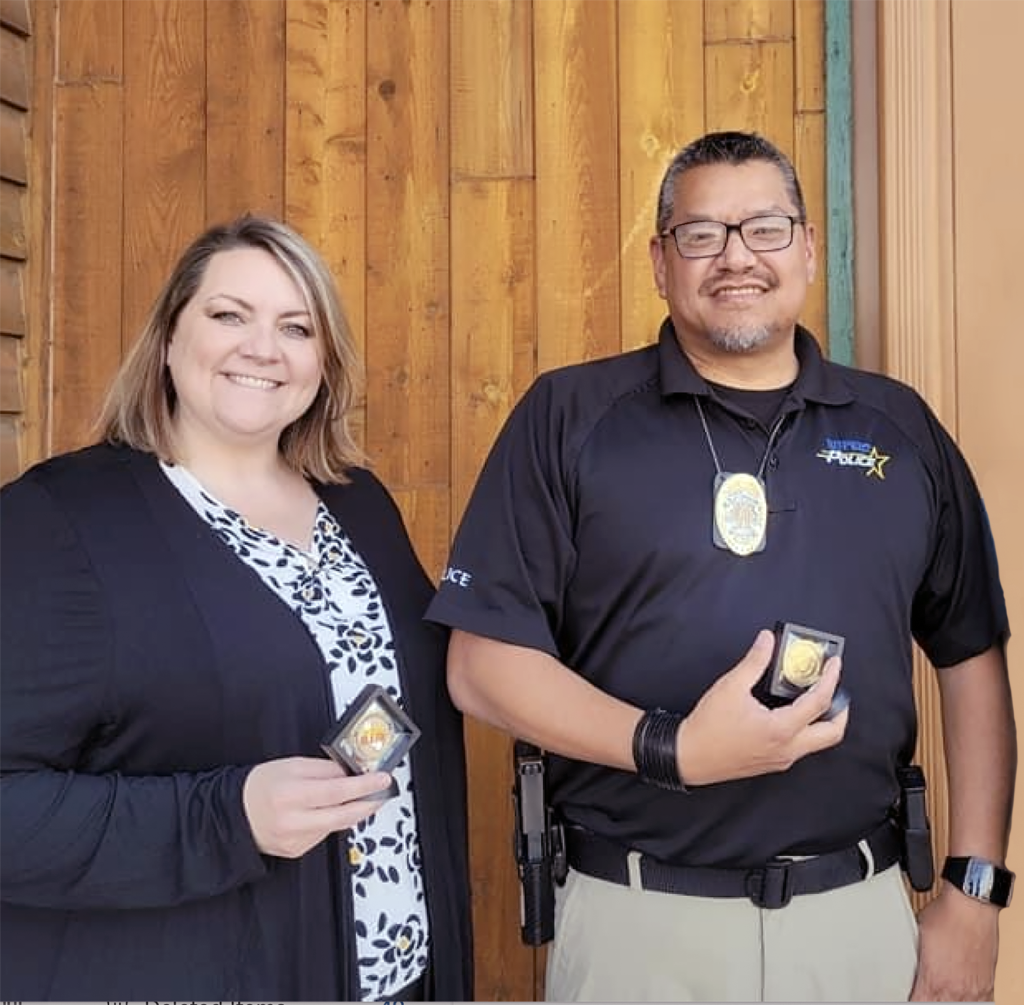
Photo of two people holding AMBER Alert challenge coins from the California Highway Patrol.
From left: Tanea Parmenter, Idaho’s AMBER Alert Coordinator, and Detective Sam Kuoha of the Rupert (Idaho) Police Department show off their California Highway Patrol (CHP) AMBER Alert challenge coins. Parmenter helped Kuoha investigate and activate resources that led California officers to locate a missing girl. It was the Rupert department’s first AMBER Alert.

In one case that involved a cross-border collaboration, an Idaho teen believed to be a victim of human trafficking was safely recovered in California after an AMBER Alert was initiated in her home state. CHP personnel who helped recover the girl from an interstate rest stop near Truckee, California, were awarded, as were Idaho State Police AMBER Alert Coordinator/Missing Persons Clearinghouse Manager Tanea Parmenter and Rupert (Idaho) Police Department Detective Sam Kuoha.

The shiny gold coins bearing the AMBER Alert logo aren’t merely tokens for display. They can help provide closure in child abduction cases, which are some of the most difficult in law enforcement. They also are a source of pride that extends beyond the office or patrol vehicle.

Howlett and Roberts recount the story of an officer whose teenage son teared up after seeing his dad’s challenge coin—and realizing his dad helped save children. “The officer said that was the best feeling ever—to have his son say how proud he was of him,” Roberts says.

While some organizations informally share their coins, the CHP is selective to ensure that “when we give them, it means something,” Roberts says. Award presentations are low key to avoid seeming like it’s being done for the publicity. “We keep it very internal so it feels personal,” Howlett adds.

Roberts credits his officers’ support for creating the challenge coin recognition. One of them even handled the coin’s design. “They were the catalyst; I was just the means to make it happen,” Roberts says. “It’s not a heavy lift to do something like this, as long as you set a few parameters.”

For Howlett, the program has proven well worth the administrative time. “It’s something that has value to us, and it has value to the people who receive the coins,” he says.
 

Wisconsin Governor Tony Evers is shown signing the Prince Act into law in March 2024

Wisconsin Governor Tony Evers signed dozens of bills in March that would invest $10 million in support of crime and human trafficking victims. A new formal partnership between Wisconsin Anti-Human Trafficking Task Force (WAHTTF) and the Missing and Murdered Indigenous Women and Relatives (MMIWR) addresses the prevalence of human trafficking in Wisconsin’s Indigenous communities. In April, Wisconsin signed two new missing person alerts into law, an effort to strengthen the state’s existing AMBER Alert system. The Prince Act expands Wisconsin’s missing person alerts for children after the murders of 5-year-old Prince McCree in 2023 and 10-year-old Lily Peters in 2022. In both cases, law enforcement didn’t have enough information to satisfy the strict requirements for issuing an AMBER Alert. As part of the Act, a new Purple Alert includes missing children under age 10 and children under the age of 18 incapable of returning home without help due to a disability.

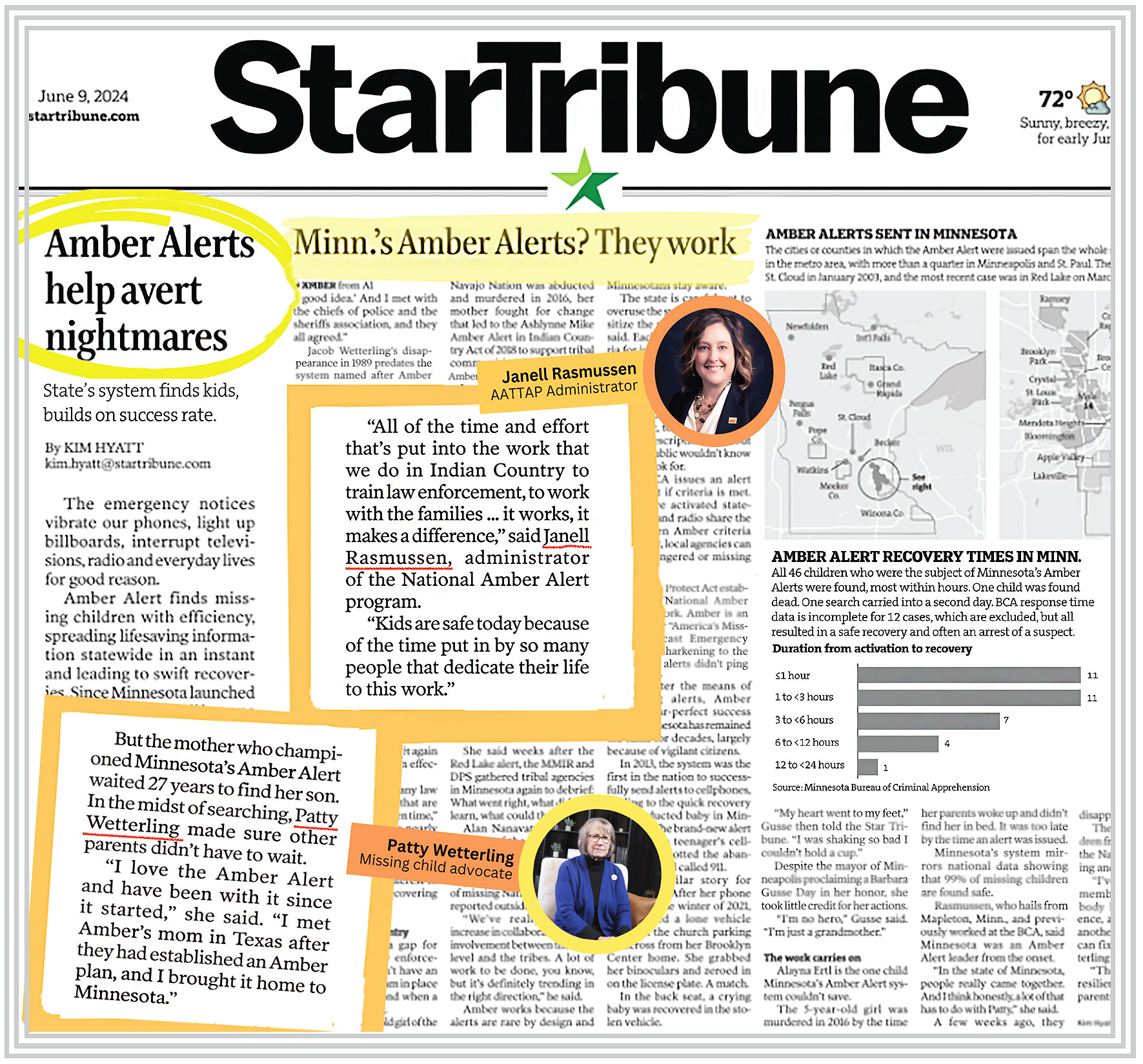
Illustration showing AMBER Alert-related feature that appeared on the front page of the Minneapolis, MN, Star Tribune newspaper. It shows two quotes, one from Janell Rasmussen, and the other from Patty Wetterling.By Denise Gee Peacock

The work of the AMBER Alert Training & Technical Assistance Program (AATTAP) and its Minnesota-based partners was front-page news this week in the state’s largest newspaper, the Minneapolis Star Tribune.

The June 9, 2024, article—entitled “Amber Alerts help avert nightmares: State’s system finds kids, builds on success”—was written by reporter Kim Hyatt.

“AMBER Alert finds missing children with efficiency, spreading lifesaving information statewide in an instant and leading to swift recoveries,” Hyatt reports. “Since Minnesota launched the program in 2002, all but one of the 46 children subject of the alerts here were safely recovered—most within the same day.”

The state’s success with AMBER Alert “does not mean the system is static,” Hyatt noted. “It continues to improve through training and by spreading to new communities 22 years after it was initiated by the state Bureau of Criminal Apprehension (BCA).”
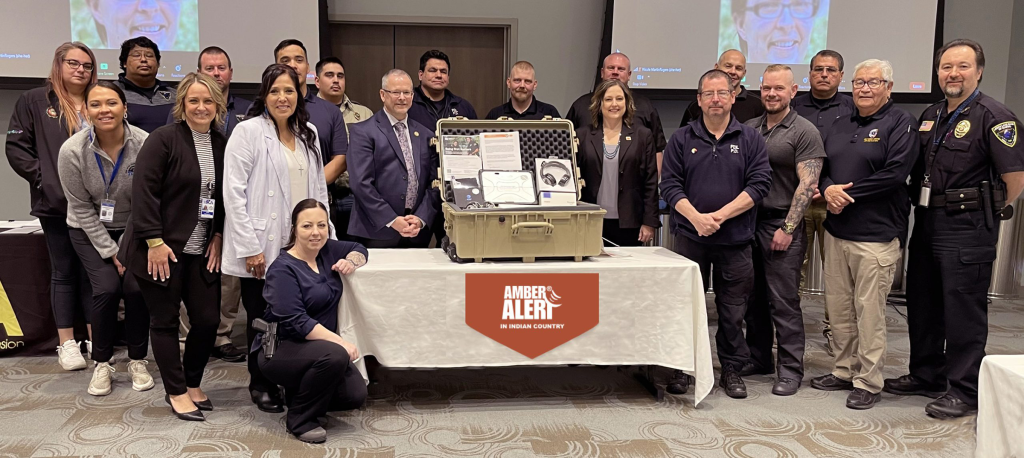
Photo of AATTAP-AIIC team with Minnesota Tribes and law enforcement during a Technology Toolkits presentation in May 2023.
The AATTAP’s AMBER Alert in Indian Country (AIIC) team provided free Technology Toolkits to Minnesota’s 11 federally recognized Tribes in May 2023. The AIIC was created after passage of the Ashlynne Mike AMBER Alert in Indian Country Act of 2018, which provides training and technical assistance to Tribes to foster stronger and faster communication and with regional, state, and federal law enforcement partners.
The article includes these highlights:
  • Since inception of the state’s AMBER Alert program in 2002, 46 children have been the focus of AMBER Alerts. Nearly half of those children (22) were safely recovered in less than three hours. One child, Alayna Ertl, was not able to be safely recovered.
  • In 2013, Minnesota became the first state in the nation to successfully send AMBER Alerts to cellphones, which led to the quick recovery of a baby in Minneapolis.
  • The state’s most recent AMBER Alert was the first to be issued by a Minnesota Tribe (the Red Lake Tribal Police). The alert led to the successful recovery of a missing 3-year-old child.
  • Interviews with two native (and current) Minnesotans who not only have made significant impacts in Minnesota, but in the nation—and beyond:
    • Patty Wetterling, a longtime advocate for missing children. She is the mother of Jacob Wetterling, who was abducted at age 11 on October 22, 1989, by a masked gunman near their home in St. Joseph, Minnesota. (Jacob’s remains were found nearly 27 years after his abduction, and his abductor charged with murder.) Wetterling co-founded and is past director of the National Center for Missing & Exploited Children’s counseling network Team HOPE, and has shared countless victim impact sessions with law enforcement across the U.S.—much of them for the AATTAP and its parent organization, the National Criminal Justice Training Center of Fox Valley Technical College. (Read more about Wetterling’s work for U.S. Department of Justice resource, When Your Child is Missing: A Family Survival Guide, and her new book, Dear Jacob: A Mother’s Journey of Hope.)
    • Child protection expert Janell Rasmussen. Rasmussen serves as Administrator of the AATTAP, which is funded by the U.S. Department of Justice to provide training and technical assistance to law enforcement throughout the United States and its territories, Indian Country, and abroad. Early in Rasmussen’s career she worked as AMBER Alert Coordinator for the Minnesota BCA—and became a good friend of the Wetterling family. Read more about her AATTAP work here.
  • Insight into the state’s AMBER Alert work from BCA Superintendent Drew Evans. “There’s only so many law enforcement officers that are out working at any given time. Yet we have nearly six million Minnesotans that can be our eyes and ears out in the community, and everybody has a vested interest in recovering our children,” he told the Star Tribune. (Note: The Star Tribune reported that access to AMBER Alerts is spreading to new communities, but everyone in the state has had the ability to request AMBER Alerts since the state plan was created in 2002.)
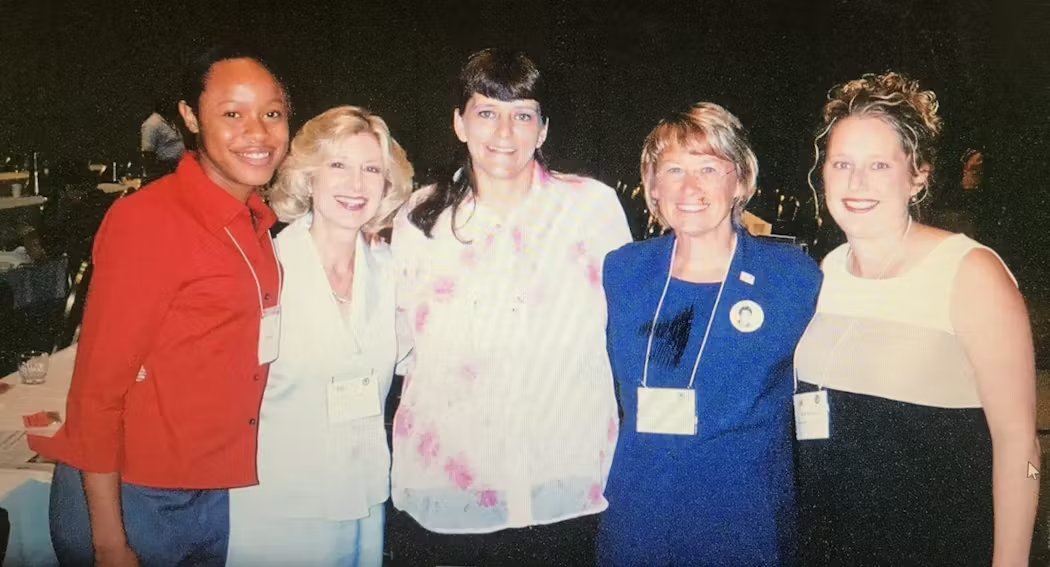
Photo showing Patty Wetterling (second from right), Janell Rasmussen (far right), Donna Norris (mother of Amber Hagerman, center), U.S. DOJ Assistant Attorney General Deborah J. Daniels (second from left), and abduction survivor Tamara Brooks (far left) at the first national AMBER Alert Conference in 2003.
At the first national AMBER Alert Conference in 2003, Patty Wetterling (second from right) and Janell Rasmussen (far right) are photographed with Donna Norris (center), the mother of AMBER Alert namesake Amber Hagerman. Also shown are then-U.S. DOJ Assistant Attorney General Deborah J. Daniels (second from left), and abduction survivor Tamara Brooks (far left). “There’s strength in the resilience of these searching parents,” Wetterling told the Star Tribune. Rasmussen notes that when this photograph was taken, she was pregnant with her daughter, who is expected to graduate next year with a degree in criminal justice.


By Denise Gee Peacock

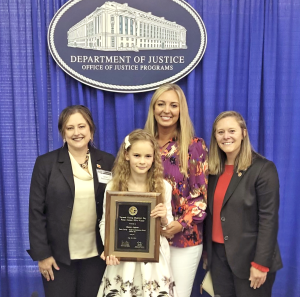
At the 41st National Missing Children’s Day commemoration May 22, 2024 in Washington, D.C., staff members from the AMBER Alert Training & Technical Assistance Program and National Criminal Justice Training Center accompanied family members of missing children who have helped produce two multimedia resources for the U.S. Department of Justice Office of Justice Programs (OJP) and Office of Juvenile Justice and Delinquency Prevention (OJJDP): When Your Child Is Missing: A Family Survival Guide and the forthcoming What About Me? Finding Your Path When Your Brother or Sister Is Missing.

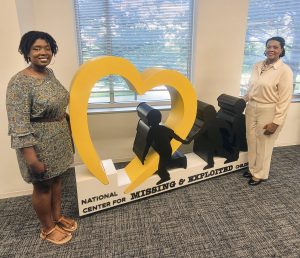
On the day before the Missing Children’s Day commemoration, the AATTAP-hosted family members paid a visit to the Alexandria, Virginia, headquarters of the National Center for Missing & Exploited Children (NCMEC). Afterward they attended an AATTAP reception recognizing them for their contributions to ensuring family members across the nation have access to the latest information and resources. They also were shown highlights of videos that will be featured on the Family Survival Guide website along with the publication once released. (Stay tuned to The AMBER Advocate for more details.)

Recognition and collaboration for better understanding—and a clear path forward

During the National Missing Children’s Day ceremony, the group received thanks for their efforts from U.S. Assistant Attorney General Amy L. Solomon, OJJDP Administrator Liz Ryan, and NCMEC President and CEO Michelle DeLaune—as well as attendee applause when they were asked to stand for recognition. They also heard from nationally revered parent-advocate and retired AATTAP-NCJTC Associate Patty Wetterling, who was a featured speaker at the event. Patty is the mother of Jacob Wetterling, who was abducted and murdered in 1989. (Read more about her search for him, and her new book, Dear Jacob, here.) Wetterling also helped update the new Family Survival Guide.

Following through on a commitment made by OJJDP Administrator Liz Ryan last year during her impactful meeting with the Family Survival Guide contributors at the conclusion of the Missing Children’s Day ceremony, this year’s event included an inaugural, private Family Roundtable meeting during which both Family Survival Guide and Sibling Guide family members discussed their experiences with being a part of these projects, their ongoing needs and goals as surviving family members who have experienced a missing child or sibling, and offered OJJDP and AATTAP leaders recommendations on ways to best support families and more broadly promulgate awareness and distribution of these and other critically important resources for family, law enforcement, community and child advocates.

“The AATTAP was honored to be invited by Administrator Ryan and other OJJDP leadership to facilitate a discussion with the families of missing and murdered children. We discussed ways to improve law enforcement response, preparedness, family support and protecting children. Bringing the important perspectives of both parents and siblings, they bravely and earnestly offered their personal stories and messages of hope for those facing the same unthinkable situation.”

Janell Rasmussen
Administrator, AMBER Alert Training & Technical Assistance Program

Commemoration highlights

Each year, the Justice Department also honors agencies, organizations, law enforcement officials, and others whose exemplary heroic efforts to help recover missing children and prosecute people who harm them.

“Our commemoration is taking a new format this year,” Ryan said. “OJJDP decided not only to highlight the tremendous work of law enforcement others in efforts to protect children, but also to take this opportunity to address the challenge is in this work— to learn more about issues related to missing kids, and hold in depth conversations with youth and families of missing and murdered children and other experts on these related topics.”

Following the commemoration, a cadre of experts, including a youth advocate with lived experience in the foster care system, participated in a panel discussion on the reasons why so many children and young adults go missing from care.  “They will suggest ways we can improve collaboration and to ensure the health and well-being of these children,” Ryan explained.

Ryan next recognized “members of family roundtable—parents, siblings and other family members with a loved one who has gone missing. They know firsthand the torment, confusion and emotional exhaustion of losing a child,” she said. “They lived it and they have channeled that sorrow into resources to helping others. Each of the family roundtable members here today has contributed to two important guidance documents."

When Your Child Is Missing: A Family Survival Guide was announced at the 2023 Missing Children’s Day event. The new fifth edition provides a wider range of missing child situations; gives families immediate access to information via its online format; and allows them to hear parents’ advice and encouragement from the parents themselves, who speak directly to them through powerful videos.

As was the case with the Family Survival Guide project, the What About Me? project was developed by AATTAP’s publications team with guidance and oversight from the OJJDP. And both projects where shepherded by Helen Connelly, a former program administrator for Fox Valley Technical College (FVTC)—home to AATTAP and the NCJTC.

The new sibling survival guide will help a missing child’s siblings understand both the emotional turmoil surrounding the crisis and the ongoing search for their sibling. It will offer advice and resources; tips on self-care, mental health, and family dynamics; guidance on dealing with law enforcement, the media, and court; first-hand insight on what to expect and how to cope.

“While more than 1,200 children have come home safely as a direct result of AMBER Alerts, we must not forget that while the system is at work, searching for that missing child, that child’s loved ones are scared, frustrated, and mentally isolated. Providing emotional support to these family members is one of our most important jobs.”

Amy L. Solomon
Assistant U.S. Attorney General

Looking back—and ahead

This year marks the 40th anniversary of NCMEC, which has contributed to the safe recovery of more than 400,000 missing children.

Additionally, the OJJDP is celebrating 50th anniversary of the Juvenile Justice and Delinquency Prevention Act. The law that established our office OJJDP has supported youth and families across the nation, providing federal funds owing to states, territories, Tribes, and communities to protect children prevent delinquency and transform juvenile justice systems.”

“As you know thousands of children go missing in the U.S. every year,” Ryan said. “While most are safely recovered, others are found deceased and never identified. Currently there are more than 1,000 children whose remains have been found, but have not been identified. We want to help name them and return them to their families, communities and loved ones.”

The OJJDP and NCMEC, with support from the DOJ—and training and technical assistance from the AATTAP and NCJTC—will work with state and local law enforcement agencies to identify these children, Ryan explained, adding, “they deserve no less.”

“I’m honored to reflect on our shared responsibility of responding to [cases involving] missing children and supporting their loved ones. And it's especially meaningful to be in the company of parents and family members of missing children. Your presence honors your loved one, and helps represent the thousands of families still searching for their children.”

Michelle DeLaune
President and CEO, National Center for Missing & Exploited Children

Wetterling to DOJ & NCMEC: ‘You Save Lives. You Saved Mine.’

NCMEC President and CEO Michelle DeLaune welcomed Patti Wetterling to speak, recognizing her as “a longtime friend and a personal source of inspiration.”

“Her son, Jacob, who went missing when he was 11 years old, was abducted near their home in Minnesota,” she said. “Patty has given her life to advocating for her son. She has raised a beautiful family. She is a fierce mother and has changed this world with every person she speaks to.”

“We're so honored that you could be with us today,” added Attorney General Solomon. “We’re indebted to you for your years of advocacy on behalf of missing children and for the work that you continue to do to claim a brighter future for our children.”

The following is an excerpt of Wetterling’s remarks at the 2024 National Missing Children’s Day event:

I want to thank you, Liz Ryan, for meeting with the group, this amazing group. [She gestures to the families group attending the ceremony.] I belong over there with you, my heart is with you, and we draw strength from you. And I also want to thank everybody at NCMEC and the DOJ. You save lives, you saved mine. 

National Missing Children's Day is an amazing time to shine a light on a dark topic. When my son Jacob was kidnapped, I knew nothing about crimes against children. ‘Who would do that?’ I cried! ‘Who would harm a child?’ It is an unimaginable pain.

After a few days, sleep deprived and depressed, I crawled into bed and pull the covers over my head and decided I'm never gonna get out of bed again. It's too hard. It hurts too much. I can't do it. With tears streaming down my face, I suddenly saw Jacob curled up in a ball somewhere saying the same thing. “I can't do this anymore. It's too hard. They're never going to find me.”

Screaming I got up and said, ‘Hold on Jacob, we will find you! But you have to stay strong!’

I got out of bed. That decision to get out of bed was the first of many choices that we made. And for me, it was in the early days—and 34 years that have followed—I decided I couldn’t live in the darkness, and I chose to seek light. Instead, I chose to fight for the world that Jacob knew and loved—a world that was fair and kind and safe for kids.

When I was given that phone number for the National Center for Missing & Exploited Children, I learned so much about the problem; how many children were missing and exploited and what we all needed to do to bring them home. Most kids come home because somebody is aware of their abduction. They look at the pictures. And if they see something unusual about a child, or a child in a bad situation, they trust their instincts and call the police.

We tried to make sure everybody got Jacob’s pictures. We had to mail pictures out back in 1989. We sent them all over. But my favorite story was when a couple was traveling from Minnesota to Florida, and they thought they saw Jacob. They recognized the picture and said, ‘He was with a man who's very thin and he didn’t look like he wanted to be with this guy.’ But they didn't know who to call. So eventually they called the FBI in Minneapolis. When they described the man that this boy was with the FBI agent knew who they were talking about… they caught up with him in Flagstaff, Arizona. And clearly [the child they found with him] wasn't Jacob.

But one 12-year-old boy got to go home because somebody was aware of the problem. They looked at the pictures and they took that extra step of being there for the child. In those 34 years since Jacob was kidnapped, I've learned that collectively, we are strong when we pool ideas and resources. Through Team HOPE and the family and sibling survival guides. We support each other and offer assistance to other families walking down this difficult path.

When a when a child is missing, it affects the entire world. Classmates, teachers, neighbors, cousins, friends—all have their worlds turned upside down… We have to keep missing children in our hearts until we can hold them in our arms again.

We are all the hope for all missing children, as well as all children who are home safe today. We can never give up hope. And together, we can, and we will, build a safer world for all of our children.