

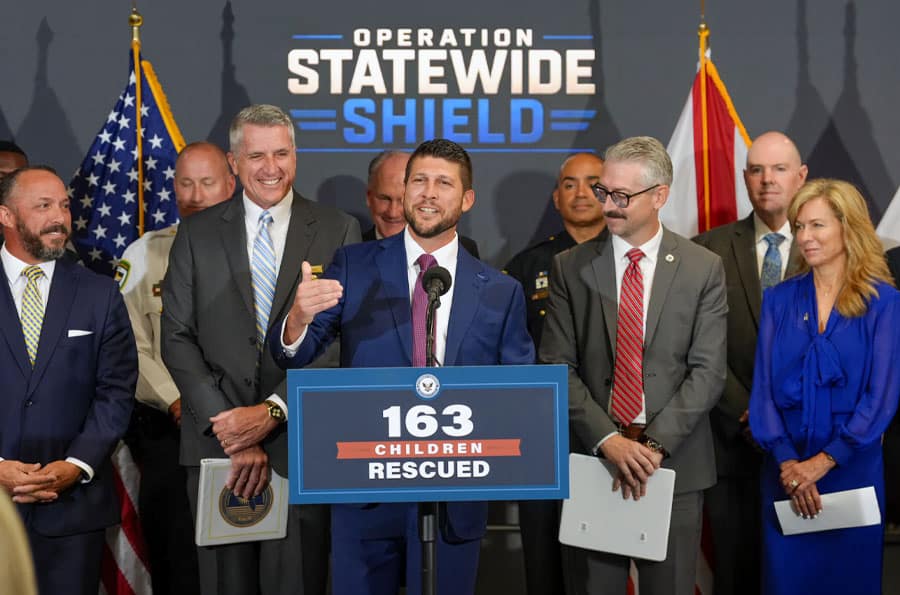
Operation Statewide Shield resulted in the successful recovery of 163 missing children, spanning ages from 2 months to 17 years. This massive five-day initiative, led by the Florida Department of Law Enforcement, extended across multiple states, one U.S. territory, and 12 foreign countries. The operation relied heavily on real-time intelligence gathering and immediate field deployment to locate vulnerable youth safely.
A defining feature of this historic operation was the establishment of specialized recovery hubs. After law enforcement safely recovered the children, officers transported them directly to these designated locations. At these hubs, children received immediate medical attention, social services support, and necessary welfare resources. This centralized approach streamlines the transition from rescue to post-recovery care.
Equally important was the integration of nonprofit organizations into the logistical framework of the operation. Groups such as Place of Hope provided essential supplies directly to field personnel during the active search phase, ensuring officers had food, water, and necessary resources to sustain the mission.
Furthermore, these organizations supplied critical practical items for the recovered children and their families. They distributed hygiene bags, care packages, and gift cards. A vital logistical insight emerged regarding family reunification: many parents had enough fuel to travel to the recovery hubs to collect their children, but they lacked the gas needed to return home. By providing gas cards, the supporting agencies eliminated a significant practical barrier to successful family reunification.
This model demonstrates the value of building multi-disciplinary task forces that combine traditional law enforcement operations with community-based logistical support. Documenting all recovery data through centralized clearinghouses ensures total case closure and maintains accurate tracking. Merging real-time field intelligence with immediate, practical support structures maximizes the efficiency of large-scale child rescue missions.
Key Findings
- Multidisciplinary task forces effectively pair law enforcement field teams with non-profit groups to sustain operational logistics during lengthy child rescue missions.
- Establishing designated recovery hubs streamlines post-recovery processing, allowing officers to securely transfer children directly to medical and social service providers.
- Providing practical assistance, such as gas cards for families who can reach the recovery hub but lack the fuel to return home, serves as a crucial step in finalizing successful reunification.
- The use of real-time intelligence coupled with centralized tracking databases ensures organized operational flows and thorough case closures.
Sources
- Florida Department of Law Enforcement (Aug 25, 2026): FDLE announces over 160 children recovered in Operation Statewide Shield (Link)
- WPBF 25 News (Aug 28, 2026): Local nonprofit details its role in operation that rescued 163 missing children (Link)
- Florida Attorney General's Office (Aug 25, 2026): Attorney General James Uthmeier and FDLE Announce the Rescue and Recovery of 163 Missing Children (Link)